
Fortress · Late 4th century BC – 2nd century AD; Hellenistic, Saka-Parthian and Kushan phases
Kampyrtepa (Alexandria on the Oxus)
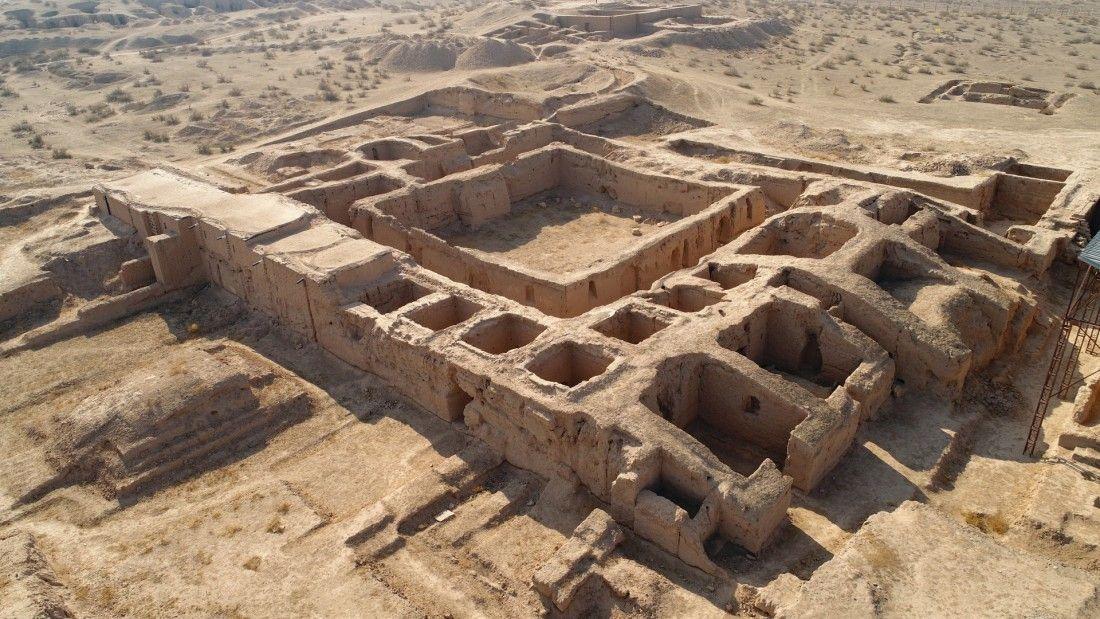
A Hellenistic river port and Kushan fortress town on a terrace above the old bed of the Amu Darya, proposed by its excavator as Ptolemy's Alexandria on the Oxus. Streets, houses and storage jars survive in the mud brick.
About
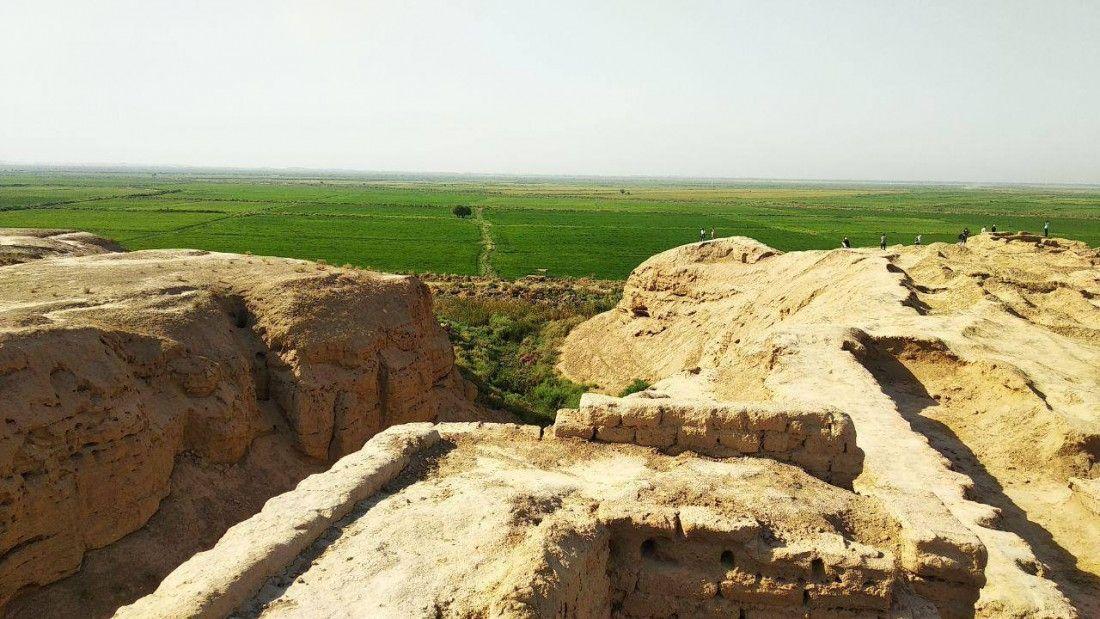
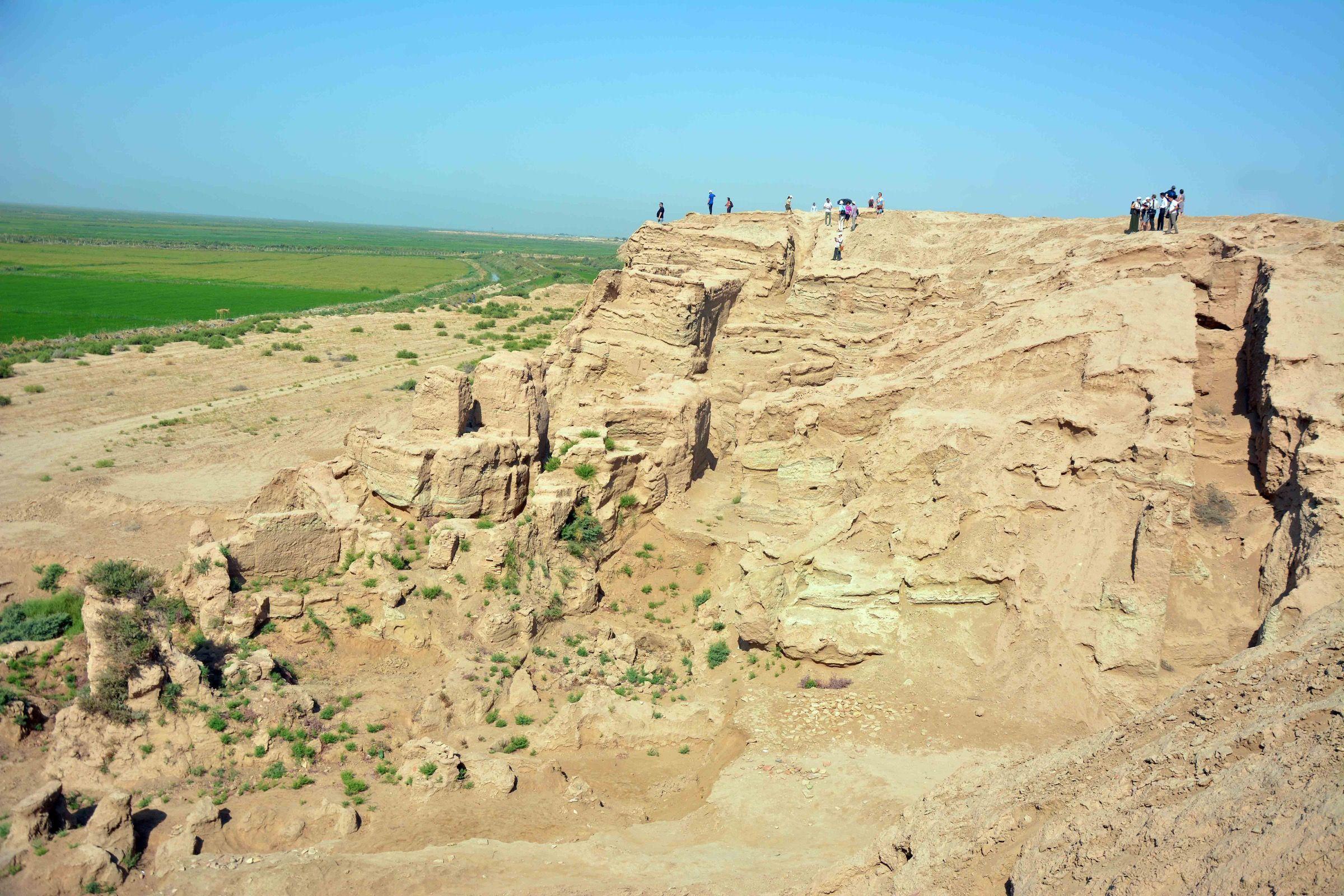
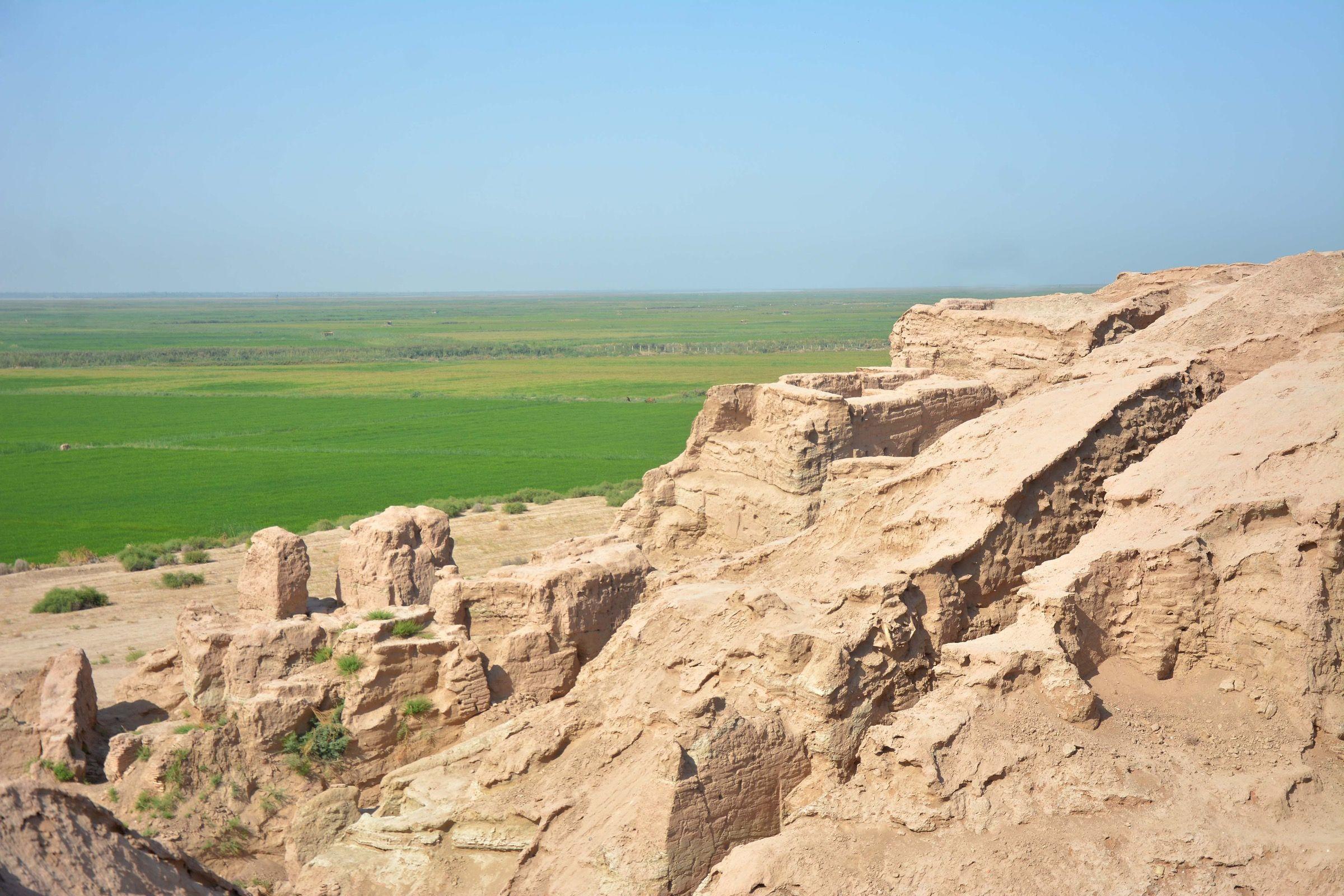
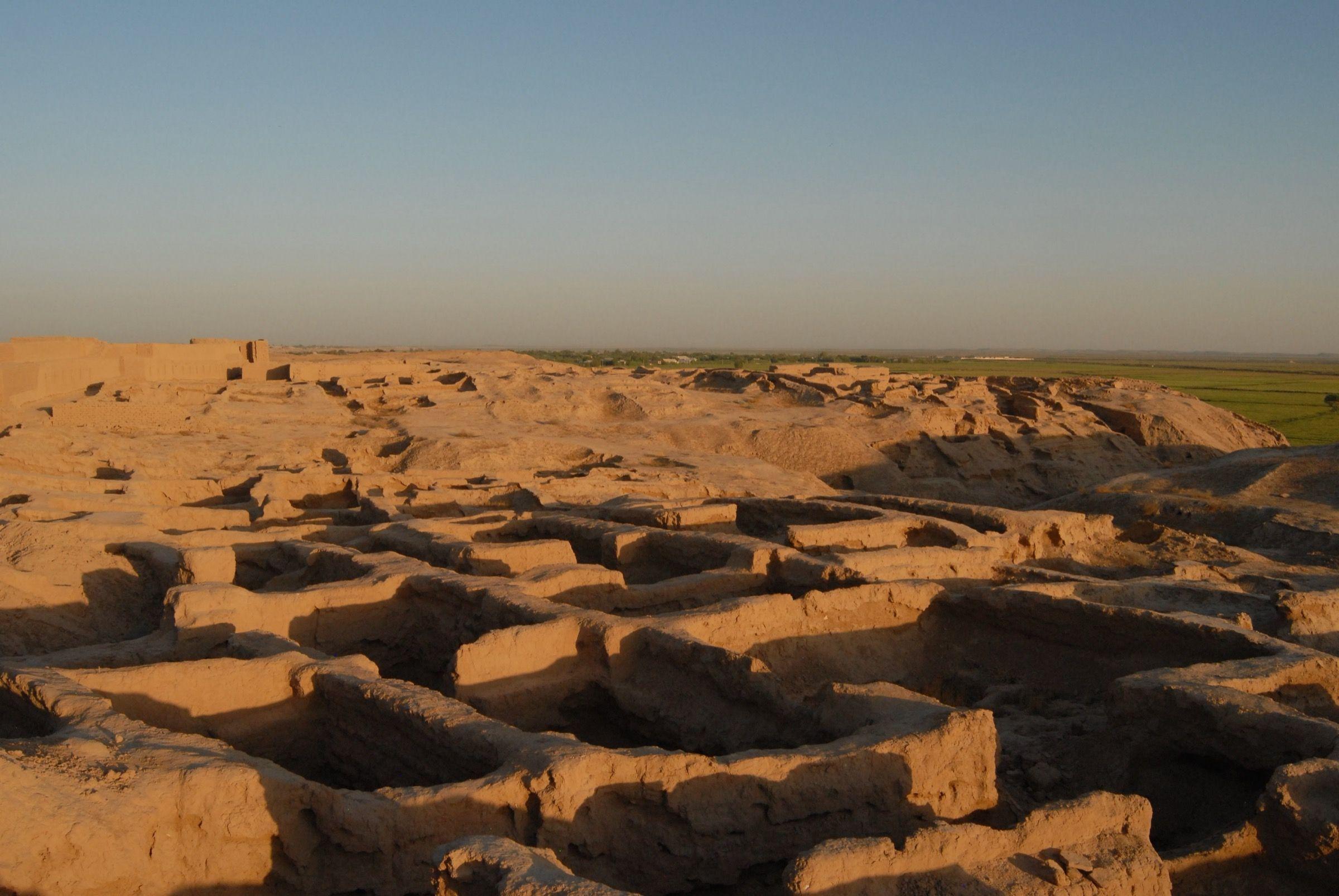
Kampyrtepa sits on a loess terrace about 30 km west of Termez, near the village of Shurob, overlooking the plain where the Amu Darya once ran directly below the walls. The river has since shifted south, leaving the site stranded above green fields, but in antiquity it controlled a crossing on the route from Bactra (Balkh) to the north. Excavations date the first settlement to the late 4th century BC, the years immediately after Alexander's campaign in Bactria, when a small port outpost was planted here.
From Greek outpost to Kushan town
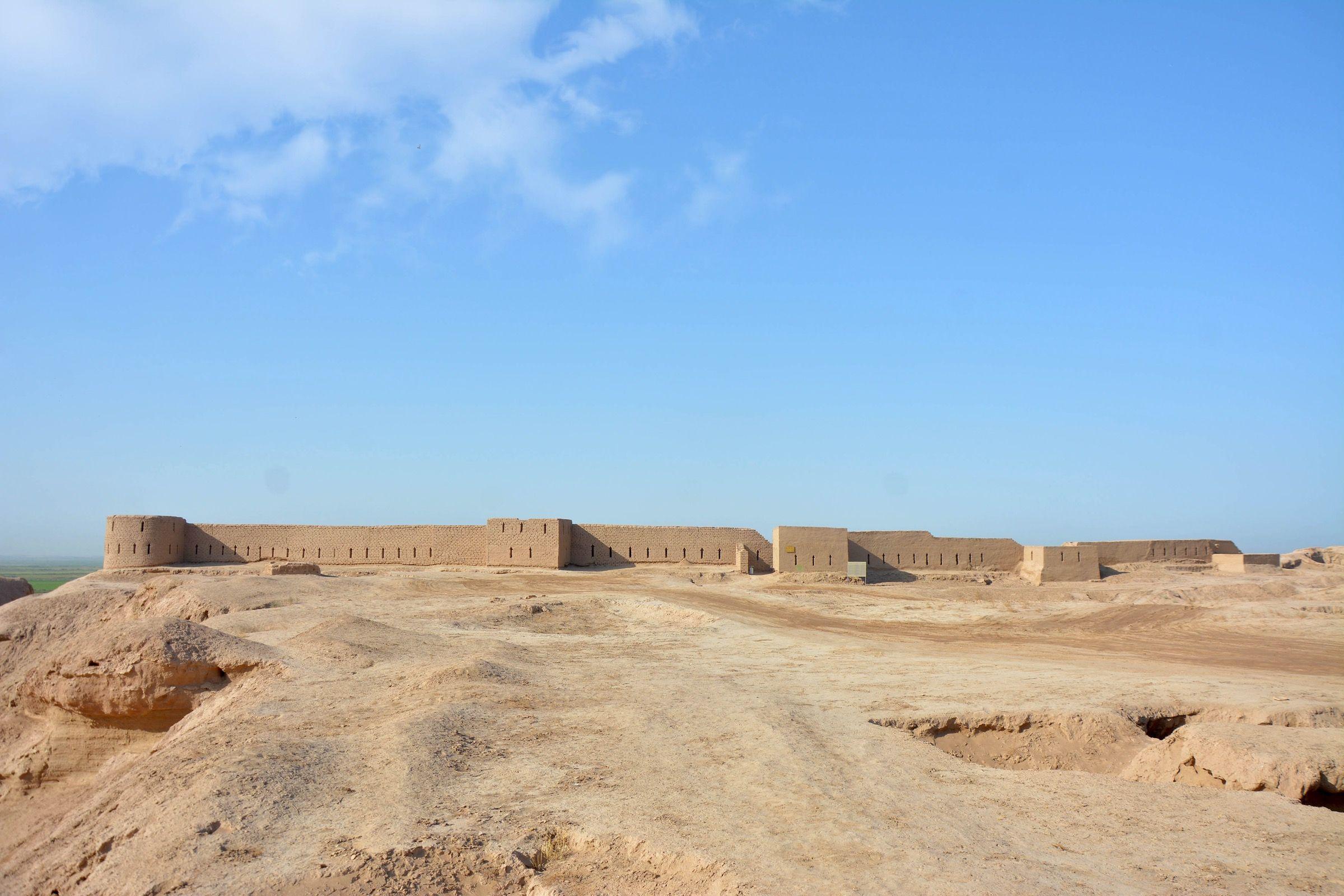
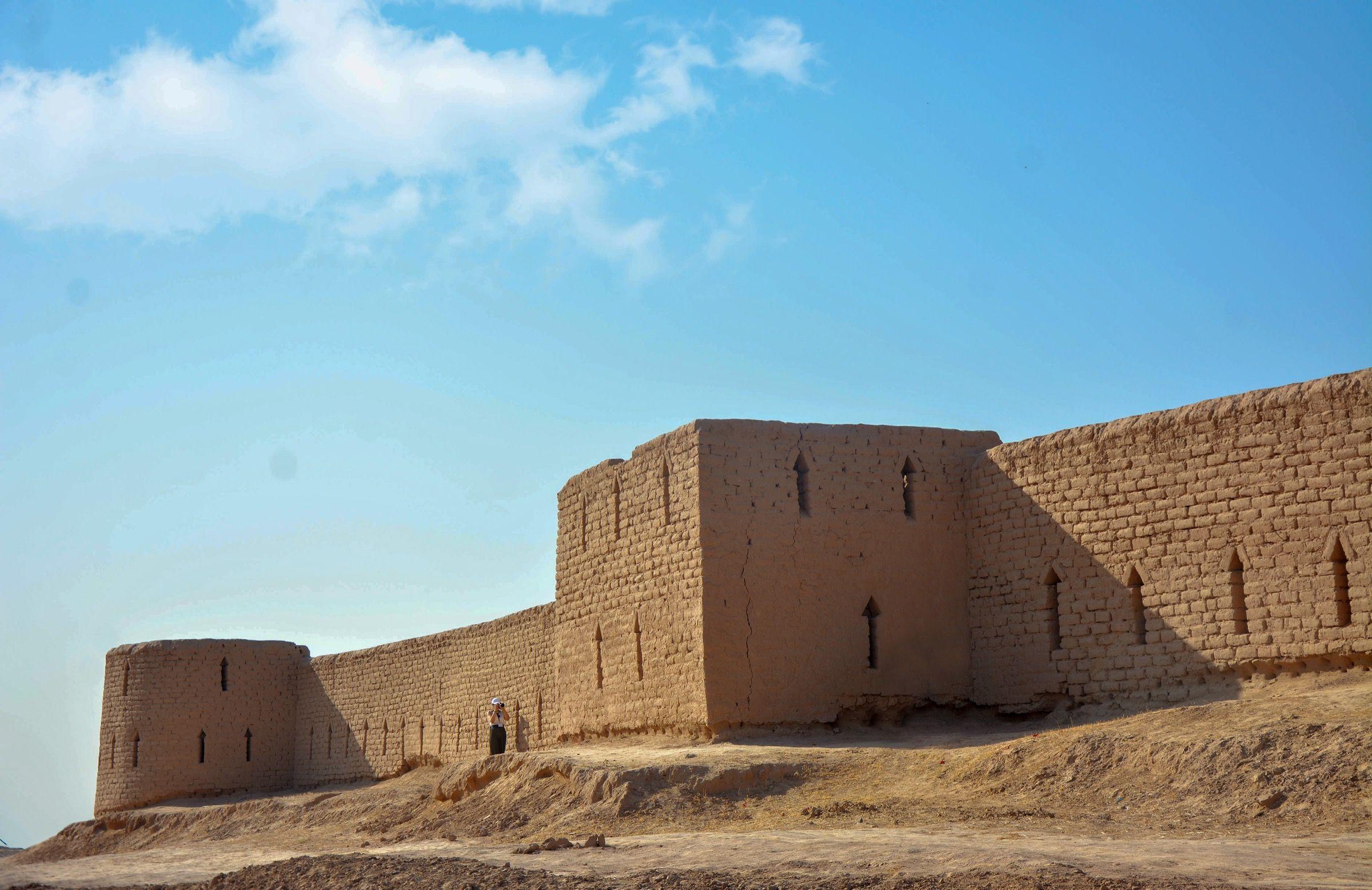
Archaeologists distinguish three main phases. The Hellenistic settlement grew under the Graeco-Bactrian kings; coins of Euthydemus I (late 3rd century BC) and Greek inscriptions scratched on pottery belong to this period. A Saka-Parthian phase followed the collapse of Greek rule, and in the 1st–2nd centuries AD the Kushans rebuilt the place as a fortified town with a citadel, a lower town and a ditch, organised in regular blocks of houses along narrow streets. The visible walls are largely this Kushan work, laid over the Hellenistic plan. The site was abandoned around the 2nd century AD, apparently when the river changed its course and the crossing lost its purpose.
The Alexandria question
The site was discovered in 1972 by Edvard Rtveladze, who went on to lead the Tokharistan Archaeological Expedition here from 2000. In 2019 he announced that the evidence (the date of the lowest layers, the position on the Oxus, the Greek material) matched the Alexandria on the Oxus that Ptolemy lists in his Geography. The identification is a proposal rather than a proven fact, and other scholars still argue for Ai-Khanoum in Afghanistan, but it has given the modest ruin an outsized reputation.
What you see on the ground
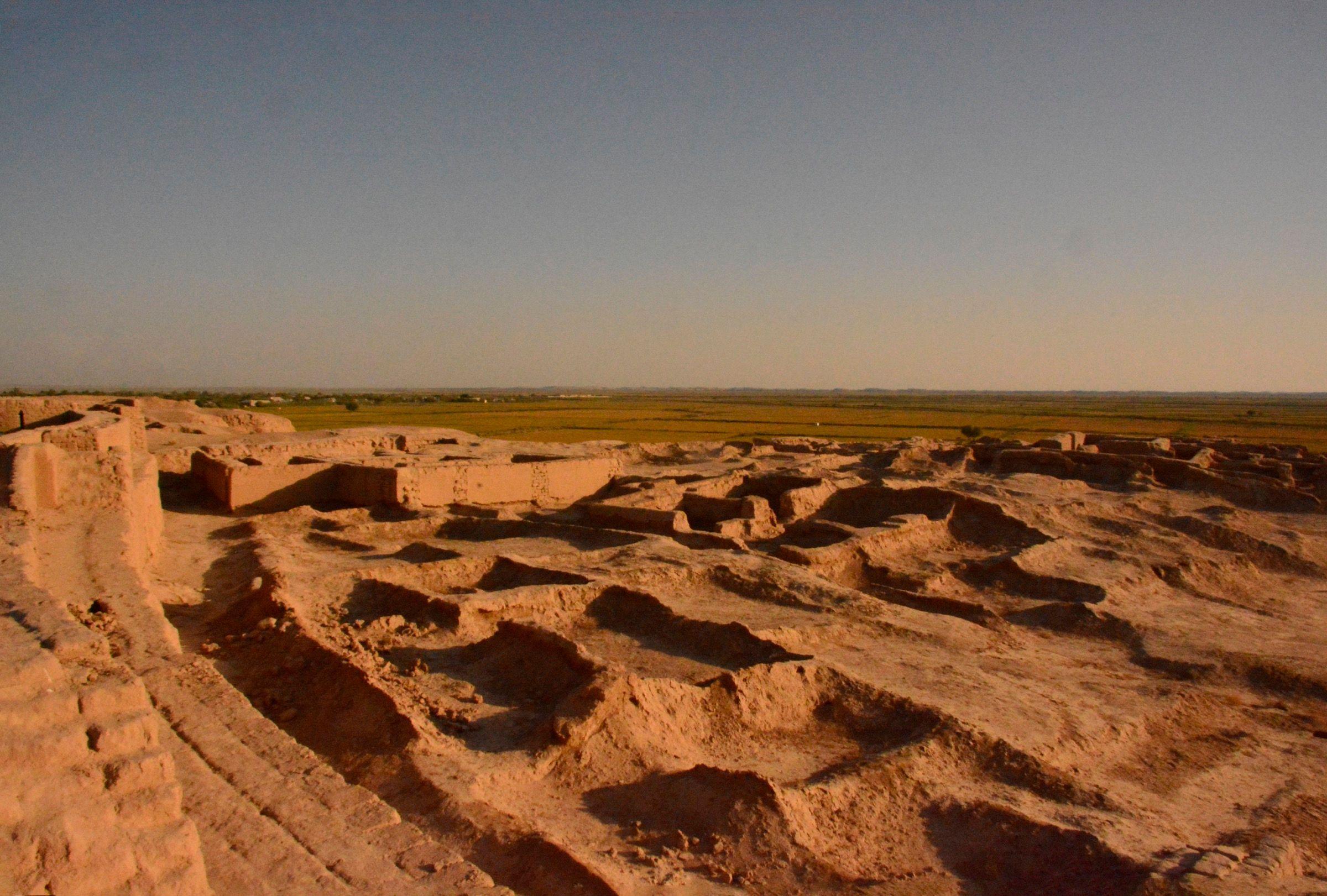
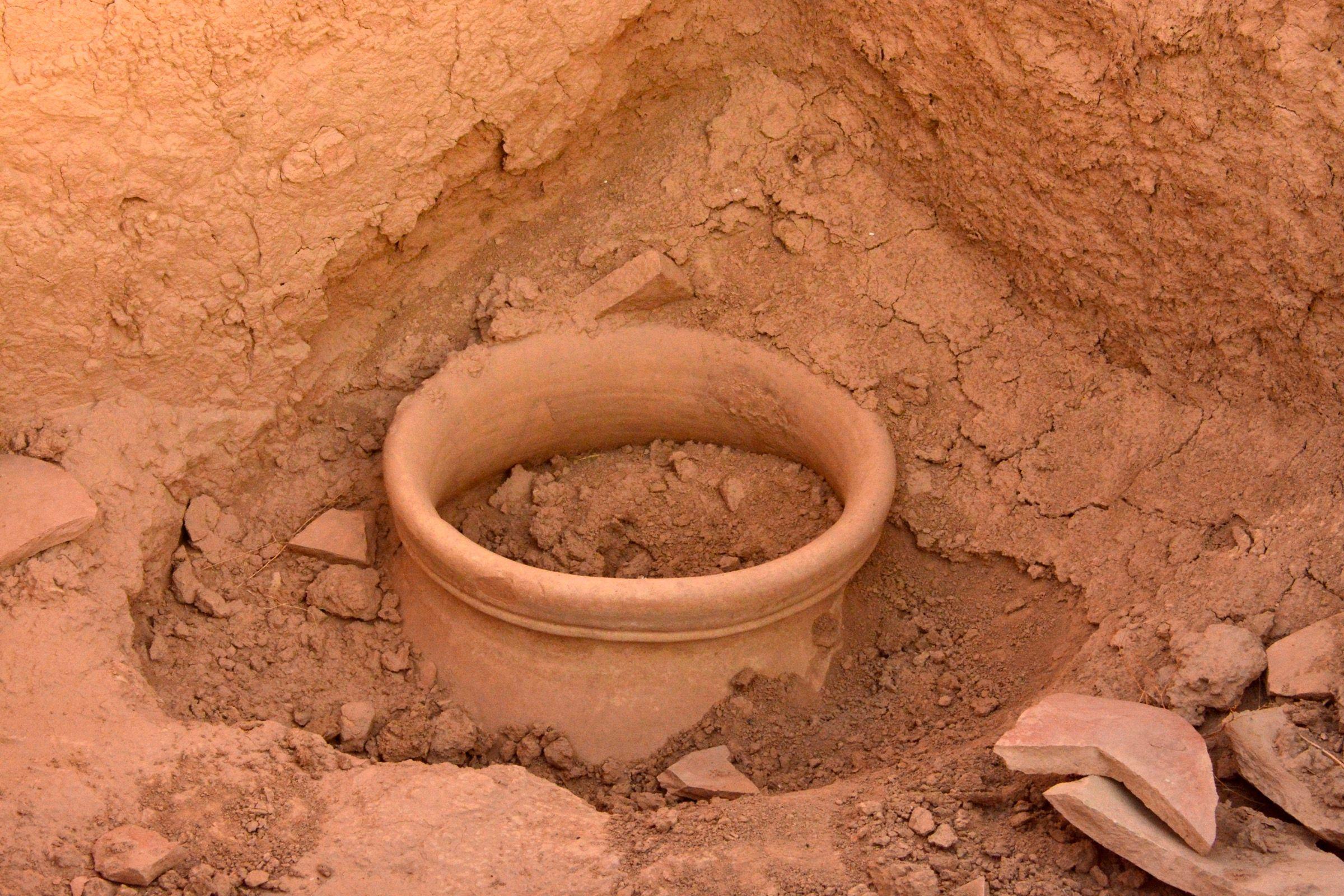
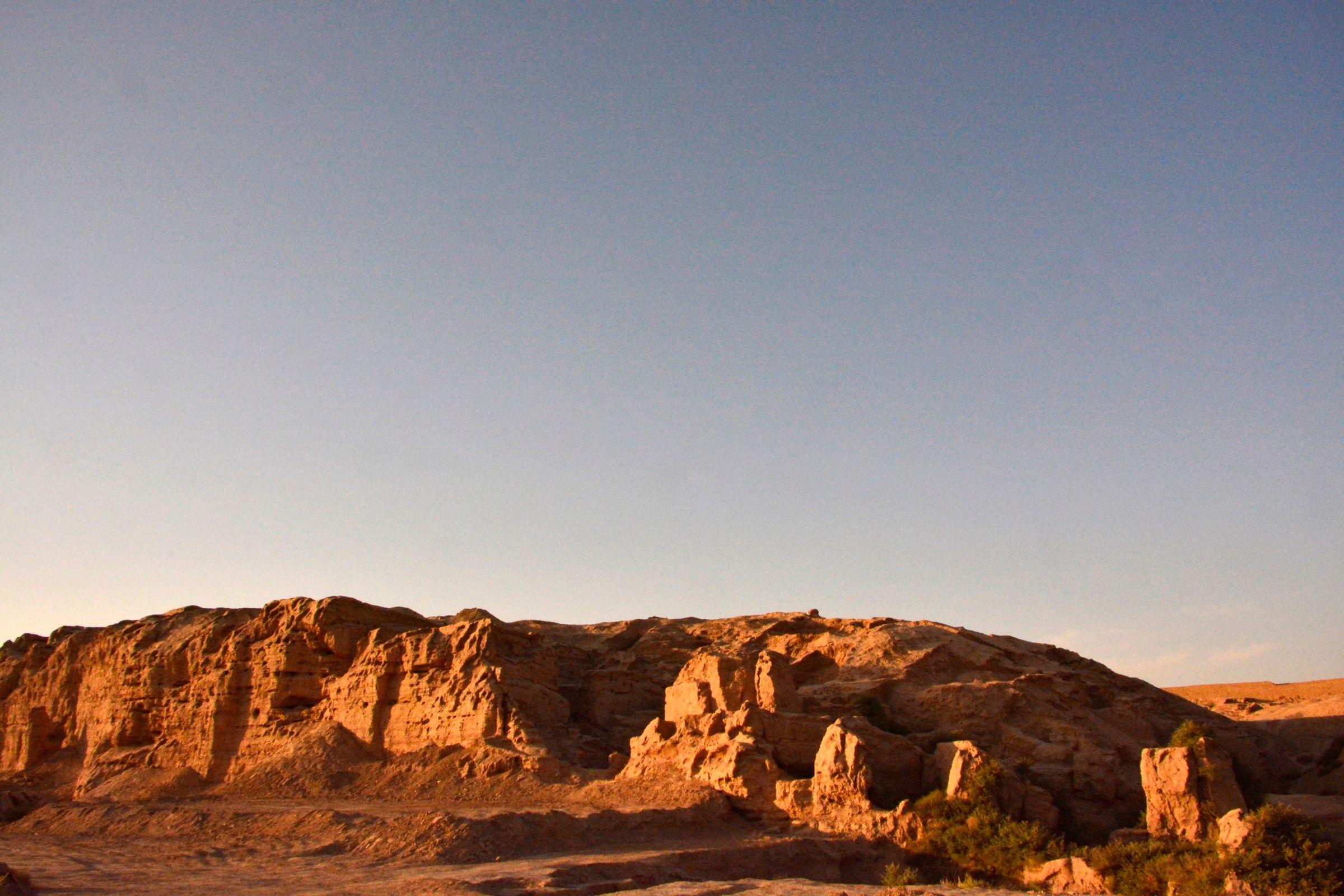
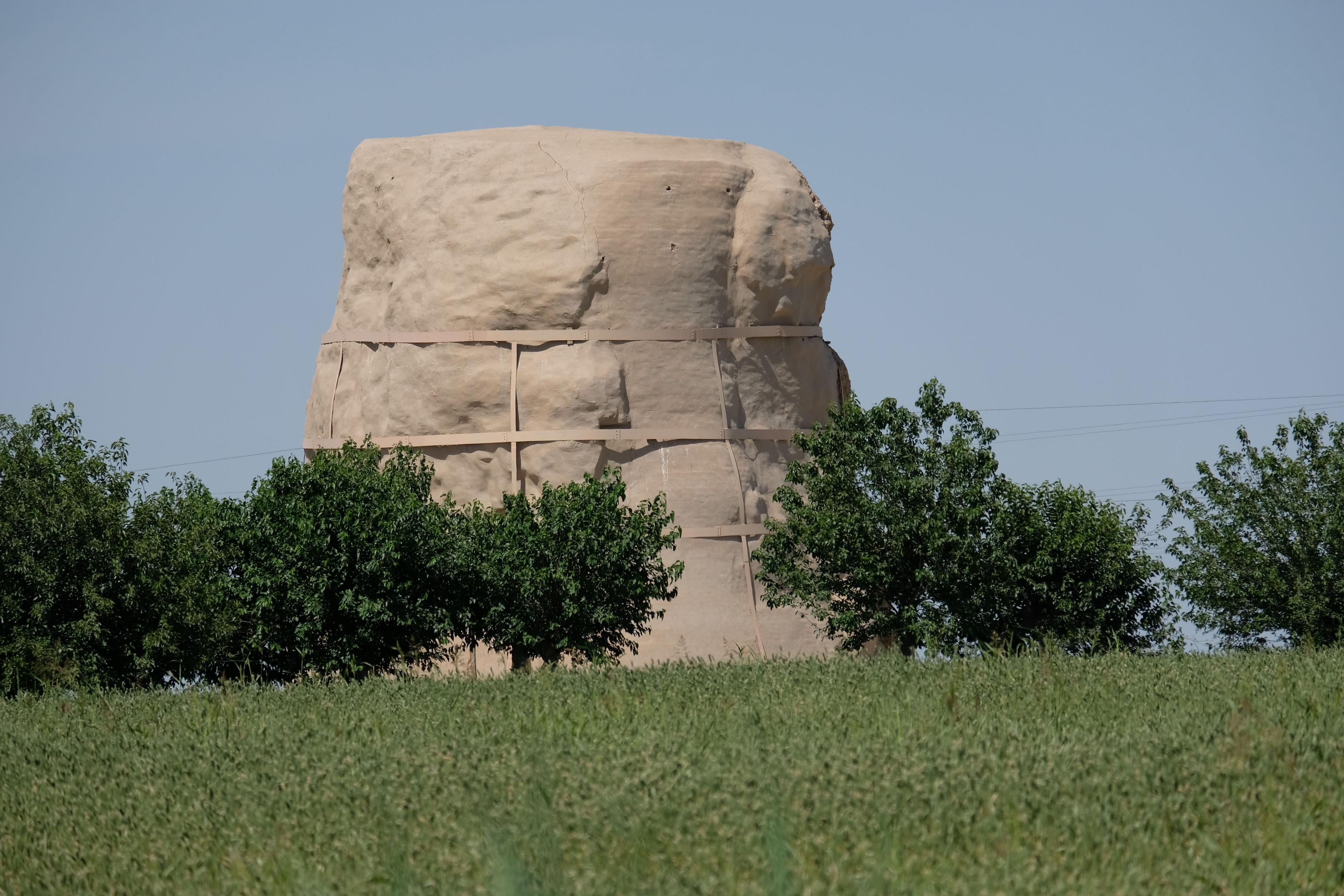
Because the town was never built over, the plan is unusually legible: the raised citadel at the western end, blocks of rooms with doorways and benches, fragments of the fortification wall with its ditch, and large storage jars left where they stood. Finds from the site, including a bone comb carved with a woman's portrait, terracotta figurines and Greek-inscribed sherds, are shown in the Termez Archaeological Museum, which is best visited the same day.
Practicalities
Kampyrtepa lies right on the Afghan frontier, inside the border zone. Visits are possible with a tour operator who registers the group in advance; bring your passport. There is no shade and no facilities, so go early in the morning or in the last two hours before sunset. It combines naturally with the Buddhist sites of Old Termez (Kara-Tepe, Fayaz-Tepe, Zurmala) and with Jarkurgan minaret on the way back.
What to see
- The Kushan citadel on the western edge of the terrace
- Residential blocks and streets of the lower town, never built over
- Fragments of the fortification wall and the defensive ditch
- Storage jars still standing in excavated rooms
- Views over the floodplain and the former channel of the Amu Darya
- Finds from the site in the Termez Archaeological Museum
Gallery
More sights in Termez & Surkhandarya
All of Termez & Surkhandarya
See Kampyrtepa (Alexandria on the Oxus) with a local guide
We build private and small-group trips around the places you want to see — with guides who grew up here.