Uzbekistan's far south: the Buddhist monasteries of Kara Tepa and Fayaz Tepa, the Zurmala stupa, the shrines of Al-Hakim at-Termizi and Sultan Saodat, the Archaeological Museum, Boysun, and how to get to Termez in 2026.
Facts, prices and schedules checked on November 4, 2026
Termez is Uzbekistan's southernmost city, on the Amu Darya with Afghanistan on the far bank, and it holds something no other region of the country can offer: the Buddhist heritage of the Kushan Empire. Around Old Termez you can walk through the cave monastery of Kara Tepa, the restored stupa of Fayaz Tepa and the brick tower of the Zurmala stupa, then visit some of the most important Islamic shrines in Central Asia, all within a short drive.
Few travellers make it this far, which is part of the appeal. This guide to Termez and the Surkhandarya region covers the Buddhist sites, the shrines of Al-Hakim at-Termizi and Sultan Saodat, the Archaeological Museum, how to get there by plane or train in 2026, the mountain district of Boysun, the best time to go and how many days you need.
Why visit Termez and Surkhandarya?
Termez stands at one of the oldest river crossings in Asia. Greek-Bactrian rulers, the Kushans, Sasanians, Arab armies and the Timurids all passed through, and the area of Old Termez was occupied for more than two thousand years before the Mongols destroyed it in 1220.
Its golden age for Buddhism came under the Kushan Empire, roughly the 1st to 4th centuries AD, when Termez (ancient Tarmita) was a centre of monasteries on the road between India and the Silk Road cities to the north. In the 7th century the Chinese pilgrim Xuanzang passed through on his way to India and recorded monasteries and monks still here. Under Islam, Termez produced scholars and Sufis whose shrines are still major places of pilgrimage.
The province, Surkhandarya, is also the hottest part of Uzbekistan, with mountains on its northern and eastern edges where the villages of Boysun keep traditions that UNESCO recognised as intangible heritage. Many of the archaeological sites around Old Termez are grouped on UNESCO's Tentative List as Ancient Termiz.
Kara Tepa: the cave monastery on the border
Kara Tepa (Qoratepa) is a Buddhist monastery complex spread over three low hills in Old Termez, active from about the 1st to the 3rd or 4th century AD. Monks carved cells and sanctuaries into the hills and built courtyards, stupas and halls around them. Excavations found wall paintings, sculpture and inscriptions in several scripts, among them some of the oldest Buddhist texts found in Central Asia.
You walk among cave entrances, mud-brick walls and a reconstructed stupa, with the Amu Darya and the Afghan bank in view. Allow about an hour, more if you are a keen photographer or interested in Buddhist archaeology.
The site lies inside the border zone, so you cannot simply turn up. A certified local guide or tour operator requests a pass from the border authorities in advance, and you need your passport on the day. A combined ticket with Fayaz Tepa was about 60,000 soum in 2026, and the sites are generally open from about 08:00 to 18:00. Rules for the border zone can change, so book through an operator and confirm access a few days ahead. Do not photograph border installations or guards.
Fayaz Tepa and the Zurmala stupa
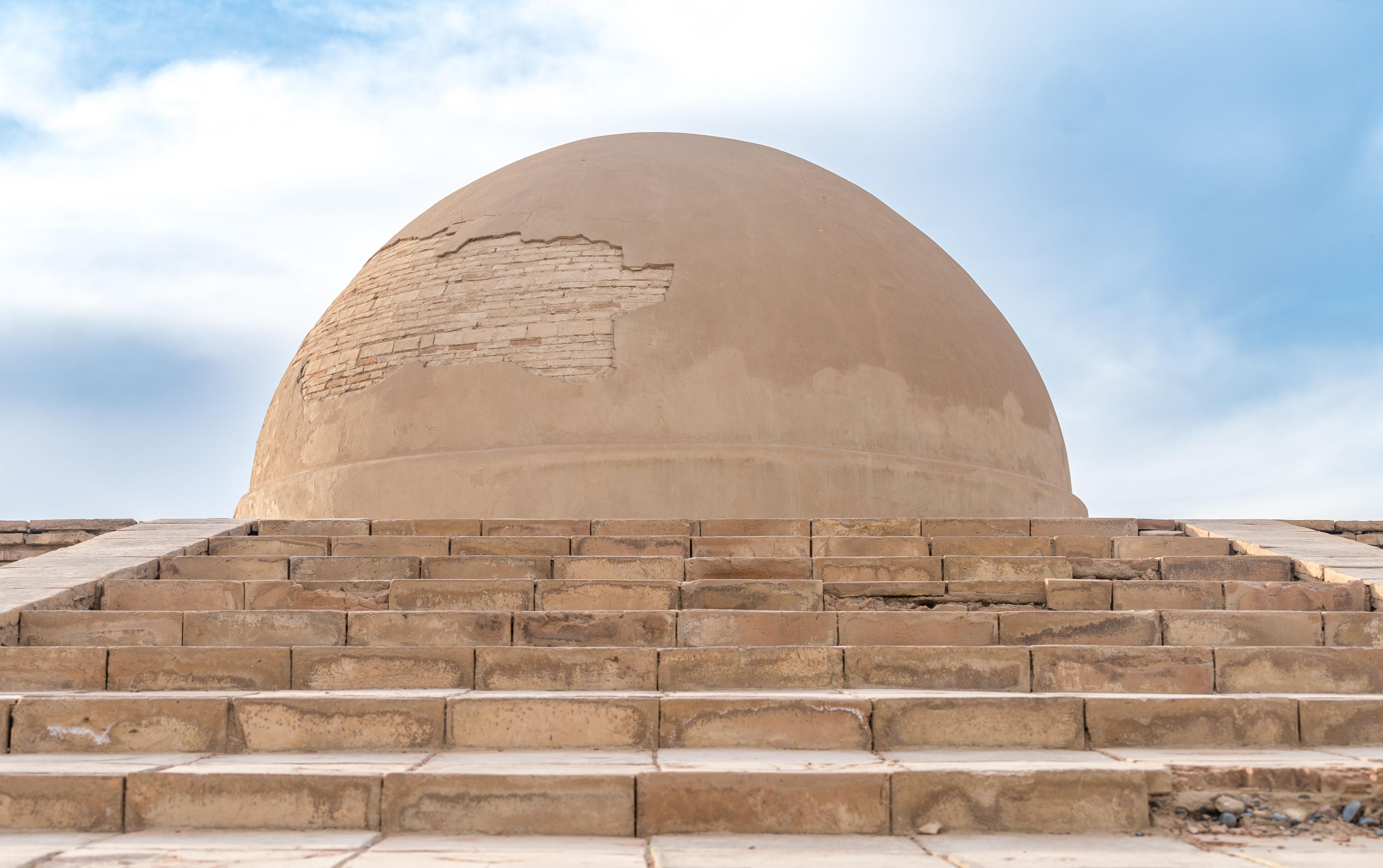
Fayaz Tepa (Fayoz Tepe) is about a kilometre from Kara Tepa and easier to visit. It is a monastery of the 1st to 4th centuries AD, excavated between 1968 and 1976 by the archaeologist Lazar Albaum. The layout is clear: a central courtyard with cells for monks, a refectory, a temple and, just outside, a stupa that has been conserved under a protective dome as part of an international project with UNESCO and Japan.
The most famous find from Fayaz Tepa is a carved limestone relief of the Buddha seated between two monks, now one of the treasures of the State Museum of History of Uzbekistan in Tashkent. Wall paintings from the site are also in museum collections.
Plan about 45 minutes here. It is usually visited together with Kara Tepa on a single ticket.
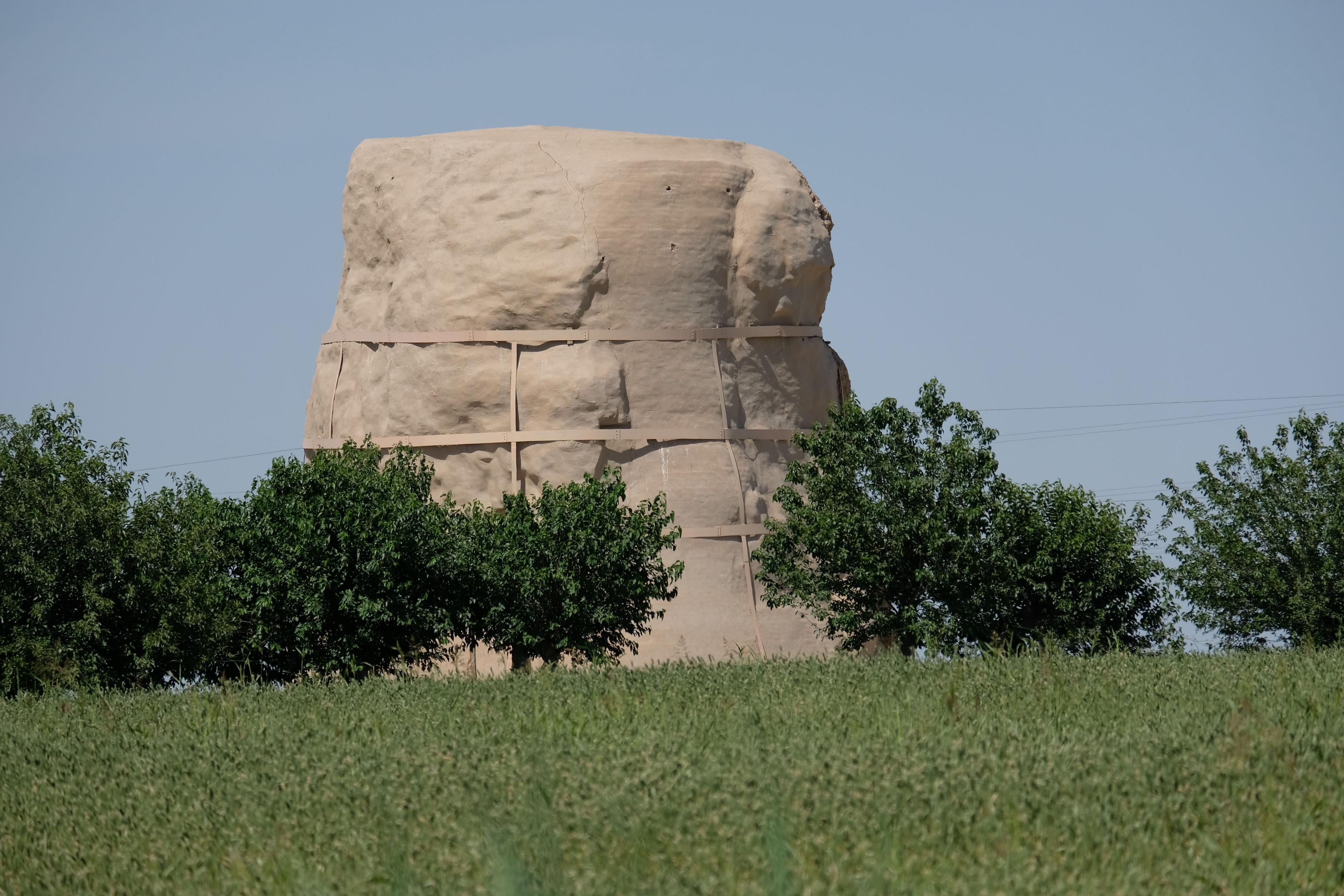
The Zurmala stupa is a solitary tower of mud brick standing in fields on the edge of Termez. Built around the 1st or 2nd century AD, it is about 13 metres high and roughly 14 metres across, and it is often described as the oldest standing structure in Uzbekistan. Its outer facing has long gone, but archaeologists believe it was once faced with fired brick and stone carved with Buddhist scenes.
There is little to do here but look and take photographs, so 15 minutes is enough. It is free to visit and open in daylight hours, and it makes a good stop on the drive between the city and the Buddhist monasteries. Go in late afternoon, when the low light picks out the brickwork.
Al-Hakim at-Termizi and Sultan Saodat
Termez is also a major place of Islamic pilgrimage, and many Uzbek visitors come for the shrines rather than the Buddhist ruins.
Al-Hakim at-Termizi was a 9th-century Sufi scholar and mystic, one of the earliest writers on the nature of sainthood in Islam, and he is regarded locally as the spiritual patron of Termez. His mausoleum complex stands on the bank of the Amu Darya near the citadel of Old Termez, with buildings from the 11th to the 15th centuries, a mosque and a garden. It was restored in 2001 and 2002. Pilgrims come throughout the week, especially on Fridays and during religious holidays.
Sultan Saodat is an ensemble of mausoleums, mosques and later buildings put up between about the 11th and 17th centuries around the tombs of the Termez sayyids, a family descended from the Prophet that was powerful here for centuries. Its brickwork, domes and arches show how Islamic architecture in the region developed before the Timurids.
Nearby is Kyrk Kyz, the Forty Girls, an early medieval square building of mud brick whose purpose, palace, caravanserai or religious house, is still debated.
Entry to the shrines is free. Dress modestly: shoulders and knees covered, and women should bring a scarf for the mosque and the tomb chambers. Remove your shoes where others do, speak quietly and ask before photographing people at prayer. Our guide to culture and etiquette in Uzbekistan has more on visiting holy sites.
The Archaeological Museum of Termez
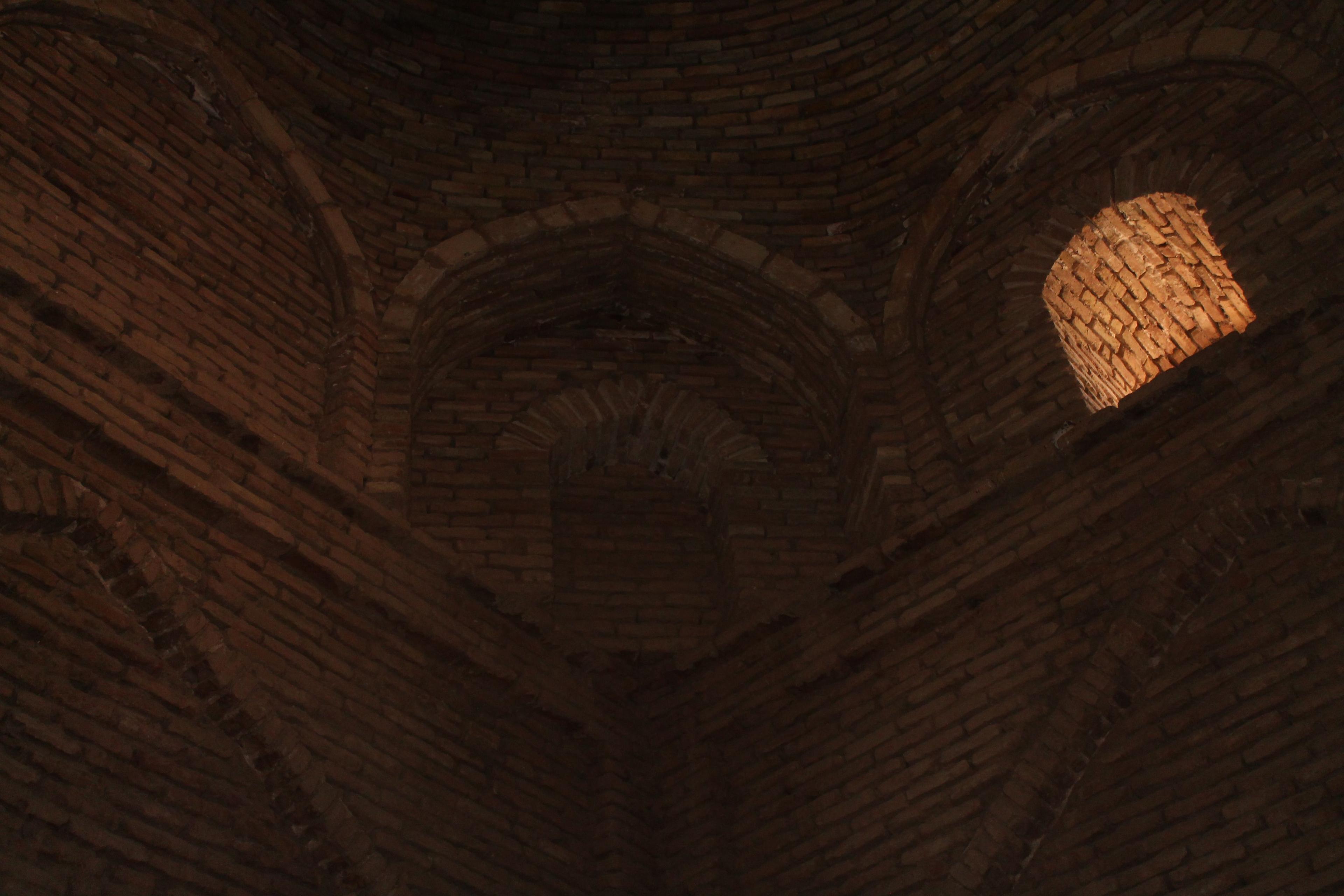
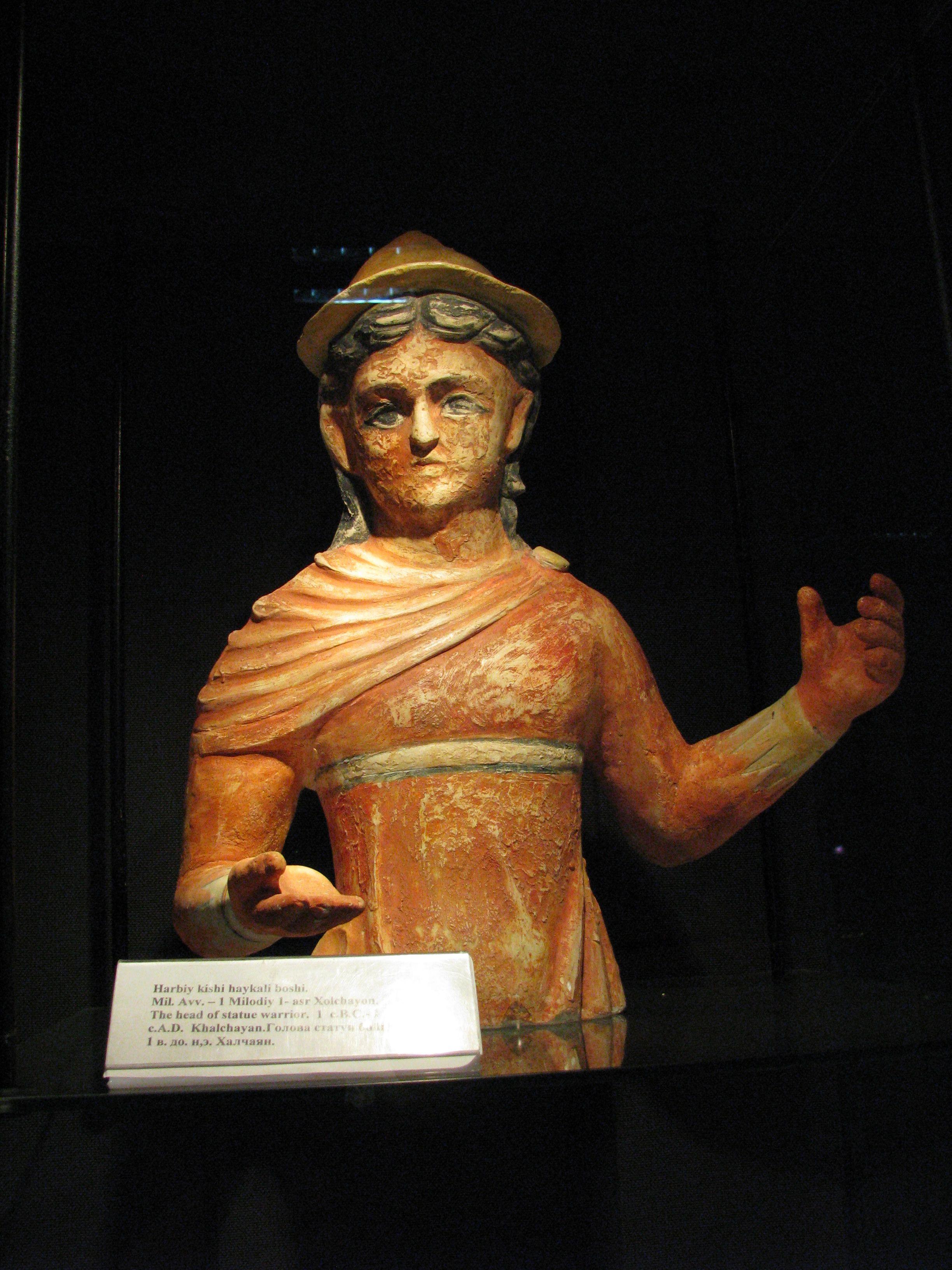
Visit the Archaeological Museum before the sites if you can. Opened in 2002, it is one of the best regional museums in Uzbekistan, and its galleries take you from the Stone Age to the Middle Ages using finds from across Surkhandarya: Buddhist sculpture and painting from Kara Tepa and Fayaz Tepa, terracotta figures from the Kushan palace at Khalchayan, coins, ceramics, ossuaries and objects from the Bronze Age settlement of Sapalli Tepa.
Practical details as of 2026: the museum is on At-Termiziy Street, tickets are roughly 25,000 to 30,000 soum, and it is usually open from 09:00 to 18:00. Some listings show it closed at weekends, so check before you go. Allow 90 minutes. A guide adds a great deal, because English labelling is limited.
More sites near Termez: Kampyr Tepa and Imam at-Termizi
With an extra half day, two more places are worth the drive.
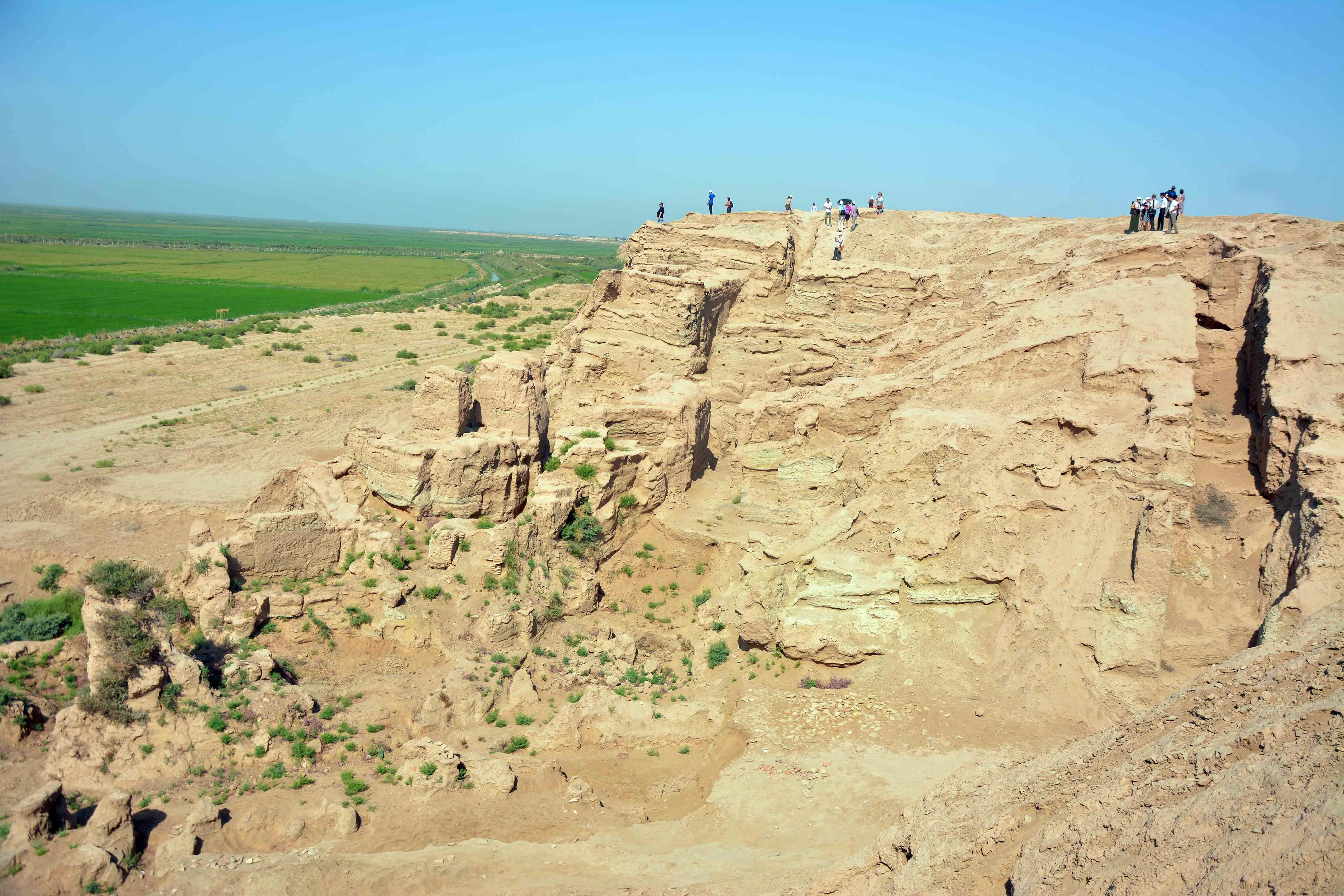
Kampyr Tepa is a fortified town on the Amu Darya about 30 to 35 km west of Termez, founded in the Hellenistic period after Alexander's campaigns and occupied into the Kushan era. Some archaeologists link it to a river port mentioned in ancient sources. Its walls, streets and houses are spread along a bluff above the river, and there is no shade, so go early and carry water. Allow at least two hours. It also lies in the border area; check access with your operator.
The memorial complex of Imam at-Termizi, the 9th-century compiler of one of the six canonical collections of hadith, lies near the town of Sherobod, about an hour north of Termez. It is a very important pilgrimage site and has been rebuilt and enlarged in recent years. The same dress code applies.
How to get to Termez: flights, train and road
Flights. The quickest way is to fly from Tashkent. Uzbekistan Airways and other local carriers operate the route, with several flights a week and often more than one a day in busy periods. The flight takes about 1 hour 20 minutes. Termez airport is a short taxi ride from the centre. Our article on domestic flights in Uzbekistan explains booking and baggage.
Train. An overnight train runs from Tashkent to Termez with sleeper carriages. In 2026 it typically leaves Tashkent in the evening, around 21:00, and arrives in Termez the next morning, around 10:45, a journey of more than 13 hours. Buy tickets on railway.uz; schedules change, so check the current timetable.
What about a fast train? In February 2026 the government announced plans to introduce modern high-speed trains between Tashkent and Termez, and work to upgrade the line through Boysun is under way. As of November 2026 no high-speed service is running, so ignore any blog that tells you otherwise until railway.uz lists it.
Road. From Samarkand the drive runs over the Takhtakaracha Pass to Shakhrisabz, then south through Guzar and the mountains near Boysun. It takes most of a day, but the scenery is the best of any route in southern Uzbekistan. A private car lets you stop at Shakhrisabz on the way (see our Shakhrisabz day trip guide) and in Boysun.
Termez is also the crossing point to Afghanistan over the Friendship Bridge to Hairatan, and road connections lead east towards Tajikistan. Our article on Uzbekistan's border crossings covers the rules.
Boysun: mountains and living traditions
Boysun (Baysun) is a mountain district about two hours' drive north of Termez on the road to Samarkand. Its villages keep a mix of customs, songs, rituals and crafts with roots in Zoroastrian, Turkic and Islamic traditions, and in 2001 UNESCO proclaimed the Cultural Space of Boysun District a Masterpiece of the Oral and Intangible Heritage of Humanity; it was inscribed on the Representative List in 2008. The Boysun Bahori folk festival, held in spring in some years, brings performers from across the country.
For walkers, the Boysuntau range offers gorges, walnut groves and mountain villages. In 1938 the archaeologist Alexei Okladnikov found the burial of a Neanderthal child in the Teshik-Tash cave in these mountains, one of the most important Palaeolithic finds in Central Asia; the cave is reached on foot with a local guide. A night in a village guesthouse is the best way to see Boysun. It also fits neatly into a road trip between Termez and Samarkand.
A two-day Termez itinerary
This plan assumes you arrive the evening before, by plane or the overnight train, and that your guide has arranged the Kara Tepa pass in advance.
Day 1: ancient Termez - Morning: the Archaeological Museum, for the background and the best finds. - Late morning: Fayaz Tepa and Kara Tepa while it is still cool. - Lunch in the city. - Afternoon: the Al-Hakim at-Termizi complex on the river and the ruins of the Old Termez citadel beside it. - Late afternoon: the Zurmala stupa in the low light.
Day 2: shrines and the river - Morning: Sultan Saodat and Kyrk Kyz. - Late morning: drive west to Kampyr Tepa, if access is confirmed. - Afternoon: the Imam at-Termizi complex near Sherobod, then continue north to Boysun for the night, or return to Termez for an evening flight.
In summer, move every outdoor visit to before 11:00 or after 16:00 and spend the middle of the day in the museum or your hotel.
Best time to visit and how many days you need
Termez is the hottest city in Uzbekistan. Summer temperatures regularly pass 40 degrees Celsius from June to August, which makes walking around open archaeological sites hard work. The best months are March to May and October to November. Winter is mild and quiet, with occasional rain. Our Uzbekistan weather by month guide has more detail.
How many days? Two full days in Termez covers the Buddhist sites, the shrines and the museum at a comfortable pace. Add a day for Kampyr Tepa and Imam at-Termizi, and one or two days for Boysun if you travel by road. A good plan is to fly one way and drive the other, via Boysun and Shakhrisabz to Samarkand.
Planning Termez with TourEast
We do not run a fixed group tour to Termez, but we arrange private trips to Surkhandarya with a licensed local guide, help with the border-zone permit for Kara Tepa, and road transfers via Boysun and Shakhrisabz. Tell us what interests you, Buddhist archaeology, Islamic shrines or mountain villages, and we will build it into a custom itinerary.