Zhang Qian's reports on Fergana and its heavenly horses, Sogdian merchants in Chang'an, Xuanzang's passage through Tashkent, Samarkand and Termez, Tang envoys on the Afrasiyab murals, the Ming diplomat Chen Cheng and the Chinese legends of Samarkand, each mapped to a site you can visit.
Facts, prices and schedules checked on November 4, 2026
For two thousand years the land that is now Uzbekistan was the far west of the Chinese world and the far east of the Persian one. Zhang Qian reached the Fergana Valley in the second century BC and came home with stories of horses that sweated blood. Sogdian merchants from Samarkand ran the caravan trade into Chang'an and settled there by the thousand. The monk Xuanzang walked through Tashkent, Samarkand and Termez on his way to India. Tang envoys appear in paint on the walls of a Samarkand palace, and a Ming diplomat left the most detailed description of Timurid Central Asia in any language.
This guide follows that Chinese Silk Road history in Uzbekistan chronologically and maps each story to a place you can stand in today. Our broader Silk Road history guide and our Uzbekistan history timeline give the wider context; here the focus is on the connection between China and the oasis cities. Mandarin-speaking guides can be arranged on request for any of our tours.
Zhang Qian and the heavenly horses of Dayuan (2nd century BC)
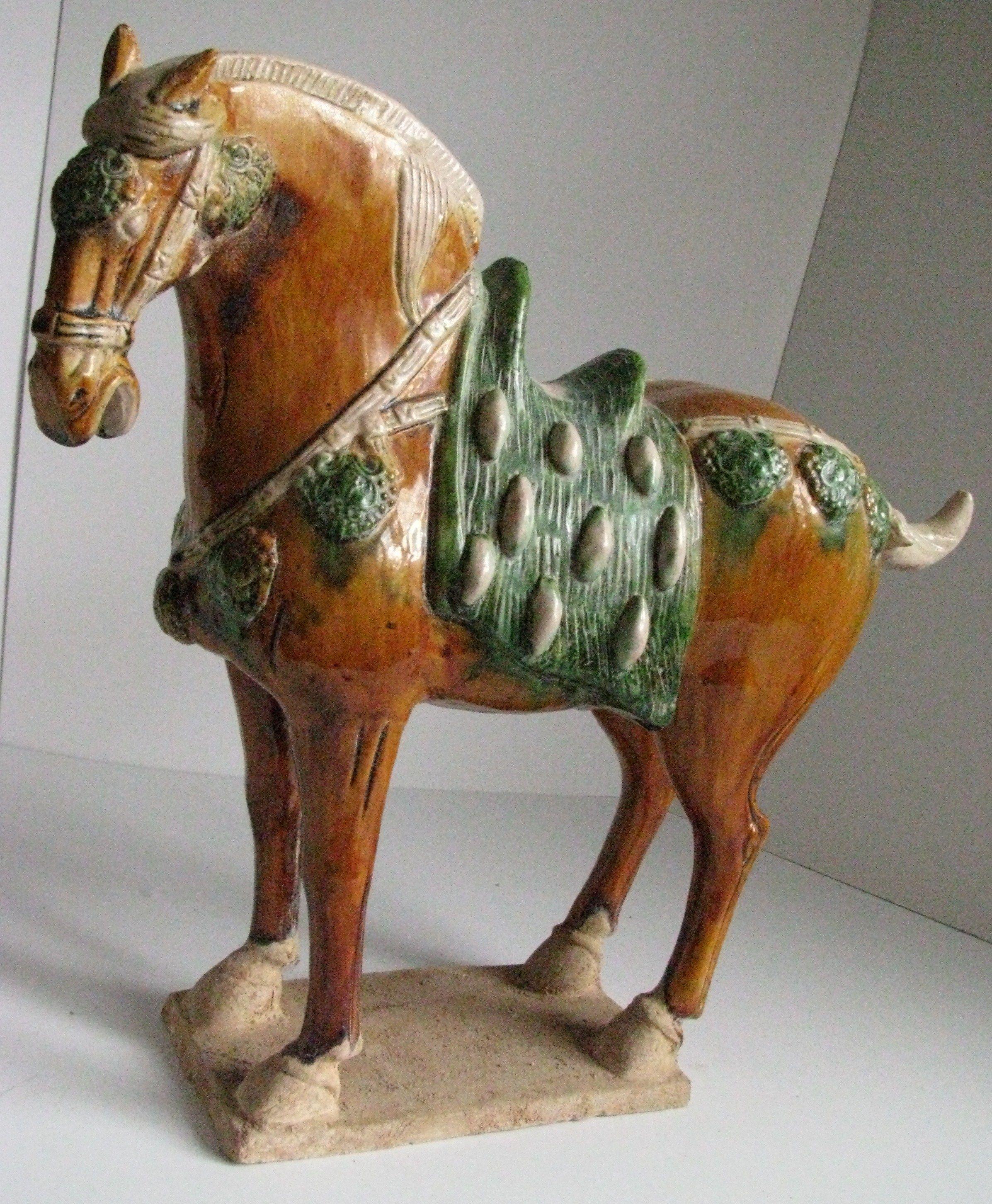
In 138 BC the Han emperor Wu sent an officer named Zhang Qian west to find allies against the Xiongnu nomads. He was captured and held for about ten years, escaped, and eventually reached Dayuan, the Chinese name for the Fergana Valley, before returning to the capital around 126 BC. His report, preserved by the historian Sima Qian, is the first Chinese account of Central Asia: walled towns, irrigated fields, grapes and alfalfa, and above all horses, tall and fast, which the Chinese called tianma, heavenly horses, and believed to sweat blood.
The horses mattered because the Han cavalry rode small steppe ponies. When Dayuan refused to sell, the emperor sent an army under Li Guangli; the first campaign failed, the second, around 104 to 101 BC, besieged the Dayuan capital and brought back breeding stock. Chinese sources call that capital Ershi; scholars have proposed sites near modern Andijan and elsewhere in the valley, and the identification is still debated.
Where to see it: the Fergana Valley itself, still the most fertile and densely settled part of Uzbekistan. The regional museums in Andijan and Fergana hold Han-period finds, and the horse remains the valley's symbol. Our Fergana Valley guide covers Margilan silk, Rishtan ceramics and the Kokand palace, which sit on the same ground Zhang Qian described.

Sogdian merchants in Chang'an (4th to 8th centuries)
The people of Samarkand, Bukhara and the Zarafshan valley in the first millennium were Sogdians, Iranian-speaking traders whose network ran from Samarkand to the Chinese capital. The Sogdian Ancient Letters, found near Dunhuang and written around AD 313, are business correspondence between Samarkand and merchants in China. By the Tang period there were Sogdian communities in Chang'an, Luoyang and along the Hexi corridor, with their own temples and surnames: An for Bukhara, Kang for Samarkand, Shi for Tashkent or Kesh.
The Sogdians brought more than silk. They carried Buddhism, Manichaeism and Nestorian Christianity east, and Chinese paper and ideas west; the famous story that Chinese papermakers captured at the Battle of Talas in 751 taught the craft to Samarkand belongs to this exchange. The most famous Sogdian in Chinese history was An Lushan, the Tang general of Sogdian-Turkic descent whose rebellion in 755 nearly destroyed the dynasty.
Where to see it: the Afrasiyab hill in Samarkand, the site of the Sogdian city, and the Afrasiyab Museum at its foot. The Konigil paper workshop outside Samarkand makes mulberry-bark paper in the old way. Across the border in Tajikistan, Panjakent's excavated Sogdian town and murals are a day trip from Samarkand; our Panjakent guide explains the crossing.
Xuanzang in Tashkent, Samarkand and Termez (AD 630)
The Buddhist monk Xuanzang left Chang'an in 629 without permission, crossed the Tian Shan and in 630 was received by the Western Turkic khagan near Suyab, in present-day Kyrgyzstan. From there his route ran west and south-west through what is now Uzbekistan, and his account, the Great Tang Records on the Western Regions, dictated after his return in 645, describes each stop.
He passed through Zheshi, the Chach oasis around modern Tashkent, then crossed the steppe to Samojian, Samarkand. He found a prosperous city whose king and people followed the Zoroastrian religion and where two Buddhist monasteries stood empty; the Records say the king, initially cool, was won over by Xuanzang's preaching, though historians suspect the welcome had more to do with politics than piety. He went on to Kesh, today's Shakhrisabz, and then through the Iron Gate, a narrow defile in the hills of Surkhandarya near Boysun, into Tokharistan. At Termez on the Amu Darya he recorded a dozen monasteries and around a thousand monks, the last great Buddhist centre before the Hindu Kush.
Where to see it: in Samarkand, the Afrasiyab hill where the Sogdian city stood. In Surkhandarya, the Buddhist sites around Termez, Fayaz Tepa and Kara Tepe, were the monasteries of Xuanzang's time, and the Termez Archaeological Museum holds their sculpture. The Iron Gate gorge lies on the Shakhrisabz to Termez road. Our Termez and Surkhandarya guide has the practical details; it is a short flight from Tashkent.

Tang envoys on the Afrasiyab murals (7th century)
In 1965 a bulldozer cutting a road across the Afrasiyab hill exposed a painted hall. The murals, now in the Afrasiyab Museum, date from the mid-seventh century, around 650 to 660, and are the finest surviving Sogdian painting. An inscription names King Varkhuman of Samarkand, who was recognised by the Tang court as governor of the region around 650.
The western wall shows a procession of foreign envoys bringing gifts: Turks, Koreans from Goguryeo, identified by the feathers in their caps, mountain peoples, and at the centre a group of Chinese ambassadors in Tang dress carrying bolts of silk and a string of silkworm cocoons. The northern wall is more remarkable still: it is a Chinese scene, with a lady in a boat among musicians and a horseman hunting leopards, which most specialists read as the Tang empress on the water and the emperor at the hunt. Whether they represent Gaozong and Wu Zetian specifically is debated, but there is no doubt that a seventh-century Samarkand ruler wanted the Chinese court painted on his wall.
Where to see it: the Afrasiyab Museum in Samarkand, open daily, a short taxi ride from the Registan. The murals are displayed in a dedicated hall with a video in several languages, Chinese among them. Allow an hour, and walk afterwards onto the hill behind the museum, where the ramparts of the old city are still visible. Our guide to Samarkand beyond the Registan covers the museum, the observatory and the surrounding sites.
Timur, the Ming and the Chinese legends of Samarkand (14th to 15th centuries)
Timur's relations with China ran from tribute to threatened war. In the 1390s he sent envoys and horses to the Hongwu emperor; by 1404 he had decided on a campaign against the Ming and set out eastward with a large army. He died at Otrar, on the Syr Darya in what is now Kazakhstan, in February 1405, and the invasion died with him.
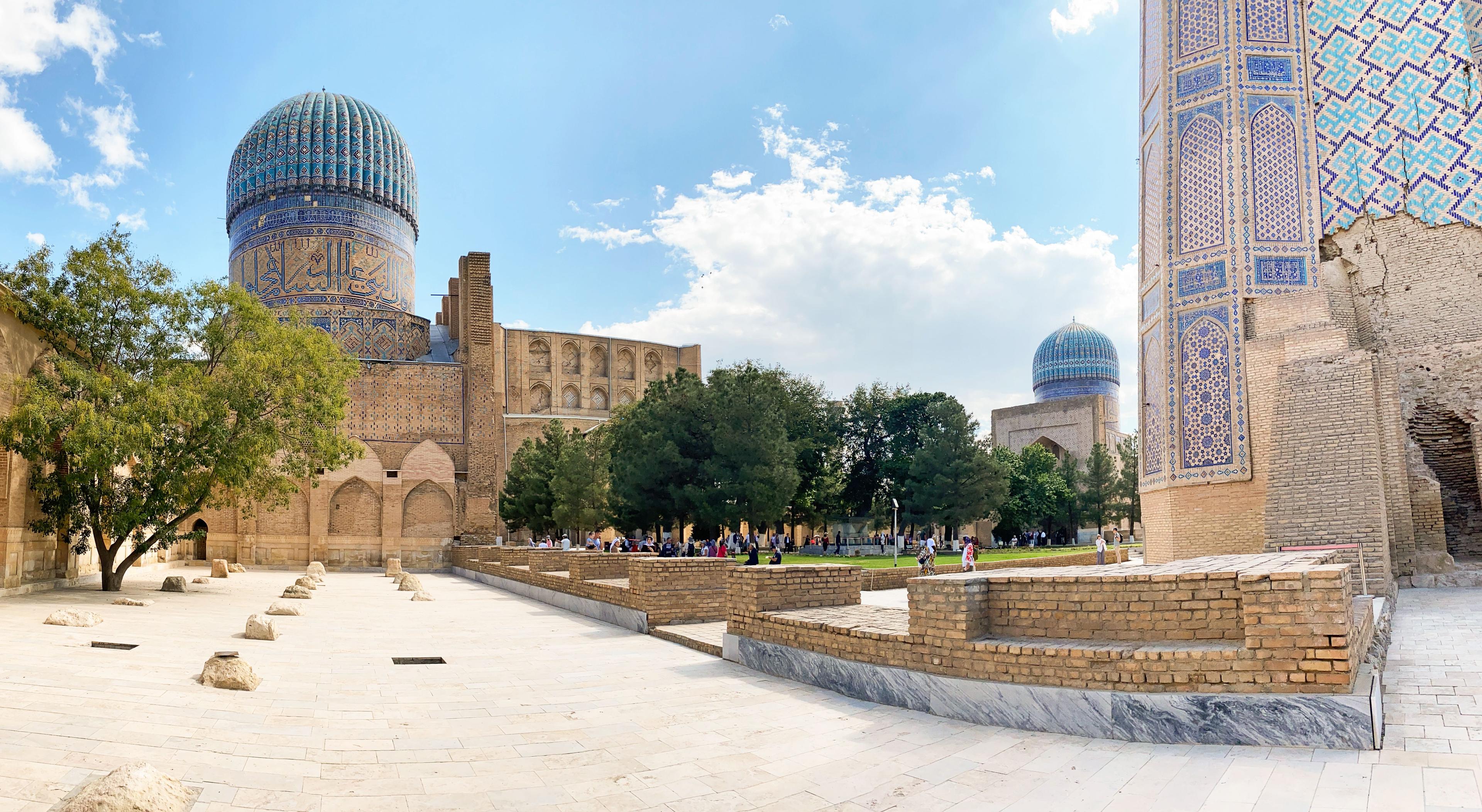
Samarkand folklore remembers China differently. The Bibi-Khanym Mosque is popularly said to have been built by Timur's Chinese wife; in fact Saray Mulk Khanum, his chief wife, was a Chagatai princess of Mongol descent, and the Chinese princess is a legend, though a persistent and much-told one. The dark jade slab over Timur's grave in the Gur-e-Amir is likewise said in local tradition to have come from a palace of the Chinese emperors before it served as a Mongol throne. Guides will tell both stories; it is worth knowing which is history.
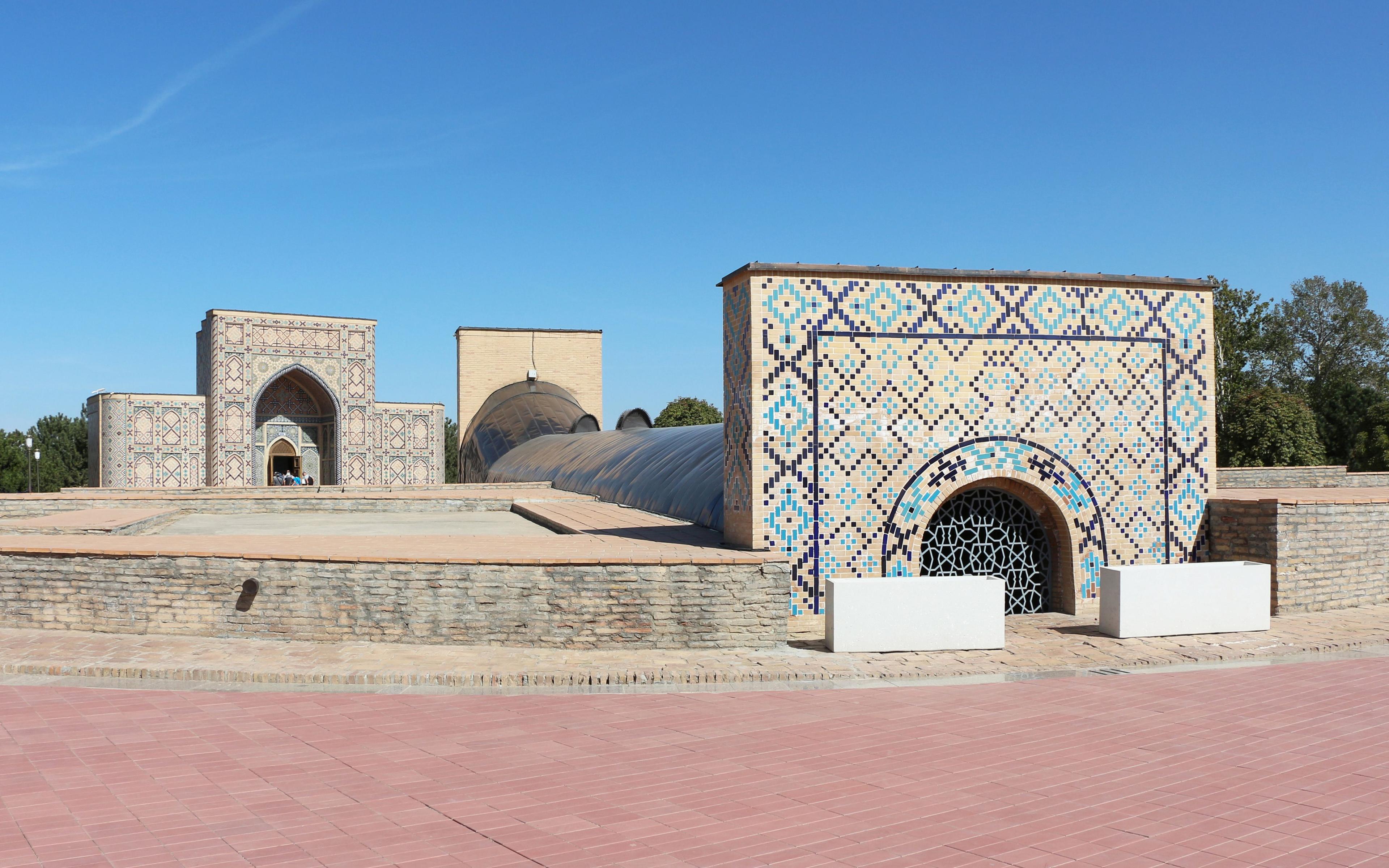
Under Timur's son Shahrukh relations became cordial. The Ming envoy Chen Cheng travelled to Herat and Samarkand in 1414, again in 1416 and 1420, and his report, the Xi Yu Fan Guo Zhi, has chapters on Samarkand, Bukhara, Termez, Tashkent and Shahrukhiya among eighteen places. It describes the markets, the irrigation, the paper and the manners of Timurid Central Asia at the time when Ulugh Beg governed Samarkand and built his observatory. A Timurid embassy went the other way in 1419 to 1422, and its painter, Ghiyath al-Din Naqqash, left a diary of Beijing.
Where to see it: the Bibi-Khanym Mosque and Gur-e-Amir in Samarkand, and the Ulugh Beg Observatory with its museum. Our guide to Gur-e-Amir and Bibi-Khanym tells the legends and the facts side by side; our Amir Timur guide covers the man.
A Chinese-history route through Uzbekistan
The sites above fall naturally into a week, in roughly chronological order from east to west:
- Fergana Valley, 2 days: Andijan, Margilan and Rishtan, with the regional museums for the Dayuan period and the Kokand palace. Reached from Tashkent by train or over the Kamchik Pass.
- Tashkent, 1 day: the State Museum of History for Sogdian and Kushan finds, the Hazrati Imam complex and Chorsu Bazaar.
- Samarkand, 2 days: the Afrasiyab Museum and hill, Bibi-Khanym, Gur-e-Amir, the Ulugh Beg Observatory, the Konigil paper mill and the Registan.
- Termez, 1 to 2 days: Fayaz Tepa, Kara Tepe, the Zurmala stupa, the Archaeological Museum and, on the way from Samarkand by road, the Iron Gate near Boysun.
- Bukhara, 2 days: not a Chinese-history site in the strict sense, but the city whose merchants carried the An surname to China, and the obvious end to the route.
The Silk Road history section of our site and the Great Silk Road tour follow a similar line.
Practical notes for Chinese-speaking travellers
Chinese citizens with ordinary passports have entered Uzbekistan visa-free for up to 30 days since 1 June 2025; Hong Kong and Macau passport holders have shorter visa-free stays. Direct flights connect Tashkent with Beijing, Urumqi and other Chinese cities, and there are overland routes via Kashgar and Kyrgyzstan. Our guide to travelling to Uzbekistan from China covers flights, payment apps, SIM cards and the border options in detail.
Museum labels are usually in Uzbek, Russian and English; the Afrasiyab Museum's film has a Chinese version. For the rest, a Mandarin-speaking guide makes the difference between seeing the murals and understanding them. We can arrange one on request for private tours and for the Samarkand and Termez days of a longer itinerary.

Exploring the China connection with TourEast
Our Silk Road itineraries already pass through most of these sites; for travellers who want the Chinese thread drawn out, we can build a private route from the Fergana Valley to Termez with the right museums, a Mandarin- or English-speaking guide who knows the sources, and the trains and flights that make a week of it. Tell us your dates and your interests and we will plan it.
Frequently asked questions
Watch
Photo gallery