Things to do in Samarkand beyond the Registan: the Ulugh Beg Observatory, Afrosiyob murals, the tomb of Daniel, Siab Bazaar, Hazrat Khizr, the silk-carpet workshop, Konigil paper mill and the Eternal City, with 2026 tickets, transport and timings.
Facts, prices and schedules checked on November 4, 2026
Most visitors give Samarkand a day and a half: the Registan, Shah-i-Zinda, Gur-e-Amir and Bibi-Khanym, then the train to Bukhara. That covers the famous postcards, but it misses half the city's story. The best things to do in Samarkand beyond the Registan take you to the hill where the city stood for two thousand years before the Mongols, to the trench of a 15th-century observatory, to a pilgrimage site shared by three faiths, and out to the villages where paper and silk carpets are still made by hand.
This guide covers the Samarkand sights beyond Registan that are worth adding when you have a second or third day: the Ulugh Beg Observatory, the Afrosiyob Museum and its Sogdian murals, the Mausoleum of Daniel (Khoja Doniyor), Siab Bazaar, the Hazrat Khizr Mosque, the silk-carpet workshop, the paper mill at Konigil and the Eternal City. For each one you will find what it is, how to get there, how long to spend and what a ticket costs as of November 2026.
Prices for foreign visitors rose in 2025 and may change again. Treat the figures below as a guide, carry cash in som, and check at the ticket office.
How many days do you need in Samarkand?
Two full days cover the classic monuments without rushing. A third day is what this article is about, and it is the day many travellers later say they enjoyed most, because it moves at a gentler pace and shows how people in Samarkand live and work today.
Geography makes planning simple. Most of these sights sit in an arc north-east of the Registan, along Tashkent Street and around the Afrosiyob hill:
- On foot from Bibi-Khanym: Siab Bazaar, the Hazrat Khizr Mosque and the silk-carpet workshop, all within 10 minutes' walk of each other.
- A short taxi ride further: the Afrosiyob Museum, the Mausoleum of Daniel and the Ulugh Beg Observatory, each 5 to 10 minutes apart by car.
- Out of town: the Konigil paper mill (about 20 minutes by car) and the Eternal City at the Silk Road Samarkand complex (about 20 minutes).
City taxis booked through Yandex Go are cheap and reliable, and drivers know all of these places by name. Our guide to getting around Uzbekistan's cities explains how the apps work. If you are short of time, a car with a driver for half a day links the outlying sights efficiently.

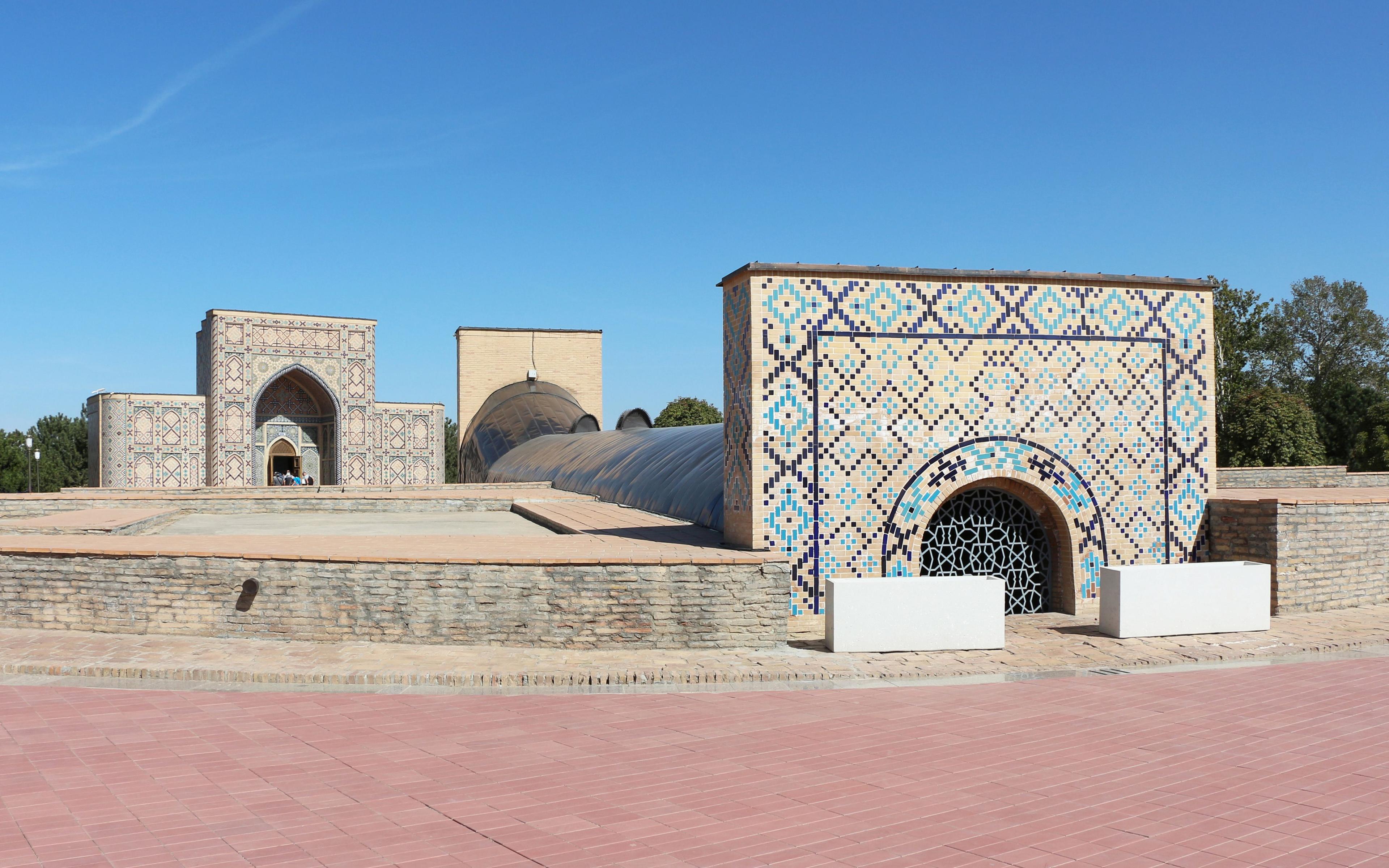
Ulugh Beg Observatory: tickets, history and what you see
Ulugh Beg, Timur's grandson, ruled Samarkand for about forty years, but he is remembered above all as an astronomer. In the 1420s he built an observatory on Kohak hill, north-east of the city. Its main instrument was a giant meridian arc, the Fakhri sextant, with a radius of about 40 metres, the largest astronomical instrument in the world at the time. Working here, his astronomers compiled the Zij-i Sultani, a catalogue of about 1,000 stars, and measured the length of the year with remarkable precision.
After Ulugh Beg was murdered in 1449, the observatory was abandoned and taken apart. Its location was forgotten until the archaeologist Vasily Vyatkin found the remains in 1908. What you see today is the lower, underground section of the sextant: a curved trench lined with marble rails, now covered by a protective arch. It is a modest sight in itself, so do not expect a tower.
The small museum beside it puts the ruin in context, with a cross-section model of the original three-storey building, astronomical instruments and copies of manuscripts. A monument to Ulugh Beg stands on the terrace.
- Ticket: about 40,000 som for foreign adults (raised from 25,000 som in July 2025).
- Hours: typically 9:00 to 18:00 or 19:00. In September 2026 the Uzbek tourism committee announced evening opening until 23:00 as part of Samarkand's night-tourism programme; check on the day.
- Getting there: about 3 km north-east of the Registan on Tashkent Street. Taxi 10 to 15 minutes; city buses also stop outside.
- Time needed: 45 minutes to an hour, longer if you enjoy the history of science.
Go with a guide or read up beforehand. The sextant makes sense once someone explains how a 40-metre arc could measure the sun's position to a fraction of a degree.
Afrosiyob Museum and the Ambassadors' Painting
Before Samarkand moved south to where the Registan stands, the city lay on the Afrosiyob hill, a plateau of grassy mounds just north of Siab Bazaar. This was Marakanda, the city Alexander the Great took in 329 BC, and later the capital of the Sogdian merchants who ran much of the Silk Road trade. It was inhabited for well over a thousand years until Genghis Khan's army destroyed it in 1220. Our Silk Road history article covers that longer story.
The Afrosiyob Museum, also spelled Afrasiab, stands on the edge of the site. Its treasure is the 7th-century wall painting known as the Ambassadors' Painting, found in 1965 when a road was cut through the mound. The murals were painted around 648 to 651 and decorated a reception hall of the palace of King Varkhuman of Samarkand.
What to look for:
- West wall: foreign envoys bringing gifts to the king, among them Chinese silk bearers and two figures many scholars identify as envoys from Korea.
- North wall: a Chinese scene with an empress in a boat and an emperor hunting.
- South wall: a ceremonial procession with elephants, camels and horses, thought to be heading to a royal funeral.
The colours have faded and parts are lost, but the scale is striking: you stand in a room the size of the original hall, surrounded by the procession. The museum was restored with help from Korean specialists, and its other rooms show pottery, ossuaries, coins and finds from the site.
- Ticket: reports for foreign visitors range from 25,000 to 40,000 som; there may be a small extra charge for photography.
- Hours: usually 9:00 to 17:00 or 18:00, with extended evening hours announced for 2026.
- Time needed: 45 minutes for the museum. Add 20 to 30 minutes if you want to walk out onto the mounds for views back towards Bibi-Khanym and Shah-i-Zinda.
Mausoleum of Daniel (Khoja Doniyor): the 18-metre tomb
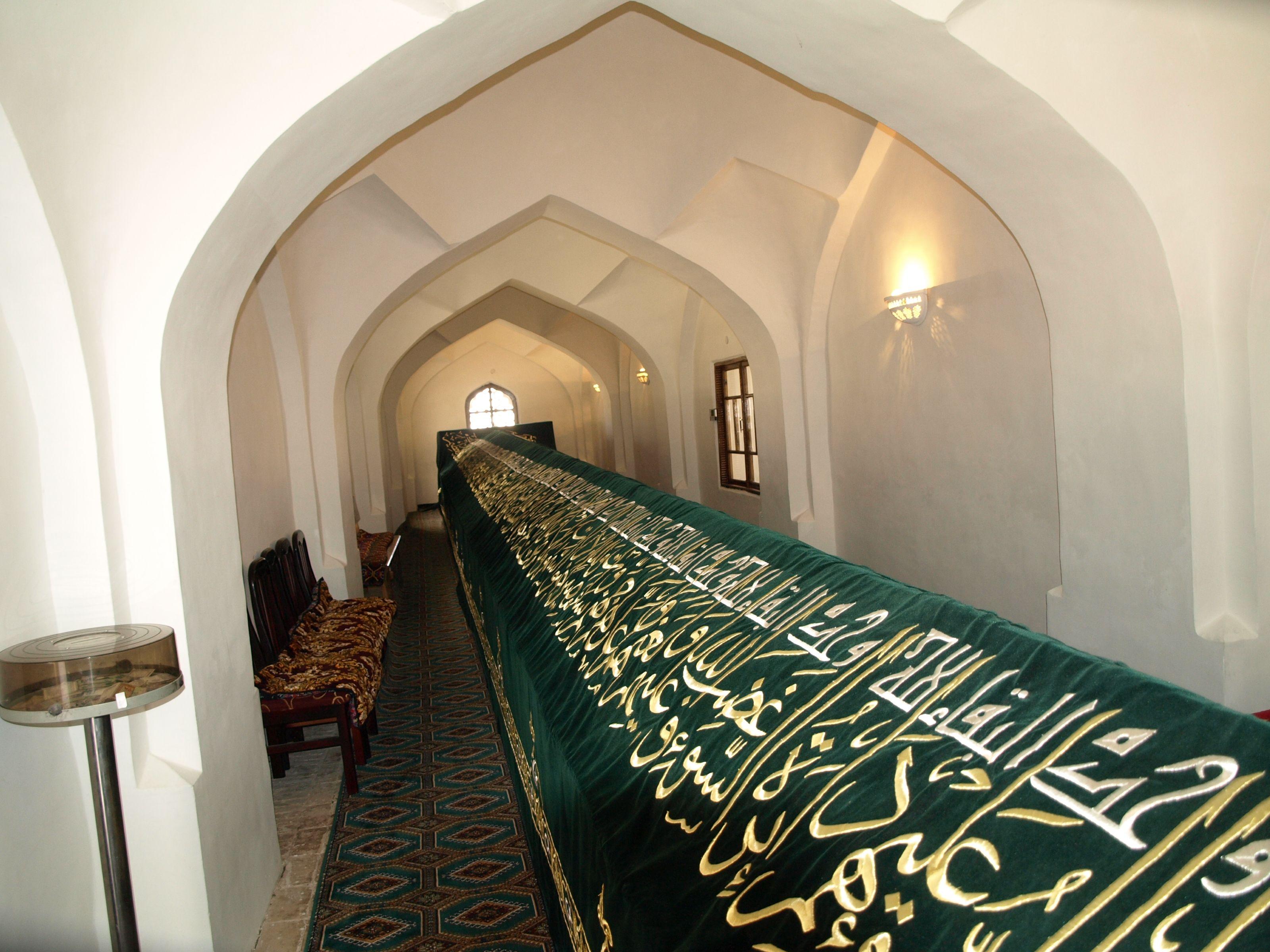
On the north-eastern slope of Afrosiyob, above the Siab stream, a long, low building with five small domes holds one of Samarkand's most unusual graves. Local tradition identifies it as the resting place of the prophet Daniel, known in Uzbek as Khoja Doniyor. According to legend, Timur brought the relics back from his campaigns in western Persia.
The sarcophagus is about 18 metres long. A popular local story says the body keeps growing, so the tomb has been lengthened over time. The present building dates from the early 20th century on an older site.
Khoja Doniyor is an active pilgrimage place, visited by Muslims, Christians and Jews, and the atmosphere is quiet and devotional. Families come to pray, and a holy spring at the foot of the steps is believed to bring blessings. Near the entrance is an old pistachio tree; visitors are told that it dried out and then came back to life after a blessing by the Russian Orthodox patriarch in 1996.
- Ticket: about 30,000 som for foreign adults.
- Dress: shoulders and knees covered for everyone; women may want a scarf. Speak quietly and ask before photographing people at prayer.
- Getting there: about 1.5 km north of the Afrosiyob Museum. The walk is pleasant in cool weather; otherwise a taxi takes 5 minutes.
- Time needed: 30 to 45 minutes, including the walk down to the spring and back up the steps.
The view from the terrace across the river valley is one of the calmest in the city.
Siab Bazaar: what to buy and when to go
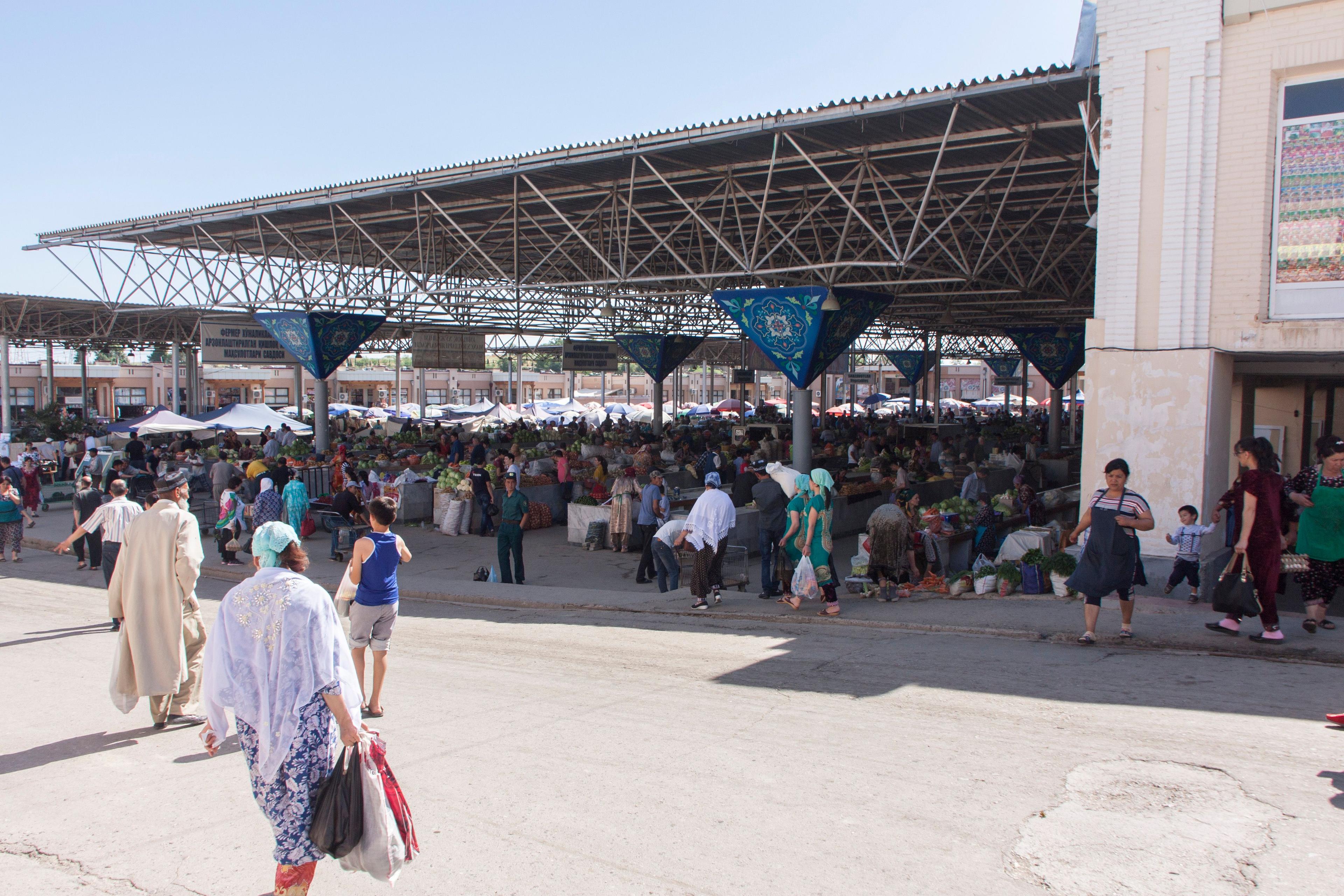
Siab (also Siyob) Bazaar is Samarkand's main market and covers more than five hectares right beside the Bibi-Khanym Mosque. It is free to enter and open from early morning. Several sources say it is closed on Mondays, so plan your bazaar visit for another day.
What to look for:
- Samarkand bread: dense, glazed round loaves stamped with patterns, sold from stacks and prams. Samarkand non is famous across Uzbekistan and keeps for days.
- Dried fruit and nuts: apricots, raisins, figs, almonds, pistachios and apricot kernels roasted in salt. Tasting is expected before you buy.
- Halva and sweets: nishalda (a white whipped sweet), sesame and nut brittles and rows of boiled sweets.
- Spices and herbs: cumin, barberries and dried chillies for plov at home.
Prices are not fixed, but most stallholders are fair. Agree on the price per kilo before they weigh. Mornings are liveliest and the light is best for photographs; by late afternoon many fruit and vegetable sellers pack up. Under Samarkand's 2026 night-tourism programme the bazaar has been announced as open until midnight, which may change the picture in the evening.
Allow 45 minutes to an hour. If you are curious about Uzbek dishes and ingredients, our Uzbek food guide is good background before you go.
Hazrat Khizr Mosque and the Karimov mausoleum
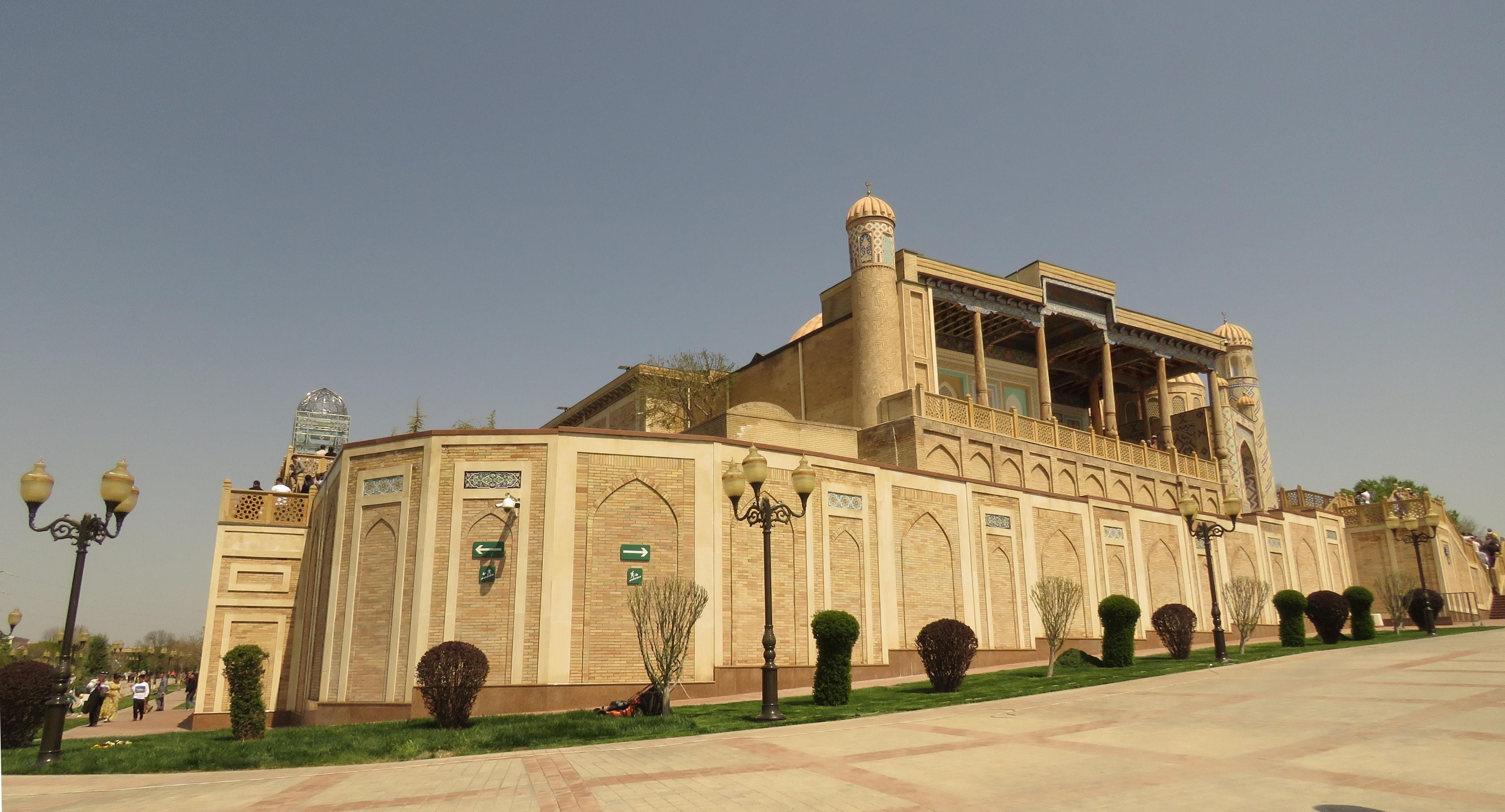
On the hill just across the road from Siab Bazaar stands the Hazrat Khizr Mosque, named after Khizr, the patron of travellers in Muslim tradition. A mosque is said to have stood here since the early 8th century, on the site of an earlier temple near the southern gate of old Afrosiyob. It was destroyed in 1220, and the present building dates from 1854, with the entrance portal, minaret and dome completed in 1919.
It is a working mosque with a beautiful veranda of slender wooden columns and a carved, colourful ceiling. Many travellers come for the view: from the terrace you look across Bibi-Khanym, the domes of the bazaar and towards Shah-i-Zinda, especially fine in late afternoon light.
Beside the mosque is the mausoleum of Islam Karimov, the first president of Uzbekistan, who was buried here in 2016. The memorial complex opened in 2018 and is a place of respect for many Uzbek visitors.
- Ticket: the mosque grounds have generally been free or charged a small fee; entry to the inside of the Karimov mausoleum has been reported at about 15,000 som for foreigners.
- Dress: as for any working mosque, covered shoulders and knees; women should bring a scarf. Avoid visiting during Friday midday prayers.
- Time needed: 20 to 30 minutes.
From here, Shah-i-Zinda is a five-minute walk north. See our Shah-i-Zinda guide for that visit.
Samarkand silk-carpet factory (Hudjum)
A few minutes' walk from Bibi-Khanym, on Hujum Street, the Samarkand-Bukhara Silk Carpets workshop is usually called the Hudjum factory after its street. It is run by the Badghisi family, Turkmen weavers with deep roots in the carpet tradition, and it is one of the best places in Uzbekistan to see a silk carpet being made from start to finish.
A visit is free and usually led by a staff member who speaks English or Russian. The tour typically follows the whole process:
- Unwinding silk from cocoons and spinning thread.
- Dyeing with natural plant dyes, including madder root, walnut shells, onion skins and pomegranate peel.
- Weaving: rows of mostly young women knotting by hand at upright looms, often working from paper patterns. A large silk carpet can take a year or more.
The tour ends in the showroom. There is no obligation to buy, and the staff are used to visitors who simply look. If you do buy, you will receive the documents needed for export; ask about shipping. Our crafts and souvenirs guide explains what to check when buying a carpet in Uzbekistan.
- Ticket: free.
- Hours: daytime working hours; weekday mornings are best to see the weavers at work.
- Time needed: 30 to 45 minutes.
Konigil paper mill (Meros): is it worth the trip?
Samarkand was one of the first places outside China to make paper, from around the 8th century, and Samarkand paper was prized across the Islamic world. The craft died out in the 19th century and was revived in the late 1990s by the Mukhtarov brothers at the Meros workshop in Konigil, a village on the Siab stream about 10 km east of the centre.
The mill sits in a shady garden of mulberry trees, and the process is easy to follow:
- Young mulberry branches are stripped and the inner bark is boiled.
- A wooden water wheel drives heavy pestles that pound the bark into pulp.
- The pulp is lifted onto frames, pressed, dried and then polished by hand with a stone until it shines.
The shop sells notebooks, cards, paper dolls and sheets at modest prices, and they make light, elegant gifts. Konigil also has a linseed oil press, a pottery and teahouses, so you can make an afternoon of it, and the village is noticeably cooler than the city in summer.
- Ticket: about 20,000 to 25,000 som, according to visitor reports from late 2025; some visitors report no ticket office at all.
- Hours: usually until about 18:00.
- Getting there: taxi 20 to 25 minutes each way. Ask the driver to wait or book a return trip in the app.
- Time needed: one hour at the mill, two to three hours for the whole excursion.
Is it worth it? Yes, if you like crafts, have a third day, or travel with children, who usually enjoy the water wheel. It is the easiest out-of-town trip from Samarkand.
Eternal City (Boqiy Shahar) at Silk Road Samarkand
The Eternal City, Boqiy Shahar in Uzbek, is a new historical and ethnographic park on the eastern edge of Samarkand, part of the Silk Road Samarkand tourist complex that opened in 2022. Over about 11 hectares, architects have built streets and squares in the styles of different regions of Uzbekistan: a Samarkand street with a triumphal arch, a Fergana quarter, and Bukhara and Khiva sections with domes, minarets and carved wooden doors.
Be clear about what it is. Nothing here is old; it is a modern, well-built reconstruction. Its value lies in the craftspeople who work in its 40-plus buildings, and in the evening atmosphere. You can watch potters from Rishtan and Gijduvan, embroiderers, blacksmiths, calligraphers, miniature painters and silk-paper makers, and join short workshops. There are teahouses and restaurants serving dishes from different regions, open-air performances, an amphitheatre and a small Quran museum.
- Hours: 10:00 to 22:00 Monday to Thursday and 10:00 to 23:00 Friday to Sunday, according to the complex's website.
- Ticket: the complex does not publish an entry price; check the Silk Road Samarkand website before you go. Workshops and shows may be charged separately.
- Getting there: about 9 km from the Registan, 20 minutes by taxi.
- Time needed: one and a half to two hours; go in the late afternoon and stay for dinner and the lights.
It works well on the evening of your arrival day, after the Afrosiyob train from Tashkent, or as a family evening. The same complex has a lakeside promenade and hotels.

Samarkand entrance fees in 2026 and a one-day route
Typical prices for foreign adults as of November 2026, paid in cash in som at each site:
- Ulugh Beg Observatory: about 40,000 som
- Afrosiyob Museum: about 25,000 to 40,000 som
- Mausoleum of Daniel (Khoja Doniyor): about 30,000 som
- Hazrat Khizr Mosque: free or a small fee; Karimov mausoleum interior about 15,000 som
- Siab Bazaar and the silk-carpet workshop: free
- Konigil paper mill: about 20,000 to 25,000 som
- Eternal City: no published price
The whole day costs less than 200,000 som per person in tickets, plus taxis. Our travel cost guide puts these figures in the context of a full trip, and our money guide explains cash and cards.
A one-day route beyond the Registan:
- 8:30 Siab Bazaar for bread and dried fruit, then the Hazrat Khizr Mosque terrace.
- 10:00 Silk-carpet workshop, a few minutes' walk away.
- 11:00 Taxi to the Afrosiyob Museum, then walk or drive to the Mausoleum of Daniel.
- 13:00 Lunch, then the Ulugh Beg Observatory.
- 15:30 Taxi to the Konigil paper mill.
- 18:00 Taxi to the Eternal City for sunset, dinner and the evening atmosphere.
In summer, when afternoons pass 35°C, swap the order: observatory and museum early, Konigil's shady garden after lunch. Our weather by month guide helps you pick the season.
Visiting Samarkand with TourEast
Our Samarkand guides know these places well, from the stories painted on the Afrosiyob walls to the best time to catch the weavers at their looms. We can add a beyond-the-Registan day to a small-group tour or build a private itinerary with a car and driver around your interests.