A local guide to Uzbek desserts and sweets: Kokand and Samarkand halva, navat sugar crystals, parvarda, chak-chak, nishalda, sumalak, honey, jams, dried fruit and nuts, how they are eaten with tea and the best bazaars to buy them as gifts.
Facts, prices and schedules checked on November 4, 2026
Uzbek desserts are not a course that arrives at the end of dinner. They are already on the table when you sit down: small bowls of navat sugar crystals, parvarda candies, raisins, almonds and a slab of halva, set out around the bread and the teapot on the dastarkhan, the spread that welcomes every guest. You nibble between sips of green tea, before the soup, between courses and long after the plov.
This guide is about those sweets. Our general Uzbek food guide lists them briefly; here we go further: what each one is made of, when it is eaten, which are seasonal and which travel well, and where to buy Uzbek sweets and dried fruit as gifts. Our separate guide to fruit and melons covers fresh fruit and the harvest calendar.
What are traditional Uzbek desserts?
Traditional Uzbek sweets fall into a few families:
- Sugar sweets: navat (crystallised sugar) and parvarda (pulled sugar pillows), the oldest and most typical
- Halva: dozens of kinds, from flour-and-oil halva to white pulled-sugar halva with nuts
- Fried dough with honey or syrup: chak-chak, and smaller fried pastries for celebrations
- Seasonal specialities: sumalak for Navruz in spring, nishalda in Ramadan and early spring
- Fruit and nuts: dried apricots, raisins, almonds, pistachios and walnuts, which for most Uzbeks are the real everyday dessert
Cakes, biscuits and ice cream are popular too, especially in Tashkent, where bakeries sell Russian- and European-style cakes. But when Uzbeks talk about shirinliklar, sweets, they mostly mean the bazaar sweets above.
The common thread is tea. Uzbek sweets are designed to be eaten in small pieces with green or black tea, which balances their intensity. Our guide to bread, tea and chaikhana culture explains the tea rituals.
A few table customs help. Sweets are set out for everyone, so take a piece or two from the nearest bowl rather than reaching across the table. Your host will keep offering more; it is fine to accept a little and then thank them with a hand on the heart. Leaving some sweets in the bowl is normal, because the table is meant to look generous. And if you visit a family, a box of sweets or a bag of good dried fruit is a welcome gift, much more usual than flowers or wine.
Uzbek halva: Kokand, Samarkand and wedding halva
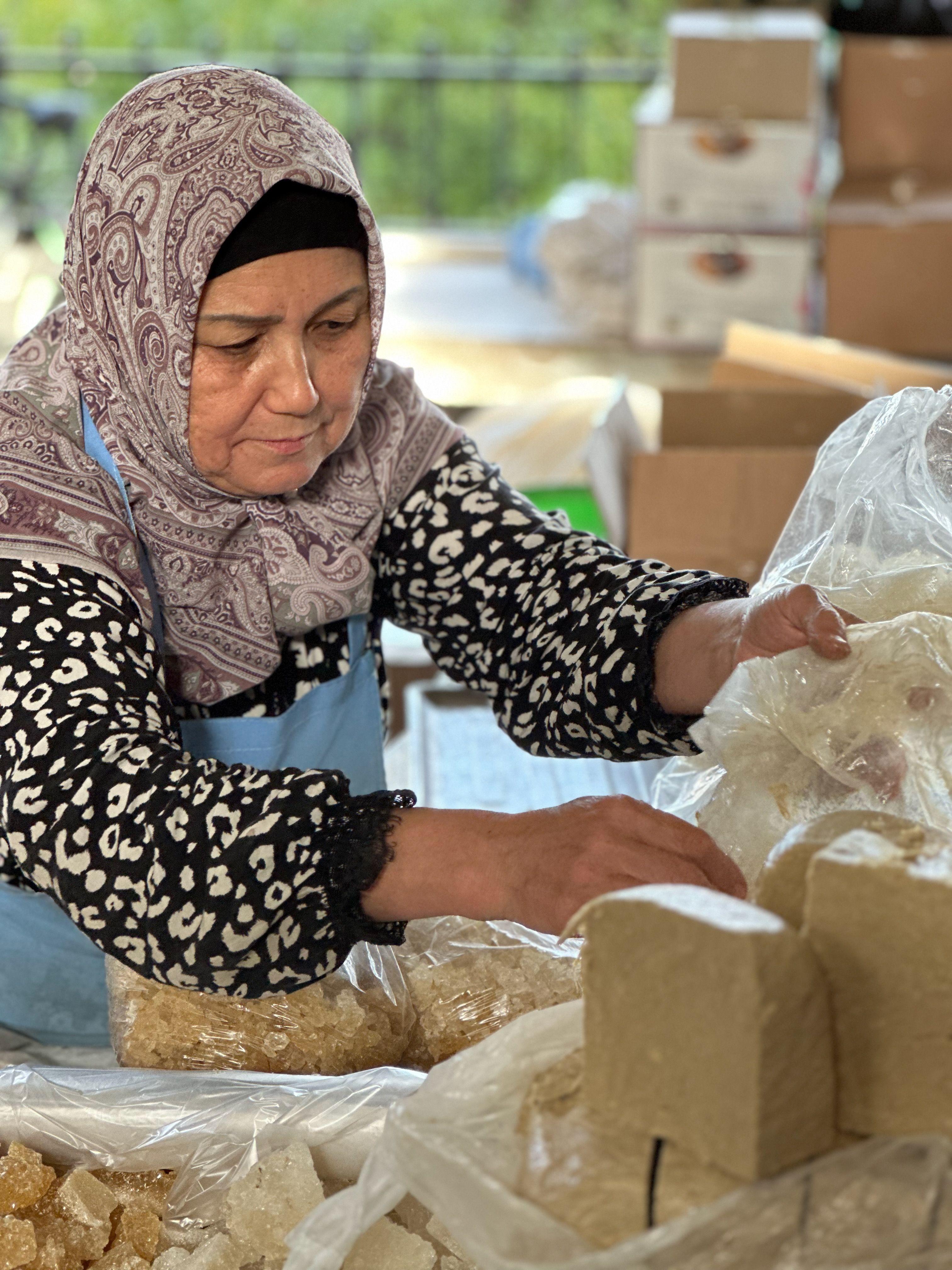
Halva (holva in Uzbek) is the word for a whole range of sweets, and an Uzbek halva stall can have twenty kinds. The main types:
- Flour halva: flour toasted slowly in oil or butter with sugar syrup, sometimes with nuts, a dense, crumbly sweet that is also made at home
- Sesame and nut halva: ground sesame, sunflower seeds or nuts with sugar, closer to the halva known in the Middle East
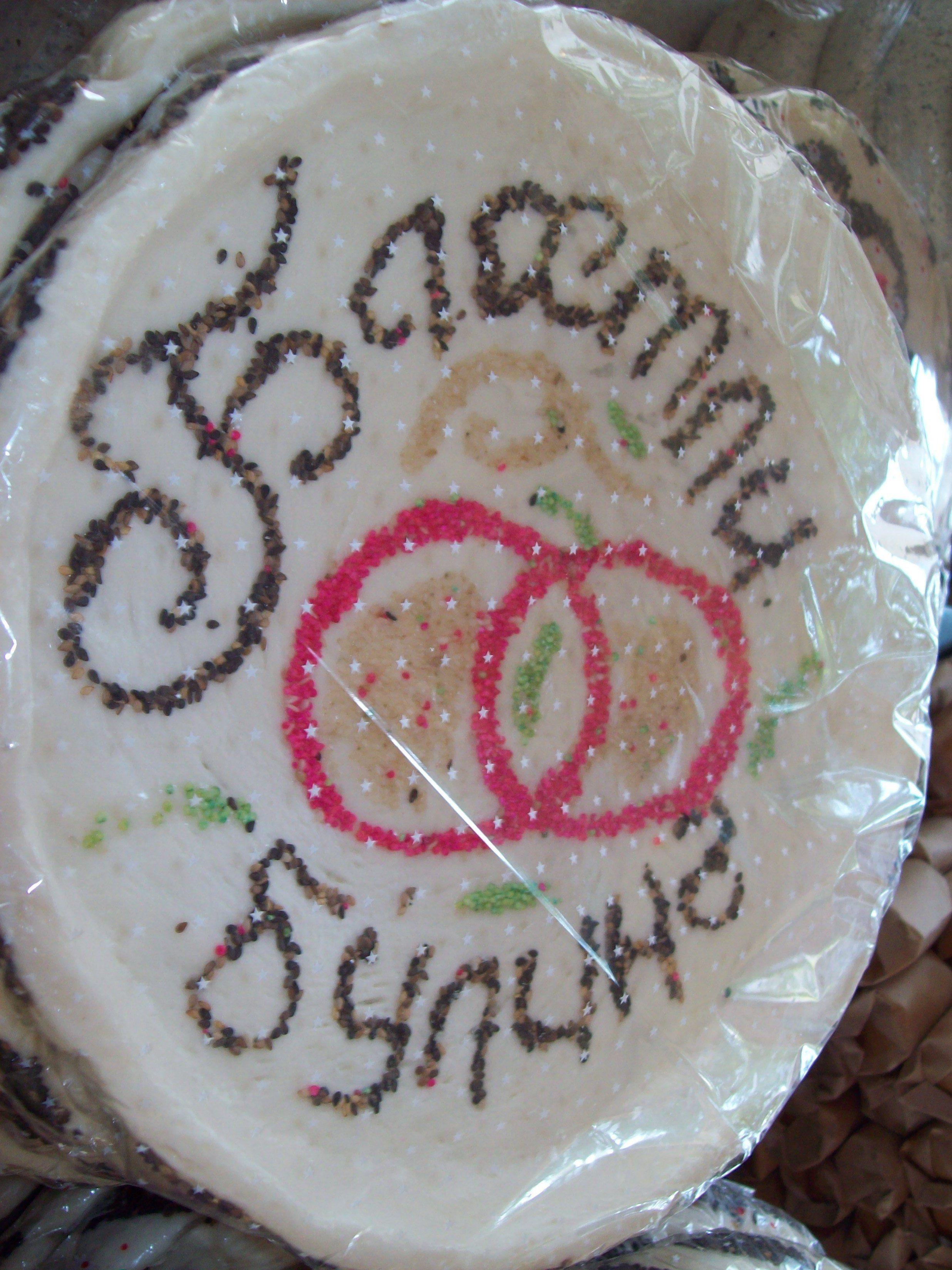
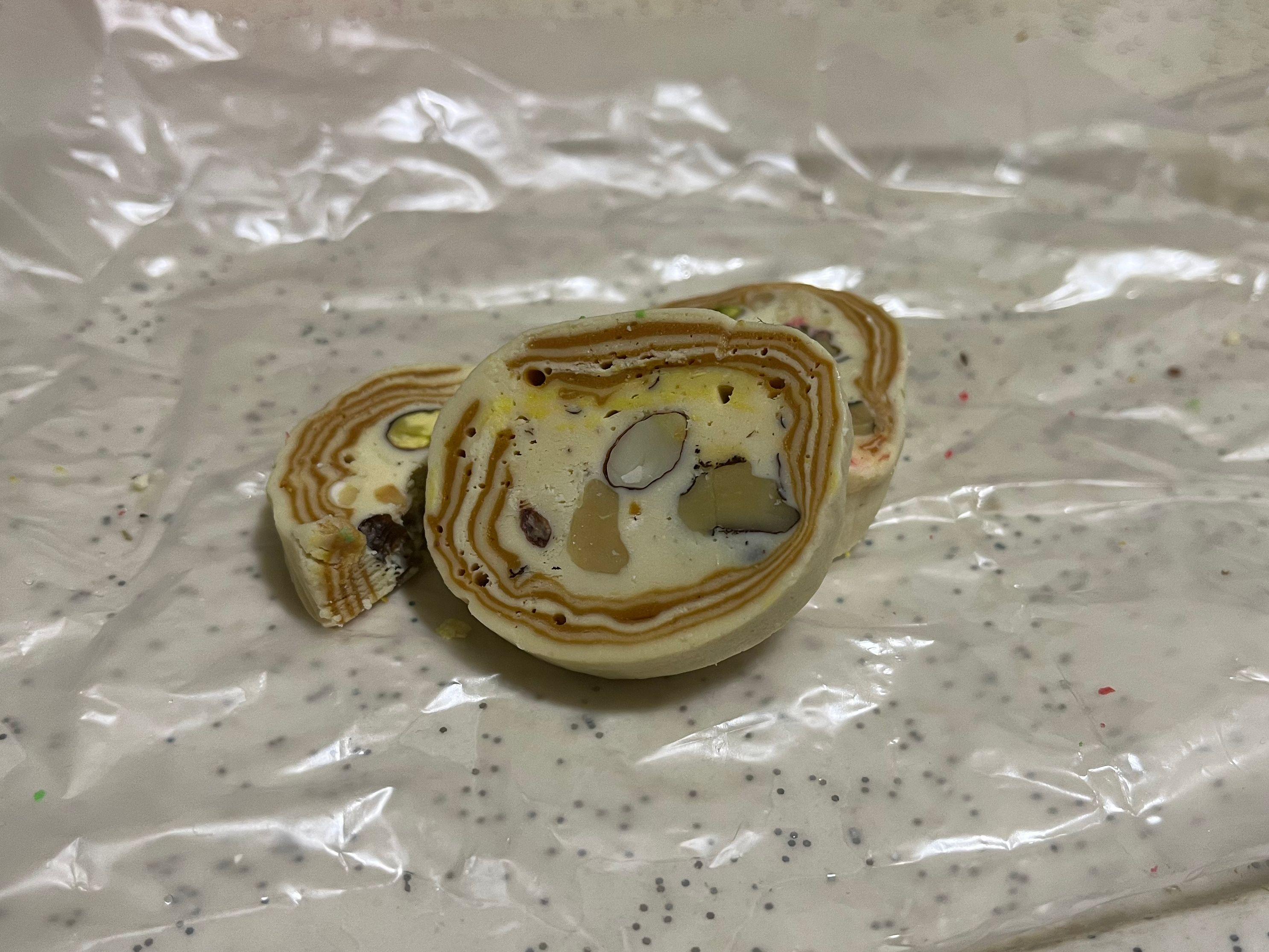
- White pulled halva: sugar syrup cooked and pulled until white and airy, then set with walnuts, almonds, pistachios or sesame; this is the style for which Kokand is famous
- Pashmak: fine threads of sugar and flour, like dry candyfloss, which does not keep and is best eaten fresh
Kokand halva, from the old capital of the khanate in the Fergana Valley, is the best known in the country. Halva makers there still pull the sugar by hand, and Kokand halva is sold in bazaars from Tashkent to Bukhara. Samarkand's Siab Bazaar is also known for halva, including large decorated slabs and towers made for weddings.
How to buy it: halva is sold by weight. Point, ask the price per kilo, and ask to taste; sellers expect it. A few hundred grams of two or three kinds is plenty to start with, as it is very rich.
What is navat? Uzbekistan's sugar crystals
Navat (navvot) is crystallised sugar, a sweet that is older than refined sugar cubes. A hot, concentrated sugar syrup, traditionally made with grape juice and sometimes flavoured with saffron or spices, is poured into vessels strung with cotton threads and left to cool slowly. Over several days, large amber or golden crystals grow on the threads and the walls of the vessel. The crystals are then broken into chunks and sold by weight.
Navat looks like lumps of amber or rock crystal, from almost clear to deep yellow. It tastes less sharp than white sugar, and grape navat has a faint fruity note.
How Uzbeks use it:
- Dropped into a piala of green tea, where it dissolves slowly
- Put on the table in a small bowl for guests to suck with tea
- Given to someone with a cold or sore throat, dissolved in hot tea or milk; this is a widespread home remedy, not a medical treatment
Navat is one of the easiest Uzbek sweets to take home: it keeps for months, does not melt and survives a suitcase. Look for it at Chorsu Bazaar in Tashkent, Siab Bazaar in Samarkand and the central bazaars of Bukhara and Kokand.
Parvarda: pillow candies for tea
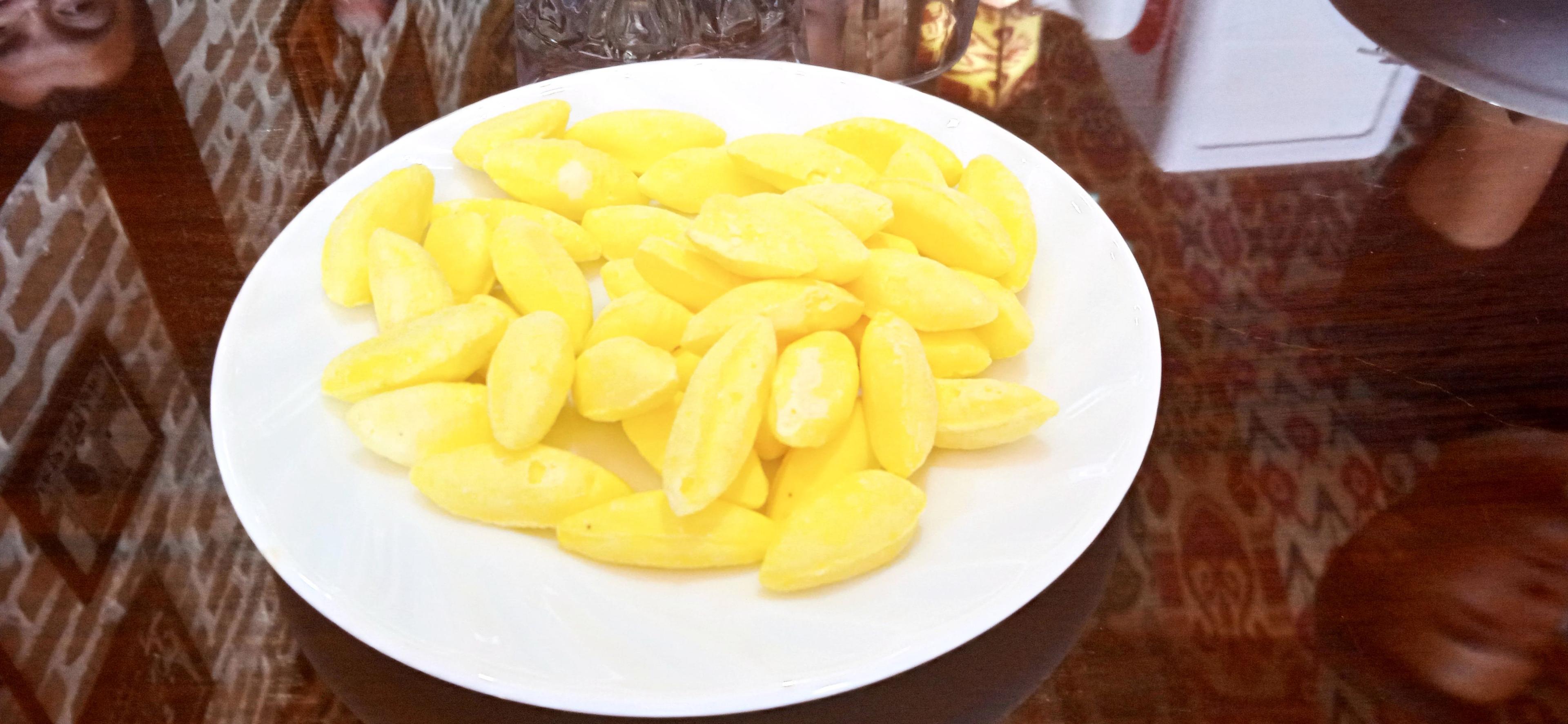
Parvarda are small, pale, pillow-shaped candies dusted with flour. They are made from little more than sugar, water, a touch of lemon juice or citric acid and flour. The sugar is boiled to a caramel, then pulled and folded by hand, again and again, until it turns from golden to white and satiny, before being cut into small pieces and rolled in flour so they do not stick.
The result is soft on the outside and slightly chewy, melting slowly in the mouth. Some makers add herbs or spices for colour and flavour.
Parvarda is a winter sweet in many families, but in bazaars it is sold all year. It goes on every dastarkhan, often next to navat and raisins. Because it is pulled by hand and takes skill, good parvarda is a point of pride for the makers, and you will notice differences between stalls: the best is very white and light. Buy it from a busy stall where it moves quickly, as old parvarda becomes sticky in humid weather.
Chak-chak and fried sweets for celebrations
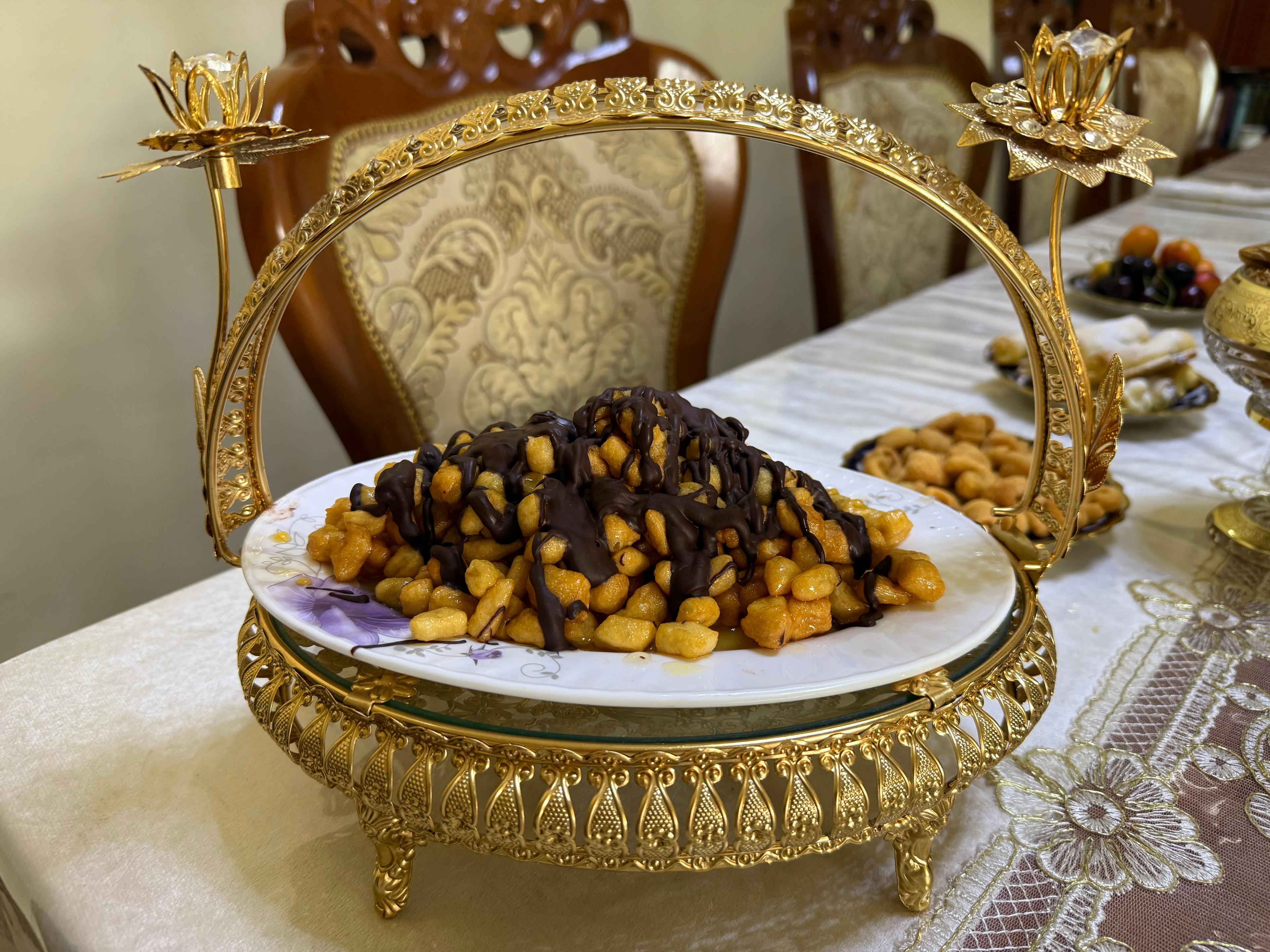
Chak-chak is pieces of fried dough bound together with hot honey into a mound or a block, sometimes topped with nuts, dried fruit or small sweets. It is usually credited to the Tatar and Bashkir kitchens of the Volga region and came to Uzbekistan long ago through the Tatar community. Today it is part of Uzbek celebrations, and at weddings you will see large decorated mounds of it.
Other fried sweets to look out for:
- Small fried dough pieces, plain or sprinkled with sugar, served with tea in many homes
- Urama: long spirals of fried dough dusted with sugar, made for weddings and celebrations
- Bo'g'irsoq: puffy pieces of fried dough, served at family events
Chak-chak is sold in bazaars and supermarkets, both freshly made by weight and packed in boxes. The boxed versions travel reasonably well if kept cool.
Seasonal sweets: sumalak and nishalda
Two Uzbek sweets are tied to particular times of year, and if you visit at the right moment you should try both.
Sumalak is the dish of Navruz, the spring new year on 21 March. It is made from sprouted wheat juice, flour and oil, stirred in a huge kazan through the night, usually by women of the neighbourhood who take turns and sing. It contains no added sugar at all; its sweetness comes from the sprouted wheat. The result is a thick, dark brown paste with a taste somewhere between malt and caramel. Our Navruz guide describes the overnight cooking. In March sumalak is also sold in bazaars by the bowl.
Nishalda is a white, airy, cream-like sweet made by whipping egg whites with sugar syrup and, traditionally, an extract of a plant root that helps it foam. It is sold from large bowls in bazaars, mainly during Ramadan, when it is a favourite after the evening meal that breaks the fast, and in spring. It is eaten with a spoon or spread on warm bread, with tea.
Nishalda does not travel and does not keep long. Eat it fresh, from a busy stall.
Honey, jams and modern sweets
Beyond the classics:
- Honey: mountain honey from the Tashkent region, the Fergana Valley and the mountains near Samarkand is sold at most bazaars, often with the comb. A breakfast of warm non bread, qaymoq (clotted cream) and honey is one of the great pleasures of a homestay.
- Murabbo: home-style jams of quince, cherry, apricot, fig or even green walnut, served with tea in small dishes.
- Ice cream: muzqaymoq is sold everywhere in summer, from kiosks and carts, and Uzbek families take it seriously on hot evenings.
- Cakes and pastries: Tashkent has many bakeries selling layered honey cakes and cream cakes inherited from Soviet times, as well as modern patisseries.
During a home visit you may be served all of these at once, which is a sign of welcome rather than a challenge to finish everything.
Dried fruit and nuts: the everyday Uzbek dessert
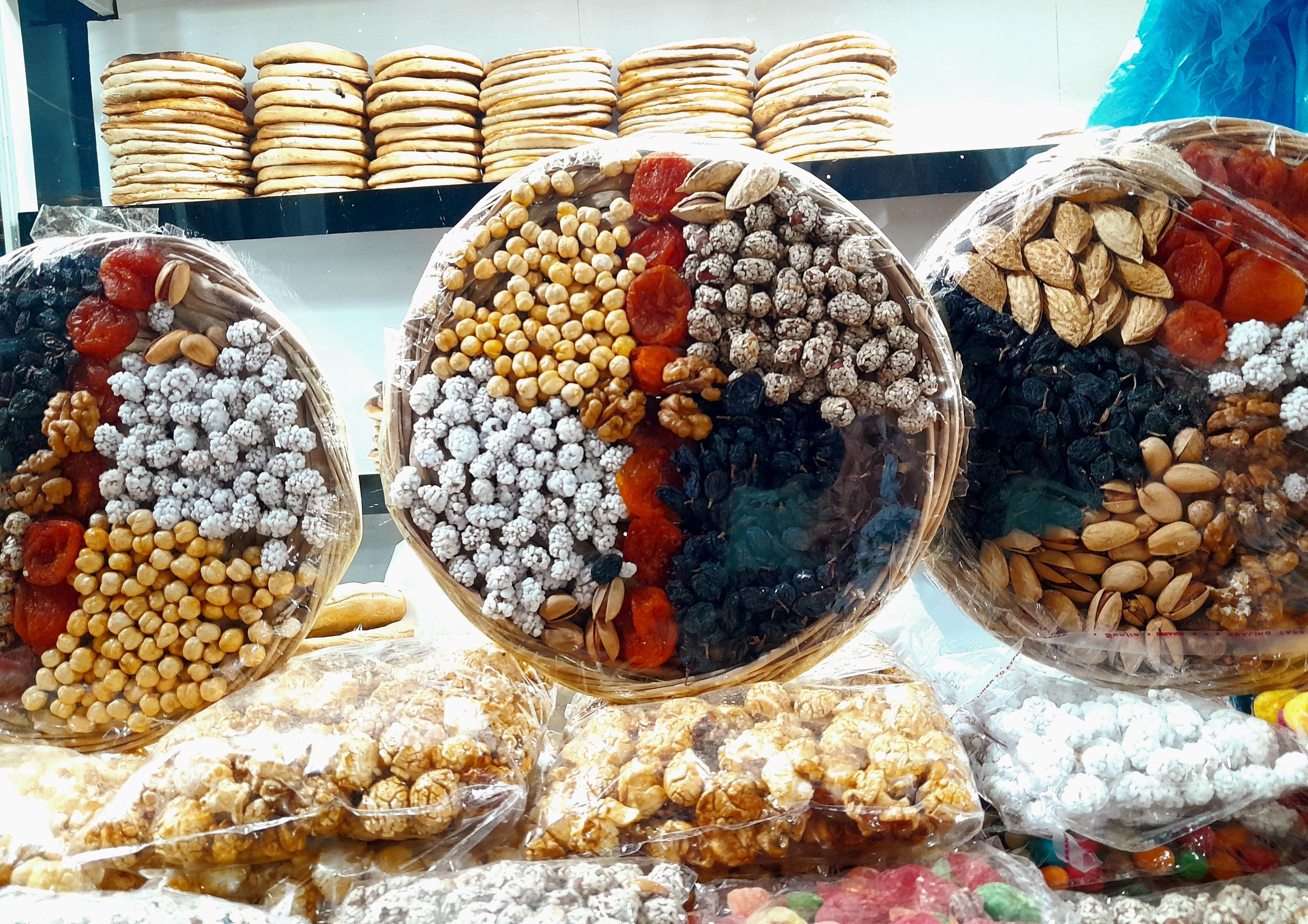
For most Uzbek families, dried fruit and nuts are the dessert. They are on the table every day, and they are also the most popular edible souvenir. Uzbekistan is one of the world's big producers of dried fruit, and the bazaar displays, sorted by colour and size, are a sight in themselves.
What to look for:
- Dried apricots: halved and stoned (kuraga), or whole with the stone (o'rik), which many locals prefer for their deeper flavour
- Apricot kernels: roasted and salted, cracked open to eat like nuts; popular with tea or beer
- Raisins (mayiz): dozens of kinds, from small dark seedless kishmish to long golden raisins
- Almonds, pistachios and walnuts, sold in and out of the shell
- Dried figs, prunes, cherries and mulberries
- Dried melon: thin strips of sweet melon, plaited or twisted, a Khorezm speciality
- Sugared nuts and candied fruit, sold next to the halva
Quality varies a lot. Taste before you buy, look for fruit with a natural colour (very bright orange apricots are often treated with sulphur, which is normal for export-style fruit but changes the taste), and buy from a stall where the stock moves quickly. Prices are per kilo, and buying more often brings a small discount or an extra handful.
Where to buy Uzbek sweets and dried fruit
The best places to buy, city by city:
- Tashkent: Chorsu Bazaar is the classic. The upper gallery under the main dome has rows of dried fruit, nuts, spices, halva and navat, and the view down over the bazaar is a bonus. Our Chorsu Bazaar and Uzbek bazaars guide covers the layout.
- Samarkand: Siab Bazaar, next to the Bibi-Khanym Mosque, is known for halva, navat, dried apricots, raisins and nuts, and many people from Tashkent stock up here. Pair it with a Samarkand loaf from the bread row.
- Bukhara: the central market, a short taxi ride from the old town, has sweets and dried fruit at local prices. The stalls near Lyabi-Hauz and the trading domes are convenient but cost more.
- Kokand and the Fergana Valley: the home of Kokand halva; buy it from the makers if you are travelling through the valley.
- Supermarkets: large city supermarkets sell vacuum-packed dried fruit, nuts and boxed sweets with printed labels, which are easier for customs at home and convenient on your last evening.
Packing tips: navat, parvarda, nuts and dried fruit travel well. Halva and chak-chak are fine for a week or two if kept cool and sealed. Nishalda, sumalak and fresh pastries are for eating here. Vacuum packing, which many bazaar sellers can do on the spot, keeps things fresh and tidy in a suitcase.
Rules for bringing food into your own country vary. Sweets, dried fruit and nuts are usually allowed in personal quantities, but check your country's customs rules; our fruit and melons guide has more on this.
Sweets and tea with TourEast
Our guides are happy to lead you through the sweets rows of Chorsu or Siab, translate, help you taste and bargain, and find the halva makers of Kokand. On our Flavours of Uzbekistan tour, or on any custom itinerary, we can add a tea ceremony with a family, a bazaar morning or a Navruz sumalak evening in March.
Frequently asked questions
Watch
Photo gallery