Uzbek plov explained by locals: the UNESCO-listed tradition, how an oshpaz builds it in a kazan, why it is eaten at lunch, morning wedding plov, the styles of Tashkent, Samarkand, Bukhara and Fergana, and where to taste them.
Facts, prices and schedules checked on November 4, 2026
Uzbek plov is the dish every Uzbek family will argue about and every traveller should eat at least twice: once at a busy plov centre at lunchtime, and once from a family kazan in a courtyard. This guide goes beyond "try the plov". It explains where the dish comes from, why UNESCO lists it, how a plov master builds it layer by layer in a cast-iron kazan, how the styles of Tashkent, Samarkand, Bukhara and the Fergana Valley differ, and where to taste each of them.
Our general Uzbek food guide covers the wider table: samsa, lagman, manti and the rest. Here we stay with one dish, because in Uzbekistan plov is never just lunch.
What is Uzbek plov (osh, palov)?
Plov is rice cooked in a single heavy cauldron with meat, onions, carrots and spices. In Uzbek it is called osh or palov; Russian speakers say plov; in English you will also see pilaf. All of them mean the same dish on the same platter.
The core ingredients are simple:
- Rice, ideally a local variety such as devzira from the Fergana Valley, with pinkish, ribbed grains that absorb fat and water without turning to mush
- Lamb or beef, often on the bone, and sometimes horse-meat sausage (kazi) laid on top
- Yellow and orange carrots cut by hand into long matchsticks, never grated
- Onions, cottonseed oil or rendered lamb-tail fat, cumin (zira), salt, and often barberries, chickpeas, raisins or a whole head of garlic
What turns these into plov is the method and the person in charge. The cook, called an oshpaz, is usually a man when the plov is cooked for a crowd, and a good one is respected across his neighbourhood. At home, women cook plov just as often. UNESCO's description of the tradition makes the point that it is cooked by men and women of every age and background.
Is Uzbek plov on the UNESCO list?
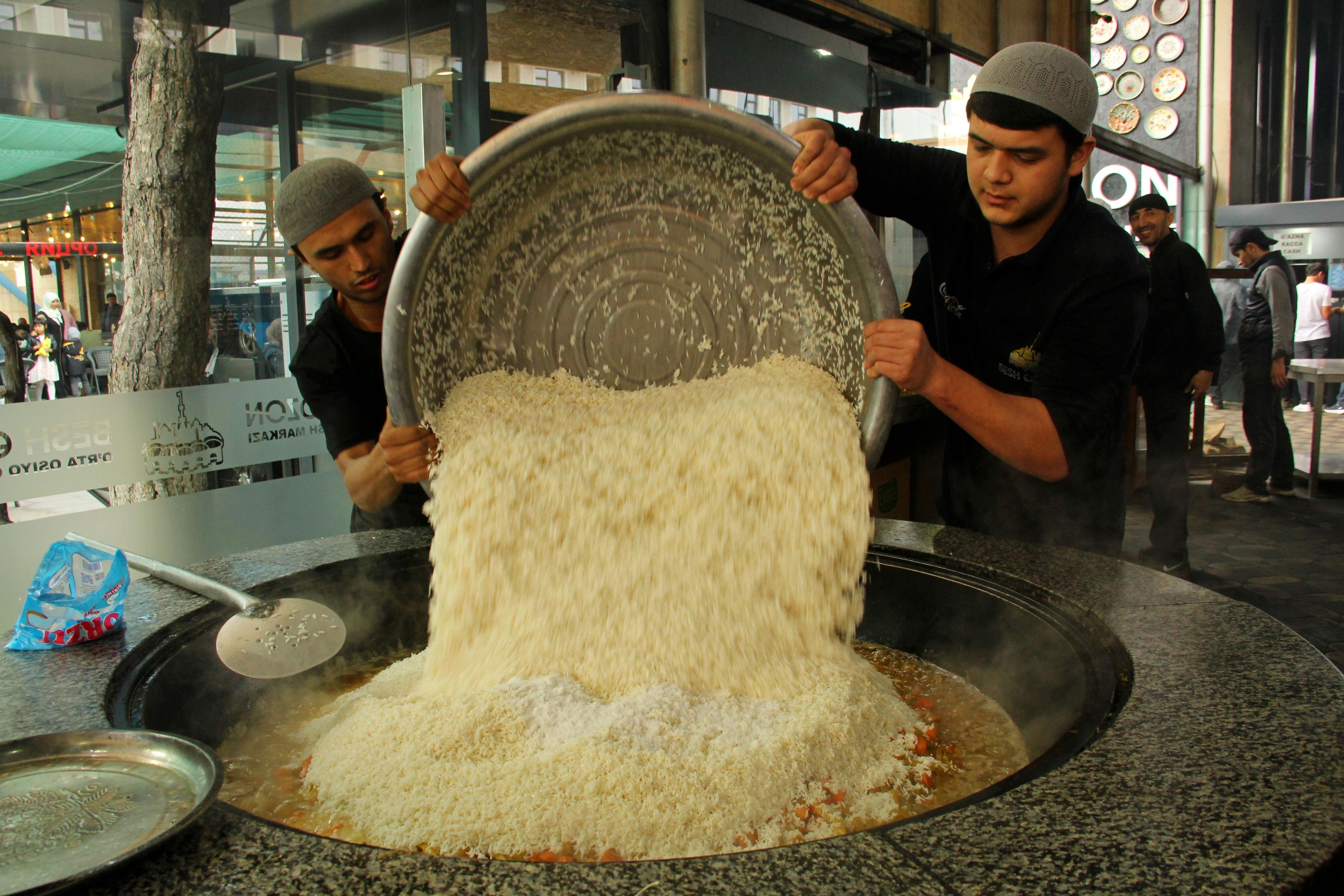
Yes. In 2016 UNESCO inscribed "Palov culture and tradition" of Uzbekistan on its Representative List of the Intangible Cultural Heritage of Humanity. What was listed is not a recipe but a social practice: plov cooked to welcome guests, to celebrate weddings and the New Year, to help people in need and to remember the dead. UNESCO notes that the skills are passed on from master to apprentice, within families, through community groups and in cooking schools.
Neighbouring Tajikistan has its own listing for oshi palav, inscribed the same year, which is a reminder that the dish belongs to the whole region, not to one border.
Pilaf-type dishes almost certainly travelled to Central Asia with Persian cooking and the caravans of the Silk Road. Local storytellers like to credit Alexander the Great, who supposedly asked for a dish that could feed an army, or the physician Ibn Sina (Avicenna), born near Bukhara, who is said to have prescribed it to restore strength. Treat both as legends. What is certain is that by the time of the Bukhara and Khiva khanates plov was the dish of feasts, and it has kept that role ever since.
How plov is cooked in a kazan
A kazan is a deep, round-bottomed cast-iron cauldron that sits over an open fire or a gas ring. Home kazans hold enough for a family; wedding kazans can hold enough rice for hundreds of guests. The shape matters: heat collects at the base for frying, then spreads evenly through the rice as it steams.
Every oshpaz has his own order and timing, but the stages are the same everywhere:
- Heating the fat. Oil or tail fat is heated until it is very hot. Many cooks fry an onion in it first and then throw it away, to clean and flavour the oil.
- Browning the meat. Bones and meat go in and are seared until dark.
- Onions, then carrots. Sliced onions follow, then a mountain of carrot matchsticks, stirred until they soften and sweeten.
- The zirvak. Water, salt, cumin and the extras (chickpeas, barberries, garlic, sometimes quince or raisins) are added and simmered. This rich, aromatic base, the zirvak, is the heart of the dish, and it is where a cook's skill shows.
- The rice. Washed and soaked rice is spread over the zirvak in an even layer and covered with water. It is not stirred into the meat.
- Steaming. Once the water is absorbed, the cook gathers the rice into a dome, pokes holes to release steam, covers the kazan and lowers the heat. The plov rests under the lid until each grain is separate and glossy.
To serve, the rice is turned onto a large platter called a lyagan, the carrots and meat are laid on top, and the meat is sliced and shared by the host. A family plov takes two to three hours; a wedding kazan starts before dawn.
Why plov is a lunchtime dish
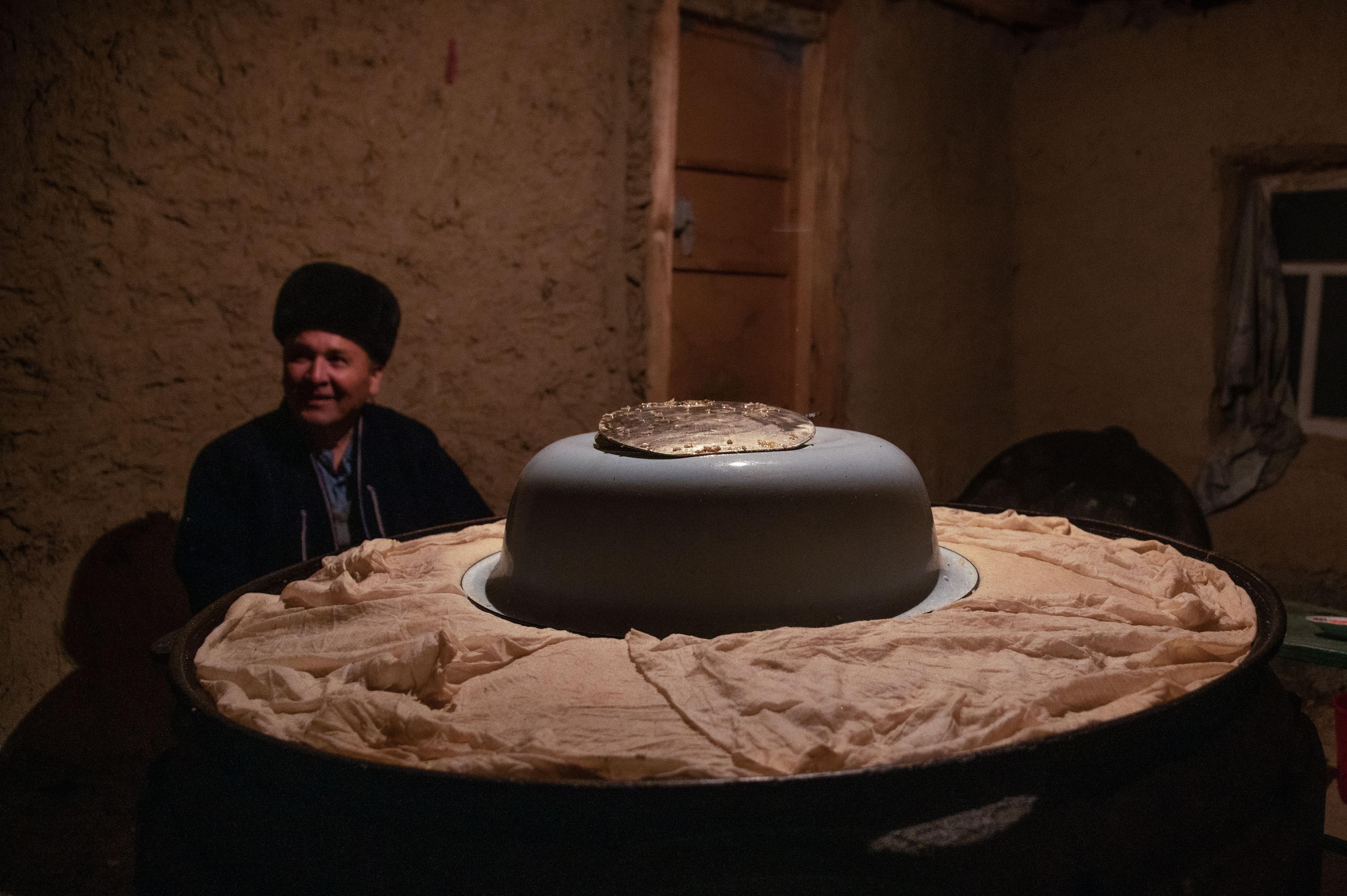
In Uzbekistan plov is eaten at midday, and locals are mildly amused by visitors who order it at 9 pm. There are several reasons.
- Plov centres light their fires early in the morning, and the big kazans are ready from late morning. By early or mid-afternoon the best plov has been eaten, and what is left has been sitting.
- It is a rich, heavy dish, and the traditional view is that it should be eaten when there is still a working day ahead to digest it.
- Its ritual role is tied to mornings: the wedding plov, as you will see below, is served at dawn.
Many restaurants now serve plov all day, but if you want it at its best, eat it between about 11:30 and 14:00, and in a busy place where the kazan is emptied and refilled quickly.
Wedding plov and morning plov (nahor oshi)
The most memorable plov is not sold anywhere. It is the to'y oshi, the wedding plov, and especially the nahor oshi, the morning plov that opens many weddings and other big family events.
The custom varies by region and family, but the outline is familiar across the country. Before the main wedding day, the family hosts a plov for the men of the neighbourhood, relatives and friends. The cooks start in the middle of the night. Guests arrive soon after dawn, often straight from morning prayers, sit at long tables, eat, say a short blessing and leave within half an hour, making room for the next wave. Musicians with long karnay horns and drums may announce the event to the whole mahalla.
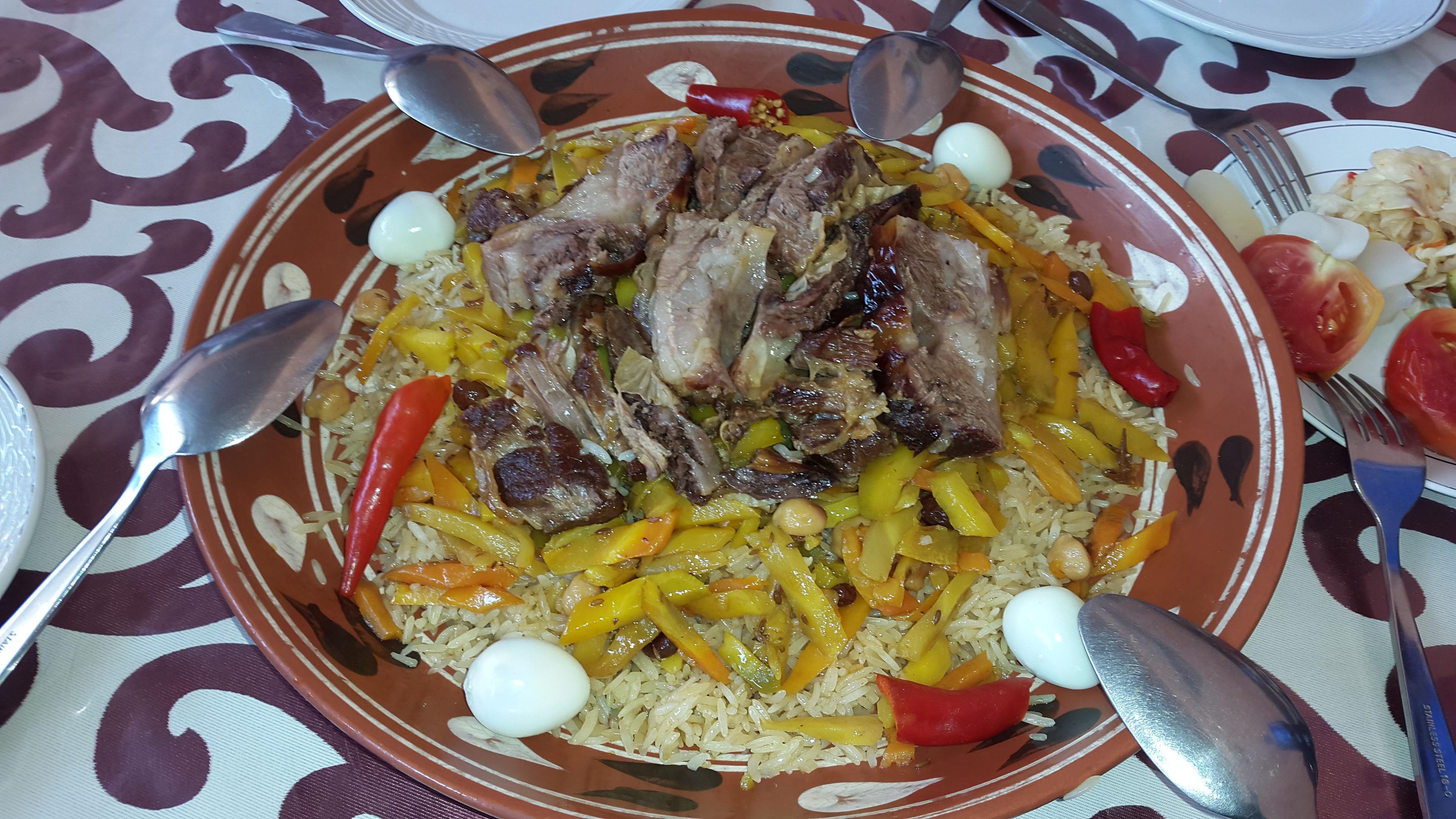
Wedding plov is usually richer than everyday plov, with more meat, sometimes kazi and quail eggs on top, and a generous hand with chickpeas and raisins. In Tashkent "to'y oshi" also appears on restaurant menus, so you can taste the style even without an invitation.
Weddings in Uzbekistan were once famous for their size. In recent years the government has introduced rules to curb spending, including caps on guest numbers, so today's events are more modest than they were, though still large by European standards. Plov is also cooked for memorial gatherings, which is part of what UNESCO recognised. If you are ever invited to a morning plov, arrive on time, dress neatly and follow your host's lead. Our article on Uzbek traditions, weddings and the mahalla explains the rest of the wedding day.
Regional styles: Tashkent, Samarkand, Bukhara and Fergana
There are dozens of local versions of plov, and arguments about which is best are a national pastime. The four you are most likely to meet:
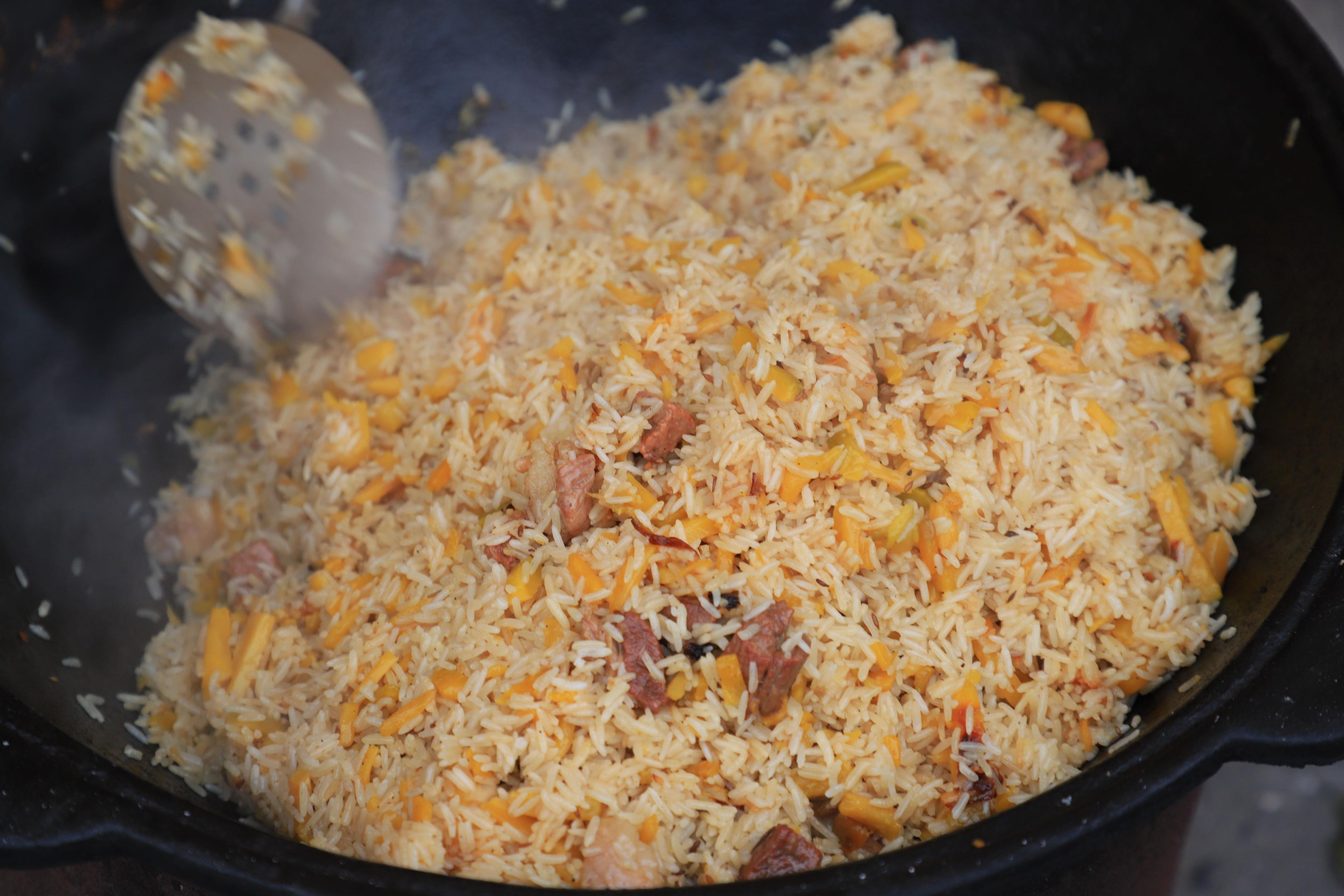
Tashkent plov. The capital's everyday style is choyxona oshi, chaikhana plov, cooked with the rice and zirvak brought together in the kazan so that the rice takes on the colour and flavour of the meat. Tashkent wedding plov is served with slices of kazi and a halved quail egg on top. Expect a well-balanced, medium-rich plate.
Samarkand plov. Here the layers stay apart. The meat and carrots cook below, the rice steams on top and is served in a pale mound with the carrots and meat arranged over it, rather than mixed through. Yellow carrots are prized, and the result is lighter in colour and taste. Samarkand also has its own speciality, zig'ir oshi, plov cooked with linseed (flax) oil, which gives a nutty flavour; some Tashkent restaurants now serve it too.
Bukhara plov. Bukhara's cooking shows its Persian and Jewish heritage. Bukharan plovs often include dried fruit, raisins or quince, and the city's Bukharian Jewish community is known for bakhsh, a green plov made with plenty of chopped herbs, traditionally cooked in a cloth bag. It is rarer on menus, so ask your guide.
Fergana Valley plov. Many Uzbeks consider the Fergana Valley the home of the best plov. Its style is darker and richer, with meat and onions fried longer, more oil and devzira rice from local fields. Kokand plov from the valley appears on menus in Tashkent too. If you are visiting the Fergana Valley, plan at least one lunch around it.
You will also hear of Khorezm plov from Khiva and Urgench, often lighter in colour, and countless family versions with quince, pumpkin or mushrooms. The best approach is simply to eat plov in every city you visit and compare.
Where to eat plov in Tashkent
The best-known address is the Central Asian Plov Centre, now operating as Besh Qozon (five cauldrons), at the foot of the Tashkent TV Tower. Huge kazans are fired up outside and you can watch the cooks at work. The company also runs branches in other parts of the city. Our Uzbek food guide has practical tips on the visit.
Beyond Besh Qozon, Tashkent has many restaurants that specialise in regional plov, including Fergana-style and Kokand plov, Samarkand plov and the linseed-oil version. A few practical points:
- Typical prices in 2026 are around 40,000–90,000 som for a portion, depending on the style and the restaurant. Many places also sell a smaller portion, about 0.7 of a full plate.
- Order a plate of achichuk, the tomato and onion salad, and a pot of green tea; both cut the richness.
- Some local places work with a cashier: you order at the table and pay at the kassa.
- Bazaar stalls at Chorsu serve plov too, but for your first taste we prefer a dedicated plov restaurant with a fast-moving kazan.
Prices change, so treat these as a guide rather than a menu.
Where to try plov in Samarkand, Bukhara and Khiva
Every city has its plov restaurants and chaikhanas, and the best address changes as cooks move. Rather than chase a single name, follow three rules: go at lunchtime, go where locals queue, and choose the city's own style.
- In Samarkand, try the layered Samarkand plov and, if you see it, zig'ir oshi. Lunch after the Registan or Siab Bazaar works well. A plov festival is also held in Samarkand, usually in late summer, with dates announced each year.
- In Bukhara, look for plov with dried fruit, and ask about bakhsh. Some restaurants open their kazans only at lunchtime and close in mid-afternoon.
- In Khiva, eat plov in a courtyard restaurant inside or just outside Ichan-Kala, then walk off lunch on the city walls.
Our guides know which kazans are good that season and are happy to point you to them.
Plov master classes: cook it yourself
The best way to understand plov is to stand next to an oshpaz while the zirvak bubbles. Plov master classes are offered by families, guest houses and cooking schools in Tashkent, Samarkand and Bukhara, and in many villages.
A typical class lasts two to three hours. You help cut carrots and onions, learn when to add each ingredient, watch the rice steam and finish with a long lunch at the family table, usually with salads, bread and tea. Some hosts add a market visit beforehand or teach samsa or bread as well.
Typical prices in 2026 range from about US$20 to US$80 per person in a group, and more for a private class with transport. We can add a plov class to any itinerary.
How to eat plov like a local
A few habits will make you look like a regular:
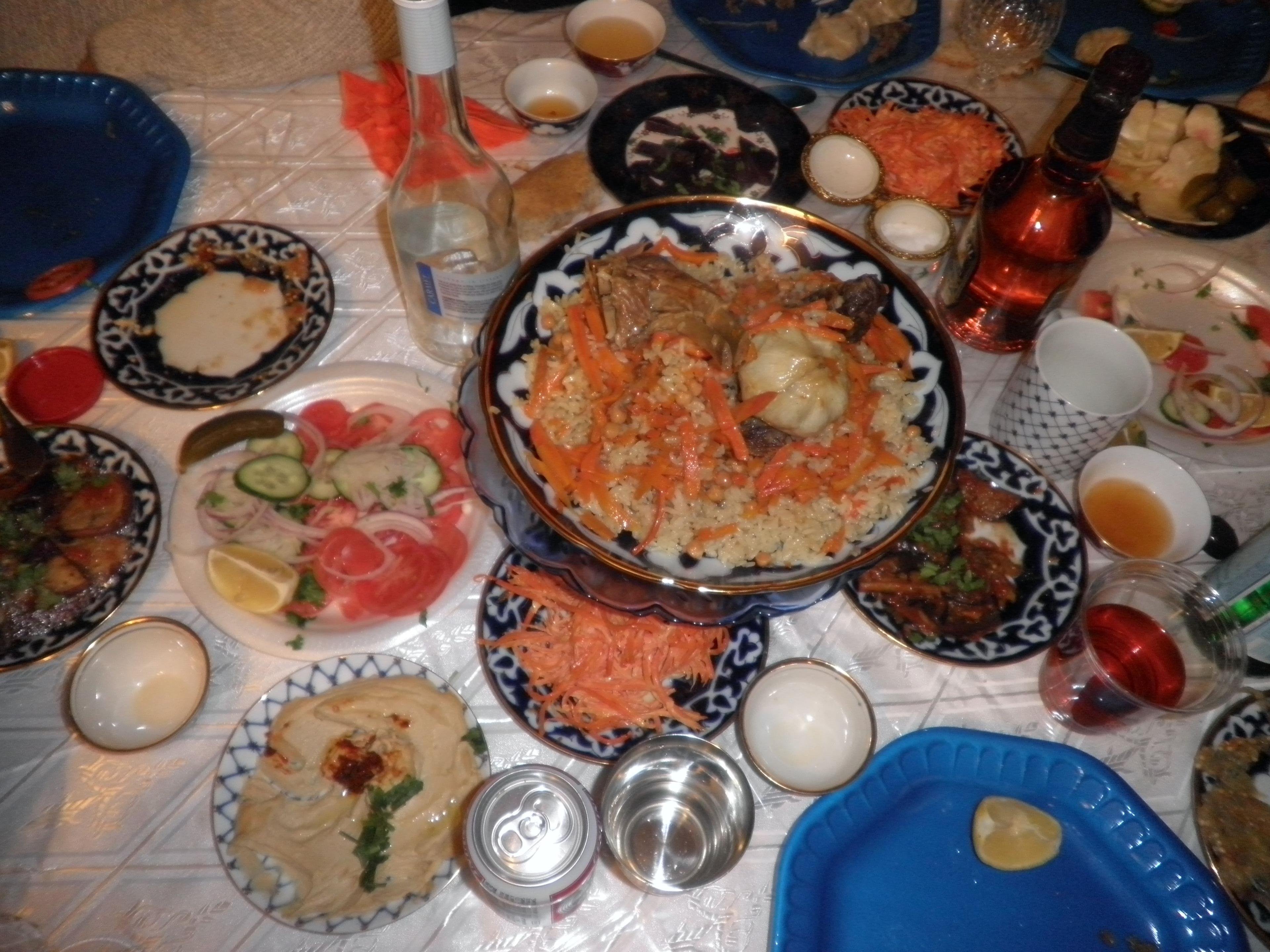
- Plov is often served on a shared lyagan in the middle of the table. Eat from the section in front of you.
- Traditionally plov was eaten by hand, pressing rice and carrot together with the fingers. Today almost everyone uses a spoon; nobody will expect you to do otherwise.
- The host or the eldest at the table slices the meat and distributes it. Wait for your share.
- Tea comes with plov, never iced drinks. Green tea is said to help digest the fat.
- Leave a little on your plate when you have had enough, or the plate will be refilled.
Vegetarians can find meat-free plov with chickpeas, pumpkin or dried fruit in some restaurants, but traditional plov is cooked with meat and animal fat, so ask before ordering.
Taste plov with TourEast
Plov is part of almost every day on the road in Uzbekistan, and we plan meals with it in mind: the right plov centre at the right hour, a courtyard lunch in Samarkand, a cooking class with a family. If you want a trip built around food, our Flavours of Uzbekistan tour or a custom itinerary is the place to start.