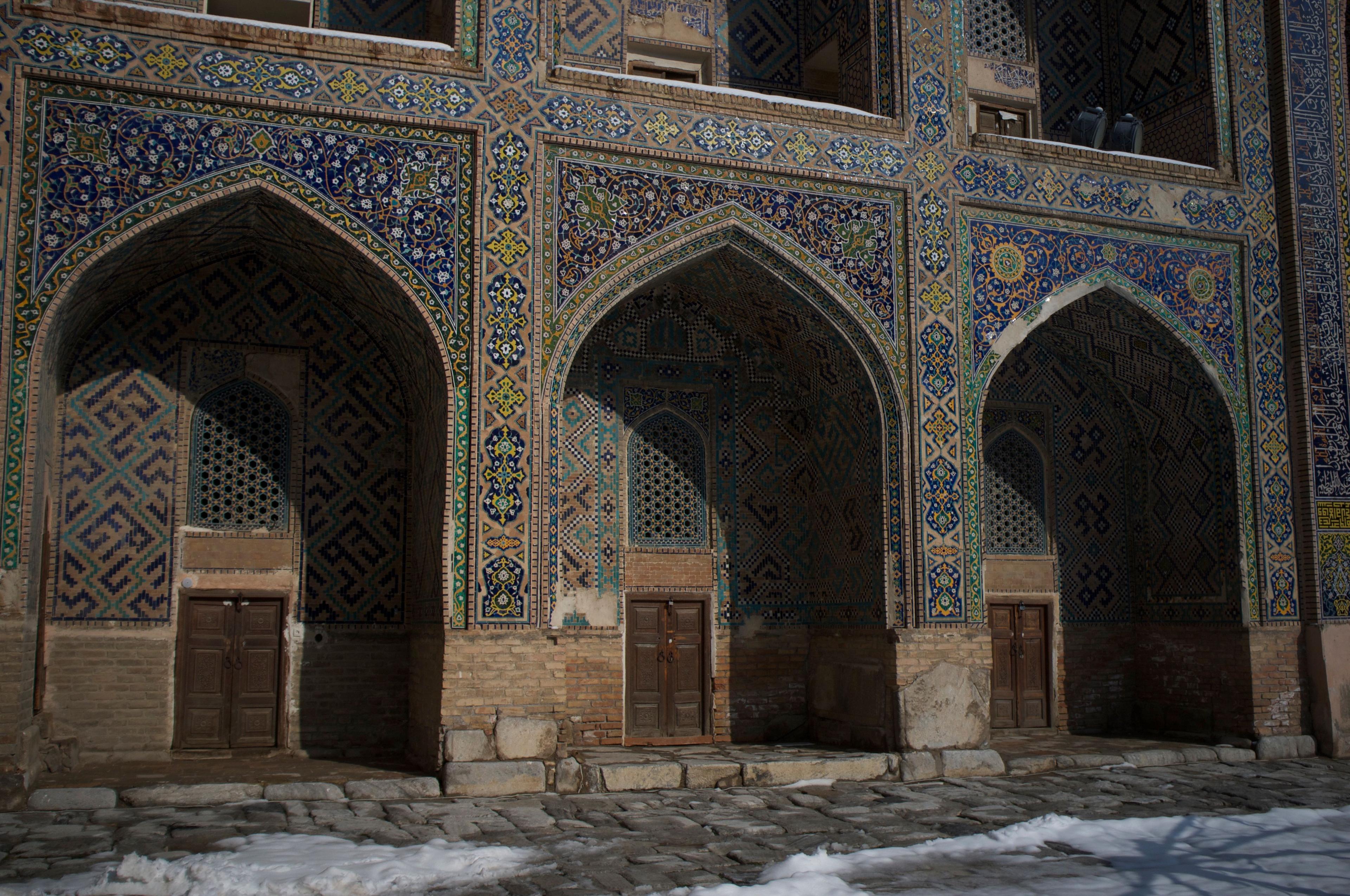
A 7-day Uzbekistan food tour built on experiences rather than a list of dishes: Chorsu at dawn, plov with a master, Samarkand bread ovens, a Khovrenko tasting, a Bukhara home cooking class and a chaikhana evening, plus what a class costs in 2026 and how to handle dietary needs.
Facts, prices and schedules checked on November 4, 2026
Some people plan a trip around monuments. Others plan it around lunch. If you belong to the second group, Uzbekistan rewards you more than almost any country on the Silk Road: a cuisine built on bread, rice, lamb and fruit, cooked in cast-iron kazans and clay tandir ovens, and served in homes and chaikhanas where hospitality is a point of honour.
This is a practical Uzbekistan food tour itinerary: seven days from Tashkent to Samarkand and Bukhara, built on experiences rather than a checklist of dishes. A bazaar at dawn, a plov cooked with a master, a bakery where the bread is slapped onto the walls of a tandir, a tasting at the oldest winery in Central Asia, a cooking class in a Bukhara courtyard house, and a slow evening at a chaikhana. We add a Fergana Valley extension for samsa, and explain what a cooking class costs in 2026, how to handle vegetarian and halal needs, and how our own Flavours of Uzbekistan tour is built.
If you want the dishes themselves explained, our Uzbek food guide, plov guide and street food article cover them. This article is about how to eat your way across the country.
What makes an Uzbekistan food tour different
Uzbek cooking is regional, and the regions are only a train ride apart. Tashkent plov is dark and generous with meat; Samarkand plov layers rice and yellow carrot without mixing; Bukhara plov is sweeter, with raisins; Khorezm cooks its own green noodle dishes and tukhum barak, pasta parcels filled with egg. Bread changes with every city: the heavy, glossy Samarkand non, the thin, crisp patir of Bukhara, the flat loaves stamped with patterns in the Fergana Valley.
The other difference is where the food happens. The best meals are not in restaurants but in homes, at bazaars, and at the chaikhana, the teahouse where men gather on raised platforms around a pot of green tea. A good food tour gets you into all three.
Three principles shaped this route:
- One hands-on experience a day, not three. A cooking class takes three to five hours and ends with a large meal; two in one day is a mistake.
- Markets in the morning, when produce arrives and bakers are working; classes at midday; chaikhanas in the evening.
- Trains between cities. The Afrosiyob high-speed train from Tashkent to Samarkand takes about two hours and ten minutes, and Samarkand to Bukhara under two hours, so you lose no eating time on the road.
Day 1: Tashkent, Chorsu Bazaar and plov with a master
Arrive in Tashkent and start with the capital's two great food institutions.
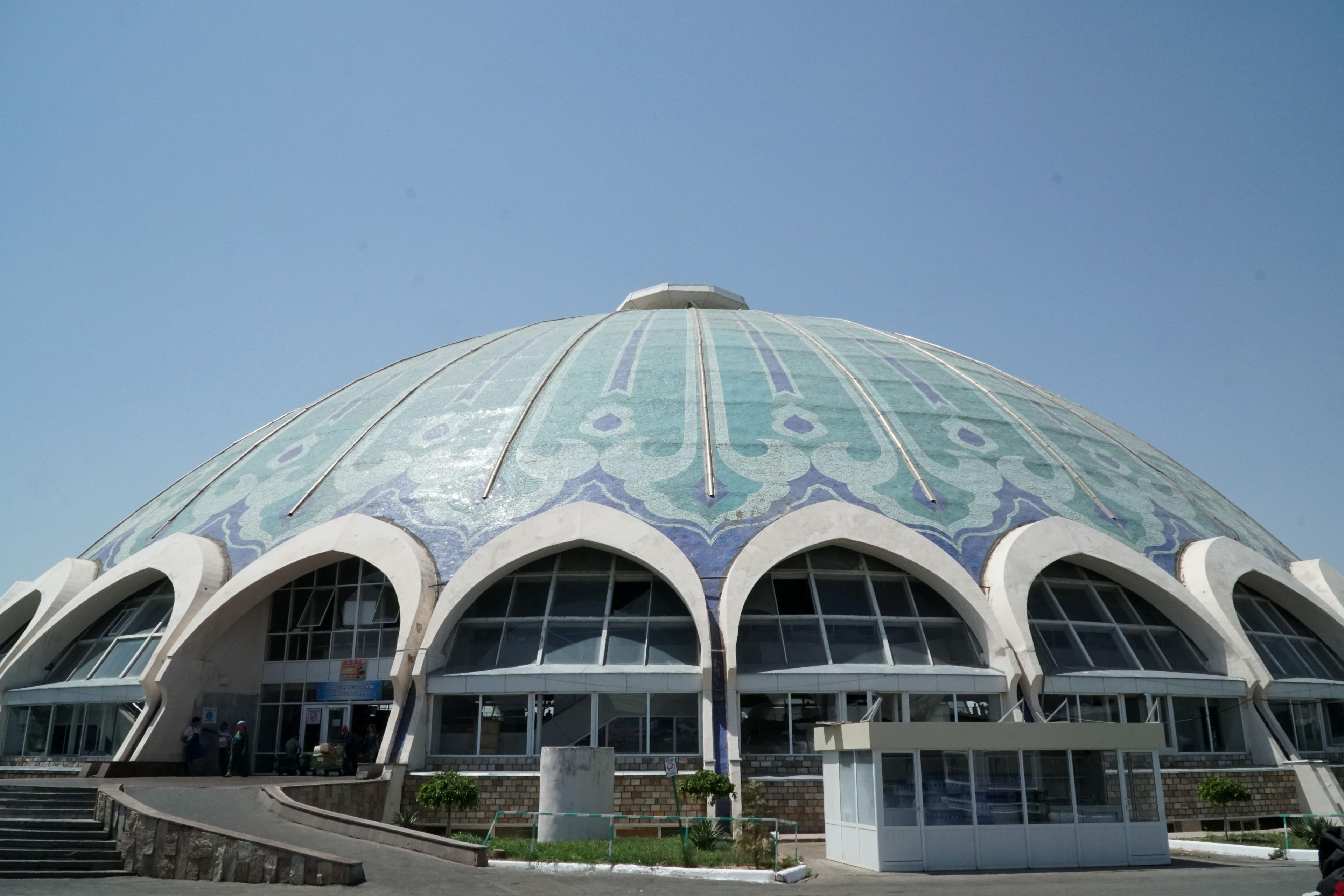
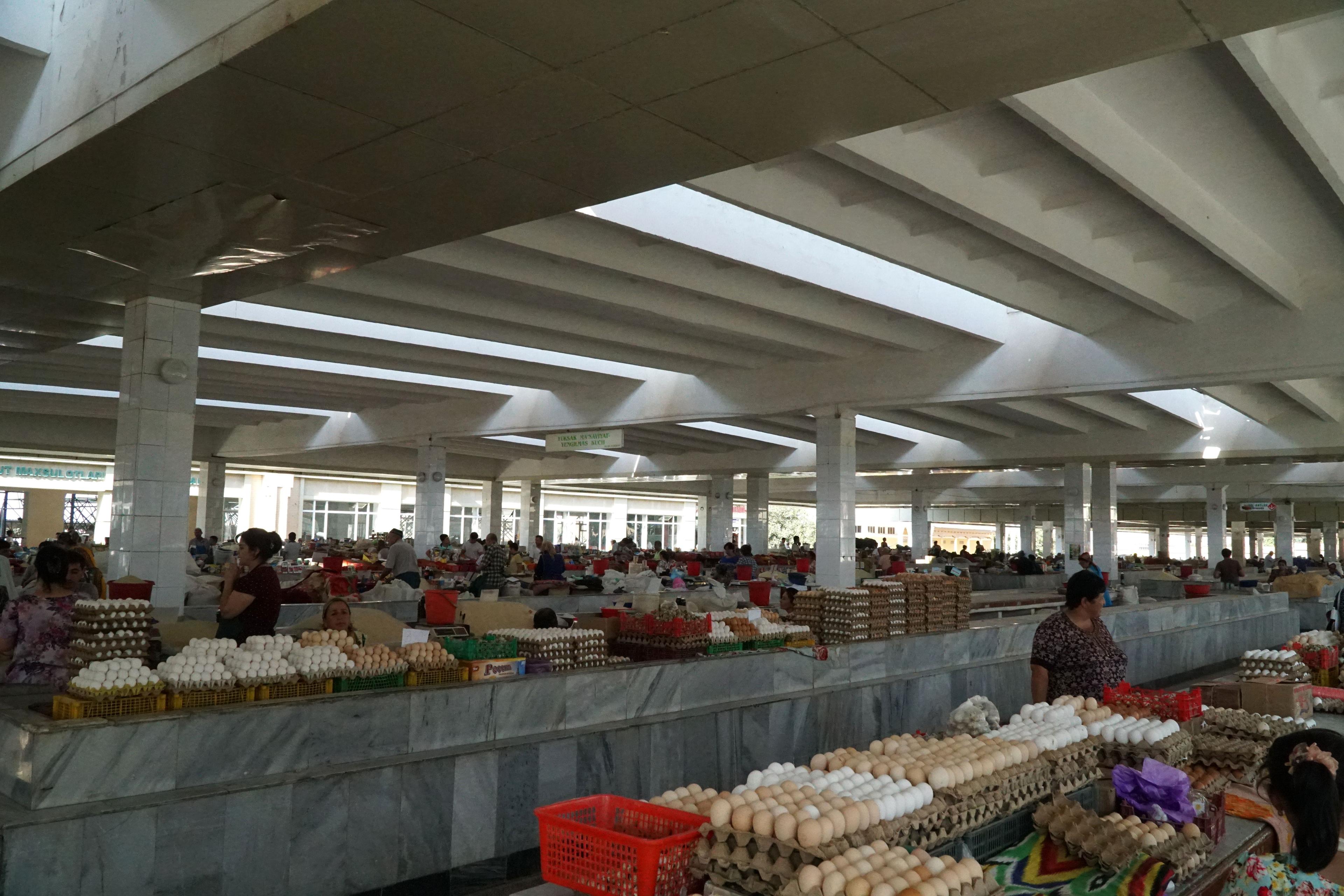
Morning: Chorsu Bazaar. Go early, before nine, when the vans are unloading. Under the blue dome you will find the meat hall, the dairy counters with kurt (dried salted yoghurt balls) and kaymak (clotted cream), the spice rows with cumin, barberries and dried hot pepper, and outside, the bread stalls and the pumpkin sellers. A guide earns their keep here: they will have you tasting halva from Kokand, dried melon ribbons and the first apricots of the season, and they will explain what each cut of lamb is for. Our Chorsu article gives the layout.
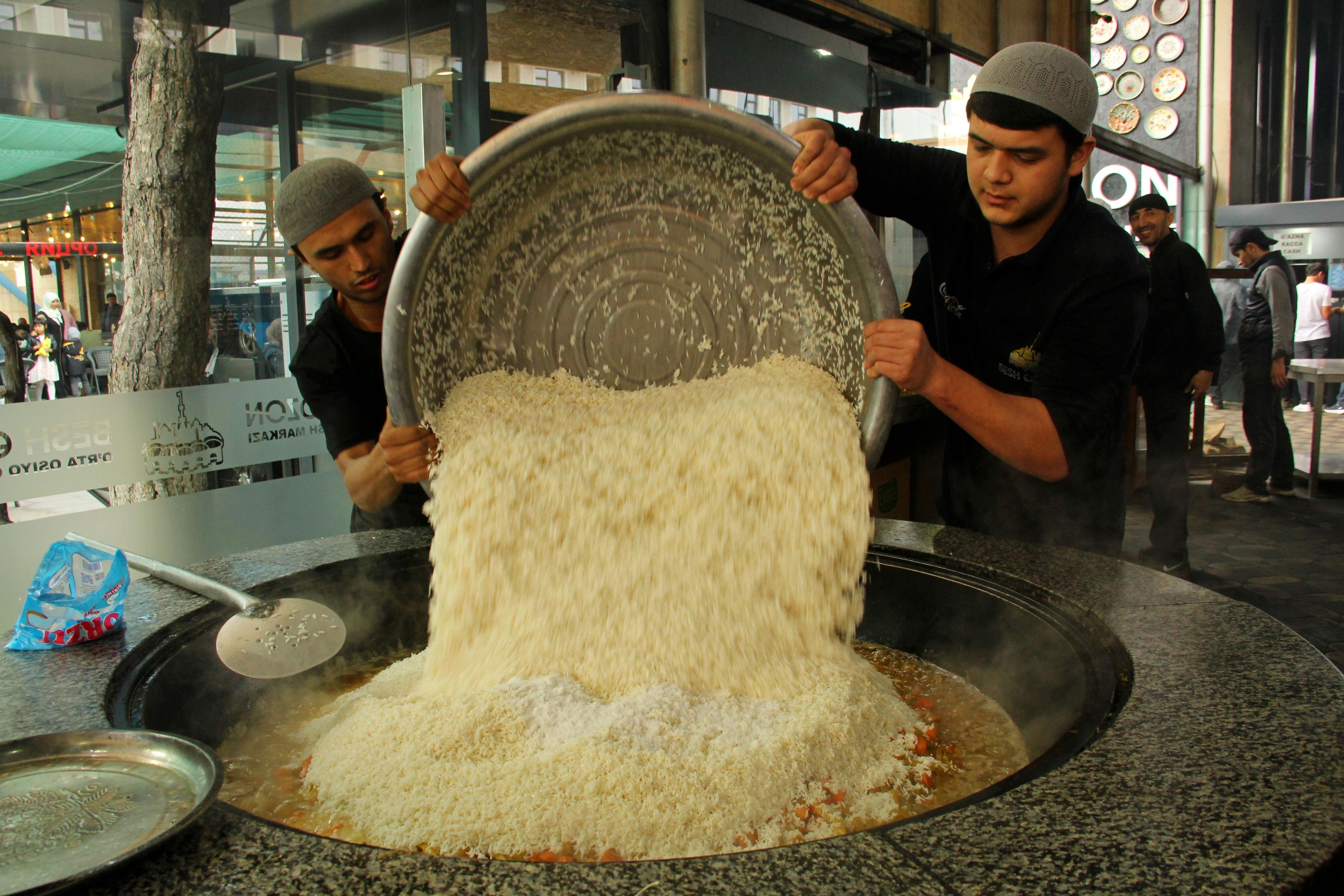
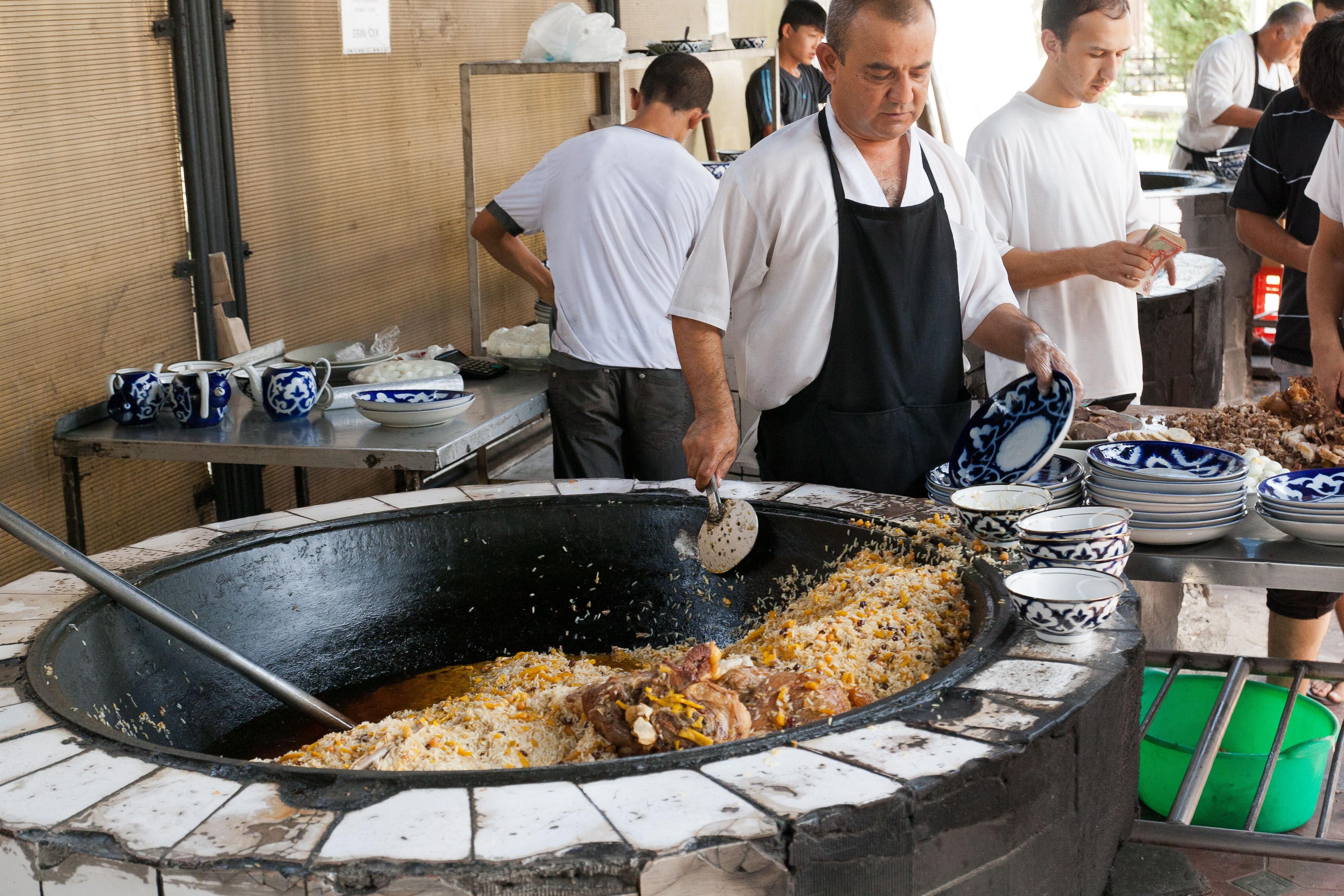
Lunch: plov at a plov centre. The Central Asian Plov Centre near the TV tower cooks plov in kazans the size of hot tubs from mid-morning, and the rice is gone by early afternoon. It is loud, fast and unforgettable. Order quail eggs and kazy (horse sausage) on top if you are brave.
Afternoon: rest, or a walk through the old mahalla behind Chorsu to see tandir ovens in courtyards.
Evening: dinner in a modern Uzbek restaurant in Tashkent for a first pass at the classics: shurpa, manti, lagman and a shashlik platter. Keep it light; tomorrow is a long day.
Day 2: Afrosiyob to Samarkand, bread ovens and a wine tasting
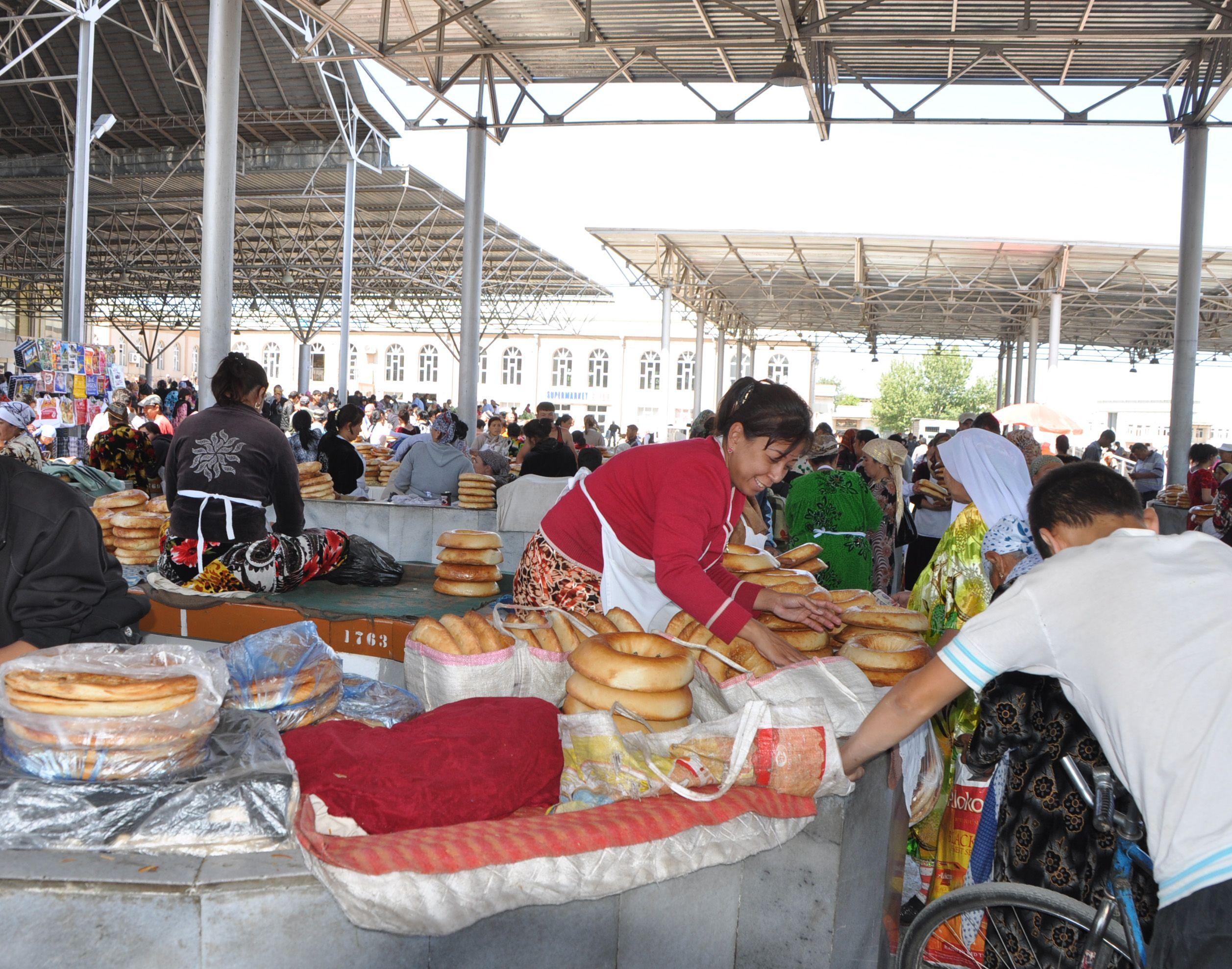
Take an early Afrosiyob to Samarkand. By ten you can be at Siab Bazaar beside the Bibi-Khanym Mosque, the most photogenic market in the country, with pyramids of Samarkand non, dried fruit and nuts, and halva cut from slabs.
Late morning: a bread bakery. Samarkand non is famous for staying fresh for days and for being stamped with a chekich, a metal die that prints the pattern. In the villages on the edge of the city, and in a few bakeries near the bazaar, you can watch dough being shaped, stamped, sprinkled with sesame and nigella, and slapped onto the inside wall of a tandir. Most bakers will let you try; most visitors fail on the first throw. A visit is usually arranged through a guide rather than booked online.
Afternoon: the Registan, because you cannot come to Samarkand and skip it.
Late afternoon: the Khovrenko winery, founded in 1868, with a small museum, a cellar and a tasting of sweet and dry wines and a brandy. Our Uzbek wine and drinks article explains what to expect; the tasting is straightforward to add to a day, and alcohol-free alternatives (fruit juices, kompot) are easy for those who prefer them.
Evening: a quiet dinner. Samarkand's speciality is its plov, and several restaurants near the Registan cook it to order for the evening.
Day 3: Samarkand plov cooking class in a village home
This is the day most guests remember. Plov classes in Samarkand usually take place in a family home in one of the villages outside the city, and they run four to five hours: a trip to the market for lamb, rice and the yellow carrots that give Samarkand plov its colour; then the kazan over a wood fire, the oil heated until it smokes, onions and meat browned, carrots layered, water added, rice spread on top and left to steam under a lid wrapped in cloth. While it cooks you make salads and, often, a bread or a pastry.
Then you eat it, with the family, at a table under the vines.
Typical 2026 prices for a Samarkand class are US$30 to US$80 per person, depending on whether it is a private family class or a marketplace booking with transport and a market tour. Classes are booked a day or two ahead, and vegetarian versions (plov with chickpeas, dried fruit and no meat) are possible if you ask in advance.
If you prefer to stay in the city, the alternative is an afternoon at Shah-i-Zinda followed by a chaikhana supper, and a plov class in Bukhara instead.
Day 4: Train to Bukhara, trading domes and a chaikhana evening
Take the morning train to Bukhara. Settle into the old town, then spend the afternoon in the covered trading domes and the lanes around Lyabi-Hauz, where you will find spice merchants, dried fruit sellers and the city's famous halva and nabat (crystal sugar).
Evening: the chaikhana. Bukhara's teahouses around Lyabi-Hauz are touristic but still wonderful at dusk, with the pool, the old mulberry trees and the storks' nests on the madrasah. Order a pot of green tea, a plate of samsa, and let the evening go. For a more local version, ask your guide for a neighbourhood chaikhana away from the square, where the clientele is retired men playing backgammon and the tea costs almost nothing. Our bread, tea and chaikhana article explains the etiquette: who pours, why the first cup is poured back into the pot, and how to refuse a refill.
Day 5: Bukhara home cooking class
Bukhara is the best city in Uzbekistan for a home cooking class, because the old town is full of nineteenth-century courtyard houses still lived in by families who cook the way their grandmothers did. Classes take place in the kitchen and courtyard, usually with the women of the house, and the menu varies with the season and the family. Dishes you may cook:
- Bukhara plov, with raisins and a lighter, sweeter flavour than Tashkent's
- Qurtob (also written qurutob), bread soaked in a sauce of kurt, with onions, herbs and oil, a dish of the Tajik-speaking Bukhara tradition
- Dimlama, a slow-cooked layered stew of lamb and vegetables
- Manti, steamed dumplings, which are a good place to learn the pleating
- Samsa or bichak, pastries baked in a tandir or oven
- Tukhum barak, the egg-filled pasta parcels of Khorezm, which a few Bukhara families now teach as well
Typical 2026 prices for a Bukhara class are US$15 to US$30 per person with a family directly, and US$35 to US$80 through booking platforms that include pick-up and a market visit. Groups of four or more usually get a lower per-person rate. Allow three hours plus the meal.
Afternoon: the Ark Fortress and Po-i-Kalyan, then a dessert stop for Bukhara halva. Our Uzbek desserts and sweets article lists what to look for.
Day 6: Gijduvan, shashlik and ceramics, or a free day
Gijduvan, 45 minutes from Bukhara, is a town known for two things: ceramics and shashlik. A day here combines a visit to a potter's workshop with lunch at one of the roadside shashlik houses where lamb, liver and minced kebabs are grilled over charcoal in quantities that defy belief. It is a cheerful, meat-heavy day and a good counterpoint to the refinement of the cooking class.
Alternatively, stay in Bukhara, visit the summer palace of the emir at Sitorai Mokhi-Khosa, and spend the afternoon at the Bahauddin Naqshband shrine, where pilgrims share plov and bread in the courtyard on Thursdays and Fridays.
Evening: a farewell dinner in a Bukhara courtyard restaurant, ideally with a folk music performance.

Day 7: Back to Tashkent, and the Fergana Valley samsa extension
Fly or take the Afrosiyob back to Tashkent (about four hours by train). If you have time before the flight home, the Yangiabad flea market or a last plov lunch fills the afternoon.
Extension: the Fergana Valley (2 to 3 days). The valley east of Tashkent is the country's orchard and its samsa capital. A food extension looks like this:
- Day A: train through the Kamchik Pass to Kokand; the halva makers of Kokand; the Khudayar Khan Palace.
- Day B: Margilan, with the Kumtepa Bazaar on a Thursday or Sunday, the silk workshops, and samsa baked in clay tandirs by the road. Rishtan ceramics on the way.
- Day C: Andijan or Fergana city, then back to Tashkent, or on to Osh in Kyrgyzstan for the Jayma Bazaar.
The valley is also where to taste the best melons and apricots, and where tea culture is strongest. Our Fergana Valley travel guide and crafts of Fergana tour cover the route.
A note on Jizzakh: the Tashkent to Samarkand road passes through Jizzakh, whose giant samsa, baked in tandirs beside the highway, are a lunch stop in themselves if you drive rather than take the train.
Dietary needs, halal, alcohol and seasons
Vegetarians and vegans. Uzbek cooking is meat-centred, but a food tour can be adapted: pumpkin samsa, vegetable manti, lagman without meat, chickpea plov, salads, bread and fruit. Tell the family hosting your class a day ahead. Our vegetarian and vegan article has the vocabulary.
Halal. Meat is halal by default across Uzbekistan. The only things to check are alcohol at tastings (easily skipped) and the occasional pork dish in Russian or Korean restaurants in Tashkent.
Allergies. Nuts, sesame and dairy are everywhere; cotton-seed oil is the traditional plov fat, though many families now use sunflower oil. Write your allergy down in Russian and Uzbek and show it; our phrases article has the words.
Seasons. Food tours are best from late April to June, when apricots, cherries and early melons arrive, and from September to October, when grapes, pomegranates and the great melons are in. July and August are hot but are the peak of the fruit season. Winter food is heavy and comforting: shurpa, dimlama and plov suit cold weather, but markets are thinner. During Ramadan (February to March in 2027) daytime tastings are better moved to the evening.
Hygiene. Eat what is hot and freshly cooked, drink bottled or boiled water, and wash fruit. Our health article covers the rest.

How our Flavours of Uzbekistan tour is built
The route above is the backbone of our Flavours of Uzbekistan tour, which we run privately for two to eight guests with a guide who cooks and a driver who knows every shashlik house between Tashkent and Bukhara. We can shift the balance toward markets, toward cooking classes or toward wine, add the Fergana samsa extension, and plan vegetarian or alcohol-free versions. Our Bukhara in Depth tour also includes a home cooking class, and any private itinerary can have one added.