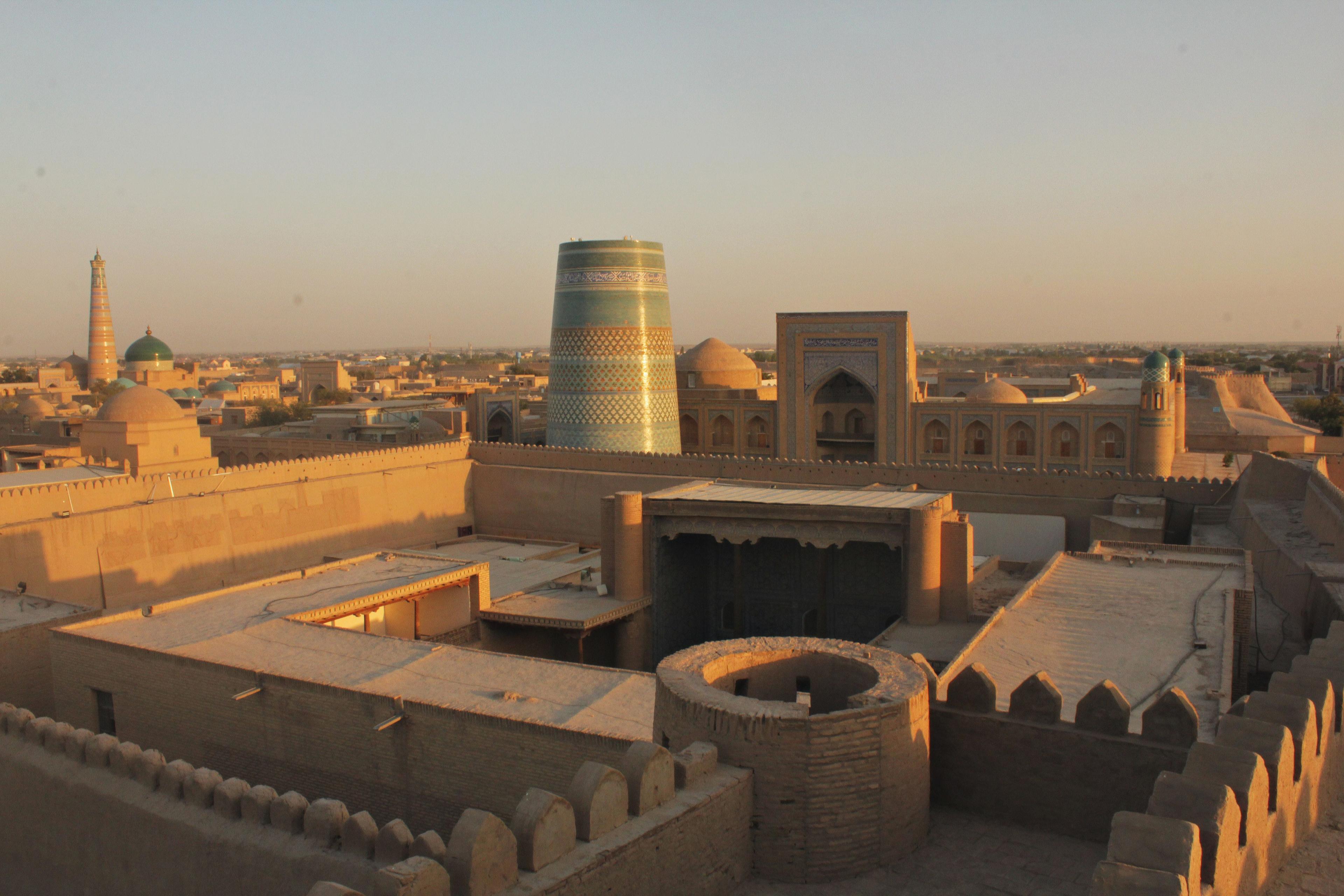
The emirs' citadel and the great minaret that even Genghis Khan spared stand five minutes apart at the heart of old Bukhara. Our guide to the Ark Fortress, the Kalyan Minaret, Kalyan Mosque and Mir-i-Arab Madrasah, with tickets as of November 2026 and how to find your way around.
Facts, prices and schedules checked on November 4, 2026
Bukhara has more than 140 protected monuments, but two places define it: the Ark, the massive fortress from which emirs ruled for centuries, and the Po-i-Kalyan ensemble, where the Kalyan Minaret has watched over the city since 1127.
They stand only a few minutes' walk apart at the western end of the old town, and together they tell Bukhara's story: power and faith, conquest and survival. The historic centre has been a UNESCO World Heritage Site since 1993, and this corner of it is where most visitors begin.
This guide explains what you are looking at, what is worth paying to enter, practical details for 2026 and how this area connects to Lyabi-Hauz and the trading domes.
The Ark: Bukhara's citadel
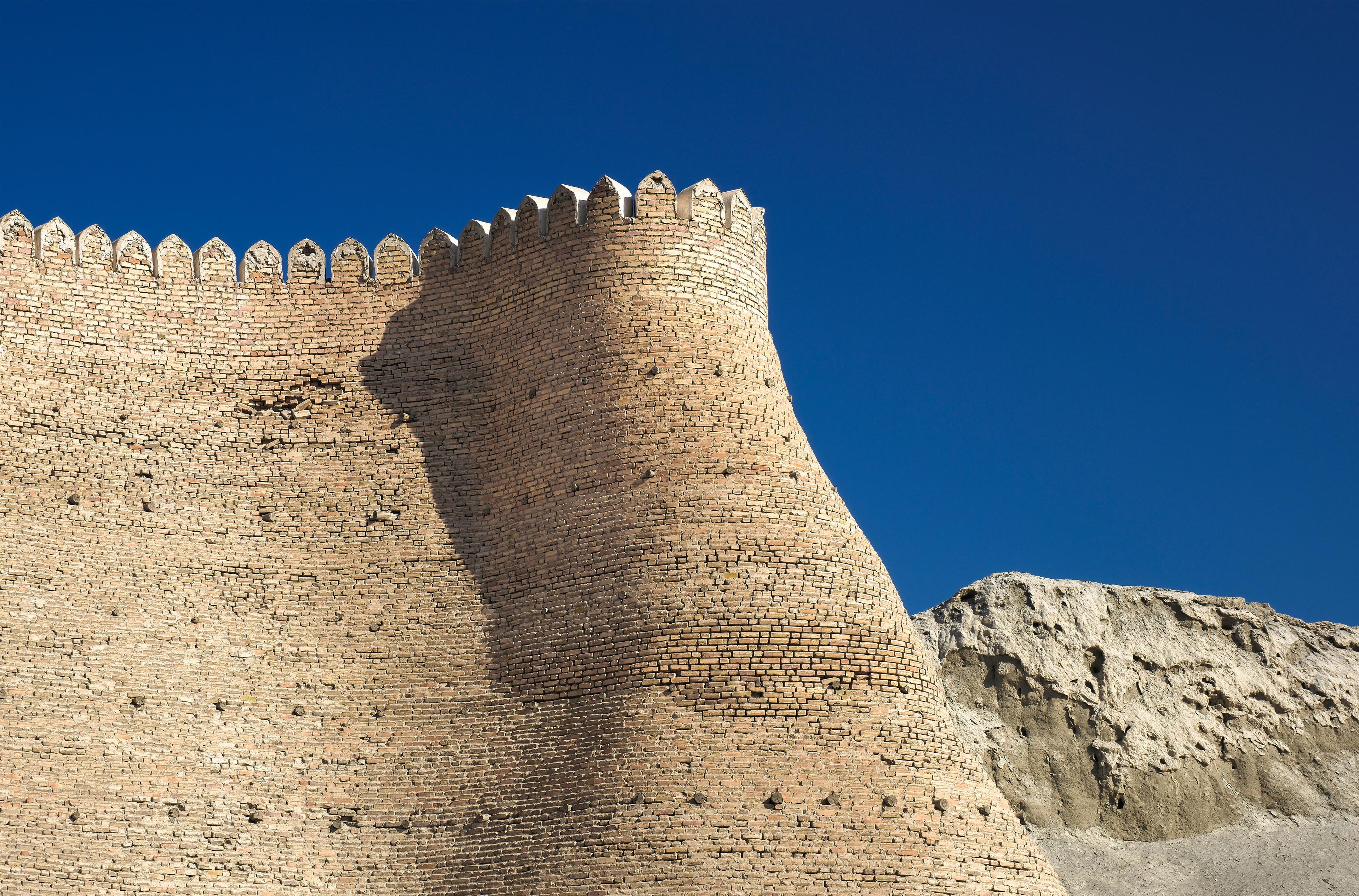
The Ark rises from the open Registan square of Bukhara like a ship of mud brick. Its sloping walls, up to around 20 metres high, enclose an area of about four hectares on an artificial mound built up over many centuries of rebuilding.
A fortress has stood here for well over a thousand years; archaeologists date the earliest layers to the first centuries AD, and legend credits the hero Siyavush with its foundation. It was the seat of successive dynasties, from the Samanids in the 9th and 10th centuries to the Manghit emirs of the 18th to 20th centuries. Inside the walls was a small city of its own: palaces, a mosque, the treasury, the mint, stables, offices, the harem and prisons.
The Ark's darkest chapter is well known. In 1842 two British officers, Colonel Charles Stoddart and Captain Arthur Conolly, were executed in the square before its gates by order of Emir Nasrullah, an episode of the Great Game between the British and Russian empires. The Ark's long rule ended in 1920, when the Red Army took Bukhara and much of the fortress was destroyed by bombardment and fire. Only part of the interior survives today, and the rest is an open, ruined plateau.

What to see inside the Ark
You enter through the monumental western gate, flanked by two towers, and climb a long covered ramp into the fortress. Inside, the surviving buildings are arranged as a museum complex.
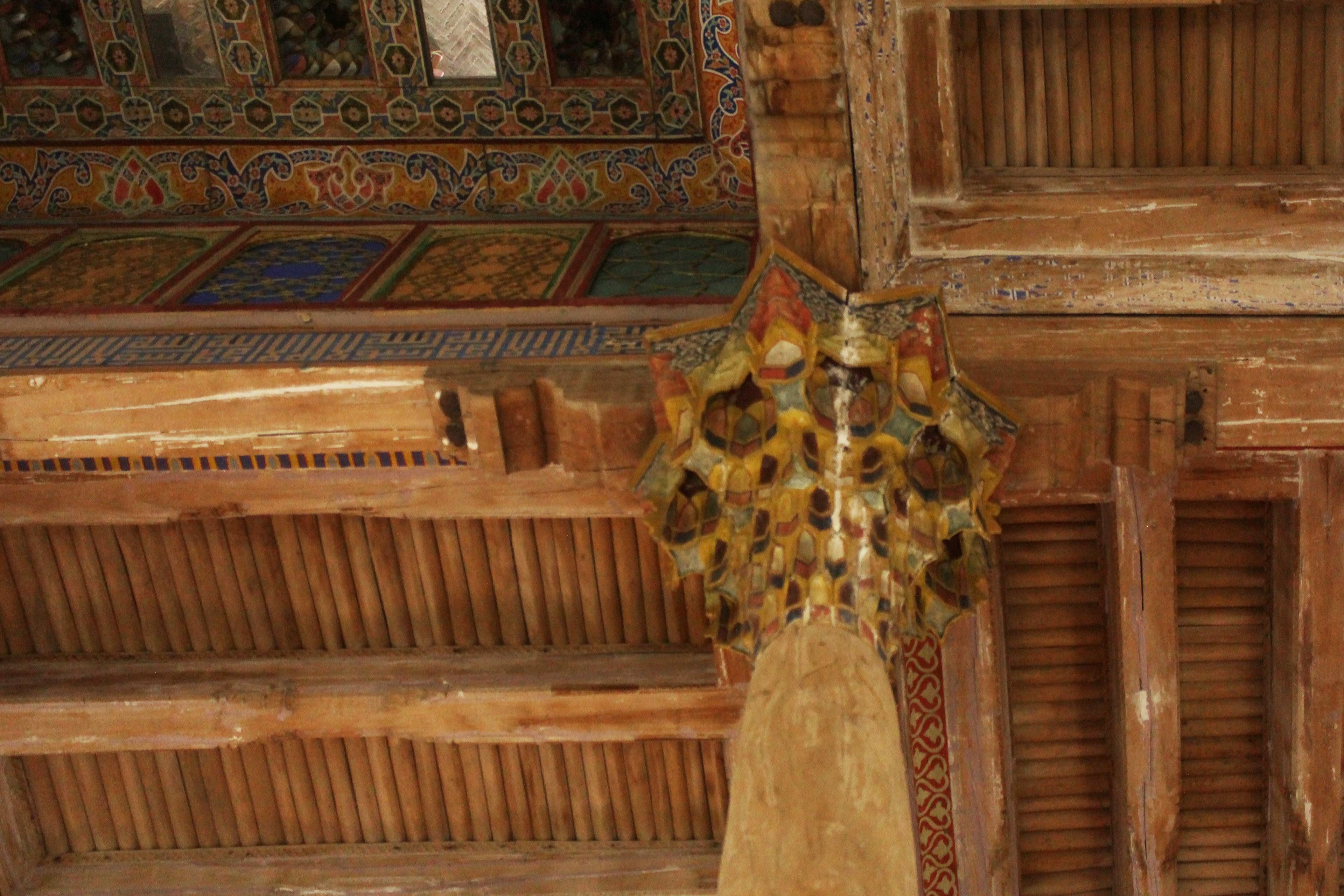
- Juma Mosque (early 18th century): the fortress mosque, with a tall iwan supported by carved and painted wooden columns. Look up at the coffered ceiling.
- Kurinish-khana (reception and coronation courtyard): an open courtyard where emirs received ambassadors and were crowned. The throne stood on a marble platform beneath a canopy at the far end.
- Museum halls: exhibits on the history of Bukhara from ancient times to the 20th century, including manuscripts, coins, weapons, costume and photographs of the last emir's court.
- Views from the walls: from the upper terraces you look across the Registan square to the Bolo-Hauz Mosque and over the rooftops towards the Kalyan Minaret.
Allow about one to one and a half hours. Just outside the Ark, the Bolo-Hauz Mosque (1712), with its slender wooden columns reflected in a pool, is free to view from outside and especially photogenic in the late afternoon. The Zindan, the emir's former prison, is a short walk behind the Ark.
The Kalyan Minaret
The Kalyan Minaret (Minorai Kalon, "the great minaret") was built in 1127 by the Karakhanid ruler Arslan Khan. It stands about 46 metres tall, tapering from roughly nine metres at the base, and for centuries it was the tallest structure in Central Asia, a call to prayer, a watchtower and a landmark for caravans crossing the desert.
Its brickwork is the masterpiece. Fourteen bands of different patterns wrap the shaft, made simply by laying fired bricks at different angles, with a single band of blue glazed tile near the top. As the sun moves, the patterns appear and fade. Under the lantern, an arcade of sixteen arches carries a cornice of carved stalactites.
Two stories follow the minaret. When Genghis Khan took Bukhara in 1220, he is said to have been so impressed by the tower that he ordered it spared while much of the city was destroyed. Later it acquired a grimmer name, the Tower of Death, after the tradition of executing criminals by throwing them from the top; accounts suggest this continued into the late 19th or early 20th century.
Visitors cannot normally climb the minaret. It is best seen from the square between the mosque and madrasah, from inside the mosque courtyard, and from the rooftop cafés nearby at sunset.
Kalyan Mosque and Mir-i-Arab Madrasah
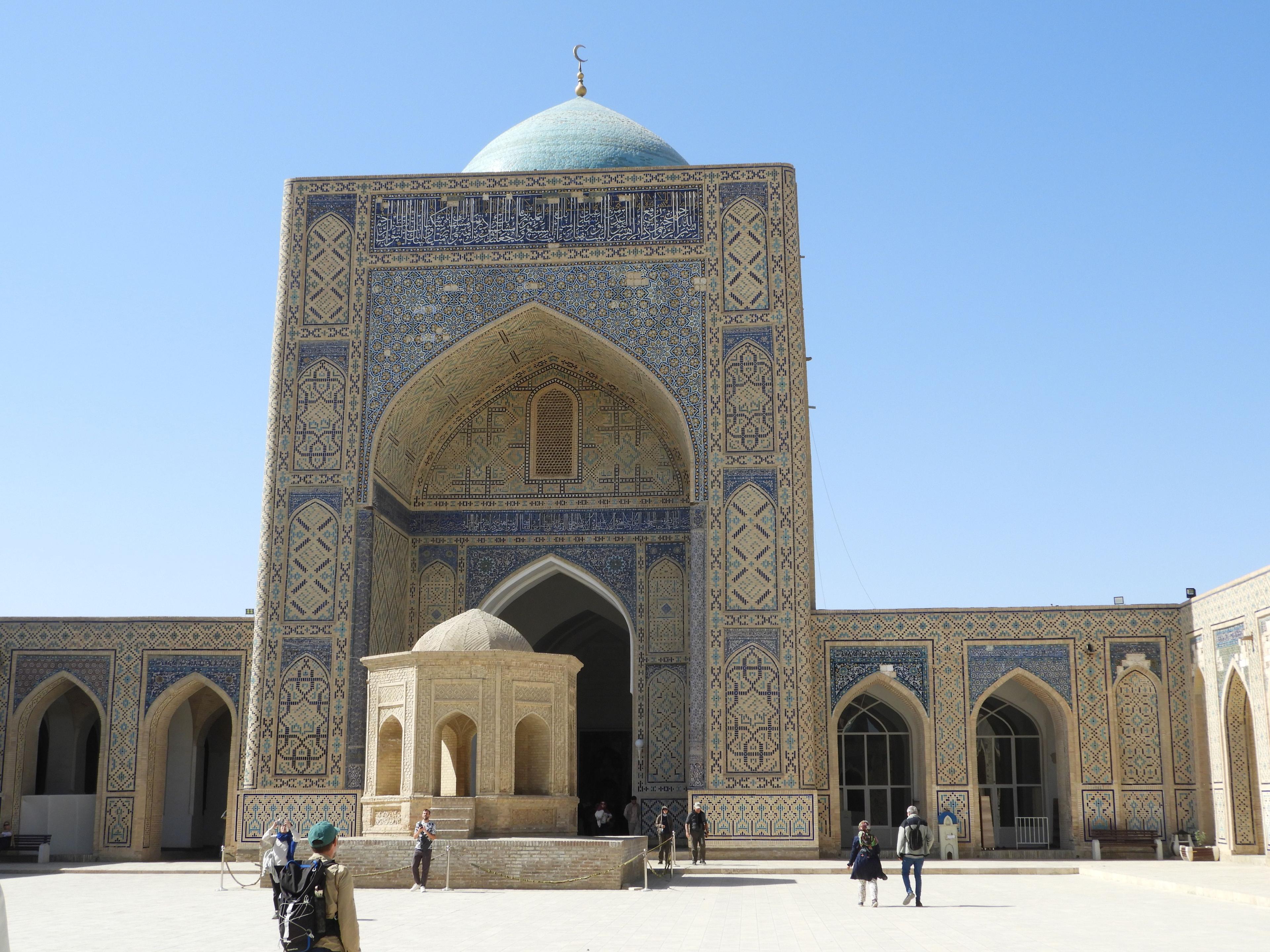
The minaret is joined by a bridge to the Kalyan Mosque, Bukhara's great Friday mosque. The present building was completed in 1514 on the site of earlier mosques, and its courtyard, among the largest in Central Asia, was designed to hold some 10,000 worshippers. Arcaded galleries supporting more than 280 small domes surround the courtyard, and on the western side a tiled portal leads to the prayer hall under a great turquoise dome. In the centre of the courtyard stands a small octagonal pavilion and a single mulberry tree. The mosque is active again and is used for Friday prayers, so non-Muslim visitors are welcome outside prayer times.
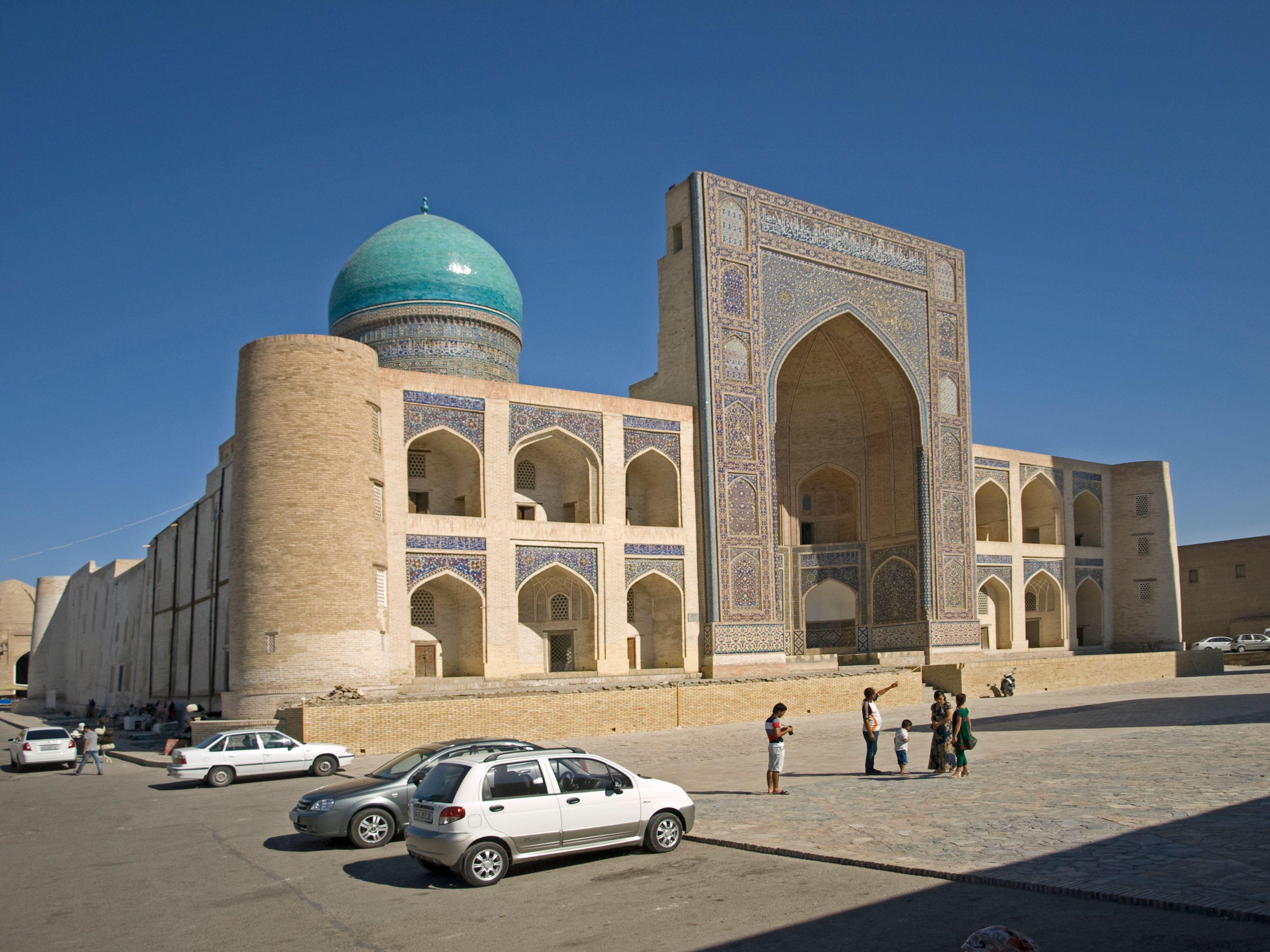
Facing the mosque across the square is the Mir-i-Arab Madrasah, built in 1535 to 1536 under the Shaybanid ruler Ubaydullah Khan and named after his spiritual teacher, Sheikh Abdullah Yamani, known as Mir-i-Arab. Its twin turquoise domes and tiled portal frame the other side of the classic Po-i-Kalyan view. The madrasah is a working religious school and was one of the few that remained open during much of the Soviet period. Tourists can usually only enter the vestibule, where you can look through to the courtyard; the tombs of Ubaydullah Khan and Mir-i-Arab lie in a chamber inside.
The arrangement of the mosque and madrasah facing each other across a square is called kosh, "pair", a feature of Central Asian town planning. Stand in the middle of the square, between the two portals, with the minaret beside you: this is one of the great urban spaces of the Islamic world.
Tickets and opening hours (as of November 2026)
There is no single combined ticket for these sights; you pay at each entrance. Recent figures for foreign visitors:
- Ark Fortress: about 50,000 to 60,000 som (roughly 4 to 5 USD), with 60,000 som most often reported. Open roughly 9:00 to 18:00, sometimes later in summer.
- Kalyan Mosque: a small fee, recently reported at 15,000 to 25,000 som.
- Kalyan Minaret: seen from outside; not normally open for climbing.
- Mir-i-Arab Madrasah: the vestibule is usually free to enter; the courtyard is reserved for students.
- Bolo-Hauz Mosque and the Po-i-Kalyan square: free.
Some museums charge a separate camera fee, so ask at the desk. Bring cash in som. Prices have risen across Uzbekistan in recent years, so check at the ticket office or with your guide.

Best time to visit and photo tips
- The Ark: visit in the morning, when it is cooler and the light falls on the main gate.
- Po-i-Kalyan: late afternoon and sunset, when the brick turns gold and the domes glow. The whole ensemble is floodlit after dark and the square is lively but relaxed.
- Rooftop terraces of the cafés around the square offer an elevated view of the minaret and both domes; buy a drink and enjoy the light.
Dress modestly for the mosque and madrasah, with shoulders and knees covered, and avoid visiting during Friday midday prayers. Spring and autumn are ideal; in July and August, temperatures in Bukhara can pass 40°C, so plan sightseeing for early morning and evening.
Getting your bearings: Lyabi-Hauz and the trading domes
Old Bukhara is compact and almost entirely walkable, with a simple axis running east to west.
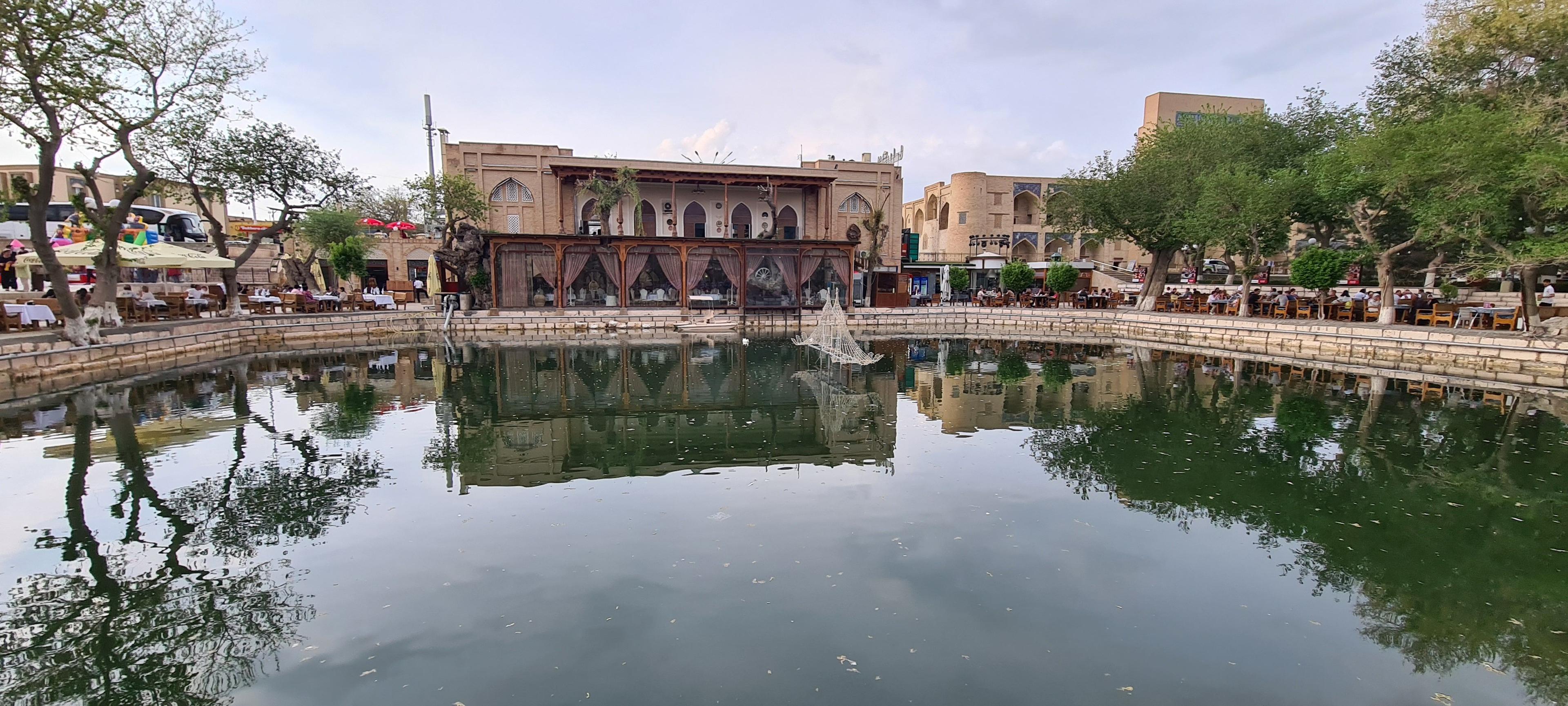
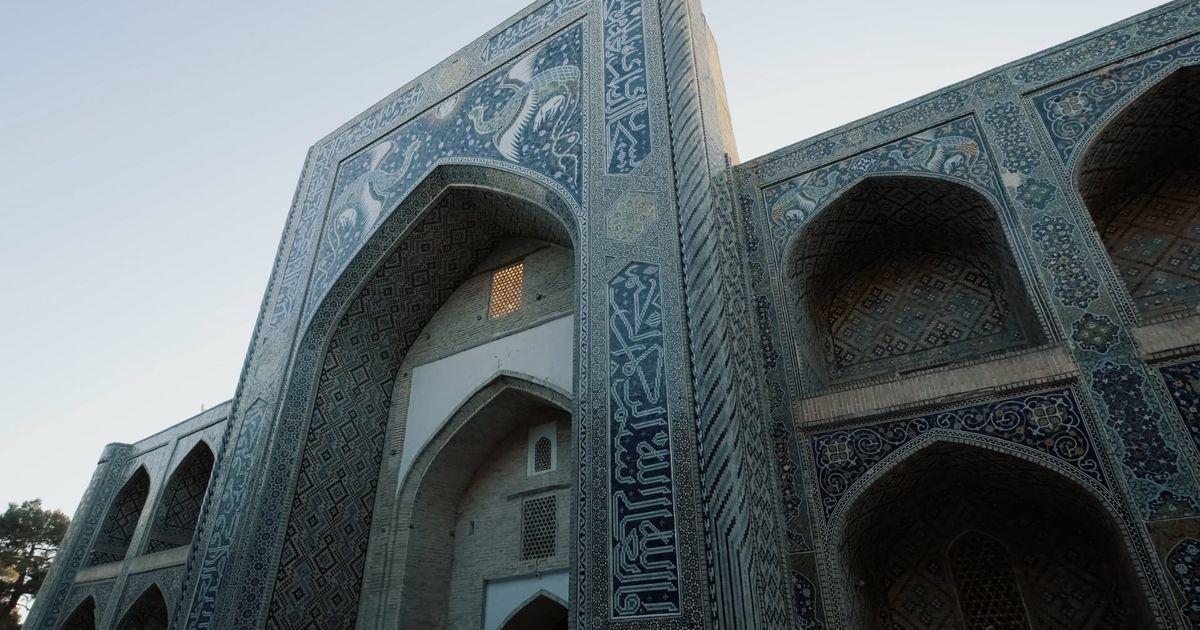
- Lyabi-Hauz: the city's favourite square, built around a pool dating from 1620, shaded by old mulberry trees and framed by the Kukeldash Madrasah and the Nadir Divan-Begi madrasah and khanaka. It is the natural meeting point, full of teahouses, with a statue of the folk hero Khoja Nasreddin on his donkey.
- The trading domes: from Lyabi-Hauz, the main lane runs west through a series of 16th-century covered bazaars, the toki. Toki Sarrafon was the money changers' dome, Toki Tilpak Furushon the hat sellers' and Toki Zargaron the jewellers'. Between them is the Tim of Abdullah Khan, a covered market hall. Today they sell carpets, suzani embroidery, ceramics and knives.
- Po-i-Kalyan: just beyond Toki Zargaron, about 10 to 15 minutes' walk from Lyabi-Hauz.
- The Ark: another five minutes north-west of the minaret.
A classic Bukhara day: the Ark in the morning, the Samanid Mausoleum and Chashma-Ayub in the park nearby, lunch, then the trading domes and Po-i-Kalyan in the afternoon, ending with dinner at Lyabi-Hauz. Most visitors arrive from Samarkand or Tashkent on the Afrosiyob high-speed train.
Visiting with TourEast
Bukhara is our home city as well as Tashkent, and our guides know its lanes and stories intimately. We can show you the Ark and Po-i-Kalyan as part of a small-group tour, or design an unhurried private itinerary with time for craftsmen's workshops and the quieter corners of the old town.
Frequently asked questions
Watch
Photo gallery