How Genghis Khan destroyed the Khwarazmian Empire in two years: the Otrar incident, the march across the Kyzylkum, the fall of Bukhara and Samarkand, the flooding of Gurganj, Jalal ad-Din's last stand, and what survives on the ground in Bukhara, Samarkand and Khorezm today.
Facts, prices and schedules checked on November 4, 2026
In the winter of 1219 the largest empire in the Islamic east stretched from the Caspian to the Indus, ruled from the cities you will visit on any Uzbekistan tour. Two years later it did not exist. Genghis Khan's invasion of the Khwarazmian Empire is one of the pivotal events of Central Asian history, and the places where it happened, Bukhara, Samarkand, the Khorezm oasis and the Syr Darya towns, are exactly where travellers walk today.
This article, written by our guides, tells the story in order: the caravan massacred at Otrar, the Khwarazmshah's fatal strategy, the march across the Kyzylkum, the fall of Bukhara and Samarkand in 1220, the drowning of Gurganj, the resistance of Jalal ad-Din Manguberdi and the Chagatai legacy that led, a century and a half later, to Amir Timur. At each stage we say what survives on the ground and where to stand.
Who was the Khwarazmshah, and why did Genghis Khan attack?
The Khwarazmian dynasty began as governors of the Khorezm oasis on the lower Amu Darya, with their capital at Gurganj (today Konye-Urgench, across the border in Turkmenistan, and not to be confused with modern Urgench in Uzbekistan). Under Ala ad-Din Muhammad II, who ruled from 1200, they swallowed Transoxiana, Khorasan and much of Iran, taking Bukhara and Samarkand from the Qarakhanids only a few years before the Mongols arrived.
Genghis Khan, by 1218 master of Mongolia and northern China, wanted trade, not war, with his western neighbour. He sent a caravan of several hundred merchants to Otrar, a Khwarazmian frontier city on the Syr Darya near present-day Turkistan in Kazakhstan. The governor, Inalchuq, accused them of spying and had them killed, and Muhammad backed him. When the Khan sent envoys to demand the governor be handed over, the chief envoy was executed and the others humiliated. The Otrar incident of 1218 made war inevitable.
Muhammad's response was the strategic blunder of the age. Rather than concentrate his larger army, he spread garrisons across the cities and waited, suspicious of his own generals and of his mother, Terken Khatun, whose faction controlled the court. The Mongols would take his empire one city at a time.
The campaign of 1219–1220: Otrar and the march across the Kyzylkum
The Mongol army, perhaps 100,000 to 150,000 strong with Chinese siege engineers, crossed into Khwarazmian territory in the autumn of 1219. It divided. Two of the Khan's sons besieged Otrar, which held out for months before falling around February 1220; Inalchuq was captured and executed. Another column rode down the Syr Darya, taking Khujand, where the governor Timur Malik fought a celebrated rearguard action from an island fortress before escaping downstream.
Genghis himself did the unexpected. With his youngest son Tolui he led the main force south-west across the Kyzylkum desert, a route of some 500 kilometres that the Khwarazmians considered impassable for an army, and appeared on 7 February 1220 outside Bukhara, deep behind the frontier and far from any relieving force. Anyone who has driven the road between Bukhara and Khiva, or stayed at a yurt camp among the Kyzylkum dunes, will understand what that march meant.
The fall of Bukhara, February 1220
Bukhara's garrison tried to break out on the second or third night and was cut down on the banks of the Amu Darya. The city surrendered on 10 February; the citadel, today's Ark, held for another twelve days until Mongol engineers breached it. According to the Persian historian Juvayni, writing some forty years later, Genghis rode into the Friday mosque, had the city's notables assembled, and told them that he was the punishment of God sent for their sins. The fighting around the citadel set the wooden city alight and most of it burned.
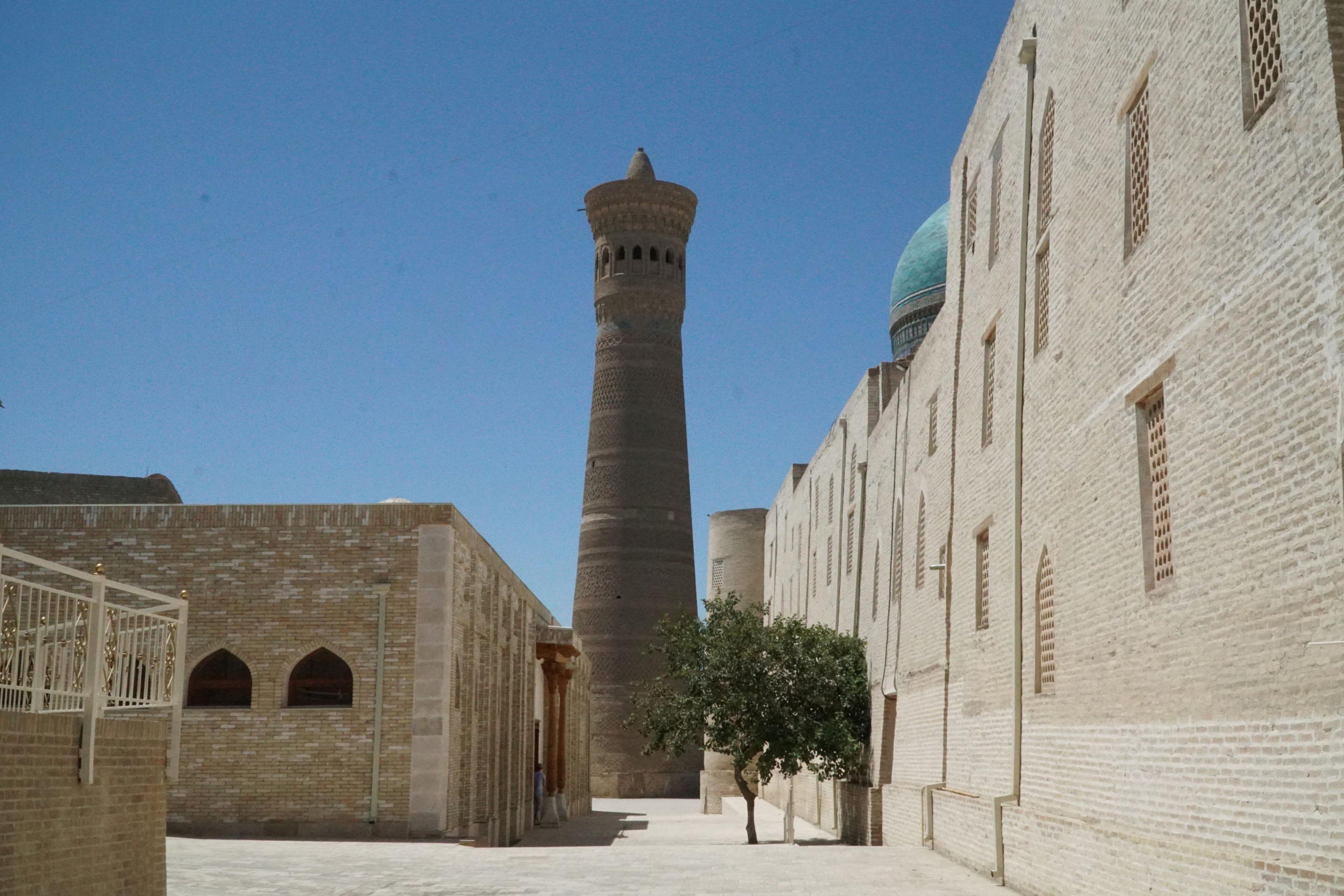
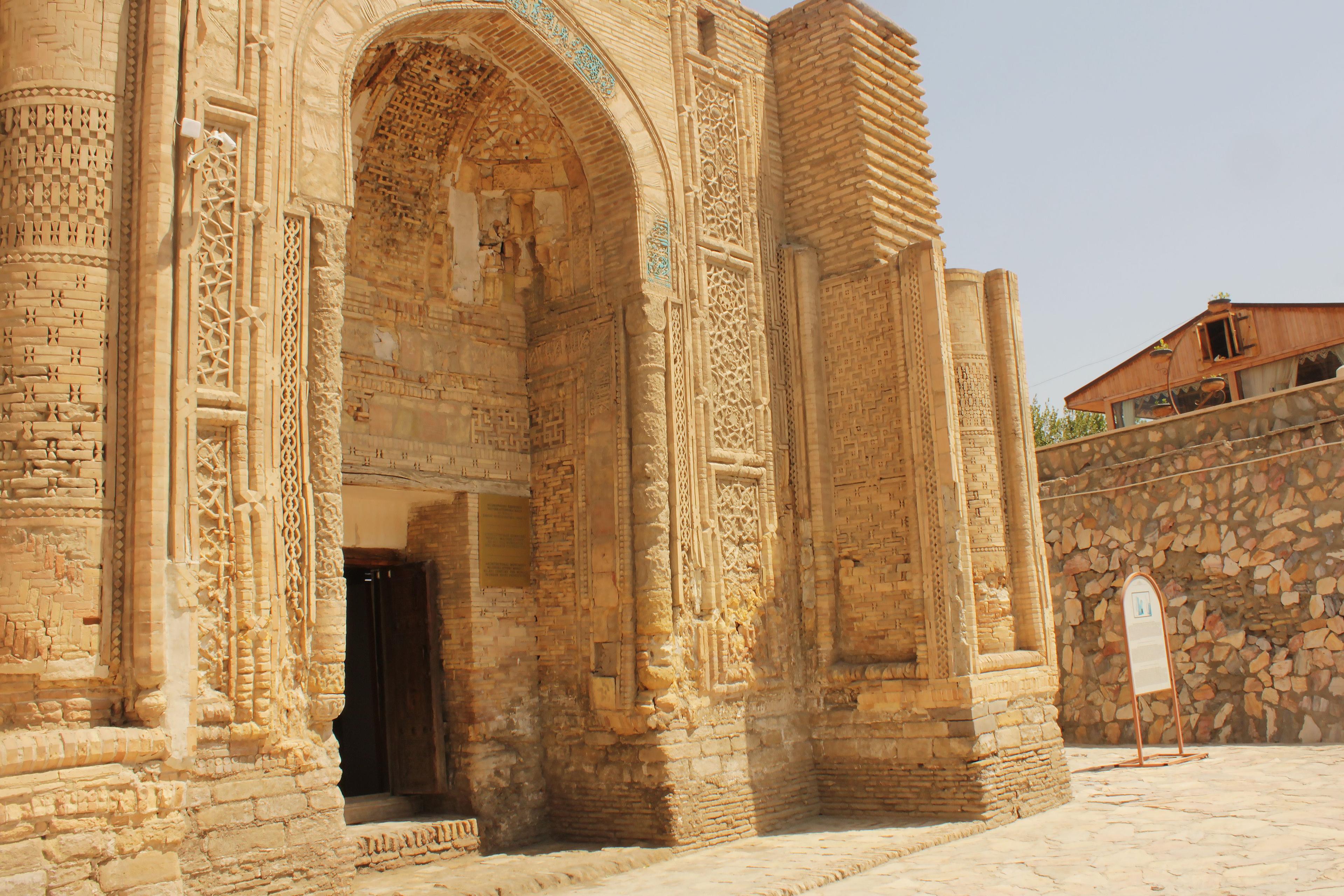
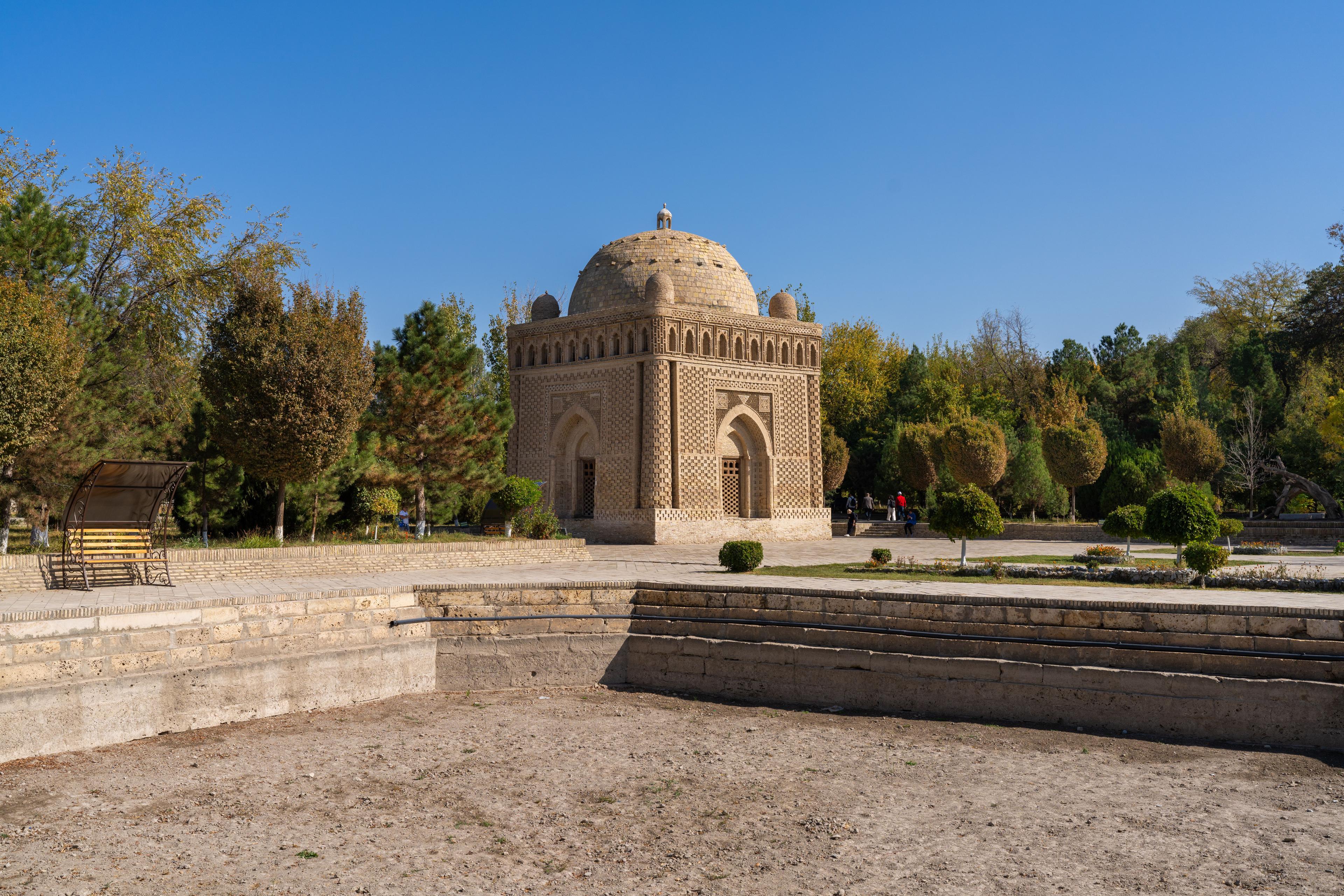
What survived is what you see now. The Kalyan Minaret, built in 1127, was left standing; tradition says the Khan was impressed by it, though the mosque at its foot was destroyed and the present Kalyan Mosque is a 16th-century rebuilding. The Magoki-Attori Mosque, partly below street level, came through, and the 10th-century Samanid Mausoleum survived because it was already half buried in silt, which is why it was lost and rediscovered only in the 1930s. The Ark itself was rebuilt many times; the walls you climb today are mostly 18th and 19th century on far older foundations. Craftsmen were marched east to Mongolia, and men of fighting age were pressed into the next siege as human shields.
Where to stand: on the Po-i-Kalyan square at dusk, looking up at the minaret that watched all of it; then the Samanid park, where the building that outlasted the Mongols sits among the trees. Our Bukhara in Depth tour spends a morning on exactly this layer of the city's history.
Samarkand, March 1220, and the move to a new city
Genghis reached Samarkand in March 1220, where his sons joined him with the army from Otrar. The Khwarazmshah's largest garrison was here, with figures in the sources ranging from 40,000 to over 100,000 men and a detachment of war elephants, but it broke within days. A sortie was destroyed, the Turkic troops tried to change sides and were killed anyway, and the city's clergy negotiated a surrender. The citadel fell soon after. Artisans, as at Bukhara, were deported; the population was dispersed and allowed to return only after paying a ransom.
The old Samarkand of the Sogdians and Qarakhanids stood on the hill of Afrasiab, north of the present centre. After 1220 it was never fully reoccupied; the city regrew to the south-west over the following century, and when Amir Timur made Samarkand his capital in 1370 he built on the new ground. That is why the Registan, Bibi-Khanym and Gur-e-Amir stand where they do, and why Afrasiab is an archaeological site of bare mounds with a museum of Sogdian murals beside it.
Where to stand: walk the Afrasiab ridge from the museum towards the Hazrat Khizr Mosque. Below you is the pre-Mongol city, above you is nothing. Then go to Shah-i-Zinda, whose oldest shrine, that of Kusam ibn Abbas, already existed when the Mongols came and around which Timur's family later built the avenue of mausoleums.
Gurganj and the flooding of the capital, 1221
The Khwarazmshah himself had fled west ahead of the army. Two Mongol generals, Jebe and Subutai, chased him across Iran; he died of illness on an island in the Caspian in December 1220, abandoned by almost everyone. His capital, Gurganj, held out longest. Besieged from late 1220 by three of the Khan's sons, who quarrelled over the command until Ogedei was put in charge, it fell in April 1221 after months of street fighting. The sources say the Mongols then broke the dams on the Amu Darya and flooded the ruins. Gurganj was rebuilt, flourished again under the Golden Horde, and was destroyed a second time by Timur in the 1380s.
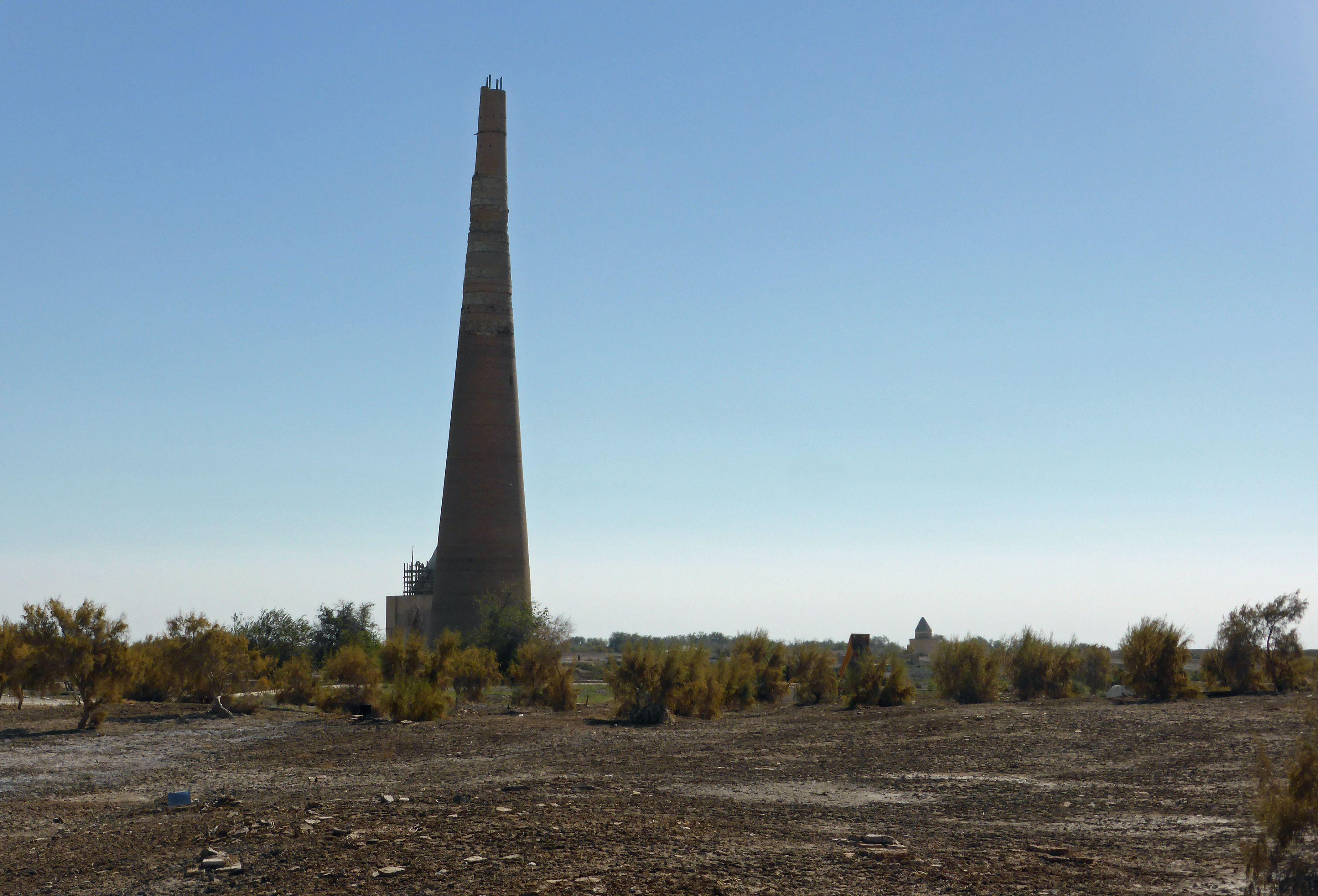
What survives stands at Konye-Urgench in Turkmenistan, 20 kilometres from the Uzbek border: the Kutlug Timur minaret, at about 60 metres one of the tallest medieval minarets in Central Asia, the mausoleums of Turabek Khanum and Sultan Tekesh, and the mound of the pre-Mongol city. It can be visited as a day trip from Khiva with a Turkmen visa or transit visa, crossing at the Shavat and Dashoguz border. We do not operate in Turkmenistan, but we can arrange the Uzbek side: the transfer from Khiva to the border and advice on the paperwork. Our Khiva to Turkmenistan border article covers the practicalities.
On the Uzbek side of the oasis, the Khorezm desert fortresses of Ayaz-Kala and Toprak-Kala predate the Mongols by a thousand years and give a sense of the defensive landscape the invaders found; Old Termez, on the Amu Darya far to the south, was also destroyed in 1220 and never rebuilt on the same site.
Jalal ad-Din Manguberdi: the resistance
The Khwarazmshah's eldest son, Jalal ad-Din, was everything his father was not. Escaping south through Khorasan, he gathered an army in Afghanistan and in the autumn of 1221 defeated a Mongol force at Parwan, north of Kabul, the first serious Mongol defeat of the campaign. Genghis came after him in person. On 24 November 1221, on the banks of the Indus, Jalal ad-Din's army was surrounded and destroyed. He rode his horse off the bank into the river and swam to the far side in full armour, and the Khan, watching, is said to have told his sons that a father should have such a son.
Jalal ad-Din spent the next decade fighting across India, Iran, the Caucasus and Anatolia, never recovering Khorezm, and was killed in 1231 in Kurdistan. In independent Uzbekistan he has become a national hero: a state order bears his name, the overnight train between Tashkent and Urgench is named after him, and an equestrian statue stands in Urgench, the modern city that took the old capital's name. Monuments to him are the natural place to end a Khorezm itinerary.
After the conquest: the Chagatai Khanate and the road to Timur
Transoxiana passed to Chagatai, the Khan's second son, and his descendants ruled it as the Chagatai Khanate for a century and a half. Recovery was slow but real. Bukhara and Samarkand were rebuilt within the old walls, Islam reasserted itself among the Mongol elite within two generations, and the trade routes the Mongols had policed from China to the Black Sea brought a new prosperity. Juvayni, who recorded the horrors, worked for the Mongol administration himself.
By the mid-14th century the khanate had fragmented into tribal confederations, and it was from one of these, the Barlas of Shakhrisabz, that Amir Timur emerged. He took Samarkand in 1370, married into the line of Genghis Khan so that he could rule in a Chinggisid's name, and built the city whose monuments draw visitors now. In a real sense the Mongol invasion cleared the ground on which Timurid Samarkand was built. Our articles on Amir Timur and on the history of Uzbekistan pick up the story from there.
Following the Mongol invasion on the ground
A history-minded traveller can trace the whole campaign in a two-week loop:
- Tashkent and the Syr Darya: the Chirchik valley was the Mongols' approach route; Otrar's ruins lie a day trip across the Kazakh border near Turkistan, which we can advise on
- Khujand (Tajikistan): Timur Malik's island fortress site, visited from the Fergana side or as a day trip from Tashkent with a Tajik e-visa
- Samarkand: Afrasiab and its museum, the Hazrat Khizr Mosque above the old city, the oldest shrine at Shah-i-Zinda, then the Timurid city built on new ground
- Bukhara: the Kalyan Minaret, Magoki-Attori, the Samanid Mausoleum and the Ark
- The Kyzylkum: the desert road between Bukhara and Khiva, ideally with a night at a yurt camp
- Khorezm: the pre-Mongol desert fortresses, Jalal ad-Din's statue in Urgench and, for those with a Turkmen visa, Konye-Urgench
Our Silk Road Grand Tour covers every Uzbek site on this list, and we can shape a private itinerary around the campaign with a guide who knows the chronicles, add the Khujand or Otrar day trips on the Uzbek side, and arrange the transfer to the Turkmen border for Konye-Urgench.