TourEast Travel
Khiva

The Walled Desert Jewel

Khiva

Overview

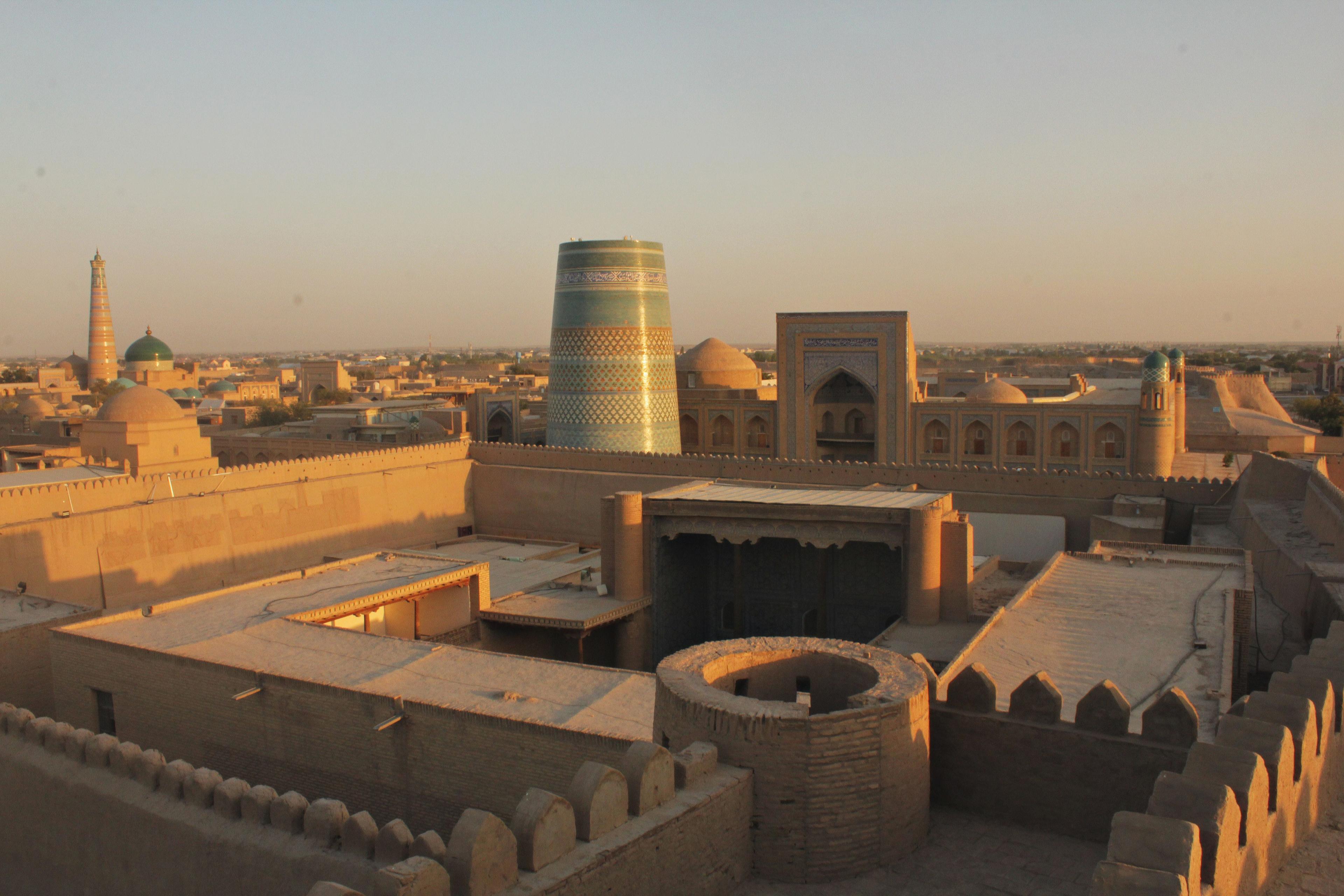
Rising from the Kyzylkum desert, Khiva’s walled inner town of Itchan Kala feels like stepping into a living fairy tale — a compact, perfectly preserved ensemble of minarets, madrasahs and palaces within ancient mud-brick walls.

Why Visit

  • Itchan Kala, an open-air museum enclosed by towering walls
  • The unmistakable turquoise Kalta Minor minaret
  • Magical at dawn and dusk when the crowds thin

Travel Tips

  • — Stay overnight to experience the walled city after dark
  • — A single ticket covers most monuments inside the walls
  • — Combine with Bukhara via a scenic desert crossing

Sights in Khiva
Ichan-Kala, the Walled Inner Town

Architectural ensemble · Walls from antiquity; most buildings 18th–early 20th c.

Ichan-Kala, the Walled Inner Town

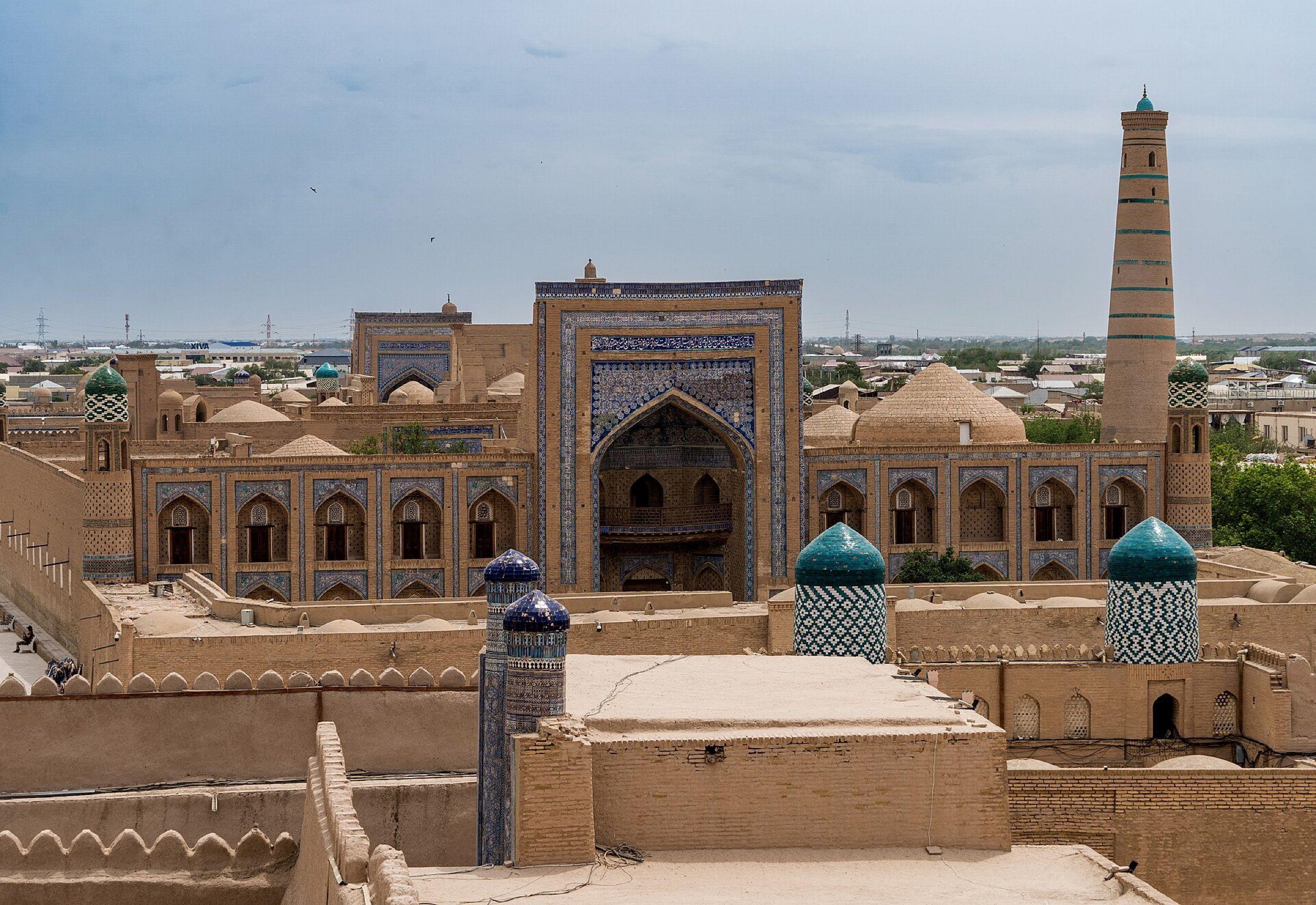
A complete walled town of madrasahs, minarets, palaces and mud-brick houses, still lived in. Ichan-Kala was Uzbekistan’s first UNESCO World Heritage Site, inscribed in 1990, and the reason most travellers cross the desert to Khiva.

Read more
Kalta Minor Minaret

Minaret · 1852–1855 (unfinished)

Kalta Minor Minaret

A squat, turquoise-tiled tower that was meant to be the tallest minaret in the Muslim world and stopped at 29 metres when its builder, Muhammad Amin Khan, was killed in battle. It is Khiva’s emblem.

Read more
Kunya-Ark Citadel

Fortress · 17th c., rebuilt and extended in the 19th c.

Kunya-Ark Citadel

The fortress-residence of the khans of Khiva, set against the west wall of Ichan-Kala: a tiled throne courtyard, a summer mosque lined with majolica, the old mint and a watchtower with the best view in town.

Read more
Juma Mosque

Mosque · Rebuilt 1788–1789 on an older site; some columns centuries older

Juma Mosque

A low, dim hall with more than two hundred carved wooden columns and almost no decoration besides them. The Friday mosque of Khiva is unlike any other in Central Asia, and some of its pillars are many centuries older than the building.

Read more
Tash-Hauli Palace

Palace · 1830–1841

Tash-Hauli Palace

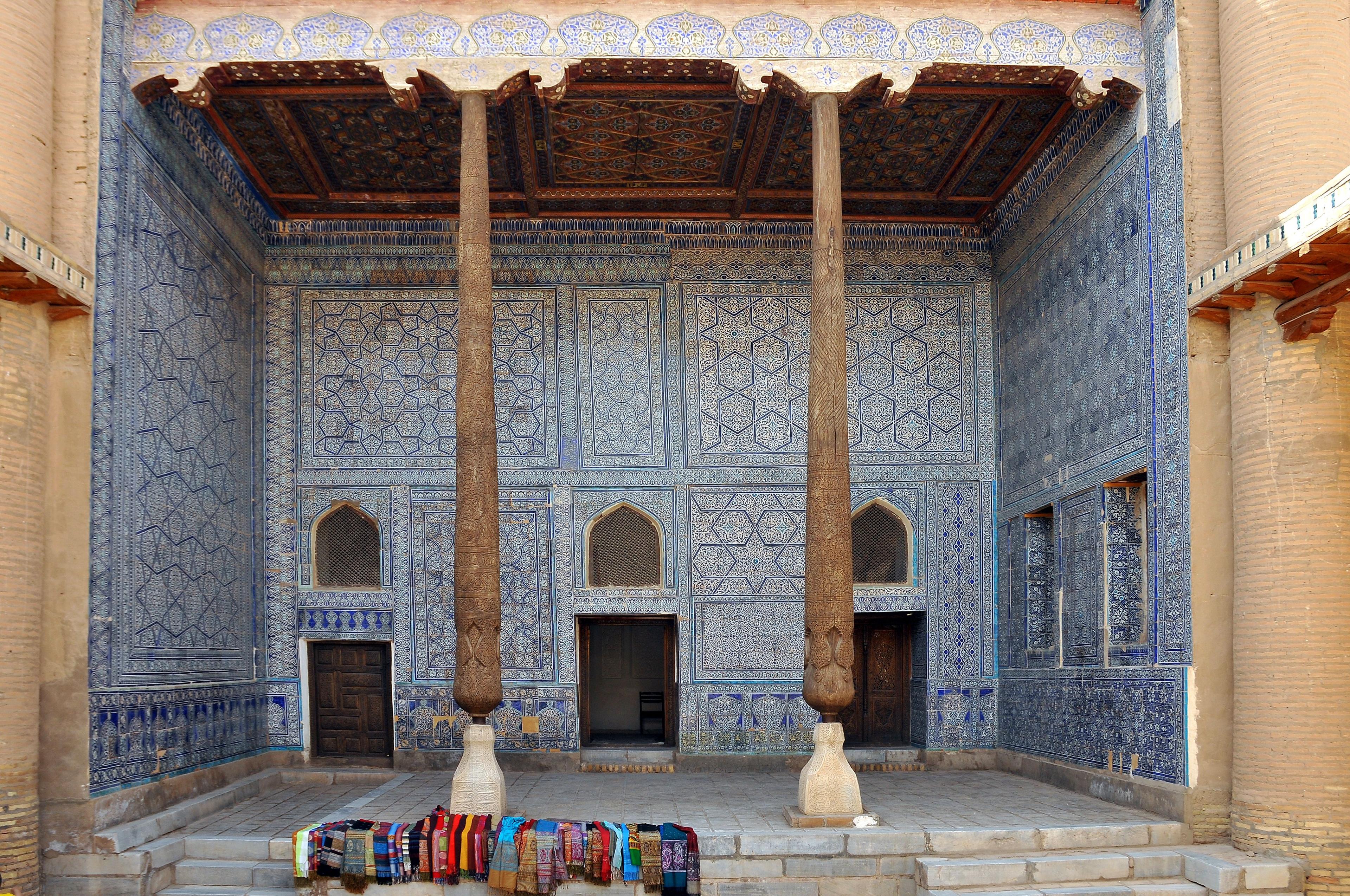
The palace of Allakuli Khan, built in the 1830s around three courtyards: a harem of five tiled iwans, a court of audience and a court of justice. Its blue-and-white majolica is the finest in Khiva.

Read more
Islam Khodja Minaret and Madrasah

Minaret · 1908–1910

Islam Khodja Minaret and Madrasah

At about 57 metres, the striped minaret of Islam Khodja is the tallest in Khiva and its last great monument. Climb it for the widest view of Ichan-Kala; the small madrasah beside it holds the Museum of Applied Arts.

Read more
Pakhlavan Makhmud Mausoleum

Mausoleum · Shrine from the 14th c.; present complex mostly 19th–early 20th c.

Pakhlavan Makhmud Mausoleum

The shrine of Khiva’s patron saint, a 14th-century poet, furrier and undefeated wrestler, under the largest turquoise dome in town. Inside, walls of blue majolica; outside, pilgrims, newly-weds and a well said to grant strength.

Read more
Muhammad Amin Khan Madrasah

Madrasa · 1851–1855

Muhammad Amin Khan Madrasah

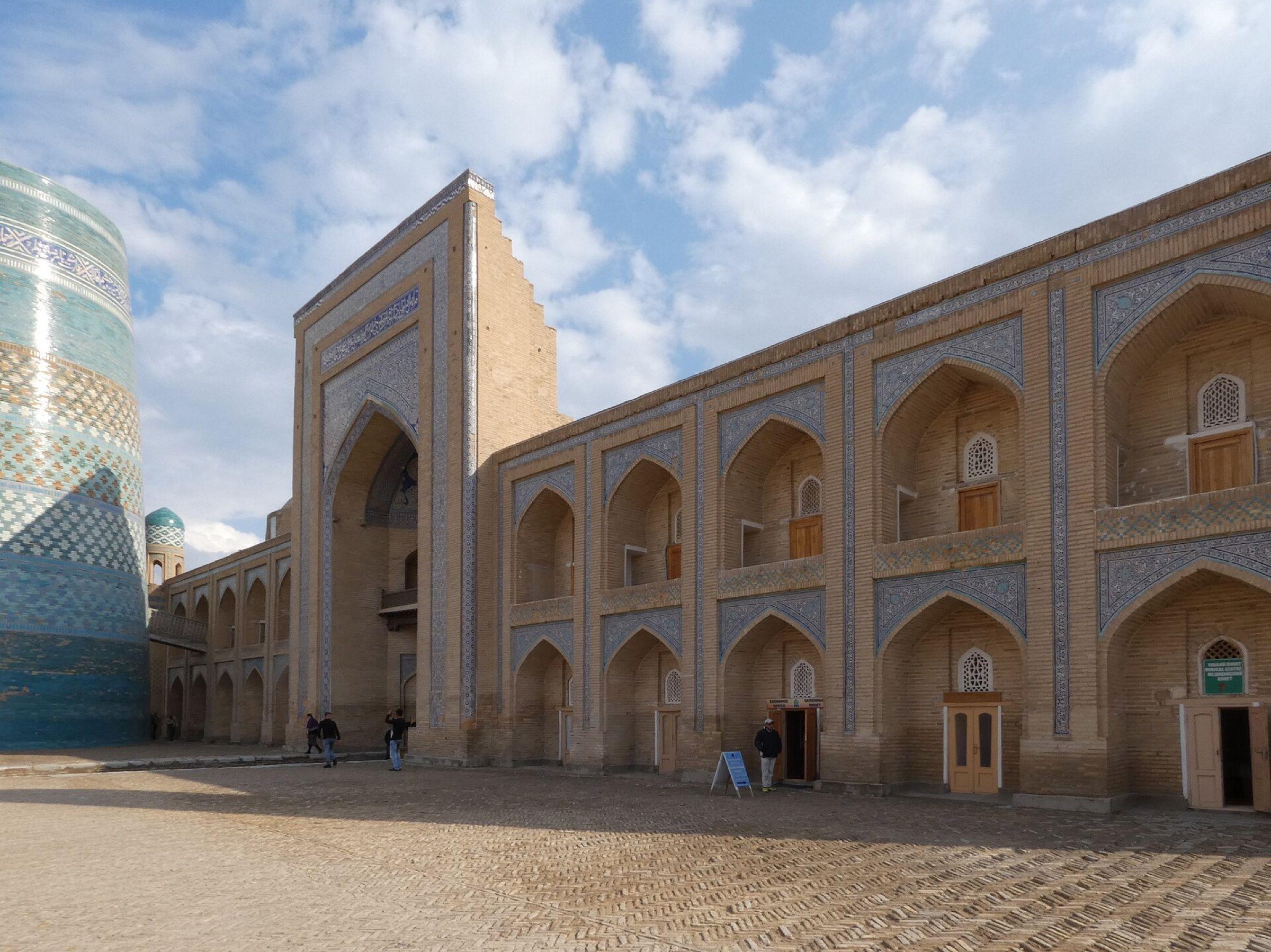
The largest madrasah in Khiva, a two-storey block of 125 student cells by the west gate, with Kalta Minor standing at its door. Once the seat of the khanate’s supreme court, it is now a hotel.

Read more
Ota-Darvoza Gate and the Walls of Ichan-Kala

Fortress · Walls of ancient origin, mostly rebuilt 17th–19th c.; gate rebuilt 1975

Ota-Darvoza Gate and the Walls of Ichan-Kala

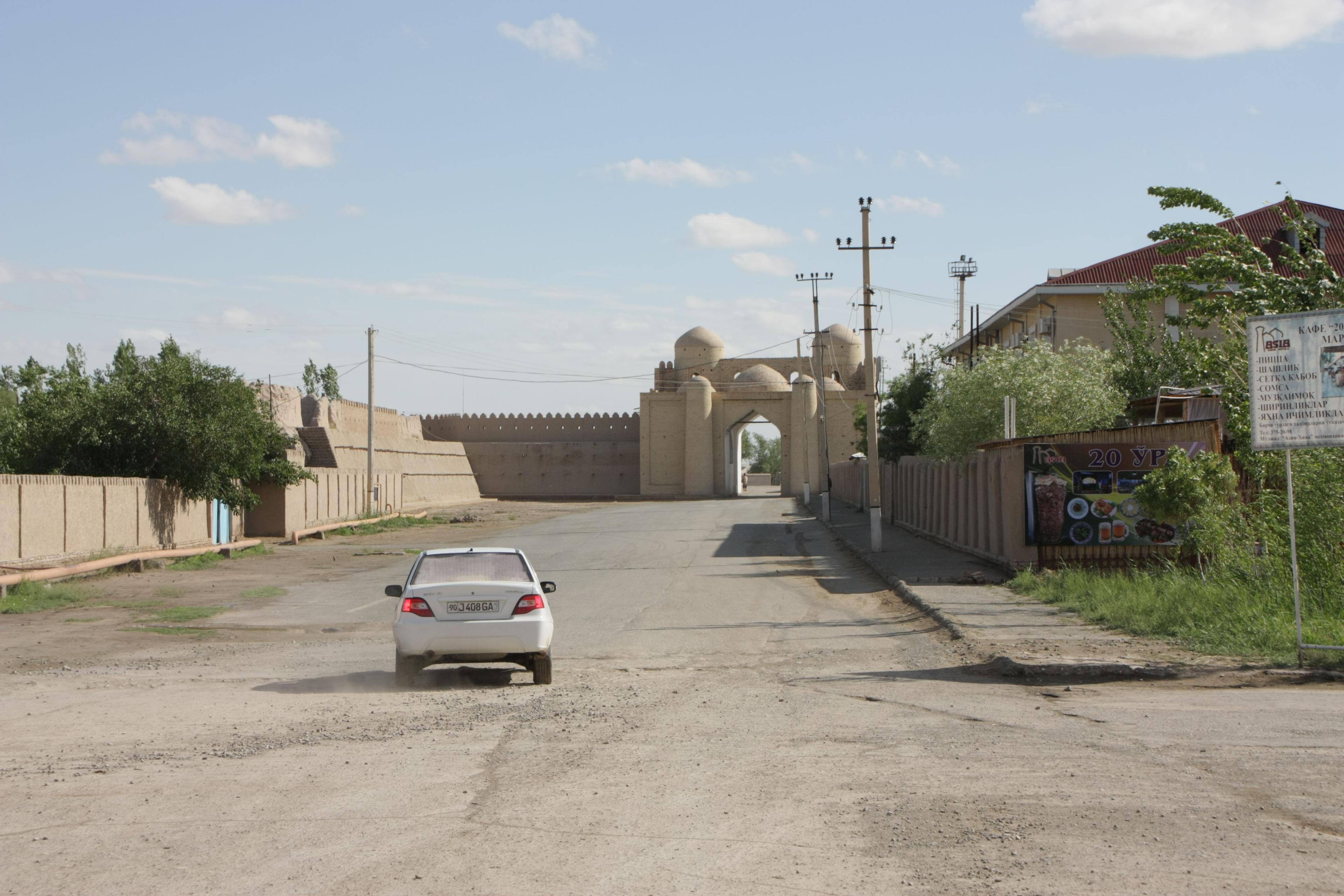
About 2.2 km of mud-brick ramparts, 8–10 metres high, with rounded bastions and four gates. Enter by Ota-Darvoza, the west gate, and come back at sunset to walk the walls as they turn gold.

Read more
Muhammad Rakhim Khan Madrasah

Madrasa · 1871

Muhammad Rakhim Khan Madrasah

The last of Khiva’s great madrasahs, facing the gate of the Kunya-Ark. It was built by Muhammad Rakhim Khan II, the khan who wrote poetry as Feruz and signed Khiva into a Russian protectorate; a museum inside tells his story.

Read more
Allakuli Khan Madrasah, Caravanserai and Tim

Architectural ensemble · 1832–1835

Allakuli Khan Madrasah, Caravanserai and Tim

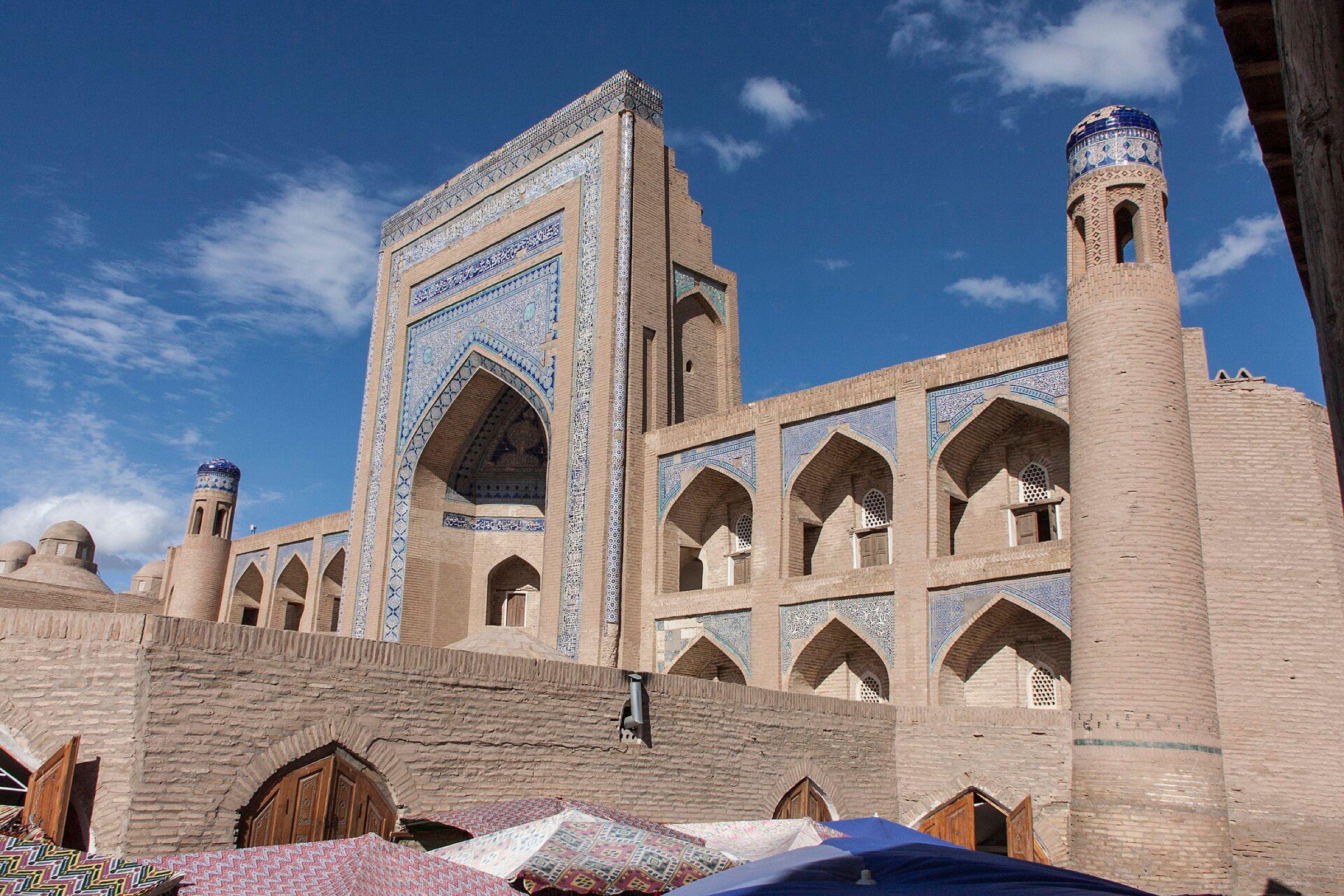
By the east gate, Allakuli Khan built a commercial quarter in the 1830s: a caravanserai for merchants, a domed covered market (tim) and a tall madrasah beside them. Together they show the trading side of the khans’ capital.

Read more
Nurullabay Palace

Palace · Early 1900s–1912

Nurullabay Palace

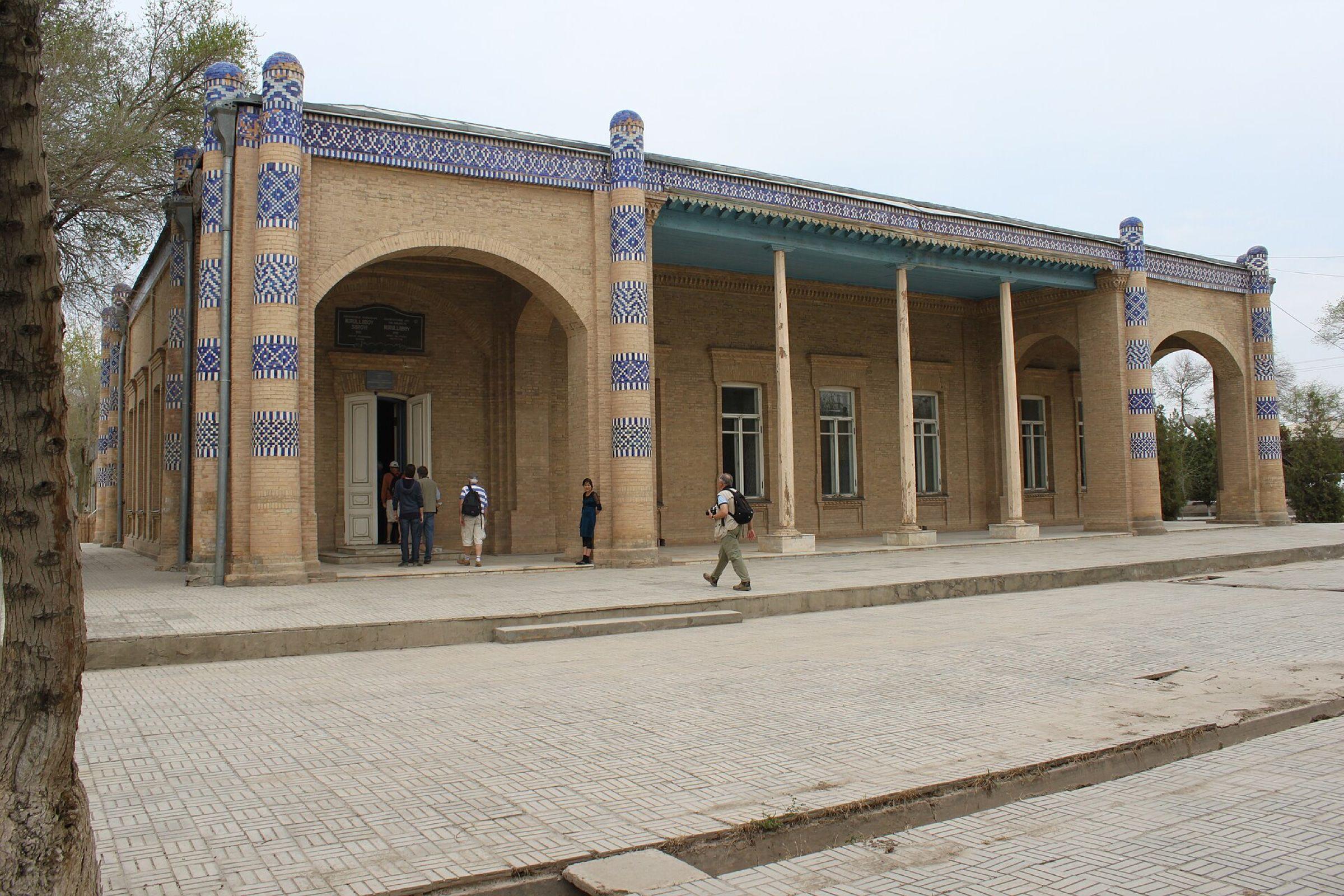
The last palace of the khans of Khiva, built outside the walls in the early 20th century, where Khorezm tilework and carved wood meet Russian stoves, European ceilings and crystal chandeliers.

Read more
Dishan-Kala, the Outer Town

Old quarter · Outer wall 1842; buildings 19th–early 20th c.

Dishan-Kala, the Outer Town

The outer ring of old Khiva, once enclosed by a six-kilometre wall built in 1842. Today it is the everyday town: the main bazaar, surviving gates, the Nurullabay Palace and a few early-20th-century buildings of the late khanate.

Read more

Plan Your Trip to Khiva

Let our local experts craft a journey around this destination, tailored entirely to you.

Trip builder

Prefer your own route?

Answer four questions and get a day-by-day plan with a price range — in 60 seconds.

Build my trip