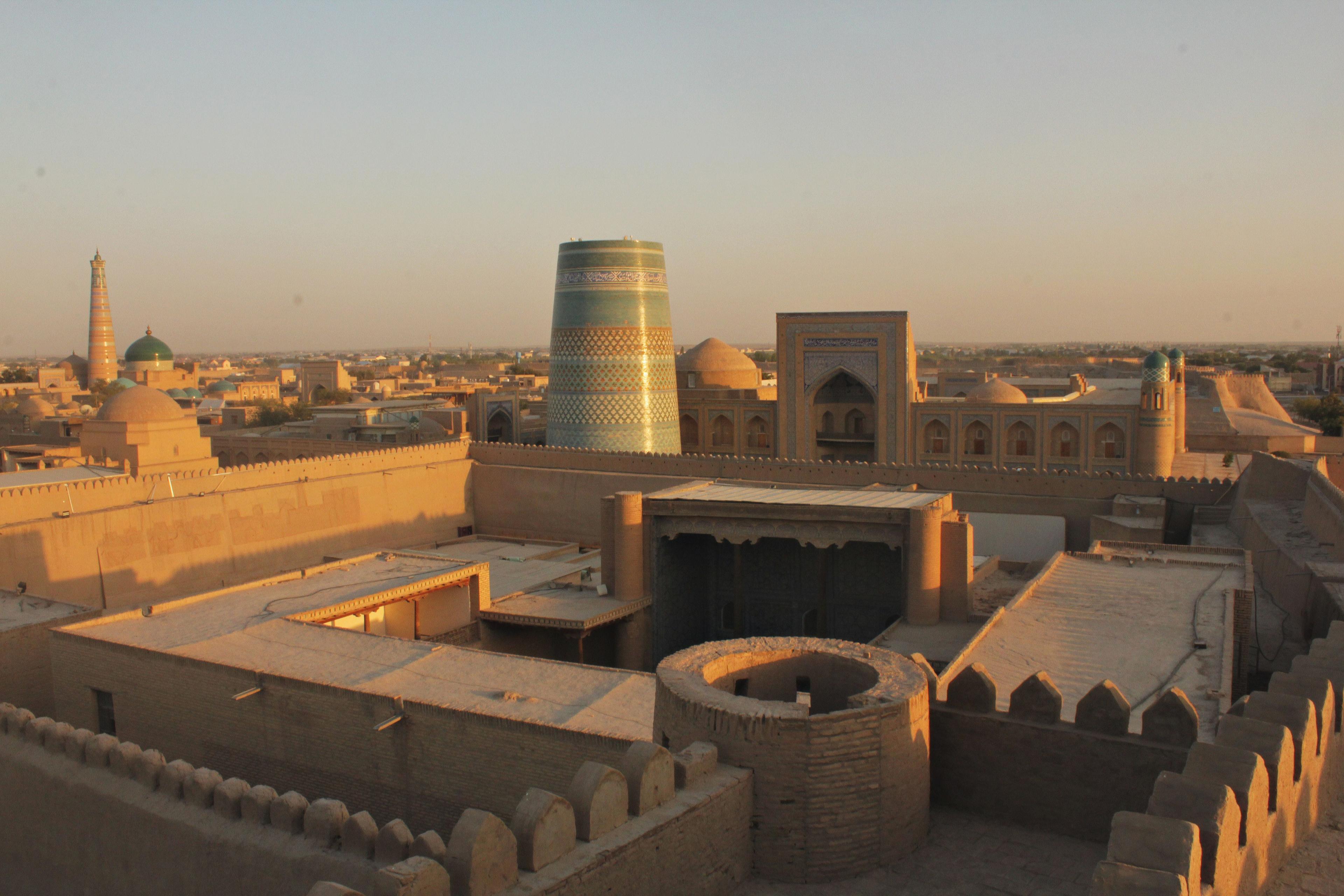
Khiva's walled inner town is the most complete old city in Central Asia, small enough to cross in fifteen minutes and rich enough to fill two days. What the single ticket covers, the monuments not to miss, where to watch sunset from the walls and how long to stay.
Facts, prices and schedules checked on November 4, 2026
Arrive at Khiva's western gate in the late afternoon and you will understand at once why travellers call it a city from a story. Clay-brown walls rise straight out of the street, and behind them a skyline of minarets, domes and tiled portals glows in the low sun.
This is Ichan-Kala (also written Itchan Kala), the walled inner town of Khiva. In 1990 it became the first site in Uzbekistan to be inscribed on the UNESCO World Heritage List. Inside its walls are more than 50 historic monuments and around 250 old houses, most of them from the 18th and 19th centuries, when Khiva was the capital of an independent khanate in the Khorezm oasis.
Unlike Samarkand or Bukhara, where the great monuments are spread through a modern city, Ichan-Kala is compact and almost entirely historic. People still live here, children play in the lanes and families run guesthouses in courtyard homes. That combination of museum and neighbourhood is what makes it special.
The walls and gates
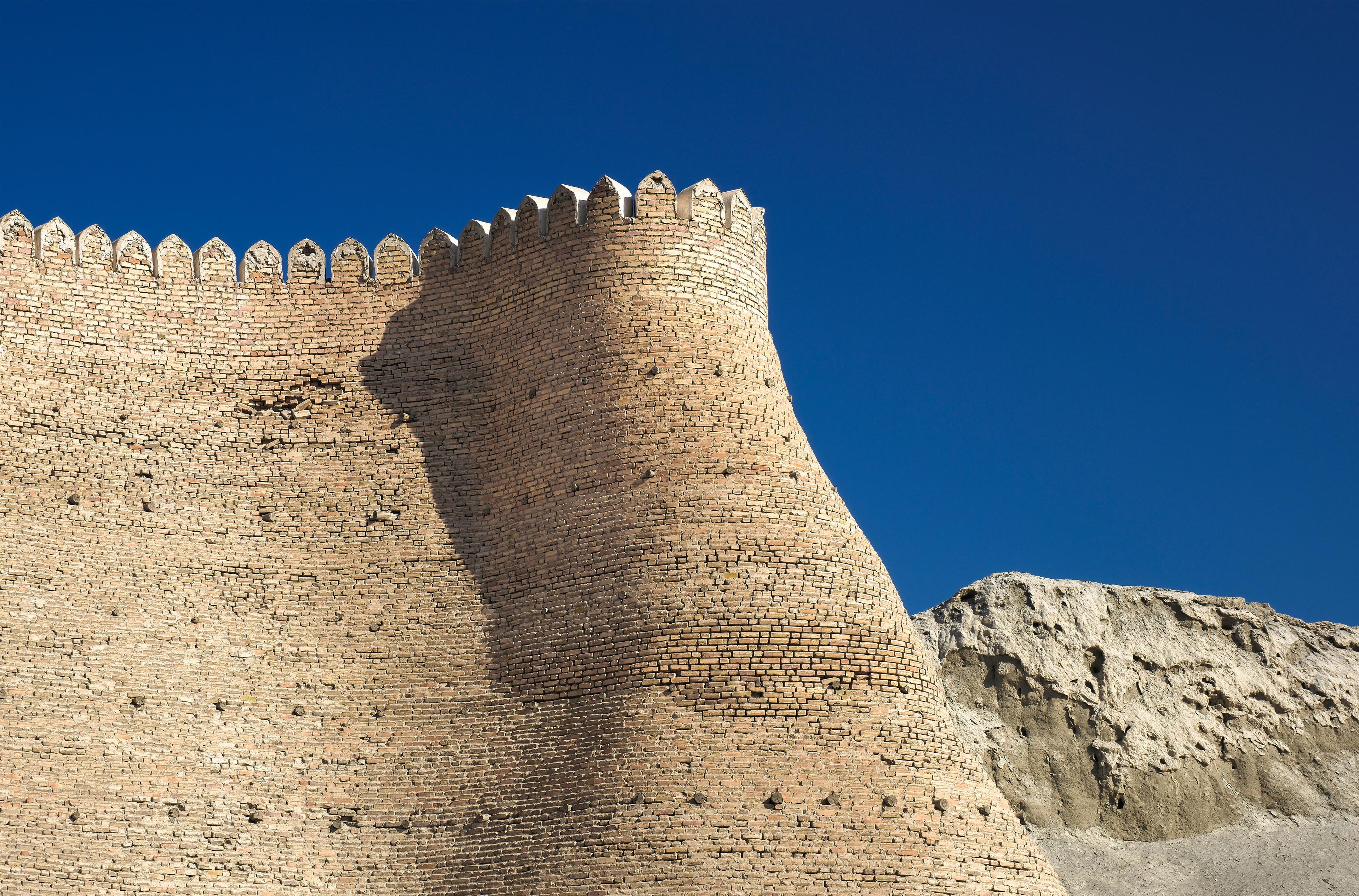
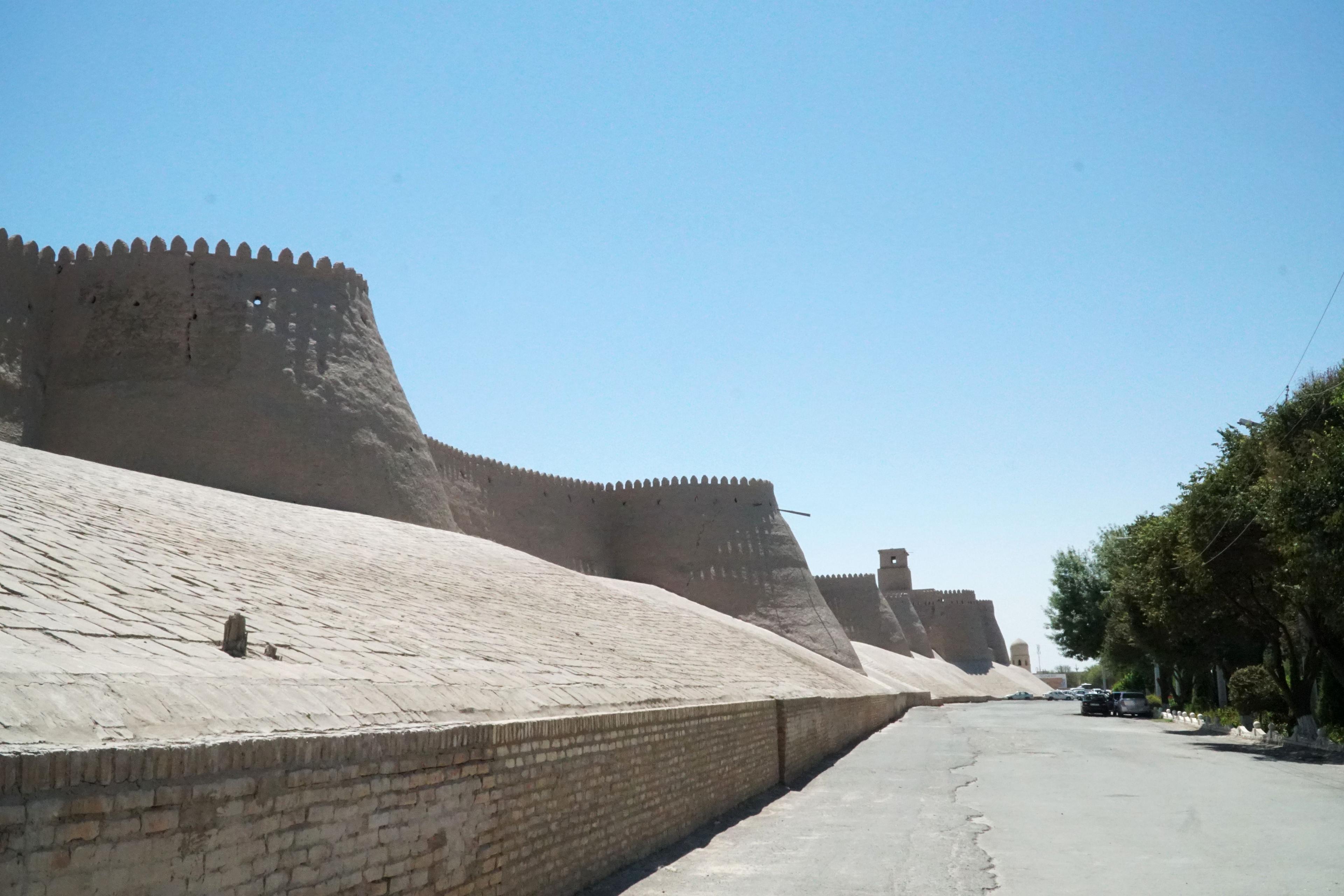
The walls of Ichan-Kala run for more than two kilometres around an oblong town of about 26 hectares. Built of sun-dried mud brick and rebuilt many times, they stand roughly 8 to 10 metres high, with rounded bastions at regular intervals and a crenellated parapet.
Four gates face the four directions:
- Ata-Darvaza (west gate): the main entrance for visitors, with the ticket office and the statue of the scholar al-Khwarizmi just outside.
- Bakhcha-Darvaza (north gate): "garden gate", leading towards the old orchards.
- Palvan-Darvaza (east gate): "strongman's gate", once beside the slave market, with a long domed passage and a lively bazaar outside.
- Tash-Darvaza (south gate): "stone gate".
Walking from the west gate to the east gate takes about ten minutes if you do not stop, which you will.
The single ticket: what it covers
Ichan-Kala uses a combined ticket, sold at the ticket office by the west gate (and usually at the other gates too). You can walk the streets without one, but you need it to enter the museums and monuments.
As of November 2026:
- Price for foreign visitors: recent reports range from 150,000 to 250,000 som (roughly 12 to 20 USD), with 250,000 som the most recent figure we have seen. Check the current price at the gate.
- Validity: usually the whole day of purchase; some visitors report a two-day validity, so ask when you buy.
- Included: most of the madrasahs and museums, including the Kunya-Ark interior, the Juma Mosque, the Muhammad Rahim Khan Madrasah and the various small museums of history, crafts and nature in the madrasah cells.
Not included, paid separately on the spot:
- Climbing the Islam Khoja minaret (recently reported at 100,000 to 150,000 som).
- The Ak-Sheikh Bobo watchtower in the Kunya-Ark, the classic panorama point (recently reported around 100,000 som).
- Some sections of the walls and a few individual sites, such as the inner chamber of the Pakhlavan Makhmud mausoleum.
Bring cash in som for the extras. Uzbekistan's prices have risen quickly in the last two years, so treat these figures as a guide.
Kalta Minor and the Kunya-Ark
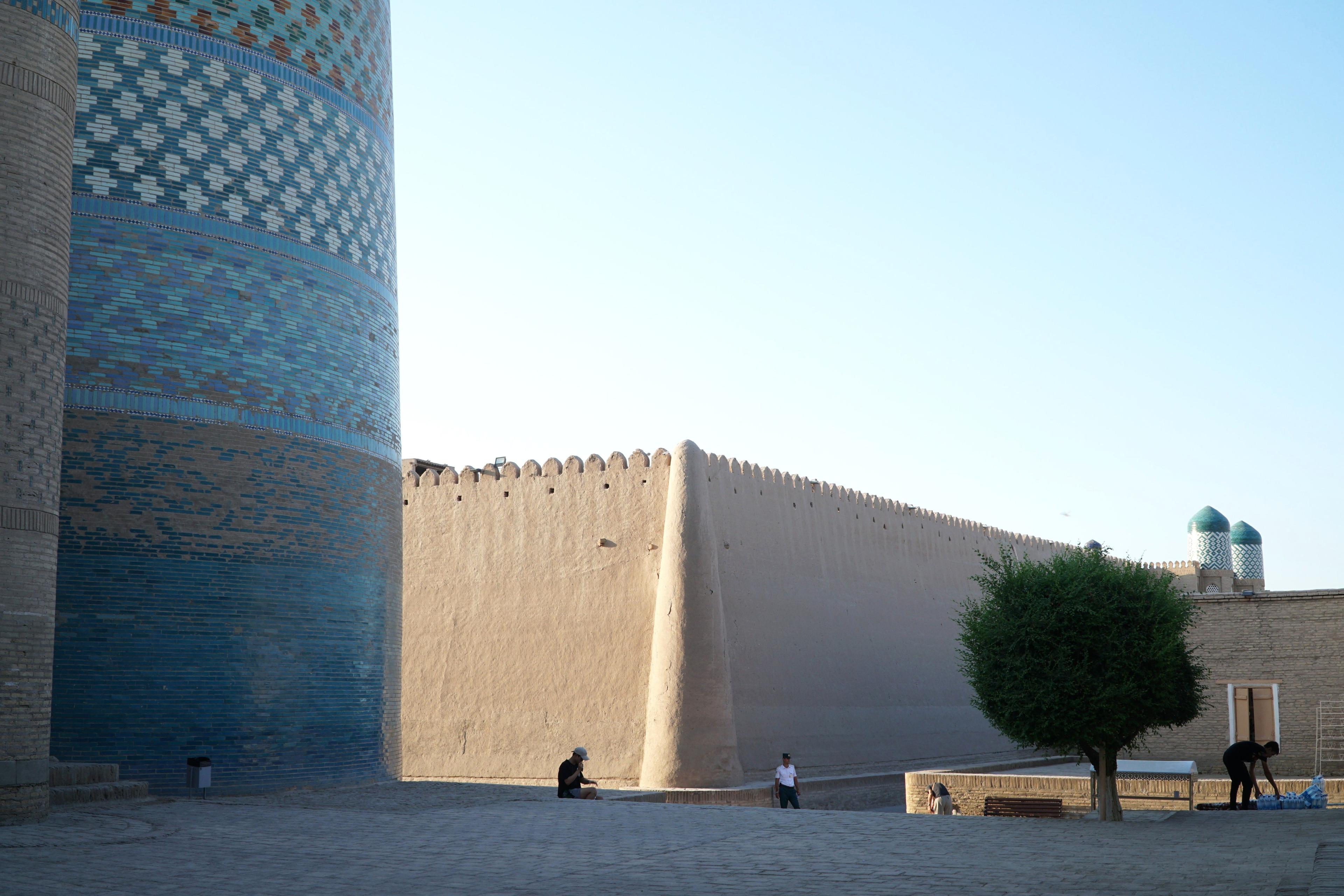
Just inside the west gate stands the image everyone associates with Khiva: Kalta Minor, the "short minaret". Muhammad Amin Khan began it around 1851, intending it to be the tallest minaret in the Islamic world, high enough, according to local stories, to see Bukhara. Work stopped when the khan was killed in battle in 1855, leaving a wide, stubby tower of around 29 metres. It is entirely sheathed in bands of turquoise, blue and white glazed tile, and it is the most colourful thing in the city. You cannot climb it, but it is worth seeing from every side.
Opposite is the Kunya-Ark, the "old fortress", residence of the khans from the 17th century. Inside the walls are a summer mosque lined with blue and white majolica, the old mint and the Kurinish-khana, the throne room and reception hall with its tiled iwan and carved wooden columns. Look for the round platform in the courtyard where the khan's yurt was pitched: even in a palace, the rulers of Khiva liked to receive guests in a felt tent.
At the corner of the Ark, the Ak-Sheikh Bobo watchtower gives the best view over the rooftops, with Kalta Minor in the foreground. It costs extra but is worth it, especially in late afternoon.
Juma Mosque
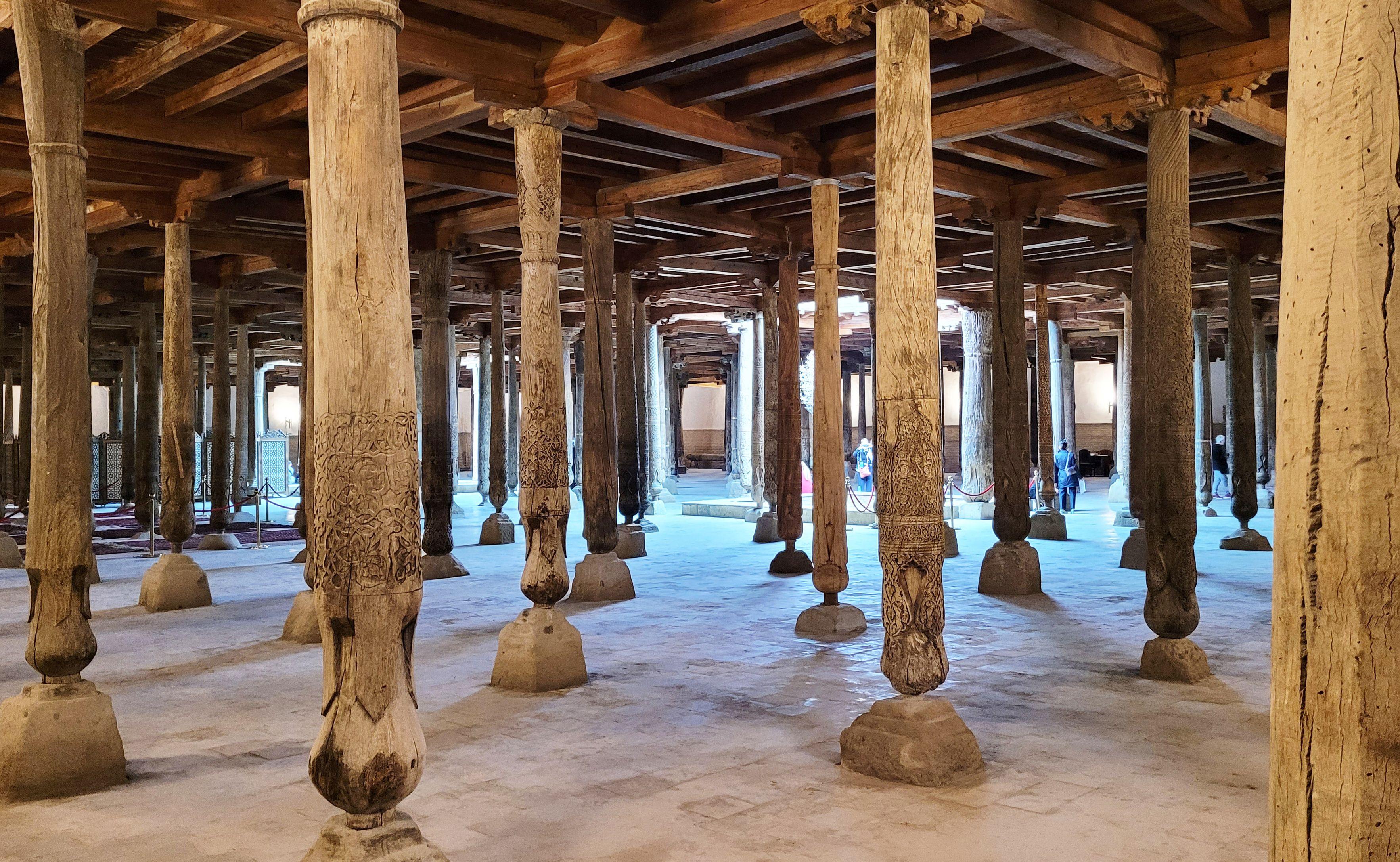
In the centre of Ichan-Kala, on the main street between the west and east gates, stands the Juma (Friday) Mosque. From outside it is plain: a low brick building with a single minaret. Step inside and you enter a dim forest of carved wooden columns, more than 200 of them in long rows, supporting a flat roof. Two openings in the ceiling let in shafts of light that move across the floor during the day.
The mosque was first recorded in the 10th century and rebuilt in its present form in the late 18th century, but many of the columns are older, reused from earlier buildings. A few are believed to date back as far as the 10th to 14th centuries; you can spot them by their different shapes and the darker, more weathered wood. Take your time here. It is one of the most atmospheric interiors in Central Asia.
The mosque's minaret, about 42 metres high, can sometimes be climbed for an extra fee; ask at the entrance.
Islam Khoja minaret and the Pakhlavan Makhmud mausoleum
The tallest structure in Khiva, the Islam Khoja minaret, was built in 1908 to 1910 for Islam Khoja, the reforming grand vizier of the khanate who also founded a hospital and a post office. At around 57 metres, it is banded in turquoise and white tiles and visible from almost anywhere in town.
A narrow spiral staircase of more than a hundred steps leads to the top. It is dark, steep and unsuitable for anyone uncomfortable with tight spaces, but the reward is a full panorama of Ichan-Kala, the walls and the desert beyond. The small madrasah beside it houses a museum of applied arts with woodcarving, ceramics and metalwork.
Right next door is the shrine of Pakhlavan Makhmud (1247 to 1325), who was a furrier by trade, a poet and a legendary wrestler, said never to have lost a bout. He became Khiva's patron saint, and his tomb grew into the city's most revered shrine. The present complex dates largely from the 19th century, crowned by a large turquoise dome, the only one of its kind in the city. Several khans chose to be buried beside him.
Inside, the walls are covered with exquisite blue and white majolica, among the finest tilework in Khiva. This is an active place of pilgrimage: dress modestly, remove your shoes where asked and keep your voice low. In the courtyard you will often see families and newly-weds drinking water from the well, which is believed to bring strength and good fortune.
Tash-Hauli palace
Near the east gate stands Tash-Hauli, "stone courtyard", the palace of Allakuli Khan, built in the 1830s. It is divided into a harem, a reception courtyard and a court of justice, linked by narrow, twisting corridors.
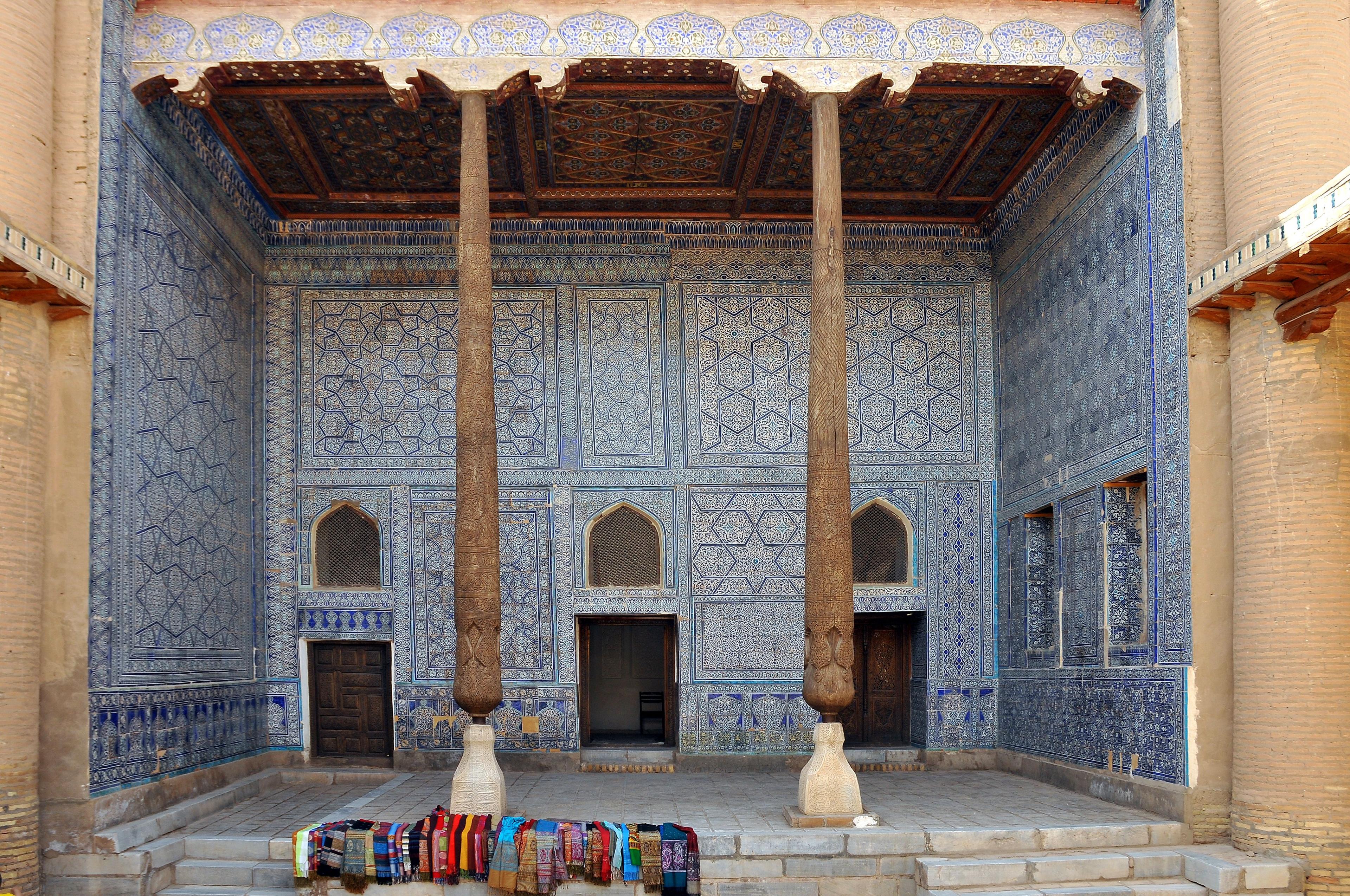
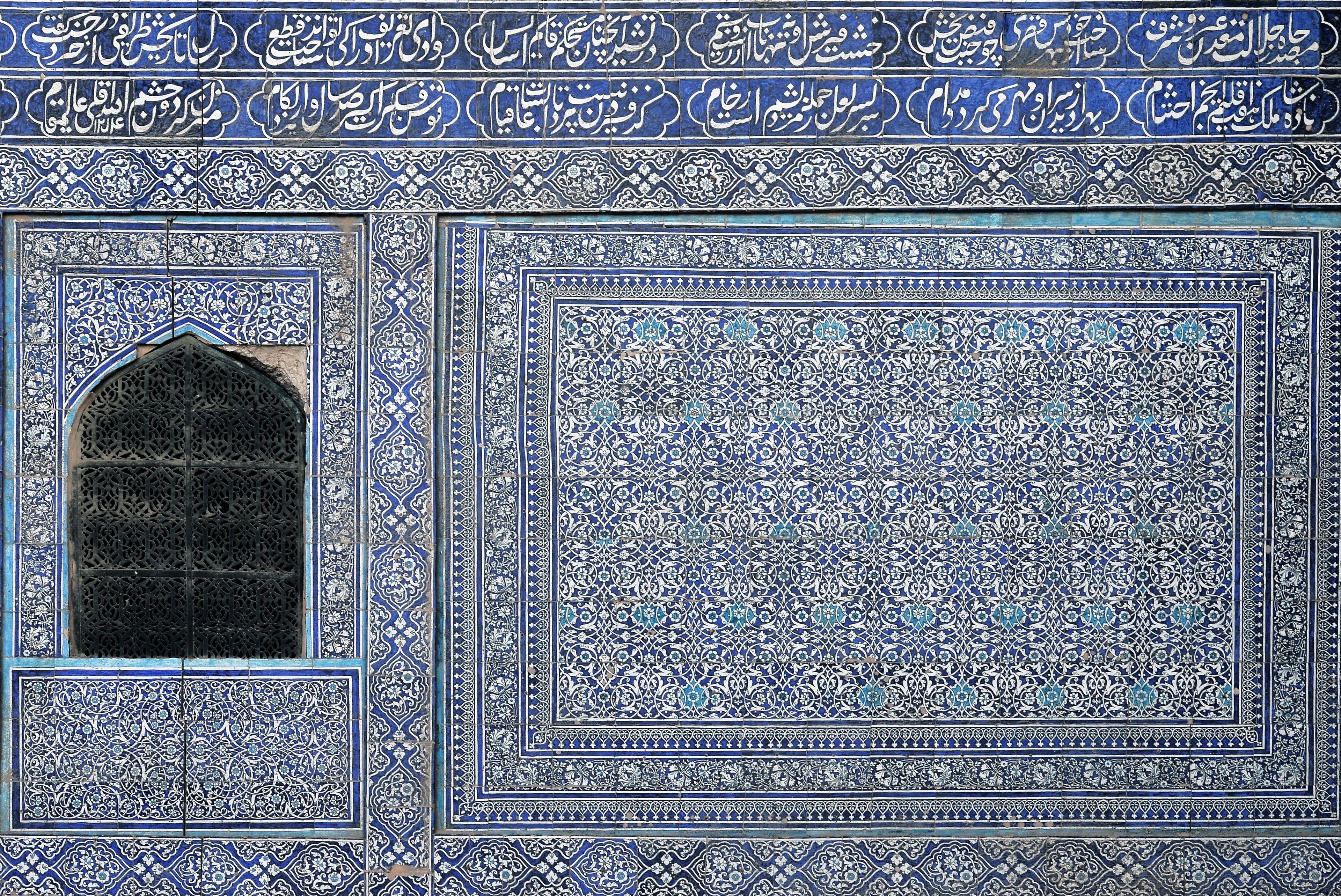
The highlight is the harem courtyard. Along one side runs a row of tall iwans, open-fronted rooms for the khan and his four wives, each with a slender carved wooden column and walls completely covered in blue and white majolica. The ceilings are painted in rich reds and golds. The reception courtyard also has a round brick platform for a yurt, which was a tradition shared with the Kunya-Ark. Allow 30 to 45 minutes; the light in the harem courtyard is best in the morning.
Sunset from the walls and when to visit
Sunset is the defining moment in Khiva. The mud-brick walls and buildings turn gold, then rose, and the tiles of the minarets glow against the darkening sky.
- The Ak-Sheikh Bobo watchtower in the Kunya-Ark is the classic viewpoint, but it gets crowded and may close before the last light, so check its closing time.
- The northern walls near the Bakhcha gate can be climbed (usually from inside Ichan-Kala; a small fee may be charged) and give a long view along the walls with the minarets behind.
- Several rooftop cafés and terraces along the main street offer a view of Kalta Minor and the Islam Khoja minaret over a cup of tea.
After dark, the main monuments are floodlit and the town becomes quiet and magical. Staying overnight inside or just outside the walls is the best way to experience it.
The best seasons are April to early June and September to October. Summer temperatures in Khorezm regularly pass 40°C, and in winter the town is cold and very quiet, which some travellers love.

How many days to spend in Khiva
One full day is enough to see the main monuments of Ichan-Kala with a guide. Two nights and one and a half to two days is better: you can see the sights at a relaxed pace, catch both sunset and early morning light, and add Dishan-Kala (the outer town), the Nurullabay Palace or a short trip into the surrounding countryside.
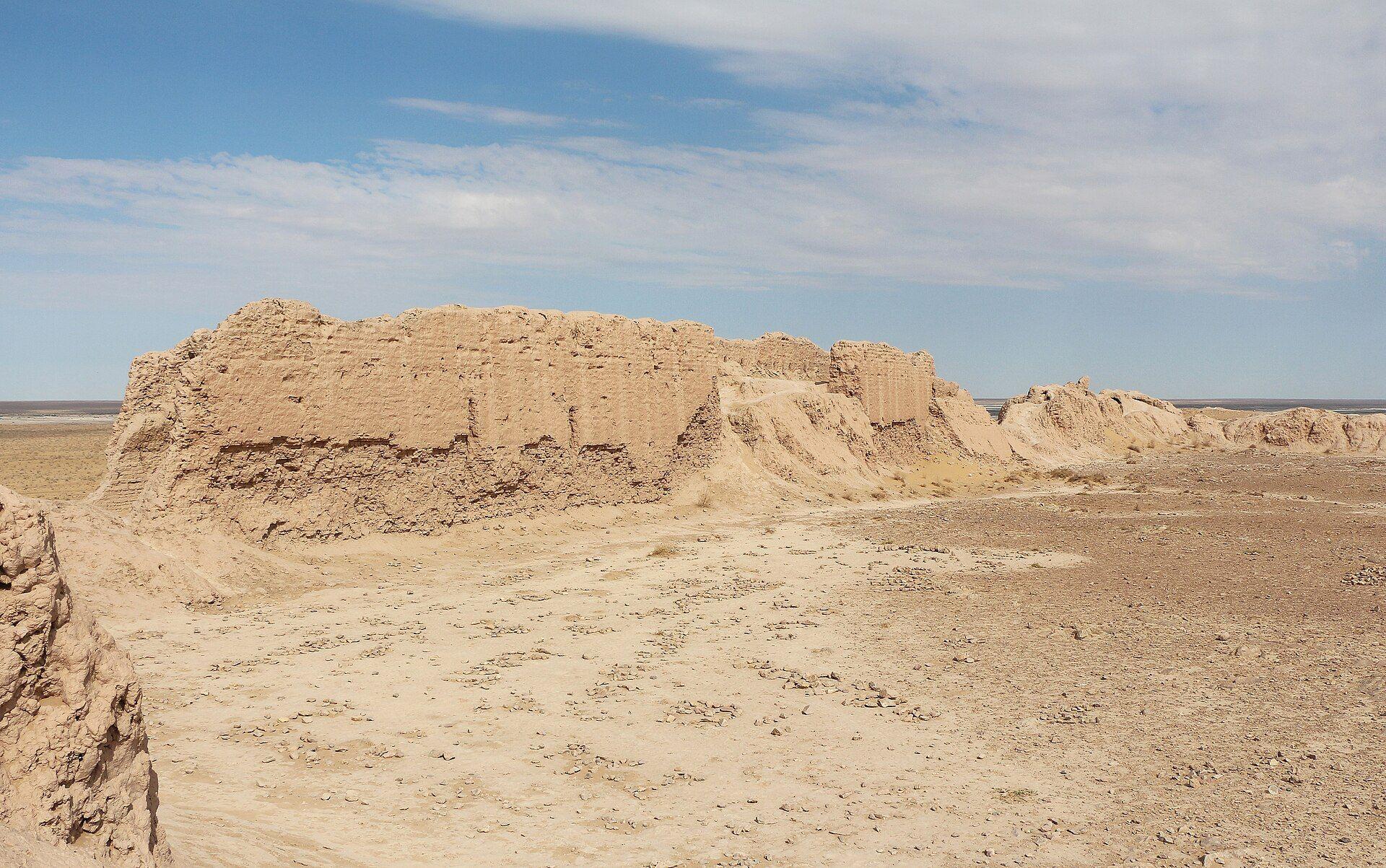
With an extra day, consider the desert fortresses of ancient Khorezm in neighbouring Karakalpakstan, such as Ayaz-Kala and Toprak-Kala, a fascinating contrast to the tiled monuments of Khiva.
Khiva lies about 35 km from Urgench, which has the nearest airport and main railway station. Daily flights connect Urgench with Tashkent, and trains run to Khiva itself from Tashkent, Samarkand and Bukhara. From Bukhara, the road across the Kyzylkum desert takes about six to seven hours by car.
Visiting with TourEast
Khiva rewards a good guide more than most places, because so much of its story is hidden in courtyards and legends. We include Ichan-Kala in our longer Silk Road programmes and can arrange private visits, overnight stays inside the walls and trips to the desert fortresses.
Frequently asked questions
Watch
Photo gallery