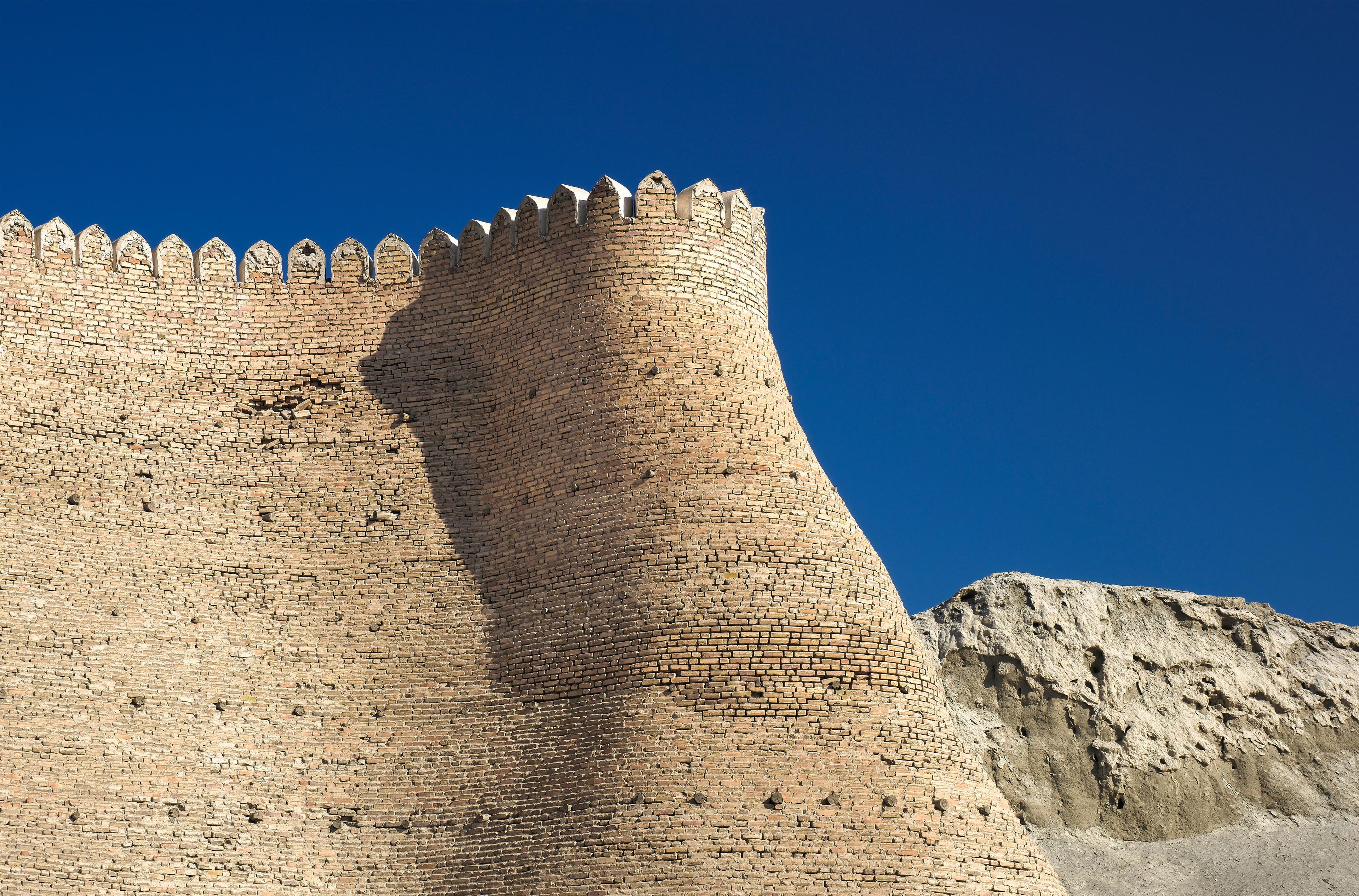
Three madrasahs, six centuries and one of the great public squares of the Islamic world. Our local guide to the Registan: what each building is, what to look for inside, tickets and hours as of November 2026, the evening light show and the best light for photos.
Facts, prices and schedules checked on November 4, 2026
Every visitor to Samarkand ends up on the Registan, usually more than once. It is the image on the banknotes, the postcards and the airline posters, and it still manages to be bigger, more precise and more alive than any photograph suggests.
The name means "sandy place" in Persian, a reminder that this was once an open, unpaved square where the city gathered: for markets, for royal proclamations, for parades and, in harder times, for public executions. Today it is framed on three sides by madrasahs, Islamic colleges, built over roughly 240 years. Together they form one of the finest architectural ensembles in Central Asia and the centrepiece of Samarkand's UNESCO World Heritage listing.
This guide covers the history of each building, what is worth seeing inside, practical details for 2026 and how to fit the Registan into a wider day in the city.
A short history of the square
Long before the madrasahs, this was the commercial heart of the city. Six roads converged here, and under Amir Timur (Tamerlane) at the end of the 14th century the square was surrounded by a covered bazaar and trading houses.
The ensemble we see now took shape in two great phases. The first came under Timur's grandson Ulugbek, the astronomer-ruler, who built his madrasah on the western side between 1417 and 1420. The second came two centuries later under Yalangtush Bahadur, governor of Samarkand under the Ashtarkhanid (Janid) dynasty,, who demolished older buildings and raised the Sher-Dor Madrasah (1619 to 1636) directly opposite Ulugbek's, then closed the northern side with the Tilya-Kori Madrasah (1646 to 1660).
By the 19th century earthquakes and neglect had left the square in poor condition: domes had fallen and minarets leaned dangerously. Large-scale restoration began in the Soviet period and continues today. Some of it was bold engineering, such as straightening the leaning north-eastern minaret of the Ulugbek Madrasah in the 1930s, and some of it is debated by specialists, since several domes and tiled surfaces are largely reconstructions. Knowing this does not spoil the visit. It simply helps to look closely and notice where the old glaze survives.
Ulugbek Madrasah (1417 to 1420)
The oldest of the three stands on your left as you face the square from the viewing platform. Ulugbek was a serious scientist, and his madrasah was one of the leading universities of the Muslim East. Alongside theology, students studied mathematics, astronomy and philosophy. Tradition holds that Ulugbek himself lectured here.
Look at the great portal, the pishtaq. Its arch is framed by panels of geometric mosaic, and the tympanum above the entrance carries a pattern of stars. It is an appropriate motif for the man who built one of the most important observatories of the 15th century on a hill just outside the city (the Ulugbek Observatory is worth a short taxi ride).
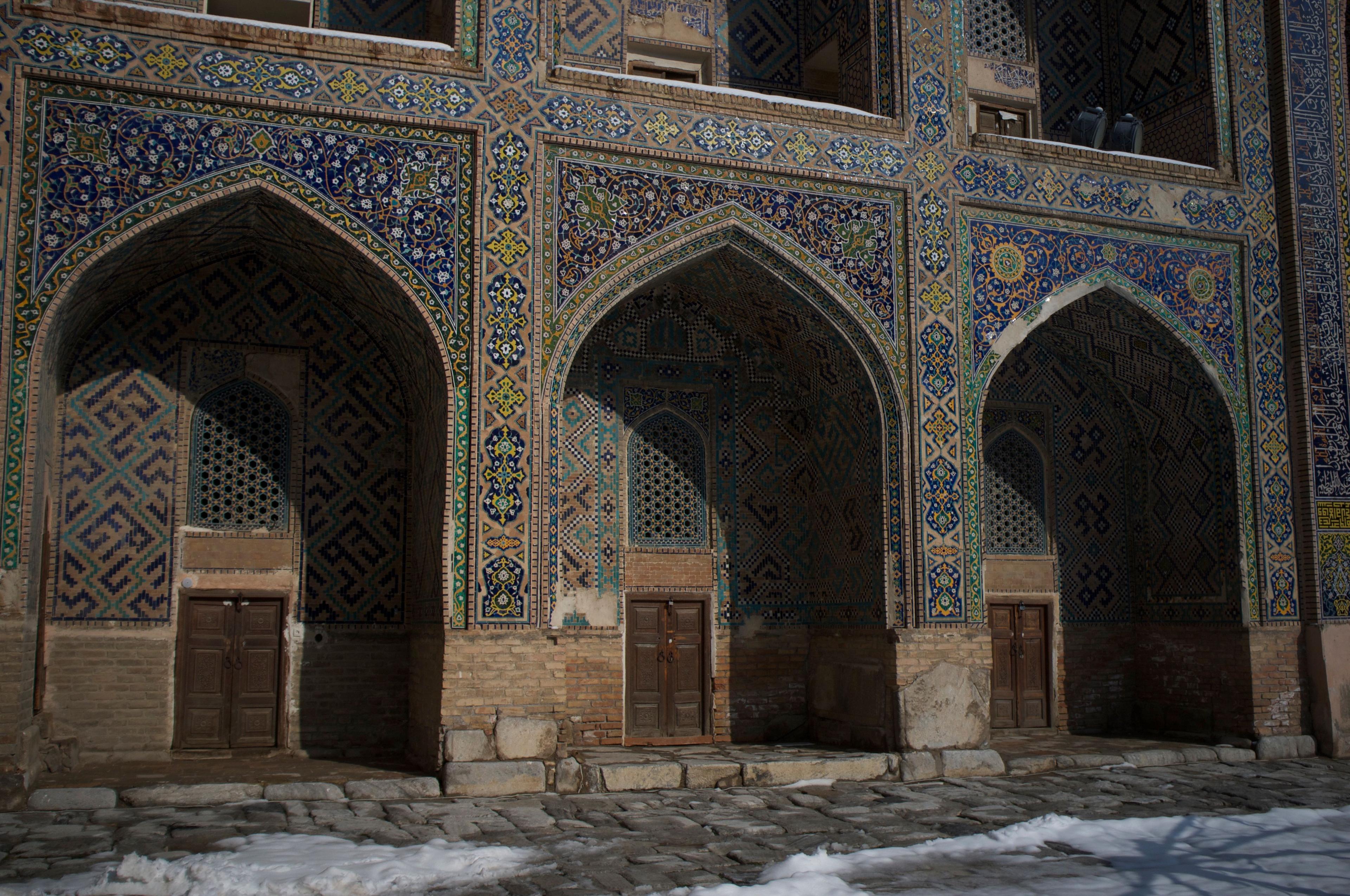
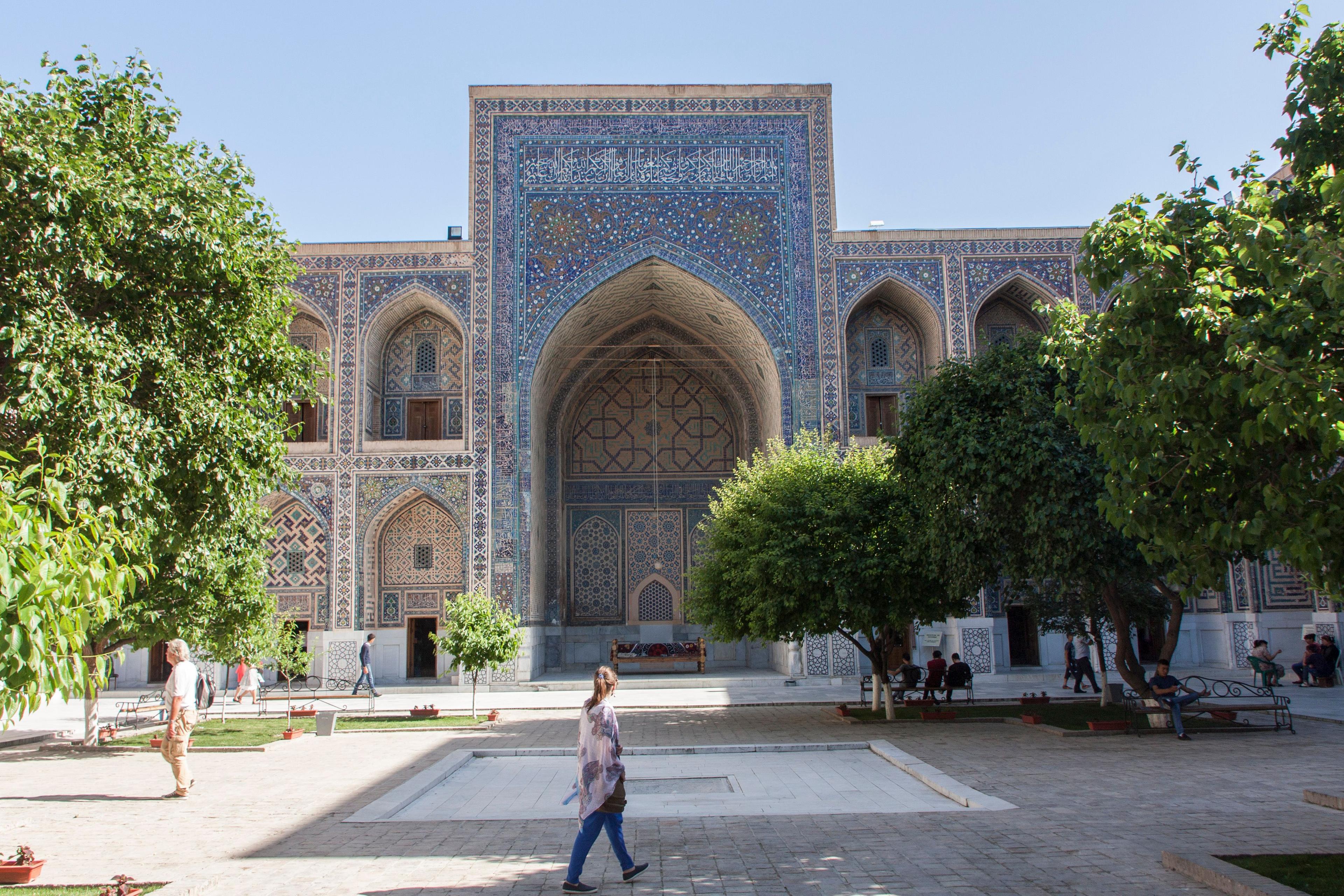
Inside, the courtyard is lined with two floors of student cells, many of which are now small craft and souvenir shops. Walk to the far side and look back at the portal: from here you see the scale of the building and how its corner minarets lean slightly outward, partly by design and partly through centuries of settling.
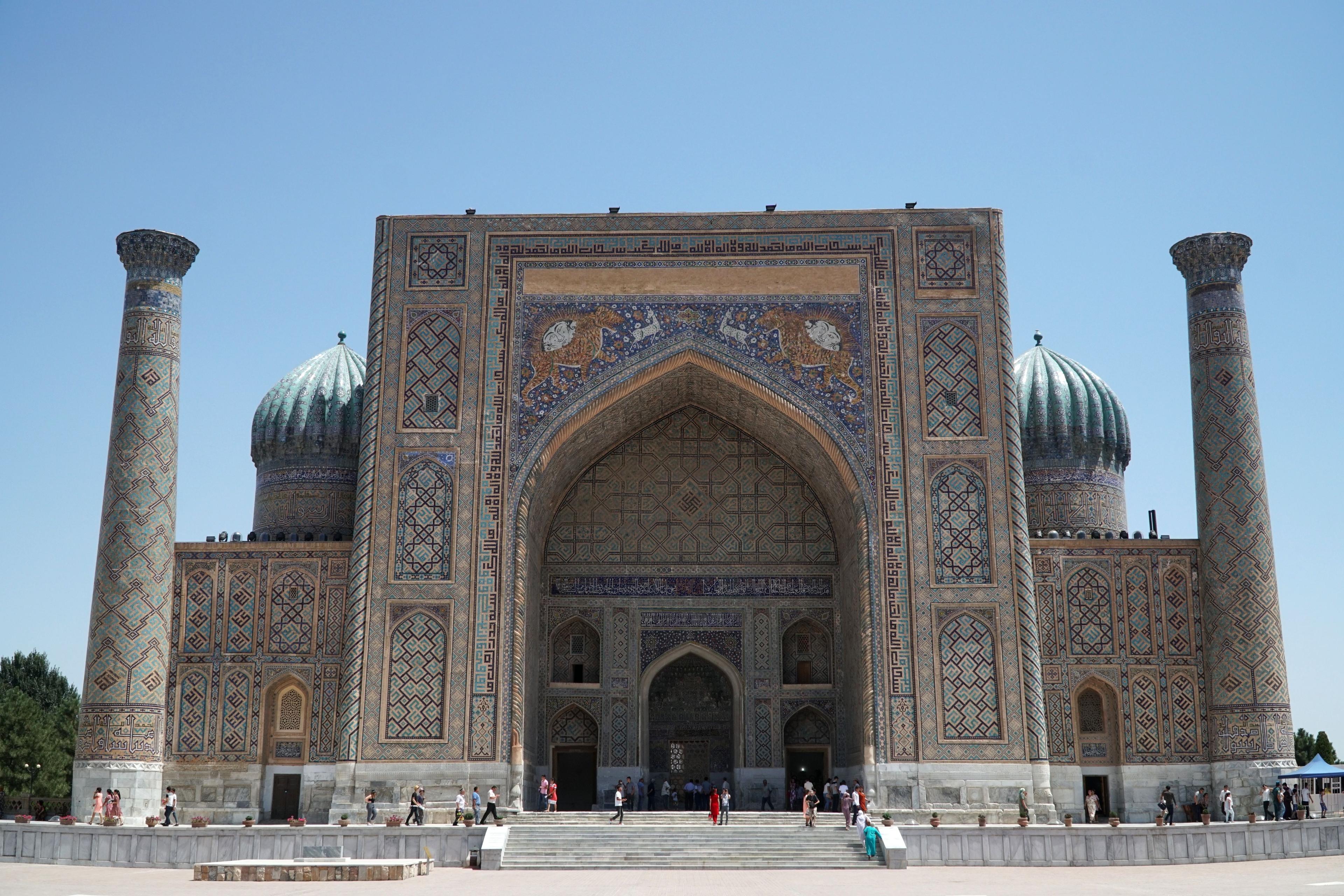
Sher-Dor Madrasah (1619 to 1636)
Opposite Ulugbek's building, and deliberately mirroring it, stands the Sher-Dor, "the one with lions". Its portal is the most photographed image in Uzbekistan: two striped big cats chasing white deer, each with a human-faced sun rising from its back.
The animals are usually described as lions, although they look more like tigers. Figurative images of living creatures on a religious building are unusual in Islamic architecture, which is exactly why this portal is so famous. Local guides will offer several explanations, from a symbol of the ruler's power to an echo of older Persian and pre-Islamic solar imagery. All are interpretations; none is documented by the builders.
Sher-Dor was built in a hurry by the standards of its predecessor, and engineers have long noted that its proportions and foundations are less refined. Inside, the courtyard follows the same plan of cells and lecture halls, and you will find workshops for miniature painting, embroidery and musical instruments. It is a pleasant place to watch artisans work, with no obligation to buy.
Tilya-Kori Madrasah (1646 to 1660)
The northern building is both a madrasah and the city's former Friday mosque, which is why it is longer and lower than the other two. Its name means "gilded", and the reason is inside.
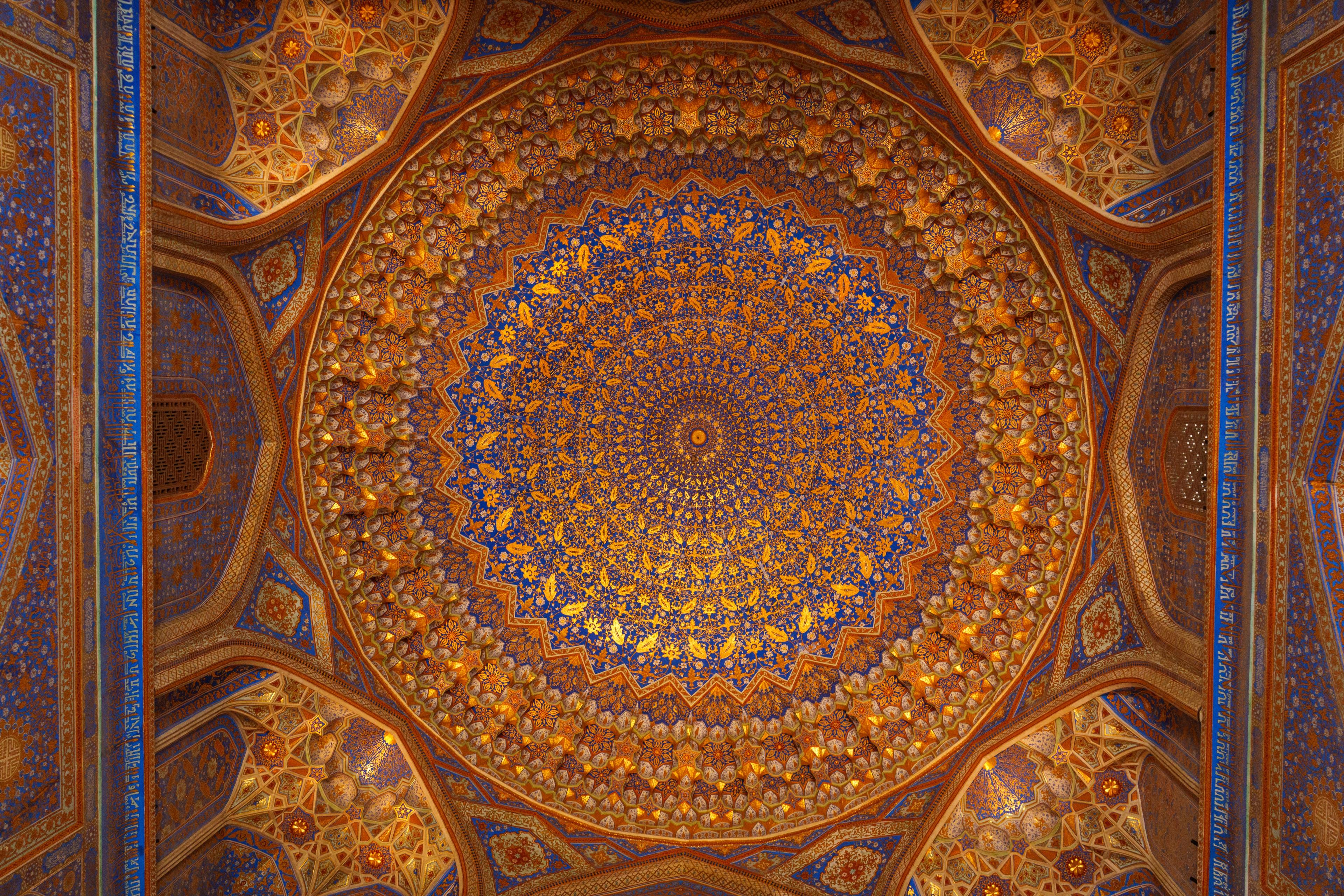
Cross the courtyard to the mosque on the western side. The prayer hall is covered with gold leaf over painted relief ornament, a technique called kundal. The ceiling looks like a soaring dome, but it is in fact almost flat: the painted pattern is designed to trick the eye into seeing depth. The gilding was extensively restored in the late 20th century, and it is at its most dramatic in the morning when daylight comes through the doorway.
Several cells around the courtyard host small exhibitions, including archive photographs of the Registan before restoration. Spend ten minutes with them. The images of collapsed domes and leaning minarets in the early 20th century make the square outside even more remarkable.
Tickets and opening hours (as of November 2026)
One ticket covers the square and the interiors of all three madrasahs. You buy it at the ticket office near the main entrance; cash in som is the safest option, although card terminals are increasingly common.
- Foreign visitors: about 100,000 som (roughly 8 USD). The price rose from 65,000 som in 2025, and further increases are possible.
- Citizens of Uzbekistan pay a much lower local rate.
- Hours: roughly 8:00 to 19:00 in the warm season and 9:00 to 17:00 or 18:00 in winter. Sources disagree by an hour, so check on the day.
- Re-entry: recent visitors report that a ticket is valid for a single entry, so plan your visit as one block of time.
You do not need a ticket to see the façades. The public viewing platform and the steps on the southern side of the square are free and open late, and many people come back in the evening just for the view. Prices and hours change often in Uzbekistan, so treat these figures as a guide and confirm at the ticket office or with your guide.

The evening light show
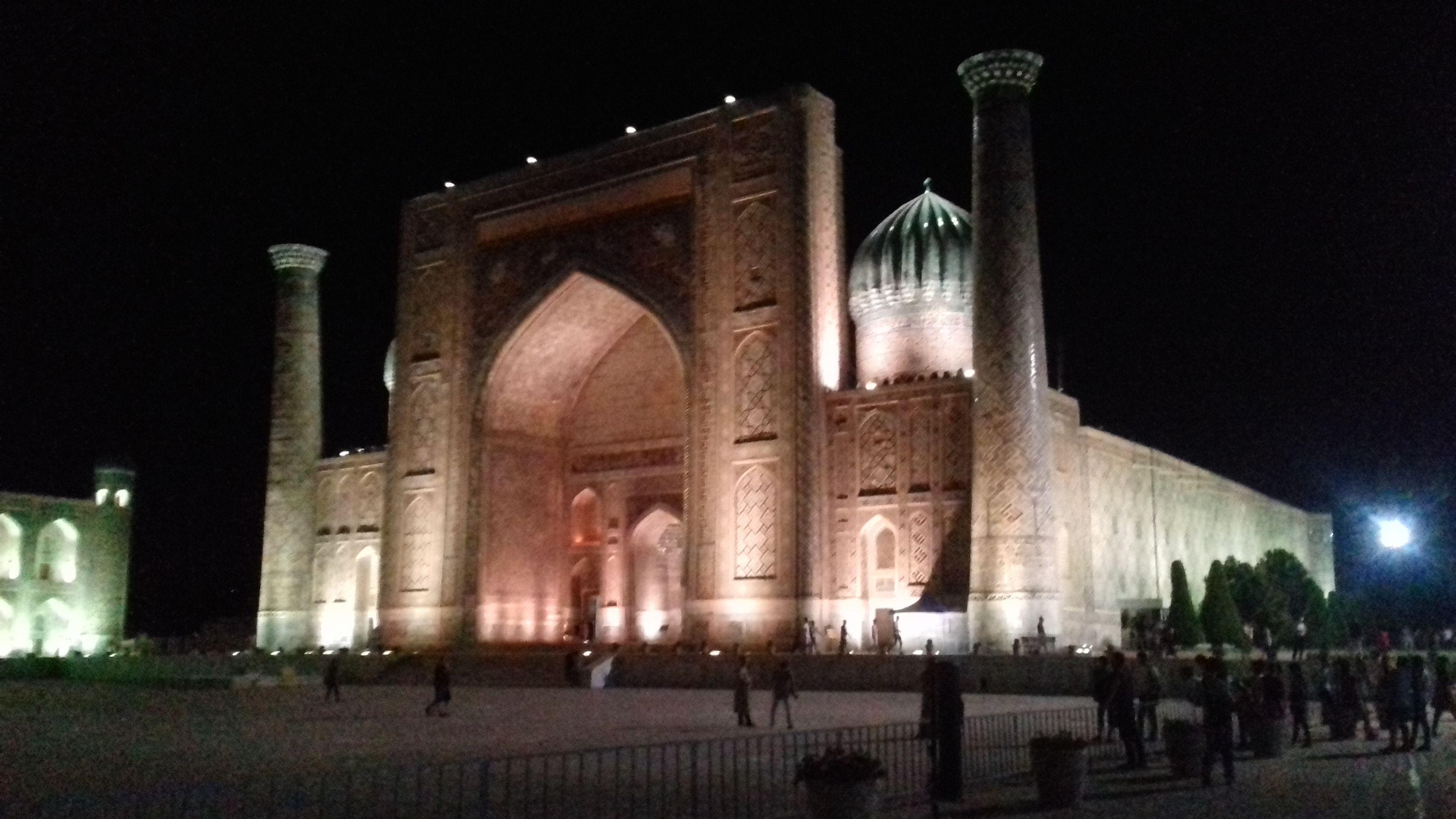
Most evenings in the warmer months the Registan is lit up after dark, and a sound and light show is projected onto the three façades. It typically lasts around 20 minutes and is free to watch from the viewing platform and steps in front of the square.
Start times shift with sunset: expect something around 20:00 to 21:00 in summer and earlier in spring and autumn. There is no fixed published timetable, and the show is not held every night. In recent years it has also paused for part of the winter (in 2025 to 2026 from late November until late February). Ask at your hotel or check with your guide on the day.
Even without the show, the illuminated square is worth seeing. Arrive about half an hour before full darkness, when the sky turns deep blue and the floodlights balance with the last daylight. That is the moment for photographs.
Best time for photos, how long to spend and what to wear
The square faces roughly south, so the light changes the character of each building through the day.
- Early morning, at opening time: soft light, few people and the best chance of clean shots of the courtyards.
- Late afternoon: warm light on the façades and long shadows across the square, but this is also the busiest time with tour groups and wedding photo shoots.
- Blue hour after sunset: the classic illuminated view from the platform.
Allow at least one and a half to two hours to see all three madrasahs properly, including the gilded mosque and the photo exhibition. If you are a keen photographer, return in the evening as well. In spring and autumn the square is comfortable all day; in July and August, when temperatures pass 35°C, visit early or late and save the middle of the day for a museum or a long lunch.
Tripods are generally fine in the open square. Drone flights over historic sites in Uzbekistan require permission, so leave the drone in your bag.
As for clothing, the Registan is a historic monument rather than an active place of worship, so there is no strict dress code. That said, it remains a respected religious site for many Uzbeks, and modest dress is appreciated: shoulders covered and shorts or skirts at least to the knee are a sensible choice, especially if you plan to continue to working mosques or Shah-i-Zinda the same day.
- Ask before photographing people, particularly women and families.
- Wedding couples often pose on the square in the afternoon; a smile and a congratulation go a long way.
- Shopkeepers in the madrasah cells are used to browsers. Bargaining is normal, polite and expected.
- Comfortable shoes help: the courtyards have uneven paving and some high thresholds.
What is nearby
The Registan sits at one end of Tashkent Street, a pedestrian avenue that leads north-east to several other major sights, so it is easy to build a half-day walk.
- Bibi-Khanym Mosque: about 10 to 15 minutes' walk. Timur's monumental congregational mosque, begun in 1399 after his Indian campaign, was among the largest in the Islamic world. Separate ticket.
- Siab Bazaar: right next to Bibi-Khanym. The city's main market for dried fruit, nuts, spices, halva and Samarkand's famous round bread. Free to enter, best in the morning.
- Shah-i-Zinda: a further 10 minutes beyond the bazaar, the avenue of tiled mausoleums is the most beautiful place in the city for many visitors.
- Gur-e-Amir: about 10 minutes' walk south-west of the Registan. The mausoleum of Timur, with its ribbed turquoise dome and his dark green jade tombstone inside. It is also lovely when lit up in the evening.
A classic first day in Samarkand is Gur-e-Amir and the Registan in the morning, lunch, then Bibi-Khanym, Siab Bazaar and Shah-i-Zinda in the afternoon, and back to the Registan for the lights. Most travellers arrive from Tashkent on the Afrosiyob train in a little over two hours, which makes even a short stay possible.
Visiting with TourEast
Our Samarkand guides grew up around the Registan and know when the light is best and when the groups have gone. Whether you join one of our small-group tours or want a private itinerary built around your own pace, we are happy to help you plan it.