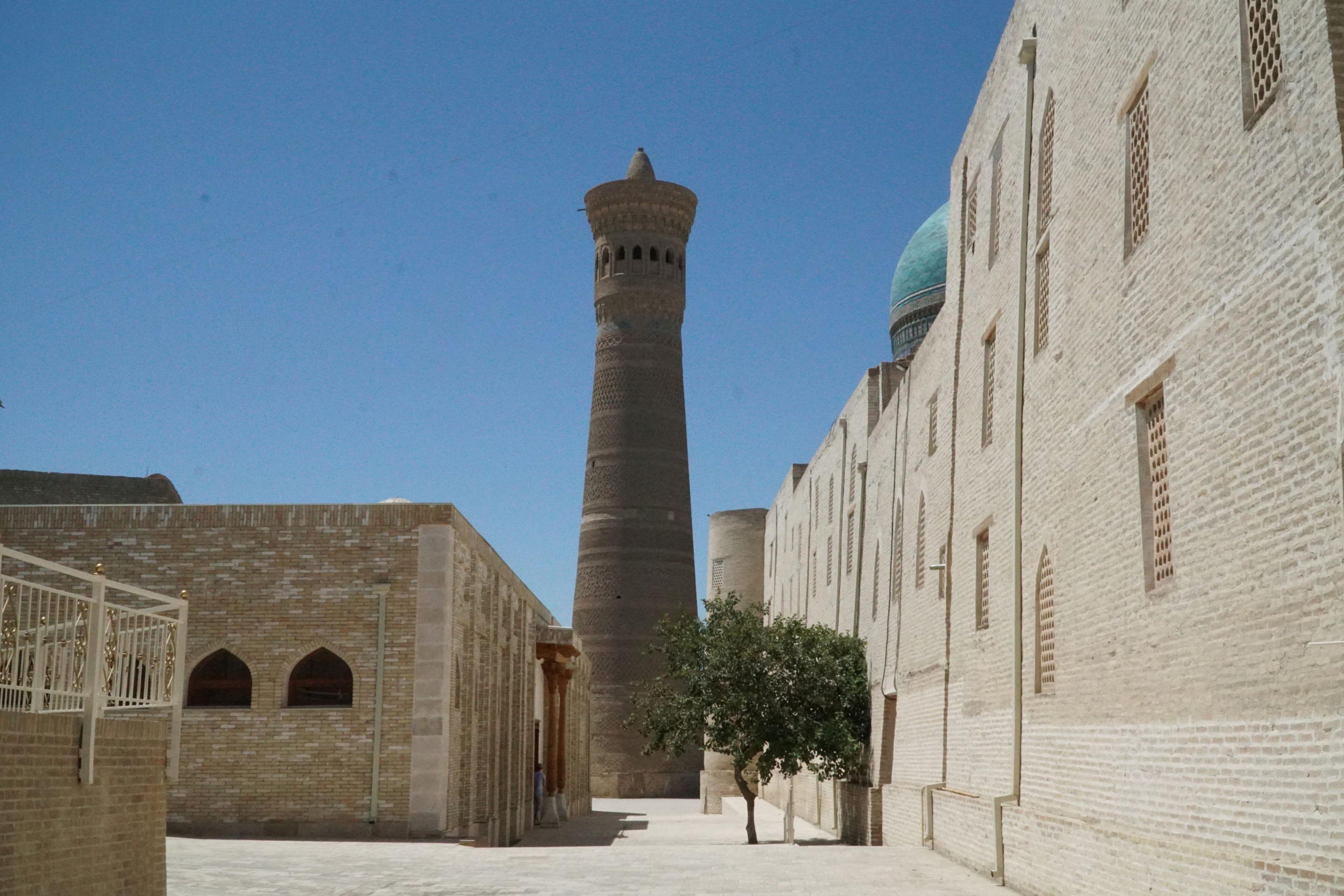
Who was Amir Timur, the conqueror Europe called Tamerlane? His life, empire and capital Samarkand, the Gur-e-Amir and the 1941 'curse', Ak-Saray in Shakhrisabz, the Tashkent museum, Ulugh Beg, Timurid architecture, and myth versus history.
Facts, prices and schedules checked on November 4, 2026
Amir Timur, known in Europe as Tamerlane, is the most famous figure in Uzbek history and one of the great conquerors of the Middle Ages. In 35 years of almost constant war he built an empire from Anatolia to northern India, and with the wealth and craftsmen of that empire he turned Samarkand into one of the most splendid cities of its age.
In Uzbekistan today he is honoured as a national hero, with statues in Tashkent, Samarkand and Shakhrisabz, a museum in the capital and, since 2026, a whole month of the year named after him. Elsewhere, from Delhi to Damascus, he is remembered for sacked cities and towers of skulls. Both images are true, and seeing his monuments with their history in mind makes them far more interesting. This guide covers who Timur was, the key dates of his life, where to see his legacy in Uzbekistan, his grandson Ulugh Beg, and the line between myth and history.
Who was Amir Timur, and why is he called Tamerlane?
Timur was born near Kesh, the modern town of Shakhrisabz, south of Samarkand. Uzbekistan marks his birthday on 9 April 1336, the date given by later court histories; many historians think he was in fact born a few years earlier, in the late 1320s. His family belonged to the Barlas, a Mongol tribe that had become Turkic-speaking and Muslim, living in the lands of the Chagatai Khanate, one of the successor states of Genghis Khan's empire.
He was not a Mongol khan, and never called himself one. Only descendants of Genghis Khan could claim that title, so Timur ruled as amir (commander) in the name of puppet khans, and took the title güregen, "royal son-in-law", after marrying a Chinggisid princess. His culture was a mix of Turkic steppe traditions and Persian court life, and he presented himself as a Muslim ruler and, late in life, as a ghazi.
He died in February 1405 at Otrar (Farab), in today's Kazakhstan, while leading a winter campaign against Ming China. He was about seventy.
Timur means "iron" in Turkic languages, and in Uzbek his name is written Amir Temur. The European name Tamerlane comes from the Persian Timur-i Lang, "Timur the Lame". Around 1363, as a young warlord, he was wounded by arrows in the right leg and right hand, and he limped for the rest of his life.
This is one detail of the legend that science has confirmed. In June 1941 Soviet scientists led by the anthropologist Mikhail Gerasimov opened his tomb. They found that the bones of his right leg had fused at the knee, giving him a pronounced limp, that his right arm was damaged, and that he was about 173 cm tall, tall for his time. Gerasimov's reconstruction of his face, from the skull, is the basis of most modern portraits and statues.
In English literature he is best known from Christopher Marlowe's play Tamburlaine the Great (around 1587), which made him a symbol of boundless ambition.

Amir Timur's empire: key dates
Timur's rise was slow and his conquests fast. The main dates:
- 1360s: rises among the warring amirs of the Chagatai lands, first as ally, then rival, of Amir Husayn.
- 1370: becomes master of Mawarannahr (the land between the Amu Darya and Syr Darya) and makes Samarkand his capital.
- 1380s: campaigns in Khorezm and Persia; Herat falls in 1381, and the revolt of Isfahan in 1387 ends in a massacre.
- 1391 and 1395: defeats Tokhtamysh, khan of the Golden Horde, on the Kondurcha and Terek rivers, ruining the Horde's power.
- 1398: invades India and sacks Delhi in December.
- 1399: back in Samarkand, begins the great Friday mosque now called Bibi-Khanym.
- 1400 to 1401: takes Aleppo, Damascus and Baghdad.
- 1402: defeats the Ottoman Sultan Bayezid I at the Battle of Ankara and takes him prisoner.
- 1404: receives envoys from Castile in Samarkand, among them Ruy Gonzalez de Clavijo, who wrote a vivid account of the city and its gardens.
- 1405: dies at Otrar on the road to China.
His empire did not survive him in one piece. His sons and grandsons fought over it, and his youngest son Shah Rukh ruled the eastern part from Herat until 1447.
Samarkand: the capital Timur built
Timur made Samarkand the showcase of his power. After each campaign he brought back architects, tile makers, weavers and craftsmen from conquered cities, from Tabriz and Shiraz to Damascus and Delhi, and set them to work. According to tradition he even named the villages around Samarkand after the great cities he had taken, such as Baghdad, Damascus and Shiraz, to show that his capital was greater than all of them.
What survives from his time in Samarkand:
- Gur-e-Amir: the family mausoleum where Timur is buried (see below).
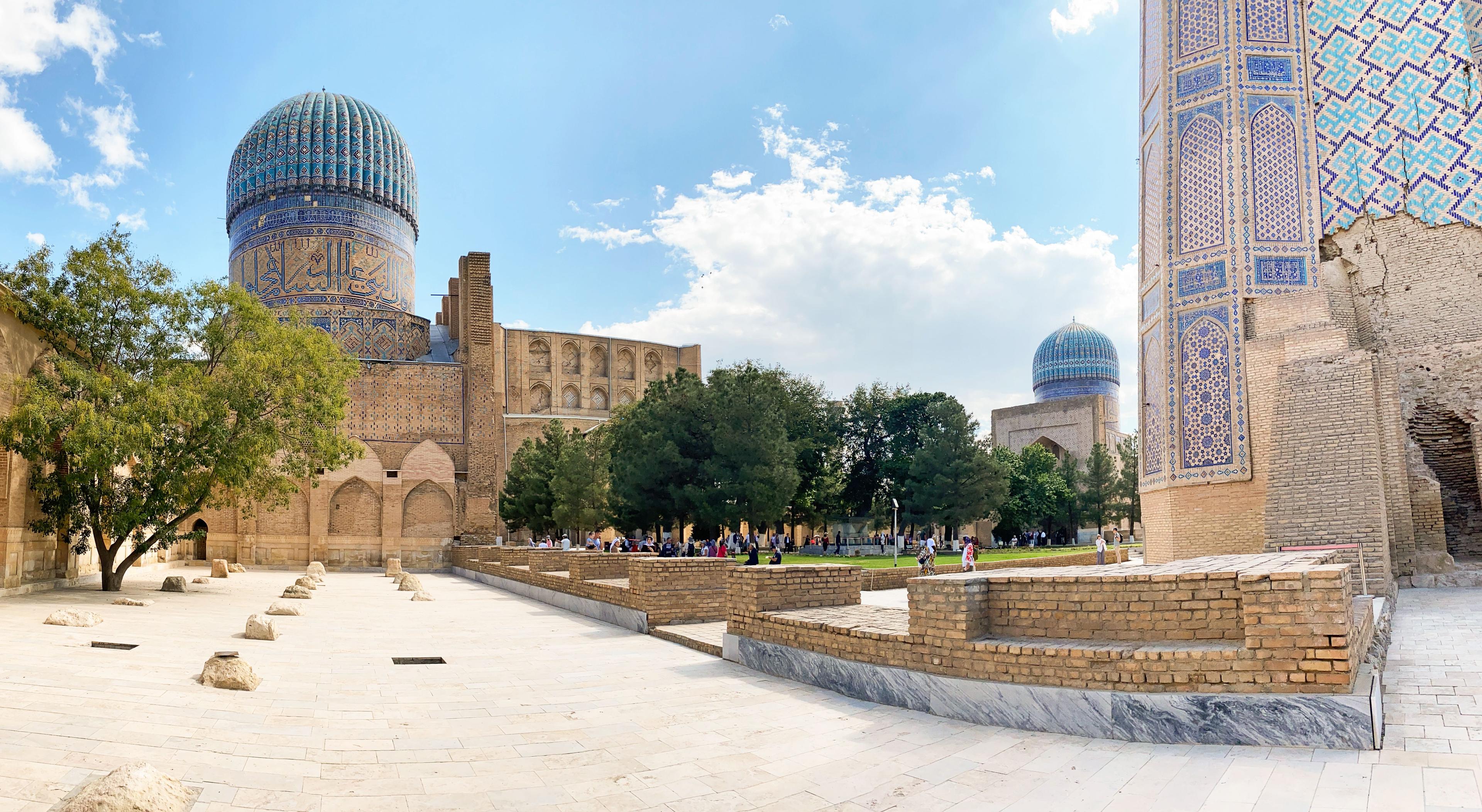
- Bibi-Khanym Mosque: begun in 1399 after the Indian campaign, one of the largest mosques of the Islamic world in its day. It was built so fast that parts began to crack within years; much of what you see today is a Soviet and modern reconstruction, but the scale is still overwhelming.
- Shah-i-Zinda: many of the most beautiful tombs in this necropolis were built for Timur's sisters, wives, nieces and generals. We describe it in our Shah-i-Zinda guide.
- Registan: the square as you see it was created by his grandson Ulugh Beg and later rulers, but it grew from the Timurid city. Our Registan guide covers it in detail.
Clavijo described palaces set in great gardens outside the walls, with tents of silk where Timur received his guests. The gardens are gone, but the scale of the buildings that remain tells the same story.
Gur-e-Amir: Timur's tomb in Samarkand
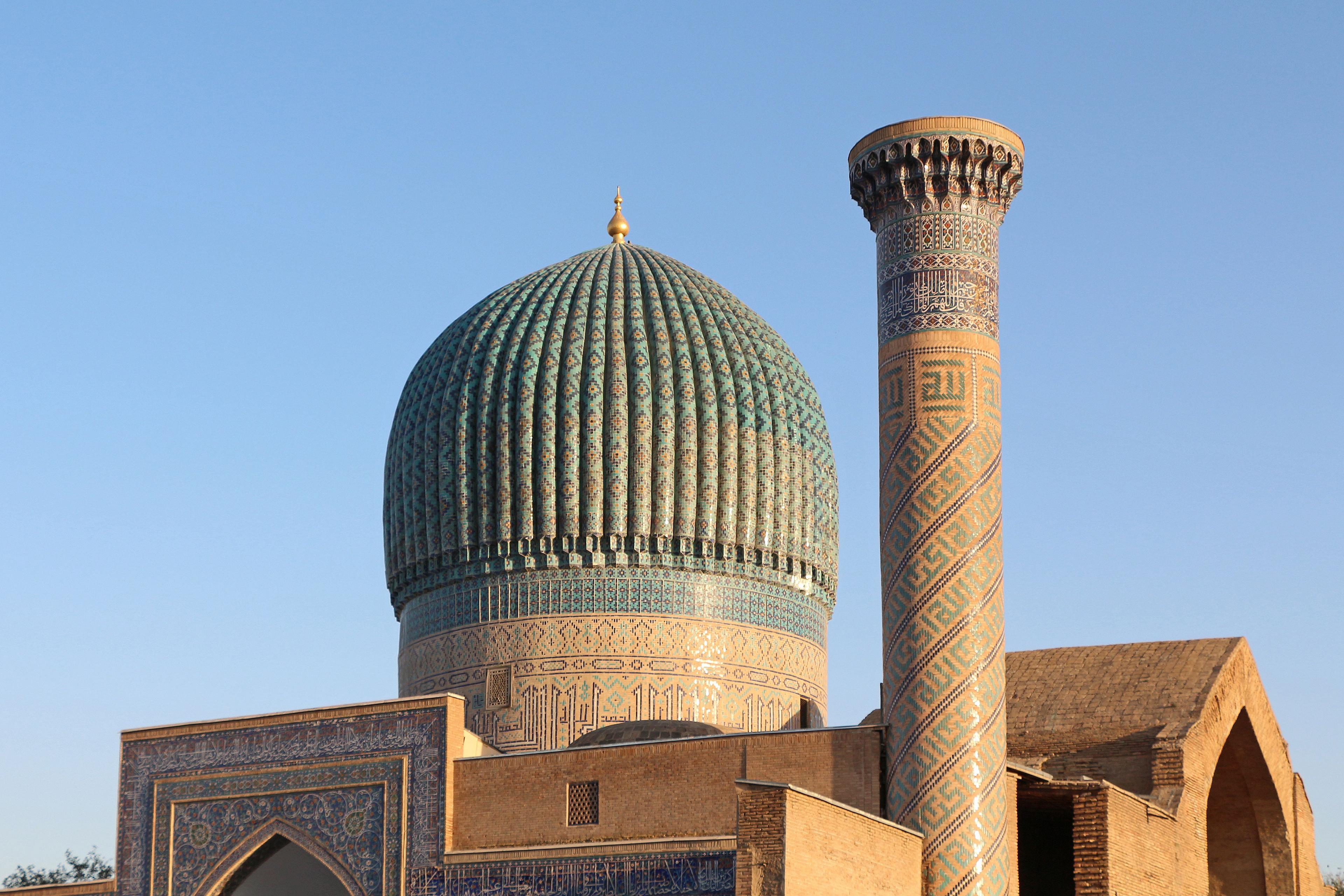
The Gur-e-Amir, "tomb of the amir", is the mausoleum of the Timurid dynasty and the best place to understand Timur. It was begun in 1403 for his favourite grandson and heir, Muhammad Sultan, who had died in battle. When Timur himself died in 1405, the mountain passes to Shakhrisabz were blocked by snow, and he was buried here instead of in the tomb he had prepared in his home town.
Buried in the crypt are Timur, his sons Shah Rukh and Miran Shah, his grandsons Muhammad Sultan and Ulugh Beg, and his spiritual teacher Mir Sayyid Baraka. The tombstones in the hall above are cenotaphs; the graves themselves lie in the crypt below. Timur's stone, a block of dark green jade placed by Ulugh Beg, is broken in two. Tradition links the break to the Persian ruler Nader Shah, who carried the stone away in 1740 and, after a run of misfortune, sent it back.
The exterior is famous for its ribbed turquoise dome, and the interior for its gilded and painted decoration, restored in the Soviet period and after independence. The mausoleum is about a ten-minute walk from the Registan, and it is beautifully lit in the evening.
The "curse of Timur": a popular story says that an inscription warned that whoever opened the tomb would unleash a terrible war, and that Germany invaded the Soviet Union on 22 June 1941, three days after Gerasimov's team began work. Timur was reburied with full Islamic rites in December 1942, shortly before the Soviet victory at Stalingrad. People close to Gerasimov later said the inscription story was invented, but it is still told by every guide in Samarkand, and it makes a good story as long as it is told as a legend.
Shakhrisabz and the Ak-Saray Palace
Timur's home town, Shakhrisabz, lies about 80 to 90 km south of Samarkand over the Takhtakaracha Pass. Here he began the Ak-Saray, the White Palace, in 1380; it took more than twenty years to build. Only the stumps of its great entrance arch survive, but even these, at about 38 m high, show how vast it was. Clavijo saw it under construction in 1404 and described its blue and gold tilework.
Shakhrisabz also has the Dorus Saodat complex with the tomb of Timur's eldest son Jahangir, and the empty crypt that Timur prepared for himself, as well as the Kok Gumbaz Mosque built by Ulugh Beg. A large statue of Timur stands in front of the Ak-Saray. Our Shakhrisabz day-trip guide covers how to get there and what it costs.

The Amir Timur Museum and monument in Tashkent
In the centre of Tashkent, Amir Timur Square is the city's main roundabout and park. An equestrian statue of Timur stands where a statue of Karl Marx stood in Soviet times, a clear sign of how independent Uzbekistan chose to tell its history after 1991.
Next to it is the State Museum of the History of the Timurids, usually called the Amir Timur Museum. The round building with a blue ribbed dome, deliberately echoing the Gur-e-Amir, opened on 18 October 1996. It was renovated in 2026 and reopened on 9 April 2026, for the 690th anniversary of Timur's birth, with nine main halls arranged by period and theme and a new immersive section about his life. The collection includes manuscripts, miniatures, weapons, coins, ceramics and copies of documents from his correspondence with European kings.
The museum has traditionally been closed on Mondays; opening hours were being reported differently after the 2026 renovation, so check before you go. Allow one to one and a half hours. Our Tashkent travel guide has more on the area around the square, including the chiming clocks and the Hotel Uzbekistan.
Ulugh Beg and the Timurid renaissance
Timur's most remarkable descendant was not a warrior but a scientist. His grandson Ulugh Beg (1394 to 1449) governed Samarkand for about forty years, mostly under his father Shah Rukh, and turned it into a centre of learning.
- Ulugh Beg Madrasah: built in 1417 to 1420 on the Registan, one of the leading schools of the Muslim world, where astronomy and mathematics were taught alongside religious sciences. He also built madrasahs in Bukhara and Gijduvan.
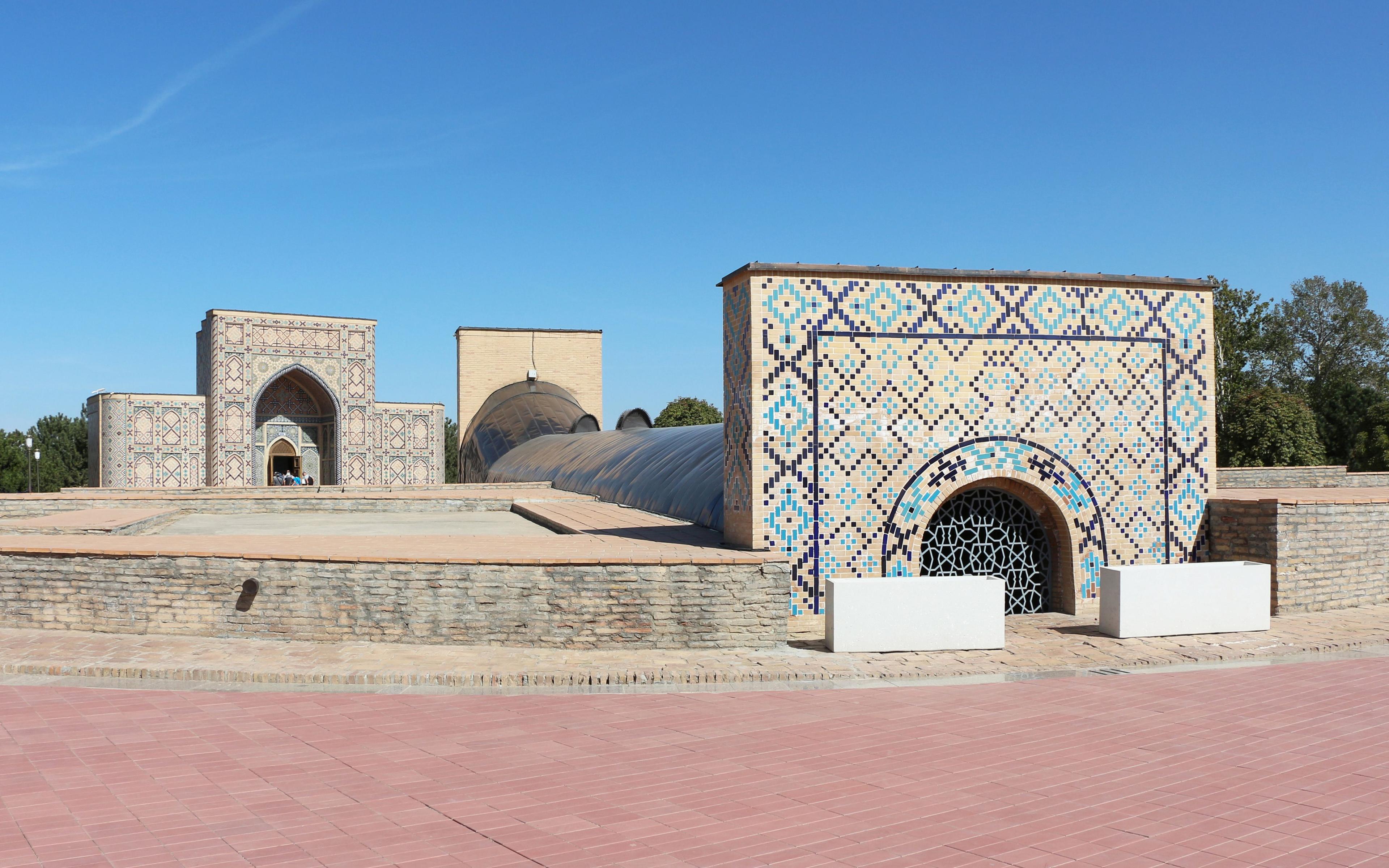
- Ulugh Beg Observatory: built in the 1420s on a hill outside Samarkand. Its giant meridian arc, the Fakhri sextant, had a radius of about 36 m; the curved underground section survives and can be visited, with a small museum beside it.
- Zij-i Sultani: the star tables of 1437 list positions for about a thousand stars, the most accurate catalogue of its time, and measured the length of the year to within about a minute.
Ulugh Beg's story ends tragically. After his father's death in 1447 he became ruler of the empire, but within two years he was defeated by his own son, Abd al-Latif, and killed in 1449 while setting out on a pilgrimage to Mecca. The observatory was later abandoned and its remains were found only in 1908.
The Timurid line did not end there. Timur's great-great-great-grandson Babur, born in the Fergana Valley in 1483, founded the Mughal Empire in India. The Mughal tombs of Delhi and Agra, the Taj Mahal among them, carry Timurid architectural ideas south of the Himalayas.

Timurid architecture: what to look for
Once you know the style, you start to see it everywhere from Samarkand to Herat. The signatures of Timurid architecture:
- Ribbed, melon-shaped domes on tall drums, as at the Gur-e-Amir and Bibi-Khanym.
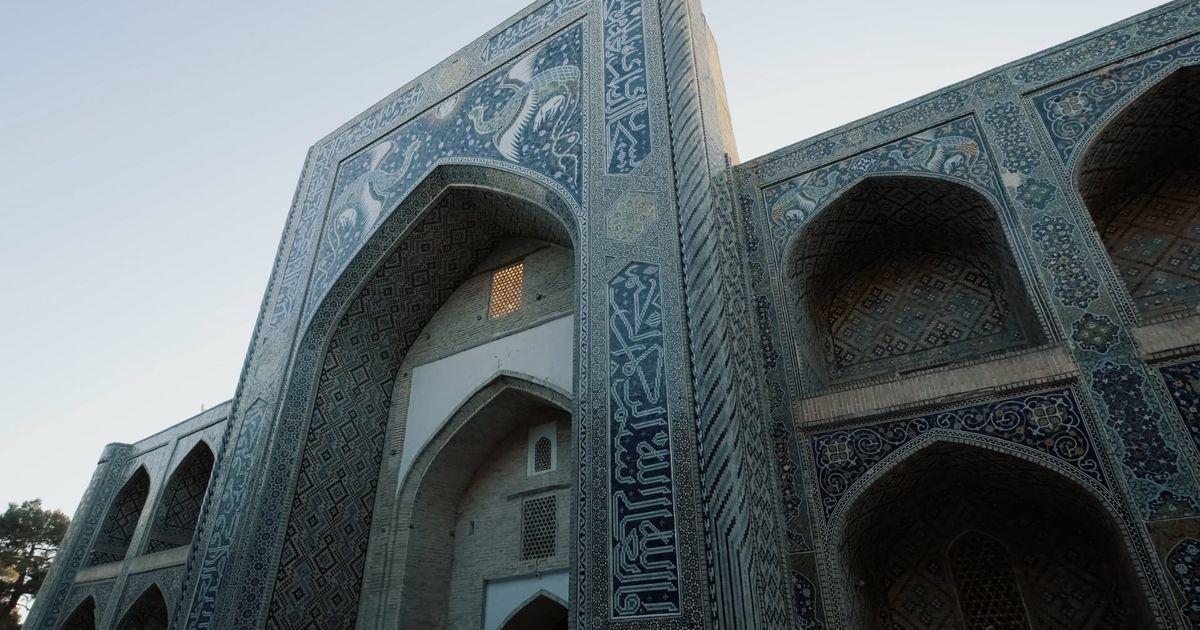
- Huge portals (pishtaqs) framing a deep arch, often flanked by minarets.
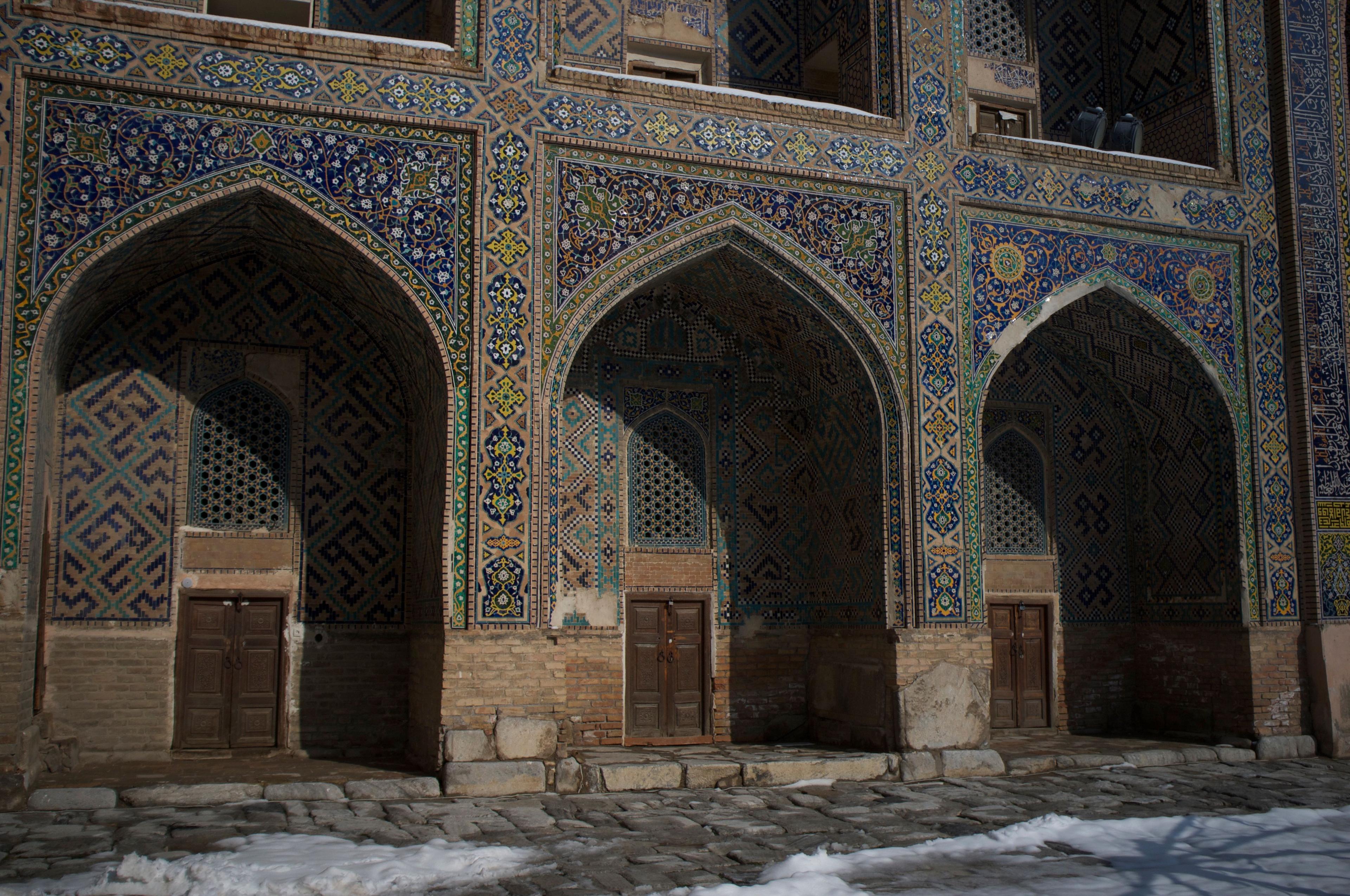
- Turquoise, cobalt and white tilework, combining glazed brick, mosaic faience and carved terracotta.
- Monumental calligraphy in square Kufic script, spelling out the names of God and the Prophet across whole walls.
- Muqarnas (stalactite vaulting) and gilded papier-mache decoration inside domes, as in the Gur-e-Amir.
- A love of scale, sometimes beyond what the builders could manage: Bibi-Khanym's dome began to crack within years.
The Shah-i-Zinda is the best place to see the full range of tile techniques in one walk. In Bukhara, the Ulugh Beg Madrasah of 1417 is a smaller, quieter example.
Myth and history: how is Timur remembered?
Timur divides opinion more than almost any figure in Asian history. Some common claims, and what historians say:
- "Timur was a Mongol." Partly. His tribe was of Mongol origin, but by his time it was Turkic-speaking, Muslim and settled in Central Asia. He married into the house of Genghis Khan but could not claim to be khan himself.
- "He built towers of skulls." True. Chroniclers, including his own court historians, describe towers of heads after the revolt of Isfahan and the sack of Baghdad, among others. Historians agree that his campaigns cost millions of lives. Exact totals that circulate online cannot be verified.
- "He was the founder of the Uzbek nation." This is the official view in Uzbekistan today. Historically, the Uzbek dynasty of the Shaybanids, which arrived from the north around 1500, actually drove out Timur's descendants. Modern Uzbekistan claims both heritages.
- "He was a patron of culture." True as well. His capital drew artists, scholars and craftsmen, and his descendants Shah Rukh, Ulugh Beg and the poets and painters of Herat created the Timurid renaissance.
- "The curse of the tomb started the war." A legend, see above.
In Soviet times Timur was officially portrayed as a feudal tyrant. Since independence in 1991 he has become the central symbol of Uzbek statehood: his image is on banknotes and public monuments, and in 2026 the state celebrated the 690th anniversary of his birth and declared April "Amir Temur Month". Our guides are happy to discuss both sides, and Uzbek visitors will often ask what you think of him.
Where to see Timur's legacy in Uzbekistan: a route
You can follow Timur's story on almost any classic Uzbekistan itinerary. A four-day sequence:
- Day 1, Tashkent: Amir Timur Square and the State Museum of the History of the Timurids.
- Day 2, Samarkand: Gur-e-Amir in the morning, Bibi-Khanym and Siab Bazaar, then Shah-i-Zinda in the afternoon light.
- Day 3, Samarkand: the Registan and the Ulugh Beg Madrasah, then the Ulugh Beg Observatory and the Afrosiyob museum.
- Day 4, Shakhrisabz: a day trip over the Takhtakaracha Pass to the Ak-Saray, Dorus Saodat and Dorut Tilavat.
Our 7-day itinerary and Silk Road history guide put Timur in the wider story of the cities. Spring and autumn are the best seasons; see our guide to the best time to visit.
Exploring Timur's Uzbekistan with TourEast
Our guides in Samarkand and Shakhrisabz know Timur's story in depth, legends included, and we can build a private or small-group tour around the Timurid monuments, with time for the Gur-e-Amir in the evening light and the Ak-Saray without crowds.