Sogdian merchants, Alexander, the Arab conquest, the Samanids, Genghis Khan, Amir Timur and Ulugbek, the khanates and the Russian empire. The Great Silk Road through Uzbekistan in plain language, and where each era survives today.
Facts, prices and schedules checked on November 4, 2026
The Silk Road in Uzbekistan is not a museum label. It is the reason the country looks the way it does: why Samarkand has turquoise domes, why Bukhara has trading domes over its crossroads, why Uzbek food mixes Persian, Turkic, Chinese and Russian influences, and why so many people here speak two or three languages.
For roughly two thousand years, caravans carrying silk, paper, horses, glass, spices, ideas and religions crossed the land between the Amu Darya and Syr Darya rivers. Empires came and went, often violently, and each left something behind.
This is a plain-language guide to that story, era by era, with a practical twist: for every period we tell you what you can still see today, and in which city. It is a companion to our individual guides on the Registan, Shah-i-Zinda, Ichan-Kala and the Ark Fortress.
What was the Silk Road, and where does Uzbekistan fit?
The Silk Road was never a single road. It was a shifting network of routes linking China with Persia, India, the Middle East and the Mediterranean, used from roughly the 2nd century BC until sea trade overtook it in the 16th century. The name itself is modern: the German geographer Ferdinand von Richthofen coined "Seidenstrasse" in 1877.
Uzbekistan sits right in the middle. The fertile valleys of the Zarafshan, the Fergana Valley and the Khorezm oasis on the lower Amu Darya gave caravans water, food and markets after the deserts and mountains. That is why the great Silk Road cities in Uzbekistan, Samarkand, Bukhara, Khiva, Tashkent, Termez and the towns of the Fergana Valley, grew rich.
In 2023 UNESCO recognised this role with a new transnational World Heritage Site, "Silk Roads: Zarafshan-Karakum Corridor", shared by Uzbekistan, Tajikistan and Turkmenistan, which includes 15 sites in Uzbekistan's Samarkand, Navoi and Bukhara regions.
What was traded on the Silk Road through Uzbekistan?
Silk gave the road its name, but it was only one item among many, and goods rarely travelled the whole distance. Most changed hands several times, in a chain of markets from oasis to oasis.
- From China: silk, porcelain, lacquer, and later the knowledge of papermaking.
- From Central Asia itself: horses, cotton cloth, dried fruit, melons, glassware, silverware and, from Samarkand, high-quality paper.
- From India: spices, gems, cotton textiles and indigo.
- From Persia and the Mediterranean: glass, silver, wool, wine and coins.
Ideas travelled with the goods. Buddhism moved north and east from India through Termez; Zoroastrianism, Manichaeism, Nestorian Christianity and Judaism all had communities here; and from the 8th century Islam spread along the same routes. Astronomy, mathematics, medicine, music and recipes crossed in both directions. Plov, noodles, dumplings and bread baked in a clay tandir all have Silk Road stories behind them.
In practical terms, every big Uzbek city grew around three things: a citadel, a great mosque and a bazaar. Caravanserais, the inns where merchants rested with their animals, ringed the gates, and covered markets marked the main crossroads. You can still walk through this layout in Bukhara and Khiva.
Sogdians: the original Silk Road merchants
Before the Silk Road had a name, the Sogdians ran it. They were an Iranian people whose homeland, Sogdiana, centred on the Zarafshan valley around Samarkand and Bukhara. From about the 4th to the 8th century AD, Sogdian merchants dominated trade between Central Asia and China. Their language was the business language of the routes, and Sogdian communities lived in Chinese cities.
The Sogdians were Zoroastrian for the most part, with Buddhist, Manichaean and Christian minorities. They were also famous horse traders: the "heavenly horses" of the Fergana Valley were so prized in China that the Han emperor sent armies there around 104 to 101 BC to obtain them.
Where to see it today:
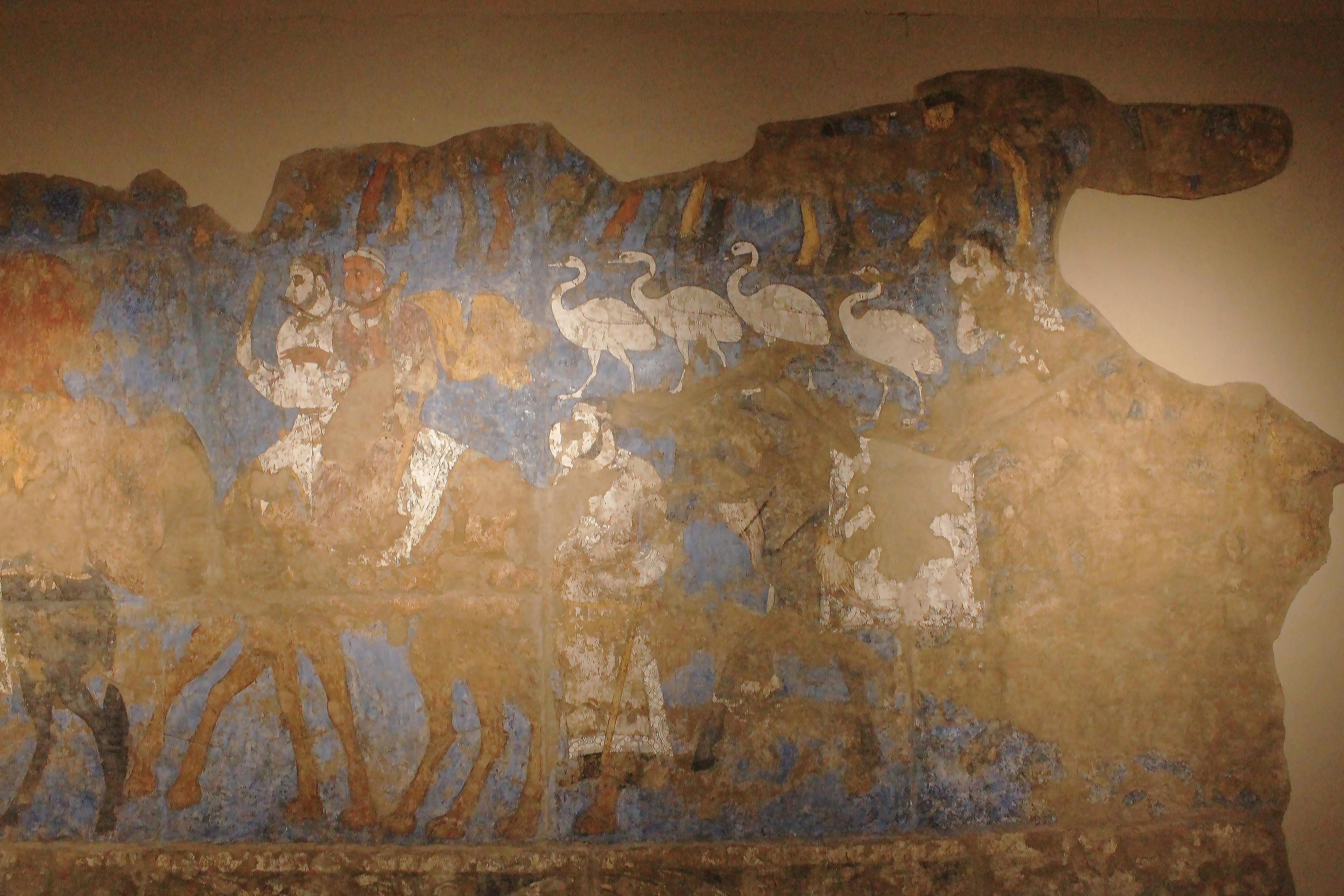
- Samarkand: the Afrasiyab hill, site of ancient Samarkand, and the Afrasiyab Museum with the 7th-century "Ambassadors' Painting", murals showing envoys from China, Korea and beyond arriving at the court of the Sogdian king Varkhuman.
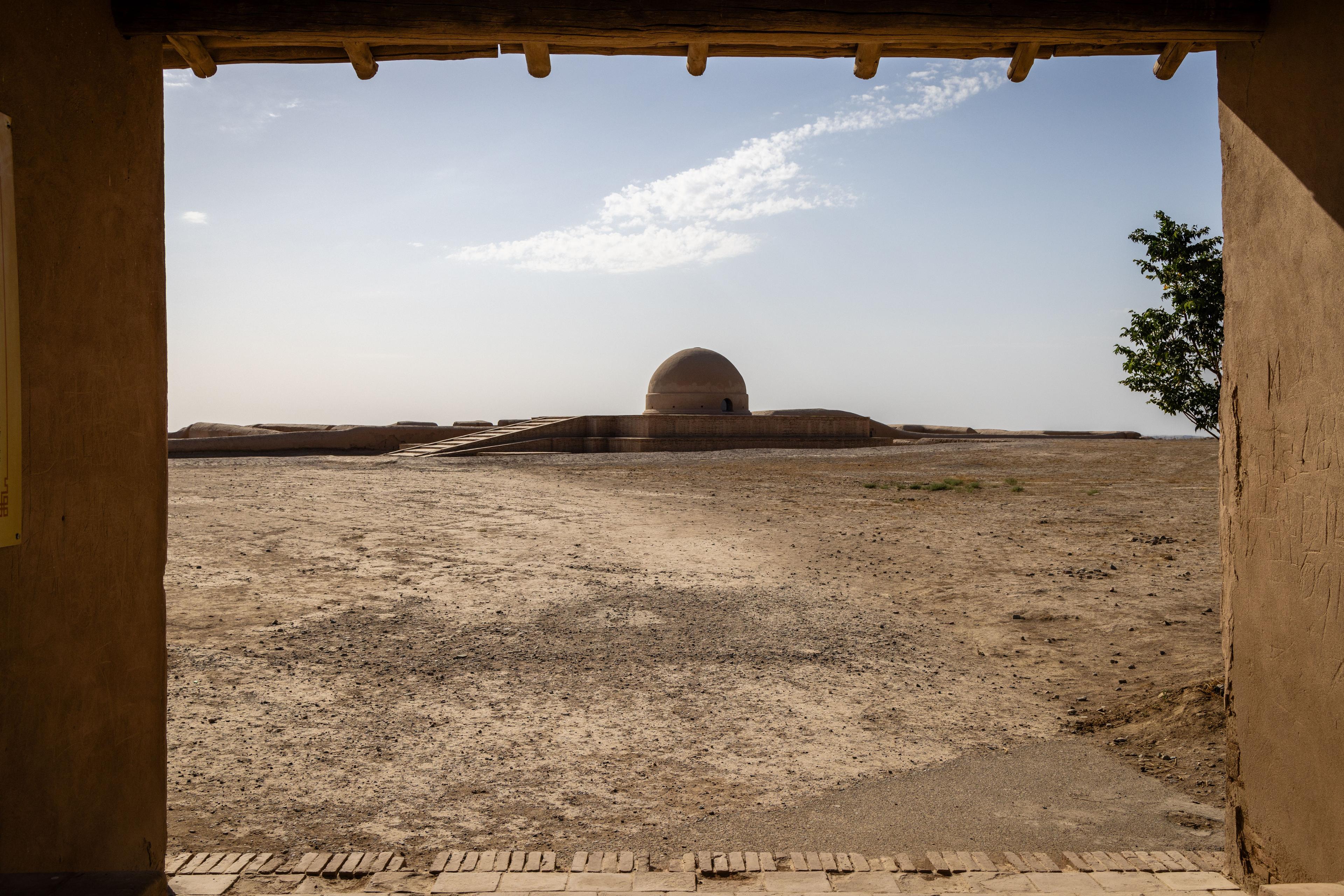
- Bukhara region: the archaeological site of Varakhsha, once a Sogdian palace, best visited with a guide.
- Just across the border in Tajikistan, ancient Panjikent is the best-preserved Sogdian town; it can be combined with Samarkand.
Alexander the Great and the Buddhist south
In 329 BC Alexander the Great reached Marakanda, as the Greeks called Samarkand, and spent two hard years fighting Sogdian and Bactrian resistance. He is said to have declared that Marakanda was even more beautiful than he had heard. He married Roxana, a local noblewoman, and founded garrison towns, but Greek rule did not last long.
In the following centuries the south of Uzbekistan became part of the Greco-Bactrian kingdom and then the Kushan empire, which helped carry Buddhism from India towards China along the trade routes.
Where to see it today:
- Termez, on the Amu Darya near the Afghan border: the Buddhist monasteries of Fayaz Tepa and Kara Tepe, dating from the first centuries AD, and the Termez Archaeological Museum.
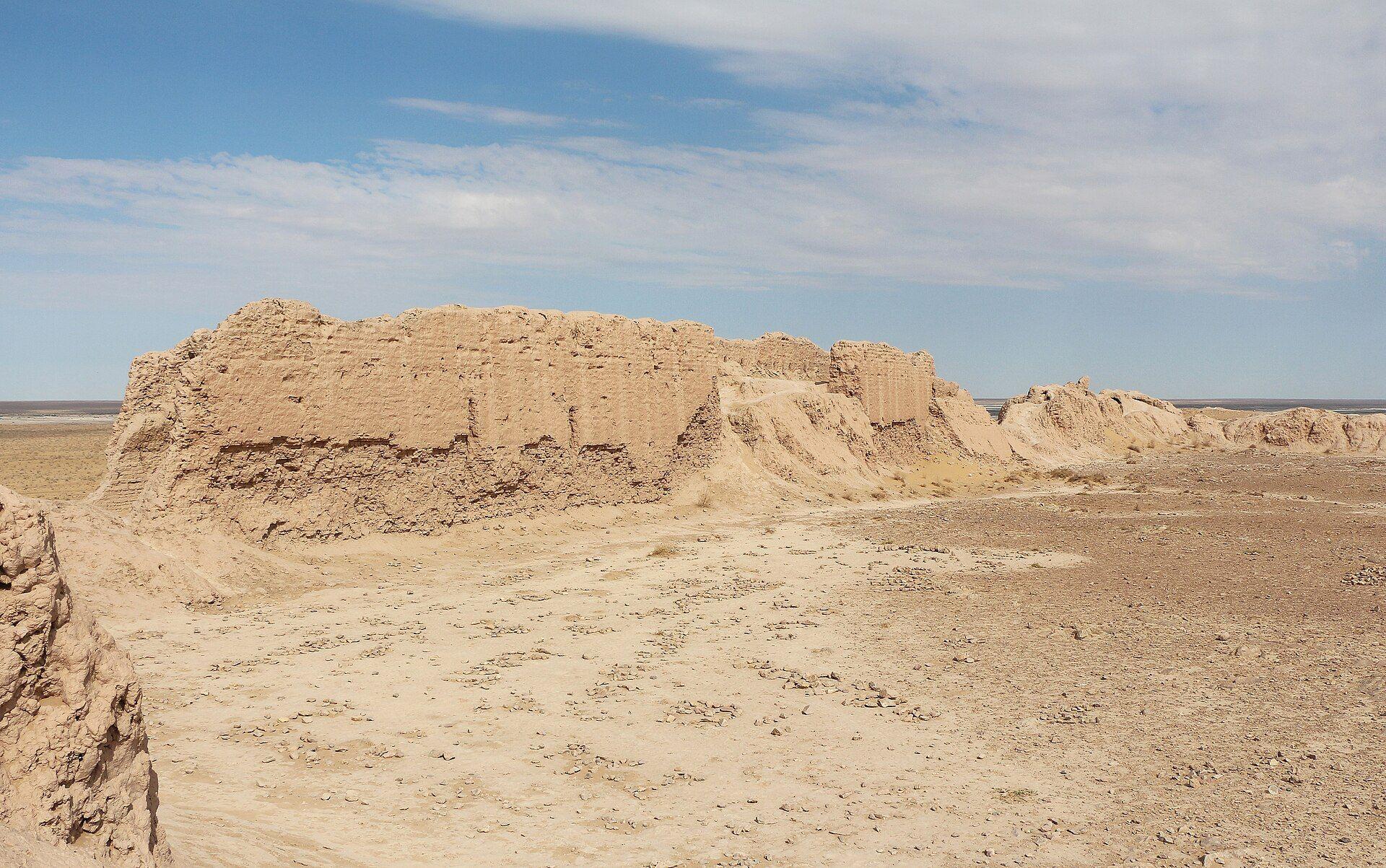
- Karakalpakstan: the desert fortresses of ancient Khorezm, such as Toprak Kala and Ayaz Kala, show how oasis kingdoms defended themselves in the same era. Our desert fortresses tour covers them.
The Arab conquest, the Samanids and the Kalyan Minaret
At the start of the 8th century Arab armies under Qutayba ibn Muslim took Bukhara (709) and Samarkand (712), bringing Islam to the region. In 751 the Abbasid Caliphate defeated a Chinese Tang army at the Battle of Talas, and tradition holds that Chinese prisoners taught papermaking in Samarkand. Whether or not the story is exact, Samarkand paper became famous across the Islamic world.
In the 9th and 10th centuries the Samanid dynasty ruled from Bukhara, and the region entered a golden age of science and literature written in Persian and Arabic. Scholars from this land include al-Khwarizmi (whose name gave us the word "algorithm"), Ibn Sina (Avicenna, born near Bukhara), al-Biruni and Imam al-Bukhari, compiler of the most respected collection of hadith.
Where to see it today:
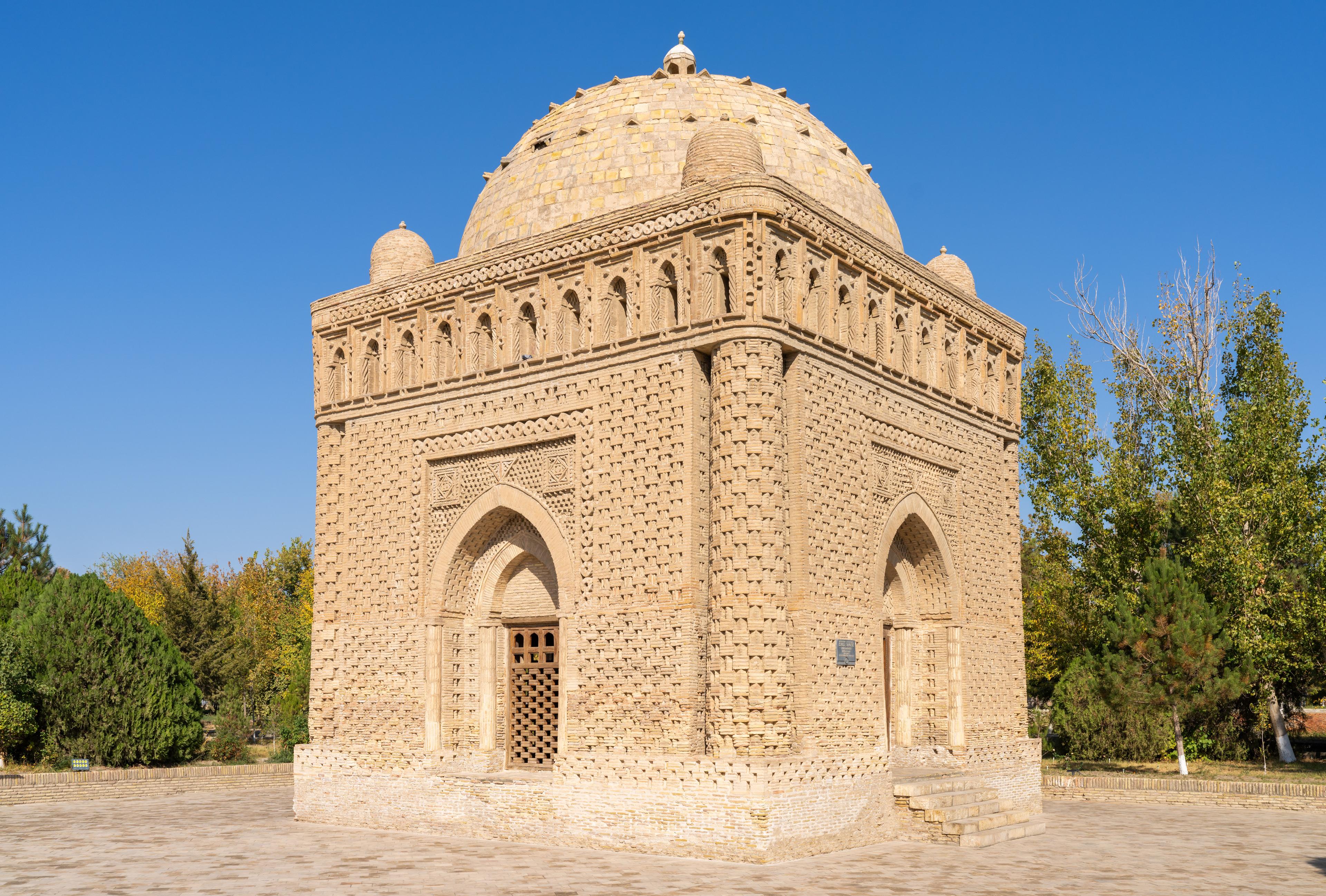
- Bukhara: the Samanid Mausoleum (10th century), a small brick masterpiece whose patterns change with the light, and one of the oldest Islamic monuments in Central Asia.
- Bukhara: the Magoki-Attari Mosque, with a 12th-century facade on far older foundations.
- Near Samarkand: the memorial complex of Imam al-Bukhari, a major pilgrimage site.
- Samarkand: the Meros paper mill in Konigil, where paper is still made by hand from mulberry bark.
From the late 10th century Turkic dynasties, the Karakhanids and then the Khwarazmshahs, took over. Trade continued, and Bukhara gained the structure that still defines its skyline.
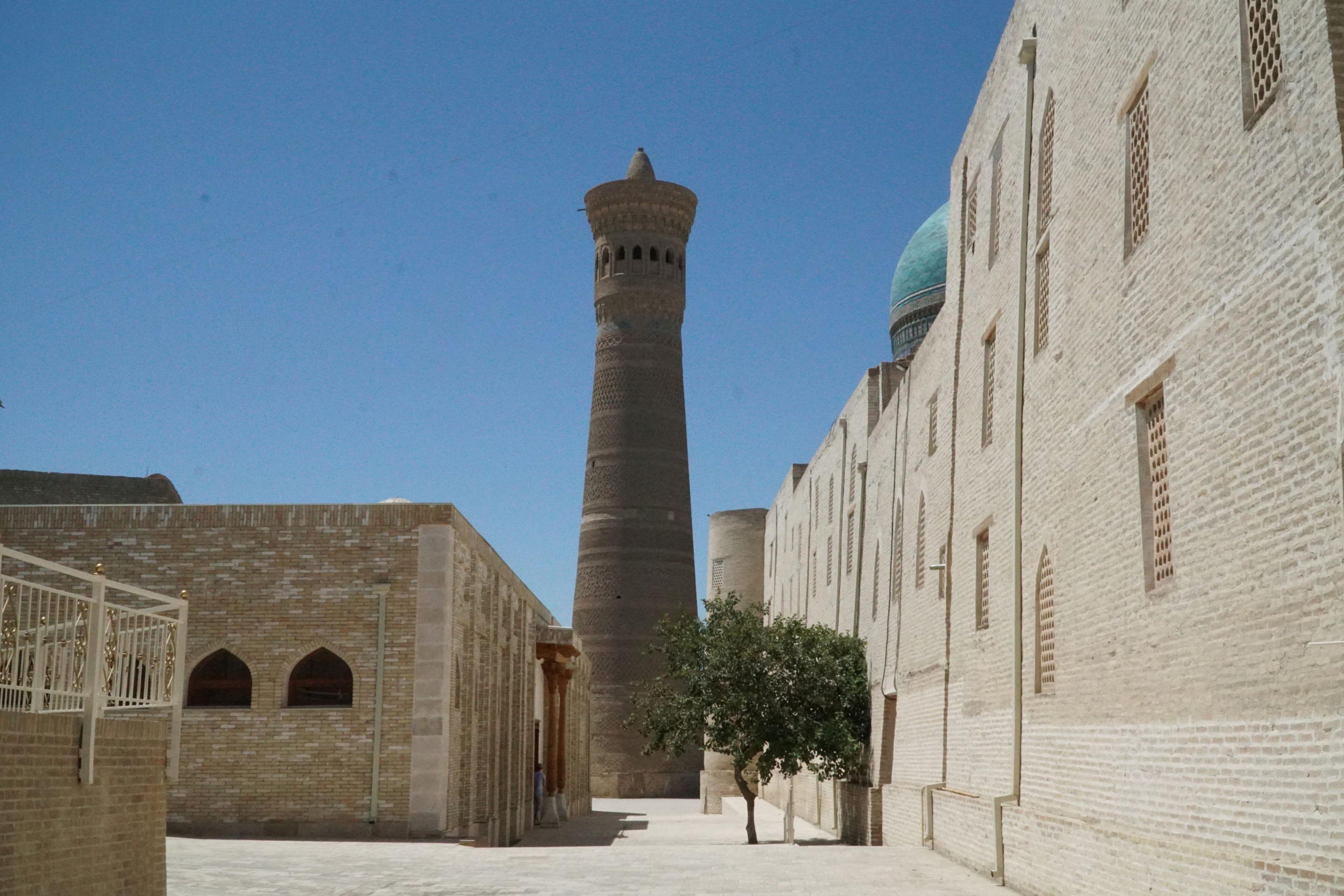
The Kalyan Minaret was built in 1127 by the Karakhanid ruler Arslan Khan. About 46 metres tall, wrapped in bands of decorative brickwork, it served as a call to prayer, a watchtower and a lighthouse for caravans in the desert.
Where to see the Karakhanid legacy:
- Bukhara: the Po-i-Kalyan ensemble, with the minaret, the Kalyan Mosque and the Mir-i-Arab Madrasah. Our guide to the Ark and Po-i-Kalyan covers it in detail.
Genghis Khan and the Mongol catastrophe
In 1220 the Mongol armies of Genghis Khan destroyed Bukhara and Samarkand, and in 1221 Urgench, the capital of Khorezm. Populations were killed or deported, irrigation systems ruined, and the old city of Samarkand on the Afrasiyab hill was never rebuilt. Legend says Genghis spared the Kalyan Minaret because its height impressed him.
Under Mongol rule, the region became part of the Chagatai Khanate. Paradoxically, the Pax Mongolica later made long-distance travel across Asia safer, and trade recovered.
Where to see it today:
- Samarkand: the empty, grassy mounds of Afrasiyab, which tell the story more powerfully than any monument.
- Bukhara: the Kalyan Minaret, the great survivor.
Amir Timur and Ulugbek: Samarkand at its height
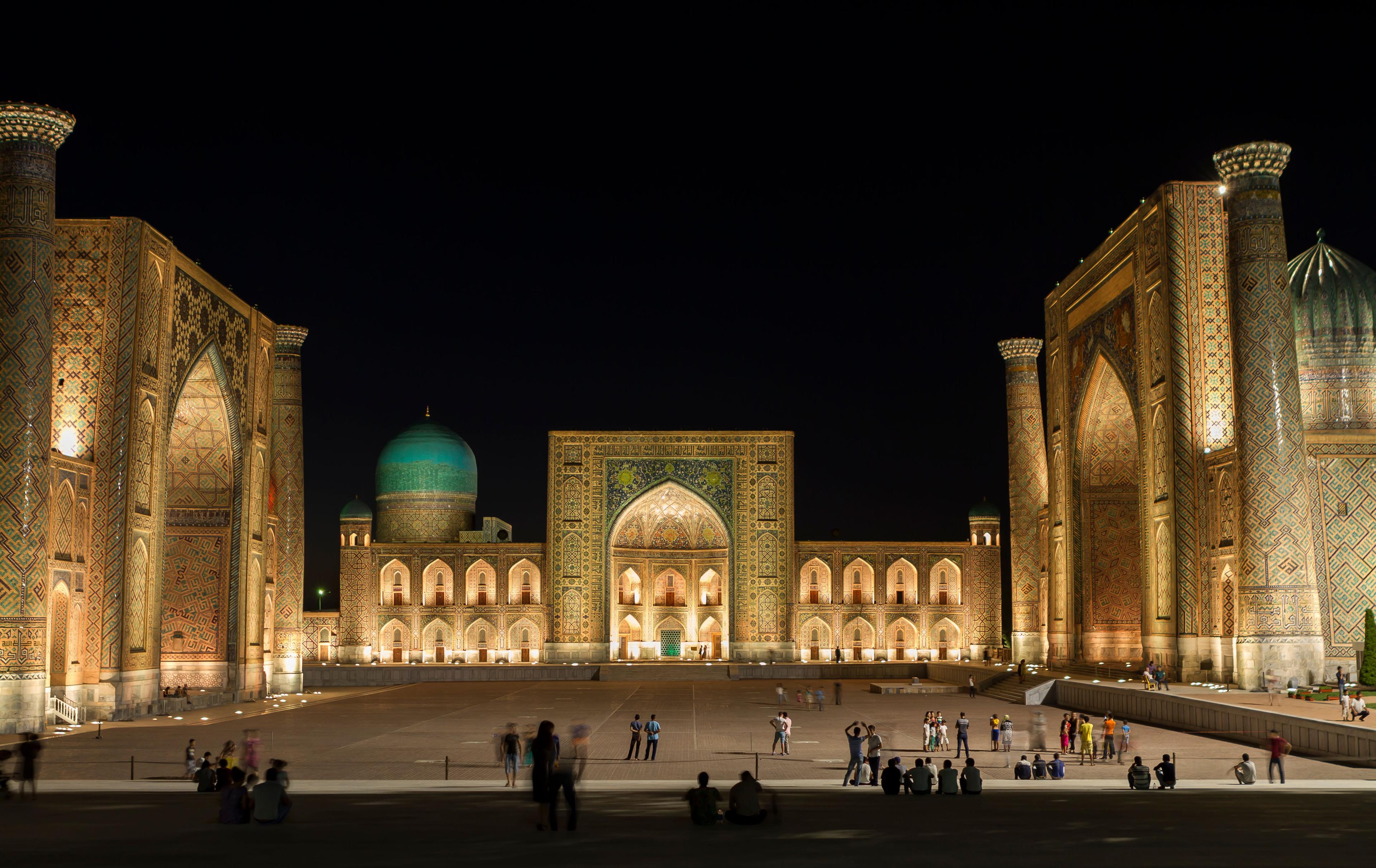
Amir Timur, known in the West as Tamerlane, was born in 1336 near Kesh, today's Shahrisabz. From 1370 he built an empire stretching from Anatolia to India, and made Samarkand its capital. His campaigns were brutal, but he brought architects, craftsmen and scholars from conquered cities to Samarkand, and the result is the turquoise-domed city you see today.
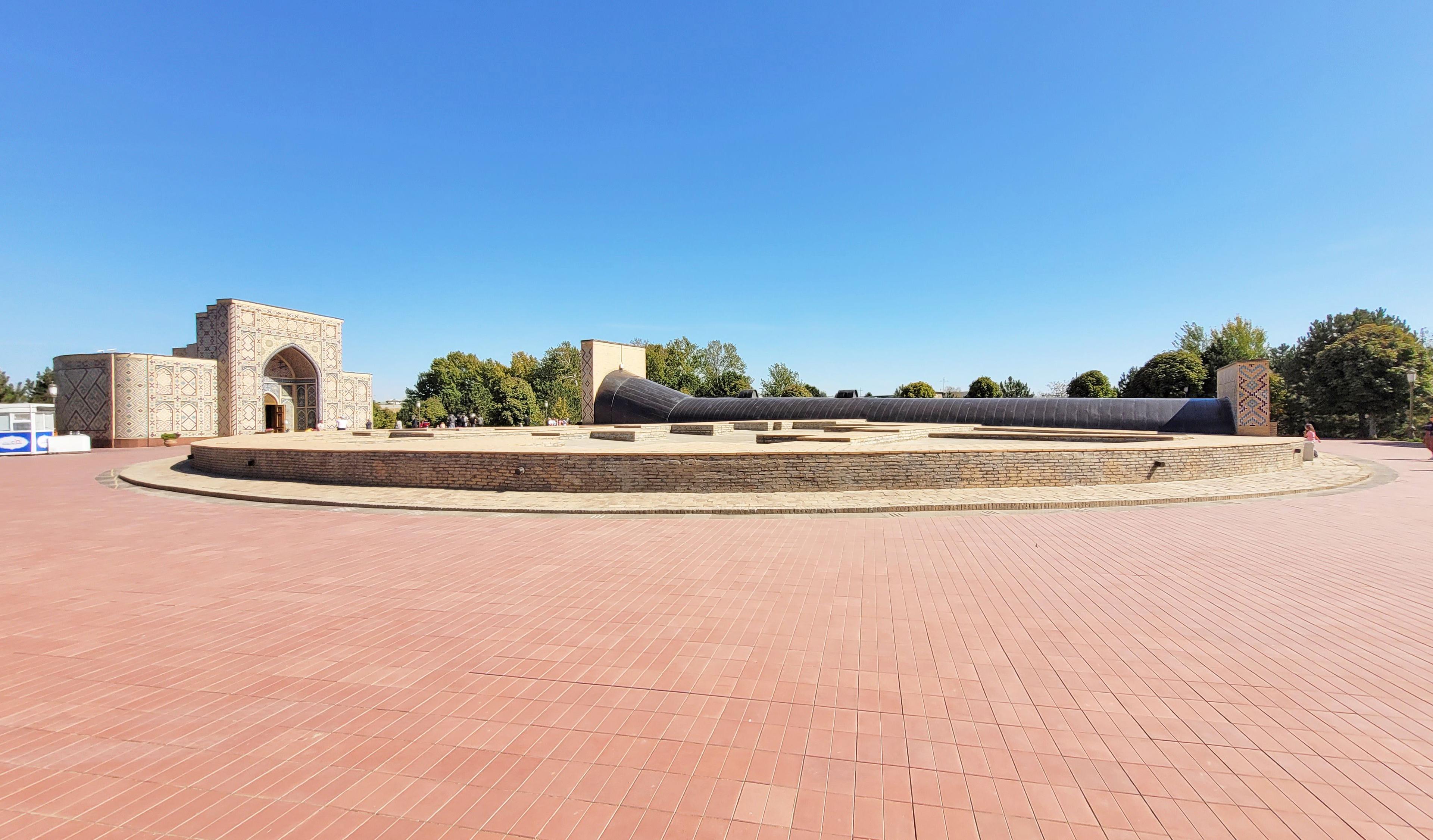
His grandson Ulugbek governed Samarkand for about forty years until his death in 1449. He was an astronomer first and a ruler second. His observatory produced a star catalogue of over a thousand stars and measured the length of the year with remarkable accuracy.
Where to see it today:
- Samarkand: Gur-e-Amir (Timur's mausoleum), Bibi-Khanym Mosque (begun 1399), the Ulugbek Madrasah on the Registan (1417 to 1420), the Ulugbek Observatory and its museum, and the Shah-i-Zinda necropolis, where many of Timur's relatives are buried.
- Shahrisabz: the ruined gateway of Timur's Ak-Saray Palace, begun in 1380, and the Dorut Tilovat complex.
- Bukhara and Gijduvan: smaller Ulugbek madrasahs.
The khanates of Bukhara, Khiva and Kokand
In 1500 the Shaybanid Uzbeks took Samarkand and the region split into rival states. At the same time, European ships opened sea routes to India and China, and overland trade slowly declined.
By the 18th and 19th centuries, three states dominated: the Emirate of Bukhara, the Khanate of Khiva and the Khanate of Kokand in the Fergana Valley. They were rich enough to build, but isolated and often at war with one another. Many of the buildings travellers love most date from this period.
Where to see it today:
- Bukhara: Lyab-i-Hauz (17th century), the trading domes, the Ark Fortress and Chor Minor.
- Khiva: almost all of Ichan-Kala, including Kalta Minor, the Tash-Hauli Palace and the Juma Mosque with its forest of wooden columns.
- Samarkand: the Sher-Dor and Tilya-Kori madrasahs on the Registan.
- Kokand: the Khudayar Khan Palace (1870s).
The Russian era and the end of the caravan age
In the 19th century the Russian Empire advanced into Central Asia during its rivalry with Britain, the so-called Great Game. Tashkent fell in 1865 and Samarkand in 1868; Khiva and Bukhara became Russian protectorates, and the Kokand Khanate was abolished in 1876. The Trans-Caspian Railway reached Samarkand in 1888, ending the age of caravans for good.
Russian Tashkent grew as a new colonial city beside the old town, with broad avenues, parks and European-style buildings. In 1920 the Red Army overthrew the last Emir of Bukhara, and the Soviet era began, lasting until independence in 1991.
Where to see it today:
- Tashkent: the colonial-era buildings around the centre, the Palace of Grand Duke Nikolai Konstantinovich and the State Museum of History.
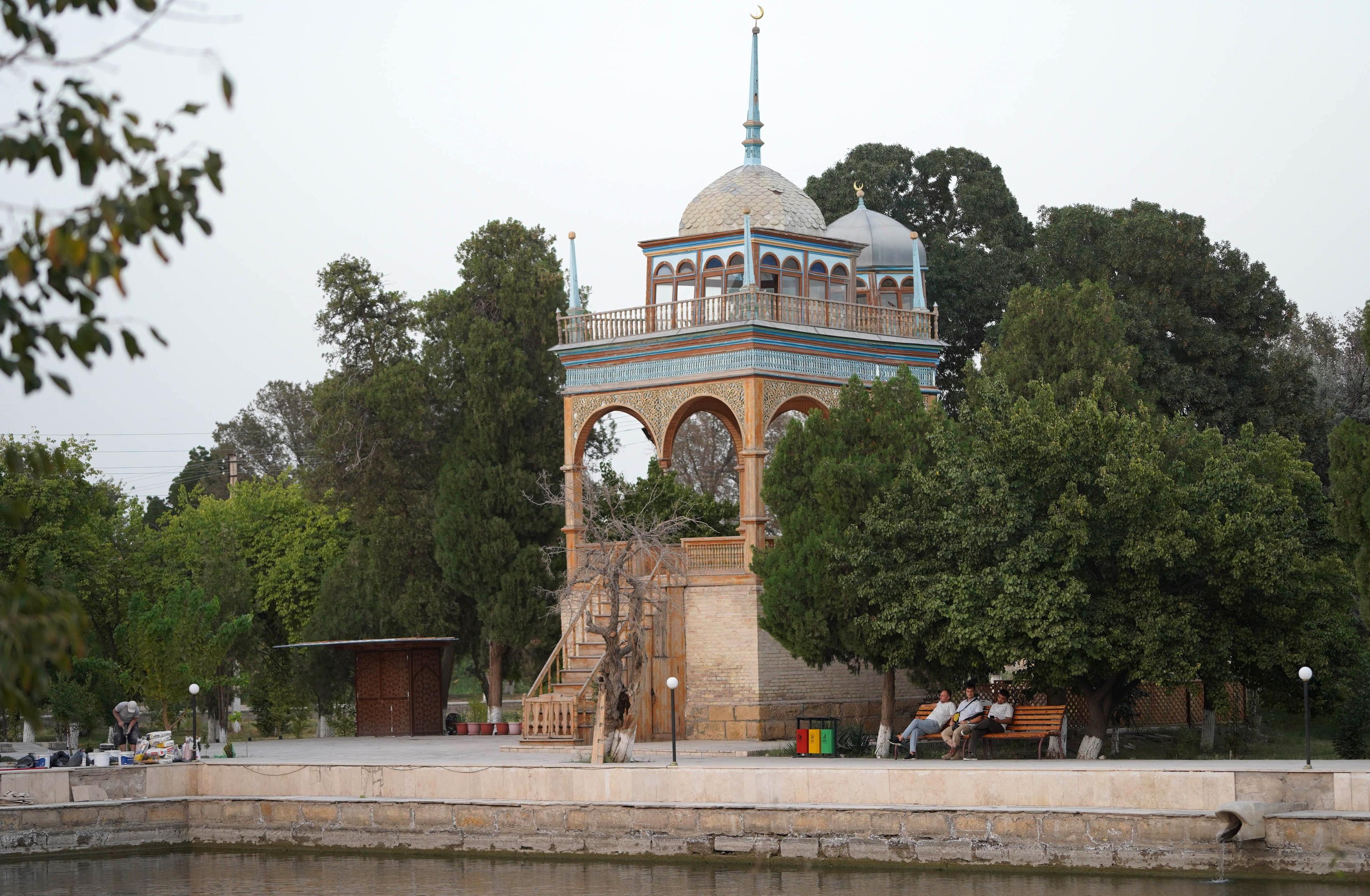
- Bukhara: Sitorai Mohi Khosa, the summer palace of the last emirs, completed in the early 20th century, a curious mix of Uzbek and European styles.
- Khiva: the Islam Khodja Minaret and Madrasah (1910), the tallest in the city.

How to see the Silk Road in Uzbekistan: a suggested route
The classic Silk Road route through Uzbekistan follows history roughly in reverse.
- Tashkent (1 to 2 days): museums, the old town and the Hazrati Imam complex, plus the Soviet and Russian city.
- Samarkand (2 to 3 days): Afrasiyab, the Timurid monuments, the Registan, Shah-i-Zinda, the Ulugbek Observatory and the paper mill in Konigil. A day trip to Shahrisabz adds Timur's birthplace.
- Bukhara (2 to 3 days): the Samanid Mausoleum, Po-i-Kalyan, the trading domes, Lyab-i-Hauz and the emir's summer palace.
- Khiva (1 to 2 days): Ichan-Kala, the best-preserved khanate city in Central Asia, with optional excursions to the desert fortresses of Karakalpakstan.
The Afrosiyob high-speed train links Tashkent, Samarkand and Bukhara, and Khiva is reached by train or a domestic flight to Urgench. Add Termez for the Buddhist sites, or the Fergana Valley for silk, ceramics and the Kokand palace.
Our 7-day itinerary article shows how to fit the essentials into a week. With 12 to 14 days you can see every era described here.
Exploring the Silk Road with TourEast
Our guides are historians at heart, and they enjoy connecting the dots between a Sogdian mural, a Timurid dome and a Russian railway station. Whether you join a small-group tour or want a private Silk Road itinerary built around your interests, we are happy to plan it with you.