From Alexander the Great in Sogdiana to independence in 1991: a clear timeline of Uzbekistan's history, era by era, with the monuments and museums where you can still see each period today.
Facts, prices and schedules checked on November 4, 2026
The history of Uzbekistan is the history of the cities you will visit. Samarkand is as old as Rome, Bukhara was a capital of Islamic learning a thousand years ago, and Khiva was ruled by khans until 1920. The difficulty for travellers is that every guide starts with a different century, and the names (Sogdians, Samanids, Shaybanids, Manghits) blur together by the second day.
This timeline puts the main eras of Uzbekistan's history in order, from Alexander the Great to independence in 1991, and for each one tells you what you can still see and where. It is written for travellers, not historians, so dates are rounded where scholars disagree. Our guide to Silk Road history covers the trade routes themselves; this article is about who ruled the land, and what they left behind.
Uzbekistan history at a glance: a quick timeline
- Before 500 BC: early farming oases along the Amu Darya and Zarafshan rivers; Samarkand's predecessor, Afrasiyab, is founded around the 8th to 7th century BC.
- 6th–4th century BC: Sogdiana, Bactria and Khorezm become provinces of the Persian Achaemenid empire.
- 329–327 BC: Alexander the Great conquers Sogdiana and takes Maracanda (Samarkand).
- 1st–3rd century AD: the Kushan empire rules the south; Buddhism spreads around Termez.
- 4th–8th century: Sogdian merchants dominate Silk Road trade.
- 709–751: the Arab conquest brings Islam; the Battle of Talas in 751.
- 819–999: the Samanid dynasty rules from Bukhara, a golden age of science and Persian literature.
- 999–1220: the Karakhanids, then the Khwarazmshahs.
- 1219–1221: Genghis Khan's armies destroy Bukhara, Samarkand and Urgench.
- 1370–1507: Amir Timur and the Timurids make Samarkand the capital of an empire.
- 1500–1920: the Uzbek khanates of Bukhara, Khiva and Kokand.
- 1865–1876: the Russian Empire conquers Tashkent, Samarkand, Khiva and Kokand.
- 1924: the Uzbek Soviet Socialist Republic is created.
- 26 April 1966: the Tashkent earthquake.
- 31 August 1991: Uzbekistan declares independence; 1 September is Independence Day.
Before Alexander: Sogdiana, Bactria and Khorezm
Long before any empire, people farmed the oases between the Amu Darya and Syr Darya rivers. Three regions matter for travellers. Sogdiana was the Zarafshan valley around Samarkand and Bukhara. Bactria lay in the south around Termez. Khorezm, the delta of the Amu Darya, is the region around modern Khiva and Karakalpakstan.
In the 6th century BC these lands became provinces of the Persian Achaemenid empire. The Sogdians spoke an Iranian language and later became the great merchants of the Silk Road. Samarkand began on the hill of Afrasiyab, where the city stood until the Mongols. In 2007 Uzbekistan celebrated the city's 2,750th anniversary.
Deep history is also visible in the mountains: the Teshik-Tash cave in Surkhandarya gave archaeologists the remains of a Neanderthal child, and the Bronze Age site of Sapalli Tepe near Termez shows that farming towns existed here around 2000 BC.
What to see:
- Afrasiyab hill and the Afrasiyab Museum in Samarkand.
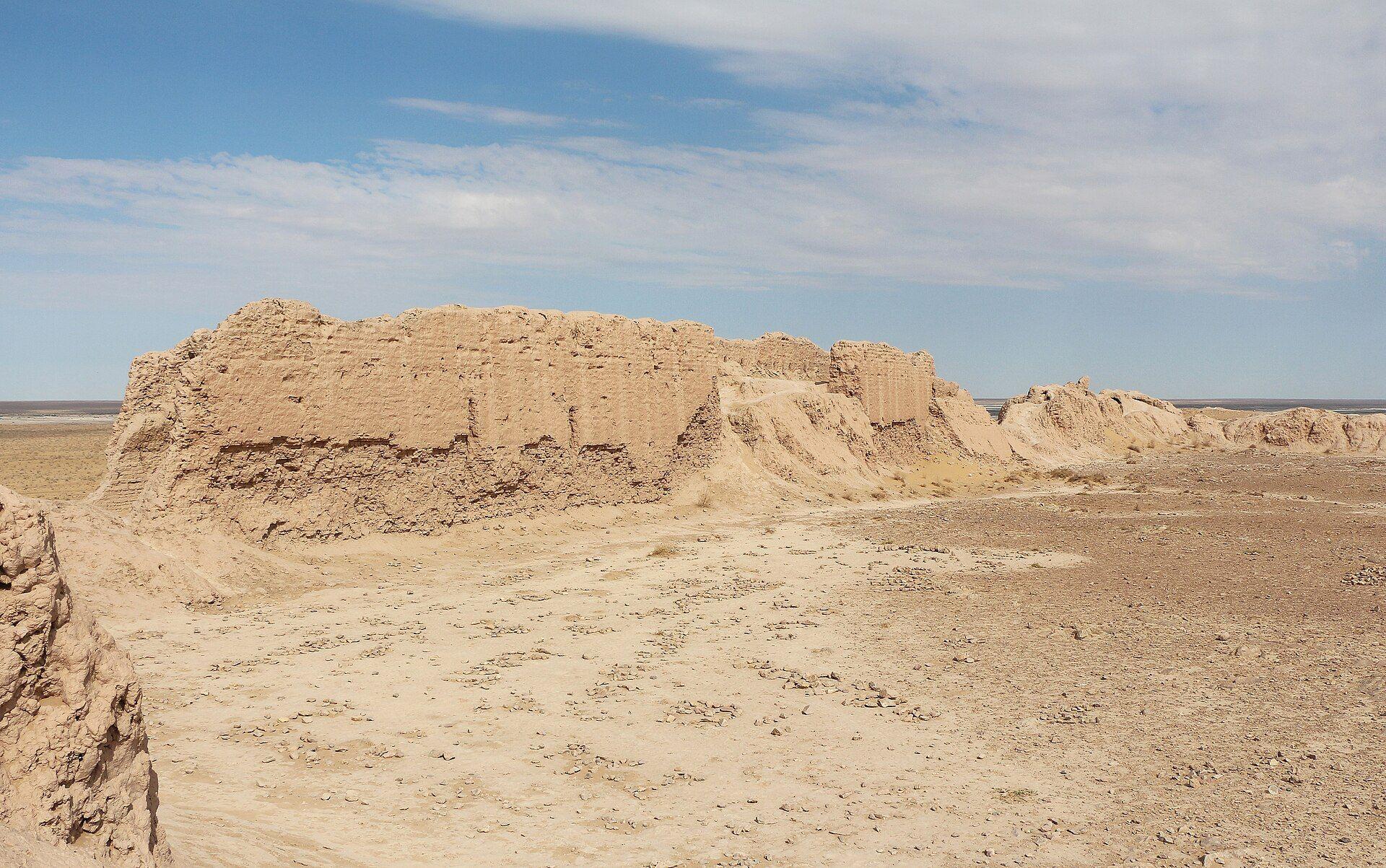
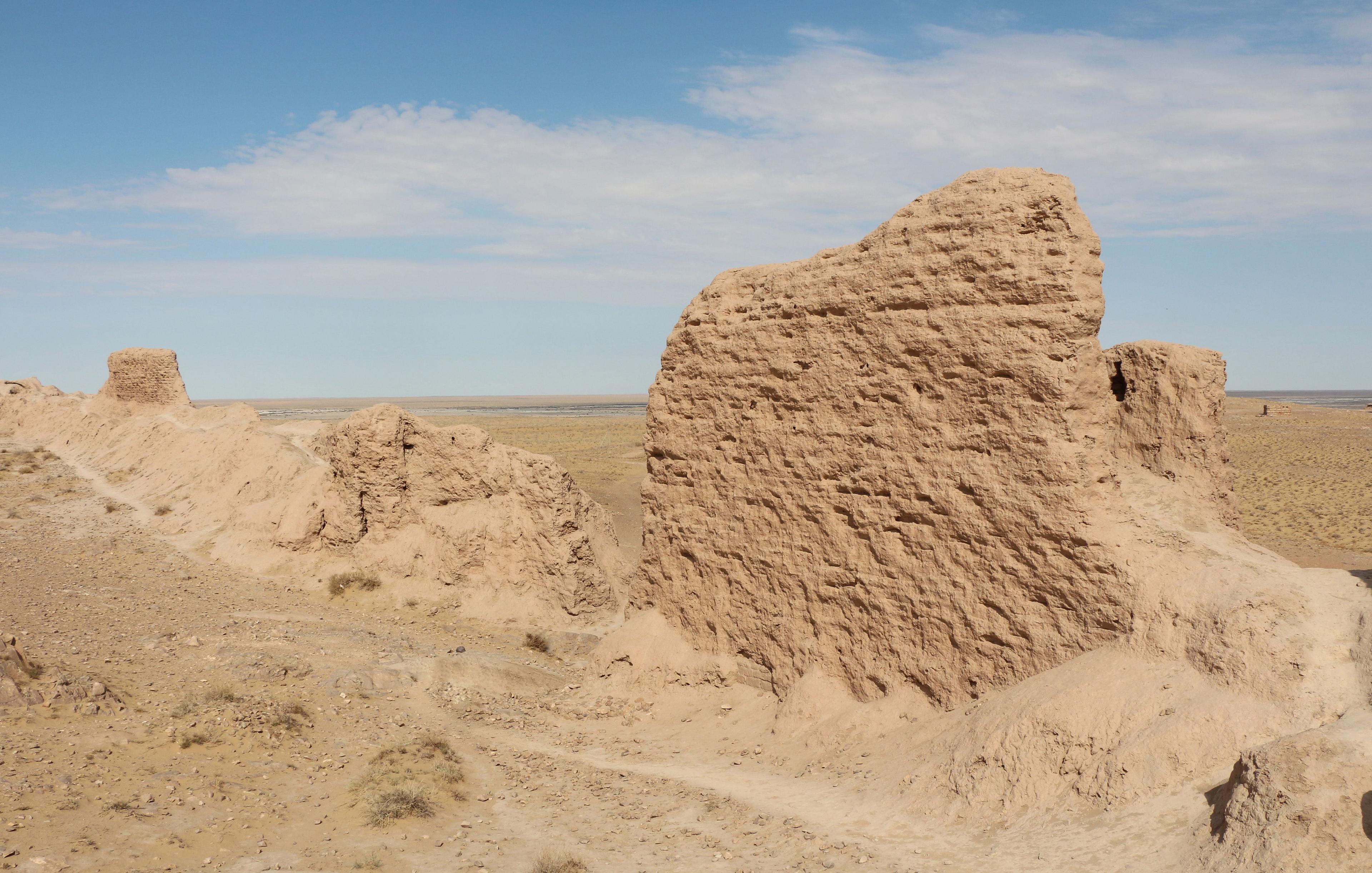
- The Khorezm desert fortresses of Ayaz-Kala and Toprak-Kala, whose mud-brick walls date from the last centuries BC and the first centuries AD.
- The Archaeological Museum in Termez.
Alexander the Great, the Greeks and the Kushans
In 329 BC Alexander the Great crossed the Amu Darya and took Maracanda, the city we now call Samarkand. The two years that followed were among the hardest of his campaign: the Sogdian leader Spitamenes led a guerrilla resistance, and Alexander's men fought a long war in the hills and steppe. In 327 BC Alexander married Roxana, the daughter of a Sogdian or Bactrian nobleman, partly to win over the local aristocracy.
After his death, the region passed to the Seleucids and then to the Greco-Bactrian kingdom, which issued fine silver coins and left Greek influence in art for centuries.
What to see:
- Afrasiyab in Samarkand, where Maracanda stood. The museum's coins and ceramics cover this period.
- Kampir Tepe near Termez, a fortified river town of the Hellenistic period, often linked with a crossing of the Amu Darya.
- Greco-Bactrian coins in the State Museum of History in Tashkent.
From the 1st to the 3rd century AD, the Kushan empire ruled a vast area from Central Asia to northern India. Its kings were tolerant of many faiths, and Buddhism spread north across the Amu Darya along the trade routes. Monasteries were built around Termez, and monks from here helped carry Buddhism towards China.
Between the 4th and 8th centuries, after the Kushans, Sogdian merchants controlled much of the trade between China, India, Persia and Byzantium. Their language became a common business language along the Silk Road, and Sogdian painters decorated the palaces of Samarkand. The famous Afrasiyab murals, painted in the 7th century for King Varkhuman, show ambassadors arriving from China, Korea and beyond.
What to see:
- Kara Tepe and Fayaz Tepa in Termez, Buddhist monastery complexes with a restored stupa; our Termez guide covers them in detail.
- Dalverzin Tepe, the Kushan city in Surkhandarya where a hoard of gold was found; finds are in Tashkent museums.
- The Afrasiyab murals in the Afrasiyab Museum, Samarkand.
The Arab conquest and the Samanids: Islam and a golden age
Arab armies reached the region in the late 7th century, and under the general Qutayba ibn Muslim they took Bukhara in 709 and Samarkand in 712. In 751 the Abbasid army defeated a Tang Chinese force at the Battle of Talas, which ended Chinese ambitions west of the mountains. Tradition holds that Chinese prisoners brought the art of papermaking to Samarkand.
Islam took root gradually. In 819 the Samanids, a local Persian family, became governors and soon effectively independent rulers, with Bukhara as their capital until 999. This was a golden age of science and literature. Scholars from this land and era include al-Khwarizmi, Ibn Sina (Avicenna), al-Biruni and Imam al-Bukhari, and Persian poetry flourished at the Samanid court. Our article on the great scholars of Uzbekistan tells their stories.
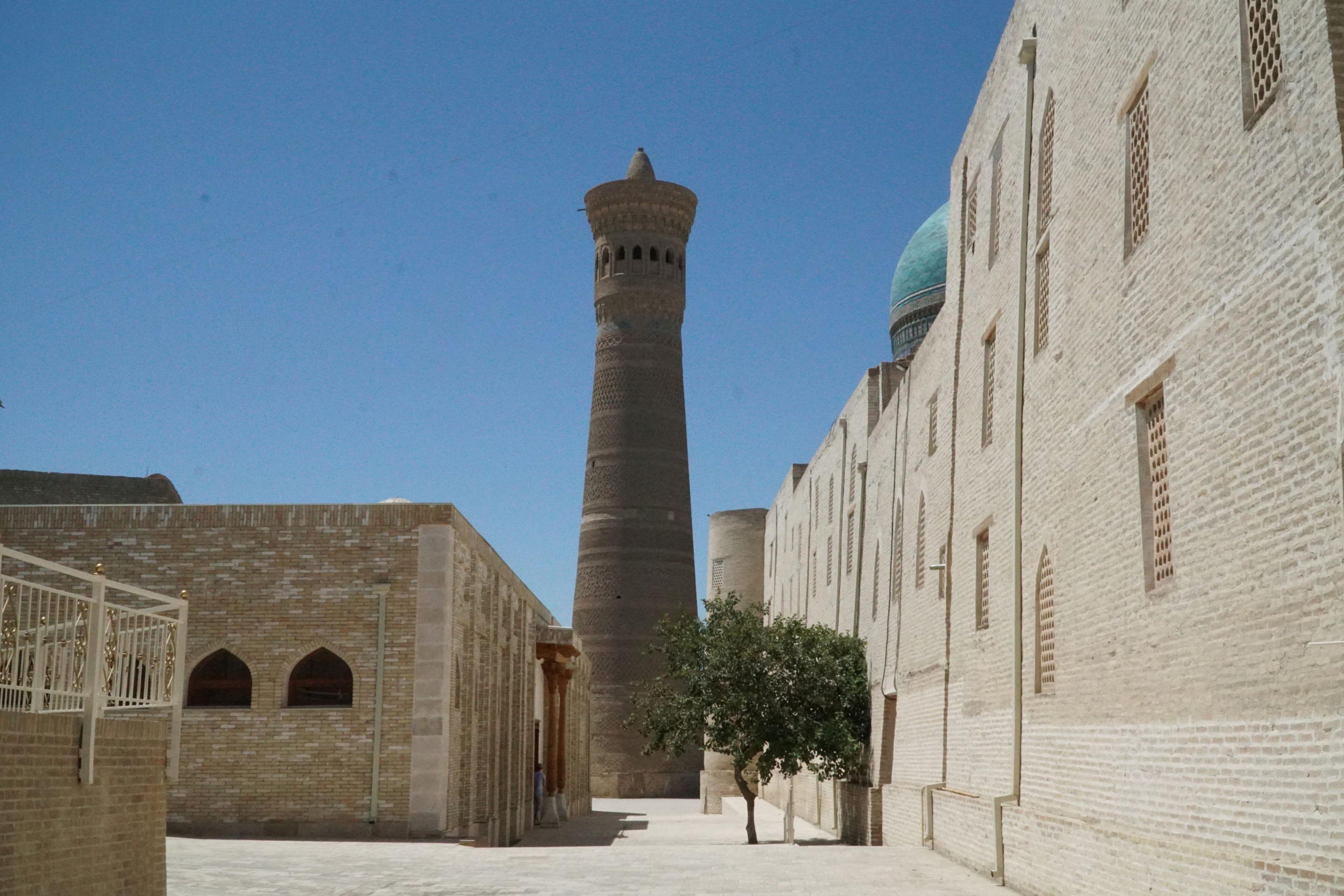
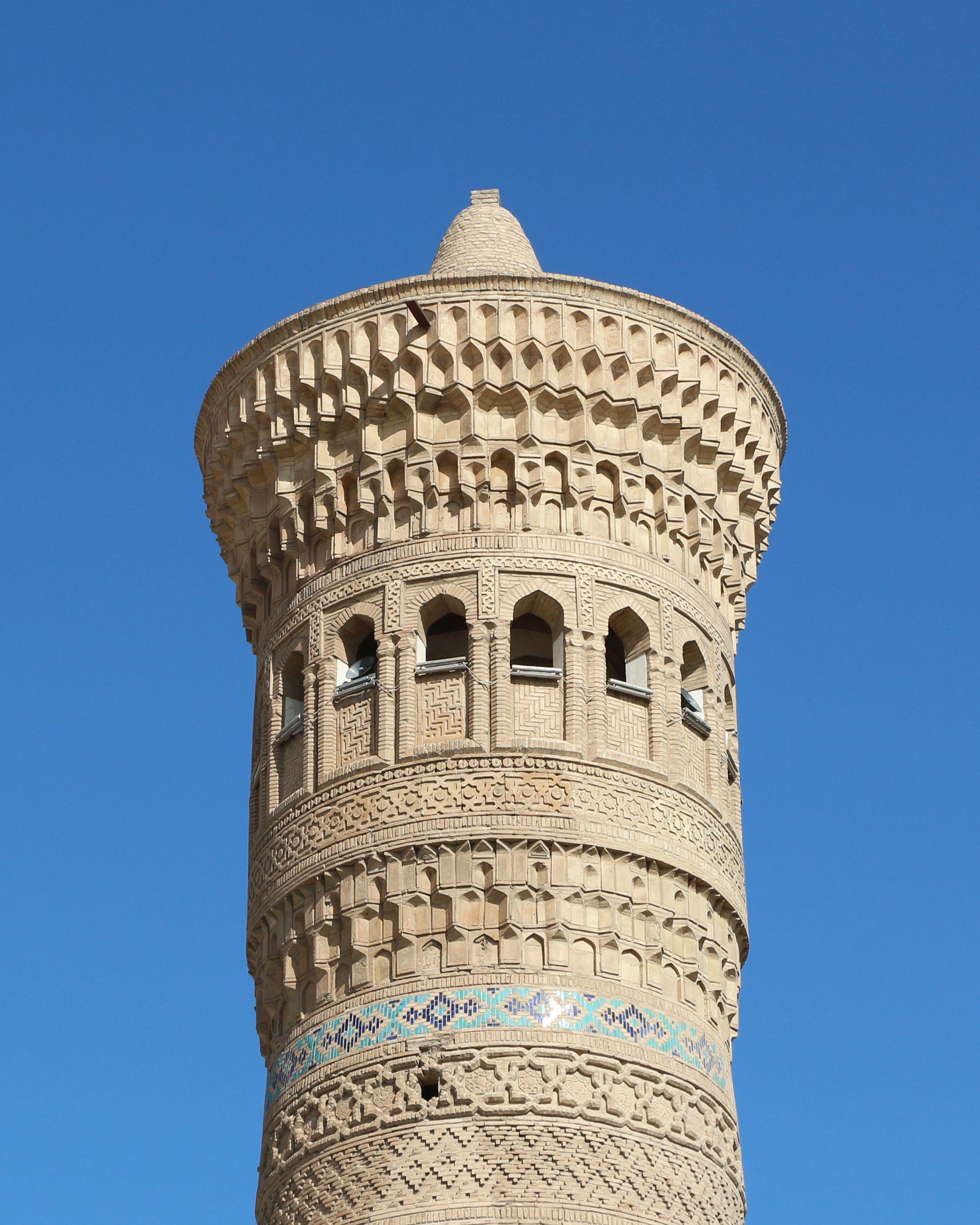
The Turkic Karakhanids replaced the Samanids, and in 1127 Arslan Khan built the Kalyan Minaret in Bukhara, then one of the tallest buildings in Central Asia.
What to see:
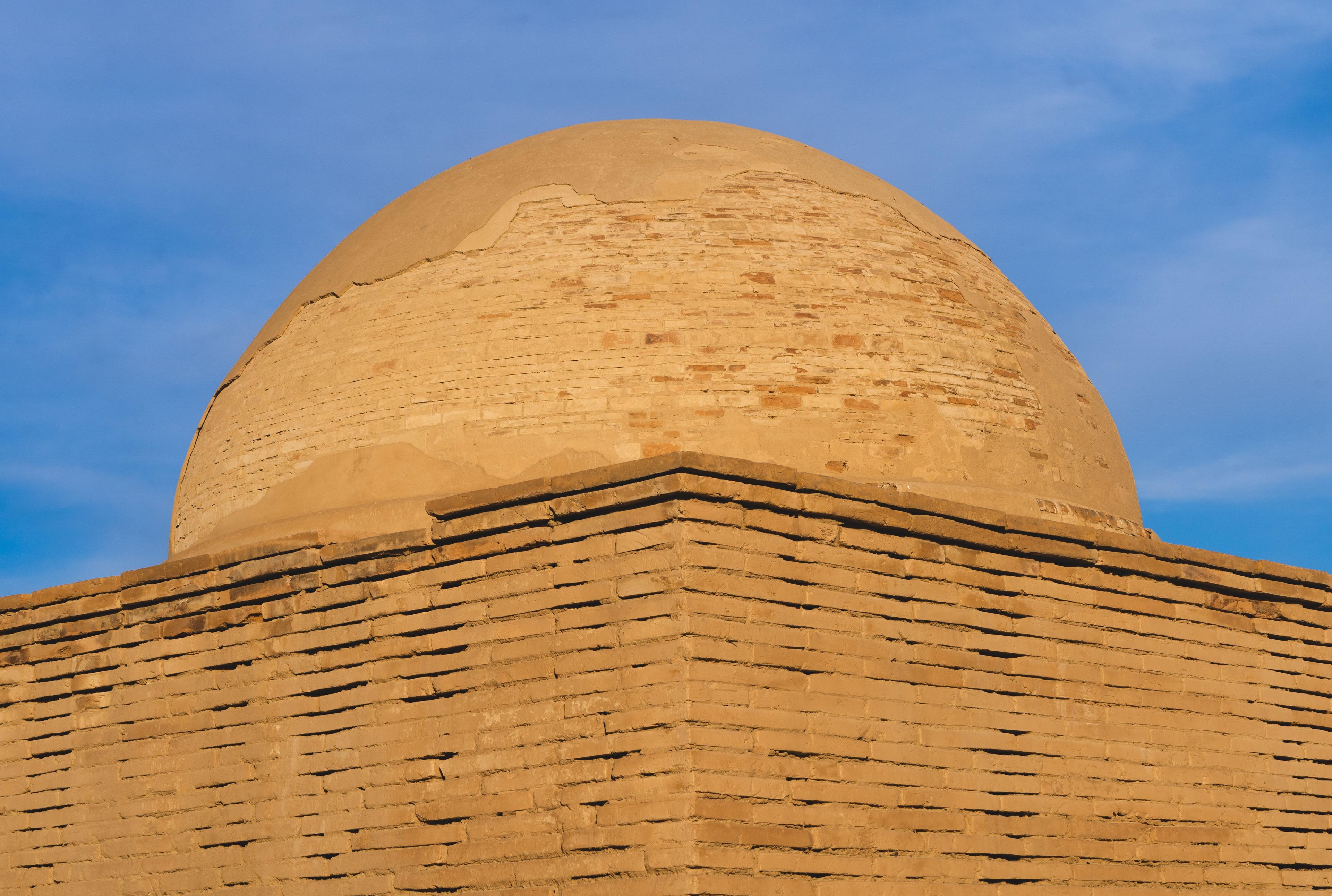
- The Samanid Mausoleum in Bukhara, a 10th-century brick cube and one of the masterpieces of early Islamic architecture.
- The Kalyan Minaret in Bukhara.
- The Magoki-Attori Mosque in Bukhara, built on far older foundations.
- The Imam al-Bukhari complex near Samarkand, a modern memorial at the scholar's grave.
- The paper workshop in Konigil near Samarkand, where Samarkand paper is made by hand again.
Genghis Khan and the Mongol conquest
In 1218 the Khwarazmshah, ruler of an empire based in Khorezm, had a Mongol trade caravan killed at Otrar. Genghis Khan's response was one of the most destructive campaigns in history. Between 1219 and 1221 Mongol armies took Bukhara, Samarkand and Urgench, the Khwarazmian capital. Much of the population was killed or deported, and irrigation systems were ruined.
Bukhara burned in 1220. Local tradition says Genghis Khan spared the Kalyan Minaret because he had to look up at it so high that his hat fell off. Whatever the truth, it survived. Samarkand on the hill of Afrasiyab was never rebuilt; the city later grew again to the south, where it stands today.
After Genghis Khan, the region became part of the Chagatai Khanate, ruled by his son's descendants. For more than a century it recovered slowly.
What to see:
- Afrasiyab hill in Samarkand: the empty, grassy mounds are the site of the city the Mongols destroyed.
- The Kalyan Minaret in Bukhara, one of the few major buildings that survived.
- Konye-Urgench, the ruined Khwarazmian capital, now just across the border in Turkmenistan.
Amir Timur and the Timurids: Samarkand's great age
Timur, known in Europe as Tamerlane, was born near Shakhrisabz in 1336 and became master of Transoxiana in 1370. In three decades of campaigns he built an empire from Anatolia to India, and he brought craftsmen from conquered cities to make Samarkand his capital. He died in 1405 on his way to invade China. Our article on Amir Timur tells his story in full.
His grandson Ulugh Beg ruled Samarkand for nearly 40 years from 1409 and was more scientist than soldier. His observatory produced a star catalogue that remained the most accurate for centuries. In 1483 another Timurid, Babur, was born in Andijan in the Fergana Valley; driven out of Central Asia, he founded the Mughal Empire in India in 1526.
What to see:
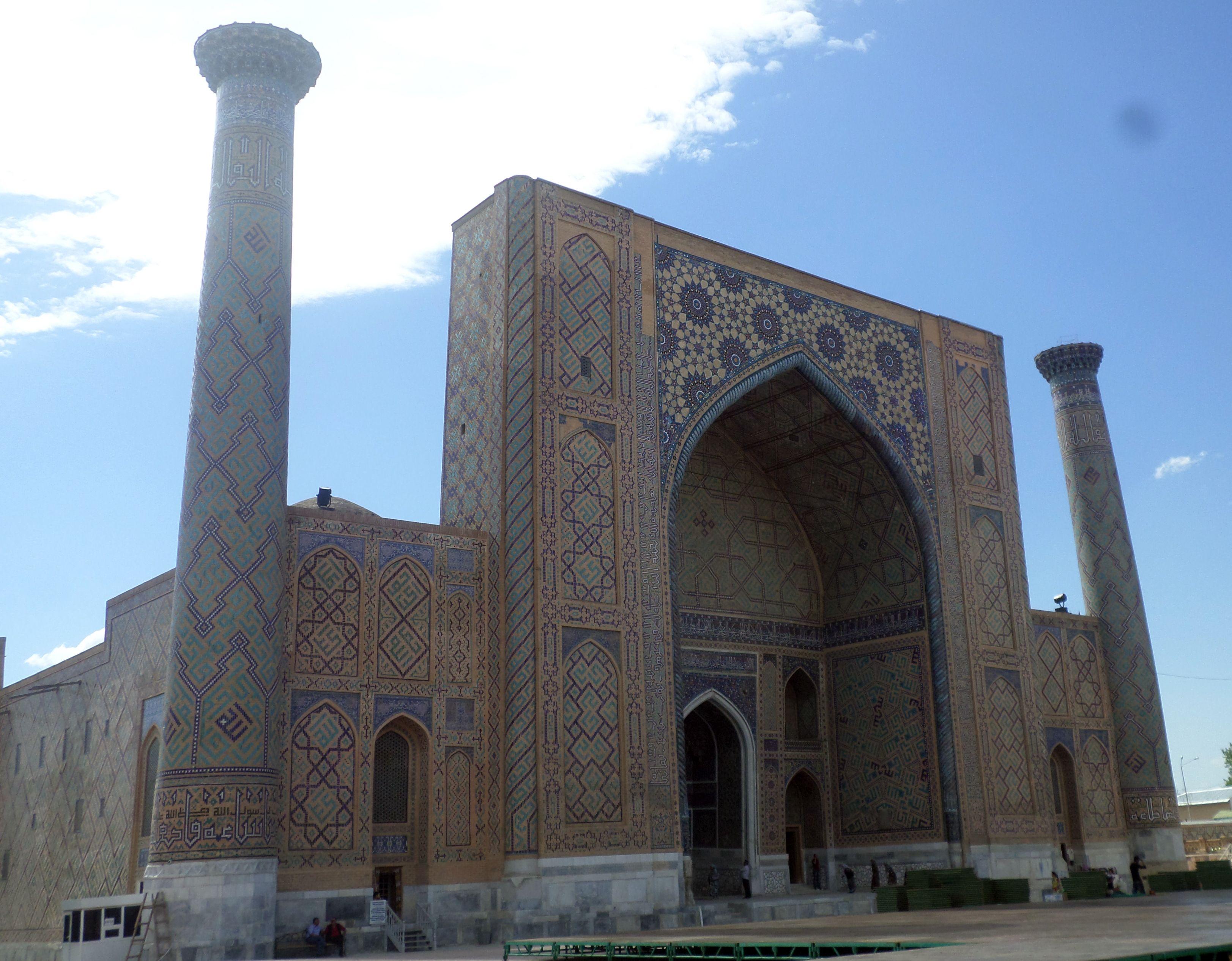
- In Samarkand: the Gur-e-Amir mausoleum, Bibi-Khanym Mosque, the Shah-i-Zinda necropolis, the Ulugh Beg Madrasah on the Registan and the Ulugh Beg Observatory.
- In Shakhrisabz: the ruined Ak-Saray palace and the Dorut Tilavat complex, a day trip from Samarkand.
- In Tashkent: the Amir Timur Museum and the statue on Amir Timur Square.
The khanates of Bukhara, Khiva and Kokand
Around 1500, Uzbek tribes from the steppe under Muhammad Shaybani Khan took Samarkand and Bukhara and ended Timurid rule. This is the origin of the name "Uzbek" as a political identity. Under the Shaybanids, Bukhara became the capital and much of the old town you walk through today was built.
Over the next three centuries the region settled into three states:
- The Khanate of Bukhara, later the Emirate of Bukhara under the Manghit dynasty from the late 18th century.
- The Khanate of Khiva in Khorezm, whose capital moved to Khiva in the early 17th century.
- The Khanate of Kokand in the Fergana Valley, founded in the early 18th century, which at its height also controlled Tashkent.
As sea routes replaced the overland caravans, the khanates became more isolated. In the 19th century they were caught in the "Great Game" between Britain and Russia; two British officers, Charles Stoddart and Arthur Conolly, were executed in Bukhara in 1842.
What to see:
- In Bukhara: the Lyabi-Hauz ensemble, the trading domes, the Mir-i-Arab Madrasah and the Ark Fortress, residence of the emirs.
- On the Registan in Samarkand: the Sher-Dor and Tilya-Kori madrasahs of the 17th century.
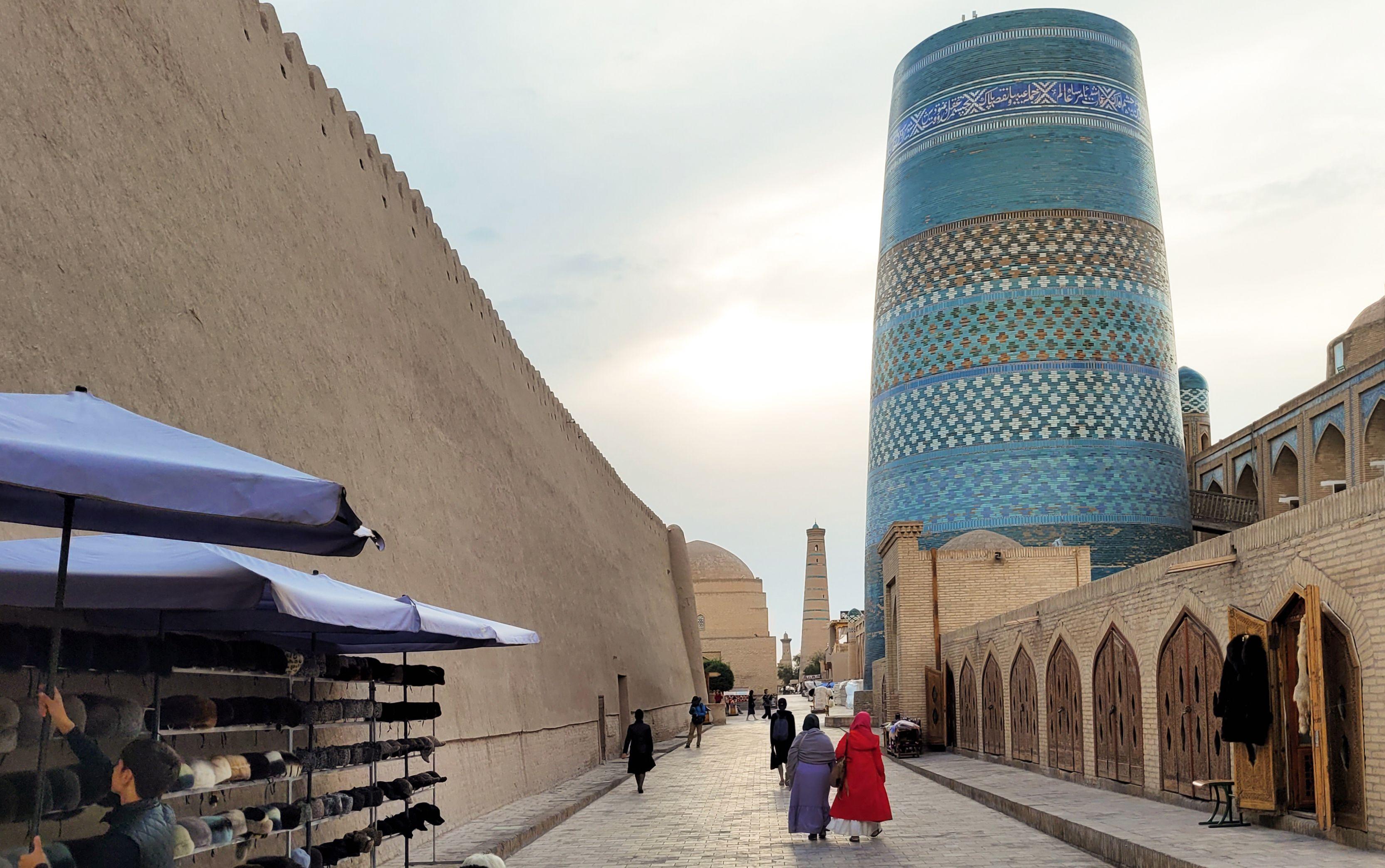
- In Khiva: almost all of Ichan-Kala, including the Kalta Minor minaret and the Tash-Hauli palace, dates from the 18th and 19th centuries.
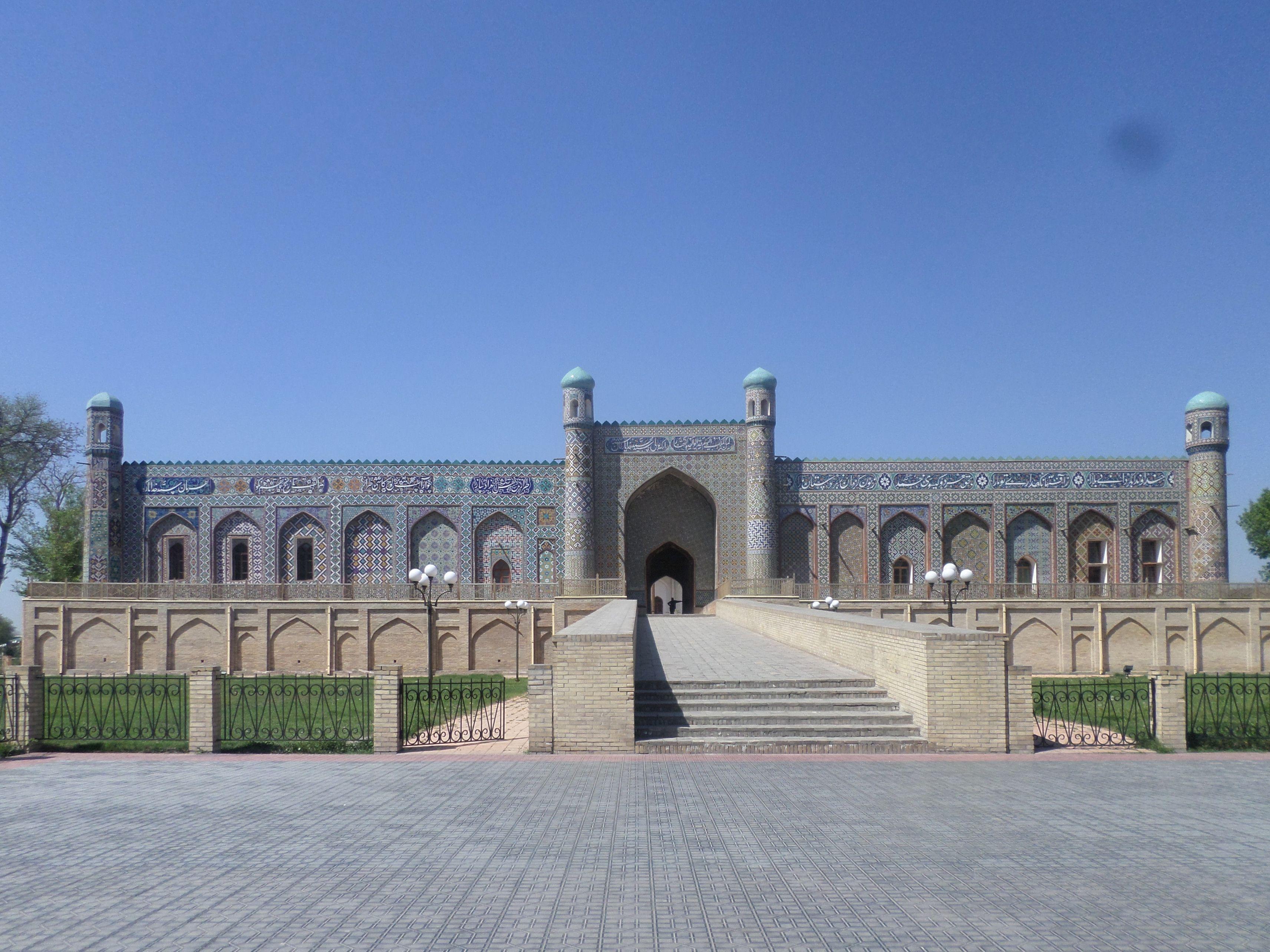
- In Kokand: the Khudayar Khan Palace of 1871, built just before the khanate's fall.
The Russian Empire: conquest and colonial rule
Russia advanced south from the Kazakh steppe in the mid-19th century. General Mikhail Chernyaev took Tashkent in 1865, and in 1867 it became the seat of the Governor-General of Turkestan. Samarkand fell in 1868 and the Emirate of Bukhara became a Russian protectorate. Khiva followed in 1873, and the Khanate of Kokand was abolished and annexed in 1876.
Bukhara and Khiva kept their rulers as protectorates, while the rest was governed directly. The Russians built new European-style towns beside the old cities, and the Trans-Caspian Railway reached Samarkand in 1888. Cotton became the main crop, a choice with long consequences. At the start of the 20th century, local reformers known as the Jadids campaigned for modern schools and a press.
What to see:
- In Tashkent: the Palace of Grand Duke Nikolai Konstantinovich and colonial-era buildings in the centre.
- In Samarkand: the Russian quarter with its tree-lined boulevards west of the old town.
- In Bukhara: Sitorai Mohi-Hosa, the summer palace of the last emirs, a blend of Uzbek and European styles.
The Soviet era: from 1920 to 1991
After the 1917 revolution, Soviet power arrived in stages. In 1920 the Red Army overthrew the last Khan of Khiva and the last Emir of Bukhara, Alim Khan, who fled to Afghanistan. In 1924 the national delimitation of Central Asia created the Uzbek SSR, with Samarkand as its first capital and Tashkent from 1930. Karakalpakstan joined it in 1936.
The Soviet decades brought mass literacy, industry and new cities, but also forced collectivisation, the suppression of religion and the purges of 1937–1938, in which much of the Uzbek political elite was executed. During the Second World War, factories and hundreds of thousands of evacuees were moved to Uzbekistan. In 1966 an earthquake destroyed much of old Tashkent, and the city was rebuilt as a modernist capital. The expansion of cotton irrigation drained the rivers feeding the Aral Sea.
What to see:
- Tashkent modernism: the Soviet buildings now on the UNESCO list, including Chorsu Bazaar and Kosmonavtlar metro station.
- The Museum of the Victims of Repression in Tashkent.
- The Savitsky Museum in Nukus, with avant-garde art banned in the Soviet era.
- The Aral Sea and the ship cemetery at Muynak.
Independence since 1991
On 31 August 1991 Uzbekistan declared independence, and 1 September is celebrated as Independence Day. Islam Karimov led the country until his death in 2016. His successor, Shavkat Mirziyoyev, opened the country to tourism with visa-free and e-visa schemes from 2018, reformed currency exchange and invested heavily in heritage and new museums.
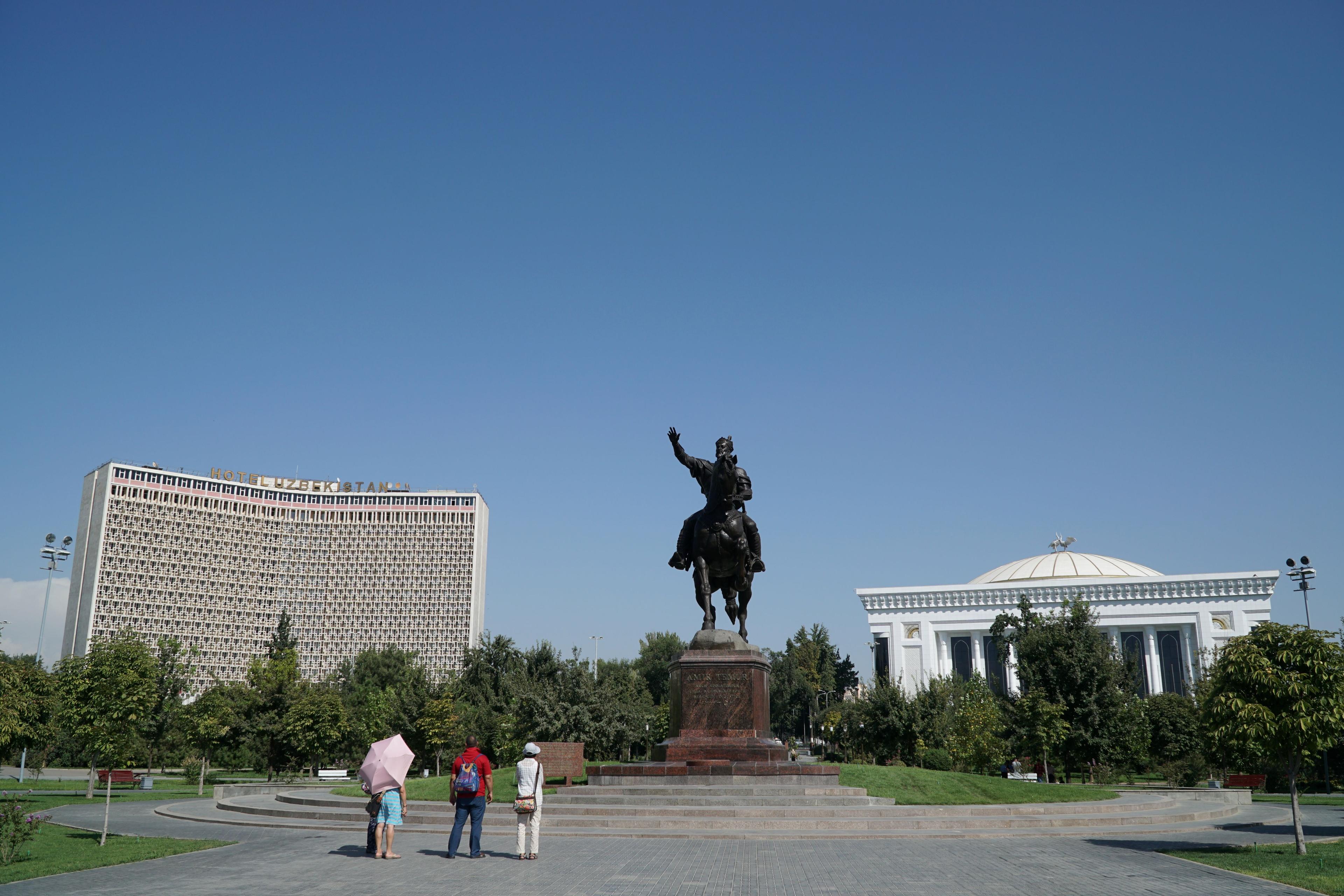
Independent Uzbekistan chose Amir Timur as a national symbol, and you will see his statues in Tashkent, Samarkand and Shakhrisabz. New landmarks include the Khast-Imam complex in Tashkent, and the Center for Islamic Civilization beside it, which opened in March 2026.
What to see:
- Amir Timur Square and Mustaqillik (Independence) Square in Tashkent.
- The Center for Islamic Civilization in Tashkent.
- The State Museum of History of Uzbekistan, which tells the whole story under one roof.
How to see Uzbekistan's history in order
The classic route of Tashkent, Samarkand, Bukhara and Khiva does not follow history in order, but it covers almost every era. If history is your main interest, our suggestions are:
- Start at the State Museum of History in Tashkent for the overview.
- In Samarkand, visit Afrasiyab and its museum before the Timurid monuments, so you see how the city moved.
- In Bukhara, start at the Samanid Mausoleum and end at Sitorai Mohi-Hosa: ten centuries in one city.
- In Khiva, add a day for the Khorezm desert fortresses, which are older than anything in Ichan-Kala.
- If you have extra days, Termez for the Kushans and Buddhism, and the Fergana Valley for Kokand.
Our 10-day and two-week itinerary guides show how to fit these into a trip.
Our guides are trained to tell the story of each place in its wider context. We can plan a private or small-group tour around the periods that interest you most, from Kushan Buddhism to Soviet Tashkent.