Rusting trawlers in the sand, a sea that retreated well over a hundred kilometres and a night in a yurt above the new shoreline. Our guide to an Aral Sea trip from Nukus: what happened, how the route works, how long it takes, the best season and realistic costs for 2026.
Facts, prices and schedules checked on November 4, 2026
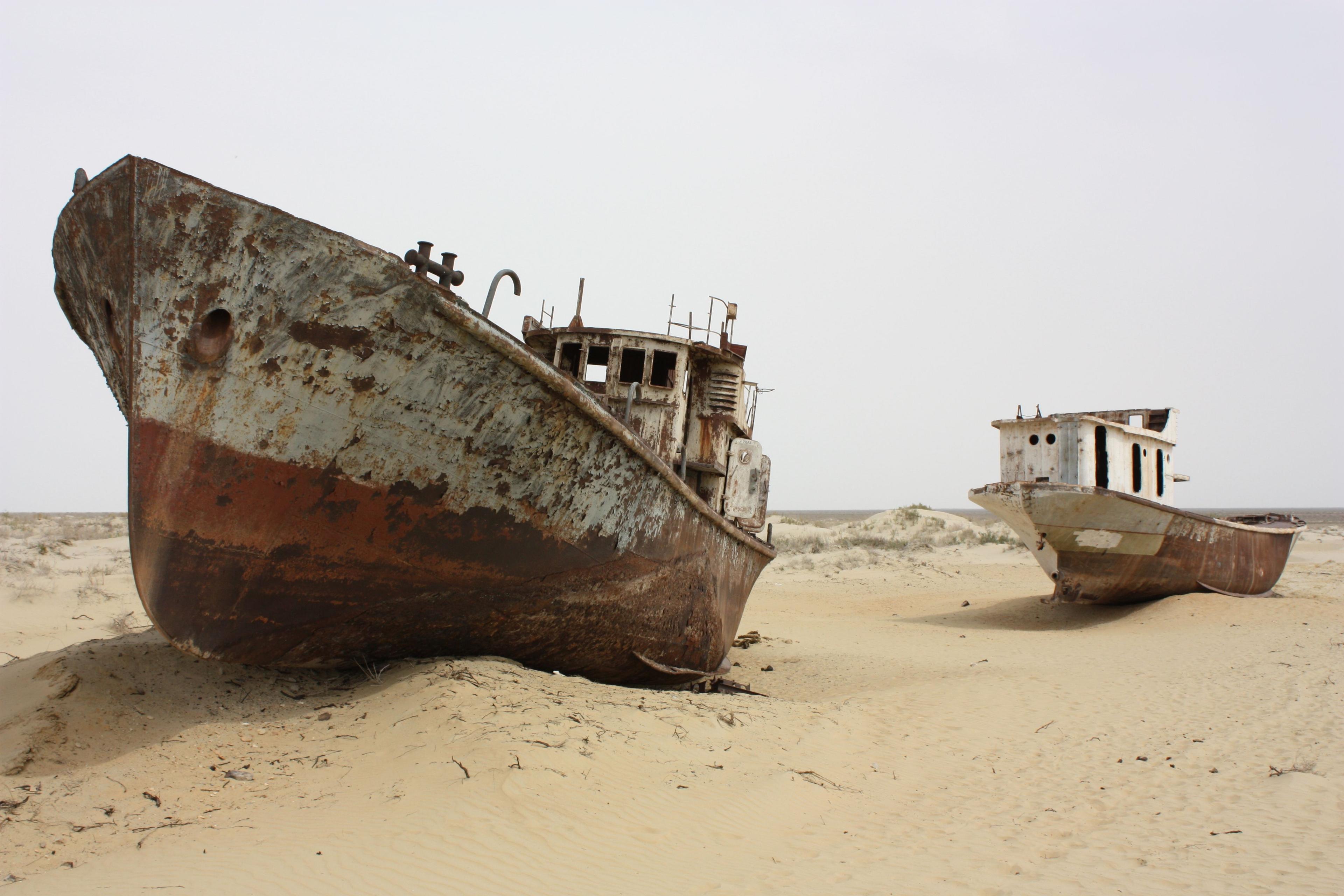
Half a century ago Muynak was a fishing port on the fourth-largest lake in the world. Today its trawlers sit rusting in the sand, and the water is somewhere beyond the horizon, well over a hundred kilometres away. Visiting the Aral Sea is not a holiday in the usual sense. It is one of the most powerful journeys you can make in Central Asia, and one of the most memorable.
An Aral Sea trip usually starts in Nukus, the capital of Karakalpakstan. It takes you to the Muynak ship cemetery, across the dried seabed and the edge of the Ustyurt Plateau, and down to what remains of the sea itself, often with a night in a yurt camp above the shore.
This guide explains what happened to the Aral Sea, how a trip works in practice, how many days you need, the best season, realistic costs as of November 2026 and what to pack.
What happened to the Aral Sea?
In 1960 the Aral Sea covered around 68,000 square kilometres, an inland sea fed by two great rivers, the Amu Darya and the Syr Darya. It supported a fishing industry that employed tens of thousands of people, with canneries in Muynak and Aralsk.
From the 1960s, Soviet planners diverted ever more water from both rivers to irrigate cotton and other crops across the desert. Less and less reached the sea. The level fell steadily, the water grew saltier and the fish died out. By 1987 the sea had split into a northern part, now in Kazakhstan, and a larger southern part. In 2014 satellite images showed that the eastern basin of the southern sea had dried up completely for the first time in modern history.
The exposed seabed is now a new desert, the Aralkum. Winds lift salt and dust from it across the region, and the communities around the old shore have lived with serious health and economic consequences for decades.
There is a partial good-news story. In 2005 Kazakhstan completed the Kok-Aral dam, which holds water in the North Aral Sea. Its level has risen, salinity has fallen and fishing has returned there. On the Uzbek side, large-scale planting of saxaul and other desert plants on the dry seabed aims to stabilise the sand. The southern sea, the one you visit from Uzbekistan, survives mainly as the western basin along the cliffs of the Ustyurt Plateau.

Muynak today: the ship cemetery and the Aral Sea museum
Muynak (also spelled Moynaq or Muynoq) is about three hours' drive north-west of Nukus. It is a small, quiet town now, but the outline of the old harbour is still clear.
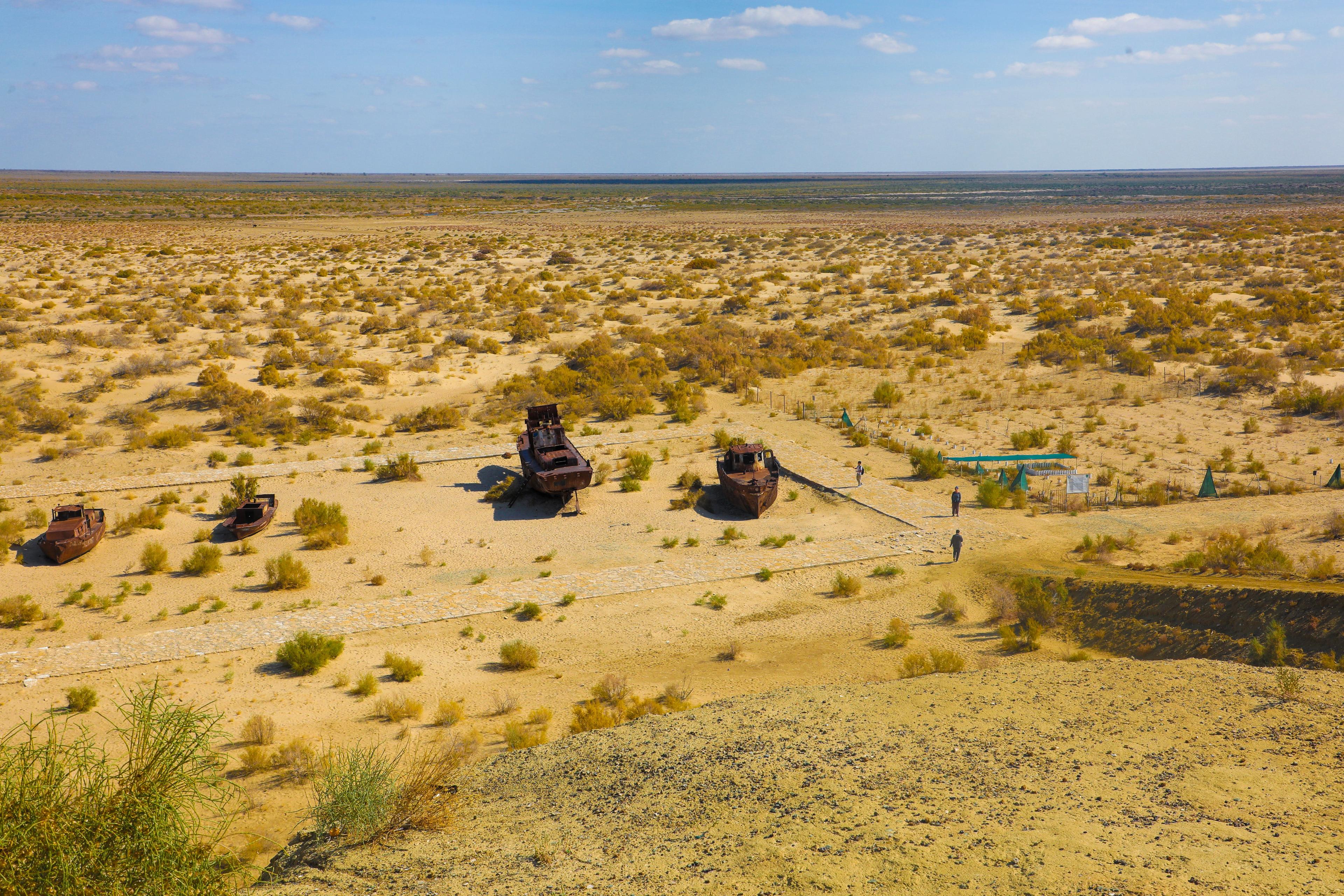
The ship cemetery sits below a bluff that once overlooked the water. A row of rusting fishing boats has been gathered on the former seabed, and you can walk among them freely. There is no ticket. Above them stands a memorial to the sea, with a viewing point that shows just how far the shoreline has moved. Decades ago there were many more wrecks scattered across the seabed; most have since been cut up for scrap, and today only a modest number remain.
The small Aral Sea museum nearby, close to the old cliff edge, is worth half an hour. It shows photographs of Muynak in its fishing heyday, cannery labels, paintings and documents about the sea's decline. Entry costs a small fee, reported at around 30,000 to 35,000 som as of November 2026, and opening hours can be irregular, so go with someone who can call ahead.
Most visitors spend one to two hours in Muynak. Late afternoon light on the hulls is the best for photographs.
The Stihia festival in Muynak
Since 2018 the ship cemetery has also hosted Stihia, an electronic music, art and science festival that draws artists and visitors from around the world to raise awareness of the Aral Sea crisis. The stage stands among the wrecks, and the event has become one of the most unusual festivals in Central Asia.
The 2025 edition was held on 29 to 31 May and attracted more than 5,000 guests. Dates and even the location are not fixed: in 2023 the festival moved to Tudakul Lake near Bukhara. Check the official site, stihia.org, for the current year's dates and tickets.
If you plan to visit Muynak during the festival, book everything early. Accommodation in Nukus and Muynak is limited and fills quickly, and transport prices rise.
Getting to Nukus, the starting point
Almost every Aral Sea trip begins and ends in Nukus, the capital of Karakalpakstan.
- From Tashkent: flights take roughly an hour and a half, with several departures a day on Uzbekistan Airways and Centrum Air. Overnight sleeper trains take around 16 to 17 hours; book early on railway.uz, as beds sell out.
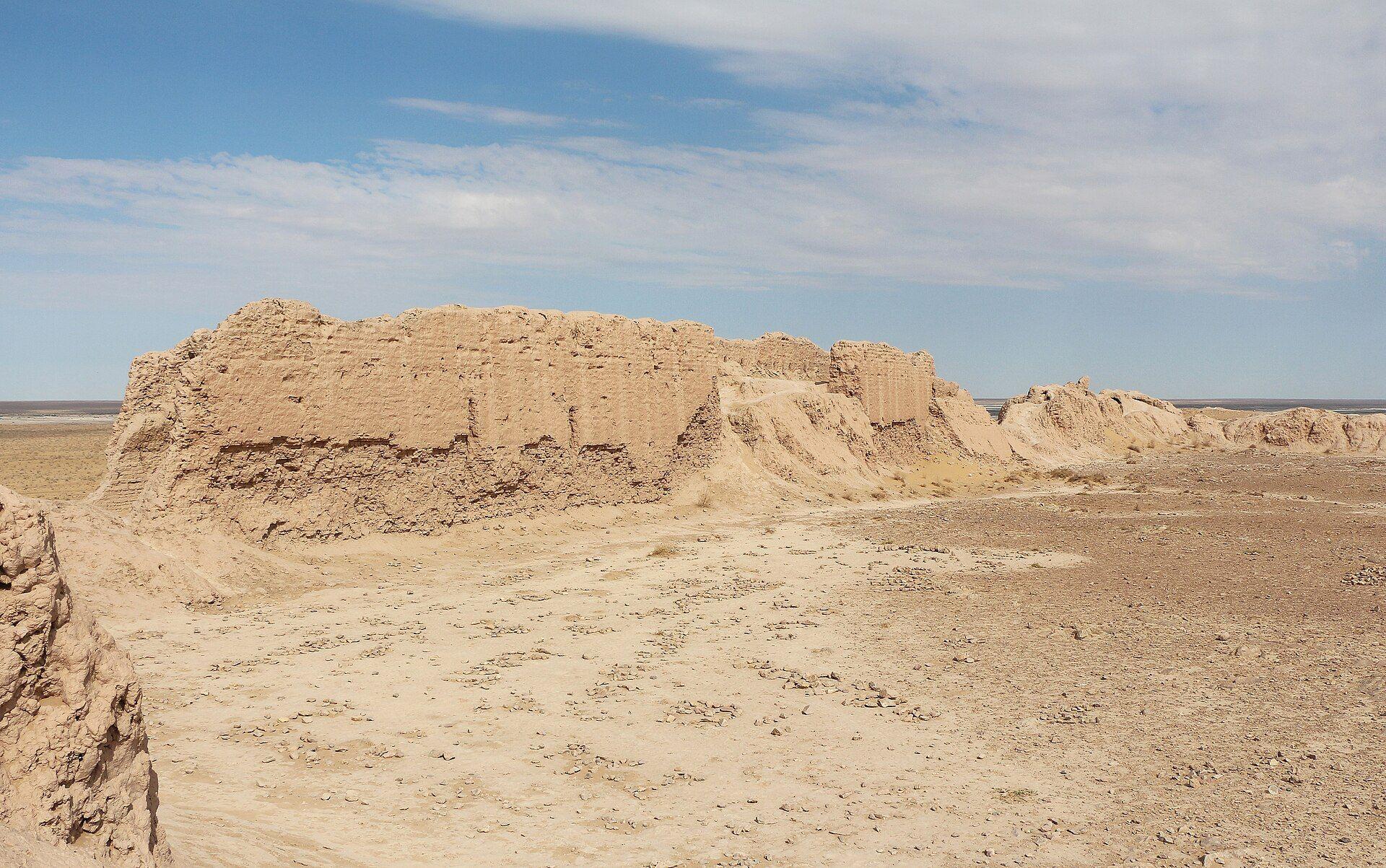
- From Khiva: about three hours by car via Urgench. Many travellers come this way after visiting Ichan-Kala, stopping at the desert fortresses of ancient Khorezm on the road.
Spend the night before your trip in Nukus. It lets you start early, and the afternoon is the perfect time to visit the Savitsky Museum, whose collection of once-forbidden avant-garde art is reason enough to come this far west. Our separate guide to the museum covers tickets, hours and what to see.
How an Aral Sea trip works: Nukus to Muynak and the shore
Reaching the water itself requires a 4x4 and an experienced driver. The shoreline keeps moving, there are no paved roads across the old seabed, and tracks change after rain. Most trips follow a similar route from Nukus:
- Nukus to Muynak: about three hours on asphalt via Kungrad, with a stop at the Muynak ship cemetery and museum.
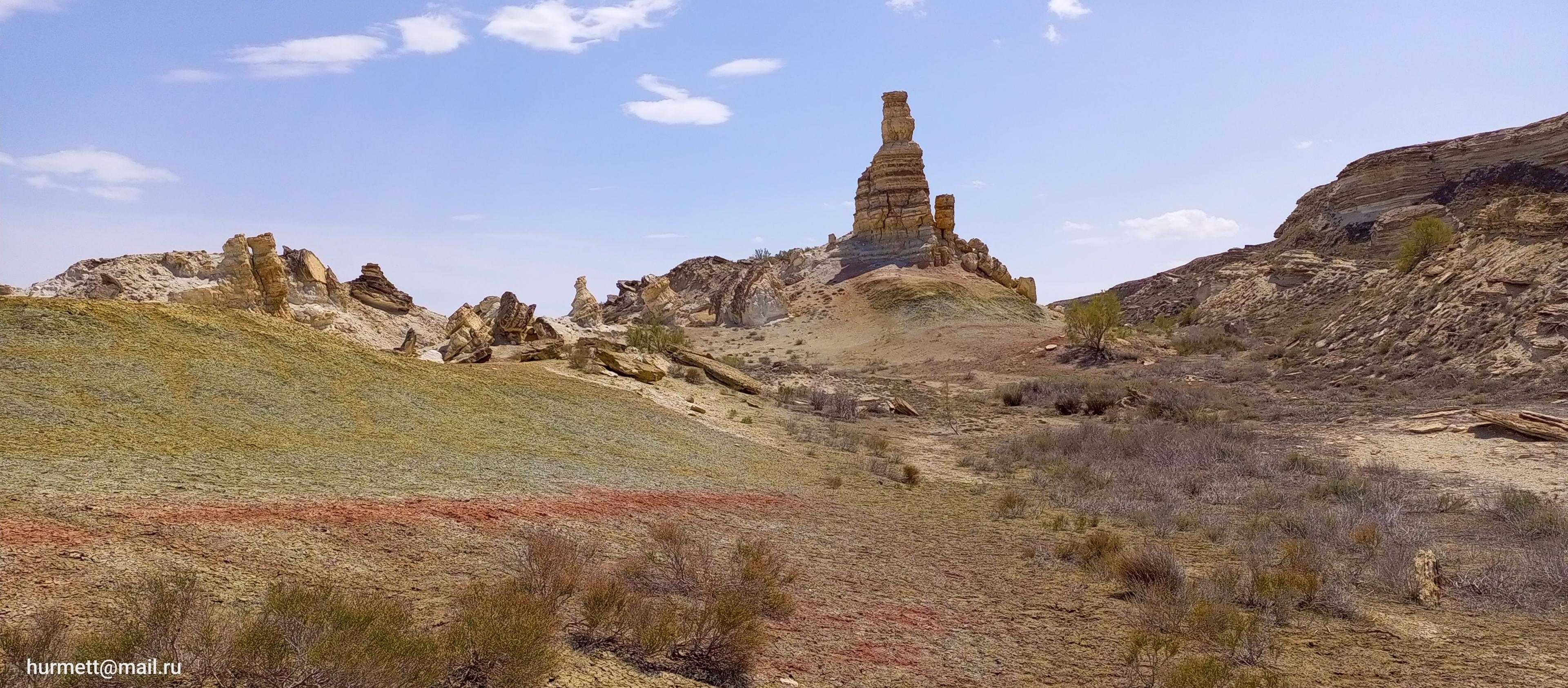
- Muynak to the Ustyurt Plateau: off-road across the dried seabed and up onto the plateau, a high desert tableland that ends in dramatic cliffs, known locally as the chink, above the remains of the sea.
- Along the plateau edge: viewpoints over the cliffs and the water, abandoned settlements and, with luck, wildlife such as foxes or birds of prey.
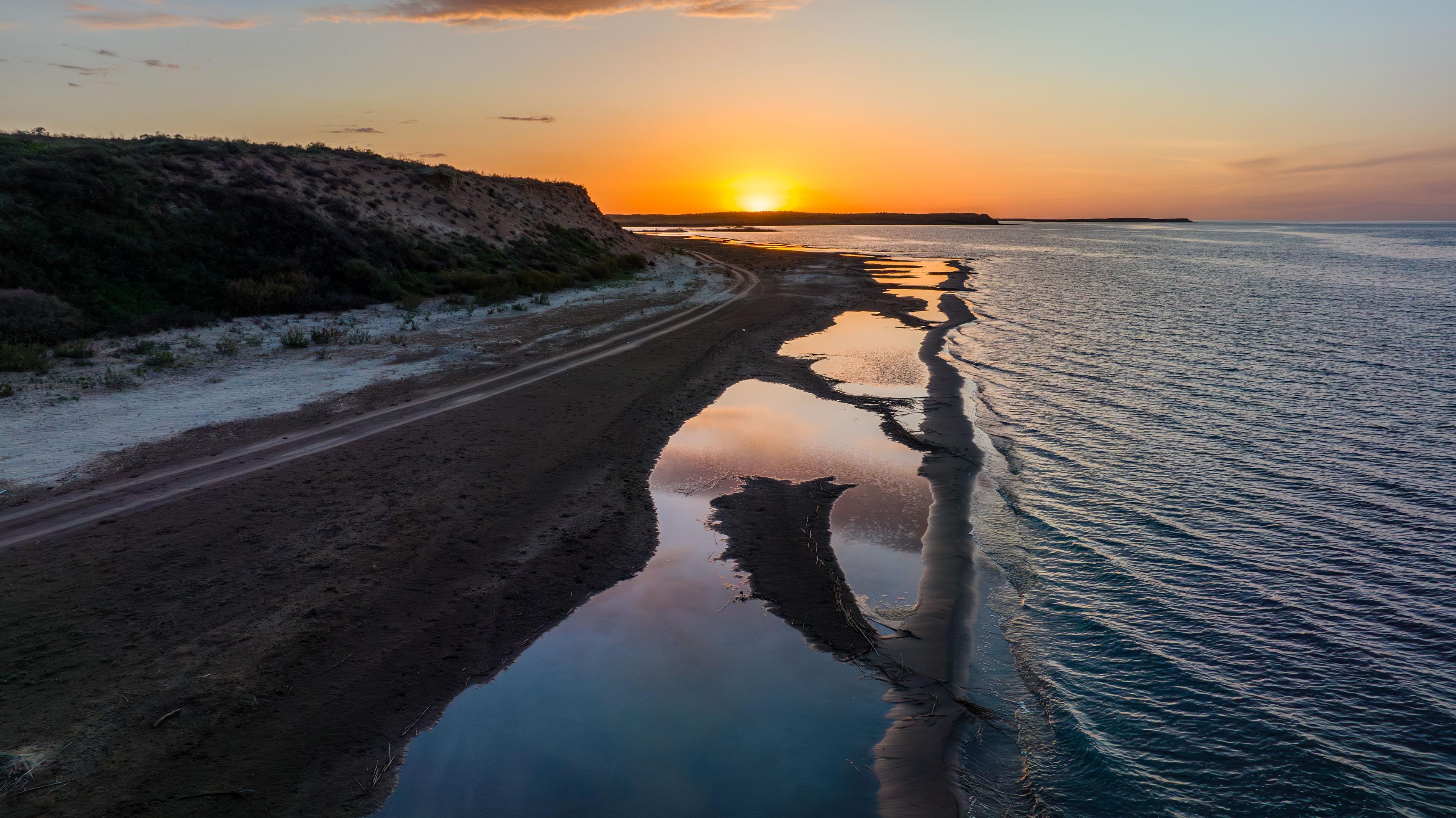
- To the shore: a descent to the beach of the western basin. The water is far saltier than the ocean, and you will float easily if you decide to swim.
- Overnight: most two-day trips stay in a simple yurt camp on the plateau or near the shore, with dinner, a sky full of stars and sunrise over the water.
The distance from Muynak to the shore is roughly 130 to 200 kilometres depending on the route and the camp, and much of the drive is on rough tracks. Expect long hours in the car on both days. That is part of the experience: the scale of the emptiness is what stays with you.
How many days do you need for the Aral Sea?
It depends on whether you want to see Muynak or the sea itself.
- Day trip to Muynak: Nukus to Muynak and back in a day is easy by car. You see the ship cemetery and the museum, but not the water. Public buses also run from Nukus, taking around three hours each way, though the timing leaves only a short stay.
- Two days, one night: the classic Aral Sea tour. Muynak on day one, then across the Ustyurt Plateau to the shore and a yurt camp, and back to Nukus on day two. This is what we recommend for most travellers.
- Three days or more: adds more of the Ustyurt Plateau, the ancient Sudochye wetlands, or a slower pace with time to walk and photograph.
Combine the trip with a visit to the Savitsky Museum in Nukus and the desert fortresses of Khorezm on the way to Khiva, and you have one of the most rewarding regional loops in Uzbekistan.
Aral Sea tour cost in 2026
The trip is priced mainly by the vehicle, so the cost per person falls sharply as the group grows. As of November 2026, typical market prices for a private two-day 4x4 trip from Nukus with one night in a yurt camp, meals, driver and fuel are:
- Solo traveller: roughly 450 to 900 USD.
- Two travellers: roughly 270 to 450 USD per person.
- Three or four travellers: roughly 180 to 300 USD per person.
Prices vary with the season, the level of the camp, whether a guide joins the driver, and whether you start and finish in Nukus, Khiva or Urgench. Some operators also offer shared departures in high season. A Muynak day trip by private car from Nukus costs much less.
Always check what is included: the yurt camp, all meals, museum fees, drinking water and the drive back to your hotel. A properly maintained vehicle and a driver who knows the routes are worth paying for, because breakdowns on the seabed are a long way from help.
Best time to visit the Aral Sea
The region has a harsh continental climate, with some of the widest temperature swings in Uzbekistan.
- Late April to June: the best season for most people. Warm days, cool nights and good light.
- July and August: very hot, often above 40°C on the seabed. Possible, but tiring, and midday heat makes walking and photography hard.
- September to mid-October: the second-best window, with settled weather and clear skies.
- November to March: cold and windy, with freezing nights. Many yurt camps close, and a day trip to Muynak is the realistic option.
Our guide to the weather in Uzbekistan by month covers the rest of the country if you are combining the Aral Sea with Khiva, Bukhara and Samarkand.
Where to stay and what to bring
You have three options, and most trips use two of them.
- Nukus: the widest choice of hotels, all modest but comfortable. The natural base for the nights before and after the trip.
- Muynak: a couple of small hotels and a simple hostel. Staying here lets you see the ship cemetery at sunset and sunrise without the crowds, and is the best option if you travel by public bus.
- Yurt camps on the Ustyurt Plateau or near the shore: the classic choice on a two-day trip. Expect shared yurts with mattresses and blankets, a dining yurt, basic toilets and limited or no showers. They are about the view and the silence, not the facilities.
Families with children manage the trip well in spring and autumn, but the long off-road stretches can be tiring for small children and anyone with back problems. Tell your operator in advance so they can plan more stops.
Yurt camps are simple and there are no shops on the way to the shore. Pack:
- Layers. Even in summer, nights on the plateau can be cool, and wind makes it feel colder.
- A warm jacket in spring and autumn.
- Sun protection: hat, sunglasses and high-factor sunscreen. There is no shade on the seabed.
- A scarf or buff against wind and dust.
- Sturdy closed shoes for walking on salt crust and rocky cliff tops.
- Swimwear and a small towel if you plan to float, plus fresh water to rinse off the salt.
- Snacks, a refillable bottle and any medication you need.
- A power bank and a head torch. Camps may have limited electricity.
- Cash in som for the museum, tips and small purchases in Muynak. See our guide to money in Uzbekistan.
Mobile signal disappears for long stretches. Let someone know your plans, and download offline maps before you leave Nukus.

Is the Aral Sea worth visiting?
If you are drawn to remote landscapes and want to understand modern Central Asia, not just its medieval monuments, yes. Standing among the ships in Muynak, then reaching the water hours later, makes the scale of what happened tangible in a way no documentary can.
It is not for everyone. The trip involves long drives, basic accommodation and a sobering story. Travellers who want comfort and architecture will be happier giving the extra days to Khiva or Bukhara.
Travel respectfully. Muynak is a town where people live with the consequences of the disaster every day. Buy lunch locally, ask before photographing residents, and treat the ship cemetery as the memorial it is.
Planning your Aral Sea trip with TourEast
We arrange Aral Sea trips with experienced 4x4 drivers who know the seabed tracks, and combine them with the Savitsky Museum, the desert fortresses and Khiva. Tell us your dates and we will suggest the route, the camp and the season that suit you.