With 14 days you can see the whole of Uzbekistan, not just the highlights: the craft towns of the Fergana Valley, the Savitsky Museum and the Aral Sea, then Khiva, Bukhara and Samarkand. Our day-by-day route, with transport times as of November 2026.
Facts, prices and schedules checked on November 4, 2026
Two weeks is when Uzbekistan opens up. A two-week Uzbekistan itinerary still covers the classic Silk Road cities, Khiva, Bukhara and Samarkand, but it also takes you to places most short trips skip: the green, crowded Fergana Valley, where silk is still woven on wooden looms; Nukus, home to one of the most remarkable art collections in Asia; and Moynaq, where rusting fishing boats lie in the sand that used to be the Aral Sea.
This is the 14-day route we recommend to travellers who want to understand the country, not only photograph it. It runs east to west and back: first the Fergana Valley, then a flight across the country to Karakalpakstan, and from there overland through Khiva, Bukhara and Samarkand to Tashkent. Every leg below comes with the transport option we use and a typical journey time as of November 2026.
At the end you will find two shorter summaries for travellers who want to combine Uzbekistan with Kyrgyzstan or Tajikistan in the same fortnight. For a shorter trip, see our 7-day and 10-day itineraries.
The 14-day route at a glance
- Day 1: Tashkent
- Day 2: Train to the Fergana Valley, Kokand
- Day 3: Rishtan and Margilan
- Day 4: Fergana Valley, return to Tashkent in the evening
- Day 5: Fly to Nukus, Savitsky Museum
- Day 6: Moynaq and the Aral Sea region
- Day 7: Desert fortresses of Khorezm, on to Khiva
- Day 8: Khiva
- Day 9: Train to Bukhara
- Day 10: Bukhara
- Day 11: Bukhara outskirts, afternoon train to Samarkand
- Day 12: Samarkand
- Day 13: Samarkand or Shakhrisabz
- Day 14: Train to Tashkent, departure
Is two weeks enough for Uzbekistan? For the country as most travellers mean it, yes, comfortably. It is not enough to add the southern Buddhist sites around Termez and the mountains as well; for that you would need closer to three weeks, or you swap the Aral Sea for Surkhandarya.

Day 1: Tashkent
Arrive, rest, and see the capital at an easy pace. The essentials are the Khast Imam complex (Hazrati Imam) with its ancient Qur'an, Chorsu Bazaar, a few stations of the Tashkent metro, and an evening on Amir Temur Square. If you arrive early and have energy, the State Museum of Applied Arts, set in a merchant's house with carved plaster and painted ceilings, is a good introduction to the crafts you will meet in Fergana. Sleep early: the valley train leaves in the morning.
Days 2 to 4: the Fergana Valley
Is the Fergana Valley worth visiting? If you care about crafts, markets and everyday Uzbek life, absolutely. It is the most fertile and most densely populated part of the country, ringed by mountains, and it feels quite different from the desert oases further west. Few foreign tourists come, and you will be welcomed with curiosity.
Getting there: the Ozbekiston train runs from Tashkent through the Kamchik Pass tunnel, about 19 km long, to Kokand, Margilan and Andijan. Kokand is a little over four hours away and Margilan about five; timetables vary, so check the current schedule. The alternative is a car or shared taxi over the Kamchik Pass road, about five hours, with mountain views. Uzbekistan Airways also flies from Tashkent to Fergana, Namangan and Andijan if you prefer to fly one way.
Day 2, Kokand. Visit the palace of Khudayar Khan, the last ruler of the Kokand Khanate, with its tiled facade and painted rooms, then the Juma Mosque with its wooden columns and the Narbutabey Madrasah. Overnight in Kokand or continue to Fergana city, the most comfortable base.
Day 3, Rishtan and Margilan. Rishtan has been a ceramics town for centuries, known for its blue-and-green ishkor glaze. Visit a master's workshop to watch the potter's wheel and the painting. In Margilan, the Yodgorlik silk factory shows the full process of ikat silk, from boiling the cocoons and reeling the thread to dyeing and weaving atlas and adras fabric by hand. If your dates allow, the Kumtepa bazaar outside Margilan is one of the most colourful in the region; it traditionally runs on Thursdays and Sundays, but check locally.
Day 4, the valley and back. Use the morning for anything you missed, a visit to a woodcarving or knife-making workshop, or a walk through a Fergana bazaar, and take the afternoon train or an evening flight back to Tashkent. Our 'Crafts of the Fergana Valley' tour covers this region in more depth.

Days 5 and 6: Nukus, the Savitsky Museum and the Aral Sea
Day 5, Nukus. Take a morning flight from Tashkent to Nukus, the capital of the autonomous Republic of Karakalpakstan; the flight takes about 1 hour 40 minutes. Spend the afternoon at the State Museum of Arts named after Igor Savitsky. In the Soviet decades Savitsky quietly gathered thousands of works by Russian and Central Asian avant-garde artists who could not exhibit at home, along with Karakalpak jewellery, costumes and textiles. Its nickname is the Louvre of the Desert. Allow at least two to three hours, and check opening days in advance, as the museum closes one day a week.
Day 6, Moynaq and the Aral Sea. Moynaq was once a fishing port on the Aral Sea. Today the shoreline is far away, and the town's most famous sight is the cemetery of ships lying on the dry sea bed. It is about 200 km from Nukus, roughly three hours each way by car on a paved road. The small regional museum explains how Soviet irrigation of cotton fields drained the rivers that fed the sea, one of the great environmental disasters of the twentieth century. It is a sobering day, and an important one.
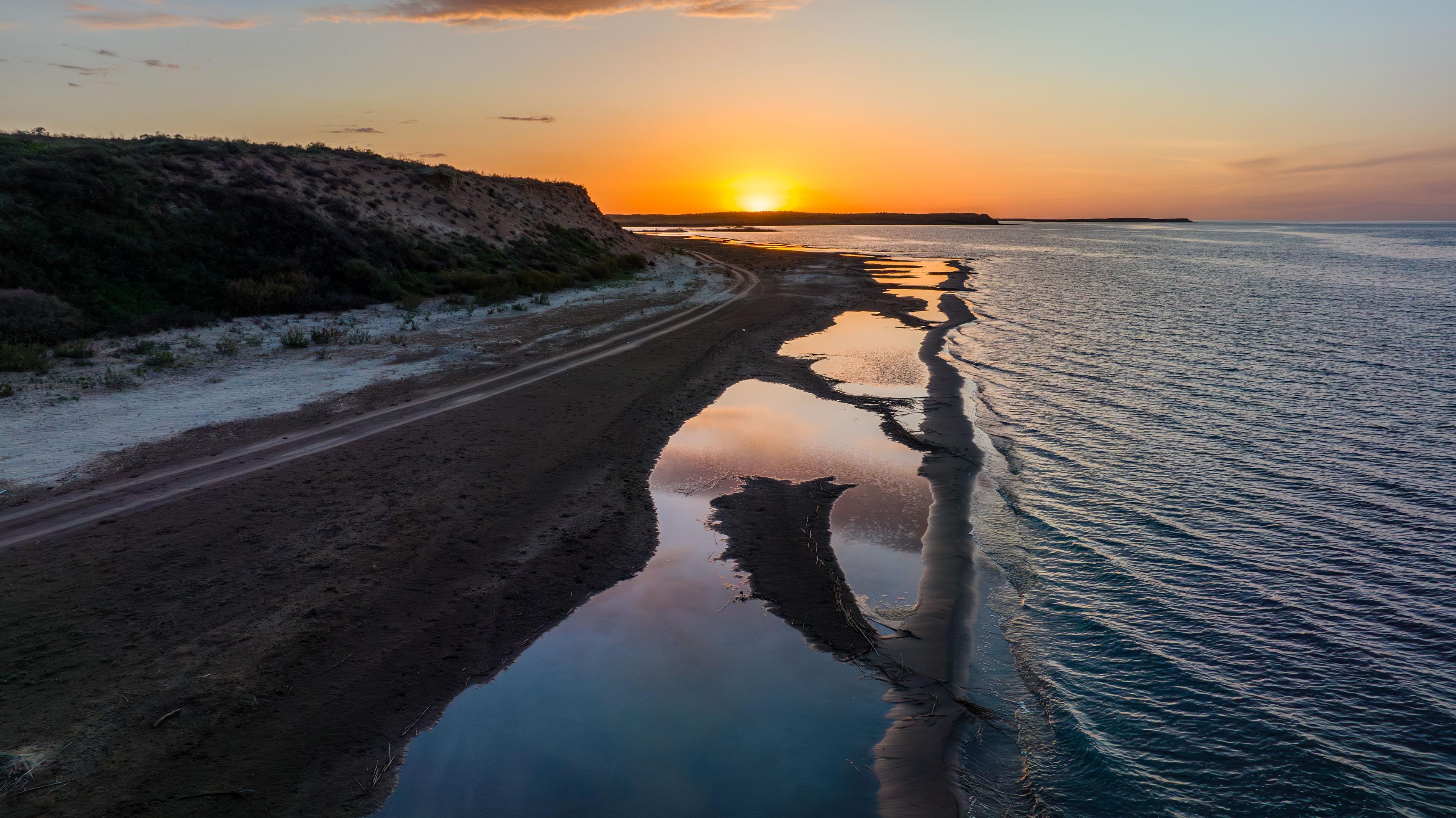
Can you reach the Aral Sea itself? Yes, but it takes longer. The current shore lies more than 100 km beyond Moynaq, over rough tracks that need a 4x4. Operators run two-day trips with a night in a yurt camp on the Ustyurt plateau above the water. If you want this, add a day to the route and take it from Bukhara in Days 10 and 11. Our 'Desert fortresses and Aral' tour includes this region.
Days 7 and 8: Khorezm fortresses and Khiva
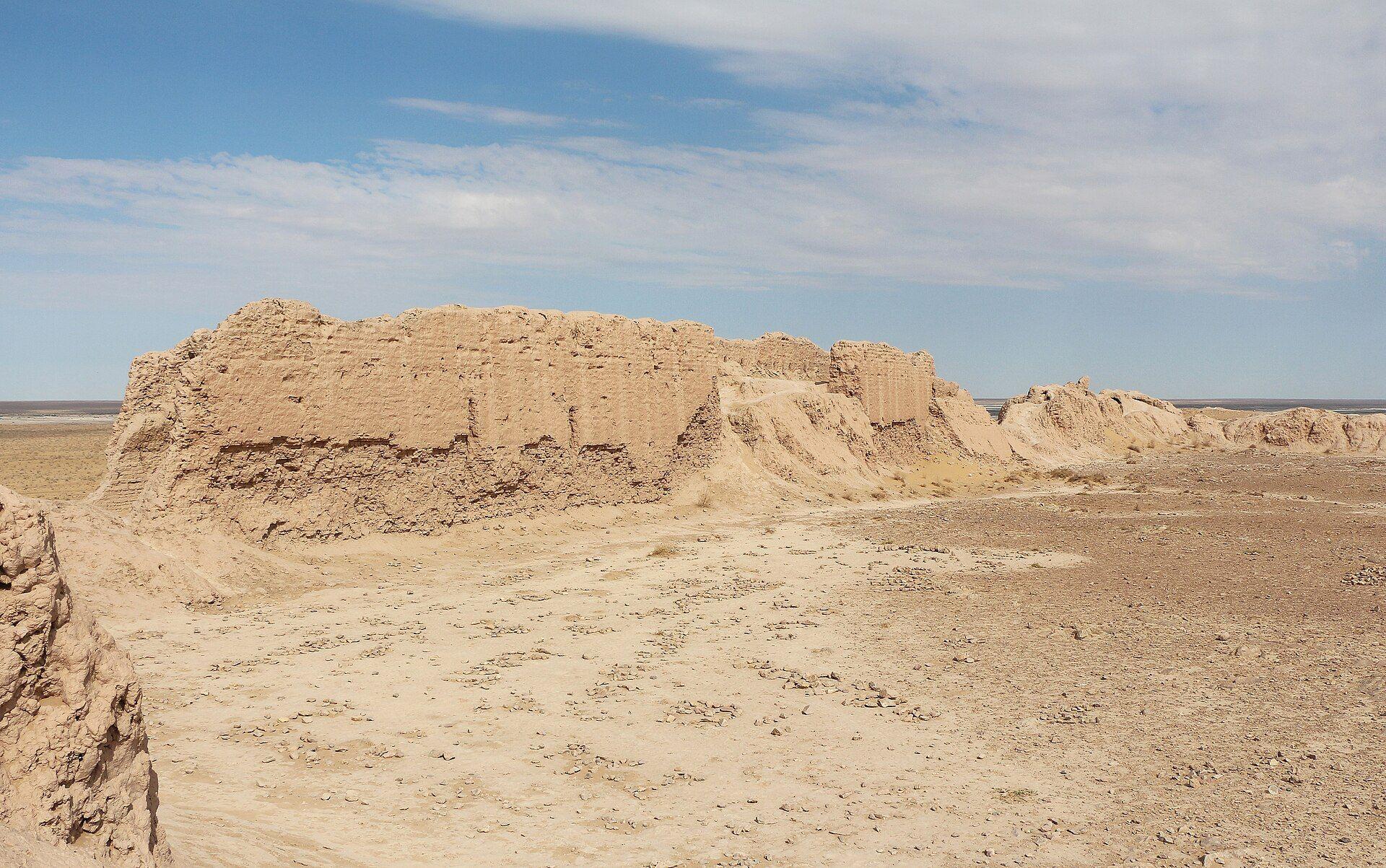
Day 7, Nukus to Khiva. The drive from Nukus to Khiva is around 200 km, and the best way to fill it is with the Elliq-Qala, the fifty fortresses of ancient Khorezm scattered across the desert. Toprak-Kala, a royal residence of the early centuries AD, and the hilltop walls of Ayaz-Kala are the most impressive. Some travellers also stop at the hilltop necropolis of Mizdakhan near Nukus. Arrive in Khiva for sunset from the city walls.
Day 8, Khiva. A full day in Ichan-Kala, the walled inner town: the Kunya-Ark fortress, the Juma Mosque with its carved wooden columns, the Pakhlavan Makhmud mausoleum, the Tash-Hauli palace, and the climb up the Islam Khoja minaret for the view. Our Ichan-Kala guide covers tickets and a walking route. In the evening, eat on a rooftop in sight of the Kalta Minor minaret.

Days 9 to 11: Bukhara
Day 9, Khiva to Bukhara. The new high-speed train covers the route in about 3 hours 30 minutes as of November 2026; book early, since seats are limited. A private car across the Kyzylkum desert takes six to seven hours. Arrive for an evening at Lyabi-Hauz.
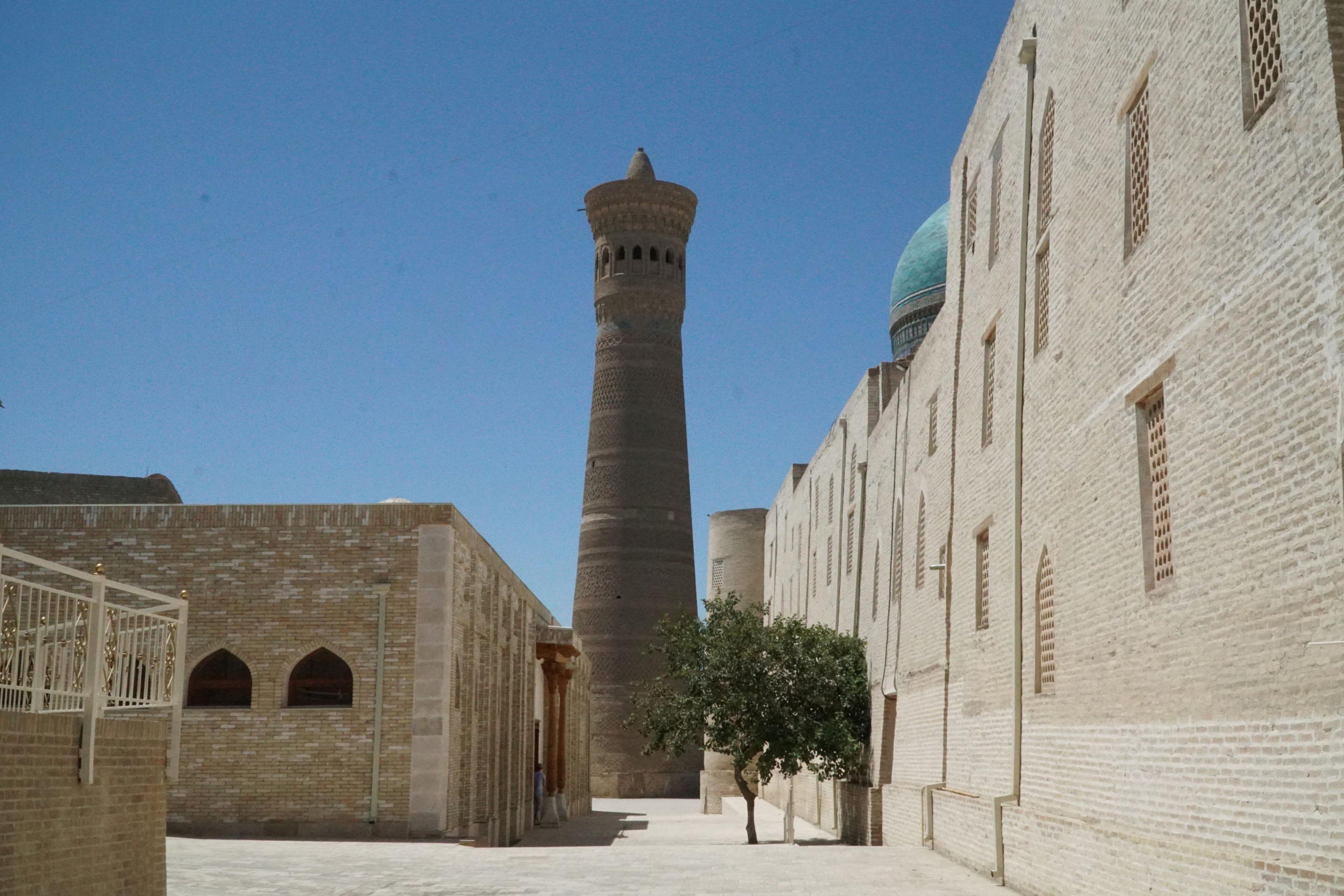
Day 10, Bukhara. The Ark Fortress and the Bolo Hauz mosque, the Samanid Mausoleum, the Po-i-Kalyan ensemble with the Kalyan Minaret, the trading domes and Chor Minor. Our guide to the Ark and Po-i-Kalyan has the details.
Day 11, Bukhara outskirts and on to Samarkand. In the morning, visit Sitorai Mohi Hosa, the emir's summer palace, and the Bahouddin Naqshband complex. Take an afternoon Afrosiyob train to Samarkand, about 1 hour 30 minutes to 1 hour 45 minutes. Bukhara's station is in Kagan, about 30 minutes from the old town by taxi.
If you prefer to sleep in the desert, replace Day 11 with a drive to the yurt camps near Lake Aydarkul, about four to five hours from Bukhara, and continue to Samarkand the next morning, giving up one Samarkand day.
Days 12 to 14: Samarkand and home
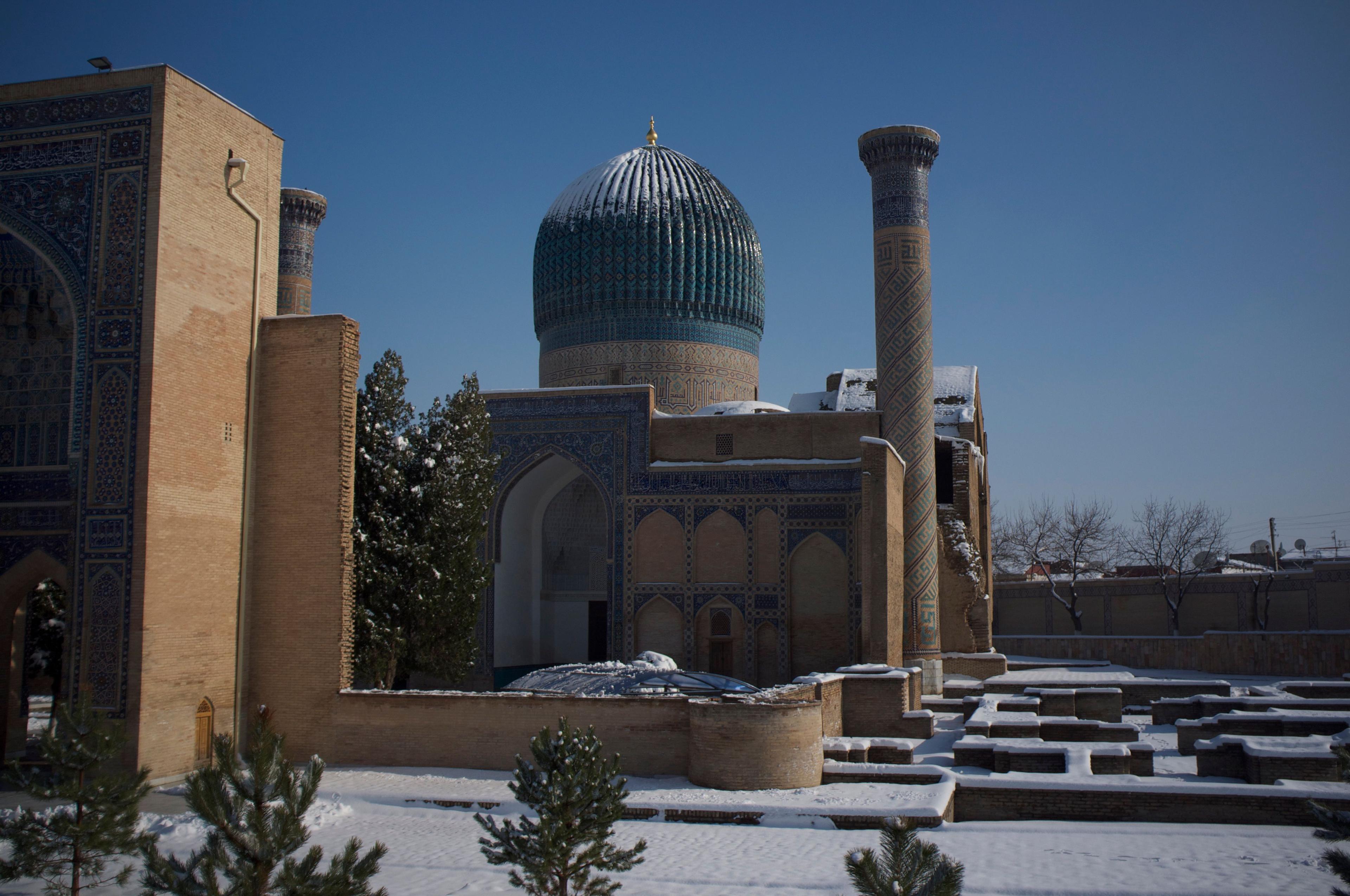
Day 12, Samarkand. Shah-i-Zinda early in the morning, then the Bibi-Khanym Mosque and the Siab Bazaar. In the afternoon, Gur-e-Amir and the Registan, which is at its best in the late light. See our Samarkand travel guide and Registan guide for tickets and timing.
Day 13, Samarkand or Shakhrisabz. Either stay in town for the Ulugbek Observatory, the Afrasiyab museum with its Sogdian murals and the Konigil paper workshop, or drive about two hours over the Takhtakaracha Pass to Shakhrisabz to see Amir Temur's Ak-Saray palace, the Kok Gumbaz mosque and the Dorus-Saodat complex. The pass can close after snow in winter.
Day 14, departure. The Afrosiyob to Tashkent takes 2 hours 10 minutes to 2 hours 30 minutes. Take a morning train for an afternoon or evening flight, or fly out of Samarkand directly if a flight suits you.
Transport summary, typical times as of November 2026:
- Tashkent to Kokand or Margilan: Ozbekiston train about 4 to 5 hours, car about 5 hours
- Tashkent to Nukus: flight about 1 h 40 min
- Nukus to Moynaq: car about 3 hours each way
- Nukus to Khiva via the fortresses: car, a full day with stops
- Khiva to Bukhara: train about 3 h 30 min, car 6 to 7 hours
- Bukhara to Samarkand: Afrosiyob 1 h 30 min to 1 h 45 min
- Samarkand to Tashkent: Afrosiyob 2 h 10 min to 2 h 30 min
Fares and booking tips are in our Afrosiyob train and domestic flights guides.

Variations: seasons, a slower pace and the south
Seasons. April, May, September and October are ideal. In summer, Nukus, Moynaq and Khiva are very hot, often above 40°C in the afternoon; start early and rest at midday. In winter, Karakalpakstan and Khorezm are the coldest parts of the route, the Aral Sea trip is hard going, and we would swap Days 5 to 7 for a flight from Tashkent to Urgench and an extra day in Bukhara or Samarkand. Our weather by month guide has the figures.
Slower pace. Drop the Aral Sea leg: fly Tashkent to Urgench on Day 5 instead of Nukus, and you gain two relaxed days for Khiva, Bukhara or Samarkand. The Savitsky Museum can be visited as a long day trip from Khiva, about three hours each way by road, if you do not want to miss it.
The south instead of the Aral Sea. If Buddhist archaeology interests you more than the Aral story, fly from Tashkent to Termez instead of Nukus, see Fayaz-Tepe, Kara-Tepe and the Kyrk-Kyz fortress, then continue by road to Shakhrisabz and Samarkand, and fly from Samarkand or Bukhara to Urgench for Khiva at the end.
Two weeks in Uzbekistan and Kyrgyzstan or Tajikistan
Many travellers combine Uzbekistan with a neighbour. TourEast is an Uzbekistan operator, so we plan and run the Uzbek part of such trips, arrange transfers to the border and advise on the rest; for the other country you will need a local operator or to travel independently. Border rules change, so always check the current status of a crossing and your visa requirements for each country before you book.
Uzbekistan and Kyrgyzstan (two weeks). A natural route spends about eight or nine days in Uzbekistan, Tashkent, Samarkand, Bukhara and perhaps Khiva, then travels through the Fergana Valley to Andijan and crosses at the Dostyk checkpoint on the road to Osh, the oldest city in Kyrgyzstan. From Osh, travellers usually fly or drive to Bishkek and spend the remaining days around Issyk-Kul and the mountains. The reverse also works, and some people simply fly between Tashkent and Bishkek.
Uzbekistan and Tajikistan (two weeks). The classic combination crosses from Samarkand to Penjikent through the Jartepa checkpoint, about an hour's drive from Samarkand. Penjikent has the ruins of an ancient Sogdian town, and from there the Seven Lakes of Marguzor and the Fann Mountains are within reach before the road to Dushanbe. A second option crosses from Tashkent to Khujand at the Oybek checkpoint. A typical split is nine or ten days in Uzbekistan and four or five in Tajikistan.
On the Uzbek side, plan to finish or start in Samarkand for Tajikistan and in the Fergana Valley for Kyrgyzstan. That keeps the transfers short and avoids doubling back.
Plan your two weeks with TourEast
Our team has run this route for years, from Margilan's silk workshops to the ship cemetery of Moynaq. Our 12-day extended group tour and the Silk Road Grand Tour cover most of it, and we are glad to build a private two-week itinerary around your dates, pace and interests.
Frequently asked questions
Watch
Photo gallery