A culture-first guide to art in Uzbekistan: the State Museum of Arts and the new Centre for Contemporary Arts in Tashkent, the Centre for Islamic Civilisation, Ilkhom Theatre, Samarkand's Afrasiyab murals, the Savitsky collection in Nukus and the Bukhara Biennial, with what is known of the 2026–2027 calendar.
Facts, prices and schedules checked on November 4, 2026
Uzbekistan's art story used to be told in one line: go to Nukus for the Savitsky collection and look at the ceramics everywhere else. That line is out of date. In the past five years Tashkent has opened or reopened a cluster of serious museums, Bukhara has staged the first contemporary art biennial in Central Asia, and Samarkand has rebuilt the museum that houses the most important early medieval paintings in the region.
This guide is for travellers who plan a trip around art rather than adding it as an afterthought. It covers the State Museum of Arts and the Fine Arts Gallery in Tashkent, the new Centre for Contemporary Arts in a converted power station, the Centre for Islamic Civilisation, the Ilkhom Theatre, the Afrasiyab murals in Samarkand, the Savitsky Museum in the far west, and the Bukhara Biennial, whose first edition ran in autumn 2025 and whose second is set for 2027.
Opening hours and ticket prices below are as of November 2026 and change often; where a date or detail is unconfirmed, we say so.
Art museums in Tashkent: the State Museum of Arts
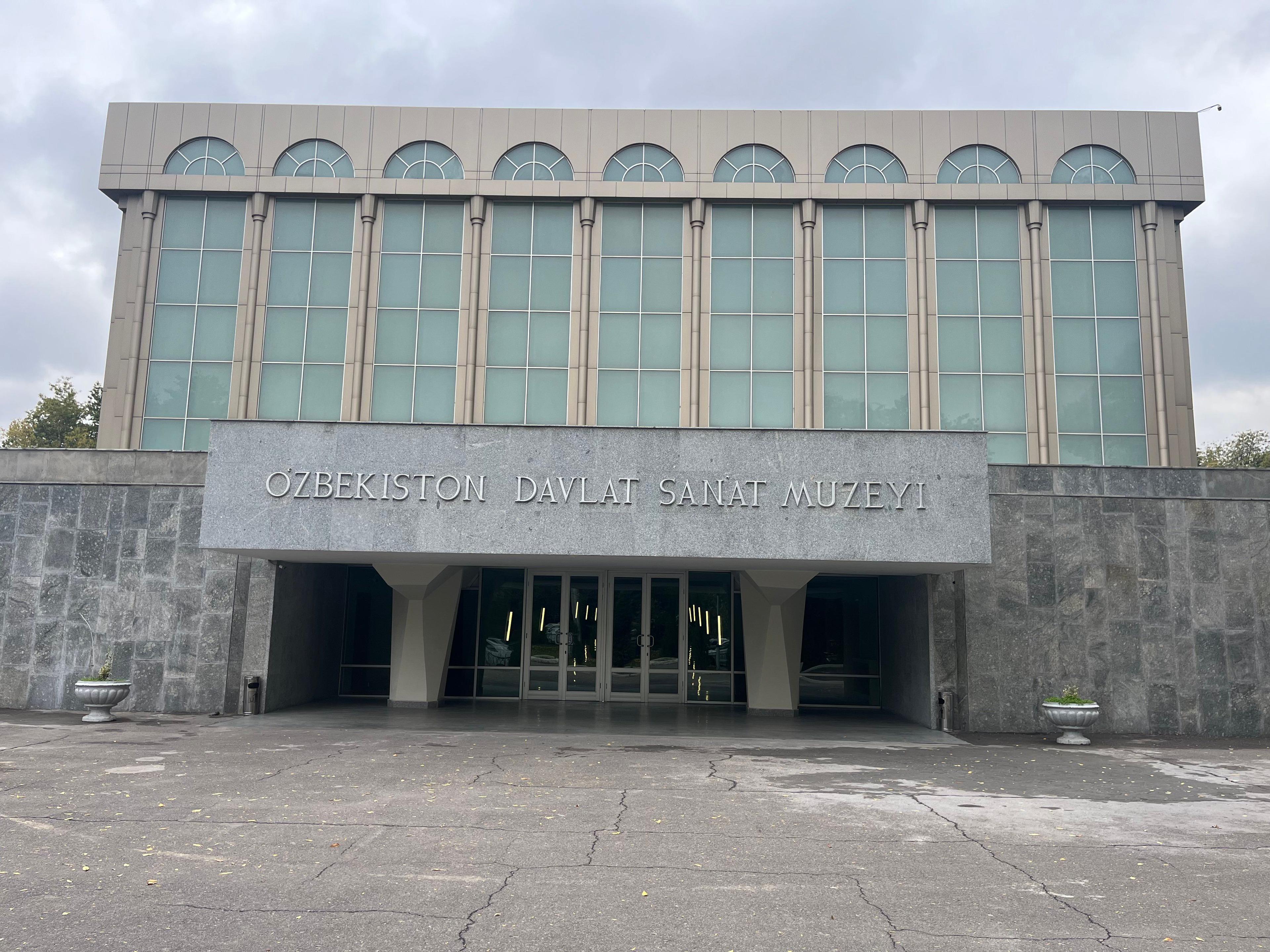
The State Museum of Arts of Uzbekistan is the country's oldest art collection, founded in 1918 around the holdings of a Romanov grand duke exiled to Tashkent in the 19th century. His European paintings and furniture are still here, which explains why a museum in Central Asia has rooms of Italian, Flemish and Russian canvases.
The building itself, a 1974 modernist block with a stone grille facade near Amir Temur Square, is a reason to visit if you follow our Tashkent modernism guide. Inside, three strands matter:
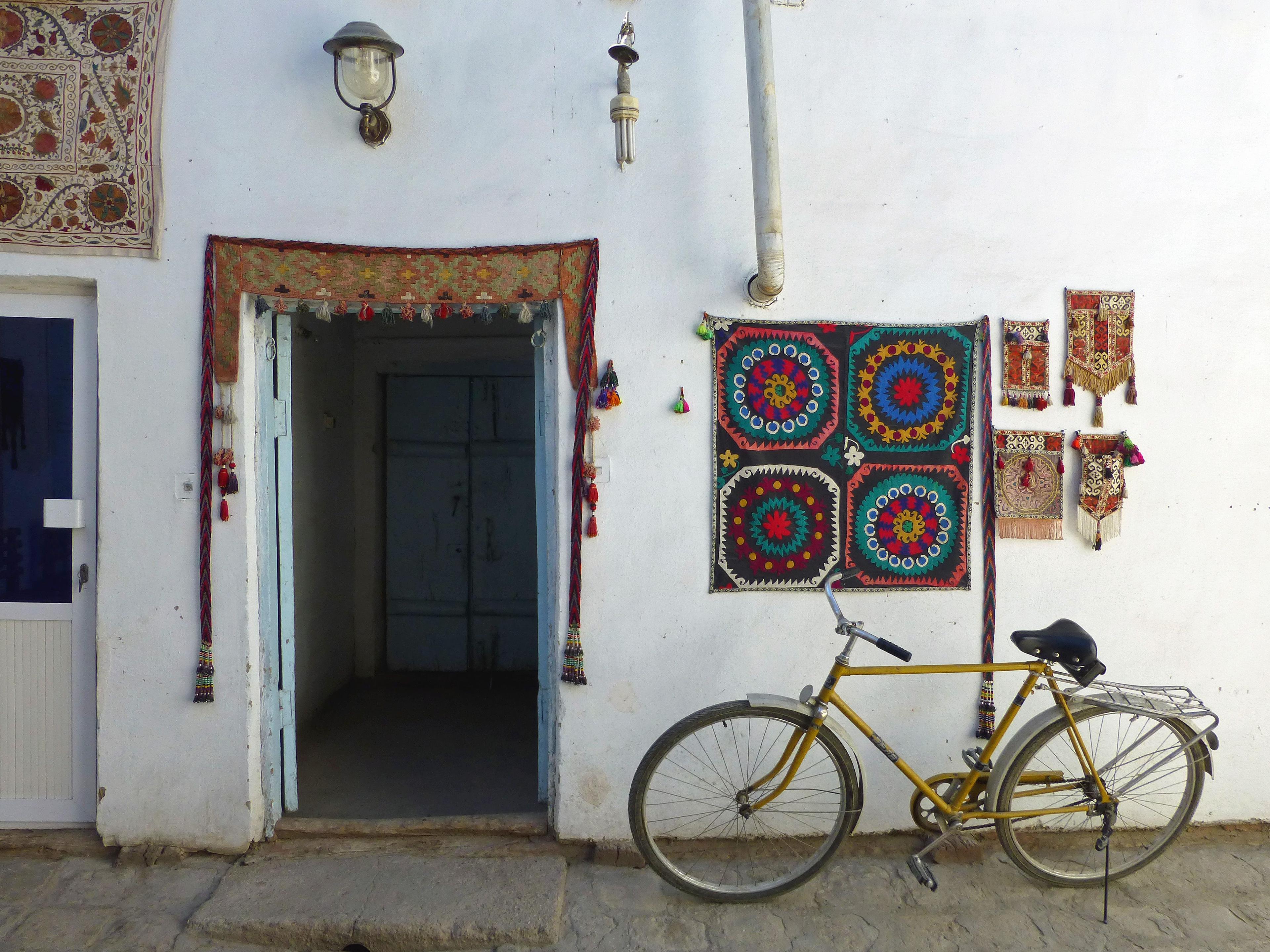
- Uzbek applied art: carved wood, suzani embroidery, ceramics from Rishtan and Gijduvan, and 19th-century jewellery from Bukhara and Khorezm.
- Russian and Soviet-era painting from Turkestan: the orientalist generation of the 1920s and 1930s, including painters who settled in Samarkand and Tashkent and invented a local modernism before it was suppressed.
- European art from the ducal collection, modest by Western standards but startling in context.
The museum has reported hours of 10:00 to 18:00, closed Monday, and a ticket of around 20,000 som for foreigners; some directories still list older hours, so confirm on the day. Allow two hours. Photography without flash is normally allowed.
Two smaller museums round out the picture. The Museum of Applied Arts occupies a 1900s mansion whose painted ceilings and carved ganch are themselves the best exhibit. The house museum of the landscape painter Ural Tansykbaev reopened after restoration in late 2025 and is the place to see how Uzbek Soviet painting handled colour.

Contemporary art in Tashkent: the Centre for Contemporary Arts and the galleries
The big change in Tashkent is the Centre for Contemporary Arts (CCA), housed in a 1912 power station on Amir Temur Street beside the Navoi Theatre. The project was announced in 2019 and took years longer than planned; the public opening took place in 2026, with a full programme of exhibitions, talks and film. Entry is free but requires advance registration online, the centre is closed on Mondays and stays open late on Friday and Saturday evenings. It is the first institution in the country built to show contemporary art on international terms, and the brick halls with their surviving turbine-era fittings are worth seeing even between exhibitions.
Around it, a small gallery scene has formed:
- The Fine Arts Gallery of Uzbekistan, on Buyuk Turon Street, is a state gallery opened in 2004 that mixes 20th-century Uzbek painting with changing shows and occasional international loans.
- The Central Exhibition Hall of the Academy of Arts, near the Fine Arts Gallery, hosts the Academy's own shows and the sale exhibitions of living painters.
- ICHKARI, which opened in September 2026 in a 1920s family house in the Yakkasaray district, is a new independent space with a free main exhibition and ticketed performances and tours.
- A handful of private galleries and artist-run rooms come and go; the current programme is best found through the CCA's channels and the Uzbekistan Art and Culture Development Foundation, which commissions most of the new institutions.
If you want to buy, the Academy's hall and the galleries around Broadway, the pedestrian street off Amir Temur Square, sell paintings by living artists at prices from a few hundred dollars. Anything older than 50 years may need an export certificate; see our customs guide.
The Centre for Islamic Civilisation: Tashkent's new landmark
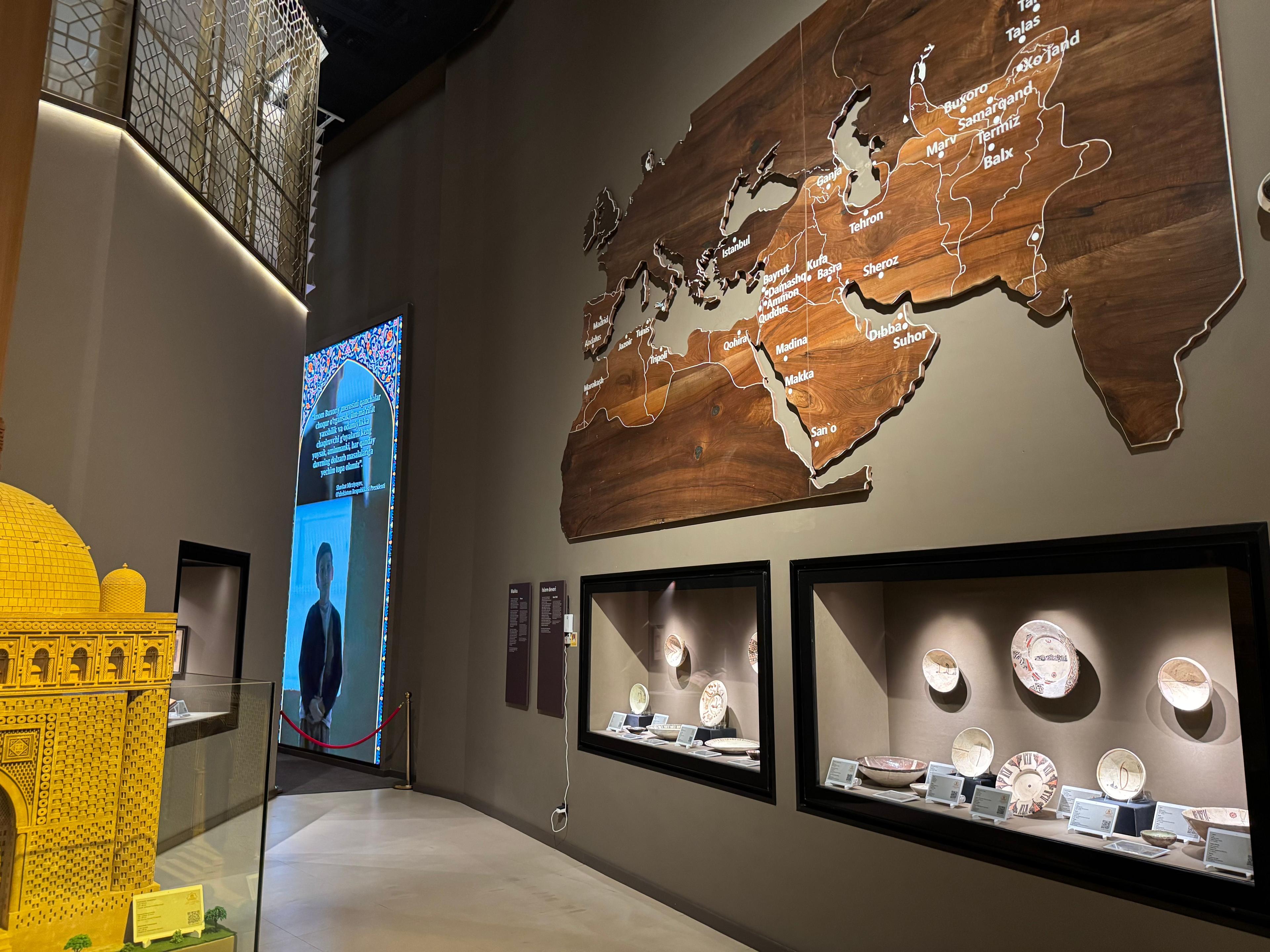
The Centre for Islamic Civilisation stands beside the Khast-Imam complex in the old city, a vast domed building in a modern take on Timurid forms. Most reports give its official opening as March 2026; one international outlet gives a later date, and the museum floors opened in stages, so if you visited in spring 2026 and found parts closed, that is why.
What it holds:
- The Quran Hall at the heart of the complex, built to display the Uthman Quran, the 8th-century manuscript that previously sat in the Muyi Muborak madrasah across the square.
- Galleries on Sogdiana, Bactria and Khorezm, then on the scholars of the Islamic golden age who came from this region: al-Khwarizmi, al-Biruni, Ibn Sina and al-Bukhari, with manuscripts, instruments and reconstructions.
- A gallery of great figures, a children's museum and a library intended to hold tens of thousands of manuscripts and their digital copies.
The museum is open daily, with tickets sold by timed session and a foreign-visitor ticket that includes an audio guide in English or Russian. Reported collection sizes range from a couple of thousand exhibits to tens of thousands; the truth is that the displays are still growing. It was recognised by Guinness World Records in April 2026 as the largest museum of Islamic civilisation. Allow a half day, and combine it with the Khast-Imam ensemble and the Chorsu Bazaar, ten minutes' walk away. Our Islamic architecture guide explains the forms you will see quoted in the building.
Ilkhom Theatre: the stage as gallery
No art itinerary in Tashkent is complete without an evening at the Ilkhom. Founded in 1976 in a basement under a housing block on Pakhtakor Street, it was the first independent theatre in the Soviet Union, and it has kept that independence through every political season since. Productions are mostly in Russian, often with English surtitles for well-known pieces, and the repertoire swings between classic texts, new Uzbek writing and physical theatre.
For visitors the theatre matters in two ways. First, the foyer and the corridor gallery show contemporary painting and photography, usually by artists who have no other venue in the city. Second, the performances themselves are the most direct contact you will get with Tashkent's intellectual life. Tickets are cheap by any standard, usually under 100,000 som, and sell out for weekend shows; book on the theatre's site or through your hotel a few days ahead. The house seats around 100, so there are no bad seats.
The theatre also runs an autumn jazz festival and hosts visiting companies, so check the programme for the dates of your visit.
Samarkand: the Afrasiyab murals and the museum
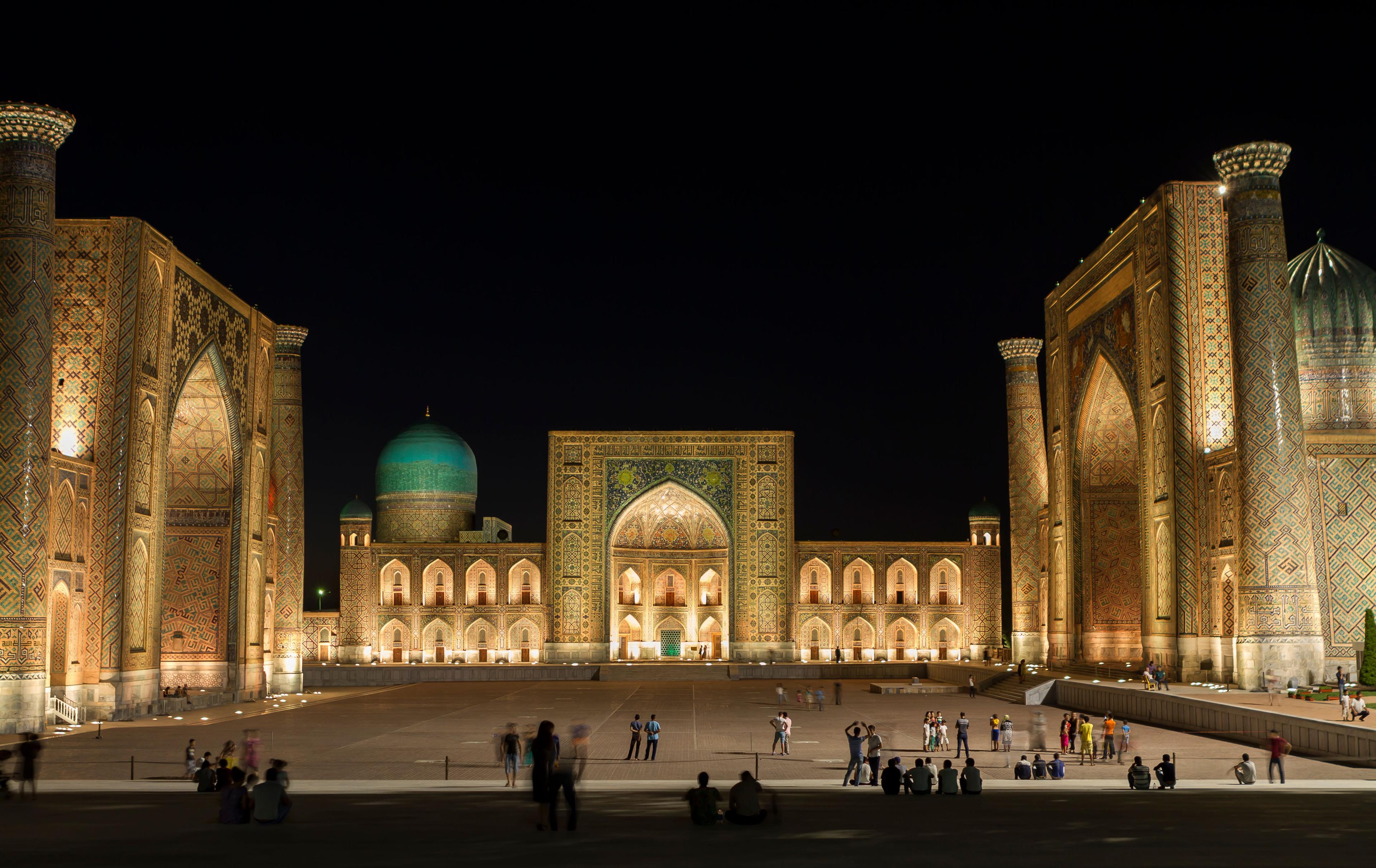
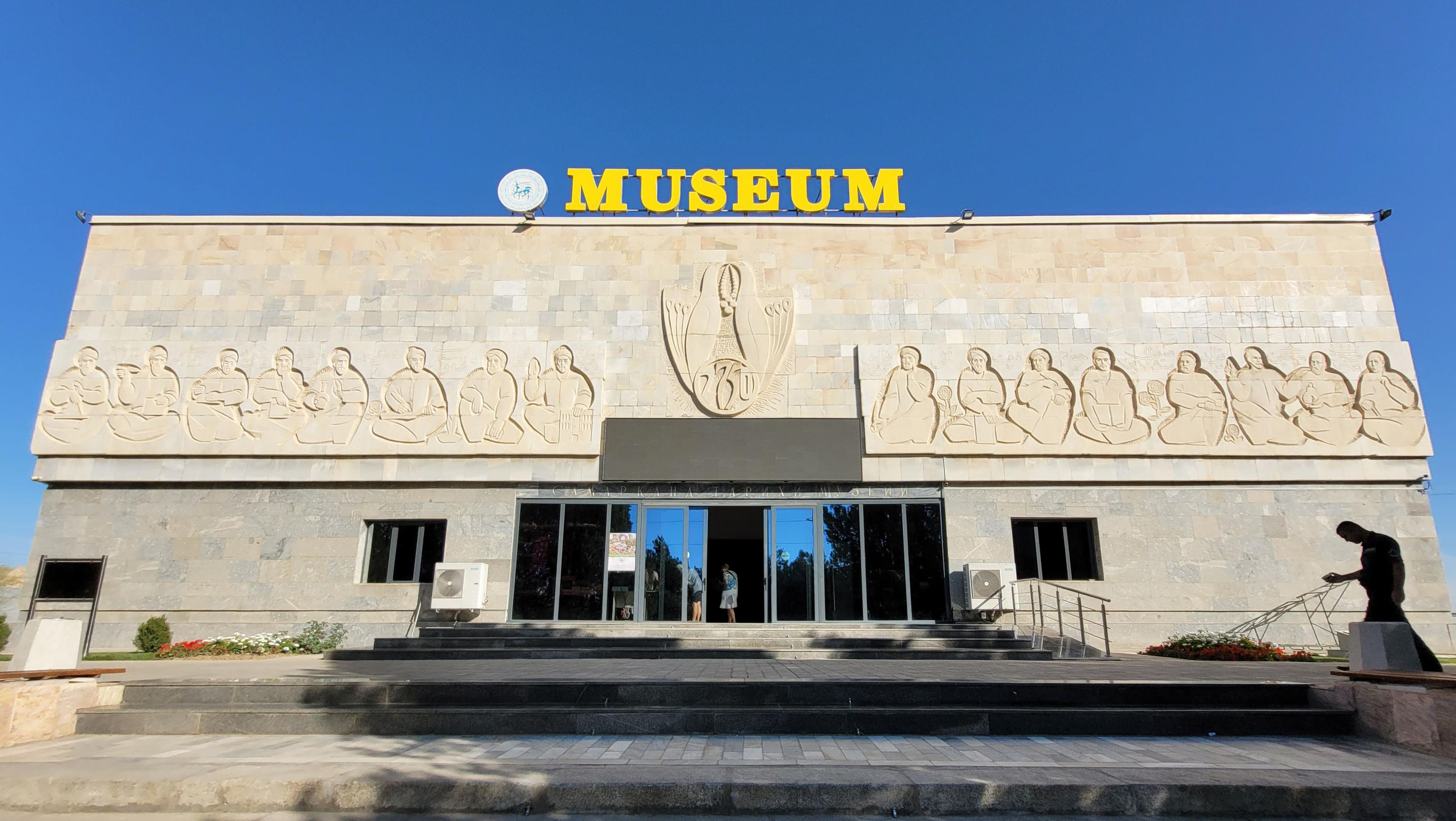
Samarkand's contribution to an art trip is older than anything in Tashkent. The Afrasiyab Museum, on the edge of the ancient city mound north of the Bibi-Khanym Mosque, holds the 7th-century wall paintings found in a Sogdian aristocrat's house in 1965. The best known, the so-called Ambassadors' Painting, shows a procession of envoys from China, Korea and the steppe bringing gifts to the ruler of Samarkand, with the Chinese emperor hunting and his empress boating on another wall.
The building was rebuilt and reopened with new displays in the 2020s, and the murals are now shown in a dedicated climate-controlled hall with good lighting, reconstructions and explanatory film. The rest of the museum covers the city from its foundation to the Mongol destruction in 1220: ossuaries, Zoroastrian altars, coins and ceramics. It takes an hour and sits conveniently between Shah-i-Zinda and the Ulugh Beg Observatory.
The same Sogdian painting tradition continues across the border at Panjakent, whose murals are in the National Museum in Dushanbe and the Hermitage in St Petersburg; the Afrasiyab hall is the only place to see major examples in situ in Uzbekistan.
Samarkand also has a small Museum of Regional Studies in a Jewish merchant's house and a growing number of galleries in the restored streets around the Registan, mostly selling suzani, miniatures and ceramics rather than showing them. For contemporary work the city still waits for an institution; the Silk Road Samarkand complex hosts occasional exhibitions.
The Savitsky Museum in Nukus: the anchor in the west
For most art travellers the Savitsky Museum remains the reason to fly to Karakalpakstan. Its collection of Russian and Uzbek avant-garde painting from the 1920s and 1930s, assembled by a Moscow-born painter and archaeologist while such work was banned elsewhere, is the second largest of its kind after the Russian Museum in St Petersburg, and the only one where it hangs beside the Karakalpak jewellery and textiles that inspired it.
We cover the museum in detail in a separate guide. For planning purposes: it needs a half day, Nukus is a 1 hour 45 minute flight from Tashkent or a day's drive from Khiva, and the trip pairs naturally with the Khorezm desert fortresses and the Aral Sea. If the Bukhara Biennial is your main reason for coming, Nukus adds two or three days at the end of the trip; the contrast between the two, a state biennial in restored madrasahs and a provincial museum that saved banned paintings from a cellar, is the whole arc of Uzbek 20th-century art.
The Bukhara Biennial: what it was in 2025 and what is planned for 2027
The first Bukhara Biennial opened on 5 September 2025 under the title Recipes for Broken Hearts, with an artistic director who had previously run the Dhaka Art Summit, and ran for ten weeks into late November. It was commissioned by the Uzbekistan Art and Culture Development Foundation, which also drives the Tashkent museum projects, and it was free to the public.
What made it unusual:
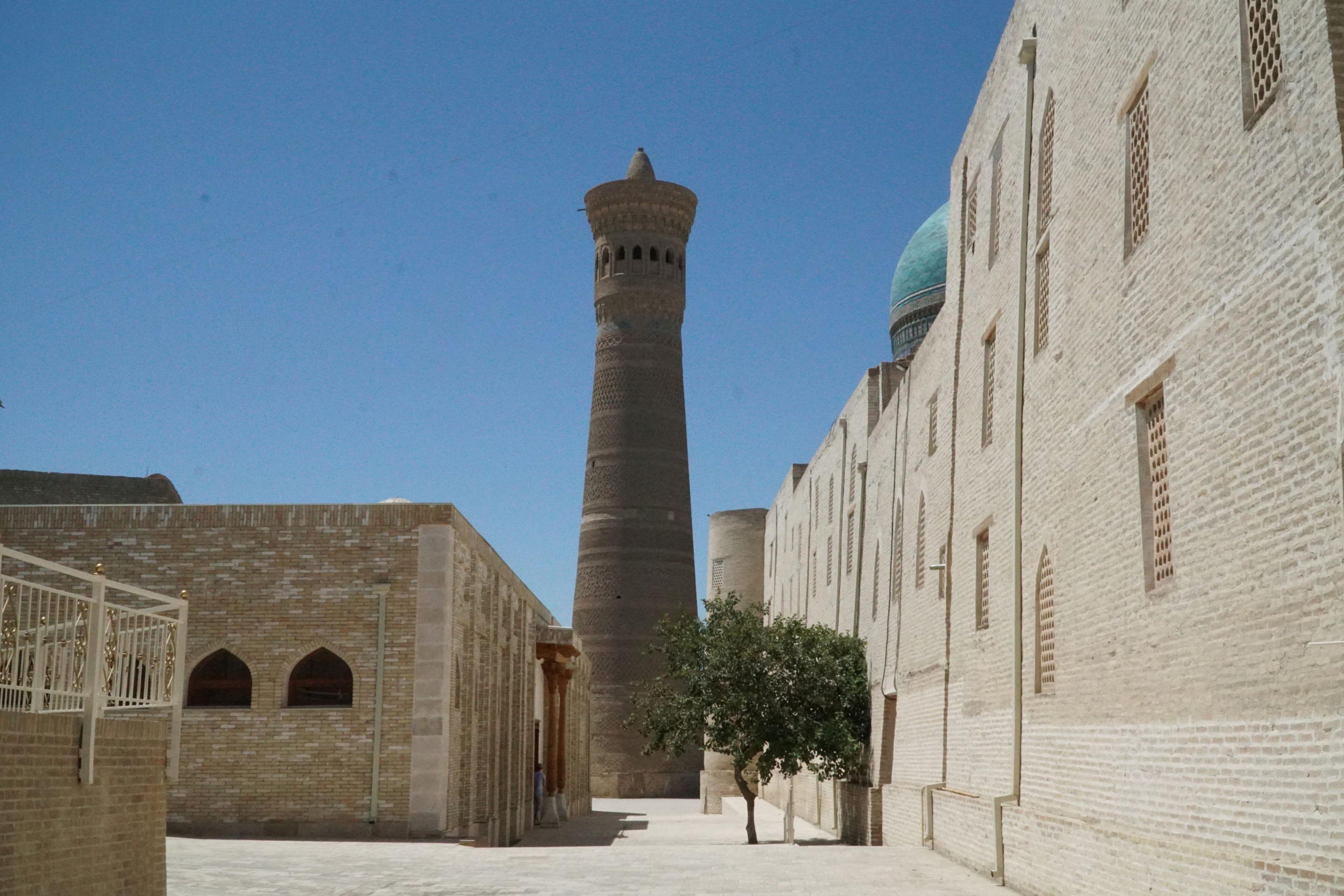
- Venues were the old city itself: restored madrasahs, caravanserais, trading domes and the house museum of a Bukharan merchant family, within walking distance of Po-i-Kalyan and Lyabi-Hauz.
- Most works were made in Bukhara, in collaboration between international artists and local craftspeople, so ceramics, suzani, woodcarving and bread appeared as materials rather than souvenirs.
- Food was built into the programme: a commissioned menu, communal meals and a culinary strand that treated Bukharan cooking as an art form.
- Attendance was reported by the organisers in the region of 1.8 million visits, a figure that includes local residents walking through the venues.
The second edition has been announced for 3 September to 21 November 2027, again in Bukhara, with a new artistic director drawn from architecture rather than curating and a plan to expand into further historic sites and public spaces across the city. The theme had not been published as of November 2026; the official site, bukharabiennial.uz, is where it will appear.
Practical implications for 2027:
- Bukhara hotels will be full in September and October, which is already peak season. Book six months ahead or more.
- The biennial is free, but some performances and dinners are ticketed through the official site.
- Plan three nights in Bukhara rather than the usual two; the venues are spread across the old town and the programme changes weekly.
- Combine with the Samarkand and Tashkent museums above for a ten-day art itinerary, or with Nukus for a fortnight.

Uzbekistan art calendar 2026–2027: what is known
Dates below are those published as of November 2026. Festivals in Uzbekistan are sometimes rescheduled by decree, so confirm before booking flights.
- Bukhara Biennial, second edition: 3 September to 21 November 2027, Bukhara.
- Centre for Contemporary Arts, Tashkent: rolling exhibition programme from its 2026 opening; the first full season runs through 2027.
- Ilkhom Theatre: repertory season September to June, with the jazz festival in autumn.
- Sharq Taronalari, the international music festival on the Registan: held in odd-numbered years in late August; 2027 is the next expected edition, not yet confirmed.
- Silk and Spices Festival, Bukhara: late May or early June each year, with craft markets around Lyabi-Hauz.
- Tashkent international art events: the city has hosted a contemporary art biennale and photography biennale in past years on irregular schedules; no 2026 or 2027 dates were published when we checked.
Our festivals calendar covers music, craft and seasonal events in more depth.
A ten-day Uzbekistan art itinerary
- Days 1–3: Tashkent. State Museum of Arts, Museum of Applied Arts and the Tansykbaev house on one day; Centre for Islamic Civilisation with Khast-Imam and Chorsu on the second; the Centre for Contemporary Arts, the galleries around Broadway and an Ilkhom performance on the third.
- Days 4–5: Samarkand by Afrosiyob. Afrasiyab Museum and Shah-i-Zinda, the Registan and Gur-e-Amir, with time in the craft workshops of the old town and a visit to the Konigil paper mill.
- Days 6–8: Bukhara by train. The biennial venues, if your dates coincide; otherwise the madrasahs they occupy, the Fayzulla Khodjaev house museum, the trading domes and the ceramic workshops of Gijduvan outside town.
- Days 9–10: fly Bukhara to Tashkent, or extend to Nukus for the Savitsky Museum and fly back from there.
The trip works in any season except high summer, when the museum-heavy days are a relief from the heat but the walking in Bukhara is hard. Spring and autumn are ideal; the Bukhara Biennial sits squarely in the best weather of the year.
Art tours with TourEast
We plan culture-first itineraries around museum hours, exhibition dates and performance schedules, with guides who know the collections rather than only the monuments. For the 2027 Bukhara Biennial we can hold hotel rooms early and build a private or small-group trip through Tashkent, Samarkand and Bukhara around the programme, with Nukus as an extension if you want the Savitsky collection as well.