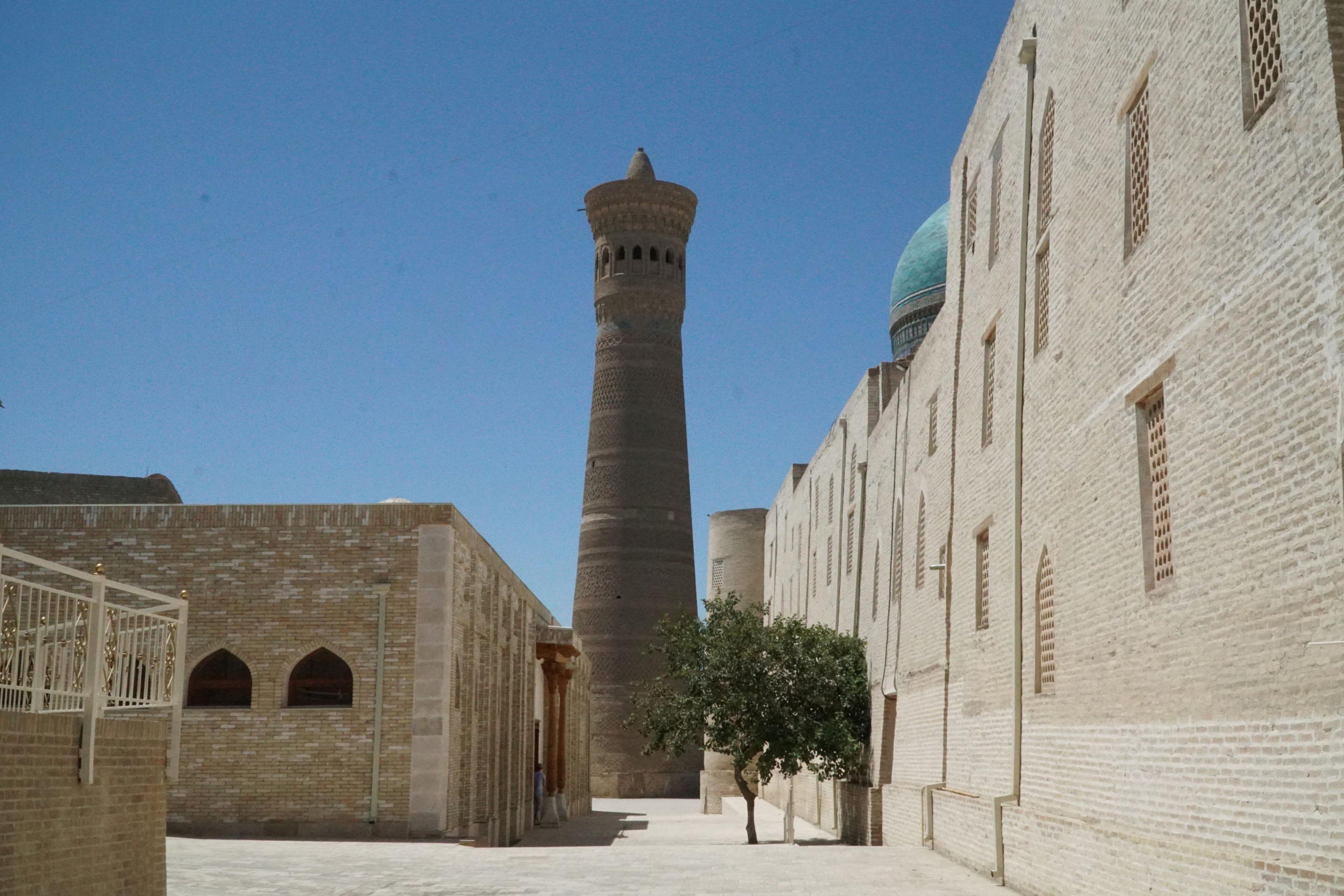
Chorsu Bazaar's UNESCO-listed dome, Siab in Samarkand, Bukhara's trading domes, Urgut's Sunday suzani market, Kumtepa near Margilan and the Yangiabad flea market. Hours, what to buy, how to bargain and photo etiquette.
Facts, prices and schedules checked on November 4, 2026
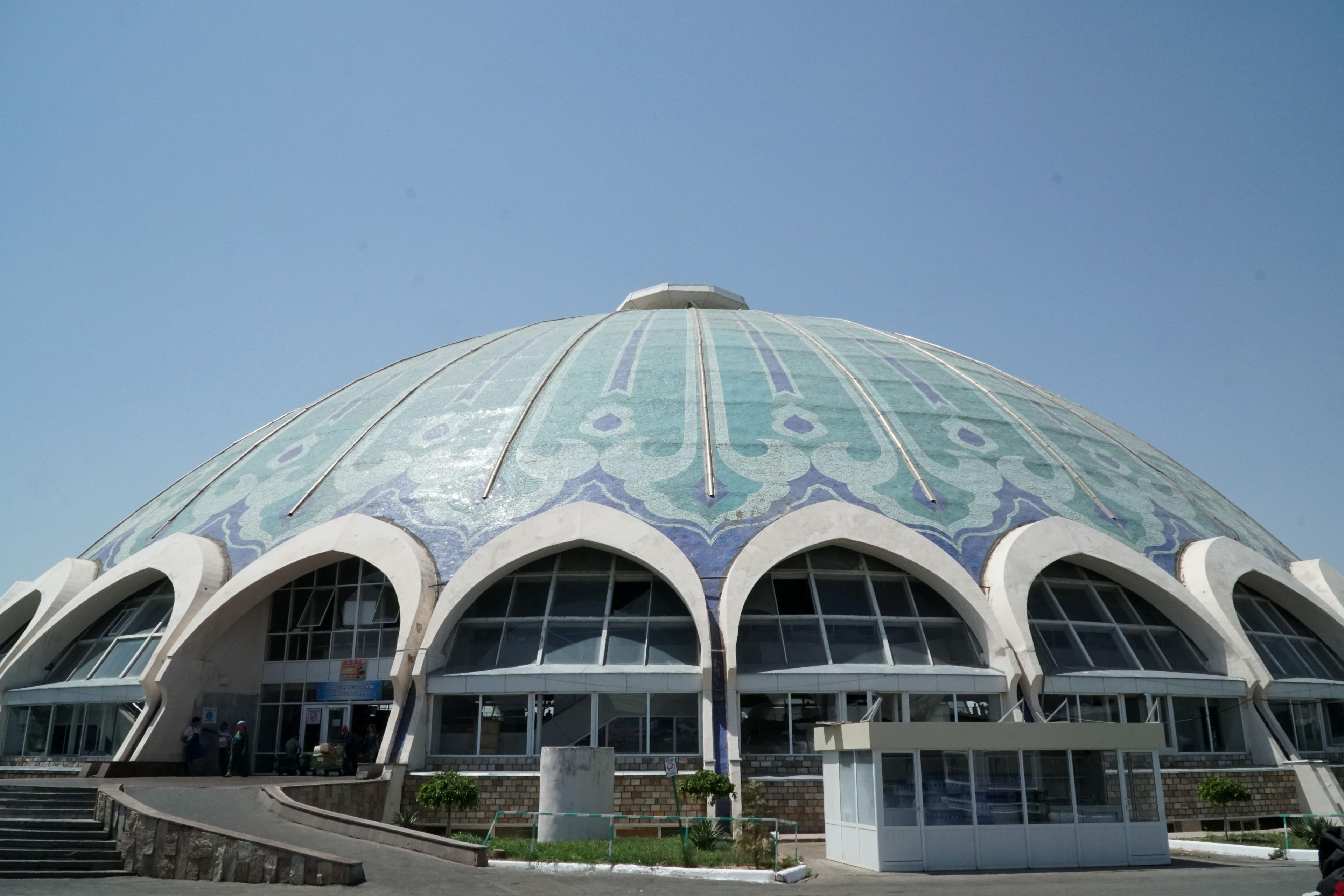
Chorsu Bazaar in Tashkent is where most travellers meet an Uzbek market for the first time, and it sets the tone for the rest of the trip: a great turquoise dome, rows of horse-meat sausages and white kurt cheese balls, women stacking flatbreads like tiles, and a level of noise that becomes oddly pleasant after ten minutes. Since July 2026 the bazaar building has also been part of a UNESCO World Heritage property.
The bazaar is still the centre of daily life in every Uzbek city, and some of the best ones are well beyond Tashkent. This guide covers Chorsu Bazaar in detail, then the best bazaars in Uzbekistan for travellers: Siab Bazaar in Samarkand, the trading domes and food market of Bukhara, the Sunday bazaar in Urgut, the Kumtepa bazaar near Margilan and Tashkent's Yangiabad flea market. We finish with how to bargain, what to buy and how to take photographs without offending anyone.
Chorsu Bazaar, Tashkent: what you need to know
Chorsu means four streams or crossroads in Persian, and there has been a market on this spot in the old town for centuries. The building you see today is a product of late Soviet modernism. After the 1966 earthquake the architects Vladimir Azimov and Sabir Adylov designed a new bazaar under a cluster of domes; construction ran alongside work on Chorsu metro station, and the complex opened in 1990, with the tiling of the main dome finished in 1993. The main dome is surrounded by seven smaller ones, and the green and blue glazed pattern makes it one of the most recognisable buildings in the city.
In July 2026 UNESCO inscribed Tashkent Modernist Architecture on the World Heritage List, a group of ten buildings from the 1960s to the early 1990s. Chorsu Bazaar is one of them, alongside the Kosmonavtlar metro station and the Palace of Peoples' Friendship.
Practical points:
- Location: the old town, next to the Kukeldash Madrasah and a 10 to 15 minute walk from the Khast Imam complex.
- Getting there: Chorsu station on the O'zbekiston (blue) line of the Tashkent Metro brings you up beside the dome.
- Hours: open every day from early morning, typically from about 05:00, until early evening, roughly 19:00 to 20:00. Individual sections close earlier, and the food hall is at its liveliest before noon.
- Best time: mid-morning on a weekday. Weekends are the busiest days.

Inside Chorsu: the sections worth finding
The bazaar is bigger than it looks, so it helps to know the layout.
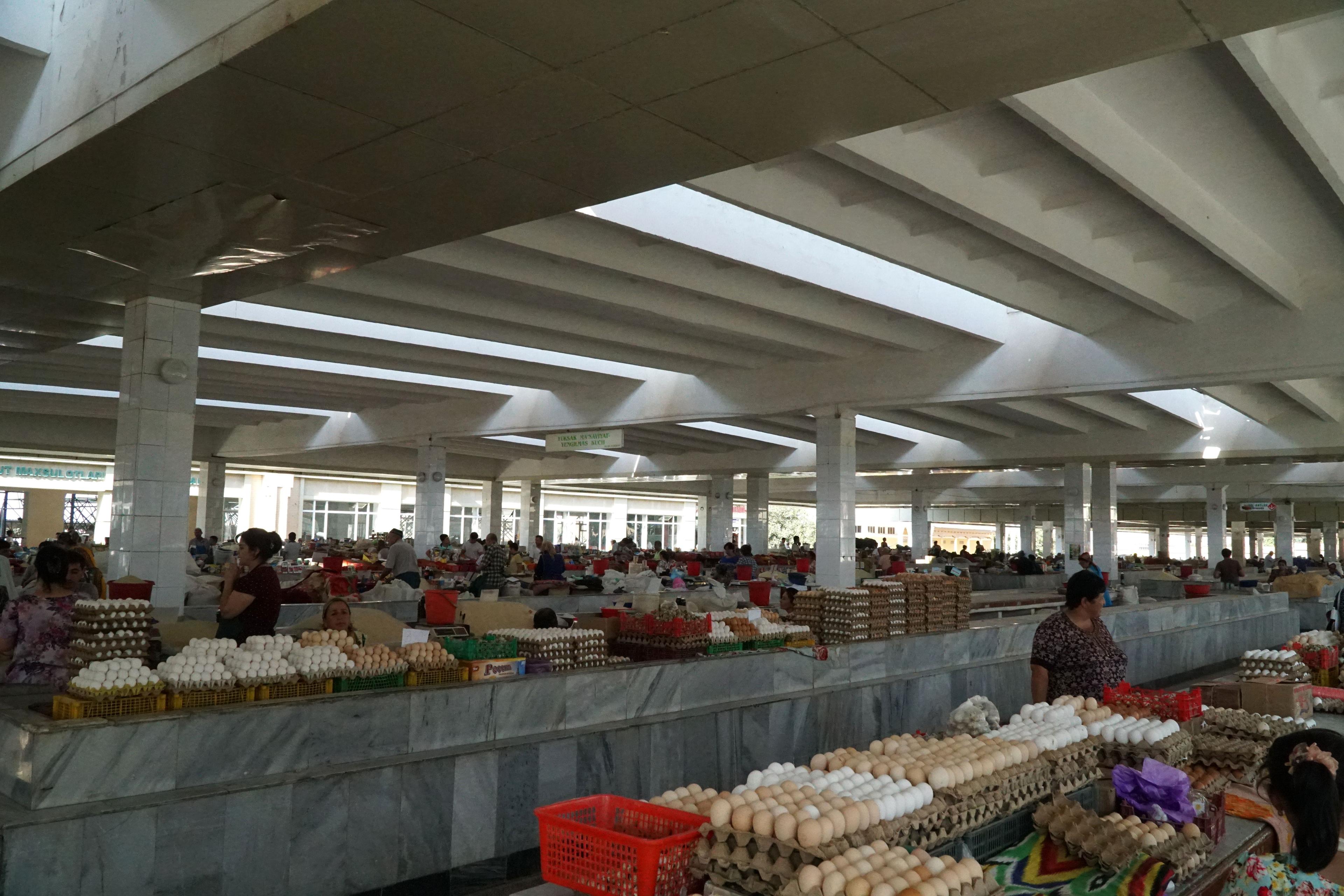
- Under the main dome: on the ground floor are meat and dairy, including kazy (horse-meat sausage), suzma (strained yoghurt) and kurt, the hard salty cheese balls sold by the bag. The upper gallery is for spices, dried fruit, nuts and sweets, and it gives the classic photograph looking down over the stalls.
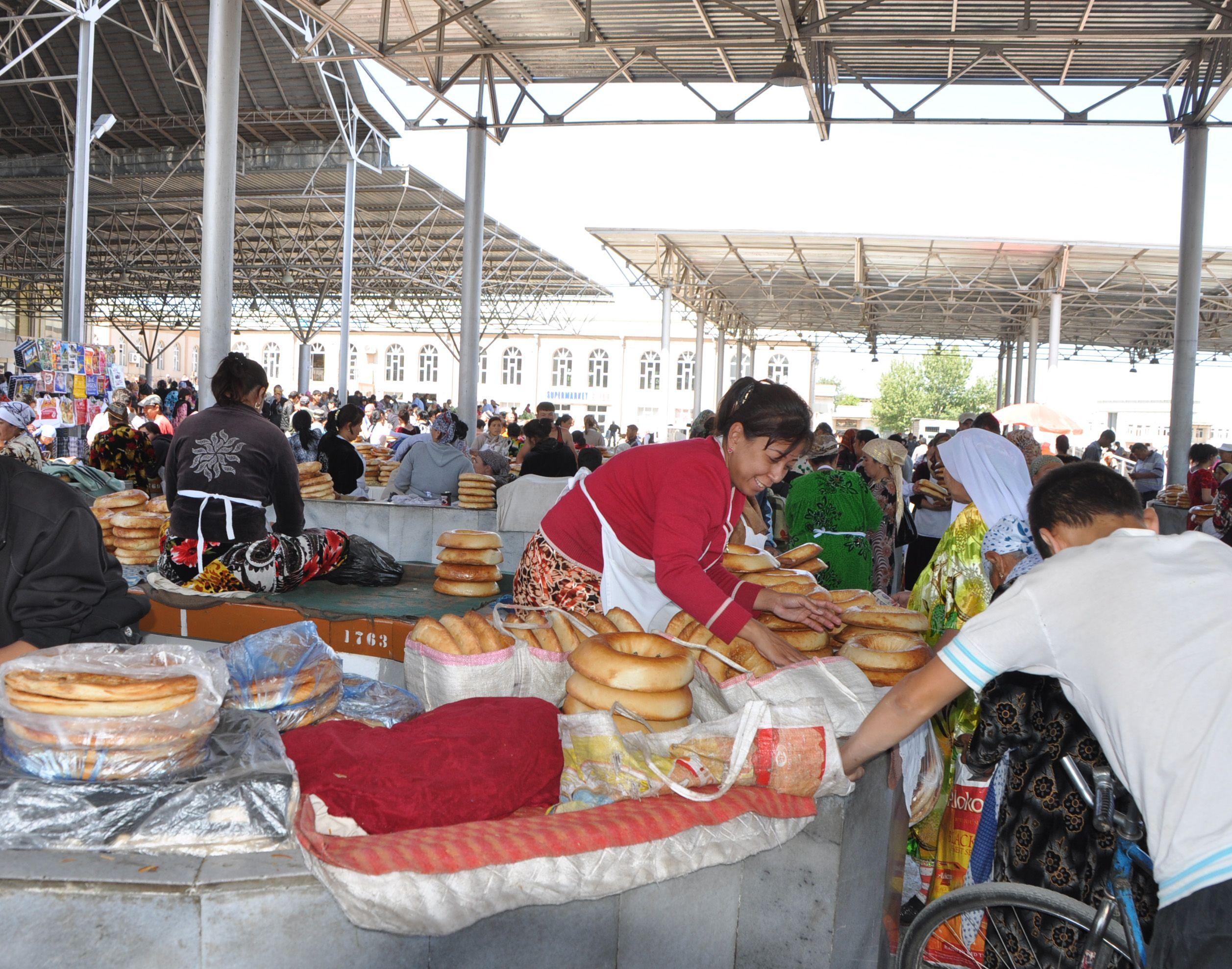
- Bread row: round non flatbreads stamped with patterns, some from other regions, including the dense Samarkand style.
- Fruit and vegetables: outside the dome in long covered rows. In late summer and autumn this is the best fruit you will taste on the trip: melons, grapes, figs, pomegranates.
- Pavilions for clothes, household goods and handicrafts: skullcaps (doppi), ceramics, knives, chapan robes and inexpensive suzani.
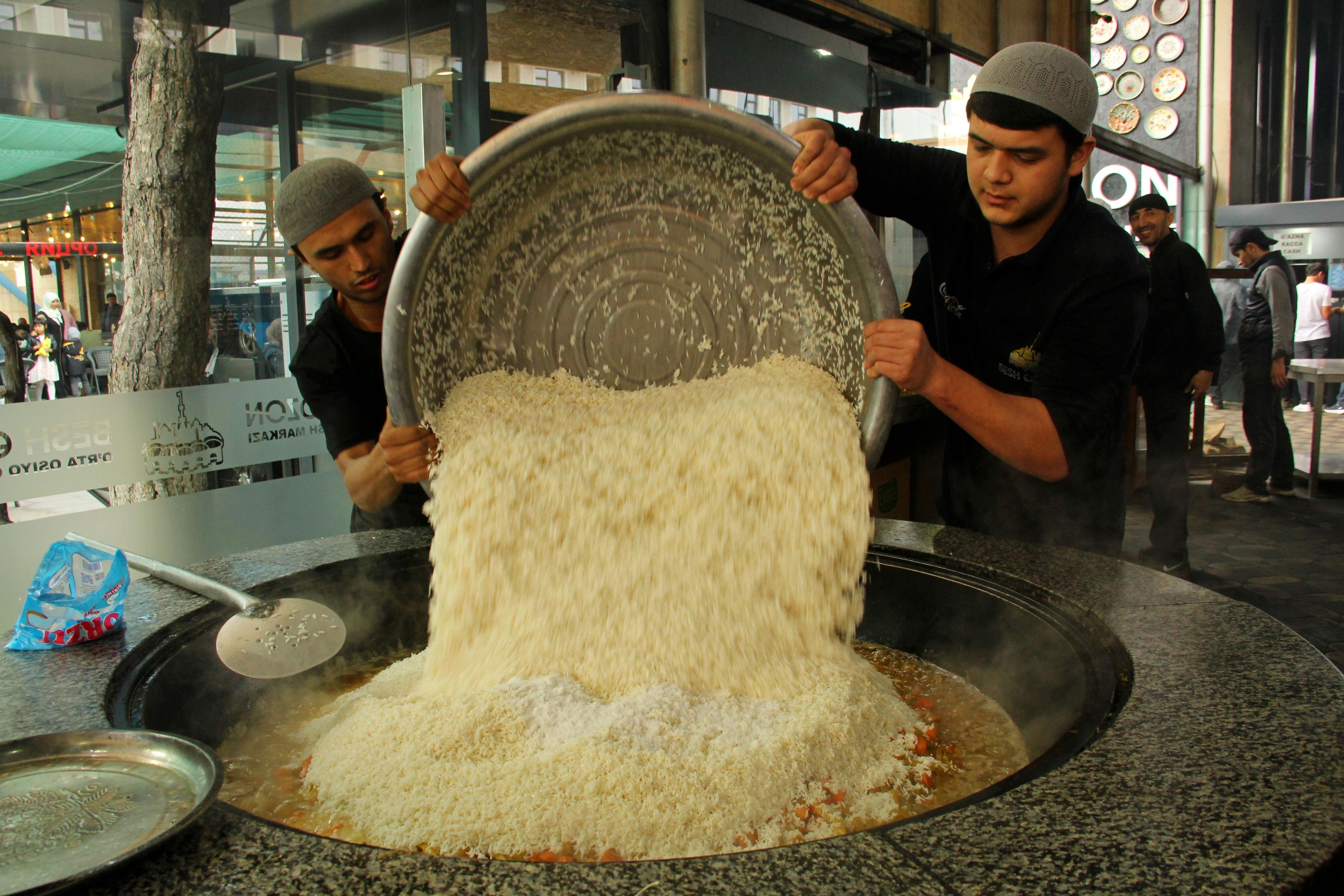
- Food court: plov, samsa from tandoor ovens, shashlik and lagman, mostly at lunchtime.
Stall holders in the dried-fruit and spice gallery are used to visitors and will offer tastings. Take them; it is part of the custom, and nobody expects you to buy from everyone. Our Uzbek food guide explains what you are tasting.
Siab Bazaar, Samarkand
Siab Bazaar, written Siyob in Uzbek, stands right beside the Bibi-Khanym Mosque, a few minutes on foot from the Registan along the pedestrian street. It is Samarkand's main market, covering about five hectares behind a blue-tiled triple-arched gate, with trading rows grouped by goods under awnings.
What it does best is food. Samarkand bread is famous across the country, and there is a whole row of it, with well over a dozen varieties. Dried apricots, raisins, almonds, pistachios and halva are said to be good enough that people from Tashkent come here to stock up. The bazaar is also the easiest place in Samarkand to buy spices and nuts to take home.
Hours: it starts trading early in the morning and winds down in the early evening. Some sources say it is closed or much quieter on Mondays, so if you are in Samarkand for only one day, check locally or with your guide. Combine it with Bibi-Khanym and the Hazrat Khizr Mosque, both a short walk away.
Bukhara's trading domes and food market
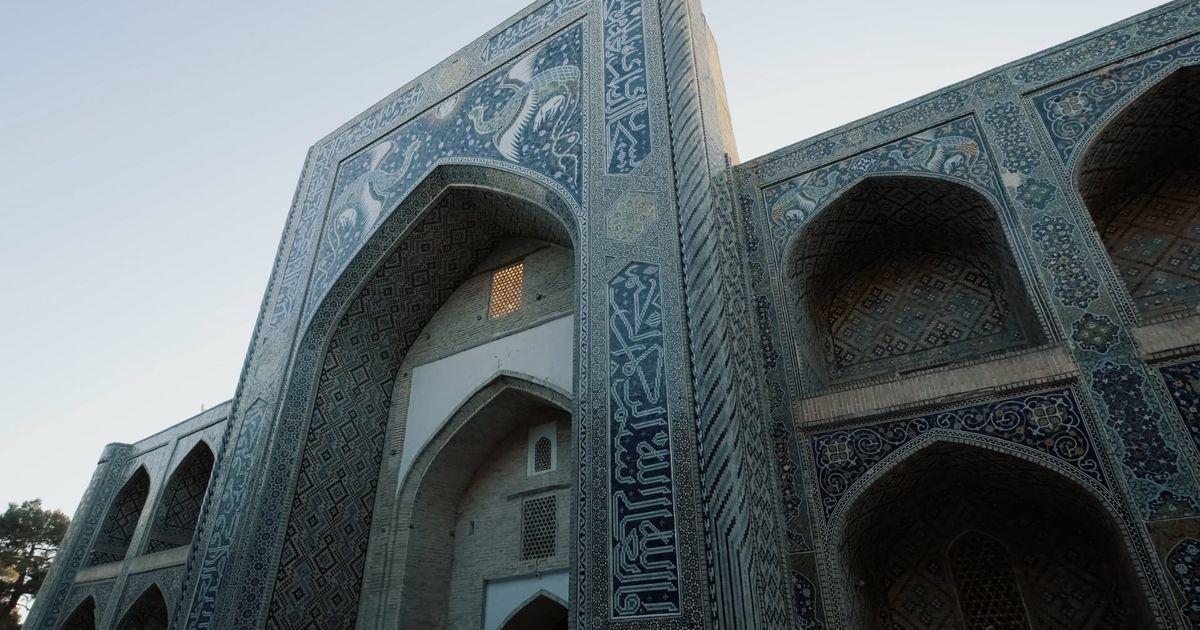
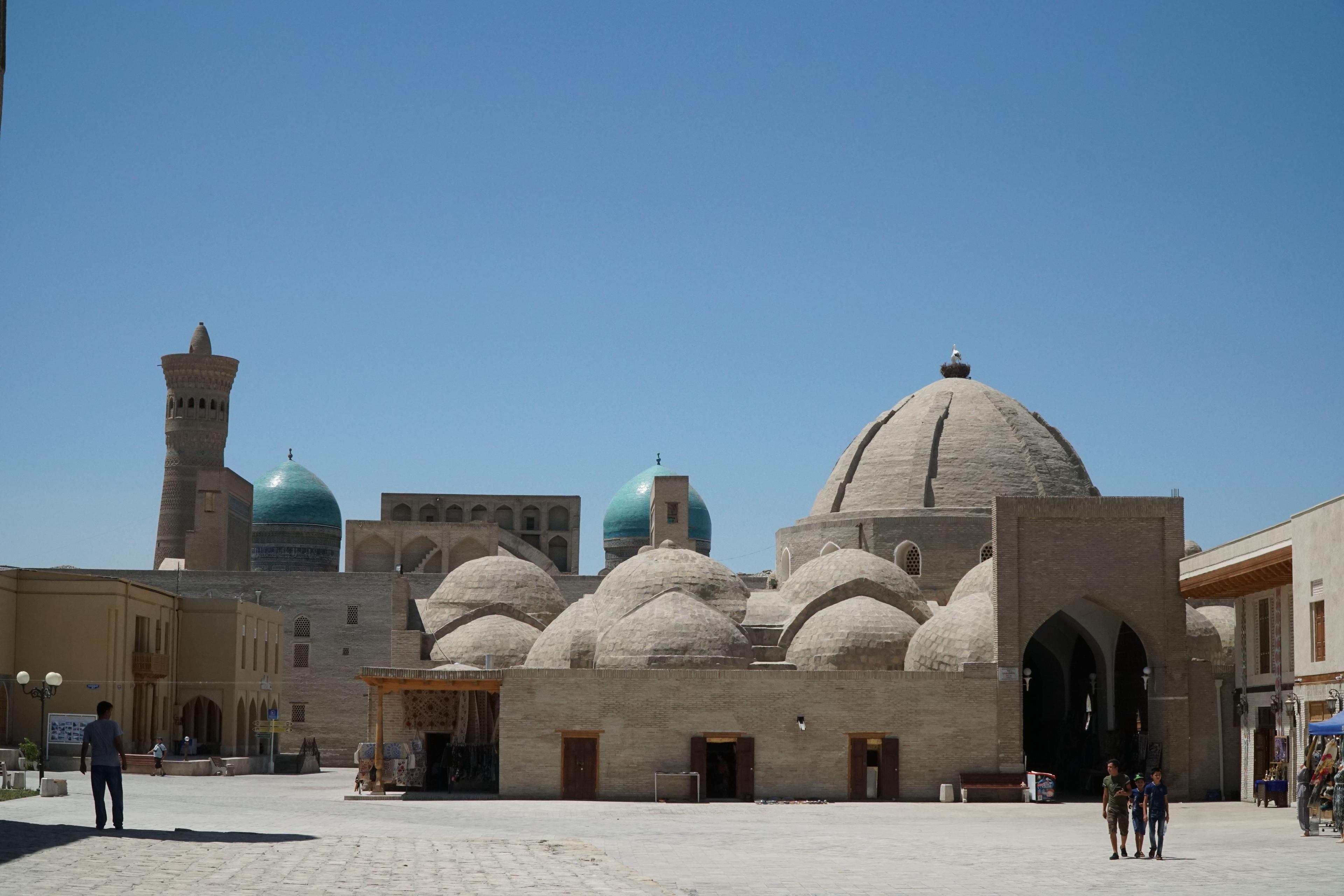
Bukhara works differently. Its historic bazaar was a network of covered crossroads called toqi, built in the 16th century under the Shaybanids, along with a covered gallery called a tim. Four still stand and are still used for trade:
- Toqi Zargaron, the jewellers' dome, the largest, near the Po-i-Kalyan ensemble.
- Tim Abdullakhan, a domed hall built around 1577, where silk and carpet sellers work today.
- Toqi Telpak Furushon, the cap sellers' dome, where five streets meet.
- Toqi Sarrofon, the money changers' dome, the smallest, near Lyabi-Hauz.
Today they sell crafts and souvenirs rather than daily goods: suzani, ceramics, carpets, miniature paintings, knives and forged scissors in the shape of storks. The domes are open from morning until early evening and are pleasant even if you buy nothing. Our Bukhara travel guide and the article on crafts and souvenirs have more detail on what to buy here.
For daily life, ask a taxi for the Markaziy Dehqon Bozori, the central farmers' market, a short ride from the old town. It is where Bukharans shop for meat, bread, fruit and spices, and it gives you a sense of the city that the domes no longer do.
Urgut Bazaar: suzani and the Sunday market
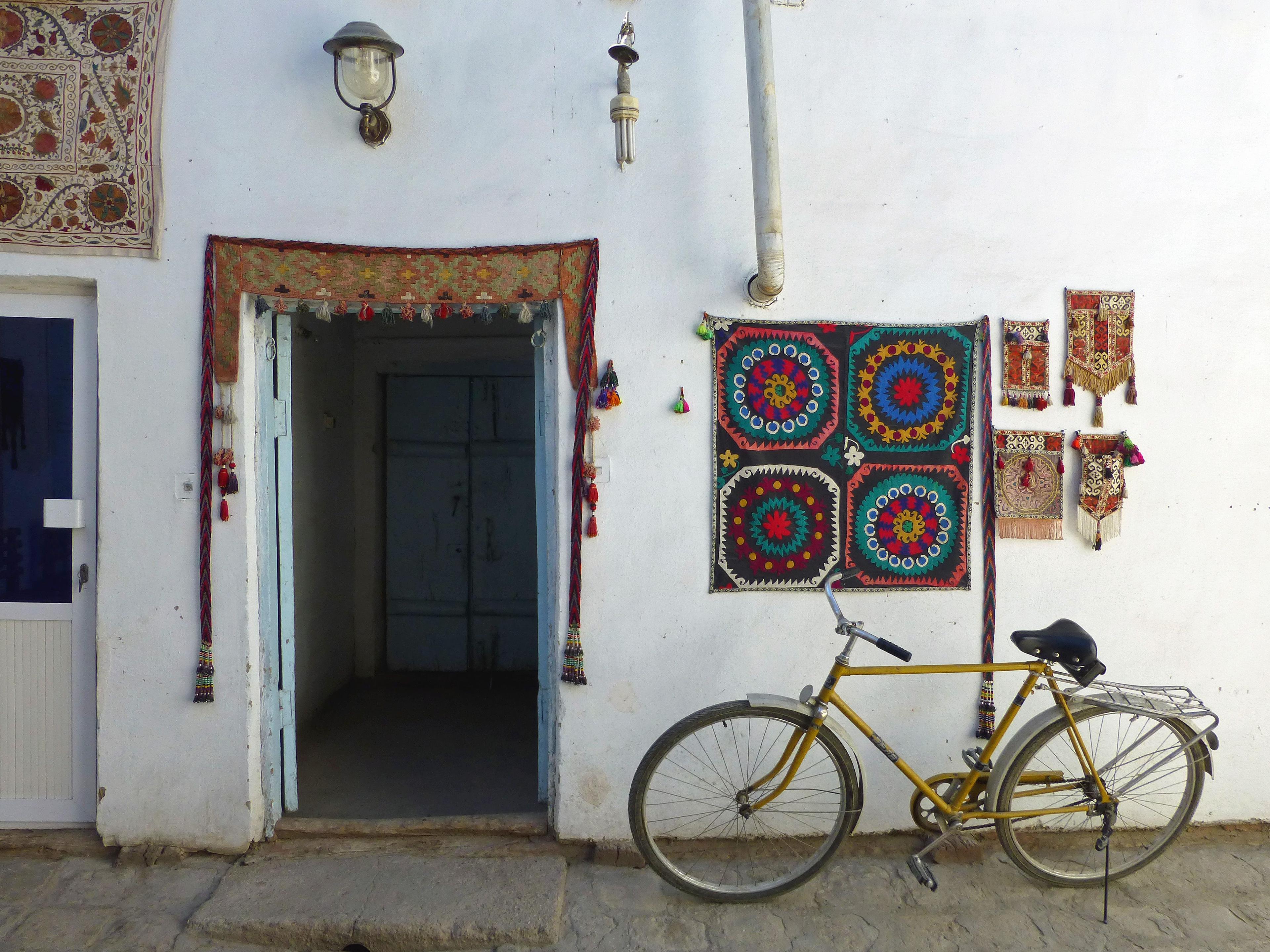
Urgut is a market town about 40 km south-east of Samarkand, at the foot of the Zarafshan mountains, and its bazaar is the best place in Uzbekistan to look for suzani, the embroidered textiles that once formed part of every bride's dowry. Alongside new work you will find older pieces, ikat fabric, embroidered skullcaps, jewellery, used carpets and plenty of everyday goods.
The textile and antiques section is at its biggest on Sunday, with Wednesday a smaller alternative and some trading on Saturday. Go early: the serious buying happens in the morning, and many sellers pack up by early afternoon. The drive from Samarkand takes about an hour each way.
A few tips:
- Look closely at the stitching. Hand embroidery has small irregularities and a back side that is not perfectly clean; machine work is even and flat.
- Old does not always mean antique. Many pieces described as old are a few decades old. That does not make them bad buys, but price them accordingly.
- Combine the market with the Chor-Chinor garden in Urgut, famous for its ancient plane trees, or a visit to the embroiderers' village of Gus nearby.
Kumtepa Bazaar near Margilan
The Fergana Valley is the most traditional region of Uzbekistan, and the Kumtepa (Qumtepa) bazaar, about 5 km west of Margilan, shows it best. It operates on Thursdays and Sundays, with Sunday the busier day.
Come for the textiles. Margilan has been the home of ikat silk for centuries, and Kumtepa has long rows of khan-atlas and adras fabric sold by the metre, alongside clothes, fruit, spices and bread. Many shoppers wear traditional dress, and the atmosphere is noticeably more local than in Samarkand or Bukhara. A taxi from Margilan or Fergana is cheap and quick.
If you are visiting the Yodgorlik silk factory in Margilan, plan the day so you reach Kumtepa in the morning. Our Fergana Valley guide covers the rest of the region.
Yangiabad flea market, Tashkent
Yangiabad, written Yangiobod in Uzbek, is Tashkent's great flea market and the successor of the Soviet-era Tezikovka market described by writers such as Alexander Solzhenitsyn and Dina Rubina. It is a sprawl of tools, spare parts, old cameras, Soviet badges and medals, records, samovars, porcelain and a lot of things nobody can identify.
It is mainly a weekend market, busiest on Saturday and Sunday mornings. The nearest metro station is Yangiobod on the Circle Line. Allow two to three hours, wear sturdy shoes and keep your phone and wallet in a front pocket.
Two important points:
- A sign at the entrance announces a ban on photography and video. Respect it, or at least ask the trader before you point a camera at anything.
- Do not buy items that may be cultural property, such as old manuscripts, icons, archaeological coins or antique weapons. Exporting antiques from Uzbekistan requires official permission, and customs officers do check.
In July 2026 Yangiabad was included in a government programme to sell 35 markets to private investors. The city says the flea-market format and the existing traders will stay, but changes are possible, so check the latest news before a visit.
How to bargain in Uzbek bazaars
Bargaining is normal and expected for crafts, textiles and souvenirs, less so for food.
- Food is sold at fixed or near-fixed prices, often by the kilo. You may get a small discount or an extra handful for buying more, but haggling over a bag of apricots is not the custom.
- For crafts, the first price is an opening offer. Counter politely, and expect to settle somewhere between a fifth and a third below the first figure, sometimes more for big pieces.
- Be friendly and take your time. A cup of tea and a few questions about how a piece was made usually lead to a better price than hard bargaining.
- Only bargain if you intend to buy. Agreeing a price and walking away is considered rude.
- Carry cash in soum, in a range of notes. Cards are accepted in some shops in the trading domes and in craft workshops, but rarely on the market floor. Our guide to money in Uzbekistan covers cash and cards.
- Check exchange rates if a seller quotes in dollars, and pay in soum where you can.
What to buy at Uzbek bazaars
- Dried fruit and nuts: apricots, raisins of several colours, almonds and pistachios. They travel well and are cheaper than at home.
- Spices: cumin, the coriander and red-pepper blends used for plov, and saffron (check it is real; very cheap saffron is usually safflower).
- Non bread: a Samarkand loaf keeps for days and makes a good gift if you are flying home soon.
- Suzani and ikat: the best value is in Urgut and the Fergana Valley.
- Ceramics: Rishtan blue-and-turquoise pottery is sold in most bazaars; Gijduvan's brown and green ware is common in Bukhara.
- Doppi skullcaps, knives from Chust, and forged scissors in Bukhara.
Check customs rules at home for food and plant products before you buy large quantities, and keep receipts for expensive carpets and textiles.

Photography etiquette at the bazaar
Bazaars are wonderful to photograph, and most traders are relaxed about cameras. A few courtesies go a long way:
- Ask before taking a close portrait, especially of women. A smile and a gesture to the camera is enough; accept a no without argument.
- Buying something small first, or chatting for a minute, changes the mood completely.
- Show people the photo on your screen. Many will ask you to take another one.
- Do not photograph butchers' stalls or prayer areas at close range without asking, and keep out of the way of porters pushing heavy carts.
- Respect no-photo signs, as at Yangiabad.
- Early morning gives the best light and the friendliest atmosphere, before the crowds and the heat. Our article on culture and etiquette in Uzbekistan has more on dress and manners.
Exploring the bazaars with TourEast
Our guides can take you round Chorsu, Siab or the Bukhara domes as part of a city tour, explain what you are tasting and help with bargaining. We can also add a Sunday at Urgut or a Kumtepa morning to private and small-group itineraries, or plan a food- and craft-focused trip around the markets.