How the Uzbek som works, where to change money, which cards work in ATMs and shops, how much to tip, and what a meal, a taxi or a museum ticket really costs. A practical money guide from our team in Tashkent, updated November 2026.
Facts, prices and schedules checked on November 4, 2026
Money in Uzbekistan is far simpler than it was a decade ago. Since the currency reform of 2017 there has been one official exchange rate, black-market money changers have all but disappeared, and ATMs that accept foreign cards are easy to find in every city on the tourist route. Still, cash matters more here than in Western Europe, and a few local habits are worth knowing before you land.
This guide covers the som itself, exchanging money, ATMs and cards, tipping, and the prices you can expect to pay in November 2026.
The Uzbek som at a glance
The national currency is the som (spelled so'm in Uzbek, code UZS). Prices are written in som everywhere, often with the zeros abbreviated: a menu showing 45 or 45 000 means 45,000 som.
Banknotes run from 1,000 to 200,000 som. Coins exist but you will rarely see them. Because the numbers are large, it helps to think in round figures: 10,000 som is a little under one US dollar, 100,000 som is a little over eight dollars, and a 200,000 note is worth about 17 dollars.
The rate floats and is set daily by the Central Bank of Uzbekistan. On 3 November 2026 the official rate was 11,942 som to one US dollar, and through 2026 it has moved in a narrow band of roughly 11,900 to 12,100. Rates change, so check cbu.uz or your banking app before you travel. Banks and exchange offices sell som at a rate close to the official one.
Prices for tourist services such as hotels and tours are sometimes quoted in US dollars or euros, but by law payments inside the country are made in som. Hotels convert at the day's rate when you pay.
Where to exchange money
The easiest currencies to bring are US dollars and euros. Russian roubles are also widely exchanged, and some larger banks change Chinese yuan, British pounds and other major currencies, though at less attractive rates.
You can exchange money at:
- Bank branches and the small bank exchange booths found in shopping centres, hotels and markets
- Exchange counters in the arrivals halls of Tashkent, Samarkand and Bukhara airports
- Some hotel reception desks, usually at a slightly worse rate
Exchange is quick: show your passport, hand over the notes and you will get a receipt. Bring clean, undamaged notes in recent designs. Torn, written-on or very old US dollar bills may be refused or exchanged at a discount, and larger notes ($50 and $100) often get a better rate than small ones.
Avoid street money changers. There is no longer any rate advantage, it is illegal, and counterfeit notes are a real risk. Our advice is simple: change a modest amount at the airport for the first day, then use bank booths or ATMs in town.
ATMs and which cards work
ATMs are plentiful in Tashkent, Samarkand and Bukhara, and available in Khiva and other regional centres, usually in bank branches, hotels and shopping centres.
Visa cards are the most widely accepted foreign cards at ATMs. Mastercard works at most, though not every, bank machine. UnionPay cards are accepted at a growing number of ATMs, including Kapitalbank's network, but coverage is patchier, so carry a Visa or Mastercard as back-up. Look for the logos on the machine before inserting your card. Local Uzcard and Humo cards dominate domestic payments, and machines that show only those two logos will not accept foreign cards.
A few practical points:
- Withdrawal limits per transaction are typically 1.5 to 3 million som (about $125 to $250), so you may need several withdrawals
- The local bank usually charges a fee, often around 1 percent or a small fixed amount, on top of whatever your own bank charges
- If the ATM offers to charge you in your home currency, decline and choose som; the machine's conversion rate is almost always worse
- Some ATMs in larger cities also dispense US dollars to foreign cards, useful if you prefer to carry dollars
- Use ATMs inside banks or hotels during opening hours, so staff can help if a card is retained
Tell your bank you are travelling to Uzbekistan before you leave, as some banks block transactions from the region by default.
Cash or card in practice
Cards are accepted in most mid-range and upscale hotels, modern restaurants and cafés in Tashkent, larger supermarkets, shopping centres and many shops in the tourist centres of Samarkand and Bukhara. Contactless payment is increasingly common, and in Tashkent a contactless bank card or phone works on the metro and city buses.
Cash is still king in:
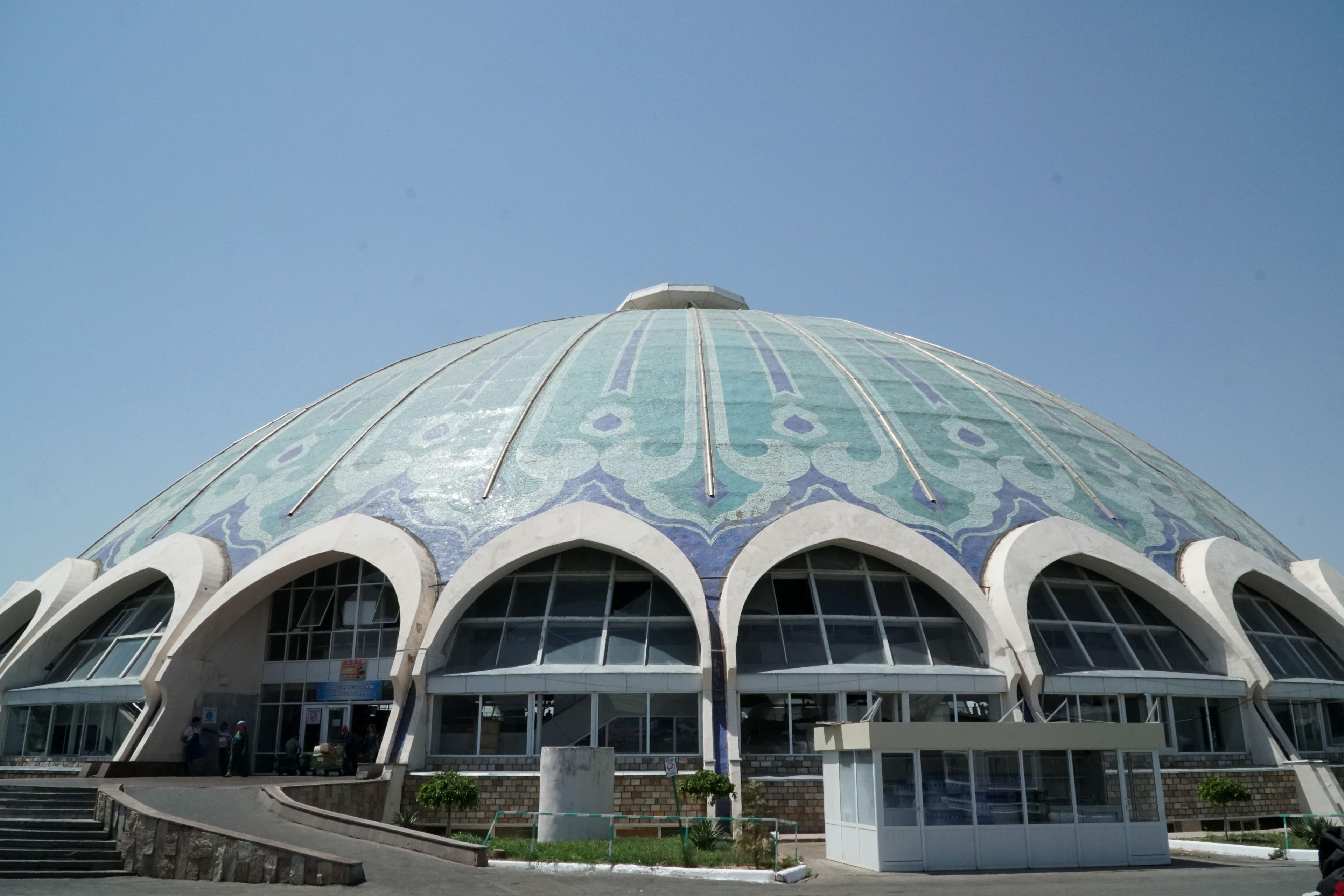
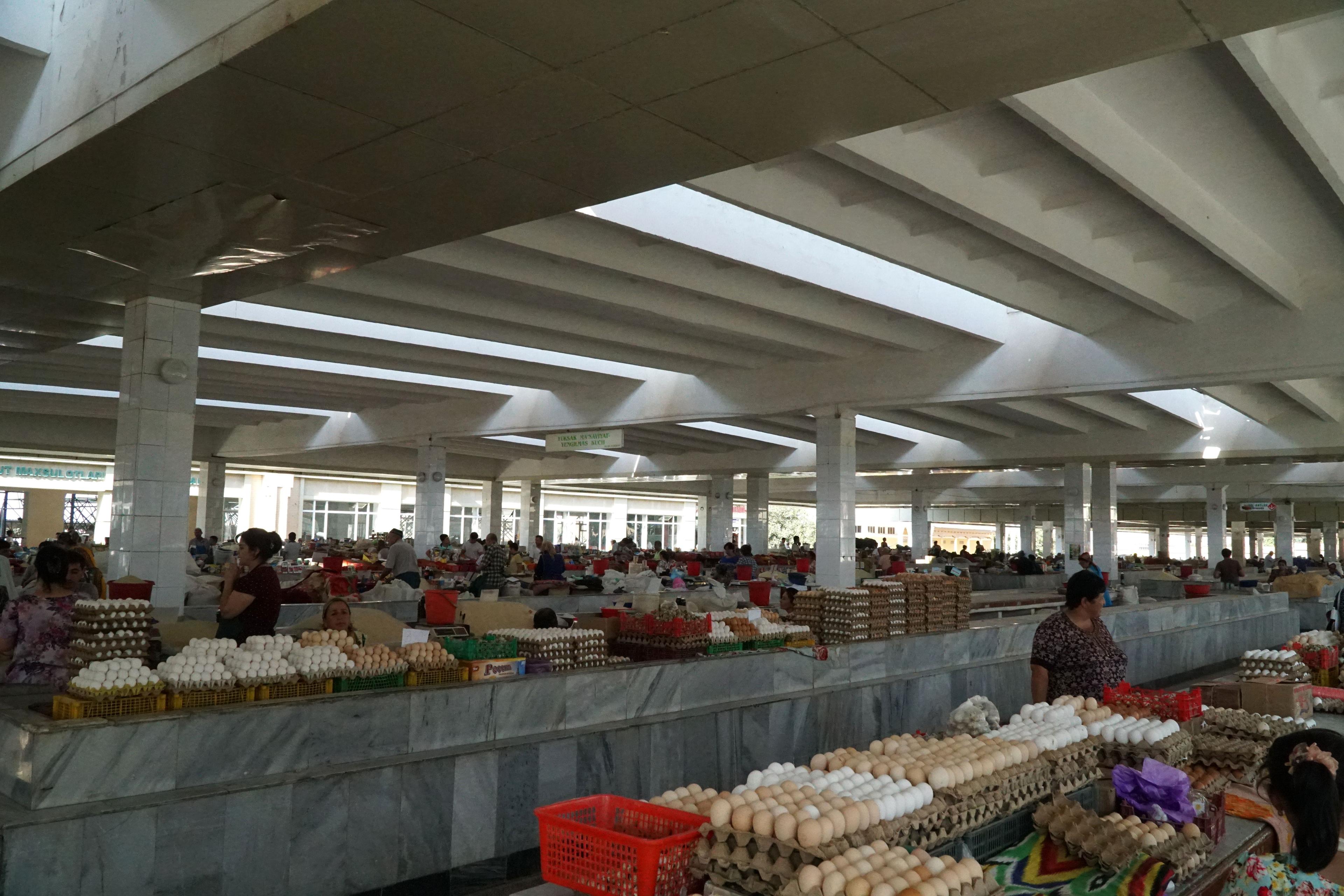
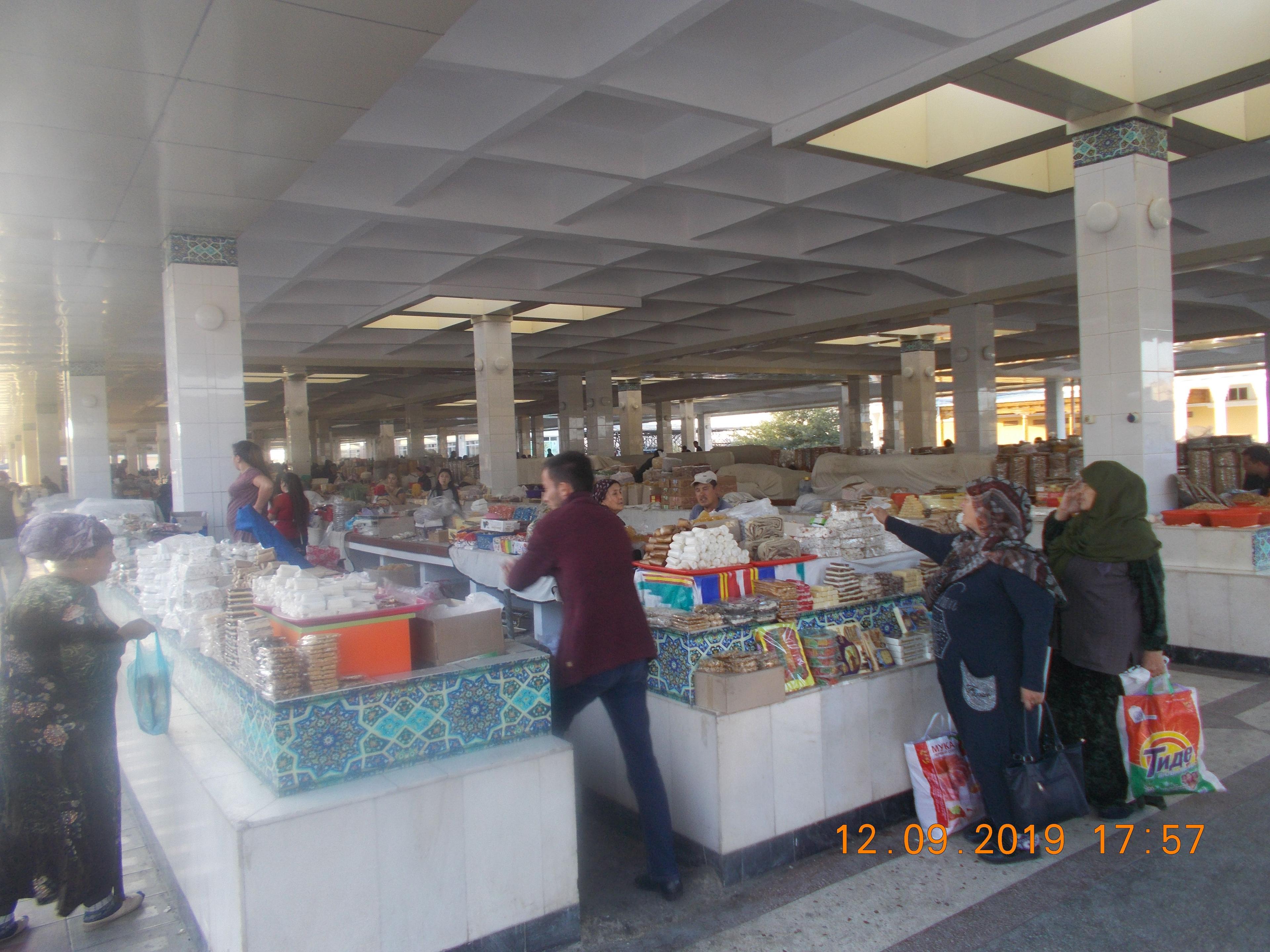
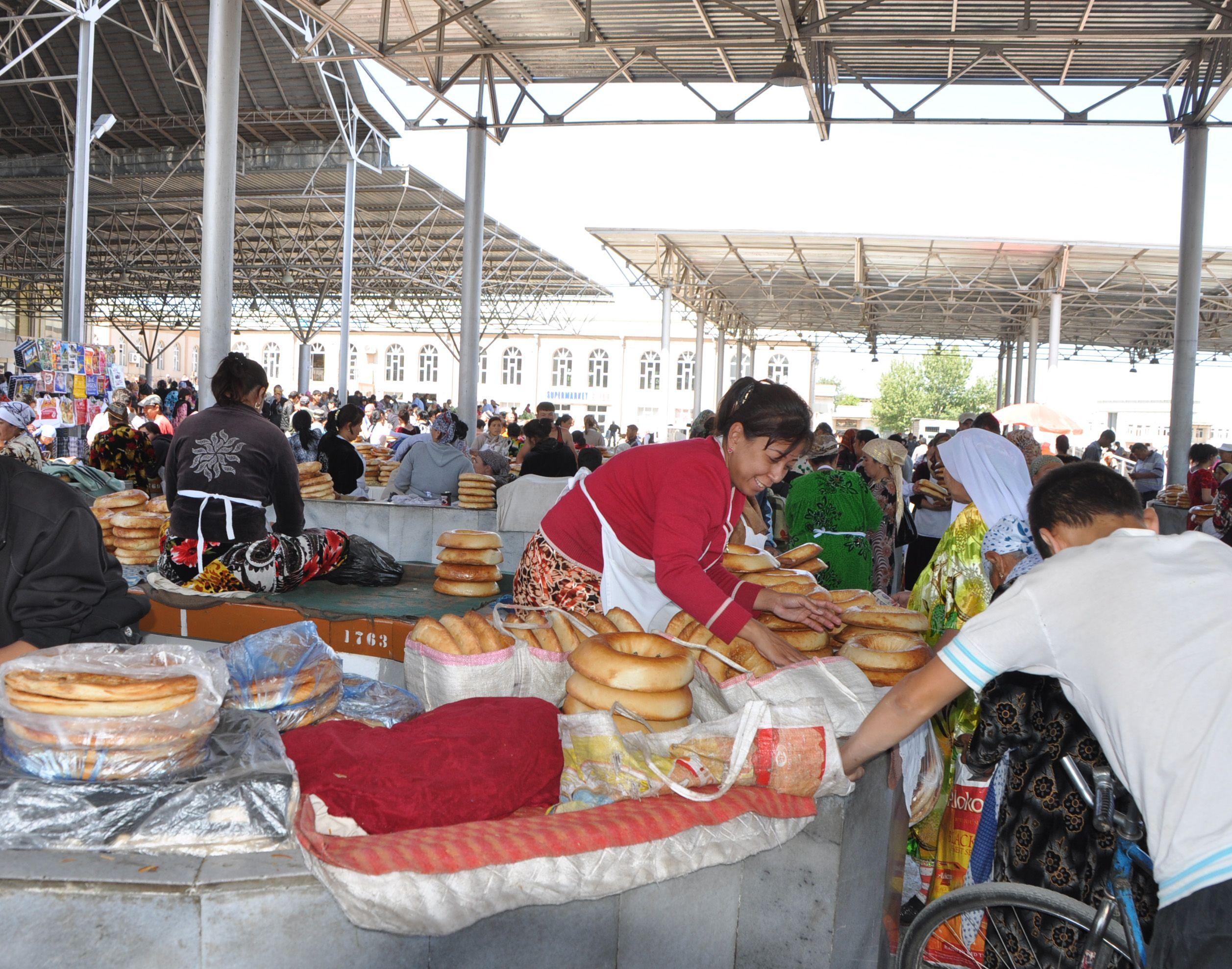
- Bazaars such as Chorsu in Tashkent and Siab in Samarkand
- Chaikhanas, plov centres and small family cafés
- Family-run guesthouses, especially in Khiva and smaller towns
- Ticket offices at some museums and monuments
- Craft workshops, although bigger ateliers often take cards
- Tips for guides, drivers and porters
For taxis, the Yandex Go app is the norm in Tashkent and works in Samarkand and Bukhara too. You can pay the driver in cash, and the app shows the fare before you book, so there is no haggling.
In practice, most of our guests carry the equivalent of $30 to $60 in som for daily spending, pay hotels and larger restaurant bills by card, and top up from an ATM every few days. Keep some smaller notes (5,000 and 10,000 som) for tea, bread and public toilets, as vendors may not have change for a 200,000 note.
Tipping customs
Tipping is not historically part of Uzbek culture, but it has become customary in tourism and is always appreciated.
- Restaurants: many restaurants and cafés add a service charge of 10 to 15 percent to the bill. Check before adding more. If there is no service charge, leaving 5 to 10 percent for good service is generous.
- Chaikhanas and plov centres: rounding up is enough.
- Guides: on a private or small-group tour, a tip at the end of each guide's time with you is customary. A common guideline is $10 to $20 per day for a private guide, less per person in a group.
- Drivers: $5 to $10 per day on a private tour.
- Hotel porters: 10,000 to 20,000 som.
- Hammam attendants and musicians at performances: small tips are welcome.
Tips can be given in som, dollars or euros. Hand them over discreetly with a word of thanks; a simple rahmat (thank you) goes a long way.
What things cost in November 2026
Uzbekistan remains good value by international standards, though prices in Tashkent and the tourist centres have risen steadily. Typical prices as of November 2026:
Food and drink
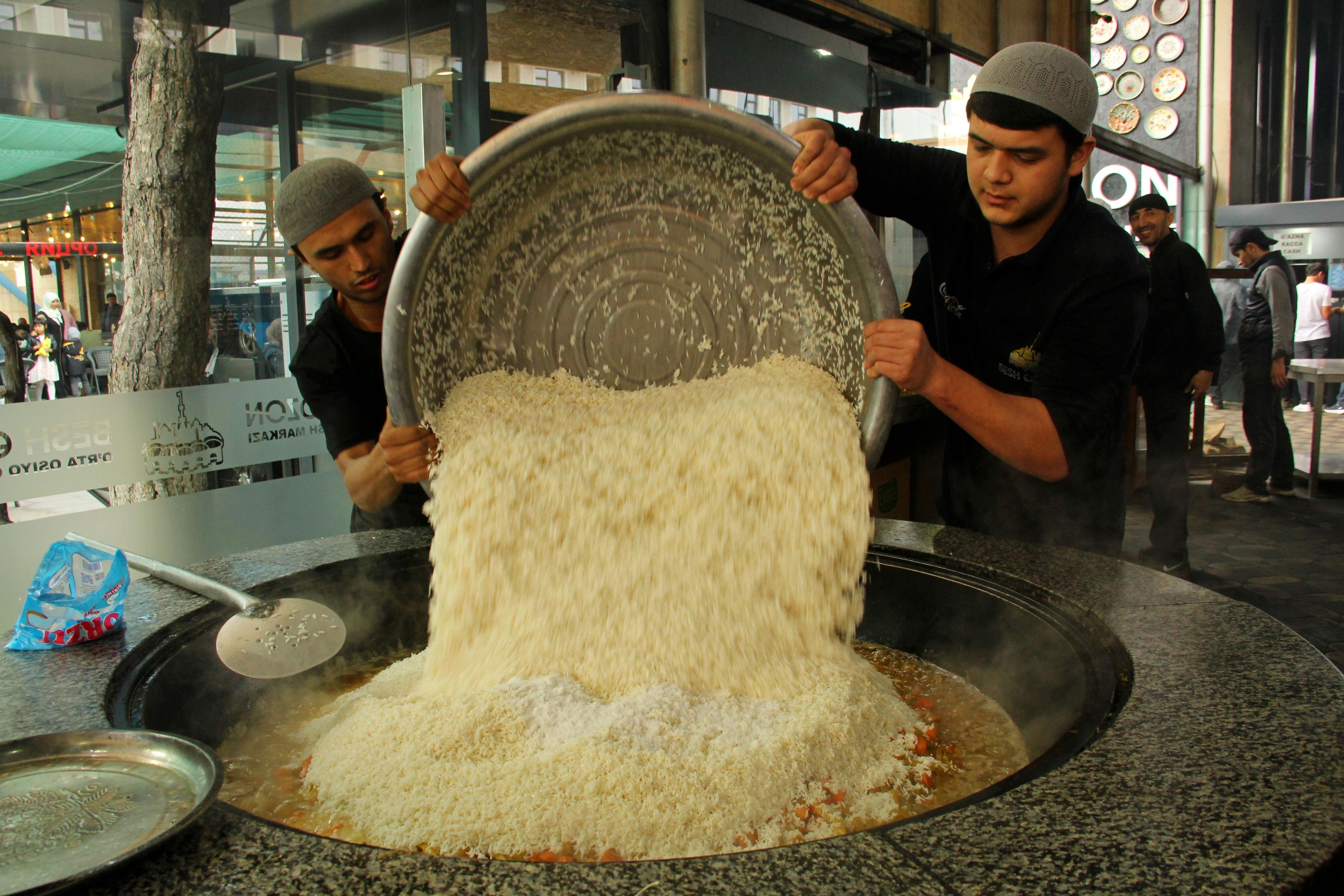
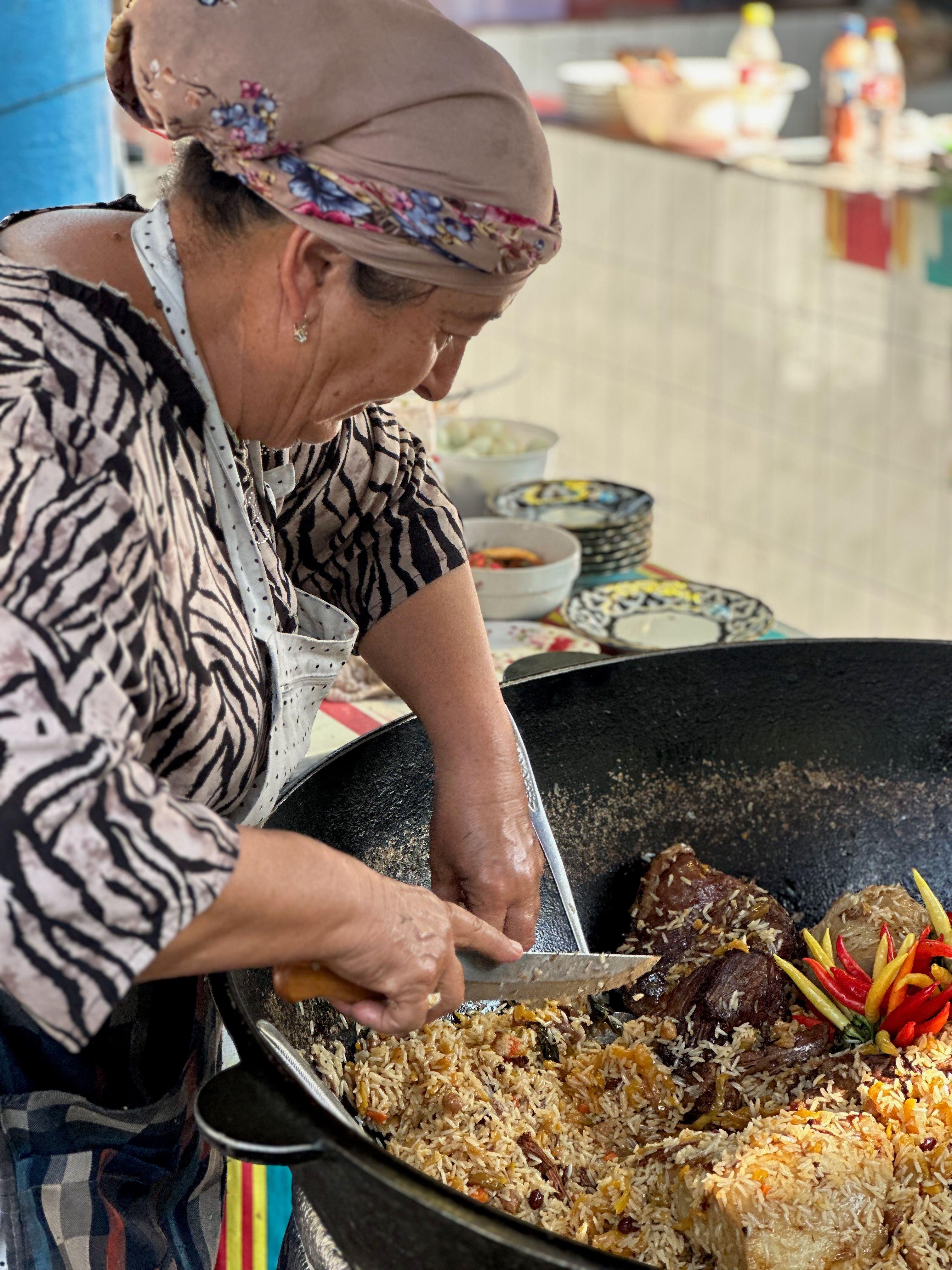
- Portion of plov at a plov centre: about 35,000 to 60,000 som; the national statistics agency recorded an average of 35,700 som in Tashkent at the end of 2024, and prices have risen since
- Simple meal in a local café: around 70,000 som
- Dinner with drinks at a good restaurant: 150,000 to 350,000 som per person
- Samsa from a tandoor: roughly 10,000 to 20,000 som
- Round non bread: about 5,000 to 10,000 som
- Pot of green tea in a chaikhana: about 5,000 to 15,000 som
- Bottle of water (1.5 litres) from a shop: about 4,000 to 7,000 som
Transport
- Tashkent metro or bus: 2,500 som paid electronically, 3,000 som for a single QR ticket
- Yandex Go in Tashkent: minimum fare 4,600 som, a typical city ride about 20,000 to 50,000 som
- Afrosiyob train, Tashkent to Samarkand, economy: about 311,000 som
Entrance tickets for foreign adults
- Registan, Samarkand: 100,000 som
- Shah-i-Zinda: 50,000 to 80,000 som (reports vary)
- Gur-e-Amir: 75,000 som
- Ark Fortress, Bukhara: 60,000 som
- Ichan-Kala combined ticket, Khiva: about 150,000 to 250,000 som
Hotels also add a tourist levy per person per night, from 8,800 som in guesthouses to 66,000 som in large hotels; it is normally shown on your bill.
Museum and transport prices change, so treat these as a guide and check on arrival.
A sample daily budget
How much you spend depends far more on where you sleep and eat than on anything else. As a rough guide for one person per day, excluding accommodation, in November 2026:
- Simple: 250,000 to 400,000 som (about $20 to $35) for bazaar breakfasts, plov or lagman at lunch, a café dinner, the metro and one or two monuments
- Comfortable: 500,000 to 900,000 som (about $40 to $75) for sit-down restaurant meals, Yandex Go rides, several entrance tickets and a few souvenirs
- Generous: from 1,200,000 som (about $100) for fine dining, private transfers and serious shopping for suzani, ceramics or silk
Craft purchases are where budgets usually stretch. Prices at workshops and bazaars are negotiable within reason, and many bigger ateliers in Bukhara and Samarkand accept cards and can arrange shipping. Keep receipts for valuable purchases. Items that look old, such as vintage carpets or suzani, may need an export certificate to leave the country; reputable sellers can arrange this.
Bringing cash into the country
You can bring foreign currency into Uzbekistan without a limit. Cash above the equivalent of 100 million som (roughly $8,400 at the November 2026 rate) must be declared in writing on arrival, and you need that stamped declaration to take more than the threshold out again. Most travellers carry far less and never deal with the form. Full details are in our guide to Uzbekistan visa and entry rules.
Travelling with us
On our tours, accommodation, transport, guides and entrance fees are paid in advance, so you only need money for meals not included, shopping and tips. If you would like help planning a budget for a private itinerary, our team in Tashkent is happy to advise.