Uzbek street food explained by locals: tandir samsa and the giant Jizzakh samsa, shashlik, lagman, manti, chuchvara, hasip and norin, what they cost in 2026, where to find them at the bazaar and how to eat well without an upset stomach.
Facts, prices and schedules checked on November 4, 2026
Uzbek street food is not a late-night scene of carts and neon. It is a daytime culture of clay ovens, charcoal grills and steaming pots, run by people who often make one thing and have made it for decades. The baker at the tandir sells samsa until the tray is empty, the shashlik man fans his coals from late morning, and the lagman cook stretches noodles by hand in the window of a café with six tables.
This guide goes beyond our general Uzbek food guide and our plov guide. It covers the dishes you can eat standing up or at a plastic table in ten minutes: samsa in its regional forms, including the giant samsa of Jizzakh, shashlik, lagman, manti, chuchvara, hasip, norin and the snacks you will meet at the bazaar. We give typical prices in Uzbek som as of November 2026 and the hygiene habits that keep most travellers out of trouble.
What is Uzbek street food, and where do you find it?
Most Uzbek street food is sold from fixed places rather than moving carts. Look for:
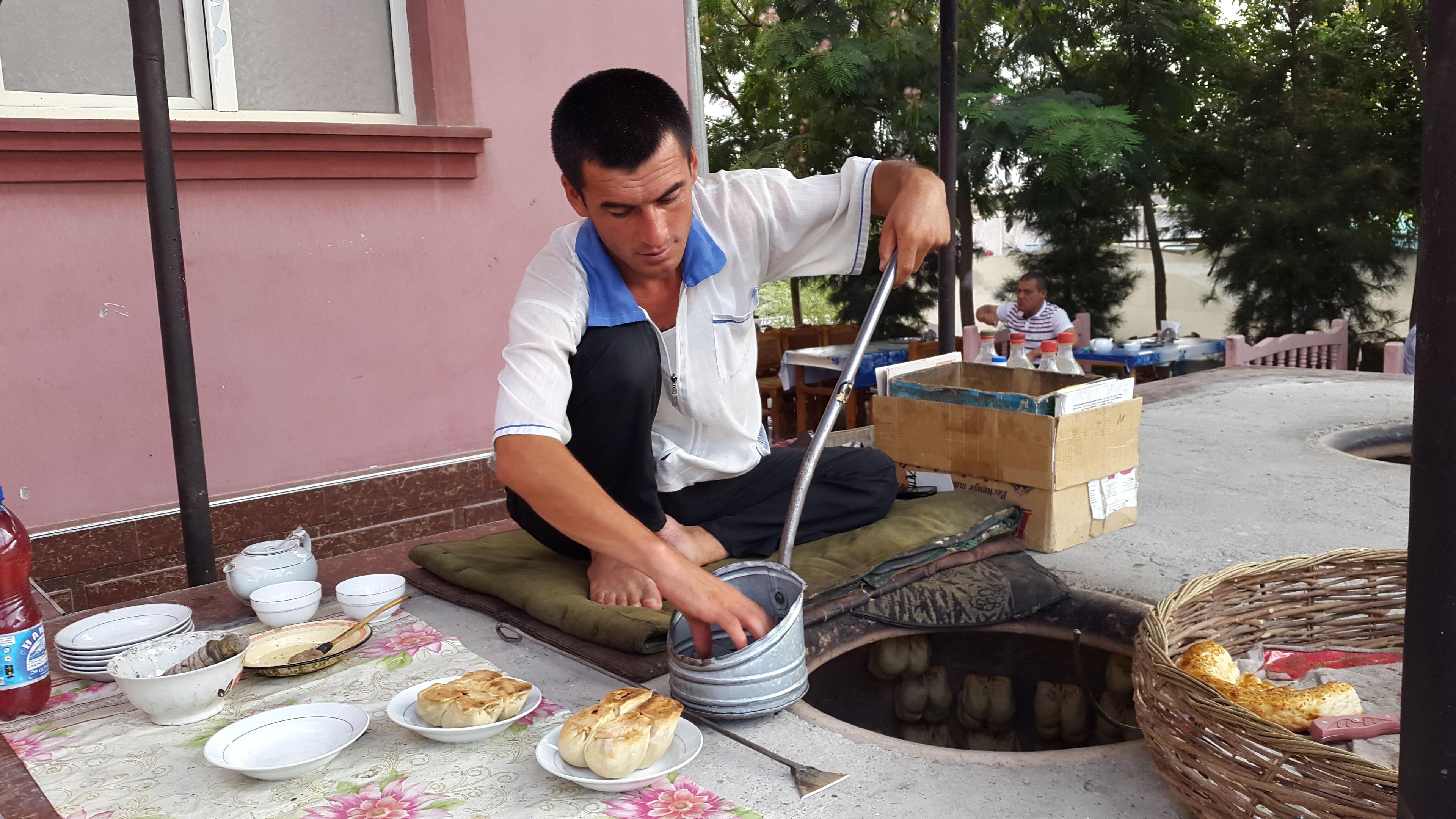
- A tandir, the clay oven built into a wall or standing in a yard, with a stack of samsa or bread on a tray beside it
- A mangal, the long narrow charcoal grill, usually with smoke drifting across the pavement
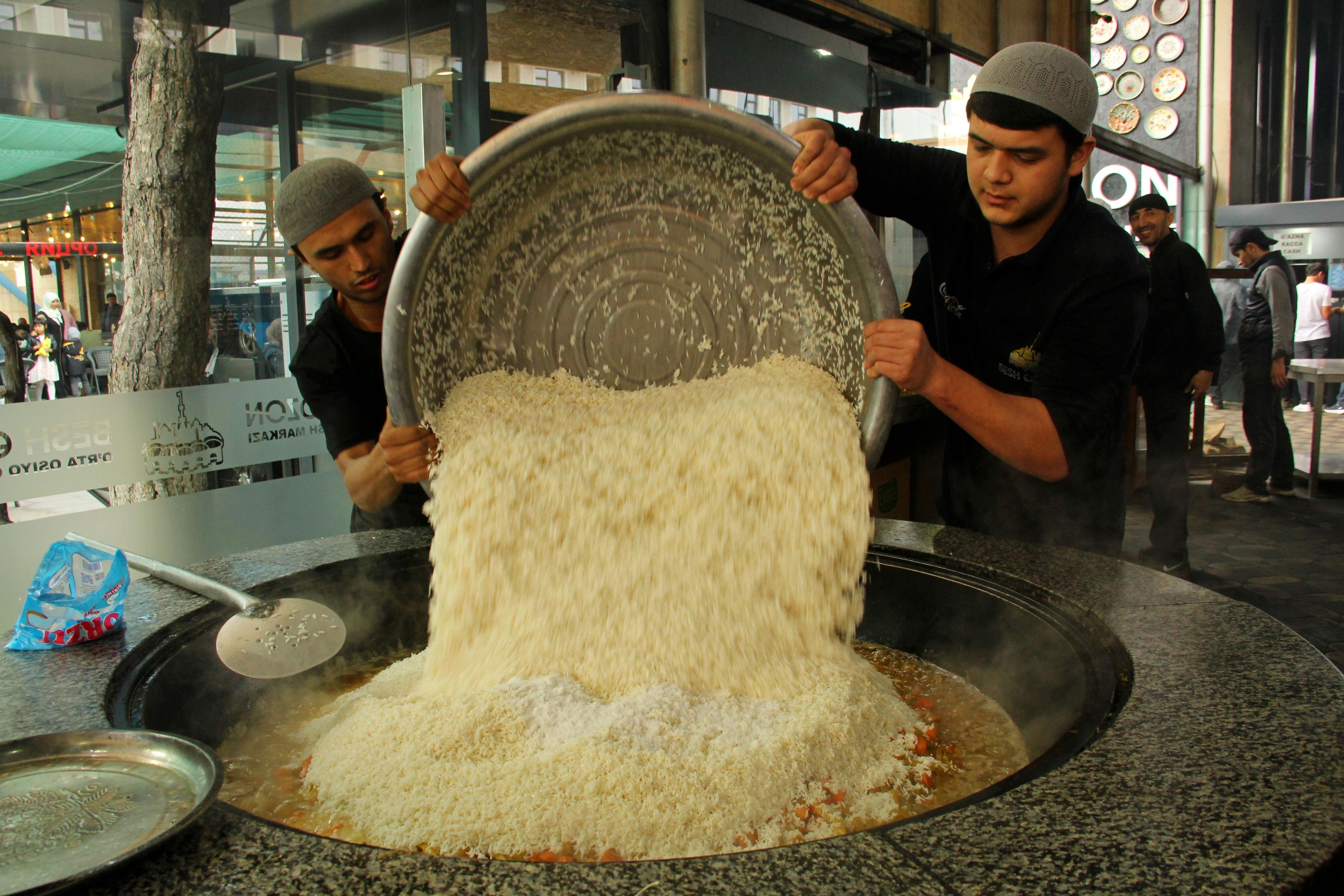
- A kazan, the big cast-iron cauldron, holding plov, kazan-kabob, hasip or norin
- A small café with tables on the pavement and a cook visible from the street
The best concentrations are around bazaars, bus and railway stations, university districts and the entrances to mahallas, the old residential neighbourhoods. In Tashkent the area around Chorsu Bazaar is the classic starting point; in Samarkand, the streets around Siab Bazaar; in Bukhara, the lanes behind Lyabi-Hauz and the central market.
Timing matters. Samsa and bread are best in the morning and around lunch. Plov is a lunchtime dish and often sells out by early afternoon. Shashlik stalls work from late morning into the evening. Many stalls simply close when the food runs out, so the earlier you go, the better the choice.
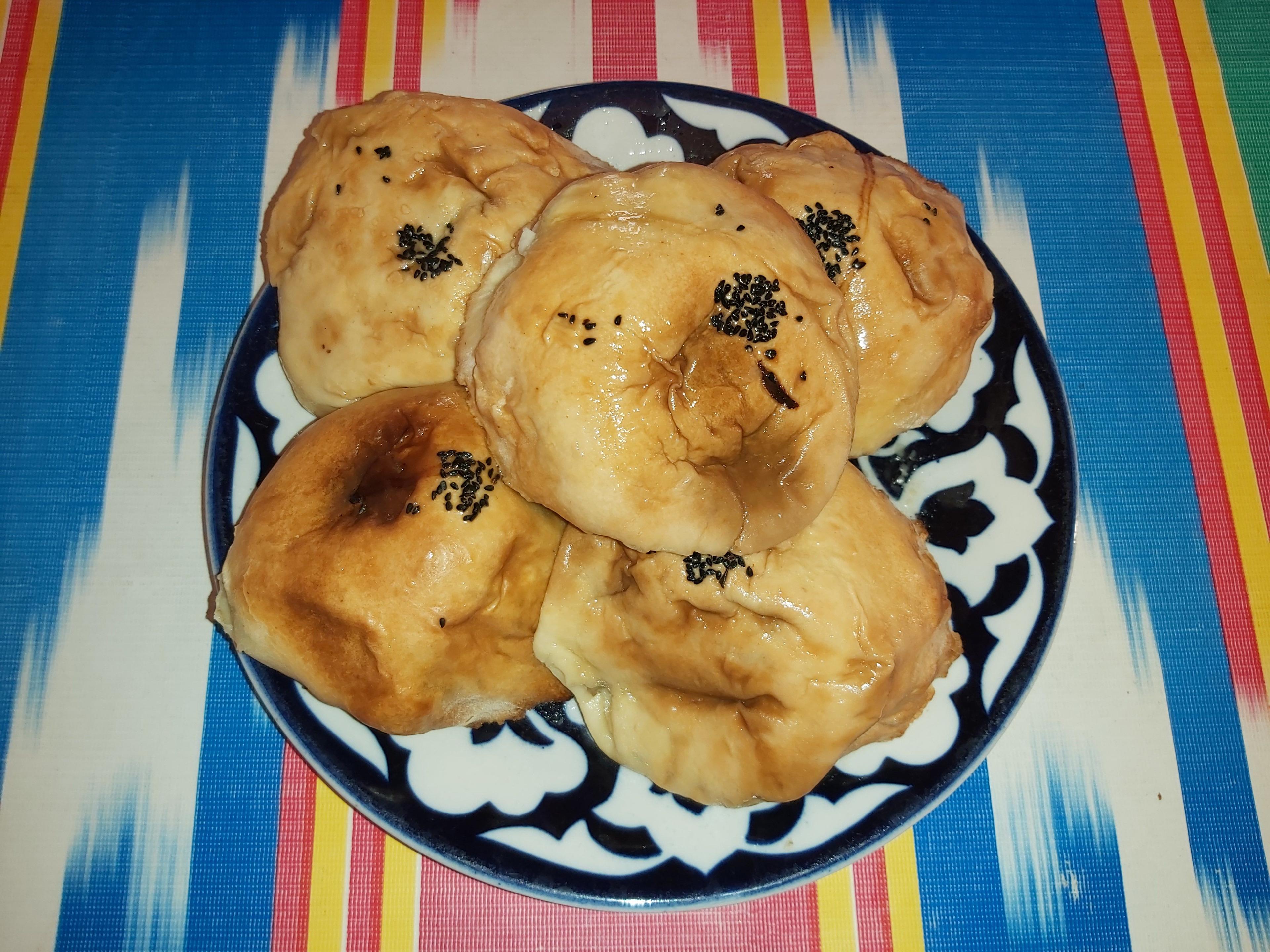
Uzbek samsa: tandir samsa and regional styles
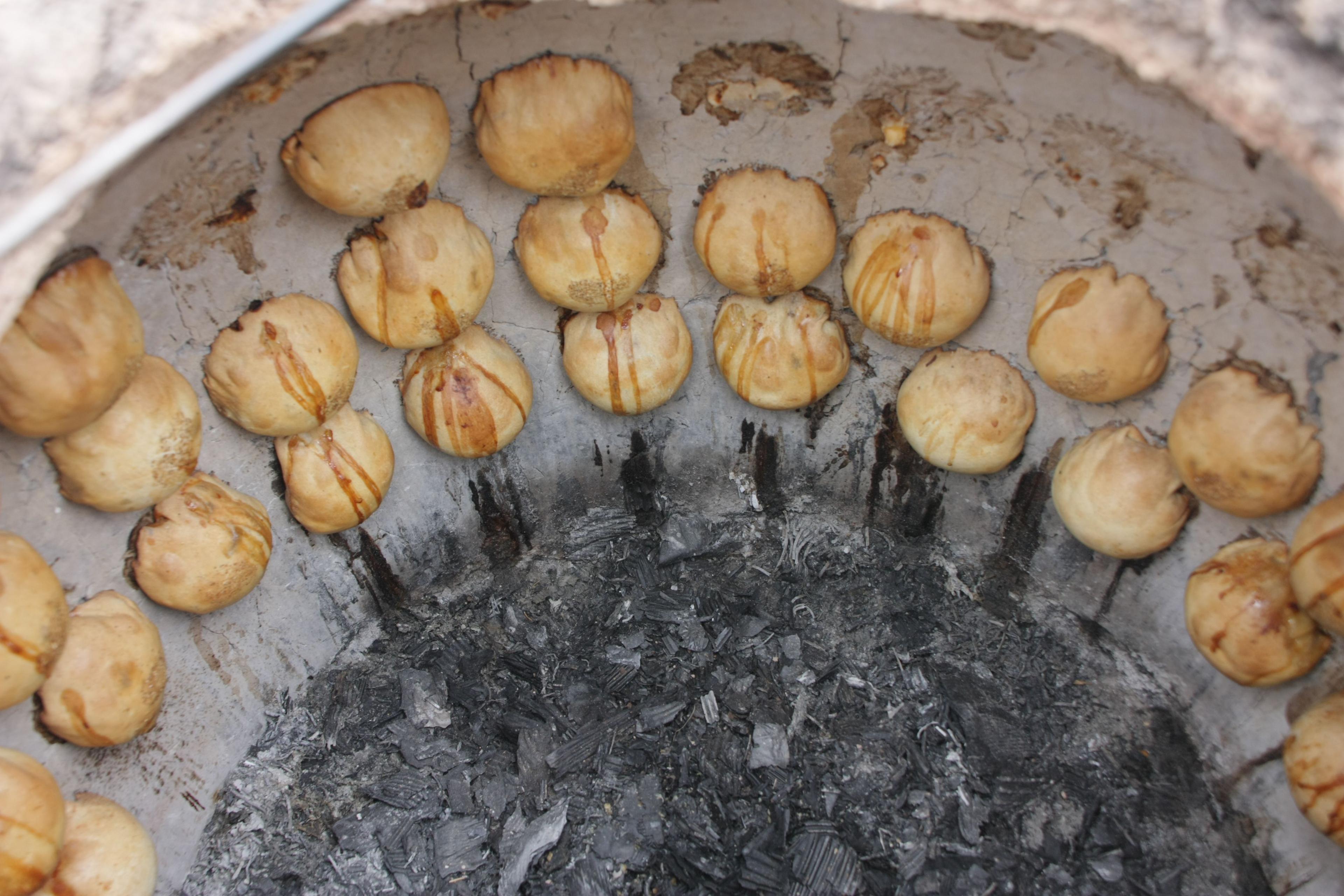
Samsa (somsa in Uzbek) is the everyday snack of the whole country: a pastry filled with meat and onion and baked against the hot wall of a tandir. The baker slaps each raw samsa onto the clay, where it sticks and bakes in dry heat, then lifts it out with a long hook or scoop. Bitten hot, it should crack and then run with juice.
The classic filling is chopped lamb or beef with plenty of onion, black pepper, cumin and a little fat from the sheep's tail, which keeps it juicy. Chopped meat is better than minced, and the best bakers cut it with a knife.
The shape and dough change from region to region. Uzbekistan's national tourism portal speaks of several dozen kinds. The ones you are most likely to meet:
- Tandir samsa: the standard triangle or square of plain dough, sold everywhere
- Qatqat (layered) samsa: rolled from many thin layers brushed with fat, flaky like a croissant
- Bukhara samsa: usually triangular and baked
- Khorezm samsa: fried rather than baked, often with minced meat; in Khiva you will also find it next to tukhum barak (egg-filled dumplings) and shivit oshi (green dill noodles)
- Ko'k samsa: filled with spring greens and herbs, sold mainly in spring around Navruz
- Pumpkin samsa (oshqovoq somsa): sweet orange pumpkin with onion, an autumn and winter favourite and a good vegetarian choice
Samsa are also sold fried in oil (the cheaper bazaar version) or baked in electric ovens. The tandir version tastes better, and a queue at the oven is the best recommendation you can get.
Jizzakh samsa: the giant that is eaten with a spoon
The most famous samsa in Uzbekistan comes from Jizzakh, the city on the road between Tashkent and Samarkand. Locals call it Qipchoq somsa, after the Kipchak mahalla of Jizzakh with which it is linked, and it is three or four times the size of an ordinary samsa, a full meal on its own.
What makes it different:
- Size: one samsa is a main course, often shared between two
- Filling: coarsely chopped mutton or beef with onion and a generous amount of fat, so it holds a lot of juice
- Baking: it bakes on the wall of a vertical tandir, and the bakers' skill is keeping such a heavy samsa from falling off
- Eating: it is served upside down so the juice does not escape, and many people open the top and eat the filling with a spoon before tearing into the crust
If you travel by road between Tashkent and Samarkand, a lunch stop in Jizzakh is the obvious way to try it; our guides know the bakeries along the route. In Tashkent you have to look for cafés that advertise Jizzakh samsa by name. On the Afrosiyob train you will pass Jizzakh without stopping, so for this one the road is worth considering. Our Tashkent to Samarkand guide compares the options.
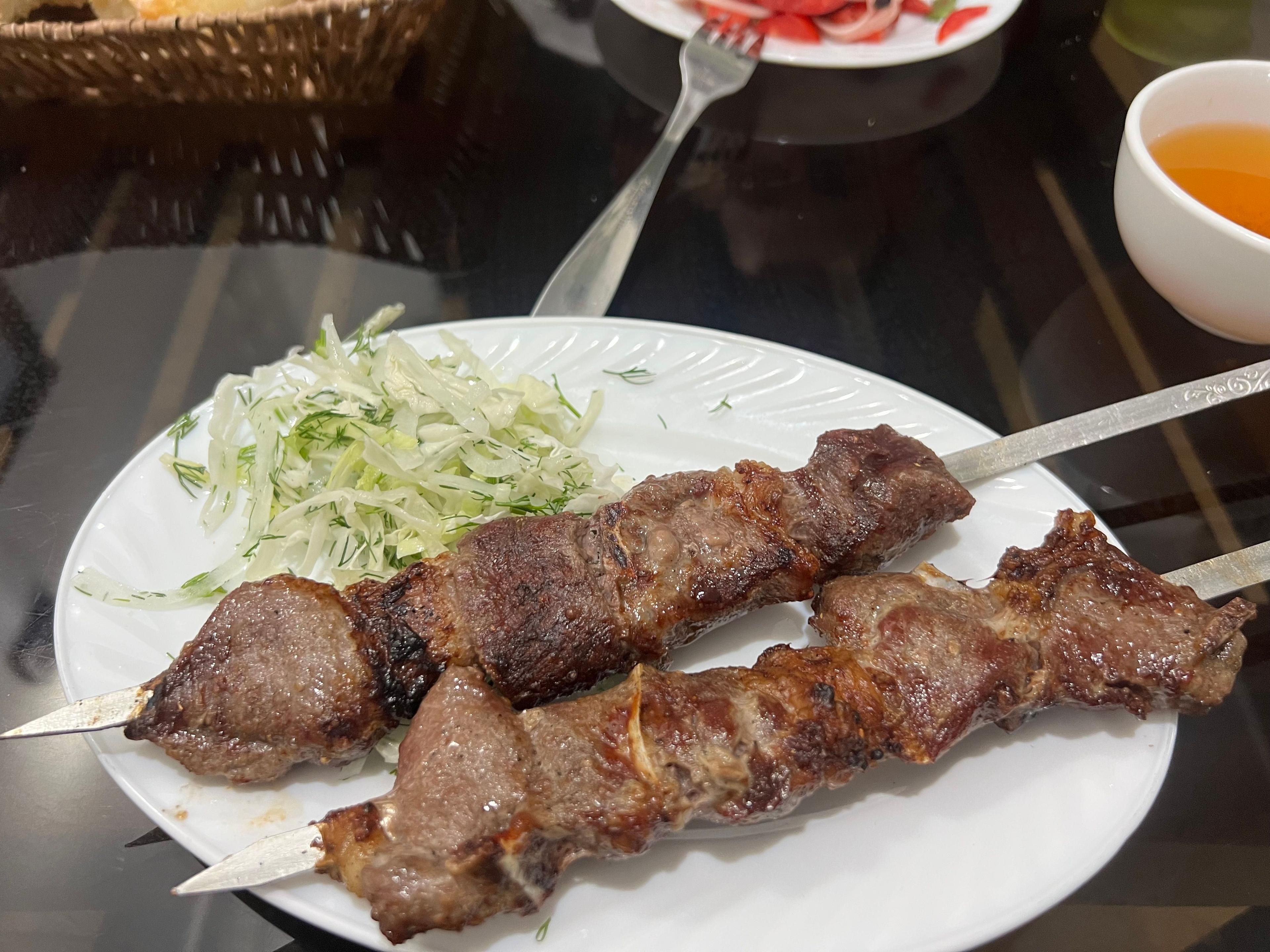
Shashlik: Uzbek kebabs from the mangal
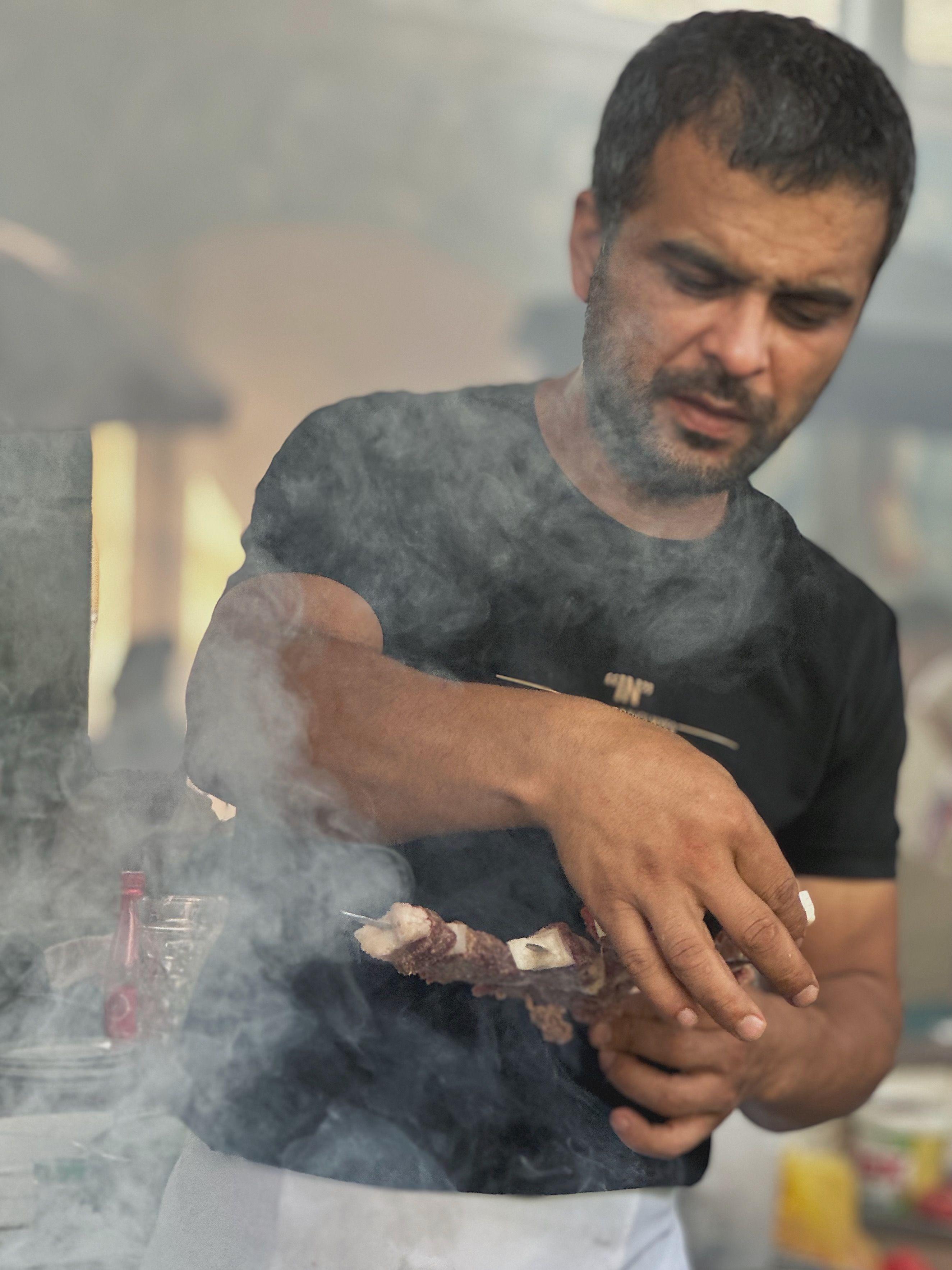
Shashlik is grilled meat on a flat metal skewer over charcoal. It is cooked to order, usually sold by the skewer, and eaten with raw onion rings sprinkled with vinegar and red pepper, plus a loaf of non bread.
The main kinds on any menu:
- Lamb or beef chunks, often alternated with small pieces of fat from the sheep's tail
- Lula or qiyma: minced meat with onion and spices pressed around the skewer
- Jigar: liver, usually wrapped in or alternated with tail fat
- Chicken, increasingly popular in cities
- Vegetables: tomatoes, peppers or aubergine, which make a decent meal with bread and salad
The fat between the meat surprises some visitors. It is there for flavour and moisture, and you can leave it on the side without offending anyone. Ask for a skewer without fat (yog'siz) if you prefer.
Good shashlik places are crowded at lunch and in the evening, and the smell will lead you to them. Order two or three skewers per person to start; more will come quickly if you ask.
Lagman, manti and chuchvara: noodles and dumplings
Lagman is the dish many travellers end up eating most often. The noodles are pulled by hand from a single piece of dough, stretched and folded until they are long and springy, then served with a stir-fry of meat, peppers, tomatoes, garlic and greens. It came to Uzbekistan with the Uyghur and Dungan cooks of the east, and Uyghur cafés are often the best places for it.
- Soup lagman: noodles in a rich broth with the vegetables on top
- Qovurma lagman: the noodles fried together with the meat and vegetables, drier and more intense
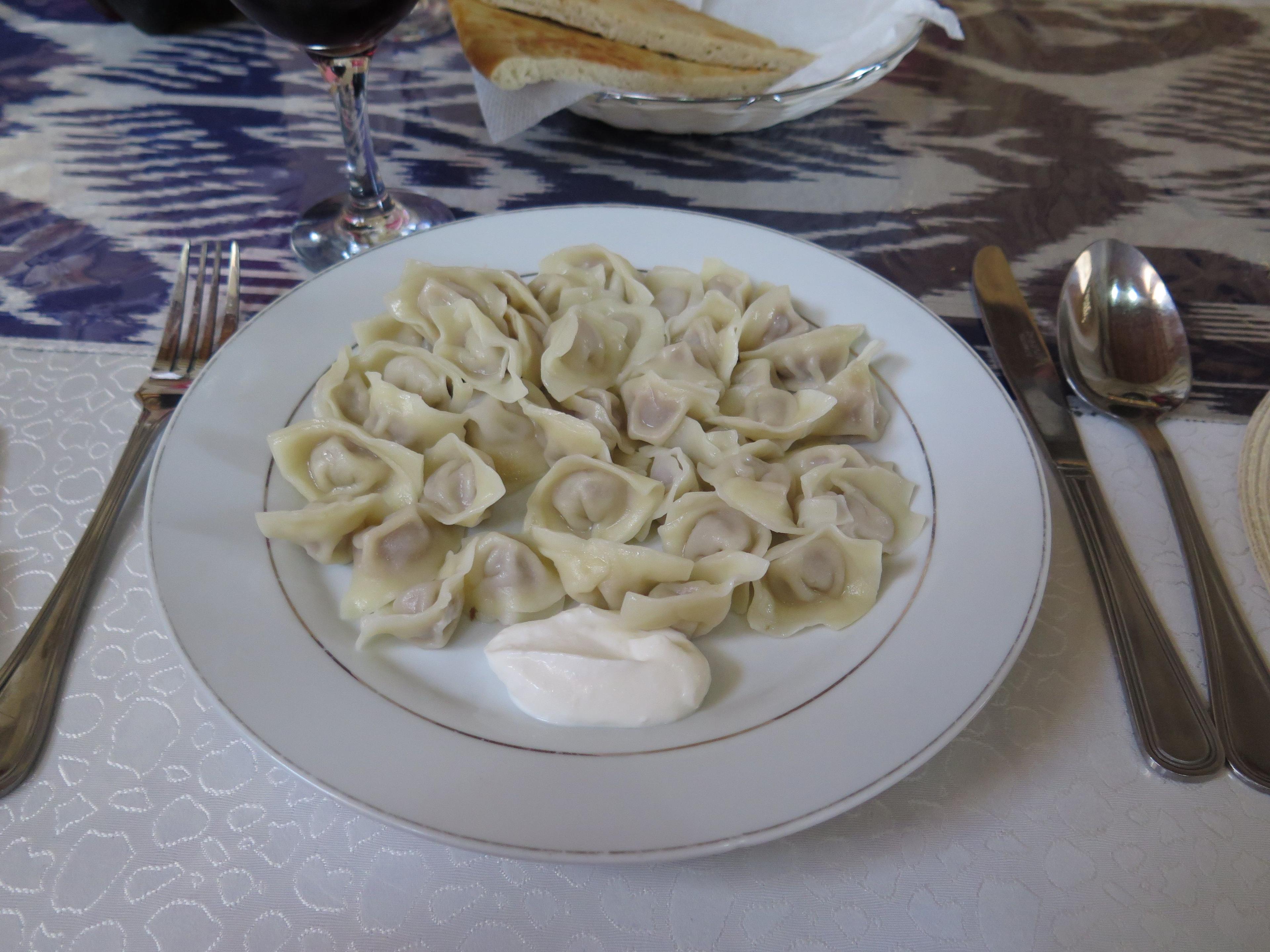
Manti are large steamed dumplings, usually filled with chopped lamb or beef and onion, sometimes with pumpkin in autumn and winter. They are steamed in tall stacked pots and served four to six to a plate with qatiq (yoghurt) or sour cream. Some cafés also fry them after steaming, which gives a crisp base.
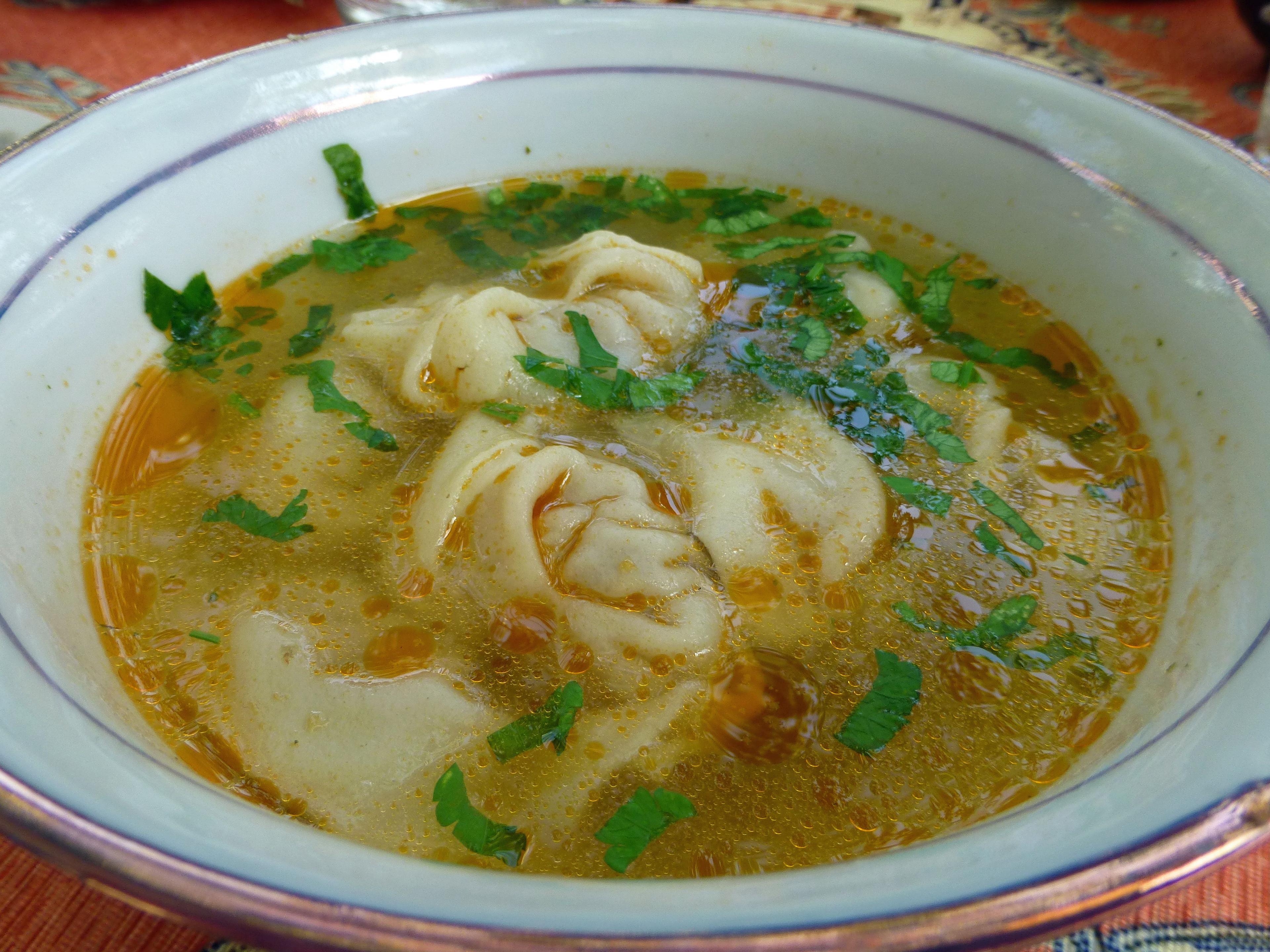
Chuchvara are their small cousins, closer to tortellini: tiny dumplings of minced meat served in a clear broth, or fried, and finished with a spoonful of qatiq, dill and black pepper. Chuchvara is a Tashkent home-cooking staple and a gentle choice if your stomach needs a rest from fat and spice.
In a café a bowl of lagman or a plate of manti is a full lunch. Neither is really walking food, but both are fast, cheap and filling.
Hasip, norin and other local specialities
A few street dishes are rarely mentioned in guidebooks but are loved by locals:
- Hasip: a sausage made by filling a sheep's intestine with rice, chopped meat and offal, onion and spices, then boiling it. It is sold sliced from a steaming pot at bazaars and simple cafés, sometimes fried with onions, and is especially popular in Tashkent and the Fergana Valley in the cooler months.
- Norin: very thin hand-cut noodles mixed cold with finely sliced boiled meat, often horse meat, and onion. It is a Tashkent breakfast and lunch dish, served with a little broth on the side.
- Kazy: horse-meat sausage, served sliced with plov or on its own; you will see coils of it hanging in the meat halls.
- Kazan-kabob: meat and potatoes fried together in a kazan until crisp, a popular lunch in Tashkent.
- Tandir go'sht: whole pieces of mutton slow-cooked in a sealed tandir, sold by weight in the late morning, with a following in Tashkent and Bukhara.
- Halim: a thick porridge of wheat and meat cooked overnight, a winter breakfast.
- Lavash: flatbread wraps with grilled meat, sauce and vegetables, the modern fast food of Tashkent and very popular with students.
In markets you will also see kurt, small hard balls of dried salted yoghurt, which locals snack on with beer or on long drives. Try one before you buy a bag; the salt and sourness are an acquired taste.
Bazaar food: what to eat at Chorsu, Siab and other markets
Uzbek bazaars are the best place to eat cheaply and well, because the turnover is high and the cooks are feeding traders, not tourists. Our guide to Chorsu Bazaar and Uzbek bazaars covers the markets themselves; here is what to eat while you are there.
At Chorsu Bazaar in Tashkent, the food stalls and cafés around the edges of the main dome serve samsa from tandirs, plov from huge kazans at lunchtime, shashlik, norin and hasip. Inside, the bread rows and the dairy section are good for a picnic: a fresh loaf, a pot of suzma (strained yoghurt) and a handful of fresh herbs.
At Siab Bazaar in Samarkand, next to the Bibi-Khanym Mosque, buy a Samarkand loaf straight from the bread row and eat it with a slice of halva from the sweets stalls. The surrounding streets have samsa ovens and shashlik cafés that feed the market workers.
In Bukhara the central market is a short taxi ride from the old town and is where locals shop; the cafés around it are cheaper and more local than those near Lyabi-Hauz.
In Khiva, outside the walls of Ichan-Kala, the daily market by the Palvan Darvoza gate has fruit, bread and simple cafés where Khorezm dishes cost less than inside the walls.
Everywhere, ask before photographing a cook at work. Most are happy, especially if you are buying.
Street food prices in Uzbekistan in 2026
Street food is one of the great bargains of Uzbekistan. These are typical prices in Tashkent as of November 2026; Samarkand and Bukhara are similar or slightly cheaper, and tourist streets cost more. The Central Bank rate in early November 2026 was about 11,940 som to the US dollar.
- Samsa from a tandir: about 8,000 to 15,000 som each (US$0.70 to 1.25)
- Jizzakh samsa: more, as it is a meal for one or two; expect it to be priced like a main course
- Shashlik: about 12,000 to 30,000 som per skewer, depending on the meat and the place
- Lagman or a bowl of soup in a café: about 20,000 to 45,000 som
- A plate of plov at a plov centre: about 40,000 to 90,000 som
- A round loaf of non: about 3,000 to 8,000 som
- A pot of tea: about 3,000 to 10,000 som
- A simple café lunch for one: about 50,000 to 80,000 som
Most stalls want cash in som, though more and more take local card payments and QR codes. Carry small notes; a 200,000 som note for a single samsa is a problem at 9 a.m. Our money guide explains cards, ATMs and exchange.
Prices are usually fixed, and bargaining over food is not the custom. In cafés, check whether a service charge has been added to the bill before leaving a tip.
Is street food safe in Uzbekistan? Hygiene tips
Most travellers eat street food in Uzbekistan without any problems. When people do get ill, it is more often because of a sudden change to a rich, oily diet than because of dirty food. A few habits make a big difference:
- Choose busy stalls. High turnover means the food has not been sitting around.
- Eat it hot. Samsa straight from the tandir and shashlik straight from the coals are safe bets. Be more careful with food that has been standing at room temperature.
- Watch the meat. Minced meat and offal need to be cooked through; send back anything pink in the middle.
- Go easy at first. Plov, lagman and tail fat are rich. Mix in soups, salads, qatiq and green tea in the first few days.
- Wash or peel fruit, and wash grapes and apricots with bottled water.
- Drink bottled or filtered water, and be cautious with ice and unpasteurised drinks from street carts.
- Carry hand sanitiser and use it before eating, especially after the bazaar or the metro.
- Pack oral rehydration salts and your usual remedy, just in case.
Our guide to health, tap water and travel insurance in Uzbekistan has more detail. If you have allergies or follow a strict diet, a few written words in Uzbek or Russian help; our guide to useful phrases has the basics.
Vegetarian and halal street food
Almost all meat sold in Uzbekistan is halal, as most of the population is Muslim; our halal travel guide explains what to check if this matters to you. Pork is rare and sold mainly in a few specialised shops and restaurants.
Vegetarians need a little planning, because many dishes are cooked with meat or meat broth. Good choices from the street:
- Pumpkin samsa and ko'k samsa (greens), when in season
- Potato samsa, sold at many bazaar stalls
- Vegetable shashlik with bread and salad
- Fresh non bread with suzma, qaymoq (clotted cream) and honey
- Salads such as achichuk (tomato and onion)
- Fruit and nuts from the bazaar
Learn to ask go'shtsiz (without meat) in Uzbek, or bez myasa in Russian, and check whether soups are made with meat stock.
Eating street food with TourEast
Our guides can turn a city walk into a street food tour: a morning at a tandir, lunch at the plov kazans, a bowl of hand-pulled lagman and a stop for Jizzakh samsa on the road to Samarkand. If food is the reason you travel, our Flavours of Uzbekistan tour or a custom itinerary can be built around it.