How to eat well in Uzbekistan without meat: the realistic challenges, vegetarian Uzbek dishes to order, phrases in Uzbek and Russian, restaurants in Tashkent, Samarkand, Bukhara and Khiva, the bazaars, and tips for vegans.
Facts, prices and schedules checked on November 4, 2026
Can you travel in Uzbekistan as a vegetarian or vegan? Yes, but it takes more planning than in most of Europe or Asia. Uzbek cuisine is built around mutton, beef and the fat of the fat-tailed sheep, and the idea of a meal without meat still puzzles many cooks outside Tashkent. At the same time, the country grows some of the best fruit, vegetables, nuts and bread in the world, and the bazaars are a vegetarian's delight.
This guide is for vegetarian and vegan travellers in Uzbekistan as of November 2026. It covers the realistic challenges, which Uzbek dishes to order and which to avoid, the words to use in Uzbek and Russian, restaurants by city that are known for vegetarian options, what to buy at the bazaars, and how to handle home-cooked meals and yurt camps.
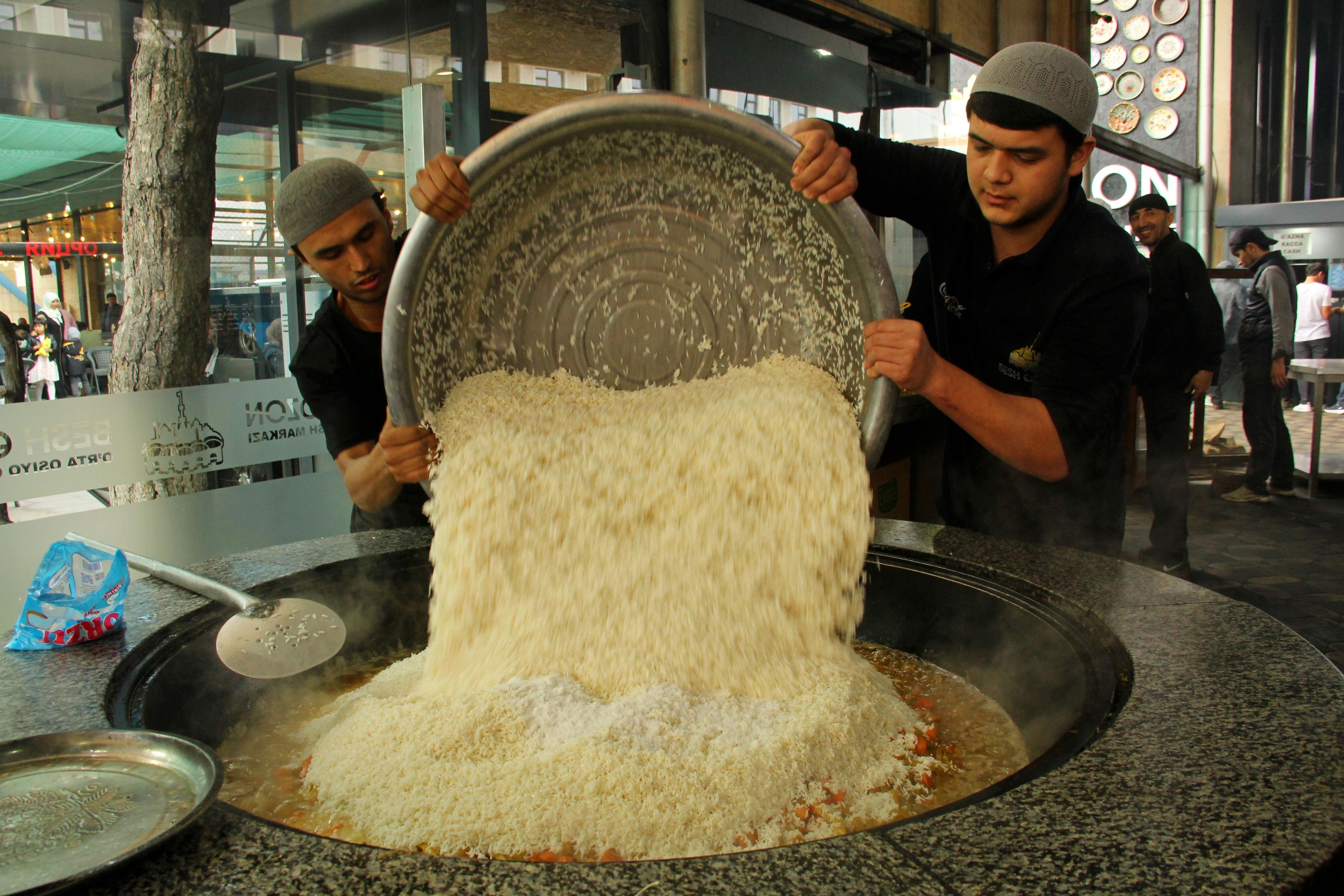
For an introduction to the whole cuisine, see our Uzbek food guide; for the national dish in depth, our plov guide.
Is it hard to be vegetarian in Uzbekistan? The realistic challenges
Honestly, it depends on how strict you are and where you travel. Vegetarians who eat eggs and dairy will eat well with a little effort. Vegans will need to plan, ask questions at every meal and occasionally fall back on bread, salads and fruit.
The main challenges:
- Animal fat is everywhere. Many dishes, including some that contain no visible meat, are cooked in mutton fat (dumba), or in oil in which meat has already been fried. Plov is the classic example.
- Meat broth. Soups such as mastava, shurpa and mash khurda are usually made on a meat stock, even when the vegetables dominate.
- Different definitions. In many kitchens "without meat" means without pieces of meat. A cook may remove the meat from a stew and consider it vegetarian.
- Dairy and eggs. Butter, sour cream, qatiq (a yoghurt drink and sauce) and eggs appear in pastries, sauces and sweets. Honey is common in desserts.
- Fixed menus. Home-hosted dinners, family guesthouses and yurt camps cook one meal for everyone. Without advance notice, they may have nothing suitable.
- Language. Outside the main tourist areas, few cooks speak English, and nuances such as broth or fat get lost.
The good news: in Tashkent there are now international restaurants that mark vegetarian and vegan dishes on the menu, and in Samarkand, Bukhara and Khiva tourist restaurants are used to the request. In July 2026 the Tourism Committee and the Embassy of India even hosted an international vegan food event in Tashkent, a small sign of how quickly attitudes are changing.
Vegetarian Uzbek dishes: what to order
Many traditional dishes are naturally vegetarian, or easily made so. Look for these:
- Non: Uzbek round bread, baked in a tandir oven. Samarkand non is famous. Most everyday non is flour, water, yeast and salt, but richer breads may contain milk, butter or fat (see the vegan section).
- Achichuk: the tomato and onion salad served with almost every meal. Simple, fresh and vegan.
- Other salads: cucumber and tomato, fresh herbs, radish, carrot salads and aubergine dishes. Ask about mayonnaise, which is common in Russian-style salads.
- Pumpkin samsa (oshqovoq somsa): pastries filled with sweet pumpkin and onion, baked in the tandir, mostly in autumn and winter. Ask whether fat was added.
- Herb samsa (ko'k somsa): filled with spring greens, a seasonal treat in spring.
- Potato samsa and potato or pumpkin manti: steamed dumplings with vegetable filling, often served with sour cream or butter.
- Tukhum barak: a Khorezm speciality from Khiva, dumplings filled with egg and milk. Vegetarian, not vegan.
- Shivit oshi: green dill noodles from Khiva, usually topped with a meat stew. Ask for a vegetable topping instead.
- Vegetarian plov: some restaurants cook a meat-free version with chickpeas, raisins, quince or pumpkin, in vegetable oil. Ask in advance.
- Grilled vegetables: tomatoes, peppers, aubergine and mushrooms from the shashlik grill.
- Sumalak: a sweet paste of sprouted wheat cooked for a whole night, made at Navruz in March. Vegan.
- Halva, navat (crystallised sugar), dried fruit and nuts, served with tea.
Dishes to be careful with: lagman (noodles in a meat sauce), shurpa and mastava (meat broth), dimlama (vegetable and meat stew), chuchvara (meat dumplings), kebab and, of course, standard plov. Meat-free versions of lagman and soups exist, but only where the cook makes them separately.
What to say: vegetarian phrases in Uzbek and Russian
Russian is widely understood in the cities, Uzbek everywhere. A few phrases go a long way, and showing them written on your phone often works better than pronunciation.
In Uzbek:
- Men go'sht yemayman: I don't eat meat
- Men vegetarianman: I am vegetarian
- Go'shtsiz, iltimos: without meat, please
- Go'sht sho'rvasiz: without meat broth
- Dumba yog'isiz: without mutton fat
- Tuxum, sut, sariyog'siz: without egg, milk, butter (for vegans)
- Baliq ham yemayman: I don't eat fish either
In Russian:
- Ya ne yem myaso (Я не ем мясо): I don't eat meat
- Ya vegetarianets / vegetarianka (Я вегетарианец / вегетарианка): I am vegetarian (man / woman)
- Bez myasa, pozhaluysta (Без мяса, пожалуйста): without meat, please
- Eto na myasnom bulone? (Это на мясном бульоне?): is this made with meat stock?
- Bez zhivotnogo zhira (Без животного жира): without animal fat
- Bez yaits, moloka i masla (Без яиц, молока и масла): without eggs, milk and butter
A tip from our guides: explain why, briefly. "I don't eat meat for health reasons" or "for religious reasons" is understood and respected more readily than a bare request. Our guide to useful Uzbek and Russian phrases has more vocabulary for restaurants.
Vegetarian and vegan restaurants in Tashkent
Tashkent is by far the easiest city. Its restaurant scene is international, many menus are in English, and the following places are known among vegetarian travellers. Opening hours and menus change, so check a recent review before you go.
- Forn Lebnen: a Lebanese café and bakery with hummus, falafel, mezze and manakish. Vegetarian and vegan items are marked on the menu, which makes it one of the most reliable addresses in the city.
- Afsona: a well-known Uzbek restaurant in central Tashkent, popular with visitors, that offers vegetarian versions of Uzbek dishes, including plov. Ask clearly about fat and butter, as reviewers have noted that some dishes are not as plant-based as they look.
- Tanuki: a Tashkent chain of Japanese and pan-Asian restaurants, useful for vegetable sushi, noodles and tofu dishes.
- Indian restaurants: Tashkent has a number of Indian restaurants serving dal, paneer and vegetable curries, popular with the growing number of Indian visitors.
Modern cafés and coffee shops in the city centre increasingly offer salads, plant-based milk and vegetable dishes. Food-delivery apps such as Yandex Eats work in Tashkent and let you filter and read menus at your hotel. Our Tashkent travel guide covers the neighbourhoods where these places cluster.
Where to eat in Samarkand, Bukhara and Khiva
In the old Silk Road cities, almost every restaurant in the tourist area will prepare something vegetarian on request, and a few are known for it. Again, check a recent review before you go.
Samarkand:
- Old City Restaurant: frequently recommended by vegetarian travellers for the widest choice of vegetarian dishes in the city. Not much is marked vegan, but many dishes can be prepared without animal products on request.
- Restaurants serving European food near the Registan and along the pedestrian streets are generally the easiest places to order a vegetable dish.
Bukhara:
- Old Bukhara: a long-established restaurant near Lyabi-Hauz with grilled vegetables, stuffed aubergines and salads. Vegan choices are limited to a few dishes.
- Minzifa: a rooftop restaurant in the old town; vegetarian meals are possible, best ordered in advance.
Khiva:
- Zarafshan: a restaurant inside Ichan-Kala, in a former madrasah, often listed for its vegetarian and vegan options.
- Khiva Moon: a restaurant in the old town that serves both meat and vegetable dishes.
- In Khiva, ask for tukhum barak and shivit oshi with a vegetable topping, two local dishes that are easily adapted.
Elsewhere, in the Fergana Valley, Nukus, Termez and the countryside, expect to rely on bread, salads, samsa, eggs and fruit unless your meals have been arranged in advance.
Bazaars and markets: the vegetarian's best friend
Uzbek bazaars are where vegetarians eat best. Every city has one, and they are a pleasure to visit even if you buy nothing. Chorsu Bazaar in Tashkent and the Siab Bazaar in Samarkand are the best known; our guide to Chorsu and Uzbek bazaars describes them in detail.
What to look for, by season:
- Late spring: strawberries, cherries and the first apricots
- Summer: apricots, peaches, figs, grapes, tomatoes and cucumbers that actually taste of something
- Late summer and autumn: melons and watermelons, the pride of Uzbekistan, then pomegranates, quinces and persimmons
- All year: dried apricots, raisins, figs and mulberries, almonds, walnuts and pistachios, roasted apricot kernels, fresh bread, honey, halva and navat
Bazaars also sell ready-to-eat food: fresh non from the bakers, pumpkin or potato samsa from the tandirs, and salads by weight. In the dairy rows you will find qurt (salted dried yoghurt balls), qaymoq (thick cream) and suzma (strained yoghurt), good for vegetarians but not for vegans.
Wash or peel fruit before eating, and buy cut fruit only where it is prepared in front of you. Our guide to health and tap water in Uzbekistan has more advice on avoiding an upset stomach.
Vegan in Uzbekistan: extra tips
Being vegan here is possible, but it takes persistence. A few things to know:
- Bread: everyday tandir non is usually vegan, but patir, a richer bread popular in the Fergana Valley and Tashkent, and some festive breads are made with butter, milk or fat. Ask "sut yoki yog' bormi?" (is there milk or fat?).
- Samsa and manti: the dough may contain butter or fat, and manti are served with sour cream or butter on top. Ask for them plain.
- Oil: ask for dishes cooked in vegetable oil (o'simlik yog'i in Uzbek, rastitelnoye maslo in Russian).
- Sweets: many contain butter, egg whites or honey. Nishalda, the white whipped sweet sold in Ramadan and winter, is made with egg whites.
- Tea: green and black tea are served without milk by default, so tea houses are easy.
- Self-catering: supermarket chains such as Korzinka and Makro in the cities sell bread, plant milks, nuts, cereals and fruit. A room with a fridge makes life much easier.
If you have a serious allergy or medical diet, carry a written card in Uzbek and Russian explaining what you cannot eat.
Home dinners, guesthouses and yurt camps
Some of the most memorable meals in Uzbekistan are cooked by families: a dinner in a mahalla home, breakfast in a Bukhara guesthouse courtyard, a supper around the fire in a yurt camp near Lake Aydarkul. These are also the meals where vegetarians are most likely to go hungry, because the host cooks a single menu and hospitality means meat.
How to make it work:
- Tell your host or your tour operator in advance, ideally when you book. With notice, families happily cook vegetable soup, vegetarian plov, pumpkin dishes and extra salads.
- Explain the details: no meat broth, no animal fat, and for vegans no butter, eggs or dairy.
- Breakfasts in guesthouses are usually easy: bread, jams, honey, eggs, fruit, cheese, porridge and tea.
- Do not worry about offending anyone by refusing meat if you have explained beforehand. Taking bread and tea is always polite.
Our culture and etiquette guide explains the customs of the Uzbek table, from breaking bread to the third cup of tea.
Travelling vegetarian or vegan with TourEast
On our tours we can tell restaurants and hosts about your diet in advance, and your guide can explain your needs in Uzbek or Russian. Tell us about your diet when you book a small-group or private trip, and we will plan each meal around it.