Uzbek bread and tea, explained by locals: obi non, patir and famous Samarkand bread, how the tandir oven works, green tea rituals, what happens in a chaikhana teahouse, where to find the best ones and where to bake bread yourself.
Facts, prices and schedules checked on November 4, 2026
Two things appear on every Uzbek table before anything else is served: a round loaf of bread and a pot of tea. Uzbek bread, non, is baked fresh every day in clay tandir ovens, and the tea is poured in small bowls in homes, offices, carpet shops and, above all, in the chaikhana, the traditional teahouse.
This guide is about that daily ritual: the main kinds of Uzbek bread and why Samarkand bread is famous, how a tandir works, how Uzbeks drink green tea, what a chaikhana is and how to enjoy one, and where to bake bread yourself. The basic table manners (never put bread upside down, accept tea with the right hand) are covered in our article on Uzbek culture and etiquette, so here we go further.
Non: why bread matters in Uzbekistan
Non is more than food. A meal does not start until the eldest at the table has broken the first loaf by hand and shared it out. Bread is placed face up, never on the ground, and leftovers are never thrown away. Many people still pick up a fallen crust, touch it to their lips or forehead and put it somewhere high.
Bread also marks the big moments of life. In many families an engagement is sealed when the two families break bread together, a custom called non sindirish. Breads decorated for weddings, to'y non, arrive by the trayful at celebrations, and a traveller leaving on a long journey may take a bite from a loaf that the family then keeps until he or she returns.
You will see these habits every day without trying: in the way a waiter sets bread on the table first, in the bread carts at every bazaar gate, and in the queues outside neighbourhood bakeries just before lunch.
Types of Uzbek bread: from lepyoshka to patir
Uzbek bread comes in many regional forms, but most visitors meet these:
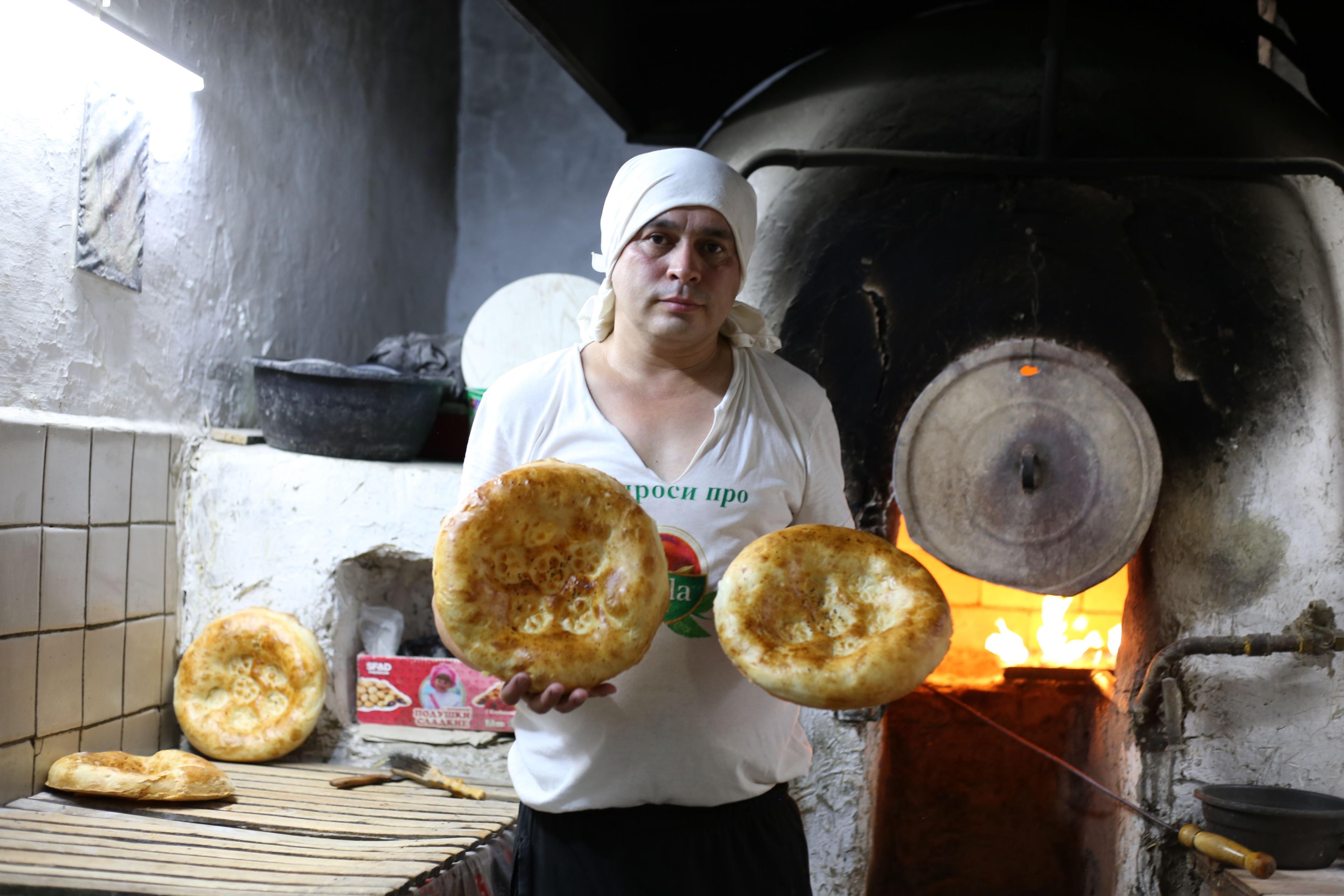
- Obi non. The everyday round flatbread with a thick, soft rim and a thin centre stamped with a pattern. Russian speakers call it lepyoshka, which is the word you will see on many menus. Bukhara's version is often sprinkled with sesame or nigella seeds.
- Patir. A richer, flakier bread made with fat or butter in the dough, crisp at the edges. Patir is a speciality of Tashkent and the Fergana Valley and is often served at celebrations.
- Samarkand non. Dense, glossy and heavy, with a high rim and a patterned centre. More on it below.
- Piyozli non and jizzali non. Breads with onion or with crisp pieces of rendered fat worked into the dough, sold hot at bazaars in the cooler months.
- Katlama. A thin, layered bread brushed with oil or butter and folded, closer to a flatbread pastry.
- To'y non. Large decorated breads made for weddings and other celebrations, with elaborate stamped and cut patterns.
Each region, and often each bakery, has its own shape, stamp and recipe. Comparing breads is one of the small pleasures of travelling from Tashkent to Samarkand to Bukhara, and it costs almost nothing: a fresh loaf in a neighbourhood bakery or bazaar usually costs a few thousand som.
Why is Samarkand bread so famous?
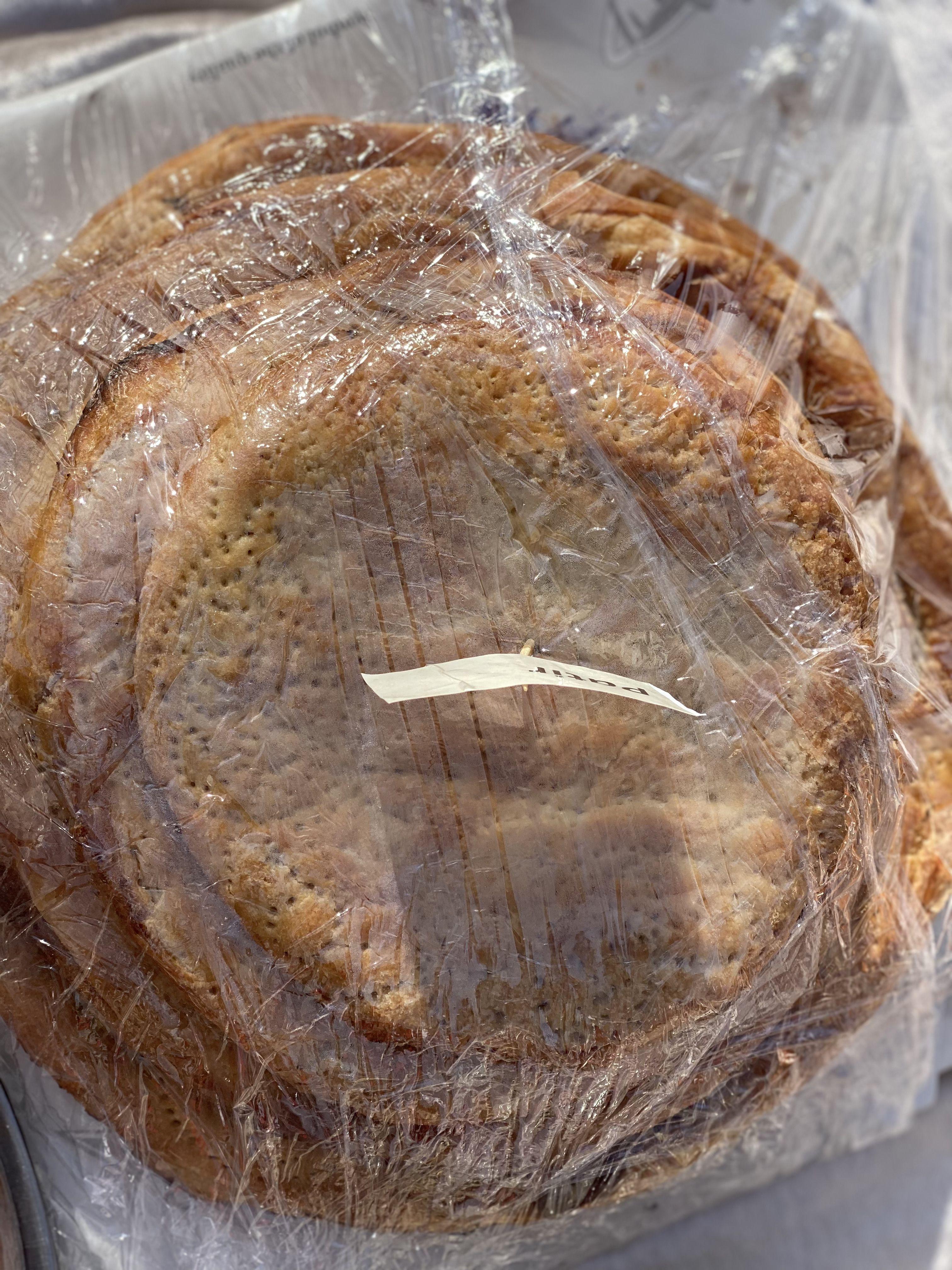
Ask anyone in Central Asia which bread is best and many will say Samarkand non. It is thick, dense and slightly sweet, with a shiny crust and a closely stamped centre scattered with seeds. It keeps for days without going stale, which is why it has long been carried as a gift from Samarkand to relatives elsewhere.
Locals tell a story about it. A ruler of Bukhara, having tasted Samarkand bread, ordered the city's best baker brought to his court. The baker made his bread in Bukhara, but it was not the same. The ruler had flour, water and even a tandir brought from Samarkand. Still the bread was not the same, and the baker explained that he could not bring the air of Samarkand. Versions of the legend name different rulers, but the moral is always the same, and Samarkand bakers repeat it with pride.
The best place to buy it is Siab Bazaar, next to the Bibi-Khanym Mosque, where bread sellers sit in long rows. Buy it the day before you leave and carry it home in a paper or cloth bag. If you plan to take bread abroad, check your home country's rules on importing food.
The tandir: how Uzbek bread is baked
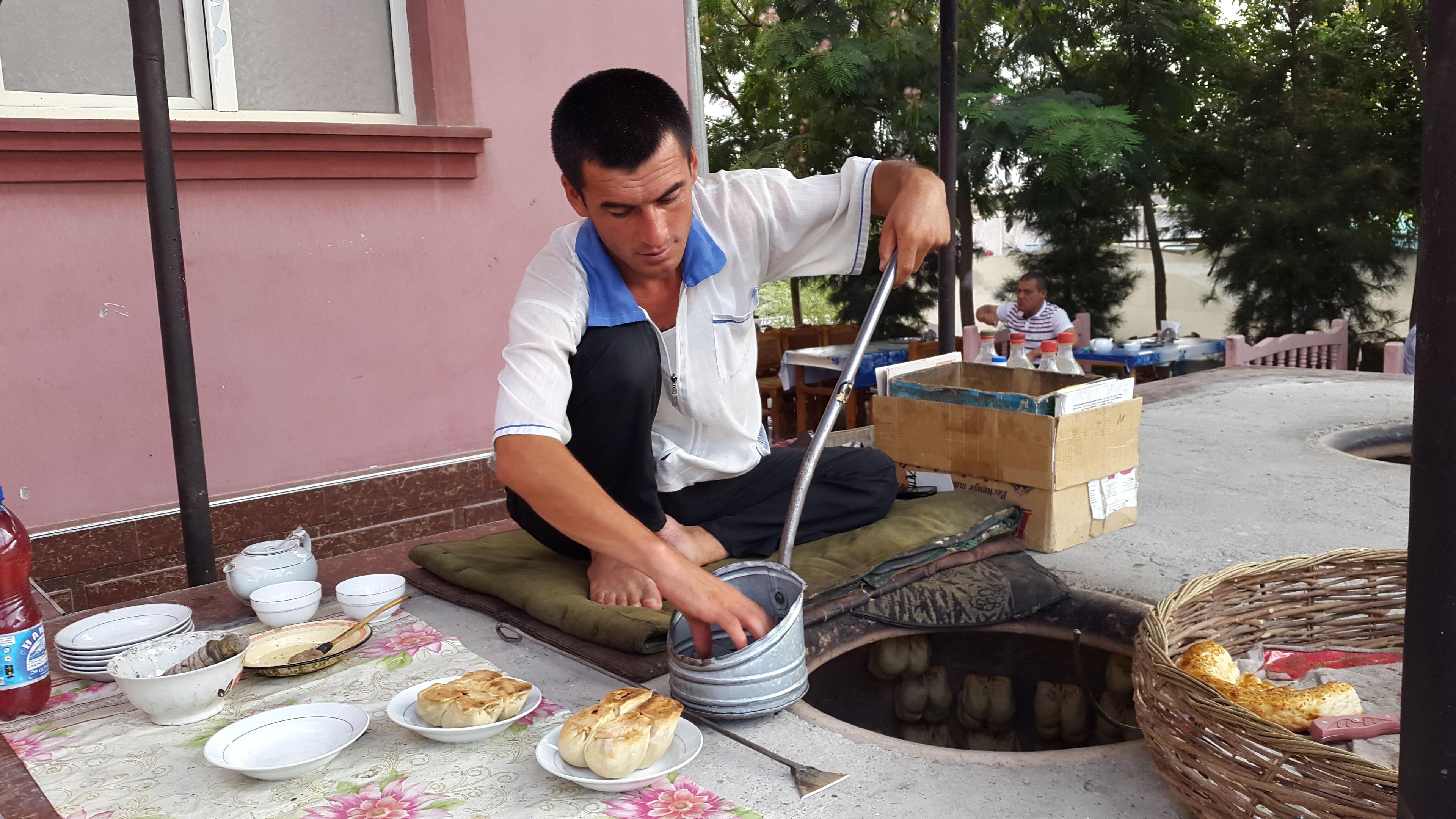
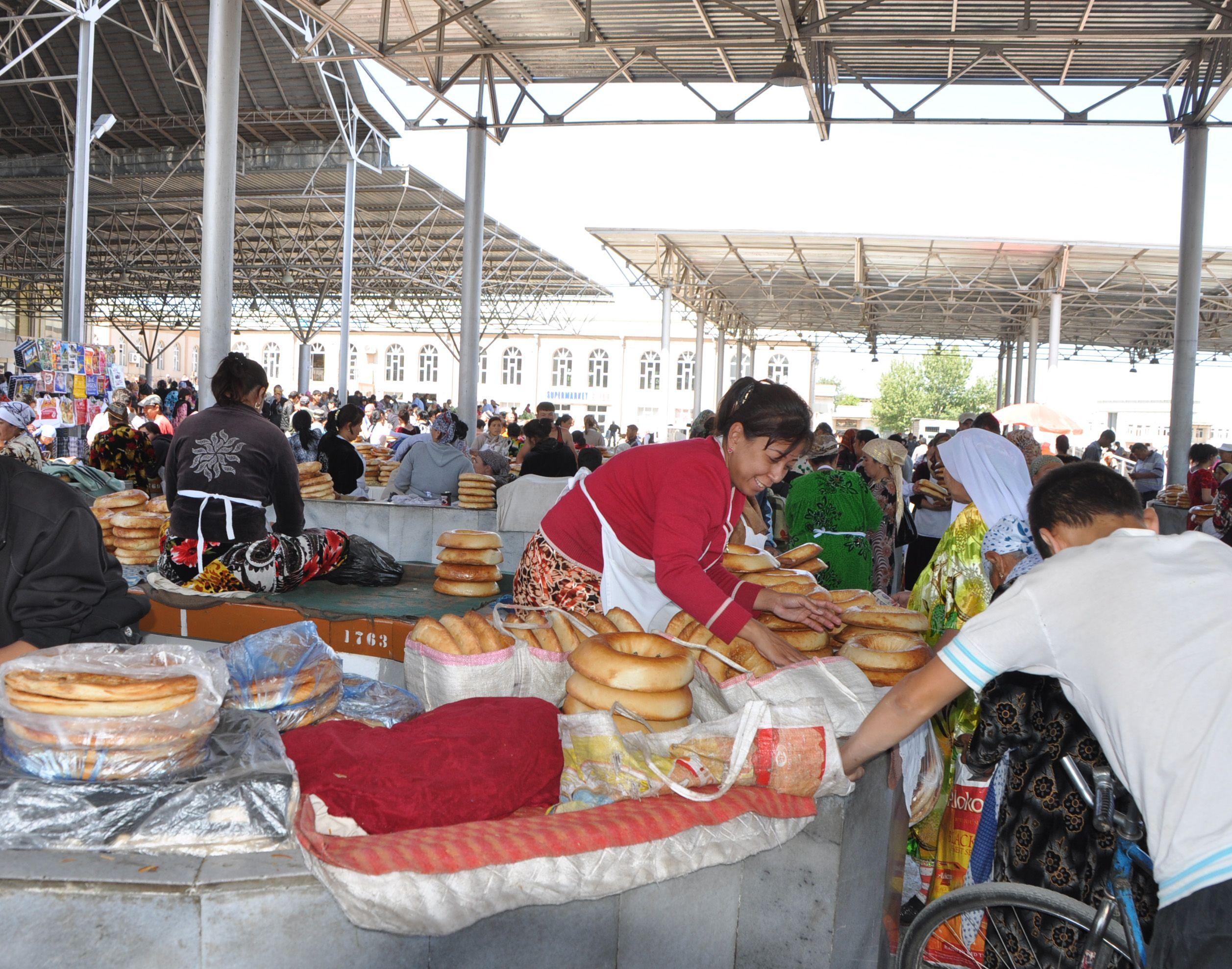
Almost all traditional Uzbek bread is baked in a tandir (also written tandoor or tandyr), a clay oven shaped like a large jar or dome. Village tandirs stand in courtyards; city bakeries may run several side by side.
The process is quick and hot:
- The baker lights a fire inside the tandir and waits until the walls are white-hot and the flames have died to embers.
- Each round of dough is flattened by hand, its centre pressed thin and pricked with a chekich, a stamp of nails or pins arranged in a pattern. The stamp stops the centre puffing up and gives every bakery its signature.
- The baker sprinkles the loaf with water and seeds, places it on a cushioned pad, leans into the oven and slaps it onto the inner wall, where it sticks.
- After several minutes the loaves are lifted off with a hook or by hand, glossy and blistered.
Watching a baker at work is one of the best free sights in Uzbekistan. Bakeries, novvoyxona in Uzbek, are found in every neighbourhood, and the bakers rarely mind visitors as long as you buy a loaf. The same ovens bake samsa, the meat pastries described in our Uzbek food guide.
How Uzbeks drink tea: green tea, black tea and the rituals
Tea is drunk all day in Uzbekistan, hot even in summer. Green tea, ko'k choy, is the national drink. Black tea, qora choy, has a strong following in Tashkent and in some other regions and families. Most Uzbek green tea is a simple, slightly smoky Chinese leaf; locals often refer to the most common grade by its Soviet-era number, 95.
A few things you will notice:
- Tea comes in a pot, choynak, with small handle-less bowls called piala. Ask for "bir choynak ko'k choy" and you will get a pot of green tea for the table.
- The host pours a bowl and returns it to the pot two or three times before serving. This is qaytarish, and it helps the tea brew evenly.
- Your bowl will be filled only partly, as a sign of respect: the host wants to keep pouring for you.
- Tea is rarely drunk alone. Expect navat (crystallised sugar), parvarda (pulled-sugar sweets), raisins, almonds, apricot kernels, dried apricots and, in season, fruit.
- An invitation "for tea" often means a full meal.
Visitors are often surprised to be offered steaming tea on a 40°C afternoon in Bukhara. Locals will tell you that hot green tea cools you better than an iced drink, and after a few days many travellers agree. It is also the polite answer to almost any offer: accepting a bowl of tea costs nothing and says you are happy to stay and talk.
Black tea with milk, and tea with lemon or herbs, also appear, especially in cities and in winter. Coffee culture is growing in Tashkent, but in most homes and chaikhanas a pot of green tea is still the first thing on the table.
What is a chaikhana?
A chaikhana (choyxona in Uzbek) is a traditional teahouse, and for centuries it has been one of the centres of social life in Uzbek towns and villages. Chaikhanas sat by bazaars, on main roads and beside the water tanks and canals of old cities, places to rest, hear the news, do business and meet friends.
The classic chaikhana is easy to recognise:
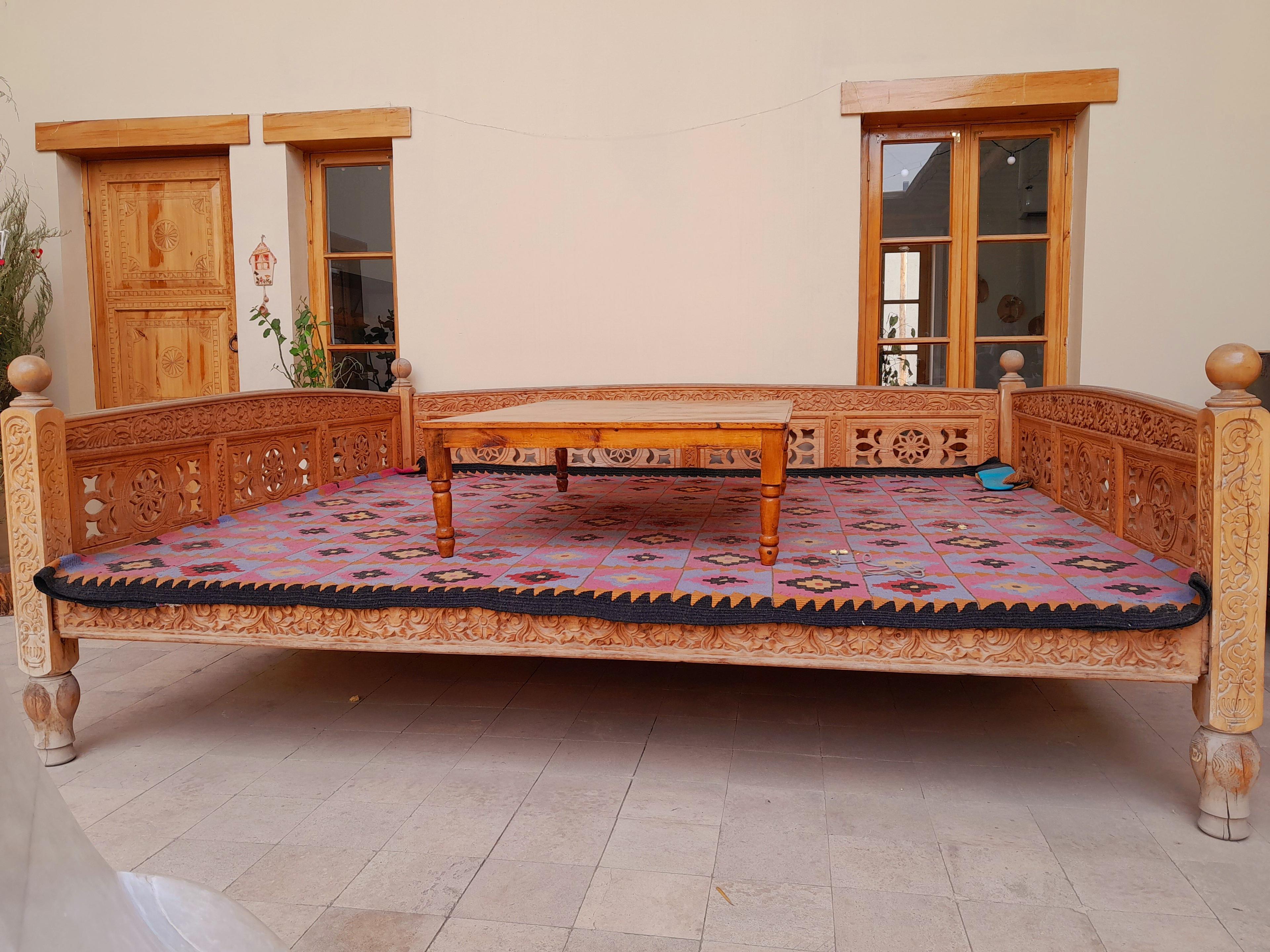
- Raised wooden platforms called tapchan, covered with carpets and cushions, each with a low table (khontakhta) in the middle. You sit cross-legged or lean on a cushion.
- Shade from plane trees or mulberries, often beside a pool or irrigation channel.
- A choyxonachi, the teahouse keeper, with kettles or a samovar always on the boil.
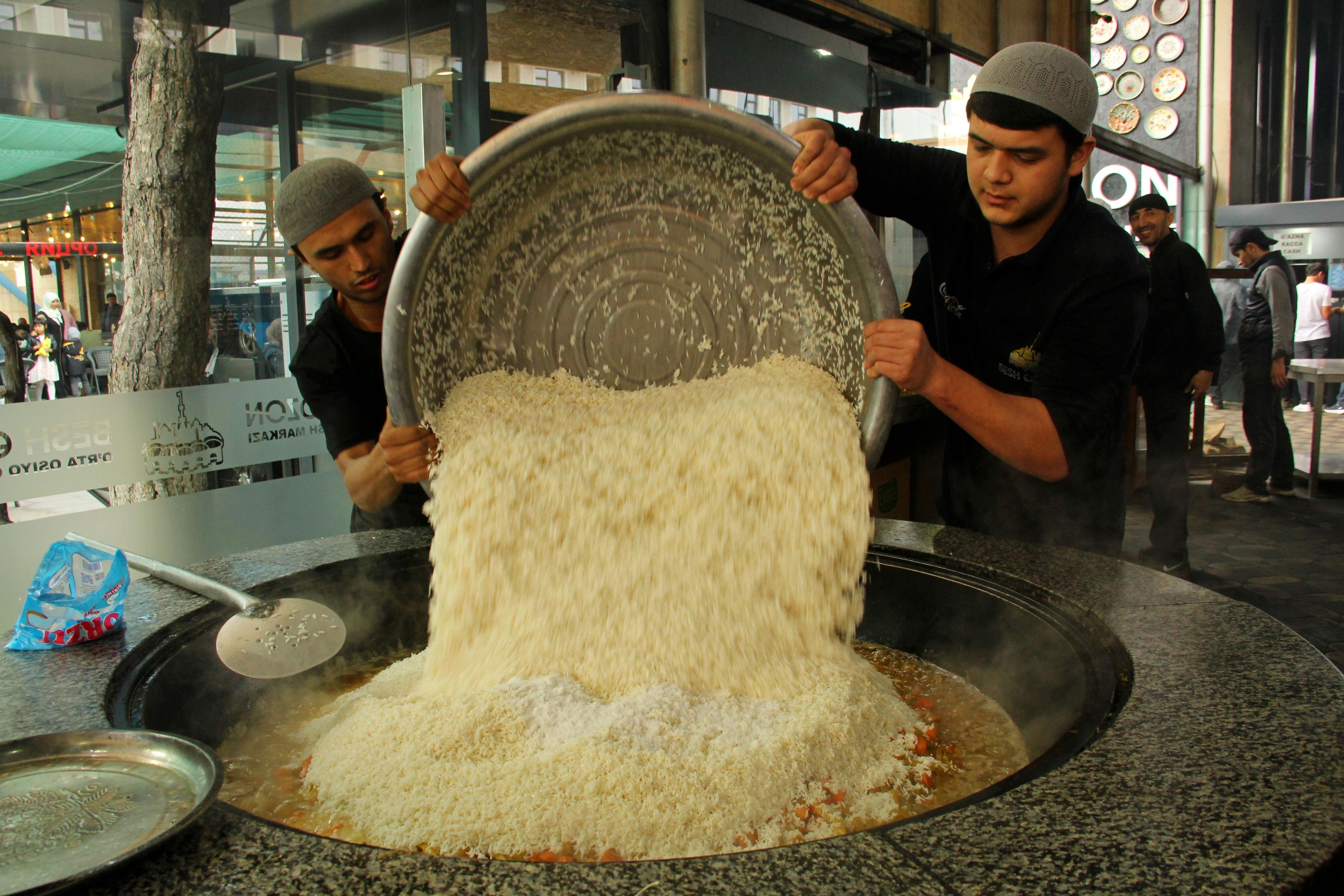
- Simple food: bread, salads, soup, shashlik and, at lunch, plov from the chaikhana kazan. In Tashkent "choyxona oshi", chaikhana plov, is a style of its own.
Traditionally the chaikhana is a men's space where neighbours, colleagues and old classmates gather. Many men belong to a gap, a regular circle of friends who meet in turn at a chaikhana or at home to eat and talk. Today, especially in cities and tourist areas, chaikhanas and modern choyxona restaurants are open to everyone, including families and women travellers. In small villages the old pattern is stronger, but visitors are always made welcome.
Where to experience chaikhana culture
You do not need a special address to find a chaikhana; there are thousands. Some settings stand out:
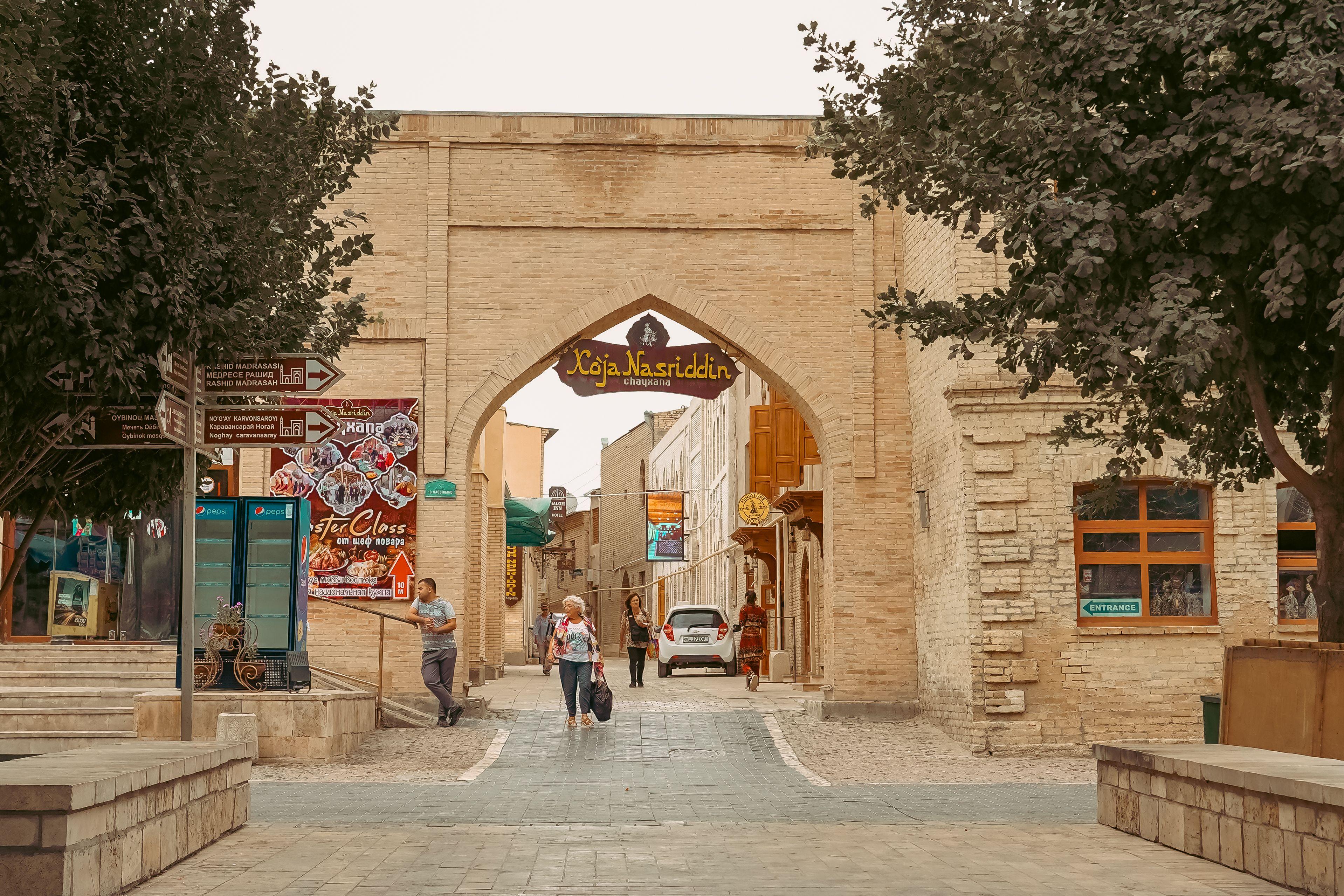
- Bukhara. The teahouse tables around Lyabi-Hauz, under old mulberry trees by the 17th-century pool, are the classic place for an evening pot of tea. Stalls near the statue of Khoja Nasreddin keep the tradition alive.
- Samarkand. Look for chaikhanas around Siab Bazaar and in the old mahallas behind the Registan, where locals take tea after shopping.
- Tashkent. The capital has both old-style teahouses near Chorsu Bazaar and large modern choyxona restaurants with tapchans in summer gardens, popular for family celebrations.
- On the road. Roadside chaikhanas on the drives between cities, in the Fergana Valley and in mountain villages are where you see the institution at its most everyday: lorry drivers, farmers and a pot of tea for a few thousand som.
Our guides can take you to a neighbourhood chaikhana where the menu is spoken, not printed.
Chaikhana etiquette for visitors
Chaikhanas are relaxed, but a few habits help:
- Take off your shoes before climbing onto a tapchan.
- Sit cross-legged or with your legs to the side; avoid pointing your feet at other people or at the table.
- Order tea first. A pot is meant to be shared, so one or two pots are enough for a small group.
- Bread arrives without being ordered in many places. Break it by hand and share it.
- Ask before photographing people, especially older men and women.
- In traditional places, dress modestly: shoulders and knees covered is a safe rule.
- Payment is usually at the end; check whether service is included on the bill.
If someone at the next tapchan sends over a bowl of tea or invites you to join them, accept with thanks and stay for at least one cup. That is how many of the best conversations in Uzbekistan begin.
Bread-baking and cooking classes
The best way to understand bread and tea culture is to spend a morning with a family. Cooking classes with home hosts and guest houses are offered in Tashkent, Samarkand, Bukhara and many villages. Depending on the host, you can:
- Knead and stamp your own loaf and bake it in a courtyard tandir
- Make samsa, manti or plov, then eat what you cooked with the family
- Combine the class with a morning visit to a bazaar to buy ingredients
- In March, help stir sumalak, the Navruz dish made from sprouted wheat
Typical prices in 2026 range from about US$20 to US$80 per person in a group, and more for a private class with transport. Ask for a vegetarian menu in advance if you need one. We can add a bread or cooking class to any itinerary.
Bringing the tradition home
A Samarkand loaf is the classic edible souvenir. Beyond that, look for:
- A tea set in the blue-and-white cotton-boll pattern (paxta), produced since Soviet times and found in almost every Uzbek home
- Hand-painted ceramic piala and lyagan platters from Rishtan or Gijduvan
- A chekich bread stamp, sold in bazaars and craft shops
- Green tea, navat and dried fruit from Chorsu or Siab Bazaar
Our guide to Uzbek crafts and souvenirs covers ceramics and textiles in more detail.
Bread and tea with TourEast
Bread and tea are part of every day on the road in Uzbekistan, from breakfast bread to an evening pot of tea at Lyabi-Hauz. If you would like more time with bakers, families and chaikhanas, our Flavours of Uzbekistan tour or a custom itinerary can be built around them.