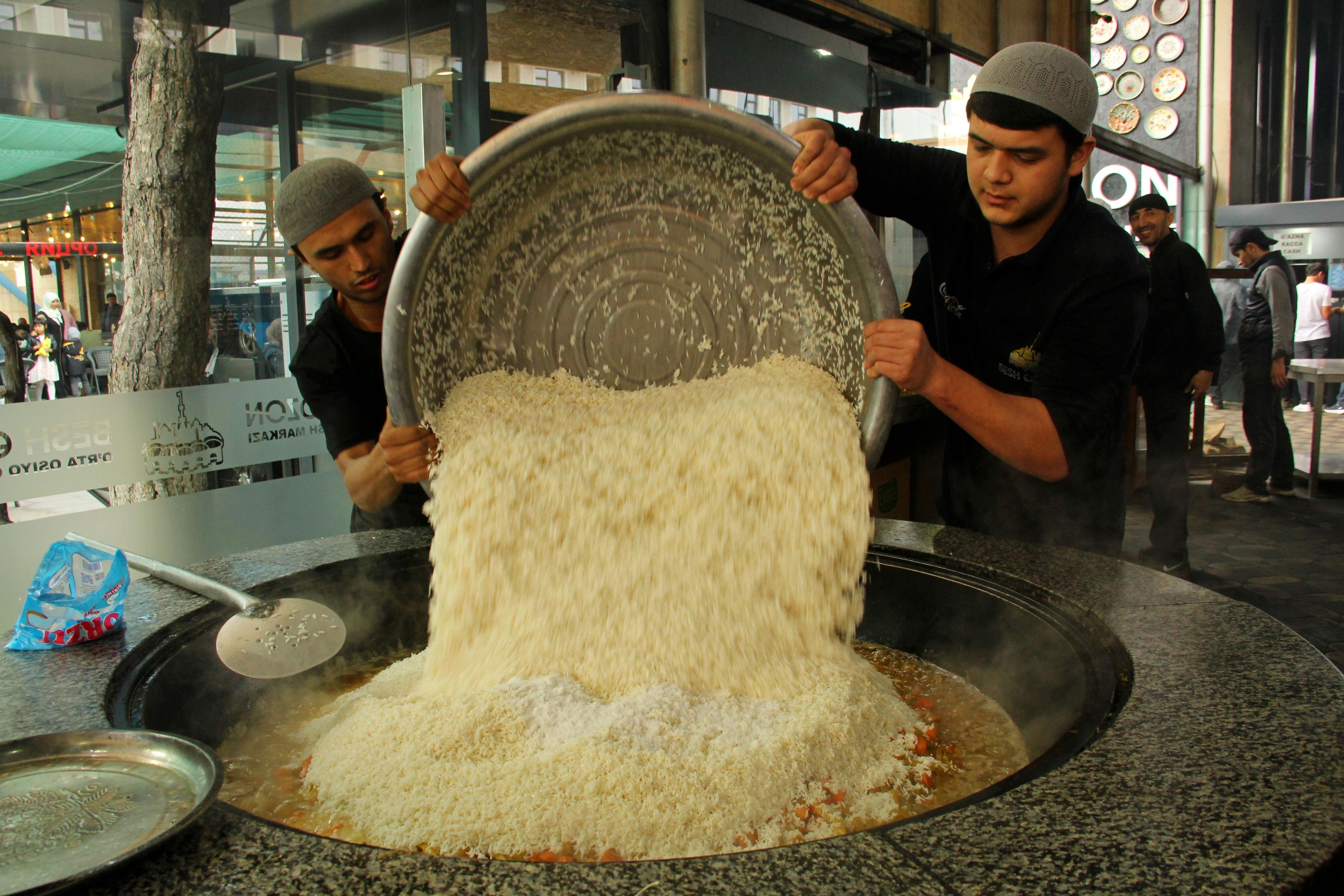
Sumalak is the dark, sweet pudding of sprouted wheat that Uzbek families stir through the night before Navruz. What it is, how it is made, why stones go in the cauldron, its UNESCO listing, and where a visitor can taste or watch it in March.
Facts, prices and schedules checked on November 4, 2026
On the night before Navruz, in courtyards and mahalla squares across Uzbekistan, women gather around enormous cast-iron cauldrons and take turns stirring a dark, fragrant mass with long wooden paddles. They are making sumalak, a sweet pudding made from sprouted wheat. It simmers for many hours, sometimes until the sun comes up, and it is served in the morning, warm, with flat bread.
Sumalak is not a restaurant dish and it is not for sale most of the year. It belongs to one season, one festival and one kind of gathering, which is exactly why it is worth understanding. This short guide explains what sumalak is, how it is made, what it means, how it is recognised internationally and how a visitor can taste it or watch it being cooked in March. Dates and details vary by family and region, so treat the account below as the usual pattern rather than a single rule.
What is sumalak?
Sumalak (sumalak or sumanak in the Central Asian languages, samanu in Persian) is a thick, glossy, brown pudding made from sprouted wheat. It tastes sweet and slightly malty, with the depth of dark caramel, yet it is traditionally made without added sugar. The sweetness is said to come from the sprouted grain itself. The texture is somewhere between a pudding and a thick porridge.
It is a Navruz dish above all. Navruz, the spring equinox festival on 21 March, marks the new year in Uzbekistan and across a wide region, and sumalak is one of its central foods. The sprouted wheat, called sabza in some regions, stands for new life in spring. UNESCO's description of the tradition says that practitioners associate it with renewal, celebration, unity, good fortune and prosperity, and that it is valued as nourishing, especially for children and pregnant women.
For the festival as a whole, including the public holiday, the concerts and the other dishes, see our Navruz guide. Here the focus is the pot.
How is sumalak made?
The process is long and communal, which is part of the point.
- Sprouting. Wheat grains are soaked and left to sprout over several days, until they produce short green shoots. Families often begin well before the festival, since the sprouts need time.
- Preparing the base. The sprouts are washed and crushed, and the juice is extracted. UNESCO's account says the wheat is washed, roasted and crushed, and the juice boiled. Wheat flour and oil or butter are added, and recipes differ.
- Cooking. The mixture is cooked slowly in a large cauldron, a kazan, set over a wood fire. UNESCO says the juice is boiled for up to ten hours. Other sources describe cooking that lasts through the night, and some say as long as a day. The difference probably reflects the size of the pot and the local method.
- Stirring. The paddle must keep moving so that the pudding does not catch. Women take turns, often singing and dancing, while men light the fire and carry the heavy things. This is how the night passes.
- Serving. In the morning the sumalak is ladled into bowls and shared with neighbours, relatives and visitors.
Because it requires time, space and many hands, sumalak is cooked for a group, not for one family alone. That is why it has become a symbol of the neighbourhood spirit, the mahalla, that our guide to Uzbek traditions describes.
Why are stones put in the cauldron?
Many accounts mention stones, often small and clean river stones, added to the bottom of the pot. Two explanations circulate. The practical one is that the stones help prevent the mixture from sticking and burning. The traditional one is a legend about a mother who had nothing to feed her hungry children and put stones in the pot, telling them she was cooking, until the night passed and the sprouted wheat she had set aside was ready.
A related custom says that whoever finds a stone in their bowl will have luck, or that a wish will come true. The practice is not universal, and families differ. If you are served sumalak and find a stone, treat it as a good omen and do not be surprised.
What does sumalak symbolise?
Several ideas are woven together. First is renewal. Wheat sprouting in the last days of winter is the visible start of spring, and eating it is a way of taking that renewal into the body. Second is generosity. Sumalak is cooked in quantity, sent to neighbours and offered to anyone who comes to the door. Third is community. The night of stirring is a social event, with songs, conversation and sometimes a prayer or a blessing when the cauldron is opened.
Many families also make a wish or say a blessing while stirring, and in some places the first spoonful is offered to the elders. The details change, but the spirit of sharing does not.
What does sumalak taste like, and how is it eaten?
Expect something darker and less sweet than a dessert, closer to a malted pudding with a toasted edge. It is usually served warm in a small bowl, with a piece of flat bread to scoop it up, and is often eaten in the morning with tea. A few spoonfuls are enough for most visitors. Hosts will offer more, and it is polite to accept a second portion if you enjoyed the first. Some families send jars to neighbours, which is why a sumalak morning can feel like a street-wide breakfast.
Is sumalak on the UNESCO list?
Yes, though with a nuance. In 2025 the UNESCO Intergovernmental Committee inscribed the culture of sumanak or sumalak cooking on the Representative List of the Intangible Cultural Heritage of Humanity. The nomination was made by Tajikistan, which is the only state party named in the listing, and describes a tradition shared by communities across the region. Navruz itself has been on the list since 2009, with Uzbekistan among the countries concerned. Uzbek cooks and families observe the same tradition, and in Uzbekistan it is just as much part of Navruz as it is anywhere else. Heritage listings recognise shared traditions, not exclusive ownership.
When and where can a visitor taste sumalak?
The timing is the main constraint. Sumalak is cooked around Navruz, in the days around 20 and 21 March. In 2027, Navruz falls on a Sunday, and the holiday arrangements, which can move days off, are explained in our guide. If you plan a visit for the festival, aim to arrive in the days before the holiday and leave a flexible morning on 21 March.
Where you are most likely to meet sumalak:
- Public Navruz festivals. Cities hold fairs, concerts and food streets where regional dishes, including sumalak, are served. In Tashkent the main programmes are in the large parks, and in Samarkand, Bukhara and Khiva the central squares host events. Programmes change each year.
- Neighbourhood cooking. In mahallas and villages, families and neighbours cook sumalak in the courtyard. A guide with local connections can sometimes arrange a visit, if the hosts agree. Never walk into a cooking circle uninvited, but do ask, since most hosts are happy to share.
- Bazaars and restaurants. Some restaurants and food stalls offer sumalak in March. Availability varies, and outside the festival season it is rare.
Etiquette is simple. Accept a bowl if it is offered, say thank you, eat with bread, and do not photograph people without asking. If the hosts invite you to stir, take a turn.
Can everyone eat sumalak?
Sumalak is made of wheat and flour, so it contains gluten and is not suitable for people with coeliac disease or a wheat allergy. It is usually made with oil or butter, and vegetarians and vegans should check the fat used in a given pot. It contains no meat and no alcohol, so it suits halal diets. It is rich and sweet, so a small bowl is plenty. As with any home-cooked food, use common sense about hygiene and how long it has been standing.
Making sumalak at home
Few people outside the region attempt it, because the process needs sprouted wheat, a heavy pot and many hours of stirring. A rough outline for the curious: sprout wheat grains over several days until the shoots are about a centimetre long, crush and strain them to extract the sweet juice, combine it with a little flour and oil, and simmer very slowly for many hours, stirring constantly. Most home attempts shorten the process considerably, and the result is a pale imitation of the festival version. A trip in March is the better way to taste the original.
Experiencing Navruz with TourEast
If you want to see Navruz and sumalak, March is the month to plan for. We can build an itinerary around the festival dates, with time in Tashkent and Samarkand for public celebrations, and arrange a visit to a family cooking the pudding when the hosts agree. Our Flavours of Uzbekistan tour is built around regional food, and you can sketch your own route with our trip builder at /trip-builder or message us on WhatsApp.