Our local guide to Bukhara (Buxoro): the sights worth your time beyond the Ark, how many days to plan, which part of town to sleep in, trains and flights, entrance fees as of November 2026, evenings and a day trip to the potters of Gijduvan.
Facts, prices and schedules checked on November 4, 2026
Bukhara is the city our guests most often wish they had given another day. Samarkand impresses with scale; Bukhara works on you more slowly, through its lanes, its teahouses by the water and the sheer number of buildings that have survived in one compact old town. UNESCO lists more than 140 protected monuments in its historic centre, and you can walk between almost all of them.
Is Bukhara worth visiting? For most travellers it is the highlight of a first trip to Uzbekistan. Where Samarkand's great monuments stand in a modern city, Bukhara's historic centre is still a living neighbourhood. People live in the mud-brick houses behind the madrasahs, children play in the lanes, and the main sights are linked by footpaths rather than highways.
This Bukhara travel guide is written by our team in the city, where TourEast has its second office. It covers what to see beyond the obvious, how many days you need, where to stay, how to get to Bukhara (Buxoro in Uzbek), what entrance fees to expect in 2026, how to spend the evenings and which day trips are worth leaving the old town for.
We have a separate, detailed guide to the Ark Fortress and the Po-i-Kalyan ensemble, so here we keep those two short and give more space to the rest of the city.
Top things to do in Bukhara
The old town runs roughly east to west, from Lyabi-Hauz to the Ark, with the Samanid Mausoleum in the park just beyond. Here are the sights we include in almost every visit.
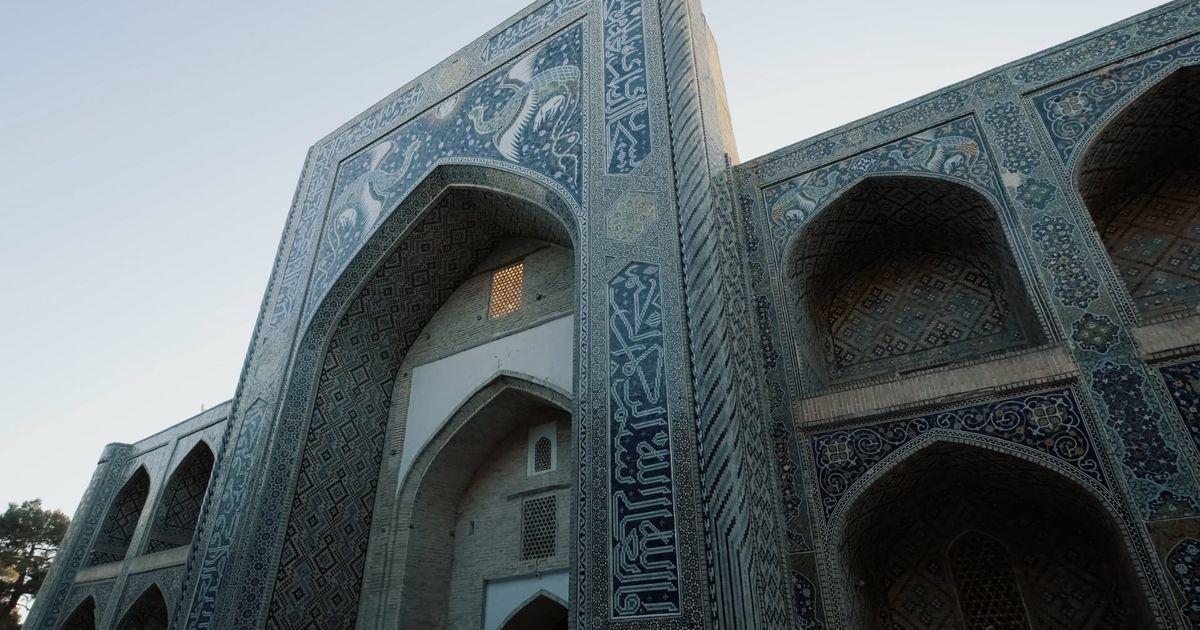
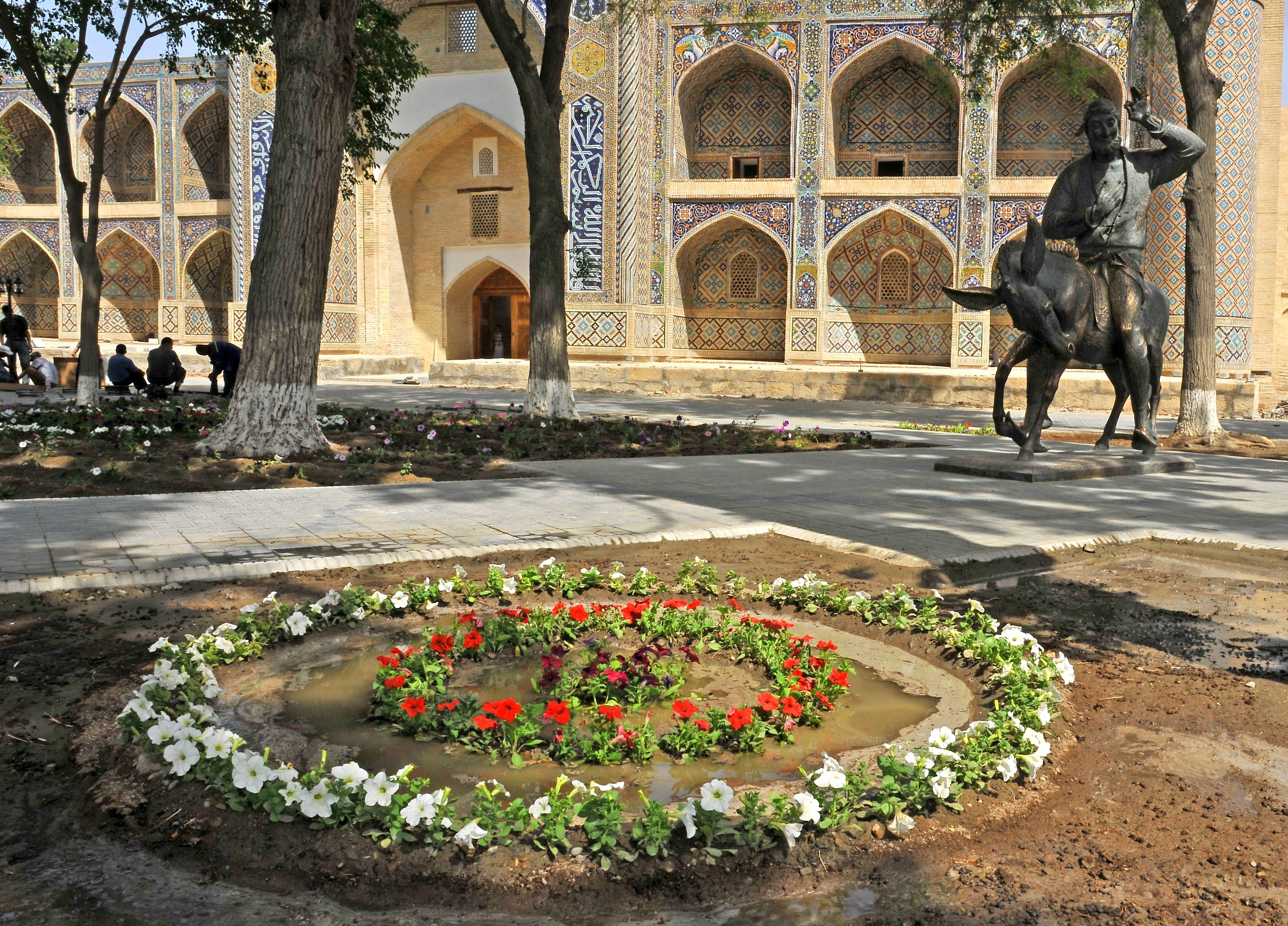
- Lyabi-Hauz: the square around a pool dating from 1620, framed by the Kukeldash Madrasah, the Nadir Divan-Begi Madrasah with its mosaic of birds carrying lambs towards the sun, and a khanaka. Mulberry trees, teahouses and the statue of Khoja Nasreddin on his donkey make it the natural meeting point of the city.
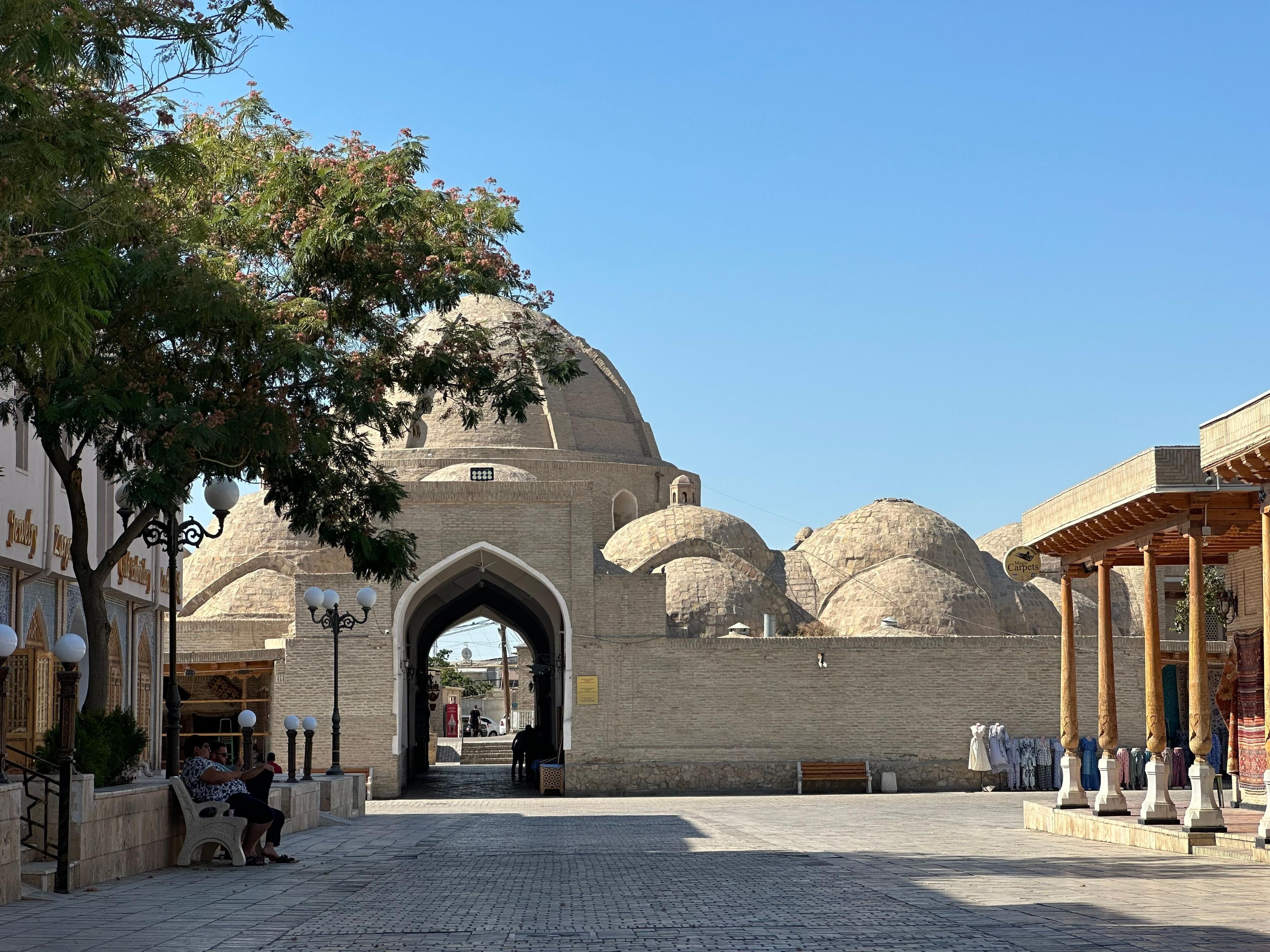
- The trading domes: a chain of 16th-century covered bazaars west of Lyabi-Hauz, described below.
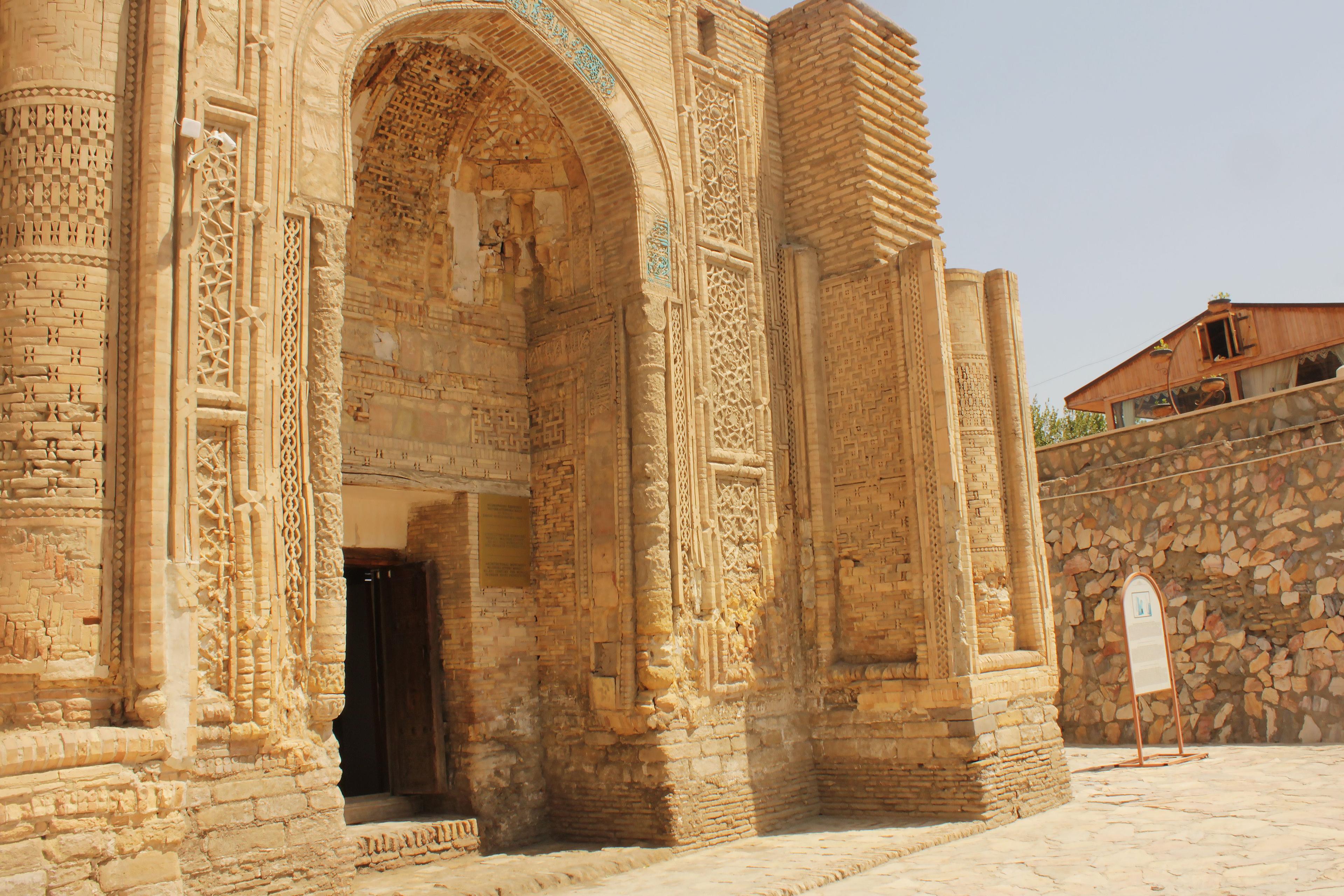
- Magoki-Attori Mosque: a short detour from the first dome. Its carved brick façade from the 12th century sits several metres below today's street level, a vivid lesson in how much the ground has risen over the centuries.
- Po-i-Kalyan: the Kalyan Minaret (1127), the Kalyan Mosque and the Mir-i-Arab Madrasah, the city's most famous ensemble. Allow an hour, more for photographs.
- Ulugbek and Abdulaziz Khan madrasahs: facing each other just east of Po-i-Kalyan, one built by Timur's astronomer grandson in the 15th century, the other in the 17th.
- The Ark Fortress: the citadel of the emirs, with museums inside and views over the rooftops.
- Bolo-Hauz Mosque: opposite the Ark, with its tall wooden columns reflected in a pool. It was the emir's Friday mosque.
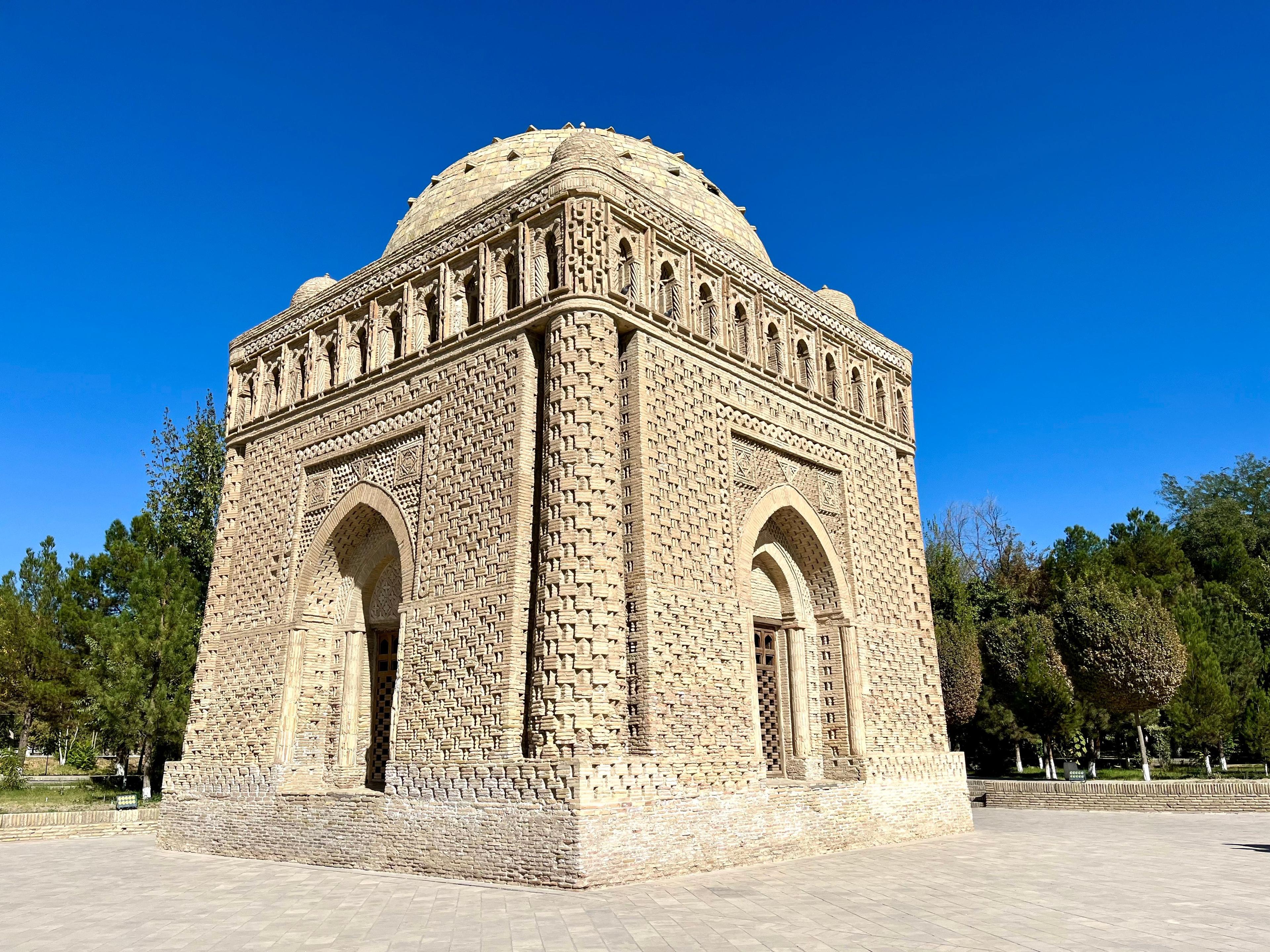
- Samanid Mausoleum: the oldest and, for many, the most beautiful building in town (see below).
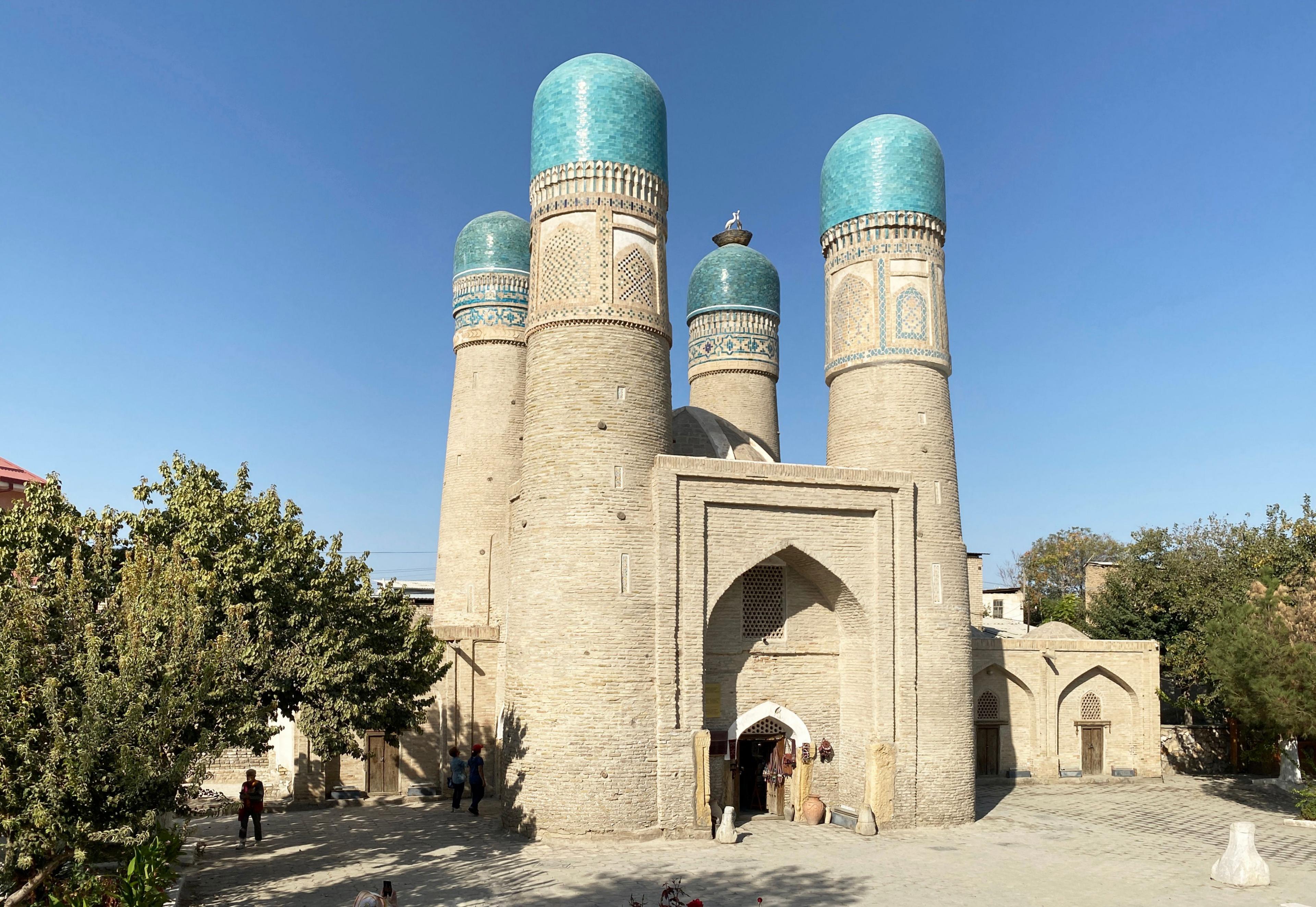
- Chor Minor: the four-towered gatehouse hidden in the residential lanes north-east of Lyabi-Hauz.
Our full guide to the Ark Fortress and Po-i-Kalyan covers those two in depth, with opening times and what to see inside.
The Samanid Mausoleum: Bukhara's oldest building
In a park west of the Ark stands a small cube of baked brick that architects travel across the world to see. The Samanid Mausoleum dates from the 10th century, when the Samanid dynasty ruled much of Central Asia from Bukhara. It is traditionally linked to Ismail Samani, the founder of the dynasty; an inscription identifies one of the burials as his descendant Nasr II, and historians still debate who built it.
What makes it remarkable is the brickwork. The same bricks carry the structure and form the decoration: basket weave, chequerboards, small circles and lattices, so that the walls change character as the sun moves. Come in the early morning or late afternoon, when the low light picks out every pattern.
The building survived because it disappeared. Mud and silt buried it before the Mongol sack of Bukhara in 1220, and it was only excavated and restored in the Soviet period. Nearby in the same park is the Chashma-Ayub, a 12th-century shrine over a spring with a conical dome, now a small museum of water in the region.
Chor Minor and the quiet lanes
Chor Minor, meaning four minarets, is not a minaret at all. It is the gatehouse of a madrasah built in 1807 by Khalif Niyaz-kul, a wealthy merchant, and the four turquoise-domed towers are decorative. The madrasah itself has gone; the gatehouse stands on its own in a small square among houses.
In 1995 one of the towers collapsed after groundwater undermined its foundations and was rebuilt with UNESCO support. Today a souvenir shop occupies the ground floor and, for a small fee, you can usually climb to the roof for a close look at the domes.
The walk there is half the point. From Lyabi-Hauz it takes about ten minutes through the old residential quarter, past carved wooden doors, small neighbourhood mosques and courtyards. Nearby is the old Jewish quarter, where the 16th-century synagogue still holds services and welcomes respectful visitors.
The trading domes and Bukhara's crafts
Bukhara was a merchant city, and its 16th-century covered bazaars, the toki, still trade. Each dome was built over a crossroads and specialised in one business: Toki Sarrafon for the money changers, Toki Tilpak Furushon for hat sellers and Toki Zargaron for jewellers. Between them stands the Tim of Abdullah Khan, a covered hall for silk and wool traders.
Today the domes and the old caravanserais around them are the best place in Uzbekistan to see crafts being made, not just sold.
- Suzani: hand-embroidered textiles, from small cushion covers to wall hangings.
- Carpets: wool and silk, with workshops where you can watch weavers at work.
- Forged steel: the blacksmiths near Toki Zargaron make knives and the famous stork-shaped scissors.
- Miniature painting, wood carving, puppets and ceramics.
Prices are rarely fixed, so polite bargaining is expected. Ask the maker about the materials and age of a piece; a good seller will gladly explain. For larger purchases such as carpets, check how export paperwork is handled before you pay.
How many days do you need in Bukhara?
Two full days is the right amount for most travellers, which usually means three nights.
- One day: enough for the core of the old town on foot, from Lyabi-Hauz through the trading domes to Po-i-Kalyan, the Ark and the Samanid Mausoleum. It feels rushed, and you will skip the interiors.
- Two days: the old town at an easy pace on the first day, then Sitorai Mohi-Hosa, Chor Minor, the Jewish quarter, workshops and a long lunch on the second. This is our recommendation.
- Three days or more: add a day trip to Gijduvan, the Bakhouddin Naqshband complex and the Chor-Bakr necropolis, or simply slow down. Bukhara rewards it.
A simple two-day Bukhara itinerary:
- Day 1 morning: the Ark, Bolo-Hauz and the Samanid Mausoleum.
- Day 1 afternoon: Po-i-Kalyan, the Ulugbek and Abdulaziz Khan madrasahs, then the trading domes towards Lyabi-Hauz for sunset and dinner.
- Day 2 morning: Sitorai Mohi-Hosa and Bakhouddin Naqshband by car.
- Day 2 afternoon: Chor Minor, the Jewish quarter, Magoki-Attori and craft workshops.
Where to stay in Bukhara
The choice is between the old town and the newer city around it.
- The old town around Lyabi-Hauz: our first choice for most travellers. Many guesthouses and boutique hotels occupy restored merchants' houses with carved wooden ceilings and shady courtyards. You walk out of the door into the monuments and back for a rest in the afternoon heat. Rooms can be small, and lanes are too narrow for cars to reach every door, so expect a short walk with luggage.
- The edges of the old town, towards the Samanid park or along the main roads: slightly larger hotels with lifts and parking, still within 10 to 20 minutes' walk of Lyabi-Hauz.
- The modern city: international-standard and business hotels, more space and quieter nights, but you will need a taxi into the old town.
In spring and autumn the best old-town hotels fill early, so book well ahead. In summer, make sure your room has air conditioning; in winter, ask about heating, since some old houses are cold.
How to get to Bukhara
By train. Most visitors arrive on the Afrosiyob high-speed train. Typical journey times are about 1 hour 30 minutes to 1 hour 45 minutes from Samarkand and about 3 hours 50 minutes to 4 hours 20 minutes from Tashkent. Since May 2026 the new line across the desert also links Bukhara with Urgench and Khiva in about three and a half hours. Our Afrosiyob train guide covers fares, booking and the timetable.
Bukhara's railway station is not in the city but in Kagan, about 12 to 15 km south-east of the old town. Allow 20 to 30 minutes by taxi or Yandex Go.
By air. Bukhara International Airport is on the edge of the city, only a few kilometres from the old town, about 10 to 15 minutes by car. Domestic flights from Tashkent take roughly 1 hour 15 minutes, and there are seasonal or year-round international links, including to Istanbul and Moscow. See our guide to domestic flights in Uzbekistan for airlines and booking.
By road. Samarkand is about four hours away by car, Khiva six to seven hours across the Kyzylkum desert. Since the Khiva railway opened, the train is the easier option for that leg.
Bukhara entrance fees in 2026
There is no single city pass in Bukhara. You pay at each monument, in cash, in Uzbek som. As of November 2026, typical prices for foreign visitors are:
- Ark Fortress: about 50,000 to 60,000 som.
- Kalyan Mosque: about 15,000 to 25,000 som.
- Samanid Mausoleum, Chashma-Ayub, Magoki-Attori and similar smaller sites: small fees, usually in the range of 15,000 to 40,000 som each.
- Chor Minor: free to see from outside; a small fee to climb to the roof.
- Sitorai Mohi-Hosa: a separate ticket for the palace museum, in the same range as the Ark.
- Lyabi-Hauz, the trading domes and the Po-i-Kalyan square: free.
Some museums charge extra for photography or for a guide at the door. As a rough budget, allow 250,000 to 350,000 som (about 20 to 30 USD) per person for two full days of sightseeing. Prices have risen in recent years and are revised without much notice, so check at the ticket office. Most sites open around 9:00 and close at 17:00 or 18:00, a little later in summer.
Bukhara at night: evenings and food
Bukhara is at its most charming after dark. The main monuments are lit, the heat goes out of the day and families come out to walk.
- Dinner at Lyabi-Hauz: the teahouses around the pool are touristy but atmospheric. For better food, ask your guide about the family-run restaurants in the lanes nearby.
- An evening walk to Po-i-Kalyan: the lit minaret against a dark sky is one of the great sights of the country, and the square is quiet at night.
- Folklore and fashion shows: in the tourist season, a show of music, dance and costume made from local textiles is staged in the courtyard of the Nadir Divan-Begi Madrasah. Check the current schedule locally.
- Rooftop terraces: several cafés near Po-i-Kalyan and the Ark have terraces for a sunset drink with a view of the domes.
Bukhara cooks its own versions of plov, and the samsa baked on the walls of a clay tandoor near the trading domes makes a good lunch on the move. Our Uzbek food guide explains what to order and how plov differs from city to city.

Day trips from Bukhara: Sitorai Mohi-Hosa, Gijduvan and more
The closest escape from the old town is Sitorai Mohi-Hosa, on the northern edge of the city about 15 minutes by taxi from the centre. It was the summer residence of the last emirs of Bukhara. The main palace was built between 1912 and 1918 for Emir Alim Khan, who fled in 1920 when the Red Army took Bukhara.
It is an unusual mix: European façades on the outside, Bukharan interiors within, the work of local master craftsmen with help from Russian engineers at the emir's court. The highlight is the White Hall, with carved and painted plaster on mirror backing. The palace now houses a museum of decorative and applied arts, with palace furniture, Chinese and Japanese porcelain, suzani and embroidered robes, and there is a separate harem building by a pool in the garden.
Allow about an hour and a half. It combines well with the Bakhouddin Naqshband shrine, which lies in the same direction, for a half-day outside the old town.
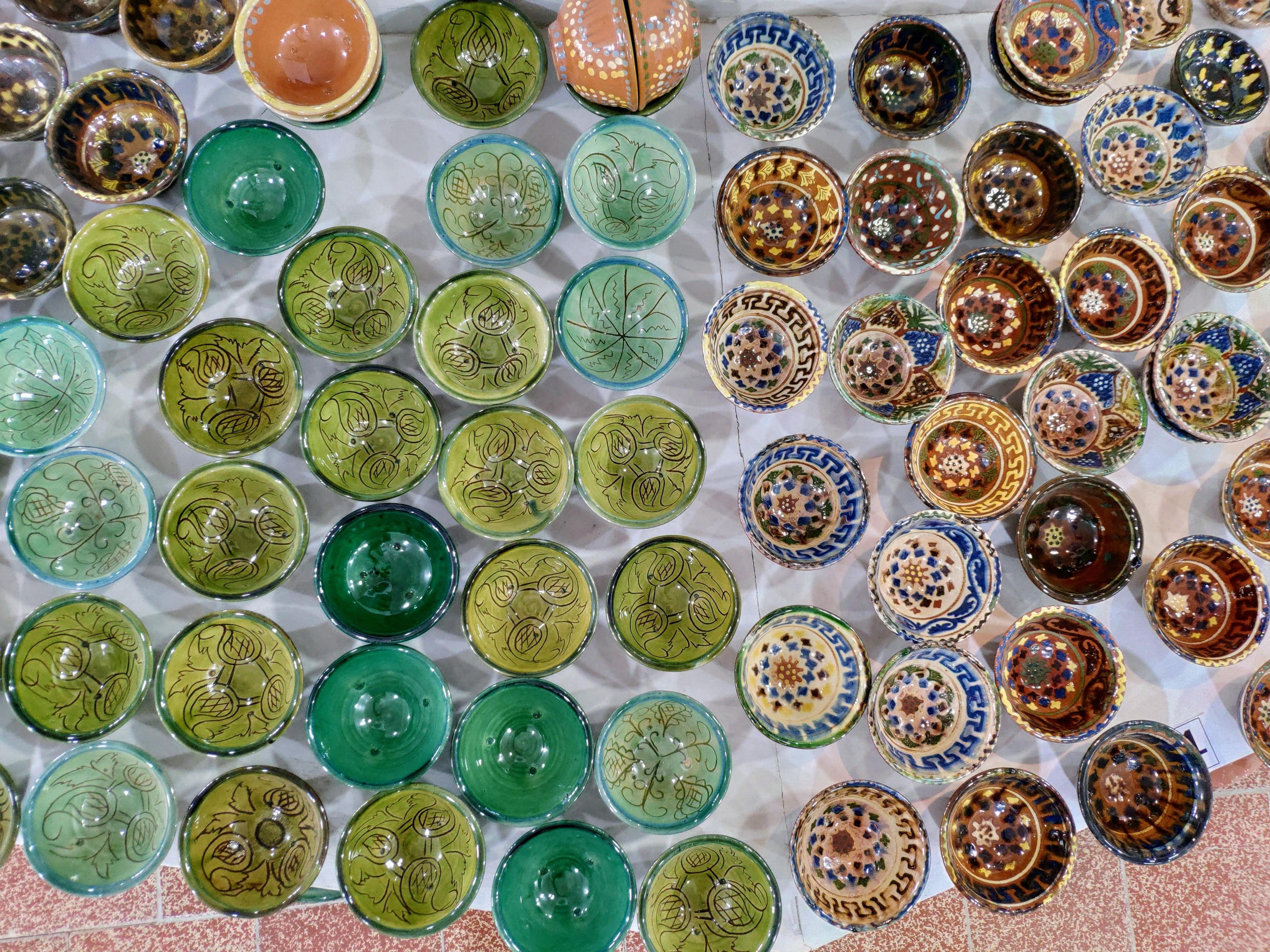
Further out, Gijduvan, about 45 km north-east of Bukhara, is a small town with one of Uzbekistan's best-known ceramic traditions. Its pottery is glazed in warm yellows, browns and greens, quite different from the blues of Rishtan in the Fergana Valley.
The Narzullaev family has kept the craft going for six generations. Their home in Gijduvan is a house museum of folk pottery, opened in 2000, with a workshop where you can watch the wheel and the kiln, see historic pieces and buy directly from the makers. Many visitors book a short master class. The drive takes about 40 minutes to an hour each way.
Gijduvan is also famous across the country for its kebab, so plan lunch there.
Other good half-day trips:
- Bakhouddin Naqshband complex, about 12 km from the centre: the shrine of the 14th-century Sufi master whose order spread across the Islamic world. Expect pilgrims, and dress modestly.
- Chor-Bakr necropolis, a short drive west: a quiet 'city of the dead' of courtyards and family tombs from the 16th century onwards.
From Bukhara, the desert also opens up: camel and yurt-camp trips near Lake Aydarkul are usually done on the way to Samarkand.
Visiting Bukhara with TourEast
Bukhara is our home city as well as Tashkent, and our guides grew up in these lanes. We can show you the city as part of a small-group tour or build a private itinerary with time for the Narzullaev workshop, family-run restaurants and the quieter corners most visitors miss.