A practical ziyarat guide to Uzbekistan: the rebuilt Imam al-Bukhari complex, Shah-i-Zinda, al-Maturidi, Bahauddin Naqshband and the Seven Pirs, Hast Imam and the Uthman Quran, Termez, shrine etiquette and a 7-day route.
Facts, prices and schedules checked on November 4, 2026
For many Muslim travellers, a ziyarat (ziarah) to Uzbekistan is the journey of a lifetime. The land between the Amu Darya and Syr Darya rivers, known in Arabic sources as Mawarannahr, gave the Islamic world some of its most respected scholars: Imam al-Bukhari, Imam al-Maturidi, Imam at-Tirmidhi, and the Sufi masters of the Naqshbandi path. Their resting places in Samarkand, Bukhara, Tashkent and Termez are living places of prayer, not museums.
This guide covers the main holy sites of Uzbekistan, what has changed in 2026 (the Imam al-Bukhari complex has been rebuilt, and the Uthman Quran has moved to a new home in Tashkent), how to behave at a shrine, and a practical route for a seven- to nine-day ziyarat tour.
What is ziyarat, and why Uzbekistan?
Ziyarat simply means "visit": travelling to pray at mosques and at the graves of scholars and righteous people, to give greetings and to reflect. In Southeast Asia the same journey is often called ziarah, and Uzbekistan has become one of the most popular destinations for it after the Haramain, Turkey and Jordan.
There are good reasons. Most of the population of Uzbekistan is Muslim, mostly following the Hanafi school, so halal food is the norm, the call to prayer is heard in the old towns, and Friday prayer fills the big mosques. Citizens of Malaysia and Indonesia can enter visa-free for up to 30 days. And the sites are close together: Tashkent, Samarkand and Bukhara are linked by fast Afrosiyob trains, so a pilgrim can cover the main shrines in a week without long road journeys.
For Indonesian visitors there is also a personal connection. President Sukarno visited the grave of Imam al-Bukhari in 1961, at a time when it lay neglected under Soviet rule. Indonesian and Uzbek accounts both credit his request with the first restoration of the site, and his name is still mentioned with warmth by guides at the complex.
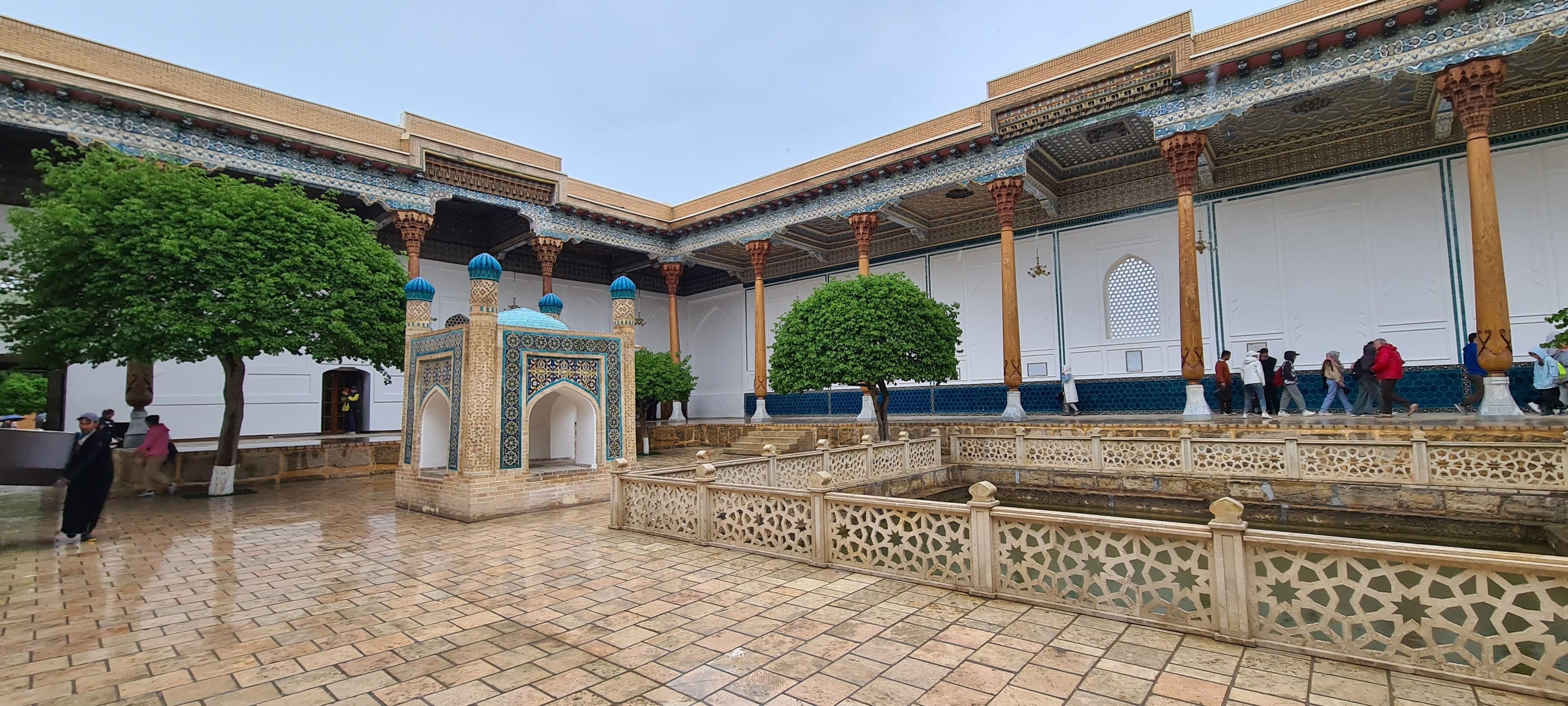
Imam al-Bukhari complex near Samarkand (rebuilt in 2026)
Muhammad ibn Ismail al-Bukhari was born in Bukhara in 810 and died in 870 in the village of Hartang (Khartang), near Samarkand. His Sahih al-Bukhari is regarded by Sunni Muslims as the most authentic collection of hadith. He is buried here, and the memorial complex is the single most important stop on any ziyarat in Uzbekistan.
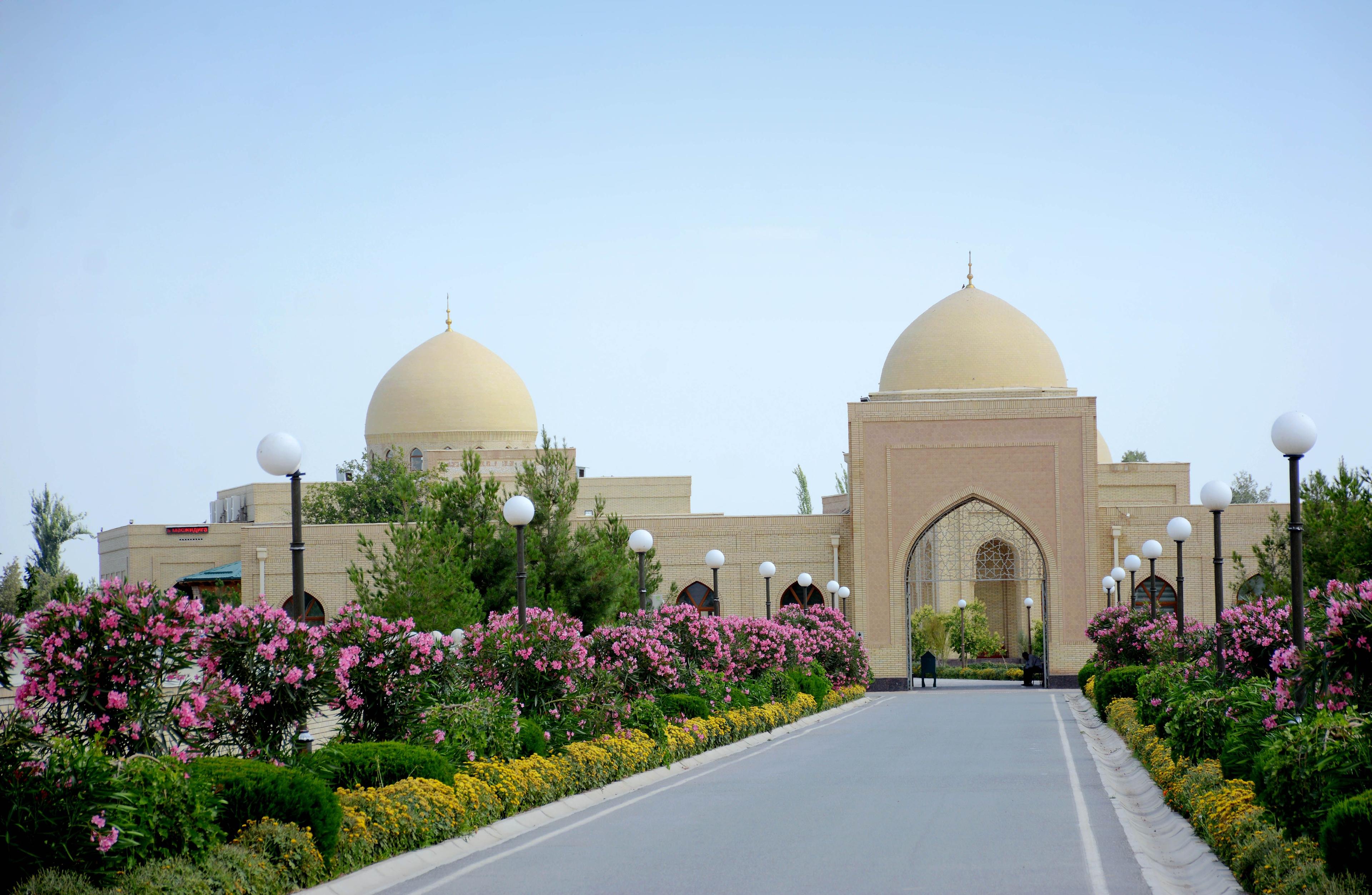
The complex lies about 25 km north of Samarkand, roughly 30 to 40 minutes by car. A mosque and mausoleum were built in 1997 and 1998, and in 2025 the site was rebuilt and greatly enlarged. President Mirziyoyev opened the new complex on 19 March 2026, just before Eid al-Fitr. According to official reports:
- The complex now covers about 45 hectares.
- A new white marble mosque holds more than 10,000 worshippers, with four minarets and a group of blue domes.
- A museum in nine pavilions covers the life and travels of Imam al-Bukhari, how hadith were collected and verified, and the life of the Prophet Muhammad.
- The site is designed for up to 65,000 visitors a day, and a tourist centre with hotels and guesthouses has been built next to it.
The grave itself is in a crypt; the tombstone you see in the domed memorial building is a symbolic cenotaph. Pilgrims usually pray two rakaat in the mosque, then recite al-Fatiha and make du'a at the mausoleum. Allow two to three hours, more if you wish to pray Zuhr or Asr in the mosque. Fridays and the days around Eid are very busy, which some pilgrims prefer for the atmosphere and others avoid.
Other holy sites in Samarkand: Shah-i-Zinda, al-Maturidi and more
Samarkand is best known for the Registan and its Timurid madrasahs, but it is also a city of shrines. Our guides usually combine these with the Imam al-Bukhari complex over two days.
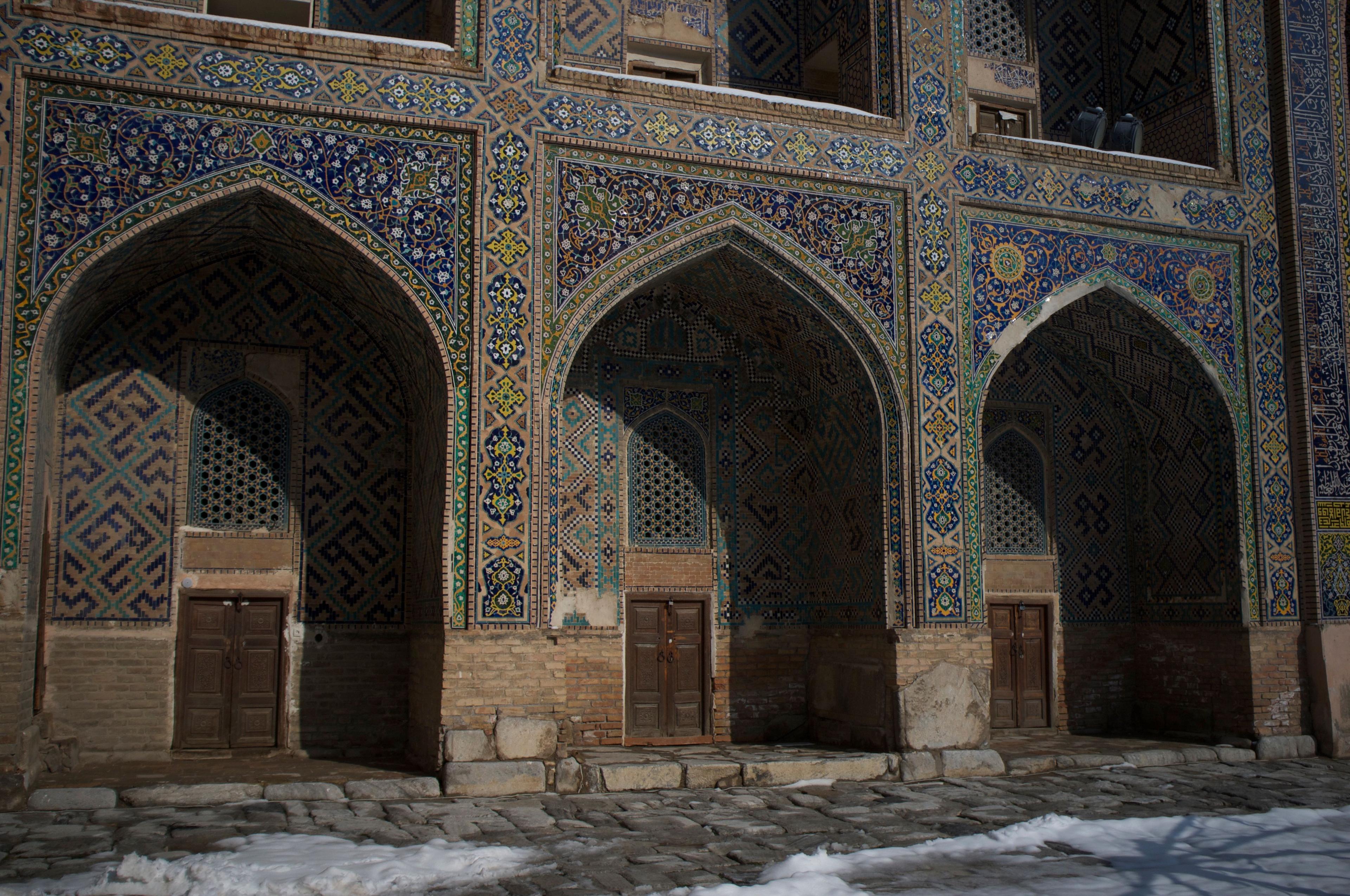
- Shah-i-Zinda: the necropolis grew around the grave attributed to Qusam ibn Abbas, a cousin of the Prophet Muhammad, who came to the region with the Arab armies in the 7th century. Tradition says he was martyred while praying, and the name means "the Living King". The Qusam ibn Abbas mausoleum and mosque sit at the top of the avenue of blue-tiled tombs. We cover the whole complex in our separate Shah-i-Zinda guide.
- Imam al-Maturidi: Abu Mansur al-Maturidi (died 944) founded one of the two main schools of Sunni creed, followed by most Hanafi Muslims. He is buried in the old Chokardiza cemetery, a short drive from the Registan. In 2025 and 2026 the complex was renewed on a 10.2-hectare site with a new mosque, a library, a museum and a study centre, and the mausoleum of Burhanuddin al-Marghinani, author of the Hanafi legal classic al-Hidaya, was rebuilt beside it.
- Khoja Doniyor: on the edge of the ancient Afrosiyob site, a long mausoleum is traditionally linked with the Prophet Daniel. It is respected by Muslims, Christians and Jews alike, and the setting above the Siab stream is peaceful.
- Hazrat Khizr Mosque: a 19th-century mosque on a hill above Siab Bazaar, a good place for a prayer between sightseeing.
Gur-e-Amir, the tomb of Amir Timur, is also worth seeing. Timur's spiritual teacher, Mir Sayyid Baraka, is buried in the same mausoleum, close to Timur.
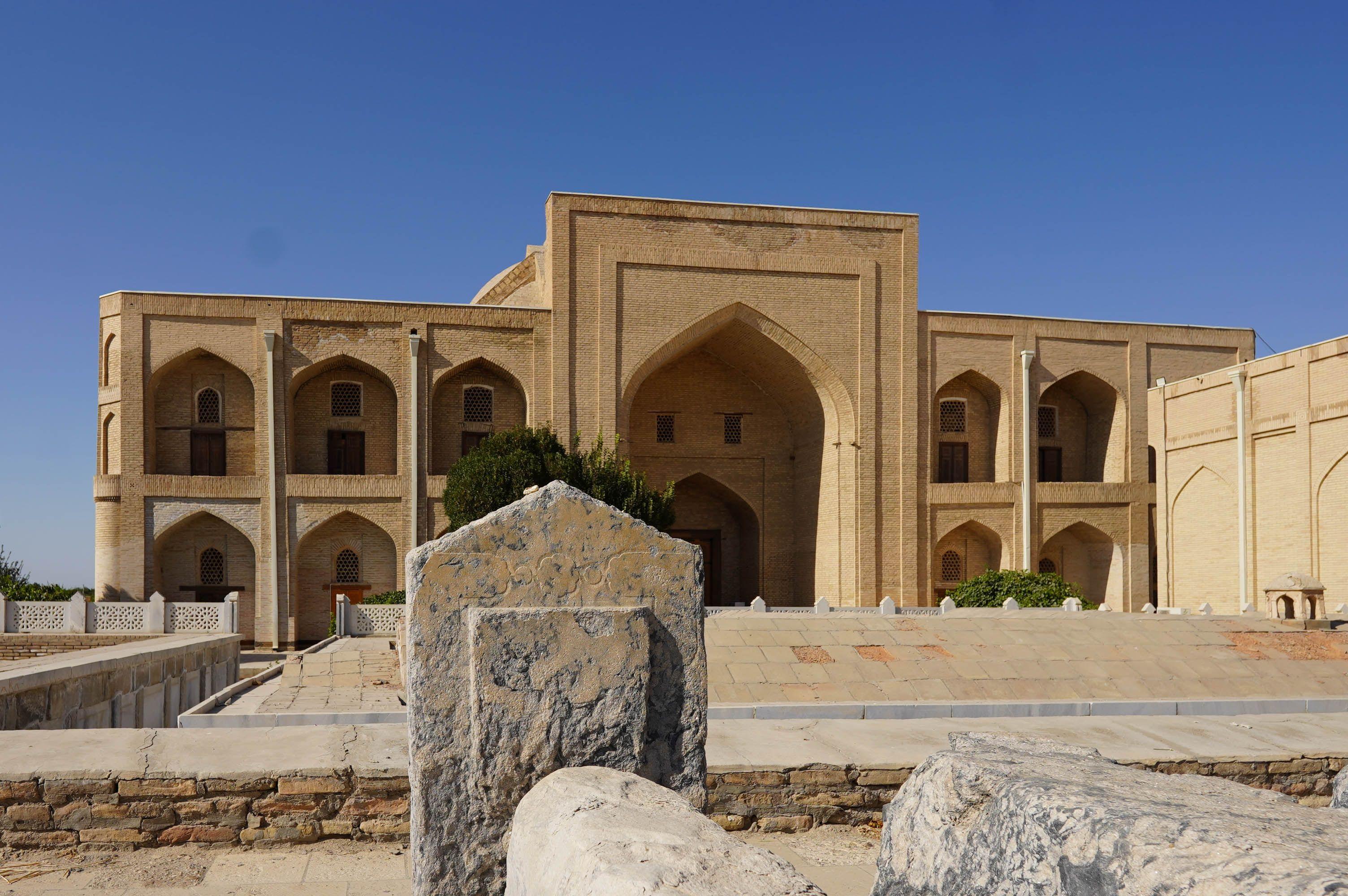
Bahauddin Naqshband complex in Bukhara
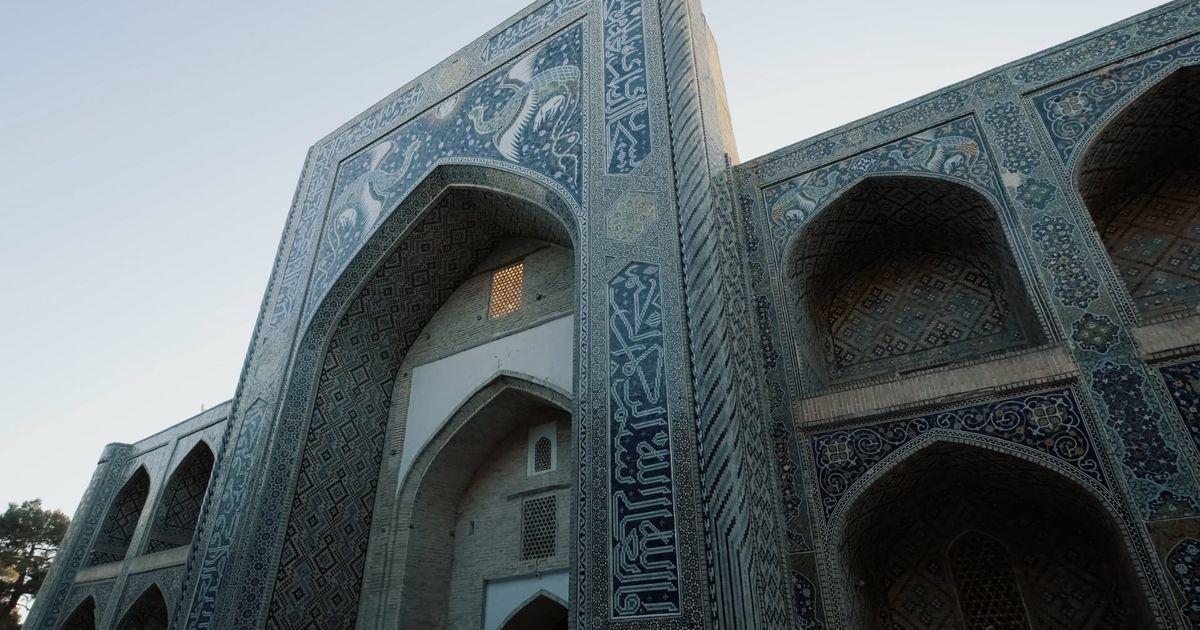
Bukhara has long been called Bukhara-i Sharif, "Noble Bukhara", and its most visited shrine is the resting place of Bahauddin Naqshband (1318 to 1389), whose name was given to the Naqshbandi Sufi order. The order spread from Bukhara to India, Turkey, the Caucasus and the Malay world, which is why many pilgrims from Indonesia and Malaysia feel a direct link to this place.
The complex stands in the village historically known as Kasri Orifon, about 10 to 12 km north-east of the old town, around 20 to 25 minutes by car. Visiting was forbidden in the Soviet period; the site was restored from 1993 and again in 2003 and 2010, and in 2023 it was included in the UNESCO World Heritage listing "Silk Roads: Zarafshan-Karakum Corridor".
What you will see:
- The open-air grave enclosure of Bahauddin Naqshband, where pilgrims recite al-Fatiha.
- The large khanqah (Sufi lodge) built in 1544 to 1545, with mosques and a courtyard.
- The tomb of his mother nearby, also visited by pilgrims.
- A small minaret (1885), a pool and old trees, which make it pleasant even in summer.
Entry is free or carries a small fee; donations for upkeep are welcome. Allow one to one and a half hours. You will see local customs here that may differ from those at home; visitors simply follow their own practice and respect others.
The Seven Pirs of Bukhara (Yetti Pir)
Local tradition speaks of the "Seven Pirs" (Yetti Pir), seven masters of the Khwajagan, the chain of teachers that led to Bahauddin Naqshband. Visiting all seven shrines in one or two days is a popular ziyarat programme in Bukhara region. The usual order is:
- Abdulkhaliq Gijduvani (12th century), in the town of Gijduvan, about 45 to 50 km from Bukhara; regarded as the first of the seven.
- Orif Revgari, a disciple of Gijduvani.
- Mahmud Anjir Fagnavi, buried in his home village, today called Anjirbog.
- Ali Romitani (Khoja Azizon), a weaver by trade, in Romitan district.
- Muhammad Baba Samosi, the first teacher of Bahauddin Naqshband.
- Sayyid Amir Kulol, his second teacher.
- Bahauddin Naqshband, the seventh, at Kasri Orifon.
The shrines are spread across several districts around Bukhara, mostly 20 to 60 km from the city on village roads. Doing all seven comfortably takes a full day with a car and driver, or two half-days combined with Bukhara's old town. A guide who knows the villages helps a great deal, as signs are mostly in Uzbek. Gijduvan is also known for its ceramics workshops, a natural stop on the way.
Hast Imam in Tashkent and the Uthman Quran
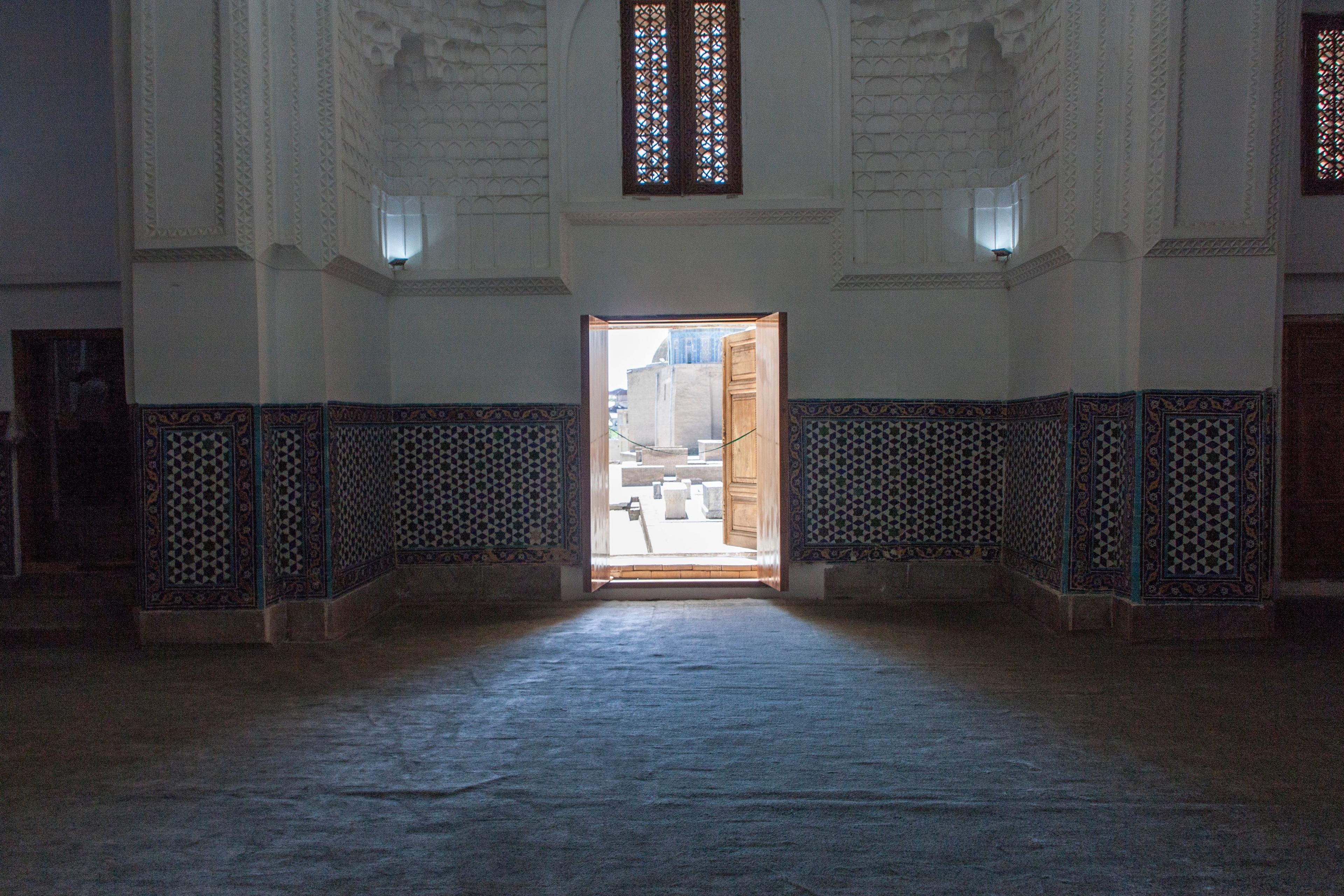
Most ziyarat trips begin or end in Tashkent, and the old Hast Imam (Hazrati Imam) square in the city's old quarter is the religious heart of the country. It is also the seat of the Muslim Board of Uzbekistan.
- Mausoleum of Kaffal Shashi: Abu Bakr al-Kaffal ash-Shashi was a 10th-century scholar and poet, the patron saint of Tashkent. The present mausoleum dates from the 16th century.
- Barak Khan Madrasah: a 16th-century madrasah, today with craft and calligraphy workshops.
- Hazrati Imam Friday Mosque: built in 2007 with two tall minarets, the main Friday mosque of the city.
- Tilla Sheikh Mosque and Muyi Muborak Madrasah: Muyi Muborak takes its name from a hair attributed to the Prophet Muhammad, which tradition says is kept there.
The great treasure of the square is the Uthman Quran, also called the Samarkand Kufic Quran, one of the oldest surviving Qurans. For years it was displayed in the Muyi Muborak Madrasah. In November 2025 it was moved to the new Center for Islamic Civilization next to the square, which opened on 17 March 2026. It is now shown in the Hall of the Holy Quran at the heart of the centre, alongside exhibitions on the scholars of Central Asia. If an older itinerary tells you to see it at the madrasah, that information is out of date. Opening hours were still being reported differently in 2026, so we check them before each visit.
Allow two to three hours for the square and the centre, and time a visit for Zuhr or Jumu'ah in the Hazrati Imam Mosque if you can.
Termez: Al-Hakim at-Termizi and Imam at-Tirmidhi
Termez, in the far south on the Amu Darya opposite Afghanistan, is the third great ziyarat region and is easy to add with a domestic flight from Tashkent (about one and a half hours).
- Al-Hakim at-Termizi: the 9th-century Sufi scholar and author is buried in Old Termez, near the ancient citadel and the river. The mausoleum grew from the 11th to the 15th century and has carved terracotta and stucco decoration; a mosque and pilgrim rooms stand beside it.
- Imam at-Tirmidhi: Abu Isa at-Tirmidhi, compiler of the Jami' at-Tirmidhi, one of the six canonical hadith collections, is buried near Sherobod, about 60 km north of Termez. A new memorial complex has been built around his grave in recent years.
Termez also has the Sultan Saodat ensemble of the Termez sayyids and important early Buddhist sites. Two days is a sensible extension, flying in and out. Summer in Termez is very hot, often over 40°C, so spring and autumn are best.
Ziyarat etiquette: dress, prayer and behaviour at shrines
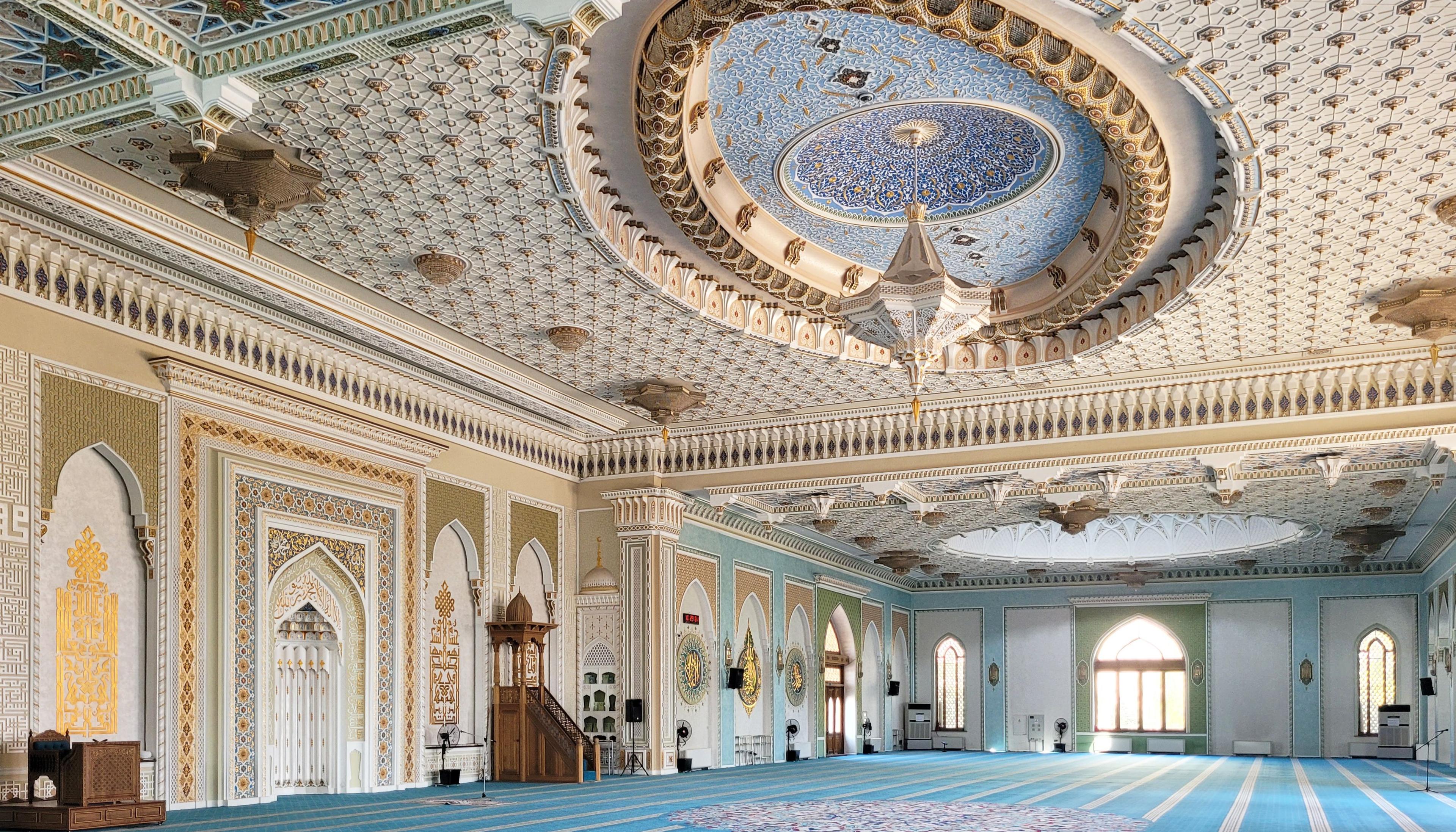
Uzbekistan is a secular state with a Muslim majority, and pilgrims are warmly welcomed. A few points make visits smoother:
- Dress: men in long trousers and sleeved shirts; women with arms and legs covered and a headscarf. Scarves are sometimes available at the entrance, but bring your own.
- Shoes: remove them before entering prayer halls and some mausoleums; there are usually shelves at the door.
- Women: larger mosques and complexes have a separate area for women, but many small mosques do not. Ask our guide or the caretaker before entering.
- Prayer times: local timetables follow the Hanafi method, so Asr is later than in Shafi'i timetables used in Malaysia and Indonesia. Many visitors pray in the local congregation; others keep their own time.
- At graves: recite al-Fatiha and make du'a quietly. Local visitors may touch the grave enclosure, tie cloths or walk around a tree. Some visitors follow such customs and many do not; nobody expects you to.
- Photography: allowed in courtyards and most exteriors. Avoid photographing people at prayer, and ask before filming inside a mosque.
- Donations: small donation boxes are common. Give what you wish; there is no obligation.
- Imams and caretakers often speak Uzbek, Russian and Arabic. A guide who speaks your language, including Indonesian or Malay, makes conversations possible.
A suggested 7-day ziyarat route in Uzbekistan
This is the route we would suggest for a first ziyarat. It uses the Afrosiyob train between cities, so there are no long road days.
- Day 1, Tashkent: arrival. Hast Imam square, the Hazrati Imam Mosque and the Center for Islamic Civilization with the Uthman Quran.
- Day 2, Tashkent to Samarkand: morning Afrosiyob train (about 2 hours). Gur-e-Amir, the Registan and Shah-i-Zinda with the Qusam ibn Abbas mausoleum.
- Day 3, Samarkand: the Imam al-Bukhari complex in the morning, Zuhr in the new mosque, then the Imam al-Maturidi complex and Khoja Doniyor in the afternoon.
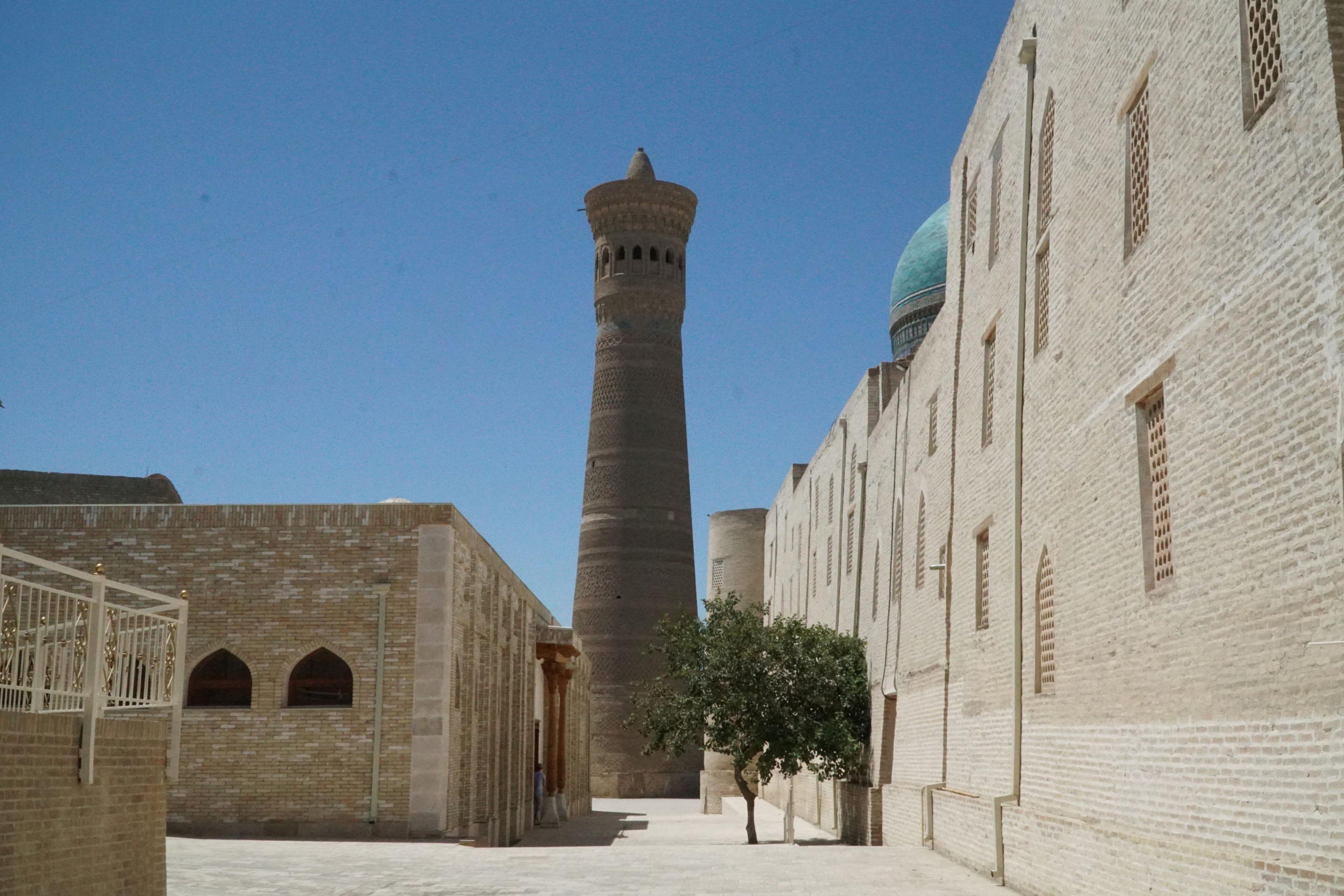
- Day 4, Samarkand to Bukhara: train (about 1.5 to 2 hours). Afternoon in the old town: the Po-i-Kalyan ensemble and the Bolo Hauz Mosque.
- Day 5, Seven Pirs: a full day by car to the shrines of the Khwajagan, ending at the Bahauddin Naqshband complex.
- Day 6, Bukhara: the Ark Fortress, the Samanid Mausoleum and the Chashma-Ayub, with free time for the bazaars.
- Day 7, Bukhara to Tashkent: by train or a short domestic flight, for the flight home.
Add two days for Termez to see al-Hakim at-Termizi and Imam at-Tirmidhi, or a day in Gijduvan and the countryside. If you arrive on a Thursday, you can plan Jumu'ah at the Imam al-Bukhari complex or at the Hazrati Imam Mosque in Tashkent.
Best time for a ziyarat trip, and practical notes
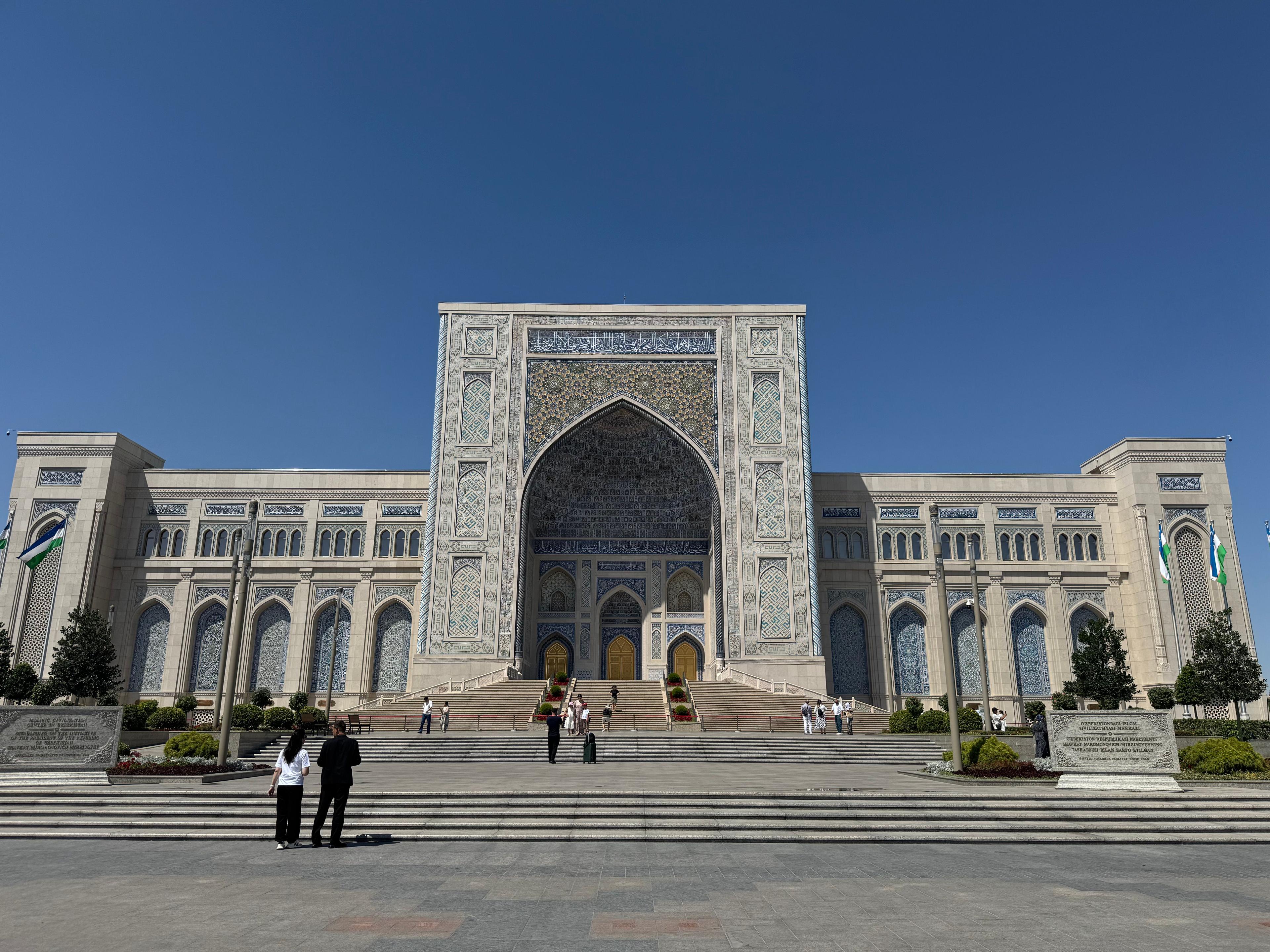
Spring (April to early June) and autumn (September to October) are the most comfortable seasons, with daytime temperatures around 20 to 30°C. July and August are hot, often 35 to 40°C in Bukhara and Termez, so we plan shrine visits early in the morning and late afternoon. Winter is quiet and cold but perfectly possible.
Ramadan is a special time to visit: iftar in a local home or mahalla is a memorable experience, and the mosques fill for tarawih. Ramadan 2027 is expected to begin around 8 February 2027, depending on the moon sighting. Restaurants stay open during the day.
Other practical points:
- Visa: citizens of Malaysia and Indonesia can visit visa-free for up to 30 days. See our visa guide for details.
- Flights: Uzbekistan Airways flies direct from Kuala Lumpur to Tashkent, and has announced up to four flights a week from late October 2026. From Indonesia, check direct options with the airline or connect via Kuala Lumpur or the Gulf.
- Food: almost all food in Uzbekistan is halal by default. Our separate guide to halal travel in Uzbekistan covers food, prayer facilities and Ramadan in detail.
- Money: carry some cash in Uzbek som for donations and small purchases; cards work in hotels and larger shops.
Planning your ziyarat with TourEast
We are a Tashkent and Bukhara based team, and we can arrange private or small-group ziyarat tours with guides who know the shrines well, in English or, on request, in Indonesian, Malay or Arabic, and plan the days around prayer times and Jumu'ah. Tell us your dates and group size, and we will suggest a route that fits.