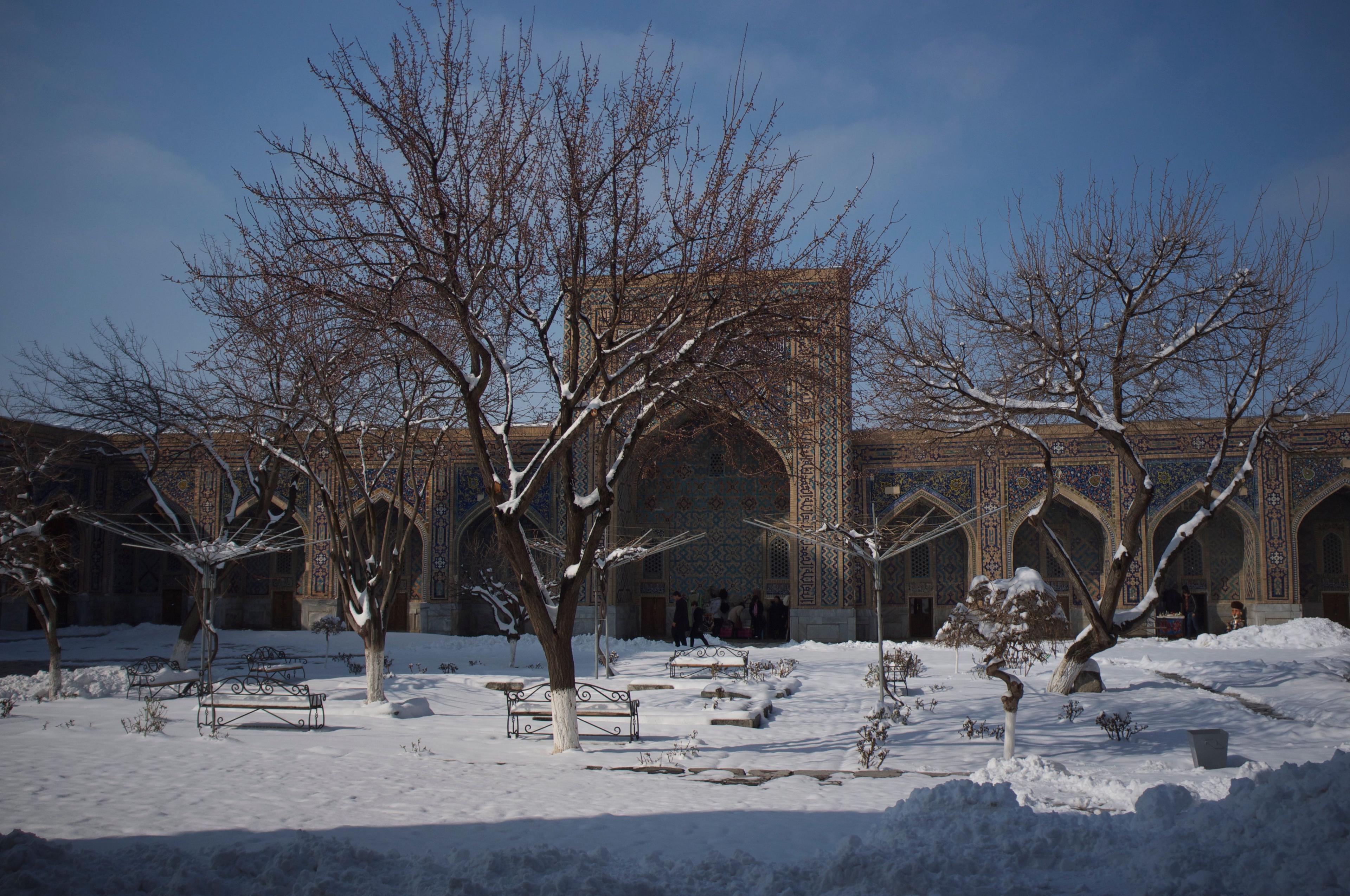
How to plan a ziyarat tour to Uzbekistan: how many days you need, an 8-day route from Tashkent to Bukhara, halal food, prayer and Jumu'ah, typical 2026 costs, group or private, and what to expect at the shrines.
Facts, prices and schedules checked on November 4, 2026
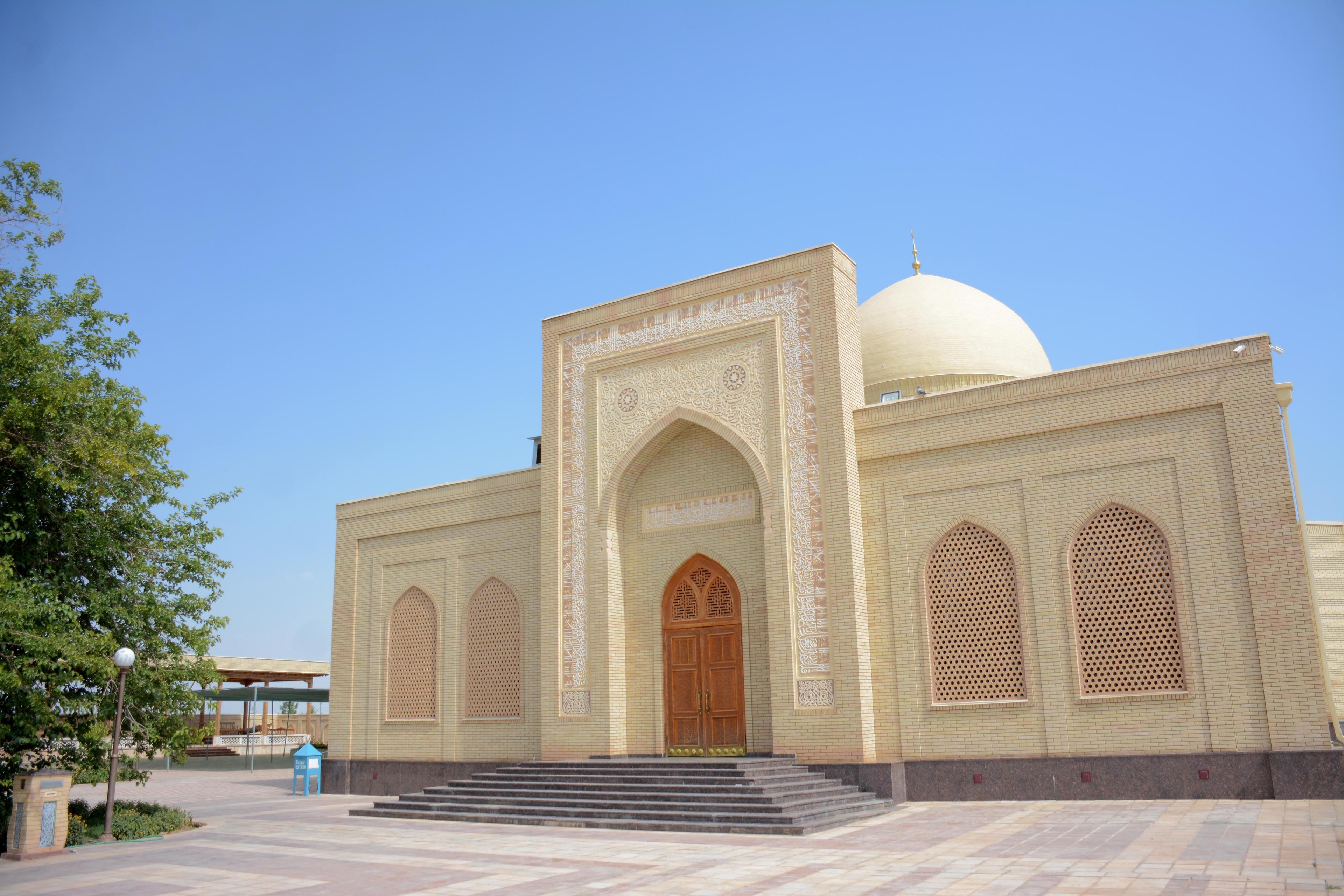
A ziyarat tour to Uzbekistan takes you to the graves of Imam al-Bukhari, Imam al-Maturidi, Imam at-Termizi and the masters of the Naqshbandi path, in cities that were centres of Islamic learning for a thousand years. Interest has grown fast: the Imam al-Bukhari complex near Samarkand reopened in March 2026 after its rebuilding and welcomed more than a million visitors in its first month, and the new Center for Islamic Civilization in Tashkent now shows the Uthman Quran.
Our ziyarat guide describes the holy sites themselves. This article is the practical companion: how many days to allow, a day-by-day route, how halal food and prayer work on the road, what a ziyarat tour costs in 2026, and what to expect when you arrive.
How many days do you need for a ziyarat tour of Uzbekistan?
The main holy places are concentrated in three cities linked by high-speed train, so a ziyarat does not need to be long. As a rule of thumb:
- 1 day: one city only. A Tashkent ziyarat (Khast-Imam, the Uthman Quran, Zangi-ata), a Samarkand ziyarat (Imam al-Bukhari, Imam al-Maturidi, Shah-i-Zinda) or the Seven Pirs of Bukhara.
- 3 to 4 days: Tashkent and Samarkand, or Bukhara alone with the Seven Pirs at an unhurried pace. Good as an add-on to umrah or a business trip.
- 6 days: Tashkent, Samarkand and Bukhara, with the Seven Pirs in a single long day.
- 8 days: the full route, with time to pray at each shrine and the Seven Pirs split over two days. This is the length we recommend for a first ziyarat.
- 10 days: the full route plus Termez in the far south, for al-Hakim at-Termizi and Imam at-Termizi.
Most packages sold in Malaysia, Indonesia, Turkey and Pakistan run between six and ten days. Shorter is possible, but the long drives between the Seven Pirs and the early train departures leave little room for prayer if you try to compress the route too far.

An 8-day ziyarat itinerary, day by day
This is a balanced route for a first visit, using the Afrosiyob train between cities so there are no long road days.
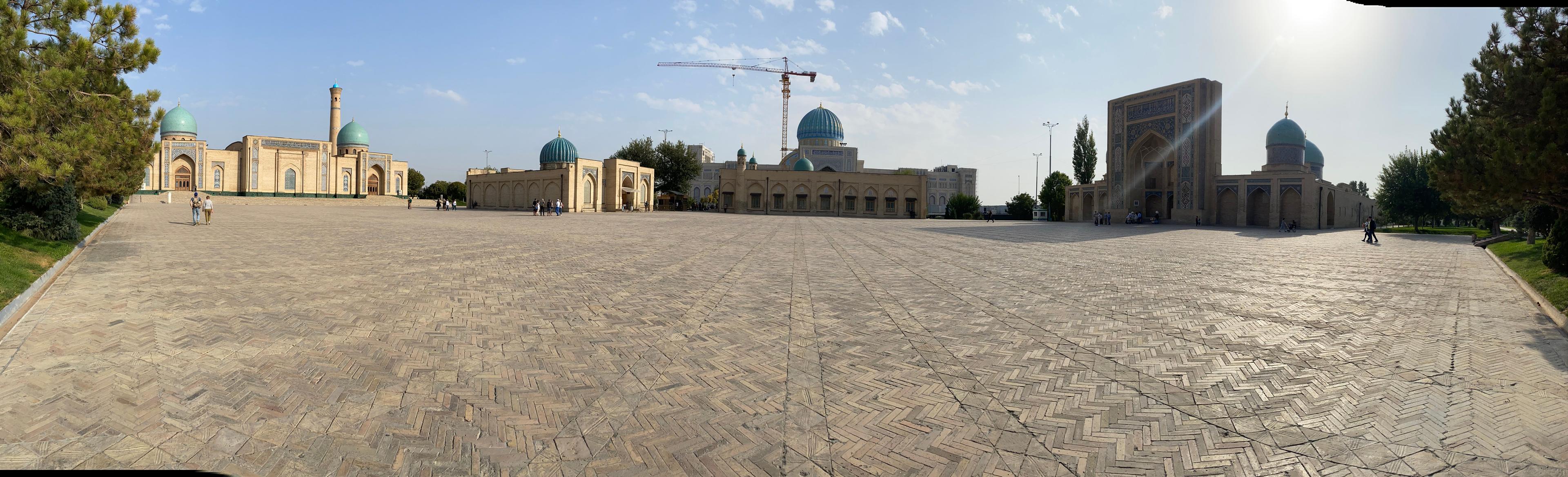
- Day 1, Tashkent: arrival, rest, then the Khast-Imam square in the afternoon: the mausoleum of Kaffal Shashi, the Barakhan Madrasah and the Hazrati Imam Mosque. Maghrib at the white marble Minor Mosque.
- Day 2, Tashkent: the Center for Islamic Civilization and the Uthman Quran in the morning; Dhuhr at Hazrati Imam; in the afternoon the mausoleum of Sheikh Zainuddin Bobo in Kukcha and the shrine of Zangi-ata on the edge of the city.
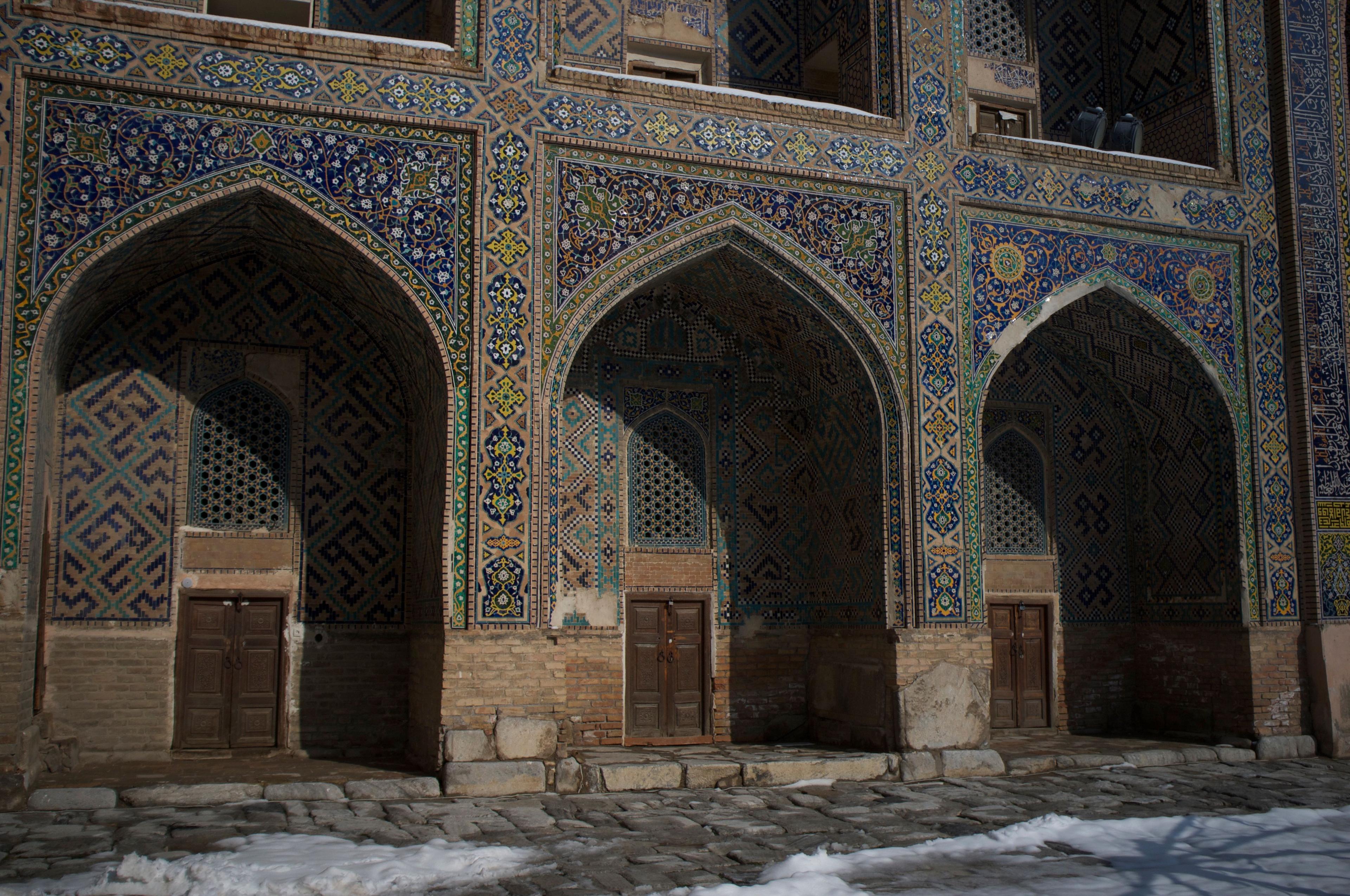
- Day 3, to Samarkand: a morning train of about two hours. Shah-i-Zinda, where Qusam ibn Abbas, cousin of the Prophet, is buried; Dhuhr at the Hazrat Khizr Mosque; the tomb of Khoja Daniyar.
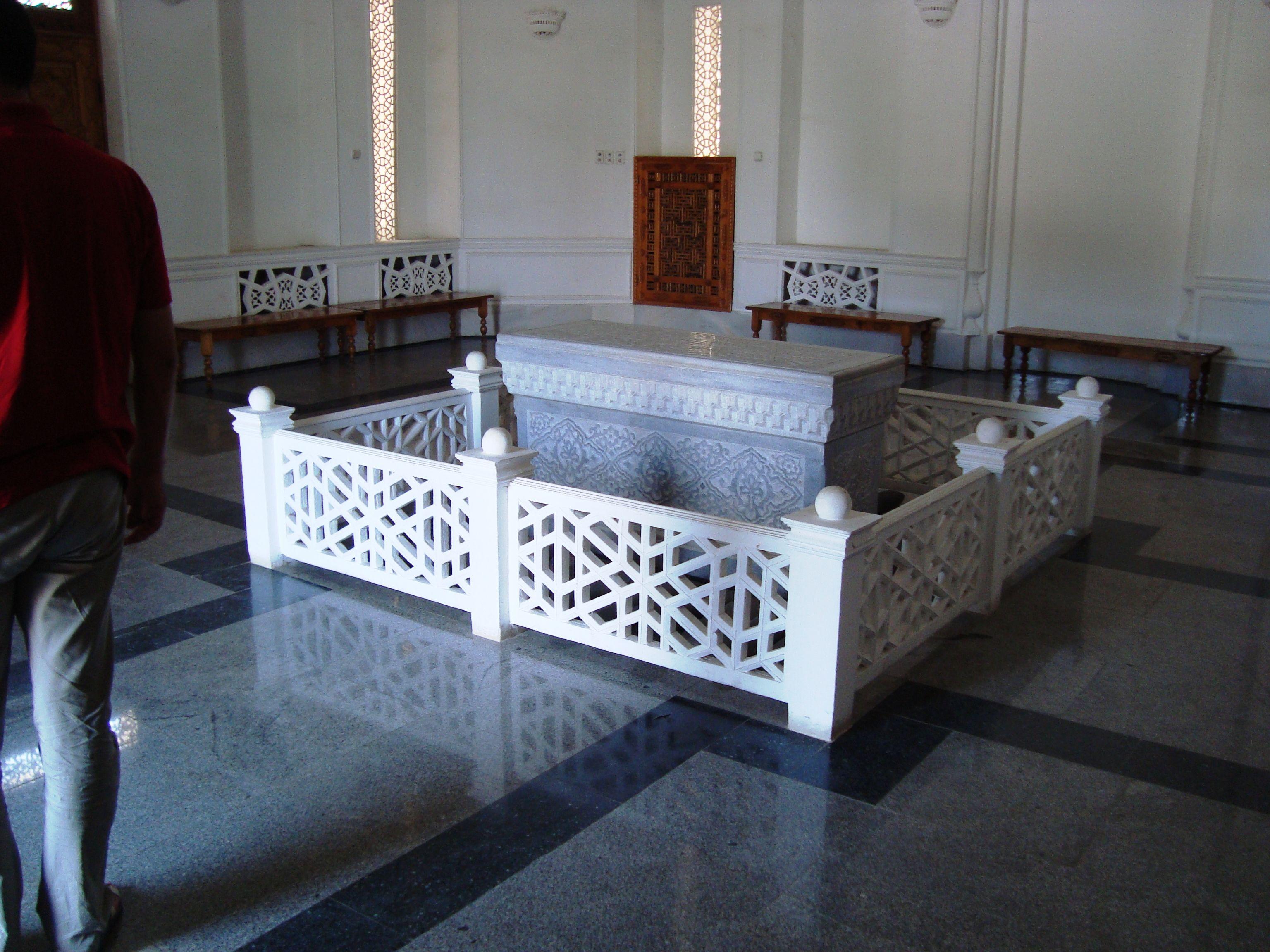
- Day 4, Samarkand: the Imam al-Bukhari complex at Hartang, about 40 minutes north, with Dhuhr in its great mosque; then the mausoleum of Imam al-Maturidi and the shrine of the Naqshbandi master Khoja Ahror Vali.
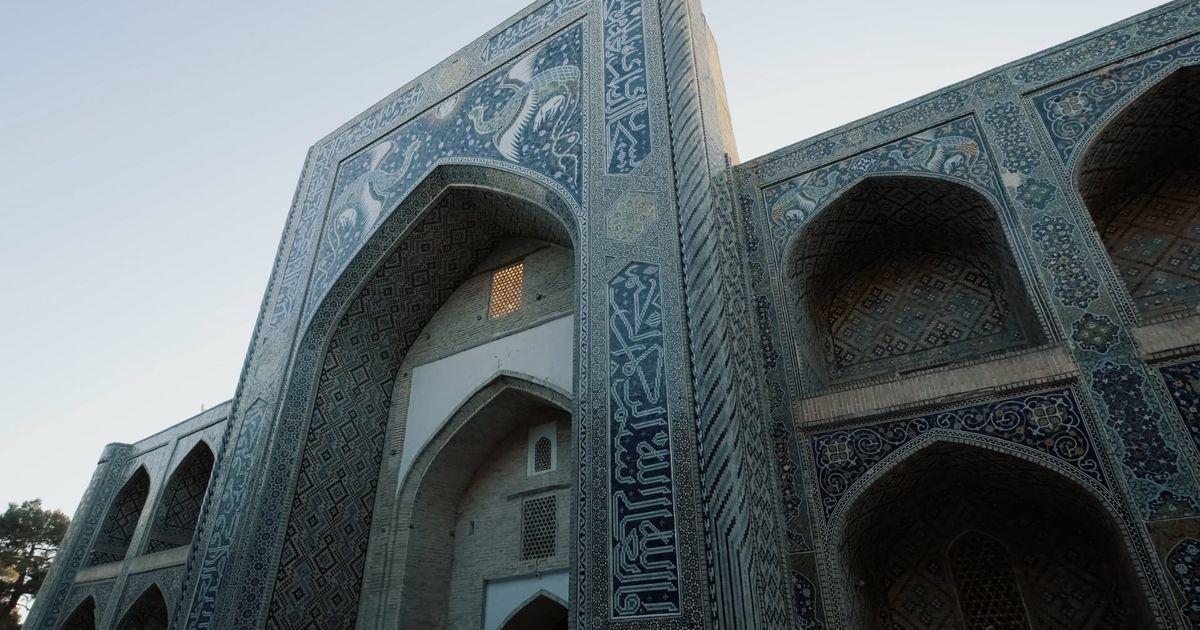
- Day 5, to Bukhara: a train of under two hours. The Bolo Hauz Mosque, the Kalyan Mosque under the great minaret, and Chashma-Ayub.
- Day 6, Seven Pirs, part one: Gijduvani, Revgari, Fagnavi, Romitani and Baba Samasi.
- Day 7, Seven Pirs, part two: Amir Kulol and Bahauddin Naqshband, then the necropolis of Chor-Bakr.
- Day 8: departure from Bukhara, or the train back to Tashkent for an international flight.
If you arrive on a Thursday, Jumu'ah can be prayed at the Hazrati Imam Mosque in Tashkent; if Friday falls in Samarkand, plan the Imam al-Bukhari complex for that day.
Adding Termez, Khiva or the Fergana Valley
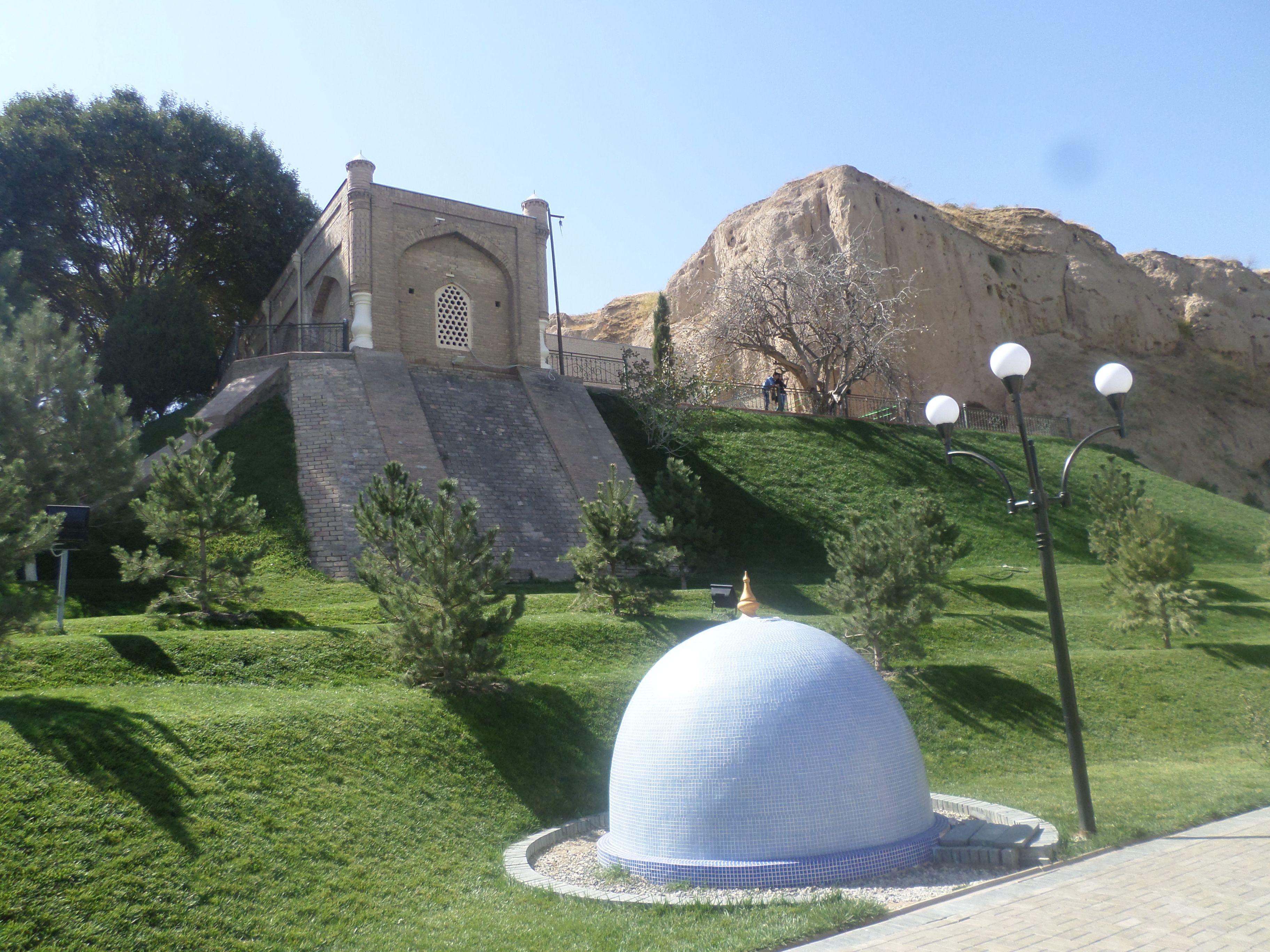
Termez, on the Amu Darya opposite Afghanistan, is the third great ziyarat region and adds two days to the route. Domestic flights from Tashkent take about an hour and a half. In one full day you can visit the mausoleum of al-Hakim at-Termizi in Old Termez, the Sultan Saodat ensemble of the Termez sayyids, and the memorial complex of Imam Abu Isa at-Termizi, compiler of the Jami' at-Tirmidhi, about an hour north in Sherobod district. Our Termez travel guide covers the city and its Buddhist sites. Avoid June to August: the south is often above 40°C.
Khiva is a different kind of visit. Its saint is Pakhlavan Mahmud, a 14th-century poet and wrestler, whose turquoise-domed mausoleum inside Ichan-Kala is a place of du'a for local families. It fits a longer trip that also takes in the architecture of Khorezm.
The Fergana Valley has hundreds of local shrines, including the Hazrat Ali shrine at Shakhimardan, an Uzbek enclave inside Kyrgyzstan, and the tombs of the Kokand khans. Access to Shakhimardan crosses Kyrgyz territory and rules change, so it needs careful planning; most first-time pilgrims leave the valley for a second visit.
Just across the border in Kazakhstan, the mausoleum of Khoja Ahmad Yasawi in Turkestan is a major pilgrimage site in its own right. We can arrange the transfer from Tashkent to the border; our Turkestan and Shymkent guide explains the crossing.
Halal food on a ziyarat tour
Uzbekistan is a Muslim-majority country, and the meat served in local restaurants is halal by ordinary practice: lamb, beef and chicken, with no pork on traditional menus. Plov, shashlik, lagman, manti and samsa are all part of daily life, and bread and green tea come with every meal.
A few points are useful to know:
- "Halal by practice" is not the same as certified. Uzbekistan introduced halal labelling for certified products and services in 2025, and some restaurants now display a certificate. If certification matters to you or to your group's ustaz, ask for certified restaurants when you book.
- Alcohol is legal and sold in shops, hotels and some restaurants. Traditional chaikhanas and national restaurants often serve none. On a ziyarat tour, we book alcohol-free venues wherever possible and can ask a hotel to empty the minibar.
- Breakfasts in hotels are usually buffets with eggs, bread, cheese, fruit and sometimes sausages; ask the hotel if you want to check what the sausages are made of.
- Groups from Southeast Asia sometimes miss rice and chilli. Plov is a rice dish, and many restaurants will bring chilli sauce on request.
Our guide to halal travel in Uzbekistan goes into food, alcohol-free options and Ramadan in more detail, and our Uzbek food guide explains the dishes.
Planning around the five prayers and Jumu'ah
On a well-planned ziyarat, the day is built around the prayer times rather than squeezed between sights. In practice:
- Prayer times: the Muslim Board of Uzbekistan publishes official daily times on muslim.uz. Local timetables follow the Hanafi method, so Asr comes noticeably later than in the Shafi'i timetables used in Malaysia and Indonesia. Many visitors keep their home method; either way the guide plans stops around it.
- Where to pray: most holy sites have a working mosque or a prayer room, with places for wudu. Airports and the main railway stations have prayer rooms. There is no prayer space on the Afrosiyob train itself, so trains are timed between prayers.
- Jumu'ah: the large Friday mosques fill 30 to 45 minutes before the start, and mats are laid in the courtyards when the halls are full. The khutbah is usually in Uzbek. Good choices are the Hazrati Imam Mosque in Tashkent, the great mosque of the Imam al-Bukhari complex, and the Kalyan Mosque in Bukhara. Plan no driving at Friday midday.
- Women: big mosques and complexes such as Hazrati Imam and Imam al-Bukhari have women's areas, but many neighbourhood mosques do not, and local women usually pray at home. Arrangements for women at Friday prayer vary by mosque, so it is worth checking in advance.
Fajr comes early in summer, around 03:30 to 04:00 in June, so on summer tours we avoid early trains after a short night.
How much does a ziyarat tour to Uzbekistan cost?
Prices depend on group size, hotel level and season. As a guide to typical prices in 2026 for land arrangements (hotels, meals as listed, transport, guide and entrance tickets, without international flights), per person sharing a twin room:
- Group tours of 15 to 40 pilgrims by coach, 7 to 8 days, 3 to 4-star hotels: roughly US$800 to 1,000.
- Private tours for two people, 6 to 8 days, comfort hotels: roughly US$1,150 to 1,500.
- Private tours with premium hotels or for a single traveller: from about US$1,800, and over US$2,500 for one person.
If you organise parts of the trip yourself, these are useful 2026 reference points:
- A private car with driver in a city: typically US$50 to 100 a day; a full day out of town, such as the Seven Pirs, costs more.
- A licensed guide: typically US$50 to 100 a day, more for rarer languages.
- The Center for Islamic Civilization in Tashkent: US$25 for a foreign adult and US$20 for a child, according to the prices announced in March 2026.
- The Imam al-Bukhari complex: tickets from 15,000 to 250,000 som depending on the type, sold online since May 2026.
- A lunch in a local restaurant: typically US$8 to 15 per person.
- Donations at shrines: small notes are the norm; keep 5,000 and 10,000 som notes handy.
Exchange rates and fees change, so treat these as ranges as of November 2026 and check official sites for live prices. Our travel cost guide covers hotels and transport in more detail.
Group or private ziyarat? Travelling with an ustaz
Most pilgrims from Malaysia and Indonesia travel in groups organised by an umrah or ziarah agency at home. A religious teacher, an ustaz or mutawwif, travels with the group, leads the prayers and the du'a at each shrine, and explains the significance of each place. The local operator provides the hotels, coach, halal meals and a local guide. This is the most affordable way to go, and many pilgrims value praying together.
A private ziyarat suits families, couples and small groups of friends. You choose the dates and the pace, spend as long as you wish at each grave, and the guide adapts the day to your prayer method and to the needs of older travellers or children. It costs more per person, but less than many expect when four to six people share a car and guide.
Whichever you choose, ask who the guide will be. A good ziyarat guide knows the history of each scholar and saint, speaks about it with respect, and understands that the purpose of the day is prayer, not sightseeing. In Uzbekistan most guides speak English or Russian; guides in Arabic, Indonesian, Malay or Turkish are fewer and should be requested early.
Best time for a ziyarat tour, and Ramadan
Spring (late March to May) and autumn (September to early November) are the most comfortable seasons, with daytime temperatures of roughly 18 to 30°C, and they are the peak months for groups. Summer is hot, often 35 to 42°C in Bukhara and Termez, so visits are planned for the early morning and late afternoon. Winter is cold and quiet, with low hotel prices.
Plan around these dates:
- Ramadan 2027 is expected to begin around 8 February 2027 and end with Eid al-Fitr around 9 or 10 March, depending on the moon sighting. Restaurants stay open during the day, and iftar with a local family is a memorable experience, but a fasting tour needs a lighter daily programme.
- Eid al-Adha 2027 is expected around 16 May. Large complexes are very busy around both Eids.
- Fridays at the Imam al-Bukhari complex and at Bahauddin Naqshband draw large local crowds, which some pilgrims enjoy for the atmosphere.
- Bukhara's Naqshbandi tourism festival takes place in September.
Indonesian school holidays in late June and July, and the December year-end break, are popular with families, despite the heat or cold.
What to expect at the shrines
Uzbekistan's holy sites range from vast new complexes to village graves under old mulberry trees. A few things help pilgrims arriving for the first time:
- Dress: women cover arms and legs and wear a headscarf; men wear long trousers and sleeved shirts. Shoes come off in prayer halls.
- Crowds: the Imam al-Bukhari complex is designed for up to 65,000 visitors a day, while the Seven Pirs are often quiet. Local schoolchildren, newlyweds and families from the countryside visit constantly, and they are usually delighted to meet pilgrims from abroad.
- Local customs: you will see people touching grave enclosures or walking around sacred trees. Visitors follow their own practice and nobody expects you to join in.
- Language: caretakers speak Uzbek and Russian, often some Arabic. Many local people know a few words of Arabic from the Qur'an, and a shared greeting goes a long way.
- Opening hours: the large complexes keep fixed hours (the Imam al-Bukhari complex opens at 10:00), while village shrines open in daylight with a caretaker present.
Our ziyarat guide has a section on etiquette at shrines, and our article on the Seven Pirs of Bukhara describes the route around Bukhara in detail.
Visas, flights and practical points
- Visas: citizens of Malaysia, Indonesia and Turkey, among many others, can visit Uzbekistan visa-free for up to 30 days. Travellers from Pakistan and India use the e-visa. Check the official portal e-visa.gov.uz or an Uzbek embassy before travelling; our visa guide has details.
- Flights: Uzbekistan Airways flies direct from Kuala Lumpur to Tashkent, and Tashkent is linked to Istanbul and the Gulf hubs. Uzbekistan promotes "Umrah Plus" journeys that combine umrah with a ziyarat in Uzbekistan via these hubs.
- Registration: hotels register foreign guests automatically.
- Money: cards work in hotels and larger shops, but carry Uzbek som in cash for donations, bazaars and village shrines.
- Health: the water at sacred springs is drunk by many locals; if you are not used to it, take a small sip or bring bottled water.
Plan your ziyarat tour with TourEast
We are a Tashkent and Bukhara based team, and we run dedicated ziyarat tours: an eight-day Grand Ziyarat of Uzbekistan, a three-day Seven Pirs of Bukhara programme, and one-day ziyarat tours in Tashkent, Samarkand and Bukhara, with halal meals throughout and every day planned around the prayers and Jumu'ah. Guides in Indonesian, Malay or Arabic are available on request, and we work with agencies that bring their own ustaz. Send us your dates and group size, and we will suggest a route.