An honest guide to renting a car and driving in Uzbekistan in 2026: who rents to foreigners, whether you need an International Driving Permit, deposits, road quality by route, fuel types and methane stations, speed limits, checkpoints, and why most visitors end up with a car and driver.
Facts, prices and schedules checked on November 4, 2026
Can you rent a car and drive yourself around Uzbekistan? Yes, and every year more visitors do. Should you? That depends on where you are going, how you feel about police checkpoints and methane queues, and whether the arithmetic of a hire car beats the cost of a car with a local driver, which in Uzbekistan is often surprisingly close.
This is a straightforward guide to car rental and driving in Uzbekistan as of November 2026: which companies rent to foreigners and where, what licence you need and whether an International Driving Permit is required, deposits and insurance, how the main roads actually are, what fuel the cars run on and why that matters, the speed limits and the 2026 fines, and what happens at checkpoints. At the end we compare self-drive with the alternative most travellers choose.
Who rents cars to foreigners, and where
Car rental in Uzbekistan is concentrated in Tashkent. The international brands, including Sixt, Hertz and Europcar, have counters at Tashkent International Airport and offices in the city, and a growing number of local firms rent through their own websites and through aggregators. Outside the capital the choice shrinks quickly: there are a few agencies in Samarkand and Bukhara, and almost nothing in Khiva, Nukus or the Fergana Valley, so most self-drive trips start and end in Tashkent.
What you will find on the lots:
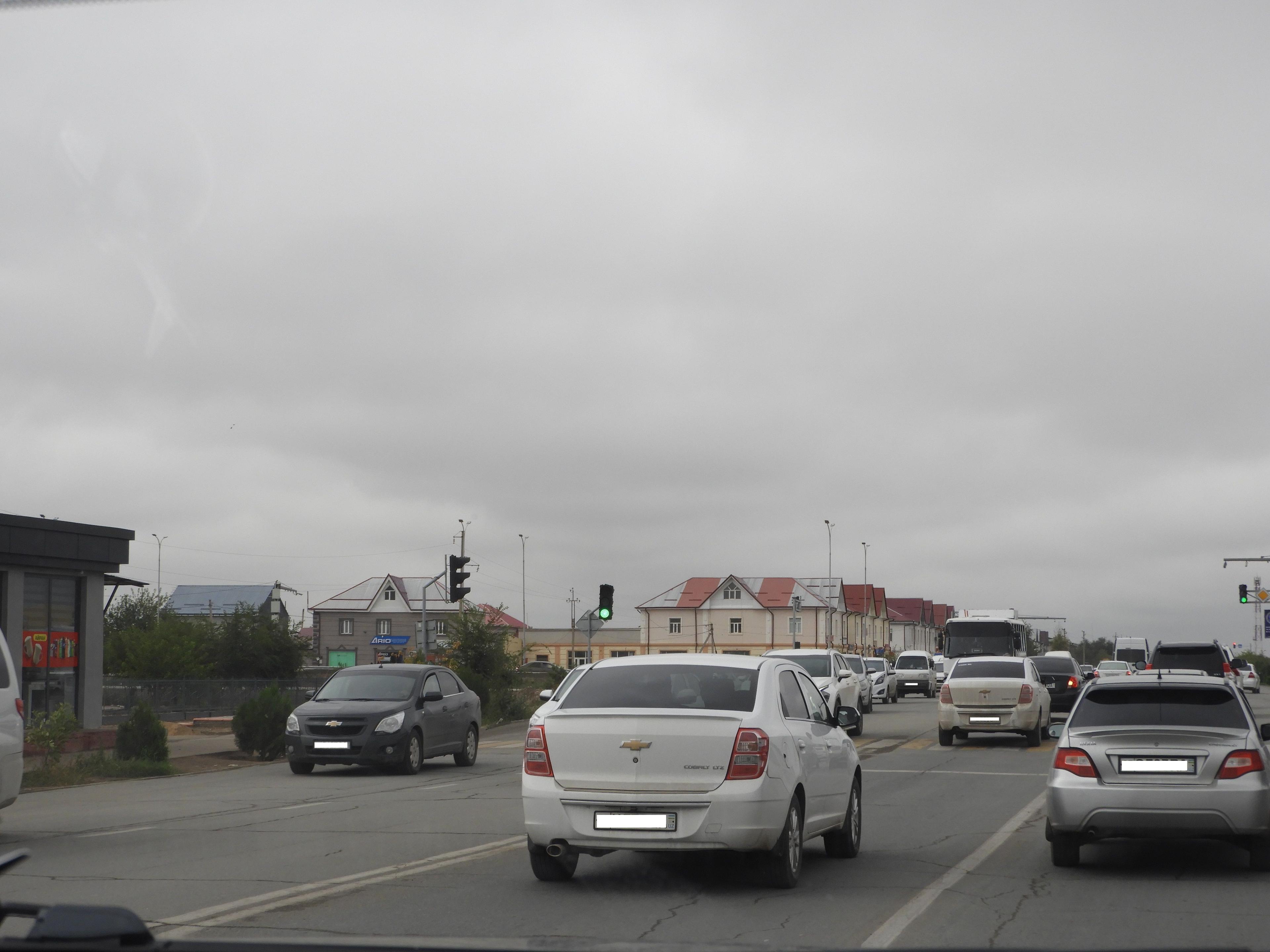
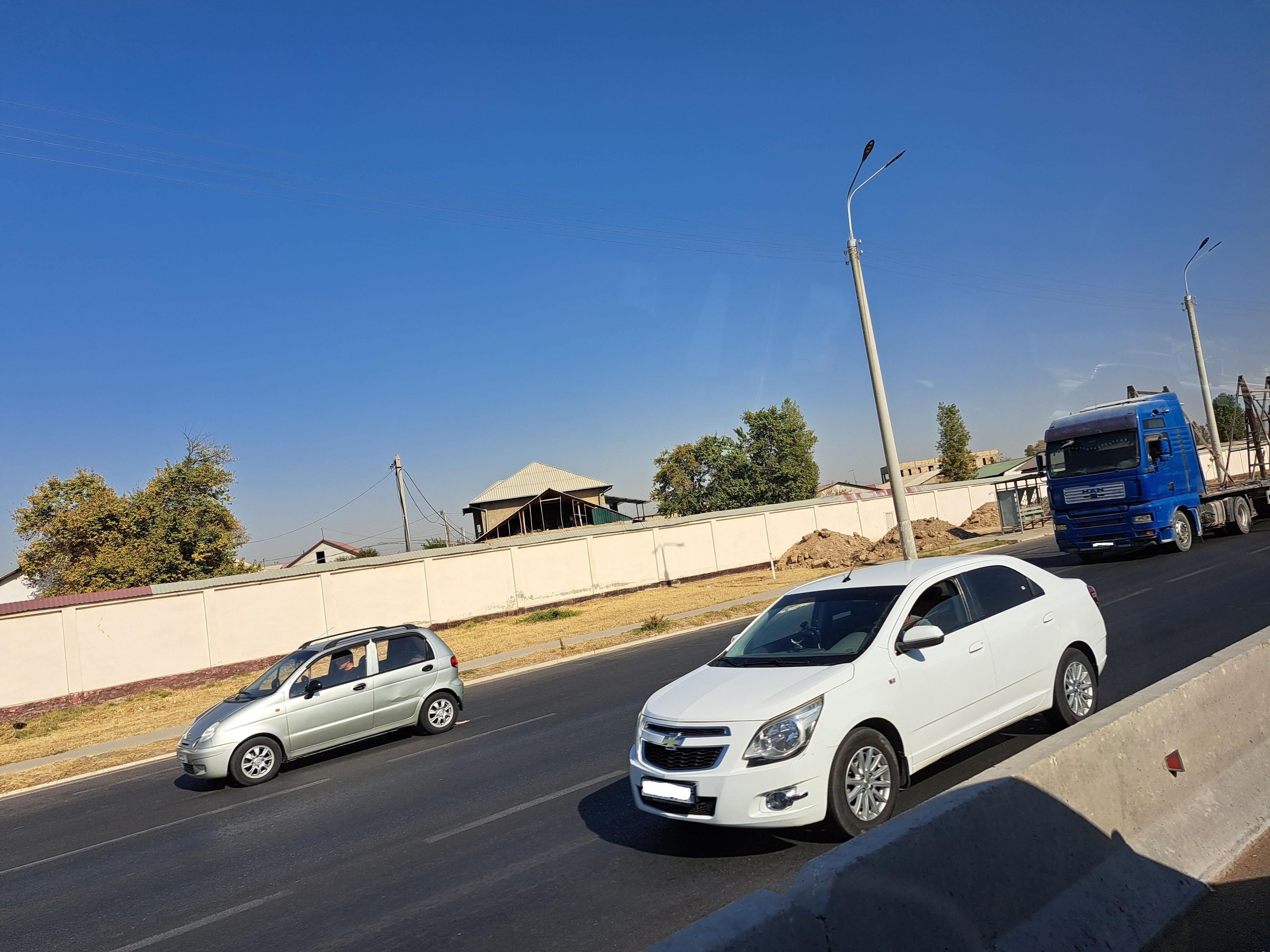
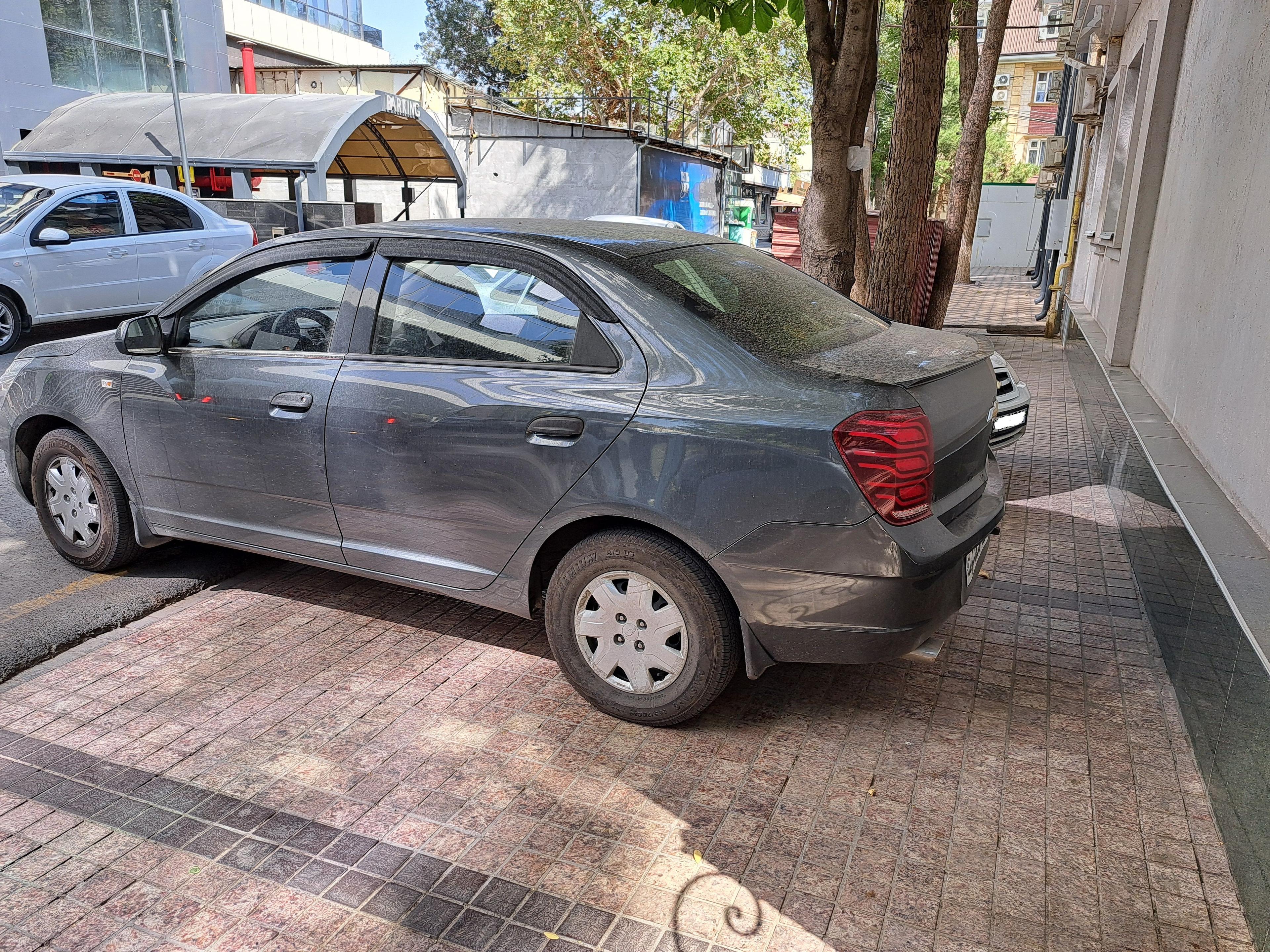
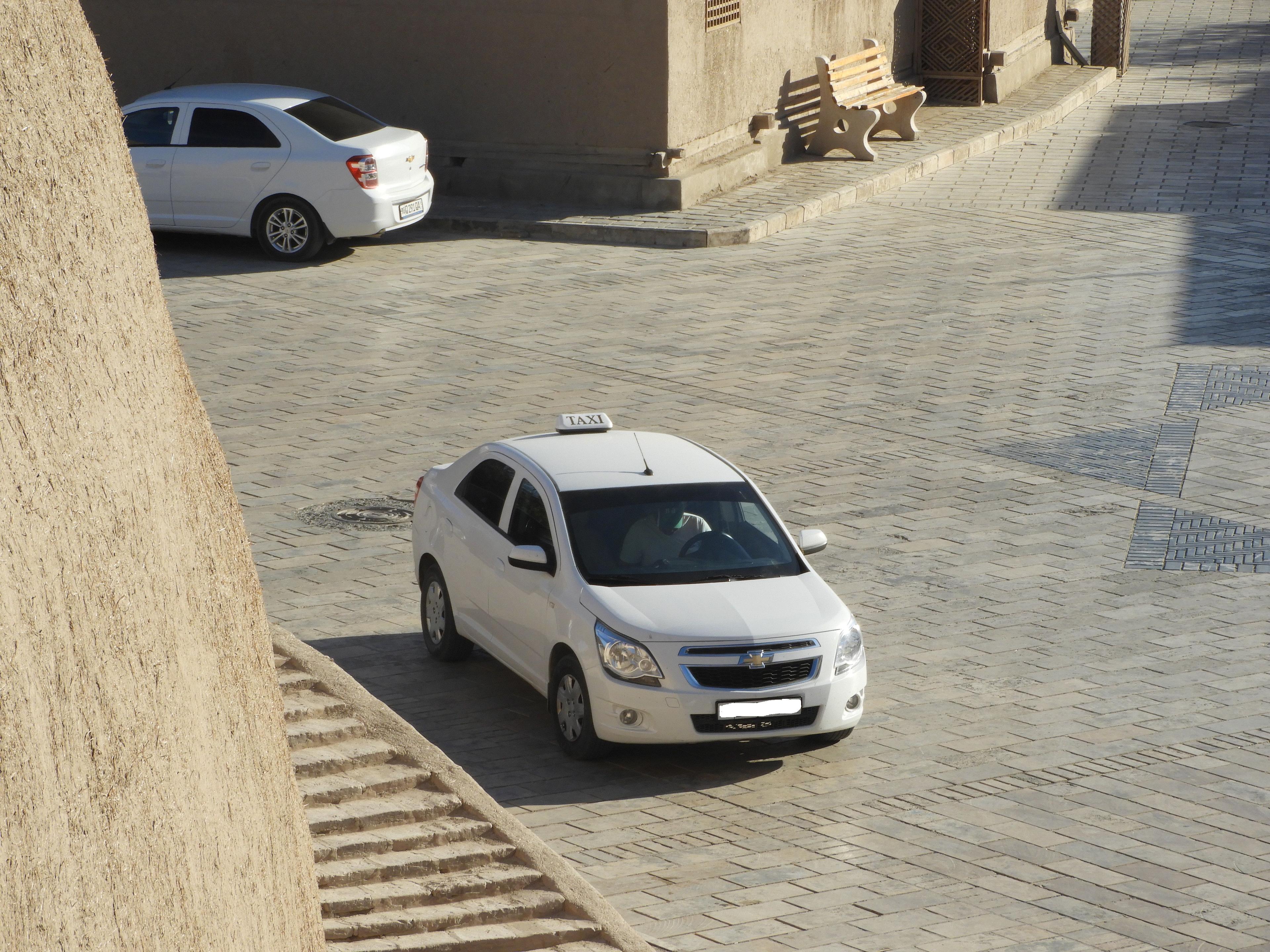
- Chevrolet models built in Uzbekistan: the Cobalt, Nexia, Lacetti/Gentra, Tracker and the Damas minivan. The Cobalt is the national car and the cheapest to rent and repair.
- Kia, Hyundai and Toyota saloons and SUVs at the international counters.
- 4x4s (Toyota Land Cruiser or Prado, occasionally a UAZ) from specialist firms, needed for the Aral Sea and the Ustyurt Plateau.
Typical 2026 rates, with insurance and unlimited or generous mileage: about US$35 to US$60 a day for a Cobalt or similar from a local firm, US$60 to US$100 a day for a mid-size saloon or small SUV from an international brand, and US$120 to US$200 a day for a 4x4. Rates at the airport counters tend to be higher than in the city. Book ahead in April, May, September and October; fleets are small and sell out.
Most companies require the driver to be at least 21 or 23, to have held a licence for one to three years, and to pay a deposit by credit card. Deposits of US$300 to US$1,000 are normal, blocked on the card rather than charged. Check the excess on the insurance; it can be high.
Do you need an International Driving Permit in Uzbekistan?
Bring one. Uzbekistan acceded to the 1968 Vienna Convention on Road Traffic in 1995, and the official government guidance (based on Cabinet of Ministers Resolution 408 of 31 May 2018) states that international driving permits, and national licences that meet the Vienna Convention format, are valid for driving in the country. Licences from countries outside the Convention are checked by the traffic police through the Ministry of Foreign Affairs, which is not a process you want to start on holiday.
In practice:
- Rental companies generally ask for a 1968-model International Driving Permit together with your original national licence. Some accept an EU photocard licence alone; many do not, and the airport counters have been known to insist on the original IDP, not a copy.
- Traffic police at a roadside stop will ask for your licence; an IDP in Russian and English ends the conversation quickly.
- Drivers from the United States, Canada, Australia, the United Kingdom, Japan and most of Europe can obtain an IDP from their national motoring association for a small fee in a few days. Get the 1968 version; the 1949 version is not the one Uzbekistan recognises.
- Bring your passport and keep your hotel registration slips in the car. Police document checks include them.
How long you may drive on a foreign licence as a visitor is not stated in the public guidance; for a tourist stay of up to 30 days it has never been an issue.
Road quality by route in 2026
Uzbekistan's main roads are better than their reputation, and the gaps are predictable.
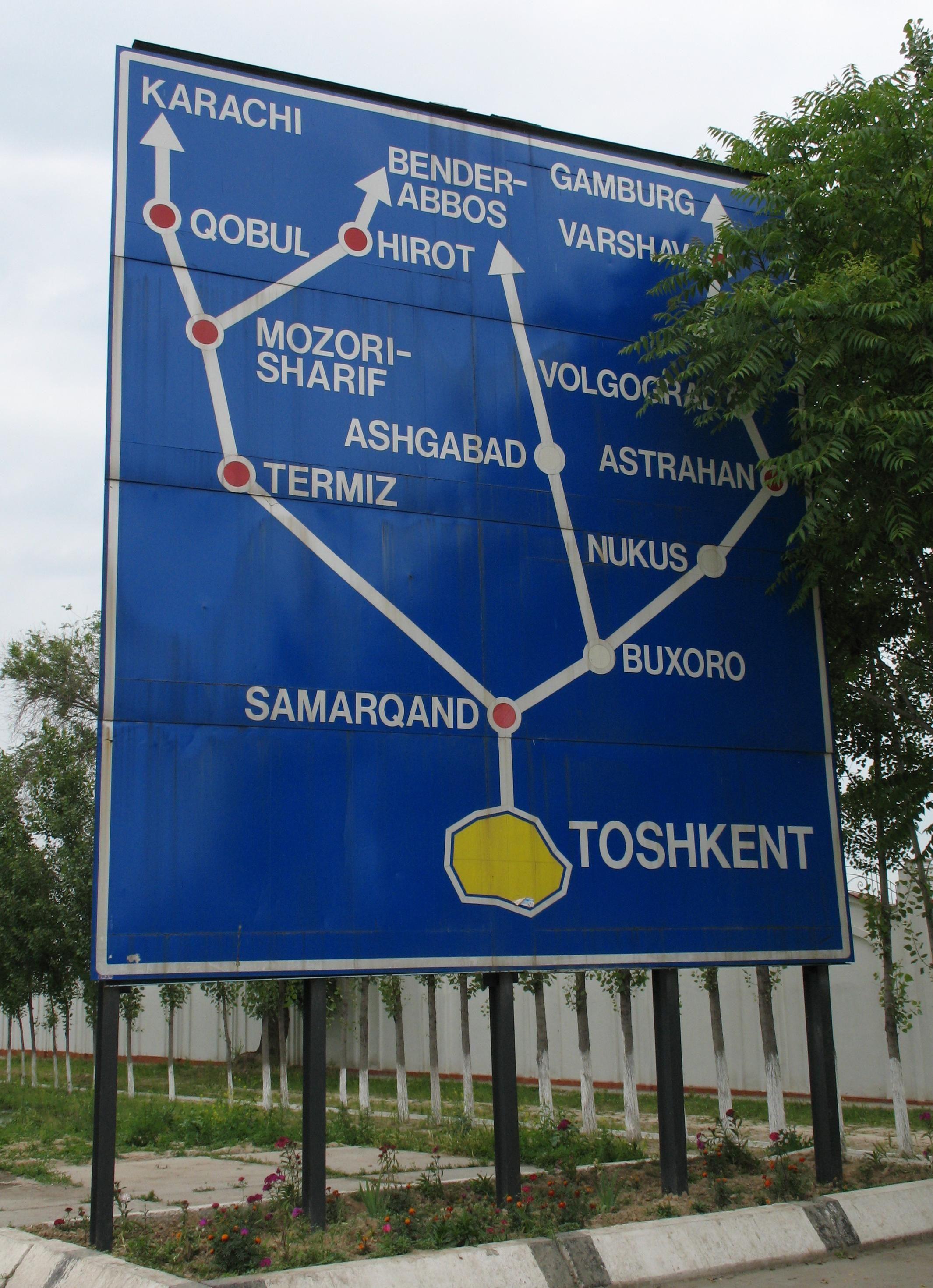
Tashkent to Samarkand (about 300 km, 4 to 5 hours). The M39 is a dual carriageway for most of the way, through Jizzakh and the Gates of Tamerlane pass. Good surface, heavy lorry traffic, speed cameras.
Samarkand to Bukhara (about 270 km, 4 hours). The M37 across the steppe via Navoi. Mostly good, with some rough patches and long straight stretches where fatigue is the danger. Rabati Malik caravanserai is the stop.
Bukhara to Khiva (about 450 km, 6 to 7 hours). The A380 across the Kyzylkum Desert has been rebuilt in stages over the last decade and in 2026 most of it is decent, but sections remain broken and the surface changes without warning. No shade, few services, and in summer the heat is dangerous; carry water and leave early. This is the drive on which a self-driver most often regrets the decision.
Khiva to Nukus (about 200 km, 3 to 4 hours). Reasonable, with sand drift in places.
Nukus to Muynak (about 200 km, 3 hours). Paved and fine. Beyond Muynak, across the former seabed to the Aral Sea, there is no road, only tracks, and a 4x4 with a local driver is the only sensible option.
Tashkent to the Fergana Valley (about 300 km to Kokand, 4 to 5 hours). The road crosses the Kamchik Pass at 2,267 m through two tunnels. Good surface, but heavy lorry traffic, police controls at both ends, and closures in snow. Chains or winter tyres are required from November to March.
Samarkand to Shakhrisabz (about 90 km). Over the Takhtakaracha Pass; a good, scenic mountain road, closed occasionally by snow in winter.
Tashkent to Chimgan and Charvak (about 80 to 100 km). Good road, heavy at weekends.
City driving is a different matter. Tashkent traffic is dense and assertive, lane discipline is loose, and parking is informal; many visitors who are happy on the open road leave the car at the hotel in the cities and use Yandex Go taxis.
Fuel: petrol, methane and the queue problem
Fuel is the thing that most surprises foreign drivers. A large share of Uzbek cars, including most taxis and many hire cars, run on compressed methane (CNG) or propane rather than petrol, because gas is far cheaper. This matters for you in three ways.
Prices. As of August 2026, at Tashkent stations, AI-92 petrol cost about 13,500 som a litre (roughly US$1.10) and AI-95 about 17,000 som (roughly US$1.35), which makes Uzbekistan the most expensive country in Central Asia for petrol. Methane rose to about 5,800 som per cubic metre in June 2026. Diesel is available at main stations but less common; most diesel vehicles are lorries. Prices change frequently; goldenpages.uz keeps a live list for Tashkent.
Availability. Petrol is reliable in cities and along the main corridors. In the desert and in smaller towns, stations may have only AI-80 (low octane) or run dry, so fill up at every opportunity on the Bukhara to Khiva and Khiva to Nukus legs. Methane stations are often restricted in winter, when gas is diverted to households: in January 2026 the government reintroduced temporary limits on CNG stations across the country, and long queues formed. If your hire car runs on methane, ask the agency how to switch to petrol and keep the petrol tank full.
Quality. Stick to the big branded stations (UNG, Mustang and others) where you can. Carry a jerrycan on the desert legs if the agency allows it.
As a rule of thumb, a Cobalt on petrol will cost about US$8 to US$10 per 100 km in fuel in 2026.
Speed limits, fines and the 12-point system
Uzbekistan tightened traffic enforcement in 2024 and 2025, with higher fines and a demerit system. The limits in 2026, per the national traffic rules:
- Built-up areas: 60 km/h, reduced to 50 km/h or lower near schools, kindergartens and hospitals
- Residential courtyards and zones: 20 km/h, pedestrians have priority
- Ordinary roads outside towns: 90 km/h for cars (80 to 90 for buses and lorries, 70 when towing)
- Motorways: 100 km/h for cars
- Posted signs override all of the above; some rebuilt sections of the M39 are signed at 110 km/h
Fines are set in multiples of the base calculation unit (BRV) and rise steeply with the excess: one unit for up to 20 km/h over, five units for 20 to 40 km/h over, nine units for more than 40 km/h over, with repeat offences bringing loss of licence. Cameras subtract 5 km/h for tolerance but that is a technical margin, not an allowance. A 12-point demerit system applies in 2026; twelve points in a year means loss of the licence and a retest. For a visitor, points matter less than the practical reality that camera fines are charged to the rental company and passed on to your card with an administration fee.
Other rules to know:
- Seat belts are compulsory front and rear, and enforced.
- Alcohol: the legal limit is effectively zero. Do not drive after a single drink.
- Mobile phone use while driving is fined; hands-free is allowed.
- Headlights on outside towns are expected.
- Right turn on red is not permitted unless signed.
Radar cameras are now common on the Tashkent to Samarkand and Samarkand to Bukhara roads and in the cities, and they work.
Police checkpoints and what to expect
Uzbekistan maintains police posts at the boundaries between regions and at the entrances to major cities. A self-driver on the Tashkent to Khiva route will pass through five to eight of them. Most of the time you are waved through; sometimes you are stopped, your documents checked and the boot opened. It is routine, polite and takes two to five minutes.
Have ready, in the glovebox: passport, licence and IDP, the rental contract and the car's registration document (the agency gives you a copy or the original), and your hotel registration slips. If you are stopped for an offence, a fine is issued on paper or through the e-system; cash payment at the roadside is not required and should not be offered. Foreigners occasionally report requests for small payments; a calm refusal and a request for the written fine usually ends it. Keep a phone number for the rental company handy.
Border areas near Termez, along the Amu Darya and in parts of the Fergana Valley have extra controls, and some archaeological sites near the Afghan border require a permit. Driving across international borders in a hire car is normally not permitted; check the contract if you plan to continue to Kazakhstan or Kyrgyzstan.
Night driving, livestock and other hazards
The real risks on Uzbek roads are not the police. They are:
- Night driving outside cities. Unlit donkey carts, lorries without tail lights, livestock, and pedestrians walking on the carriageway. Plan to arrive before dark, always.
- Overtaking. Local drivers overtake on blind bends and expect you to make room. Drive defensively and leave a gap.
- Fatigue on the steppe and desert roads, where the straights run for 50 km.
- Summer heat on the Kyzylkum crossing, with temperatures above 40 degrees from June to August. Carry several litres of water per person.
- Winter ice on the Kamchik and Takhtakaracha passes.
- Potholes appearing suddenly on otherwise good roads, especially after the spring thaw.
Mobile coverage is good along the main corridors and patchy in the desert; download offline maps. Yandex Maps and Google Maps both work; Yandex has better local detail. Roadside assistance from the rental company is usually limited to Tashkent, so on a long route you are relying on local mechanics, who are resourceful and cheap. In the event of an accident, call 102 (police) and do not move the vehicles until they arrive; insurance claims depend on the police report.
Self-drive or a car with driver? The honest comparison
Here is why most visitors end up with a driver, even those who set out to rent a car.
Cost. A private car with a driver in Uzbekistan typically costs US$50 to US$100 a day in 2026 for a comfortable saloon, including the driver's fuel on short legs; long intercity transfers are priced per route, with Bukhara to Khiva in the range of US$120 to US$200 for the car. A hire car at US$40 to US$80 a day plus fuel, deposit, insurance excess and camera fines is not much cheaper, and sometimes dearer.
Effort. The driver handles checkpoints, parking, methane queues, the Kyzylkum crossing and the Tashkent traffic. You look out of the window.
Flexibility. With a driver you can still stop at every samsa oven and caravanserai; that is what they expect.
Self-drive wins when you are a confident driver who wants solitude on the road, when you are heading to the mountains around Tashkent for several days, or when you are touring the Fergana Valley at your own pace. For the classic Tashkent to Khiva route, the train for the long legs and a driver for the days in between is the combination most of our guests choose.
If you do rent, the ideal pattern is: trains between the big cities (the Afrosiyob to Samarkand and Bukhara, the day train to Khiva), and a hire car only for the days when you want freedom, such as Chimgan and Charvak from Tashkent, the Nuratau villages from Samarkand, or a loop through the Fergana Valley. Our articles on getting around Uzbekistan and on domestic flights cover the alternatives.
How TourEast can help
We arrange cars with professional drivers for single transfers, day trips and full itineraries, from a Chevrolet saloon for two to a minibus for a group, and we build routes that combine trains for the long distances with a driver for the days in between. If you prefer to drive yourself, we are happy to advise on routes, fuel stops and where a 4x4 is genuinely necessary, and to arrange the desert and Aral Sea legs with a local driver so you do not have to.