Samarkand to Bukhara by Afrosiyob or Sharq train, or by road with stops at the Rabati Malik caravanserai, the Malik sardoba, Nurata's Chashma spring and the potters of Gijduvan. Times, fares and which option to choose, as of November 2026.
Facts, prices and schedules checked on November 4, 2026
Samarkand to Bukhara is the classic middle leg of a Silk Road trip in Uzbekistan. The two cities are about 270 km apart, and you have a real choice: the high-speed train covers the distance in under two hours, while the road takes most of a day but passes some of the best roadside stops in the country.
This guide covers both, as of November 2026: which trains run and when, what they cost and how to book, how the station in Bukhara works, and what to see on the road, from the 11th-century Rabati Malik caravanserai and its domed cistern to Nurata's holy spring and the ceramic workshops of Gijduvan. Fares, classes and onboard service on the Afrosiyob are covered in detail in our separate Afrosiyob train guide.
Samarkand to Bukhara at a glance
- High-speed train (Afrosiyob or Jaloliddin Manguberdi): about 1 h 40 min to 1 h 55 min
- Express train (Sharq): about 2 h 50 min
- Private car, direct: about 4 to 4.5 hours
- Private car with stops at Rabati Malik and Gijduvan: a relaxed 7 to 8 hours
- Private car with a detour to Nurata: a long 10 to 11 hours, or two days with a night in a yurt camp
- Shared taxi or bus: about 4 to 5 hours, cheap but with no stops
In short: if you want the most time in the two cities, take the train. If you are interested in the Silk Road between the cities, with its caravanserais, cisterns and craft villages, drive at least once. A good compromise for a round trip is the train one way and the road the other.
Samarkand to Bukhara by train
All high-speed trains from Tashkent to Bukhara call at Samarkand, so there are several fast departures every day.
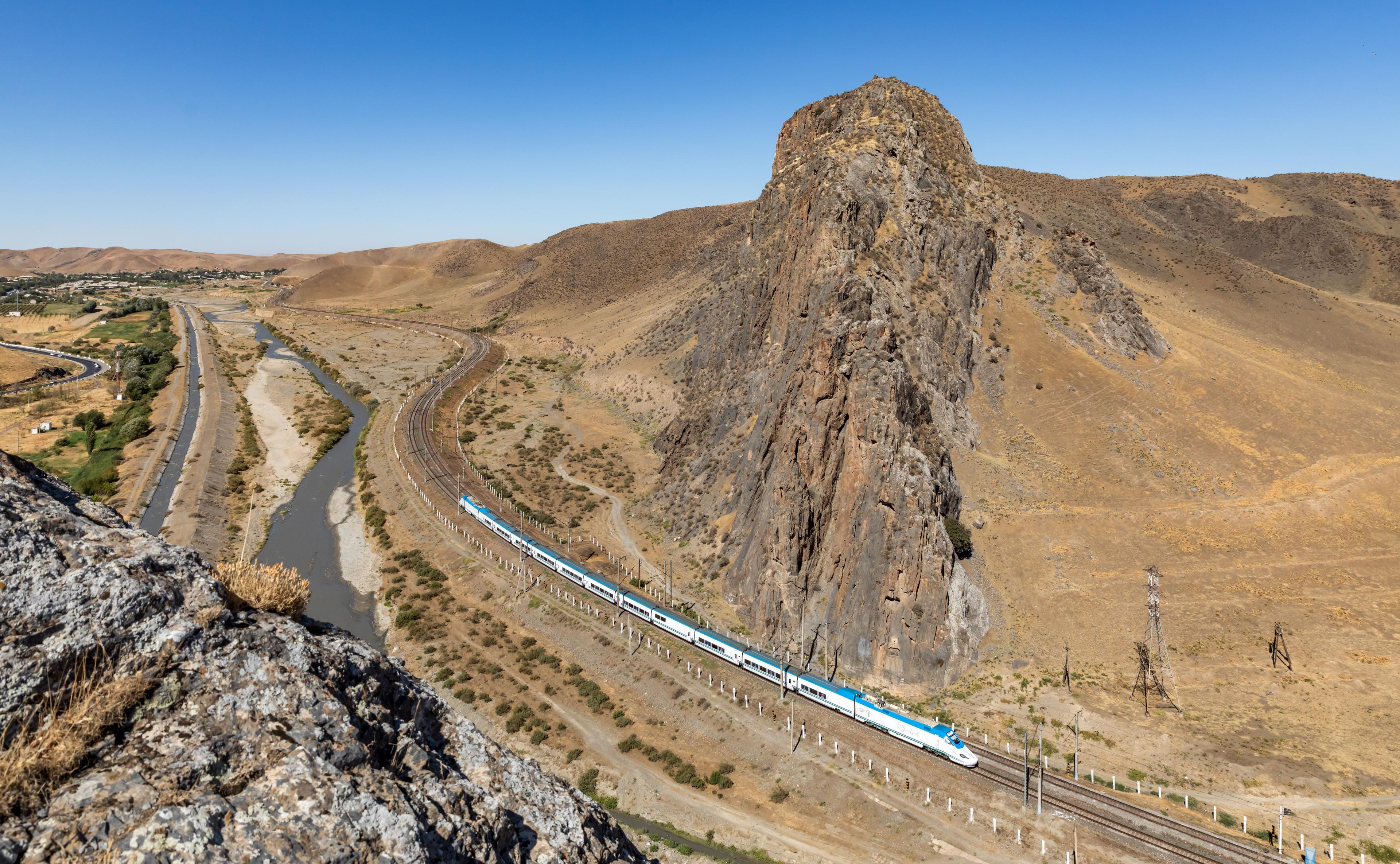
- Afrosiyob: the Talgo high-speed train, with economy, business and VIP classes. About 1 h 47 min to 1 h 56 min from Samarkand to Bukhara.
- Jaloliddin Manguberdi: the new high-speed train to Khiva, in service since May 2026, with economy and VIP classes. About 1 h 40 min to 1 h 55 min to Bukhara.
- Sharq: the conventional express, with open second-class seating and first-class compartments. About 2 h 50 min.
There are also overnight sleeper trains towards Bukhara, Urgench and Khiva. They pass Samarkand in the evening or the middle of the night, so they suit travellers continuing west to Khiva rather than this short hop.
One thing to know: most of these trains start in Tashkent, and many seats are sold for the whole journey. Only part of each train is available from Samarkand, so the popular morning trains can show as full from Samarkand even when there are seats from Tashkent. Book early in spring and autumn.
Samarkand to Bukhara train times
Typical departures from Samarkand to Bukhara in autumn 2026:
- 08:23 Afrosiyob, arriving about 10:10
- 09:13 Jaloliddin Manguberdi, arriving about 10:54
- 09:43 Afrosiyob, arriving about 11:39
- 10:49 Afrosiyob, arriving about 12:36
- 11:46 Sharq, arriving about 14:35
- 13:33 Jaloliddin Manguberdi, arriving about 15:27
- 22:13 Afrosiyob, arriving about 00:01
From Bukhara to Samarkand, the useful trains leave at about 10:57 (Jaloliddin Manguberdi), 15:09, 15:35 (Jaloliddin Manguberdi), 16:22, 16:55 (Sharq) and 18:14, taking 1 h 40 min to 2 h 30 min. There are also very early departures at about 03:34 and 05:21, which few travellers want.
Our tip: the 08:23 or 09:43 Afrosiyob from Samarkand puts you in Bukhara before lunch, with the afternoon free for the old town and sunset at Lyabi-Hauz. Timetables change by season and some trains run only on certain days, so check the live schedule on the official Uzbekistan Railways site before you plan around a specific train.
Samarkand to Bukhara train ticket prices and booking
Uzbekistan Railways publishes official fares for journeys from Tashkent, but not for the short Samarkand to Bukhara section. As of November 2026, an economy seat on the Afrosiyob between the two cities typically costs in the range of 165,000 to 200,000 som (about US$14 to 17), with business and VIP considerably more. The Sharq is cheaper. Treat these as a guide and check the exact fare when you search, because prices change and a booking fee is added online.
How to buy:
- Online on the official e-ticket site (eticket.railway.uz) or the Uzbekistan Railways app: register, choose a foreign passport as your document, enter the passport number exactly, and pay by card
- At any station ticket office with your passport, paying in som
- Through a tour operator or an international reseller, usually with a service fee
Sales open up to 60 days before departure. Carry your passport on the journey: it is checked at the station entrance and at the carriage door. Our Afrosiyob guide covers refunds, luggage and station security in detail.
Bukhara station is in Kagan
The most common surprise on this route is that Bukhara's railway station is not in Bukhara. Trains stop at Bukhara-1 station in the town of Kagan, about 12 to 15 km south-east of the old town.
From the station, a car to the old town takes 20 to 30 minutes. Yandex Go works in Bukhara and is the easiest option; drivers waiting at the exit ask more, so agree the price before getting in. If you are staying inside the old town, many guesthouses around Lyabi-Hauz are on pedestrian lanes, so the car may drop you at the nearest street and you walk the last few minutes.
For your departure from Bukhara, leave the old town at least an hour before the train. Evening traffic towards Kagan can be slow, and the station has a security check at the entrance.
In Samarkand the station is about 6 km from Registan Square, 15 to 20 minutes by car. If you travel with us, a driver meets you at both ends, so the station transfers are taken care of.
Samarkand to Bukhara by car: the old caravan road
The road follows the Zarafshan river west, roughly along the old caravan route between the two cities, through the city of Navoi. It is about 270 km and takes about four to four and a half hours without stops. The road is good on most stretches, with some slower sections through towns.
Ways to travel by road:
- Private car with driver. The only way to make the stops in this guide. A car and driver arranged through a hotel or agency typically costs around US$80 to 140 one way in 2026, depending on the vehicle, the stops and whether the driver speaks English. A guide in the car makes the stops far more interesting.
- Shared taxi. Shared cars leave Samarkand for Bukhara when full. Cheap and quick, but they will not stop at monuments, and luggage space is limited.
- Bus. Coaches run between the two cities' bus stations. The cheapest option, but slow, and both bus stations are outside the historic centres.
In summer, start early. From June to August the stretch through the Navoi region is very hot by midday, and the outdoor stops are best before 11:00.
Rabati Malik caravanserai and the Malik sardoba
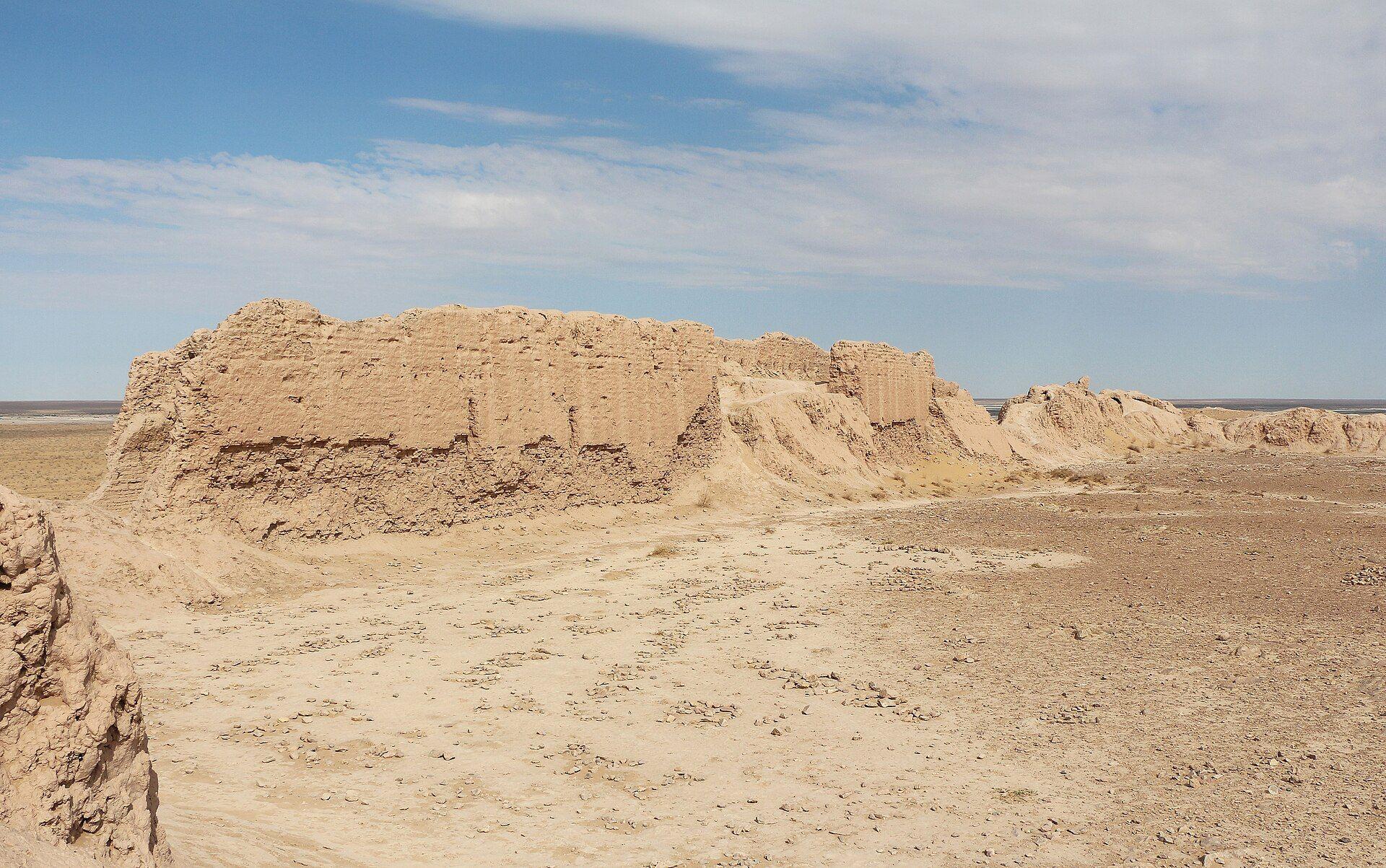
About two-thirds of the way to Bukhara, just west of the city of Navoi, a tall brick portal stands alone beside the highway. This is Rabati Malik, a royal caravanserai built by the Karakhanid ruler Shams al-Mulk Nasr, who ruled from Samarkand from 1068 to 1080. It was a fortified inn for rulers and caravans on the road between the two great cities.
What survives is mainly the monumental entrance portal, framed by terracotta with Arabic inscriptions, and the low lines of the walls behind it. Much of the complex was destroyed in the 1950s when the asphalt highway was built through it, and the portal was badly damaged in the 1968 earthquake before its restoration. Even so, it gives a strong sense of what a royal halt on the Silk Road looked like.
Across the road is the Malik sardoba, a domed brick cistern that stored water brought by underground channel from the Zarafshan. In the dry steppe between Samarkand and Bukhara, cisterns like this kept caravans alive. Walk down the steps into the cool interior and look up at the dome.
In 2023 Rabati Malik and the sardoba were inscribed on the UNESCO World Heritage List as part of the transnational Silk Roads: Zarafshan-Karakum Corridor. Allow 30 to 45 minutes for both. There is a small site museum and a modest entrance fee, paid in cash.
Chashma: Nurata's holy spring (a detour)
Nurata is not on the main road but north of it, at the foot of the Nuratau mountains on the edge of the Kyzylkum desert, almost 200 km from Samarkand. The detour adds several hours, so it suits travellers who want a slower road day or plan a night in the yurt camps near Lake Aydarkul.
The heart of Nurata is the Chashma complex, built around a spring that has been a place of pilgrimage for centuries. The water stays at about 19 to 20 degrees all year, and the pool is full of marinka, fish that local people regard as sacred and never eat. Around the spring are a Friday mosque, a domed shrine, an old bathhouse and a small museum, and above them rise the ruins of a fortress that local tradition links to Alexander the Great.
Chashma is an active religious site. Dress modestly, with shoulders and knees covered, and women should bring a scarf for the mosque. Our guide to Nuratau and the Aydarkul yurt camp shows how to turn this detour into an overnight trip.
Gijduvan: ceramics, kebabs and a Sufi shrine
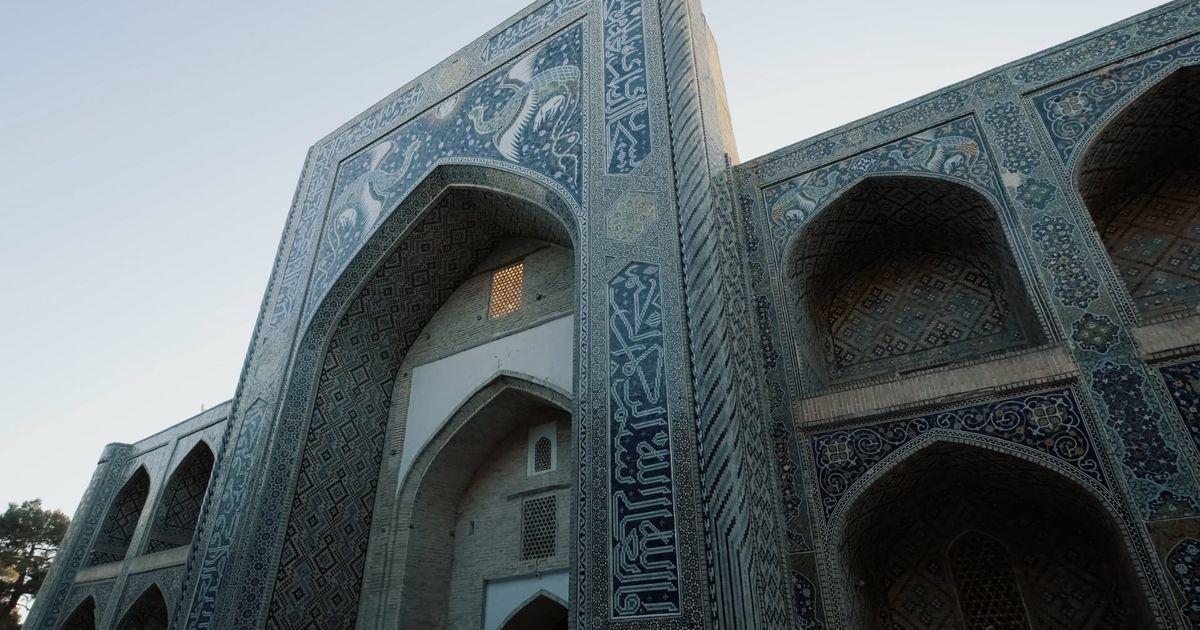
The last stop before Bukhara, about 45 km from the city, is Gijduvan, a small town with one of Uzbekistan's best-known ceramic traditions. Gijduvan pottery is recognisable by its warm palette of browns, ochres, greens and yellows, quite different from the blue-and-white ware of Rishtan in the Fergana Valley.
The best-known workshop belongs to the Narzullaev family, potters for six generations, whose home includes a museum of ceramics and a working studio. You can watch the wheel and the kilns, see historic pieces and buy directly from the makers. Large dishes are heavy, so ask about packing if you are flying home.
Gijduvan is also famous across Uzbekistan for its kebabs, so it makes a natural lunch stop. In the town centre stand a small madrasah built by Ulugh Beg in 1433 and the shrine of Abdulkhaliq Gijduvani, the 12th-century Sufi master regarded as the first of the Seven Pirs of Bukhara. Our guide to ziyarat in Uzbekistan explains the Seven Pirs tradition.
Train or road: which should you choose?
- Short on time: take the train. You lose almost no sightseeing time, and the morning Afrosiyob puts you in Bukhara before lunch.
- Interested in crafts, architecture or the Silk Road itself: drive, with stops at Rabati Malik, the sardoba and Gijduvan. It turns a transfer into one of the most memorable days of the trip.
- Travelling as a family or group of three to four: a private car often costs about the same per person as business-class train tickets, and door-to-door service saves the Kagan transfer.
- Heading on to Khiva: consider driving Samarkand to Bukhara and taking the new train from Bukhara to Khiva, or the other way round. Our guide to getting from Bukhara to Khiva compares the options.
- Travelling in July or August: take the train, or drive very early and keep the stops short.
Whichever you choose, plan at least two full days in Bukhara itself. Our Bukhara travel guide suggests how to spend them.
Samarkand to Bukhara with TourEast
We can book your train seats as soon as sales open, meet you at Bukhara station in Kagan, or arrange a private car and guide for the road with stops at Rabati Malik, Gijduvan and, if you like, Nurata. This leg fits into our small-group tours and any private itinerary.