Everything you need to ride Uzbekistan's high-speed trains: Afrosiyob routes and journey times, economy, business and VIP fares, when tickets go on sale, the new Khiva line, backup trains and what to expect at the station.
Facts, prices and schedules checked on November 4, 2026
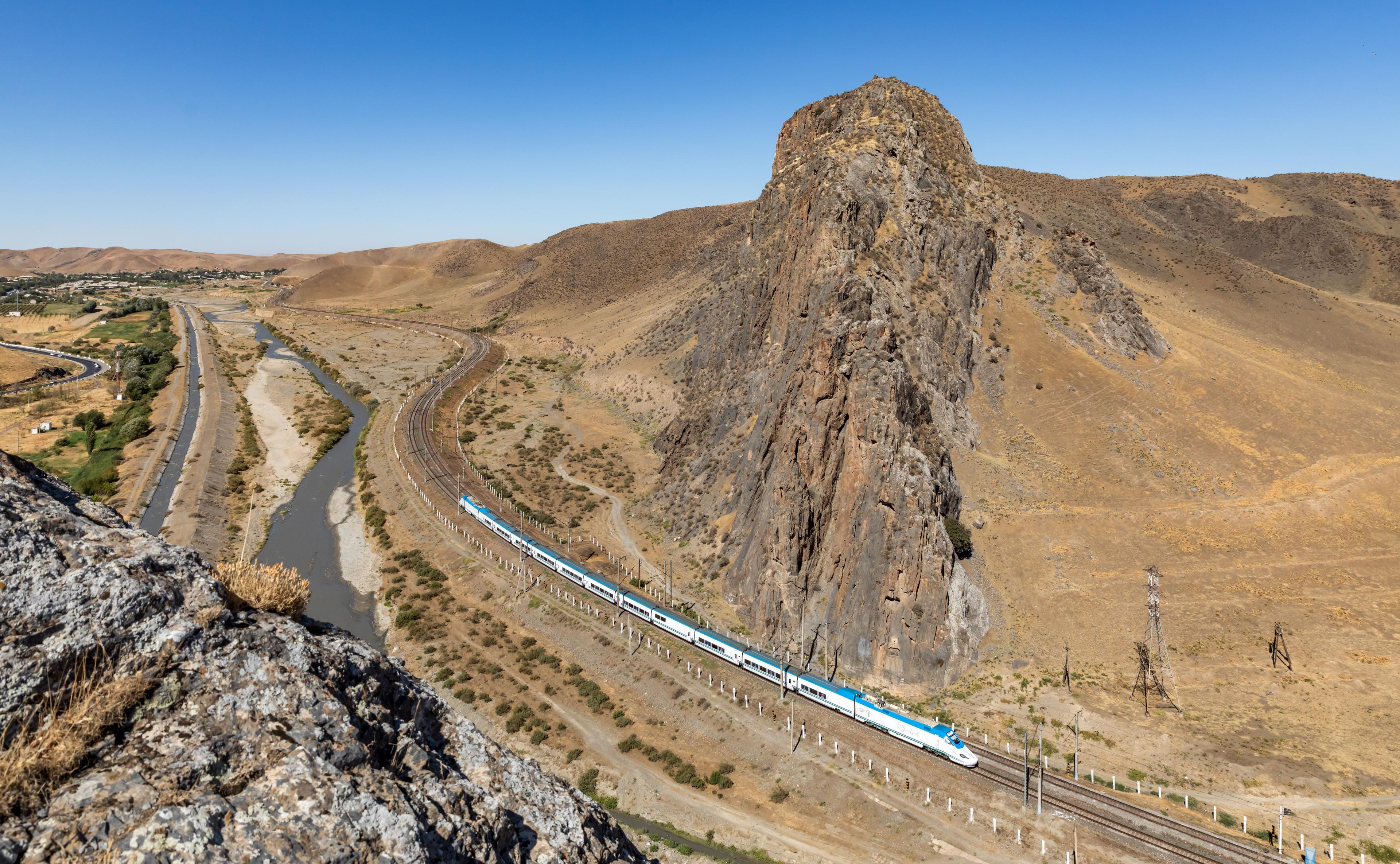
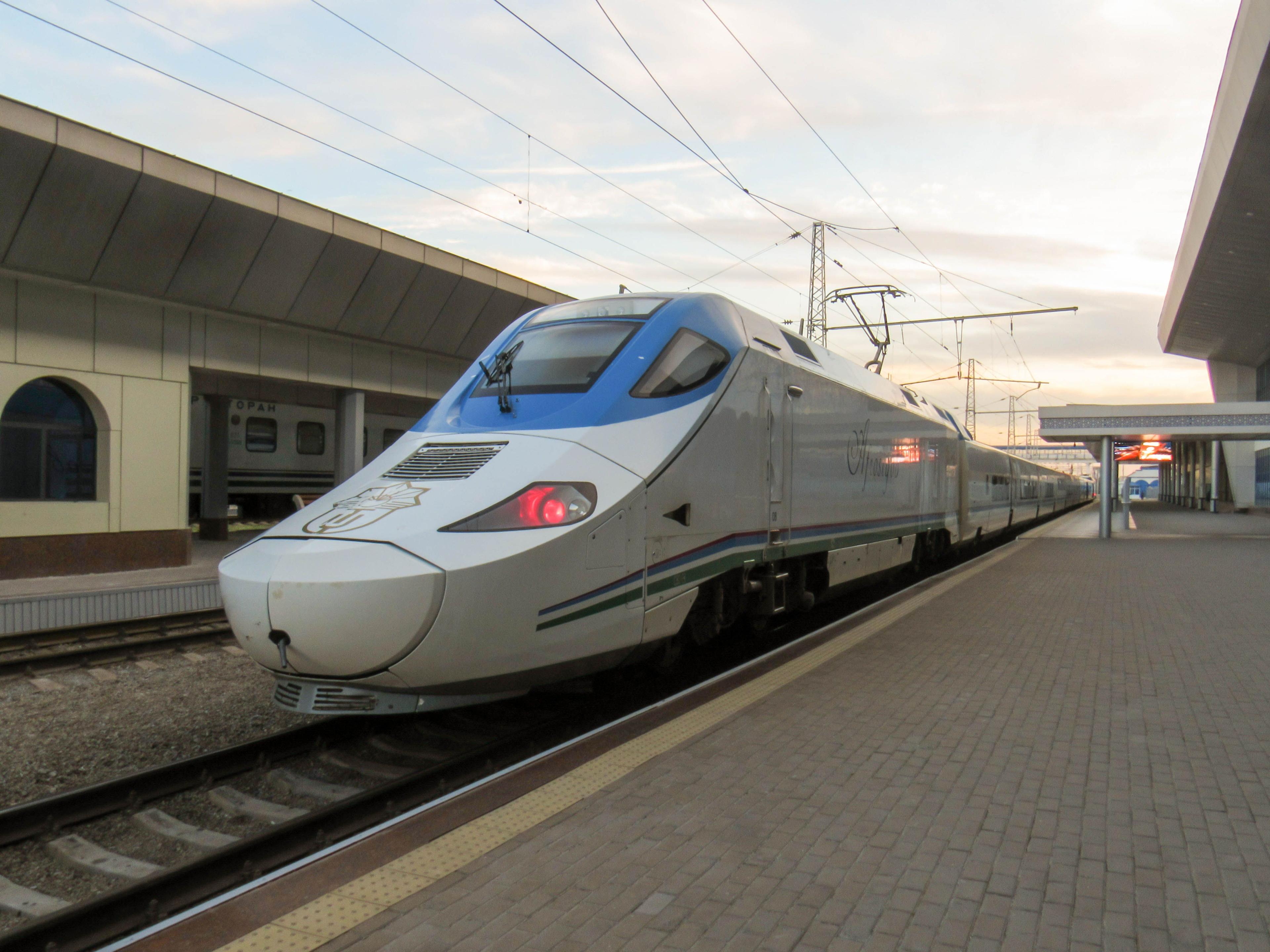
The Afrosiyob is the train that made Uzbekistan easy. Before it arrived, getting from Tashkent to Samarkand meant most of a day in a car or an old Soviet carriage. Today a Spanish-built Talgo set covers the distance in a little over two hours, at up to around 210 km/h on the open stretches, with reclining seats, air conditioning and a cup of tea along the way.
For most visitors the high-speed line is the backbone of the trip: Tashkent, Samarkand and Bukhara are all on it, and since May 2026 a new high-speed service runs all the way to Khiva. Our guides and drivers use these trains every week, and this guide collects what we tell our own guests: which routes run, how long they take, what the classes are like, what tickets cost as of November 2026, and how to get a seat when everyone else wants one too.
Routes and journey times
Uzbekistan's high-speed network runs east to west along the old Silk Road, on upgraded conventional track operated by Uzbekistan Railways (O'zbekiston Temir Yo'llari). The Tashkent–Samarkand section opened in 2011, the Karshi branch in 2015, Bukhara in 2016, and the long desert section to Urgench and Khiva in May 2026.
Typical journey times on the fastest trains:
- Tashkent – Samarkand: 2 h 10 min to 2 h 30 min
- Samarkand – Bukhara: about 1 h 30 min to 1 h 45 min
- Tashkent – Bukhara: about 3 h 50 min to 4 h 20 min (most trains stop at Samarkand and Navoi)
- Tashkent – Karshi: about 3 h 40 min
- Tashkent – Khiva: about 7 h 30 min to 7 h 45 min on the new Jaloliddin Manguberdi train
- Bukhara – Khiva: about 3 h 30 min
Most Afrosiyob departures leave Tashkent early in the morning, roughly between 06:00 and 08:30, with one or more evening trains. There are several daily trains to Samarkand, fewer that continue to Bukhara, and extra trains are added on Fridays to Sundays and around public holidays. The timetable shifts between seasons, so always check the live schedule on the official booking site before you plan a tight connection.
Shakhrisabz, the birthplace of Amir Temur and home of the Ak-Saray Palace, also has a seasonal Afrosiyob link. From 27 March 2026 the train has run on Fridays, Saturdays and Sundays, leaving Tashkent at 06:33 and returning from Shakhrisabz at 16:24, which makes a long day trip possible from the capital.
The trains and the classes
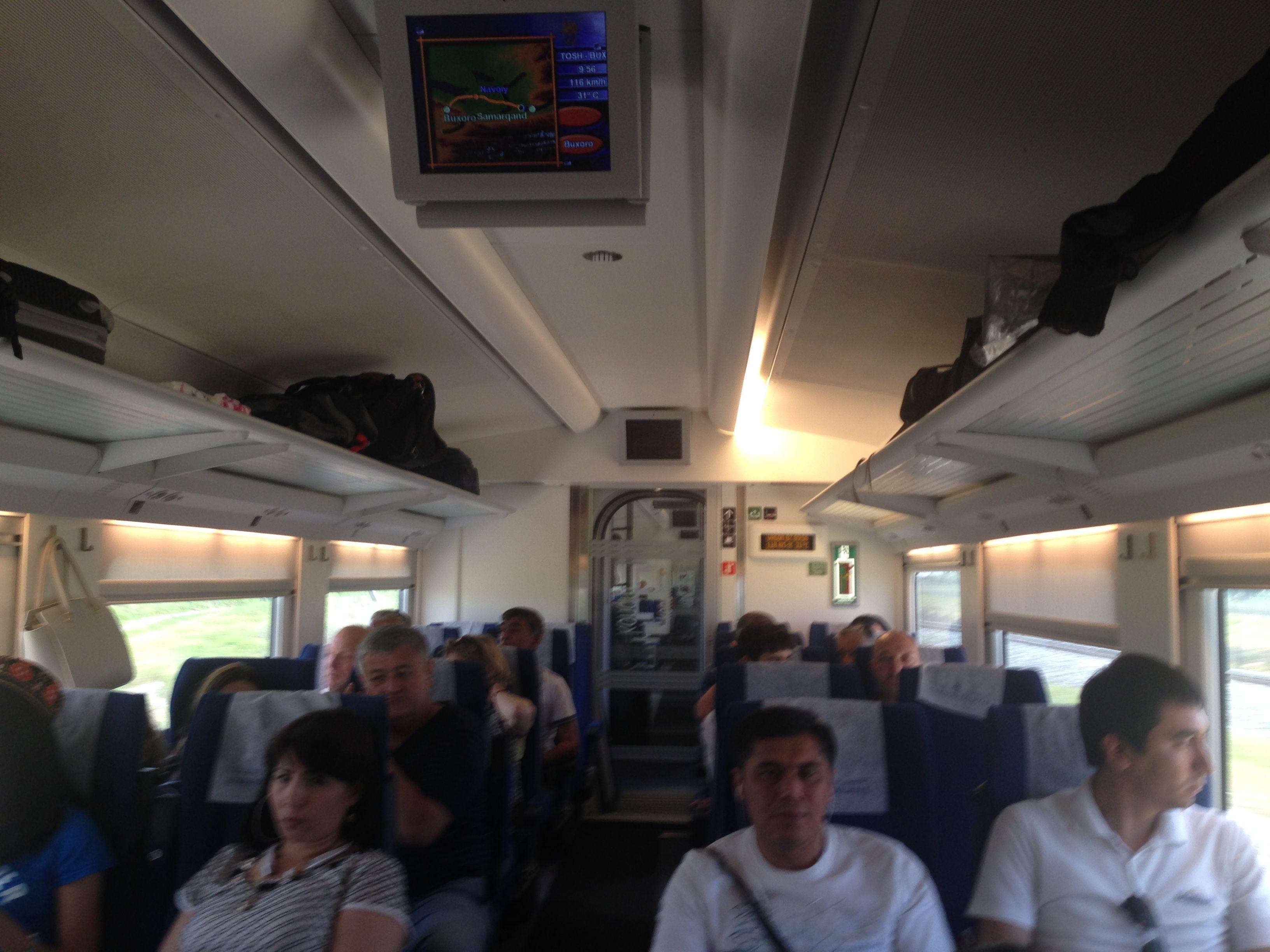
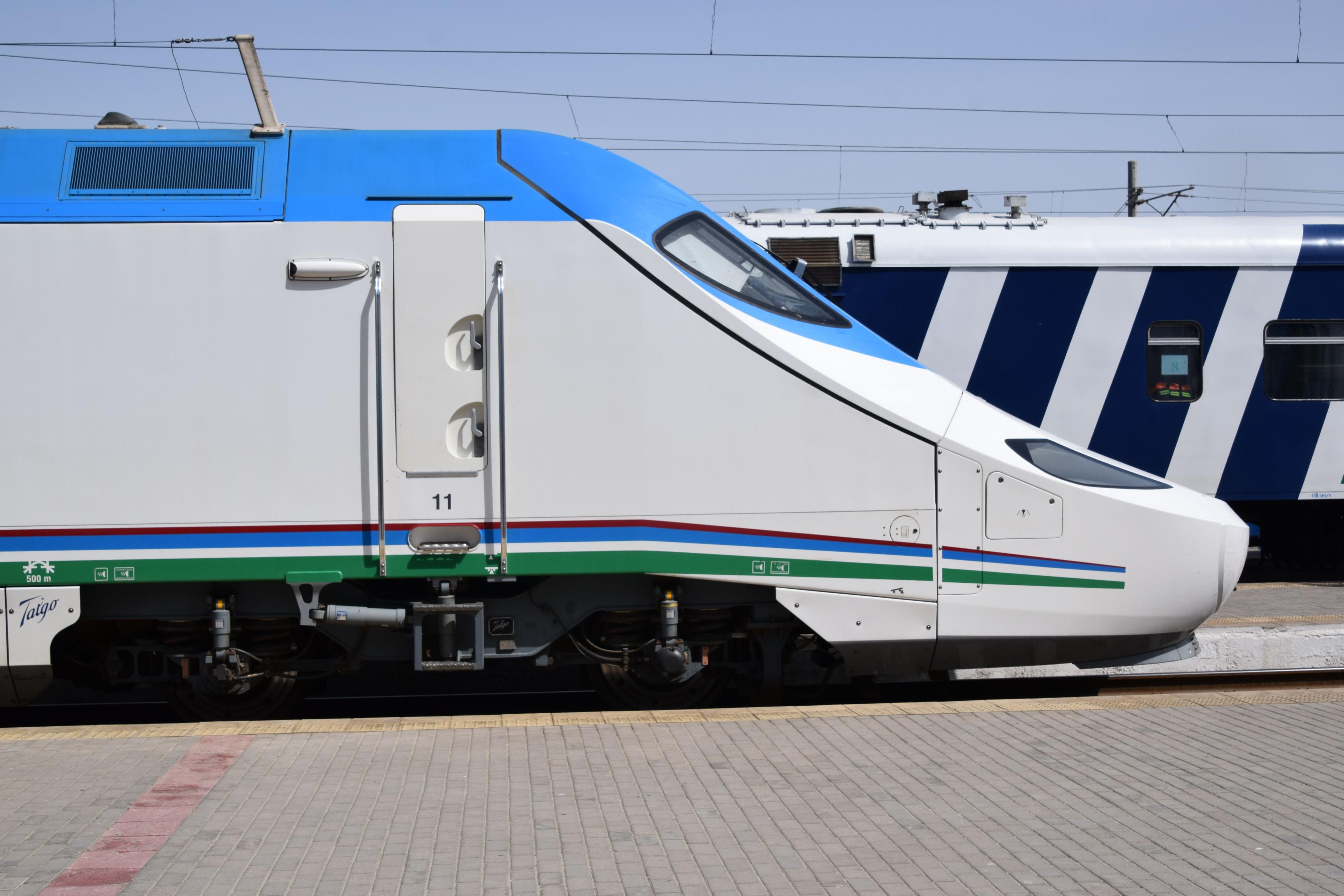
The Afrosiyob sets are Talgo 250 trains. A standard set has nine cars: two VIP, two business, four economy and a bistro car. All are air-conditioned and non-smoking, with large windows and overhead racks.
- Economy: fabric seats in a 2+2 layout, a fold-down table and enough legroom for a two-hour ride. This is what most Uzbek families and many travellers choose, and it is perfectly comfortable.
- Business: wider seats in a 2+1 layout, fewer people per car and a quieter atmosphere. A good choice for the longer Bukhara run.
- VIP: leather seats in a 2+1 layout in a small saloon of around 11 seats. Pleasant, but the price jump over business is large for a short journey.
Tea and a light snack are usually served from a trolley shortly after departure, and the bistro car sells hot drinks, sandwiches, pastries and soft drinks. Bring your own water for longer trips and a light layer, because the air conditioning can be strong in summer.
The new Jaloliddin Manguberdi trains on the Khiva line are Korean-built Hyundai Rotem units with seven cars: five economy cars and two VIP cars. They have seat-back screens, tables and accessible facilities. They are newer and roomier than the Talgos, and in their first season they have sold out quickly.
Ticket prices as of November 2026
Afrosiyob fares are set in Uzbek som and have risen every year since 2024. The latest increase of 15 per cent took effect on 1 February 2026. The current one-way prices published by Uzbekistan Railways are:
- Tashkent – Samarkand: economy 311,000 som, business 455,000 som, VIP 709,000 som (roughly US$26 / 38 / 60)
- Tashkent – Karshi: economy 429,000 som, business 642,000 som, VIP 976,000 som (roughly US$36 / 54 / 82)
- Tashkent – Bukhara: economy 509,000 som, business 760,000 som, VIP 1,138,000 som (roughly US$43 / 64 / 96)
- Tashkent – Khiva, Jaloliddin Manguberdi: economy 780,000 som (about US$65); VIP is listed at around 1,815,000 som (about US$150)
Dollar figures use an exchange rate of about 11,900 som to the dollar, the Central Bank rate at the end of October 2026. Samarkand – Bukhara is considerably cheaper than the long runs from Tashkent; check the exact price when you book.
Prices can change with little notice, and a booking fee is added online. Treat these numbers as a guide and confirm the live fare on the official site when you book.
How and when to buy tickets
Tickets go on sale up to 60 days before departure, although some trains are released later. In spring and autumn, the peak seasons, and on any weekend or public holiday, the most popular Afrosiyob departures can sell out within days of opening. Navruz in March, the May holidays, Independence Day on 1 September and New Year are the hardest periods. If your dates are fixed, book as soon as sales open.
Your options:
- Official website. Uzbekistan Railways sells e-tickets at eticket.railway.uz, which now redirects to its new ticketing domain. Switch the language to English, register with an email address, and when entering passenger details choose a foreign passport as the document type. Each ticket is issued in the passenger's name and passport number.
- Official mobile app. Uzbekistan Railways has an app for iPhone and Android that sells the same tickets and stores them on your phone.
- Ticket offices. Any station ticket office can sell tickets for any train with your passport. They take som in cash or local cards, not foreign currency.
- Agencies and resellers. International booking platforms and local tour operators can buy for you, usually with a service fee.
Payment with foreign Visa and Mastercard cards generally works on the official site, but it is not always smooth: the system can be slow when a popular date opens, and some cards are declined. If the first attempt fails, try again later or use another card, and do not wait until the last week to start.
An e-ticket on your phone is normally enough, but keep a screenshot or printout in case the station Wi-Fi or your data fails. Your passport is checked against the ticket, so carry it every time.
Refunds: for domestic e-tickets you get the ticket price back if you cancel 24 hours or more before departure, minus a non-refundable booking commission of 25,000 som and a refund fee of 15,000 som per seat. Between 24 and 6 hours before departure the refund is partial. Refunds can only be processed in Uzbekistan, either online for card-paid tickets or at a station ticket office.
The new line to Khiva
The biggest change of 2026 is the electrified line across the Kyzylkum desert from Bukhara to Urgench and Khiva. The high-speed service named Jaloliddin Manguberdi, after the 13th-century Khorezmian ruler, made its first run on 3 May 2026. It leaves Tashkent at 07:00 and reaches Khiva in the mid-afternoon, stopping at Samarkand, Bukhara and Urgench. The northbound train leaves Khiva at about 07:10 and arrives in Tashkent in the afternoon.
At launch the train ran on alternate days in each direction. Timetables published later in the year show more frequent departures, but frequency on this line is still changing, so check the current schedule before you plan around it.
For travellers this changes the classic route. Until now most people flew from Tashkent to Urgench or drove six to seven hours across the desert between Bukhara and Khiva. Now Bukhara to Khiva takes about three and a half hours in comfort, and the whole country from Tashkent to Ichan-Kala can be crossed by train in a day. Khiva station is about 1.5 km from the walls of the old town, a short taxi ride or a 20 to 30 minute walk.
Seats are limited and demand is high, so book this train early. If it is full, the conventional and overnight trains still run, and domestic flights to Urgench remain a good option.
Backup trains: Sharq, Nasaf and night trains
When the Afrosiyob is sold out, the conventional express trains are a good alternative.
- Sharq runs daily between Tashkent, Samarkand and Bukhara. It takes about three hours and twenty minutes to Samarkand and around six hours to Bukhara. Seats are in second class (open-plan seating) and first class (compartments). As of 2026, Tashkent – Samarkand costs about 200,000 som in second class and about 300,000 som in first class; Tashkent – Bukhara about 277,000 som in second class.
- Nasaf runs daily from Tashkent to Samarkand and Karshi, with seats in second class only.
- Overnight sleeper trains run from Tashkent to Bukhara, Urgench, Khiva, Termez and Nukus, with two-berth (SV), four-berth (kupe) and open-plan (platskart) classes. A kupe berth from Tashkent to Khiva costs around 350,000 som. They are slow but save a night's hotel.
These trains are older and less polished than the Afrosiyob, but they are clean, safe and usually on time. They sell out less quickly, so they are your best bet for last-minute plans.
Stations, security and luggage
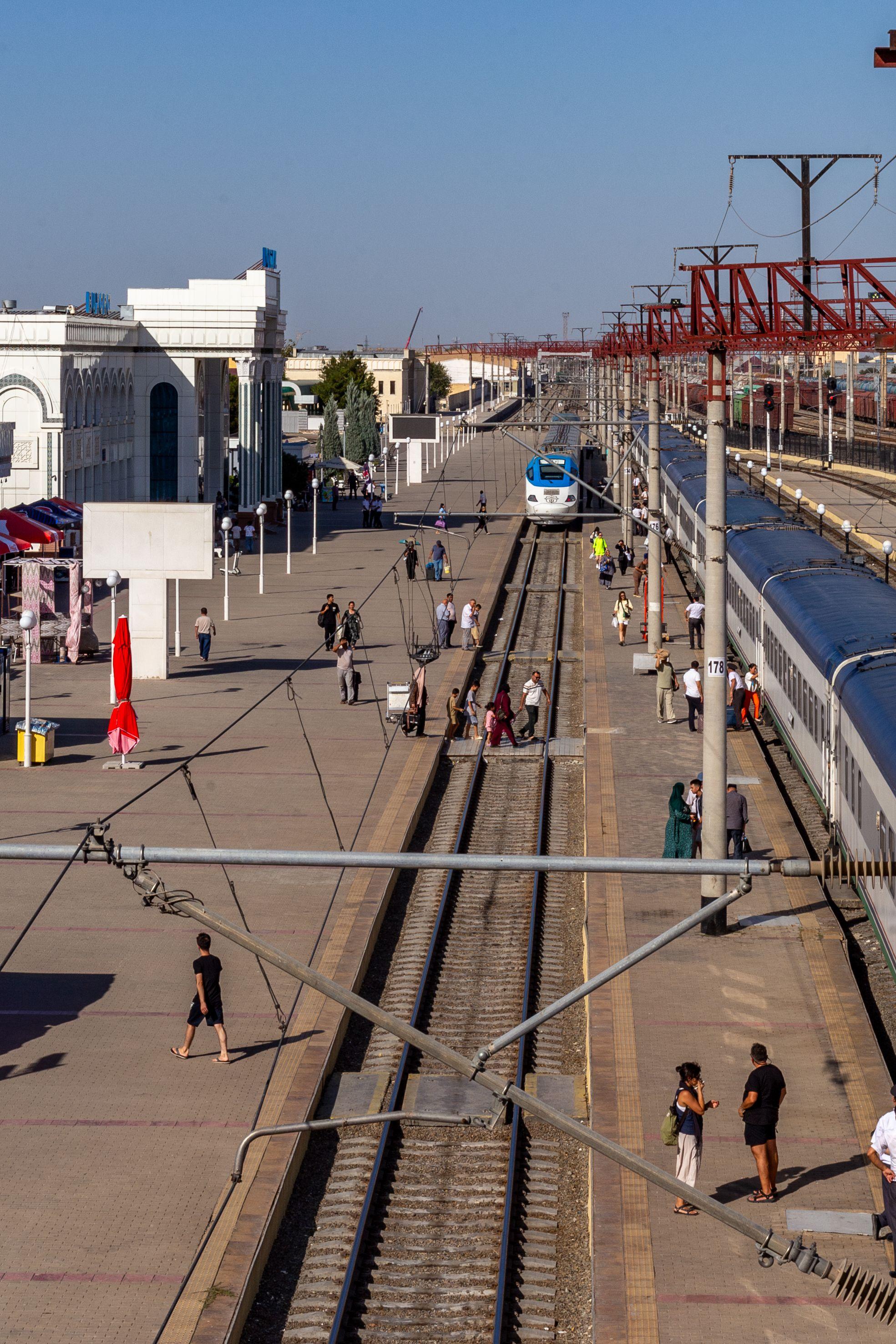
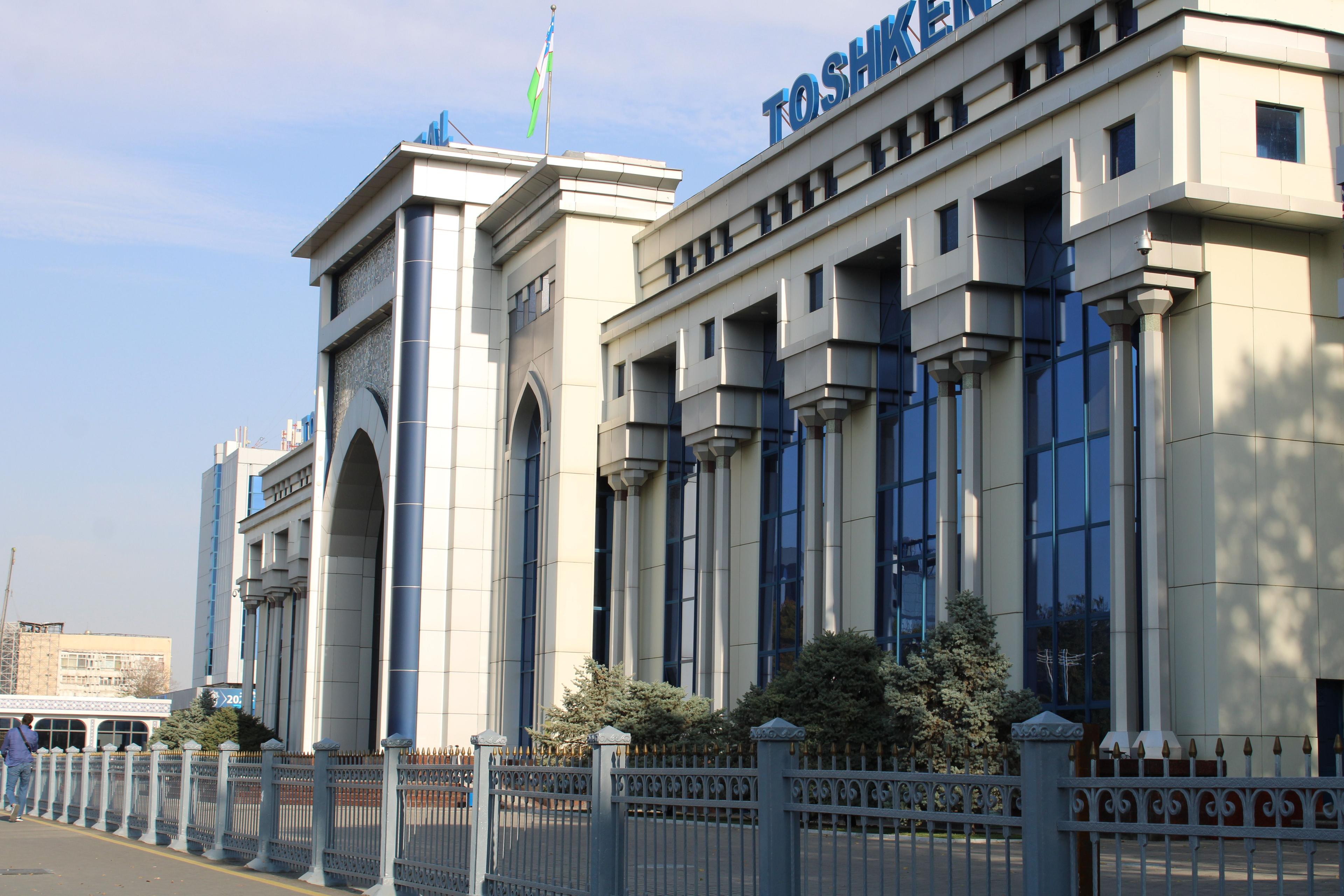
Uzbek stations work more like airports than European railway stations. You need a ticket and your passport to get into the building, bags go through an X-ray scanner, and you wait in the hall until your train is announced. Staff check your ticket and passport again at the carriage door. Arrive 30 to 40 minutes before departure, a bit more at peak times.
- Tashkent: most Afrosiyob trains use Tashkent Central station (Toshkent vokzali, formerly called Tashkent North), next to Toshkent metro station. Some trains use Tashkent South station, about 7 km away, so check which station is printed on your ticket.
- Samarkand: a large, modern hall about 6 km from Registan Square. Yandex Go taxis pick up from the forecourt; ignore the touts at the exit.
- Bukhara: trains stop at Bukhara-1 station in the town of Kagan, about 12 to 15 km from the old town. Allow 20 to 30 minutes by taxi to Lyabi-Hauz.
- Khiva: a new station about 1.5 km from the walls of Ichan-Kala.
Luggage: there is no weighing at the gate for normal travellers. Medium suitcases fit on the overhead racks of the Talgo cars and there is space at the ends of each car. Uzbek rules allow a generous free allowance per passenger, but very large or numerous bags are awkward on the narrow Talgo racks. If you are travelling with heavy cases, a porter or your guide will help at the platform.
Food and drink are sold in every station. Toilets on board are clean on the Afrosiyob and the new Khiva trains.

Our tips for a smooth ride
- Plan the train first, then the hotels. The high-speed timetable decides the shape of your days, especially between Bukhara and Khiva.
- Take the early train. The 06:00 to 08:30 departures put you in Samarkand or Bukhara by mid-morning with a full day ahead.
- Keep your passport on you, not in the suitcase. It is checked at the entrance, at the carriage door and sometimes on board.
- Leave the old town early for an evening train from Bukhara. The station is in Kagan, outside the city, and taxis can take a while at dusk.
- In summer, choose morning trains. The midday heat on the platforms in June to August is fierce.
- Double-check the station name in Tashkent and Bukhara. Tashkent has two main stations, and Bukhara's is in Kagan.
- Keep some cash in som for the bistro car, which does not always accept cards.
Travel by train with TourEast
All our small-group and private tours across Uzbekistan use the Afrosiyob and the new Khiva train wherever it makes sense, and we buy the tickets for you as soon as sales open. If you are planning a custom itinerary, tell us your dates and we will build the route around the best train times.
Frequently asked questions
Watch
Photo gallery