Amir Timur's hometown is 80 to 90 km from Samarkand over the Takhtakaracha Pass. How to get there, what it costs, how long to allow, what to see at Ak-Saray, Dorut Tilavat and Dorus Saodat, and our honest answer on whether it is worth the day.
Facts, prices and schedules checked on November 4, 2026
Shakhrisabz (Shahrisabz in Uzbek, meaning green city) is the hometown of Amir Timur, the 14th-century conqueror the West calls Tamerlane. Before Samarkand became his capital, he built here the most ambitious palace of his age, the Ak-Saray, whose surviving gate towers still rise above the town. The historic centre has been a UNESCO World Heritage Site since 2000.
For most travellers Shakhrisabz is a day trip from Samarkand, about 80 to 90 km to the south over the mountains. The road crosses the Takhtakaracha Pass, which is half the reason to go.
This guide covers how to get from Samarkand to Shakhrisabz, what the day costs, how long to allow, what to see at the three main monuments and, honestly, whether the trip is worth it for you.
Why Shakhrisabz matters: Timur's hometown
Shakhrisabz is an old city. In antiquity it was known as Kesh, and the region appears in the history of Alexander the Great's campaigns. Its greatest moment came with Timur, who was born in 1336 near Kesh into a family of the local Barlas tribe and rose to rule an empire from Anatolia to India.
Timur never forgot his home town. He began the Ak-Saray, the White Palace, in 1380, buried his eldest son here and prepared a tomb for himself. In the end he was buried in Samarkand, in the Gur-e-Amir, but Shakhrisabz kept a special status under his dynasty. His grandson Ulugbek added a great Friday mosque in the 1430s.
Today it is a provincial town of about 150,000 people in the Kashkadarya region. Its historic centre was largely cleared around 2014 to create a landscaped park linking the monuments, a change that led UNESCO to place the site on its List of World Heritage in Danger in 2016. Knowing this helps set expectations: you come for three or four great Timurid buildings, not for an intact old town like Bukhara or Khiva.
How to get from Samarkand to Shakhrisabz
By private car with driver. This is how most visitors go, and what we recommend. The drive over the Takhtakaracha Pass takes about one and a half to two and a half hours each way, depending on stops and traffic. The driver waits while you visit and you can stop for views, fruit and photographs on the pass.
By shared taxi. Shared taxis to Shakhrisabz leave from stands in Samarkand when all four seats are full. It is the cheapest option and works well for independent travellers with time to spare. Agree the price and the drop-off point before you set off, and plan your return by mid-afternoon, when fewer cars are heading back.
By organised tour. Group and private day tours from Samarkand include transport and a guide, and often lunch. With a guide, the monuments make much more sense, since a lot of what you see is ruins.
By train. There is no direct train from Samarkand that suits a day trip, but since 27 March 2026 an Afrosiyob high-speed train has run from Tashkent to Shakhrisabz on Fridays, Saturdays and Sundays, leaving Tashkent at 06:33 and returning from Shakhrisabz at 16:24. It makes a very long day trip from the capital possible. The railway takes a longer route than the road over the pass. Check the current timetable, and whether the train calls at Samarkand, on the official Uzbekistan Railways site; our Afrosiyob train guide explains booking.
The Takhtakaracha Pass road
The road from Samarkand climbs south across the Zarafshan range to the Takhtakaracha Pass, at roughly 1,600 to 1,700 metres, before dropping into the green Kashkadarya valley. Even if you were not going to Shakhrisabz, it would be a lovely drive.
- On the way up: orchards, poplar-lined villages and, from spring, roadside stalls selling dried fruit, nuts, honey and kurt, the salty dried yoghurt balls.
- At the top: a viewpoint with long views over the mountains and south towards Kitob and the Kashkadarya plain. In spring the slopes are green and full of wild flowers; in autumn they turn gold.
- On the way down: hairpin bends, shepherds and the first glimpse of the valley.
The pass road is narrow in places and busy with lorries, so travel with an experienced driver. In winter heavy snow can close it for a day or more; in January 2024, for example, traffic was stopped during a snowstorm. If the pass is closed, drivers use a longer lowland route, which adds significant time. Check conditions locally between December and February.
Ak-Saray Palace
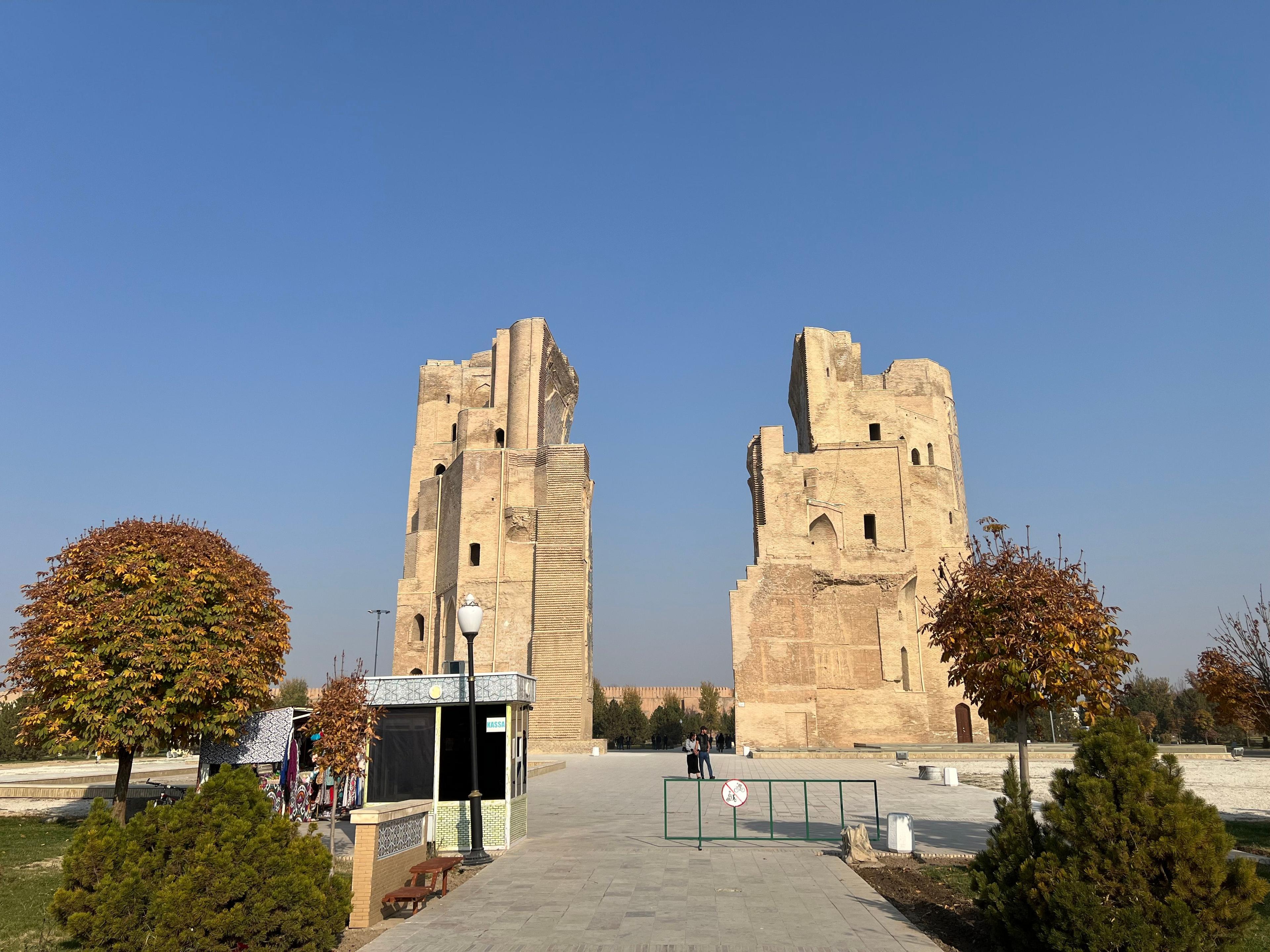
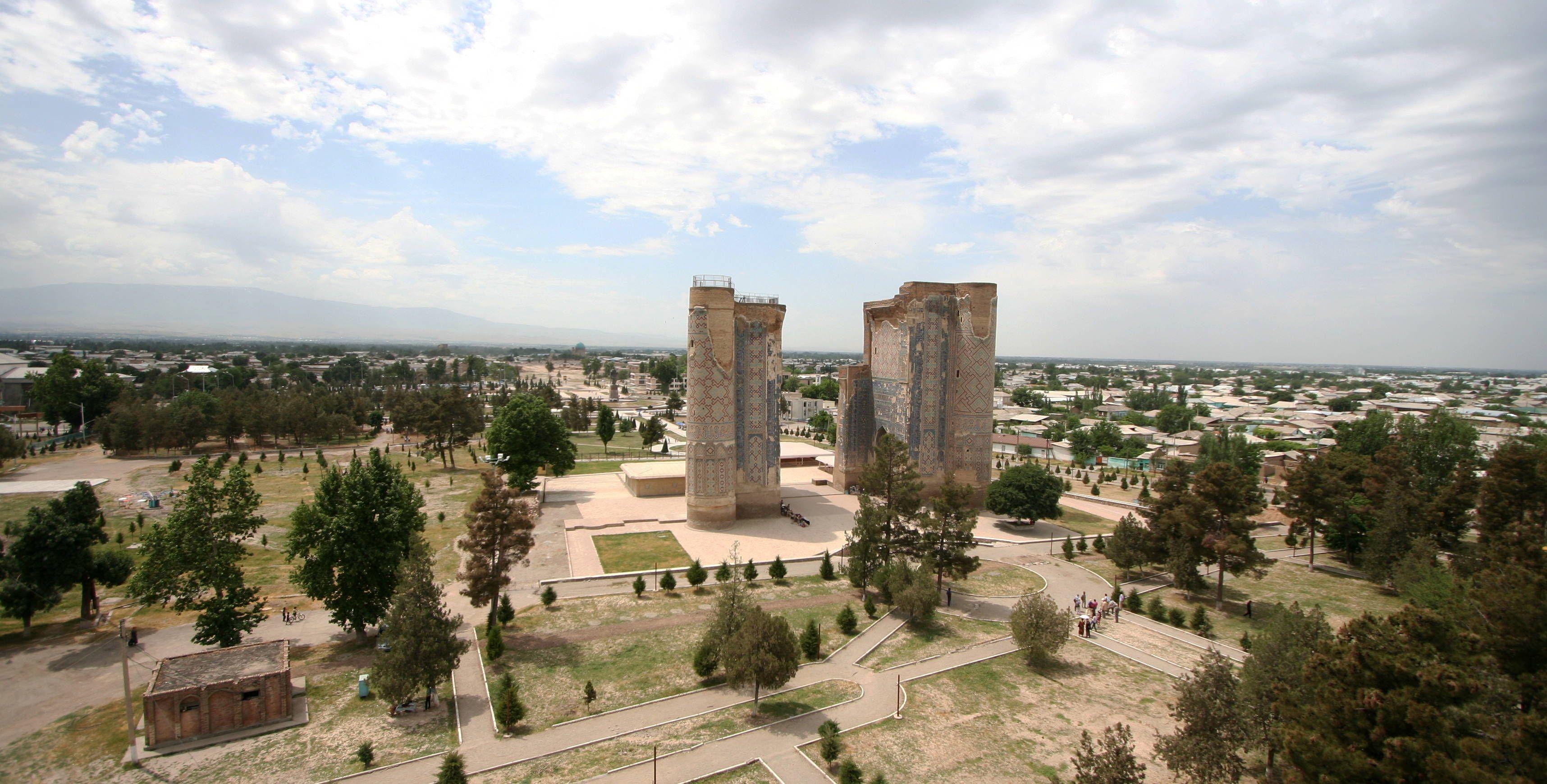
Even as a ruin, the Ak-Saray (White Palace) is overwhelming. Timur began it in 1380 with craftsmen brought from Khorezm, and it was still being finished in 1404, when the Spanish ambassador Ruy González de Clavijo passed through and described its splendour.
What survives are the two pylons of the main portal, about 38 metres high. The arch that once joined them spanned about 22 metres, one of the widest of its time. Behind it lay a courtyard roughly 120 metres wide and 240 metres long with a pool at its centre. The palace was destroyed in the 16th century by the forces of Abdullah Khan II of Bukhara.
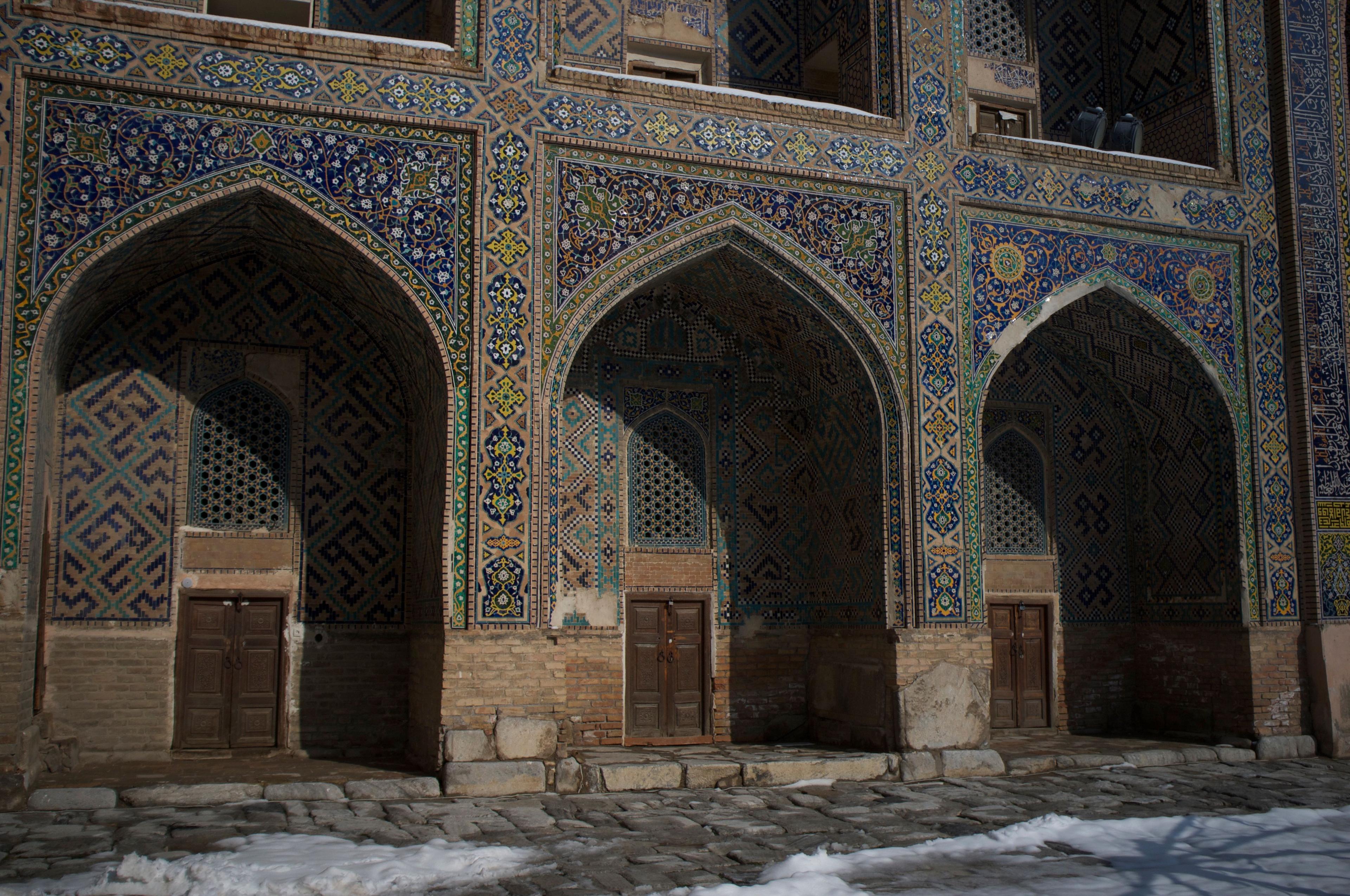
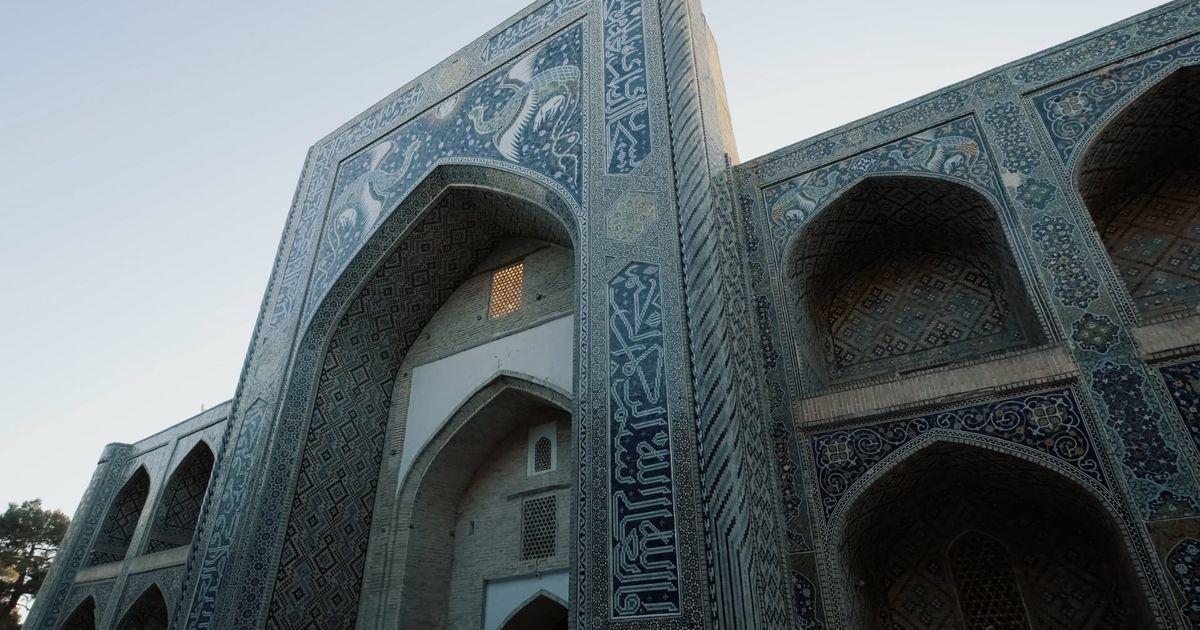
Look closely at the tilework on the pylons: huge geometric and calligraphic patterns in blue, turquoise and white glazed brick, designed to be read from a distance, and finer mosaic and carved tiles at eye level. Inscriptions in the decoration include a wish that God prolong the sultan's days.
In front of the pylons stands a large bronze statue of Timur, a favourite spot for wedding photographs. From here a long landscaped park runs south through the historic centre to the other monuments, a walk of 15 to 20 minutes.
Dorut Tilavat and the Kok Gumbaz Mosque
Dorut Tilavat, the House of Contemplation, is the religious ensemble in the southern part of the old centre. Its centrepiece is the Kok Gumbaz, the Blue Dome, a Friday mosque built in 1437 by Ulugbek in honour of his father Shah Rukh. Its broad blue dome gave the mosque its name, and it is still used for prayer.
Opposite stands the Gumbazi Seyidan, a mausoleum built by Ulugbek a year or so later as a family tomb, with fine painted decoration inside. Nearby is the mausoleum of Sheikh Shamsiddin Kulyal, a Sufi teacher revered by Timur's family; according to tradition, Timur's father is buried close by.
This is a place of pilgrimage. Dress modestly, women should bring a scarf, and keep your voice down in the courtyards.

Dorus Saodat: Jahangir's tomb and Timur's crypt
Dorus Saodat, the Seat of Power and Might, was meant to be the dynastic necropolis of the Timurids. Most of it has vanished, but two parts remain.
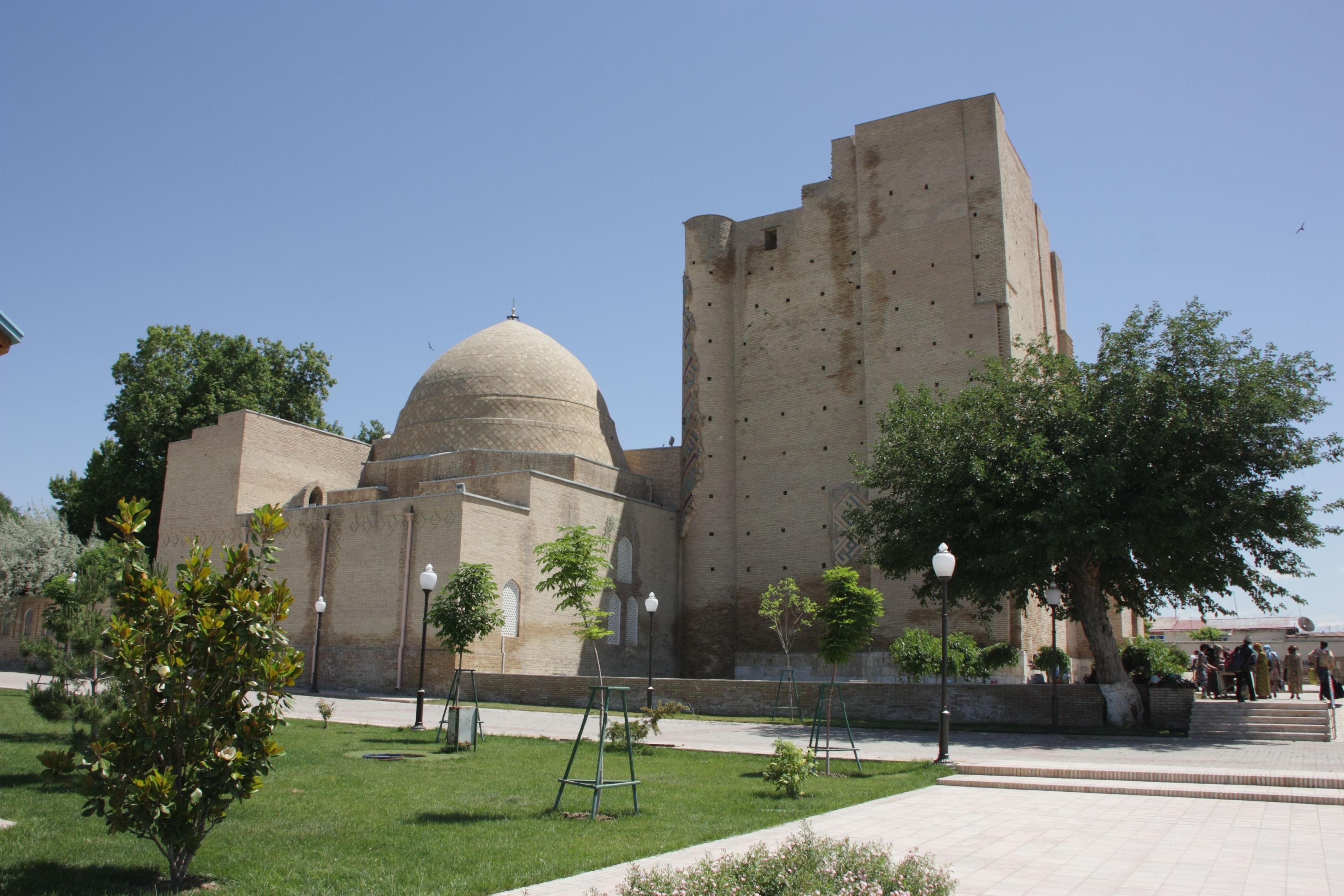
- The Mausoleum of Jahangir: Timur's eldest and favourite son, who died young in 1376. Its tall, ribbed conical dome above a square chamber is unusual in this part of Uzbekistan, and the building is one of the oldest Timurid monuments in town.
- Timur's crypt: in 1943 archaeologists found an underground chamber behind the complex with a stone sarcophagus inscribed for Timur. He was never buried in it; it is believed he intended to lie here, but he died in 1405 on campaign in winter, when the pass was closed, and was buried instead in Samarkand. Ask your guide to show you the entrance, which is easy to miss.
Next to the mausoleum is the small Hazrati Imam Mosque, still in use, with a pleasant courtyard.
What else to see in Shakhrisabz
Between the three great monuments, a few smaller places are worth a stop, especially if you have a guide to point them out.
- The Chorsu trading dome: a domed crossroads bazaar from the Timurid period, on the walk between Ak-Saray and Dorus Saodat, now used for craft and souvenir stalls. It is a smaller cousin of the trading domes of Bukhara.
- The old bathhouse: a domed hammam close to the Chorsu, a reminder that the historic centre was once a dense town of lanes, houses and public buildings.
- Embroidery workshops: Shakhrisabz has its own tradition of fine needlework, and in a few workshops near the centre you can watch embroiderers at work and buy directly from them. Prices are better than in Samarkand, and the pieces are often more original.
- The town bazaar: lively in the morning, with fruit from the Kashkadarya valley, bread, honey and the local dried yoghurt.
- The park itself: whatever one thinks of the clearance of the old quarters, the long avenue of gardens and fountains is pleasant to walk in the evening and busy with local families.
If you have more time, the mountain villages of the Kitob and Shakhrisabz districts and the Hissar range to the east offer walking, homestays and cooler air in summer. They need a separate trip and a local driver; ask us if you would like to combine them with Shakhrisabz.

How much does a Shakhrisabz day trip cost?
As of November 2026, rough costs for a day trip from Samarkand are:
- Private car with driver for the day: typically 50 to 90 USD for the car, depending on its size and the season.
- English-speaking guide: an additional daily fee; worth it here, where so much needs explaining.
- Shared taxi: a seat costs a fraction of a private car, but you travel on the driver's schedule.
- Organised day tours: prices vary widely with group size, from budget group trips to private tours with lunch.
- Entrance fees: small, paid in cash in som at Dorut Tilavat, Dorus Saodat and sometimes Ak-Saray, generally in the range of 20,000 to 40,000 som per site. Some ticket prices change without notice.
- Lunch: a simple meal in a local restaurant costs 5 to 10 USD per person.
Bring cash in som for fees, stalls on the pass and lunch. Cards are accepted in few places outside the main hotels.
How long to allow and a suggested day plan
Allow a full day: 8 to 10 hours from Samarkand and back, with about three to four hours in Shakhrisabz itself.
- 08:30: Leave Samarkand.
- 09:30: Stop at the Takhtakaracha Pass viewpoint and stalls.
- 10:30: Ak-Saray Palace and the Timur statue.
- 11:30: Walk south through the park, past the old 15th-century trading dome (Chorsu) and the bathhouse quarter, to Dorus Saodat and Timur's crypt.
- 12:30: Dorut Tilavat and the Kok Gumbaz Mosque.
- 13:30: Lunch.
- 15:00: Drive back, arriving in Samarkand around 17:00 to 17:30.
The best seasons are April to early June and September to October, when the pass is green or golden and the town is comfortable to walk. In July and August Shakhrisabz is very hot at midday, so start early. In winter, check that the pass is open.
An alternative: rather than returning to Samarkand, continue south to Karshi or on towards Termez, or use Shakhrisabz as a stop on a longer road journey through southern Uzbekistan.
Is Shakhrisabz worth visiting?
Our honest answer: yes for most people with three or more days in Samarkand, and especially for anyone interested in Timur, architecture or mountain scenery. The Ak-Saray portal is one of the most impressive ruins in Central Asia, the Kok Gumbaz is a fine Timurid mosque, and the drive over the pass is a highlight in its own right.
It is probably not worth it if:
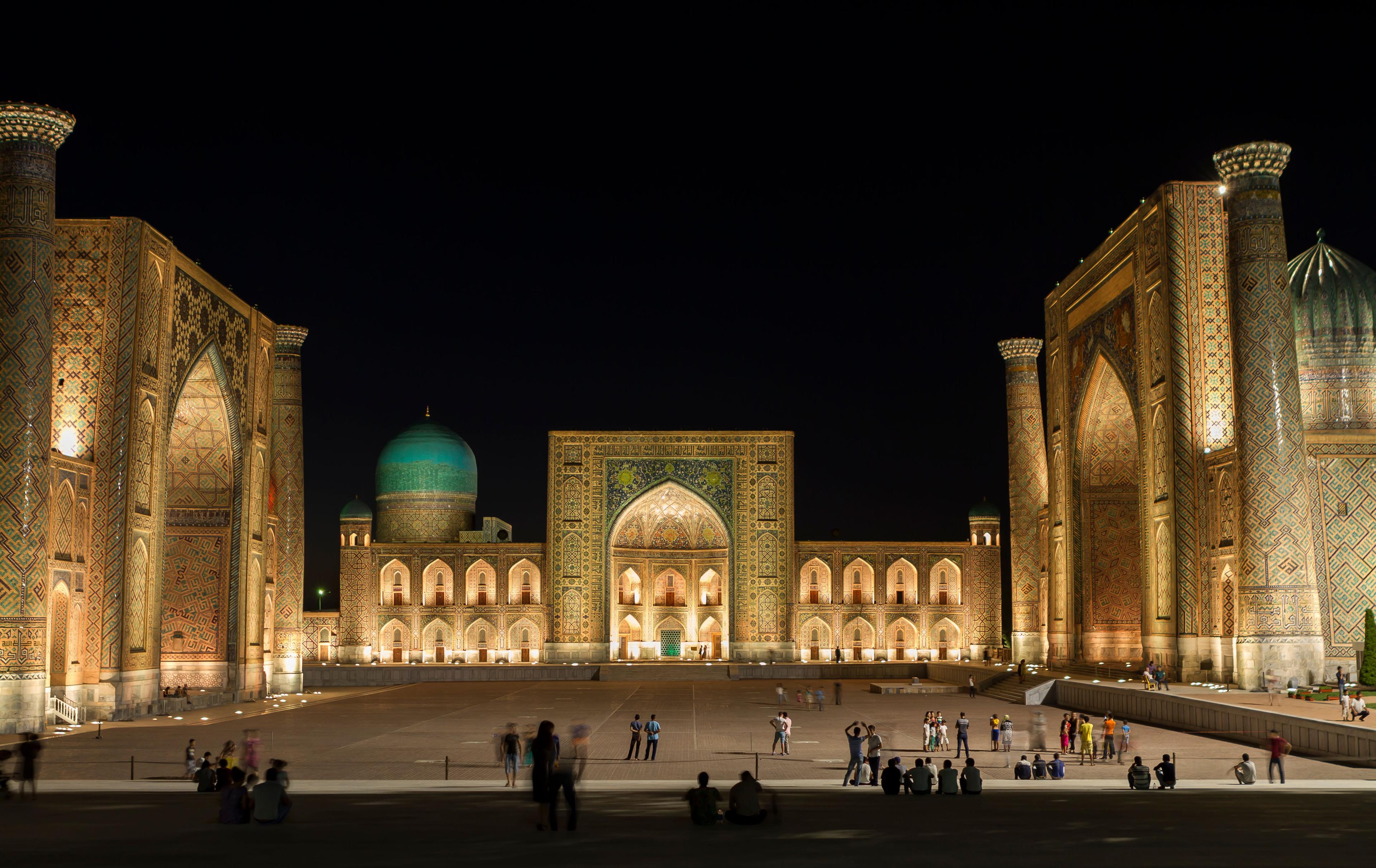
- you have only one or two days in Samarkand, where the Registan, Shah-i-Zinda and Gur-e-Amir come first;
- you hope for a living historic town like Bukhara or Khiva, since much of Shakhrisabz's old fabric was replaced by the park;
- you travel in deep winter, when the pass may be closed and the day becomes long.
If you go, go with a guide. The stories of Timur, Clavijo and the empty crypt bring the place to life in a way the information boards cannot.
Visiting Shakhrisabz with TourEast
We can add Shakhrisabz to any Samarkand programme as a private day trip with a driver and guide who know the pass road well. Tell us your dates and we will fit it into a small-group tour or a custom itinerary.