How to get around Tashkent, Samarkand, Bukhara and Khiva like a local: Tashkent metro fares and its palace-like stations, Yandex Go taxis, city buses, shared taxis between cities, walking the old towns, and what things cost in 2026.
Facts, prices and schedules checked on November 4, 2026
Getting around Uzbekistan's cities is cheap, safe and easier than most visitors expect. Tashkent has one of the most beautiful metros in the world, ride-hailing apps work in every city on the tourist route, and the historic centres of Samarkand, Bukhara and Khiva are best explored on foot.
This is the advice we give our own guests on their free days: how to pay for the metro now that ticket booths are disappearing, what a taxi should cost, when to use a shared taxi between cities, and a few habits that keep everything smooth. All prices are as of November 2026.
The Tashkent metro
The Tashkent metro opened in 1977, the first in Central Asia, and was built to survive earthquakes. Today it has around 50 stations and about 70 km of track on four lines: the Chilonzor line (red), the Uzbekistan line (blue), the Yunusobod line (green) and the overground Circle line. Trains run from 05:00 to midnight, every few minutes at peak times.
For visitors, the Uzbekistan and Chilonzor lines are the most useful. They connect the city centre around Amir Temur Square and Mustaqillik Square with Chorsu Bazaar, the old town around Khast Imam, and Tashkent Central railway station, which has its own metro stop called Toshkent.
Signs are in Uzbek in Latin script, with announcements in Uzbek; station names on the network map are easy to match. Keep an eye on the rush hours, roughly 07:30 to 09:30 and 17:30 to 19:30, when the trains on the main lines are packed.

The most beautiful metro stations
Until 2018 photography in the metro was forbidden, because the system doubled as a civil-defence shelter. The ban has since been lifted, and the stations are now one of Tashkent's main sights. Each was designed around a theme, with marble, carved plaster, chandeliers and ceramic panels.
- Kosmonavtlar: deep blue walls and ceramic medallions of cosmonauts, among them Yuri Gagarin and the Uzbek-born Vladimir Dzhanibekov. The most photographed station in the city.
- Alisher Navoiy: domed ceilings and painted panels inspired by the poems of Alisher Navoi, the father of Uzbek literature.
- Mustaqillik Maydoni: white marble columns and glittering chandeliers under Independence Square.
- Paxtakor: ceramic murals of cotton flowers, a reminder of the crop that shaped Soviet Uzbekistan.
A good way to see them is to buy a day pass and ride the blue Uzbekistan line from Toshkent station to Kosmonavtlar and Alisher Navoiy, then cross to Paxtakor and Mustaqillik Maydoni on the red Chilonzor line. Allow two hours. Photograph freely but be considerate of commuters, and avoid tripods and flash during the rush hours.
Metro and bus fares, and how to pay
From 1 October 2026 a single ride on the Tashkent metro or a city bus costs 2,500 som when paid electronically and 3,000 som with a paper QR ticket. That is about 20 to 25 US cents, and the price is the same however far you go.
Ways to pay:
- QR tickets: sold for cash at ticket machines and the remaining ticket windows. Scan the code at the turnstile. Most ticket offices are being replaced with QR machines, so carry small notes.
- ATTO transport card: the city's rechargeable card, sold at metro ticket points and post offices and topped up in the ATTO app, at terminals or at the window. Worth it if you are in Tashkent for more than a day or two.
- Contactless bank cards: local Uzcard and Humo cards work at the turnstiles. Foreign contactless Visa and Mastercard cards work for some visitors and not for others, so do not rely on them.
Passes on the ATTO card are good value if you plan to ride a lot: one day of unlimited bus and metro travel costs 13,500 som, one week 73,000 som. Bus-only passes are cheaper. With a card, a second bus within an hour costs 1,500 som and further buses in that hour are free.
Large luggage costs an extra 4,000 som on the metro and buses, but in practice a taxi is far easier with a suitcase.
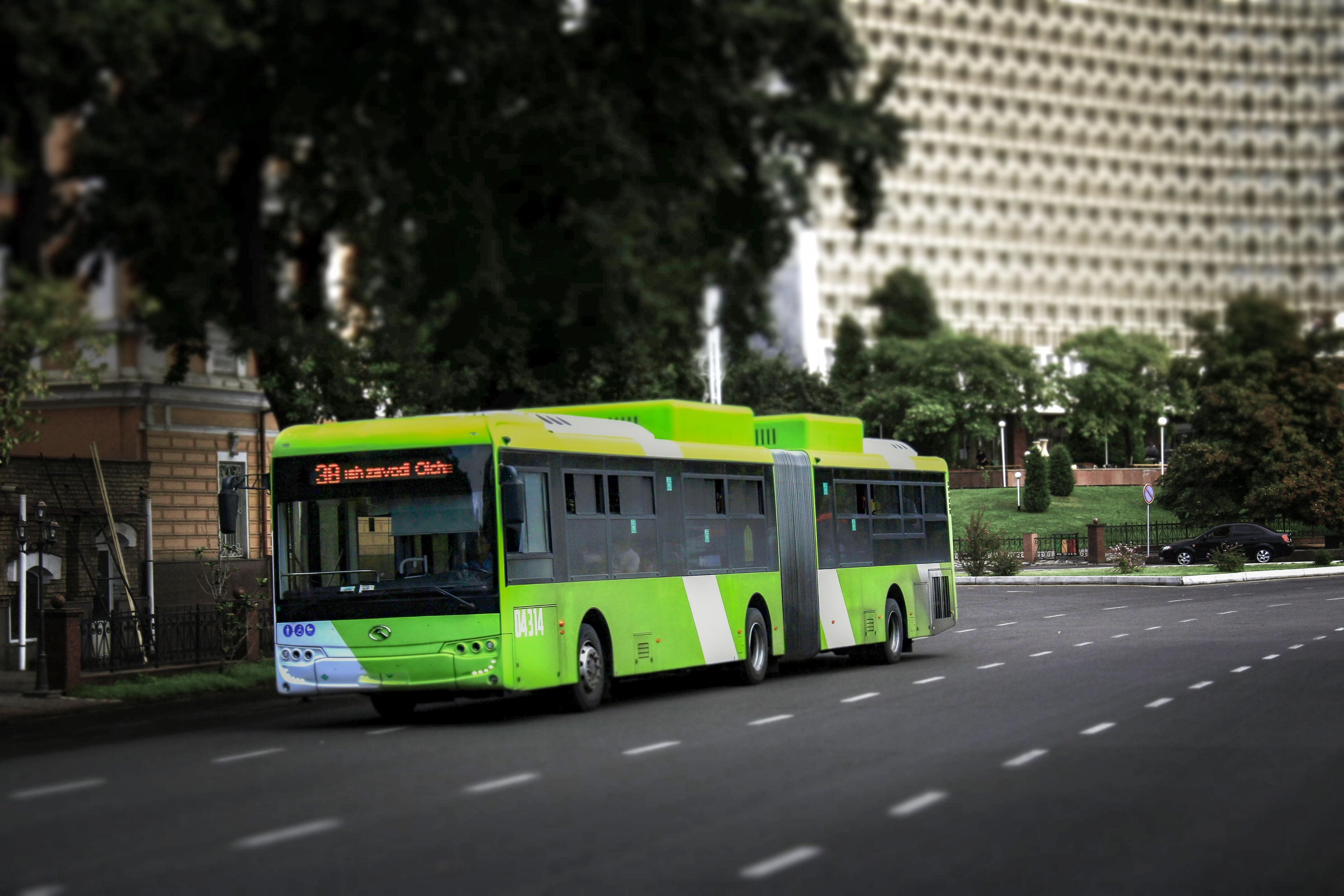
In Samarkand, buses and the modern tram cost 2,000 som by card or ATTO and 4,000 som with a QR ticket. In Bukhara, buses cost 2,000 som with electronic payment. Drivers no longer take cash on most city routes, so buy a ticket or card first.

Taxis and Yandex Go
Ride-hailing has transformed city travel in Uzbekistan. Yandex Go is the main app and works in Tashkent, Samarkand, Bukhara, Urgench, Khiva, Shakhrisabz and most other cities. MyTaxi is a local alternative. You see the price before you book, the driver's route is tracked, and there is no haggling.
Fares are low. In Tashkent the economy Start class has a minimum fare of 4,600 som and adds about 1,050 som per kilometre plus a per-minute charge, so most rides across central Tashkent cost in the region of 15,000 to 40,000 som (roughly US$1.30 to 3.50), depending on distance, traffic and demand. Samarkand, Bukhara and Khiva are cheaper still. Prices rise at rush hour, in bad weather and late at night.
Tips:
- Install the app and verify your phone number before you arrive. A local SIM or eSIM makes this easier.
- Link a card if it works, but keep cash in som as a backup. Some foreign cards will not link, and cash is always accepted.
- Check the number plate before getting in. Cars are often white Chevrolets, and many look alike.
- At airports and stations, agree the exact pickup point in the app chat, and walk past the drivers offering rides at the exit.
Street taxis still exist, and any private car may stop if you raise your hand. If you take one, agree the price before you get in. For travellers who do not speak Uzbek or Russian, the app is simpler and almost always cheaper.
Shared taxis and buses between cities
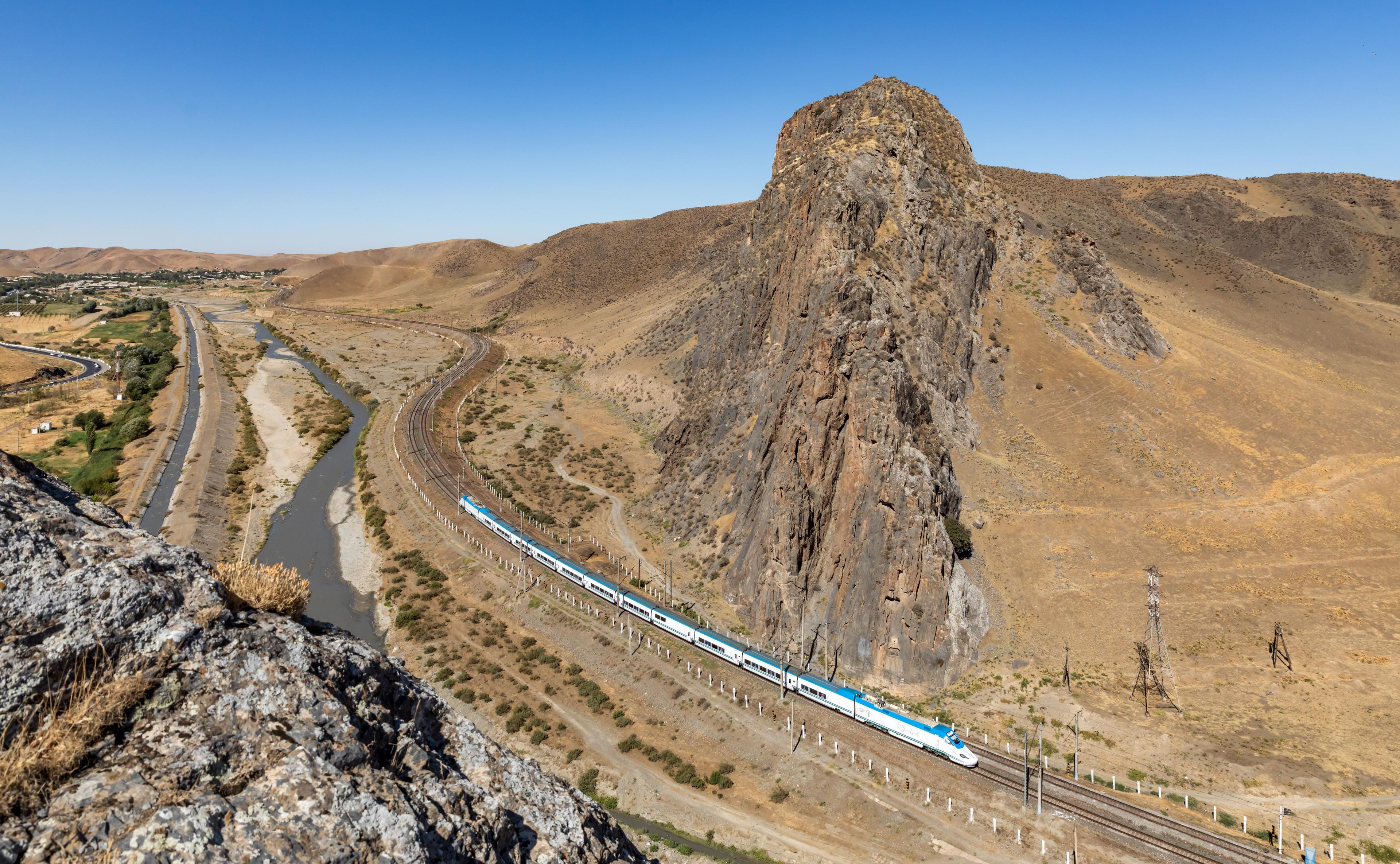
Between cities, the train is usually the best choice, but shared taxis fill the gaps. They wait at fixed stands, usually near bus stations, bazaars or city exits, and leave when all four seats are sold. You pay per seat, or buy all four seats to leave at once.
They are most useful:
- Between Tashkent and the Fergana Valley over the Kamchik Pass, a scenic mountain road.
- Between Samarkand and Shakhrisabz over the Takhtakaracha Pass, when the seasonal train is not running.
- Between Bukhara and Khiva across the desert, as a backup when the new train is sold out.
As a guide, a whole car from Tashkent to Samarkand costs around US$27 to 35, so a single seat is a fraction of that. Long-distance buses also run on the main routes; a seat from Tashkent to Samarkand costs about US$7 and takes around four hours. Agree the price, the destination address and whether luggage is included before you set off, and choose drivers who look well rested.
If you value comfort and time, a private car with a driver, booked in advance, costs more but stops where you want, including at Ulugbek's observatory, a roadside tandoor bakery or a viewpoint.

Walking the old towns
In the historic cities your own feet are the best transport.
- Khiva: the walled inner town of Ichan-Kala is compact and largely pedestrian. You can walk from the West Gate to the East Gate in about 15 minutes, though you will want a whole day.
- Bukhara: the old centre between Lyabi-Hauz, the trading domes, the Kalon Minaret and the Ark Fortress is an easy, flat walk of about 20 minutes, mostly on pedestrian streets.
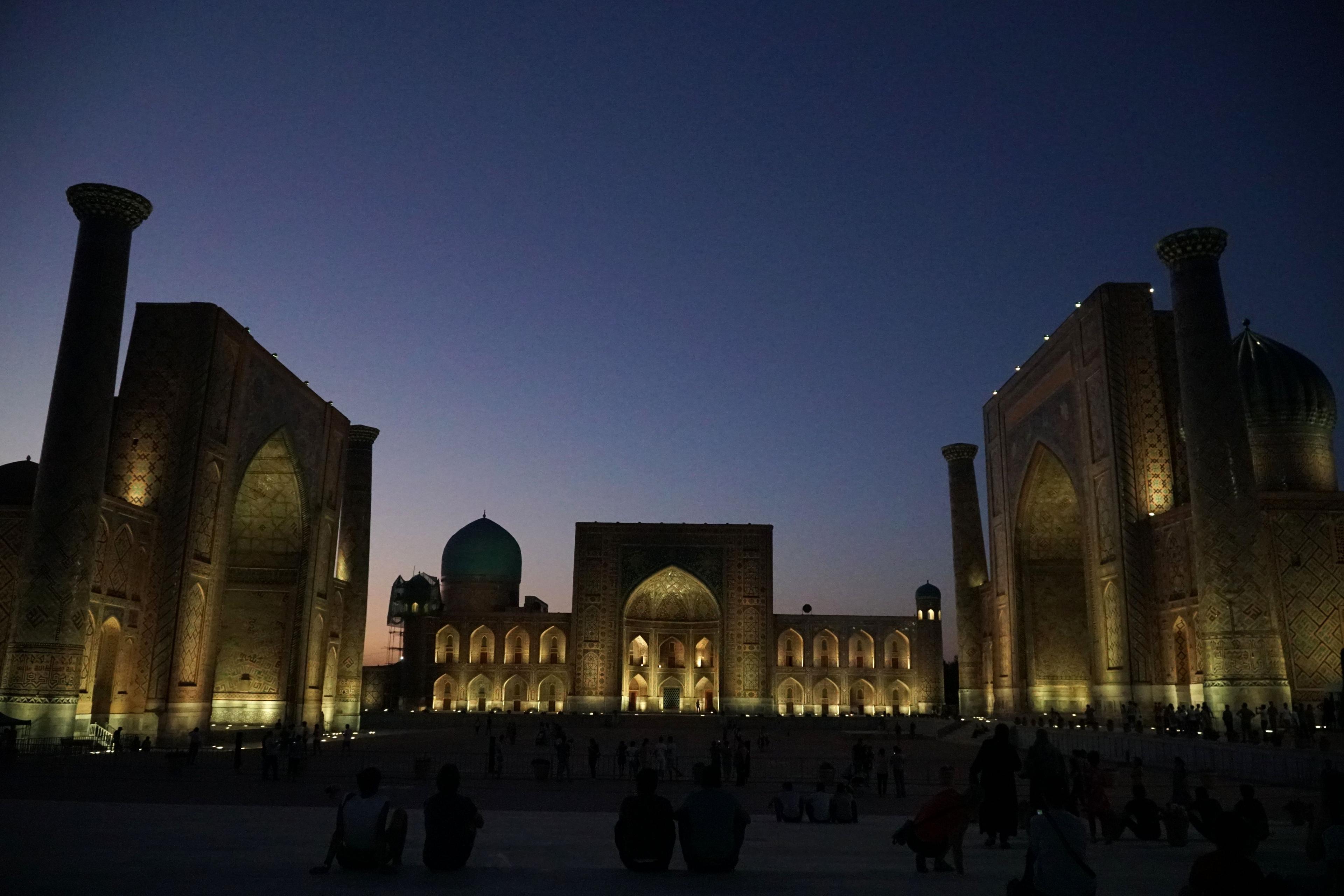
- Samarkand: Registan Square, the Bibi-Khanym Mosque and Siab Bazaar are linked by a pedestrian avenue. Shah-i-Zinda is a little further on foot, and the Gur-Emir Mausoleum is about 15 minutes' walk from Registan. Use a taxi for Ulugbek's observatory and the Afrasiyab museum.
- Tashkent: a large modern city. Walk around Amir Temur Square, Broadway and the old town lanes around Chorsu Bazaar, and use the metro or taxis between districts.
Wear comfortable shoes with a firm sole: old-town paving is uneven, and the polished stone around the monuments is slippery after rain. From June to August, plan walks for the morning and evening and rest in the afternoon heat.
Prices, safety and etiquette
Uzbekistan's cities are safe by any standard, including at night in the centres. The usual precautions still apply: keep your phone and wallet in a front pocket in crowded bazaars and on the rush-hour metro.
- Carry small notes. Many drivers, ticket machines and stalls cannot change a 200,000 som note.
- Traffic is fast and drivers do not always stop at crossings. Use pedestrian underpasses in Tashkent and cross with locals elsewhere.
- Wear the seat belt in taxis, front and back, even if the driver does not.
- On the metro and buses, offer your seat to older passengers, as Uzbek passengers always do.
- Tourist police patrol the main sights in Samarkand, Bukhara and Khiva and are helpful if you have a problem.
Women travelling alone generally find city transport comfortable; sitting in the back of a taxi is normal.
Exploring with TourEast
On our private and small-group tours, transfers, intercity cars and train tickets are all arranged for you, and our guides will happily show you the metro on a free afternoon. If you prefer to travel independently with a little support, we can build a custom itinerary with transfers only where you need them.
Frequently asked questions
Watch
Photo gallery