Silk weavers in Margilan, blue-glazed pottery in Rishtan and the khans' palace in Kokand. Our local guide to the Fergana Valley: how to get there over the Kamchik Pass, how many days you need, the best season and the market days worth planning around.
Facts, prices and schedules checked on November 4, 2026
The Fergana Valley is the part of Uzbekistan that most first-time visitors skip, and the part our guides most often tell friends not to miss. It has no Registan and no walled old town on the scale of Ichan-Kala. What it has instead is the country's living craft heartland: silk still dyed and woven by hand in Margilan, pottery glazed in the same turquoise blues for centuries in Rishtan, and the last great palace of the Kokand khans.
It is also the most densely populated corner of Central Asia, green with orchards, cotton and mulberry trees, and noticeably more traditional than Tashkent. Life moves around bazaars, family workshops and teahouses, and visitors are still rare enough to be welcomed with genuine curiosity.
This Fergana Valley travel guide covers what to see, how to get there from Tashkent over or under the Kamchik Pass, how many days to give it, the best season and the market days worth planning your trip around. Practical details are as of November 2026.
Where is the Fergana Valley and why go?
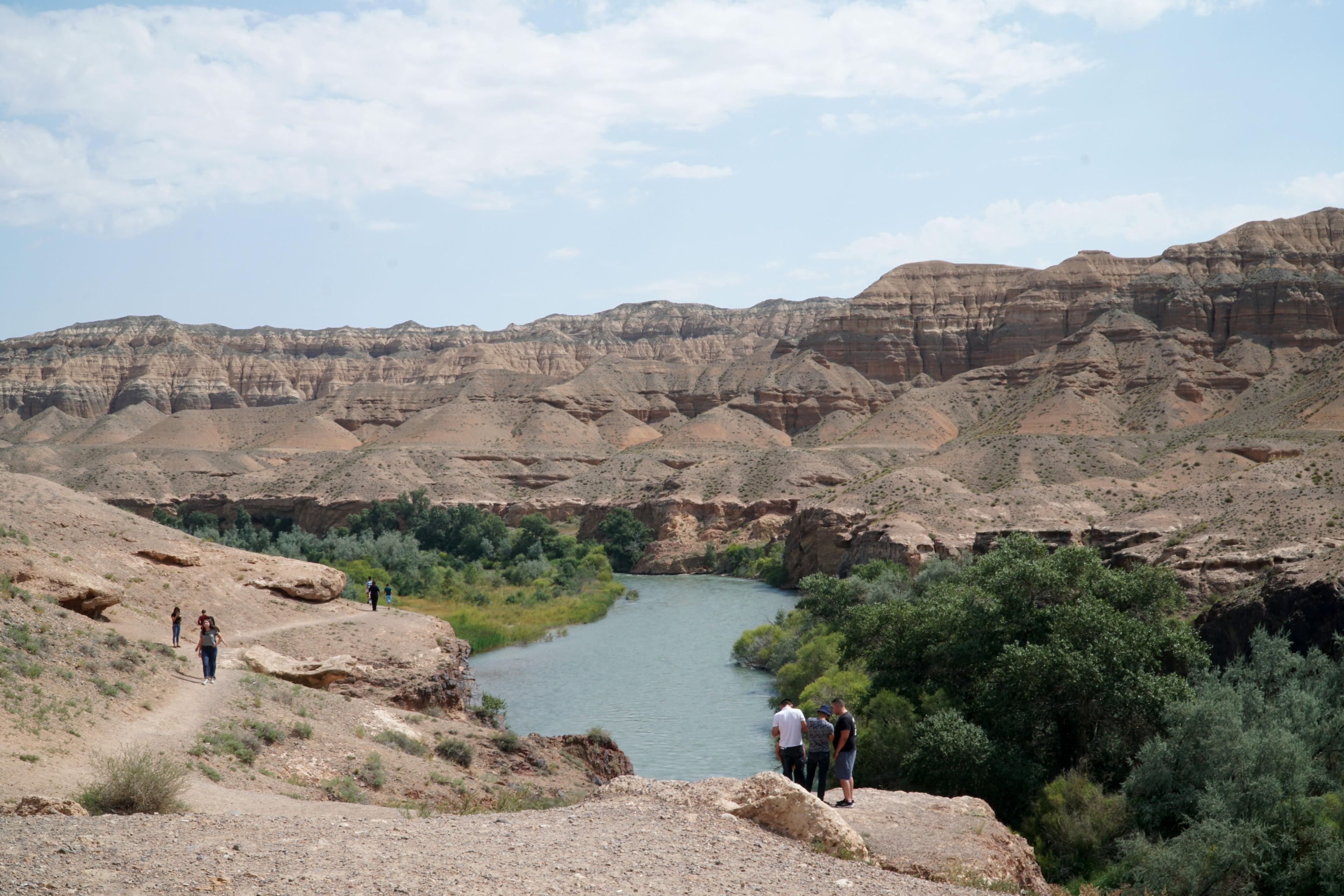
The Fergana (also spelled Ferghana) Valley is a broad, fertile basin about 300 kilometres long, ringed by the Tian Shan and Pamir-Alay mountains. The Syr Darya river runs through it. Politically it is shared by three countries: the flat, populous heart belongs to Uzbekistan, while the mountain rim falls to Kyrgyzstan and Tajikistan.
On the Uzbek side there are three regions, Fergana, Andijan and Namangan, and the towns most travellers visit lie within an hour or two of each other:
- Margilan: the silk town, with the Yodgorlik silk factory and the Kumtepa Bazaar nearby.
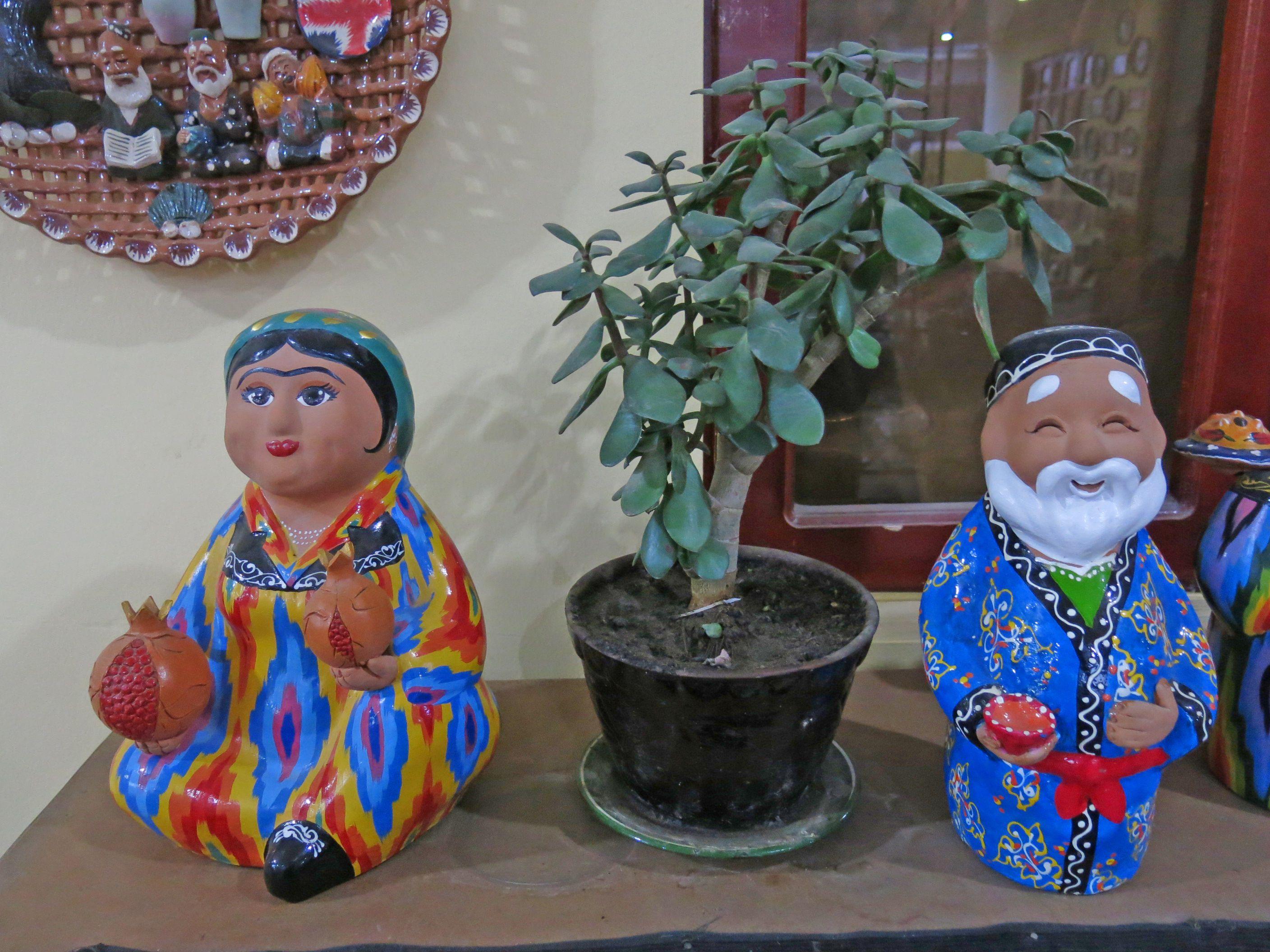
- Rishtan: a pottery town with family workshops that have worked the local red clay for generations.
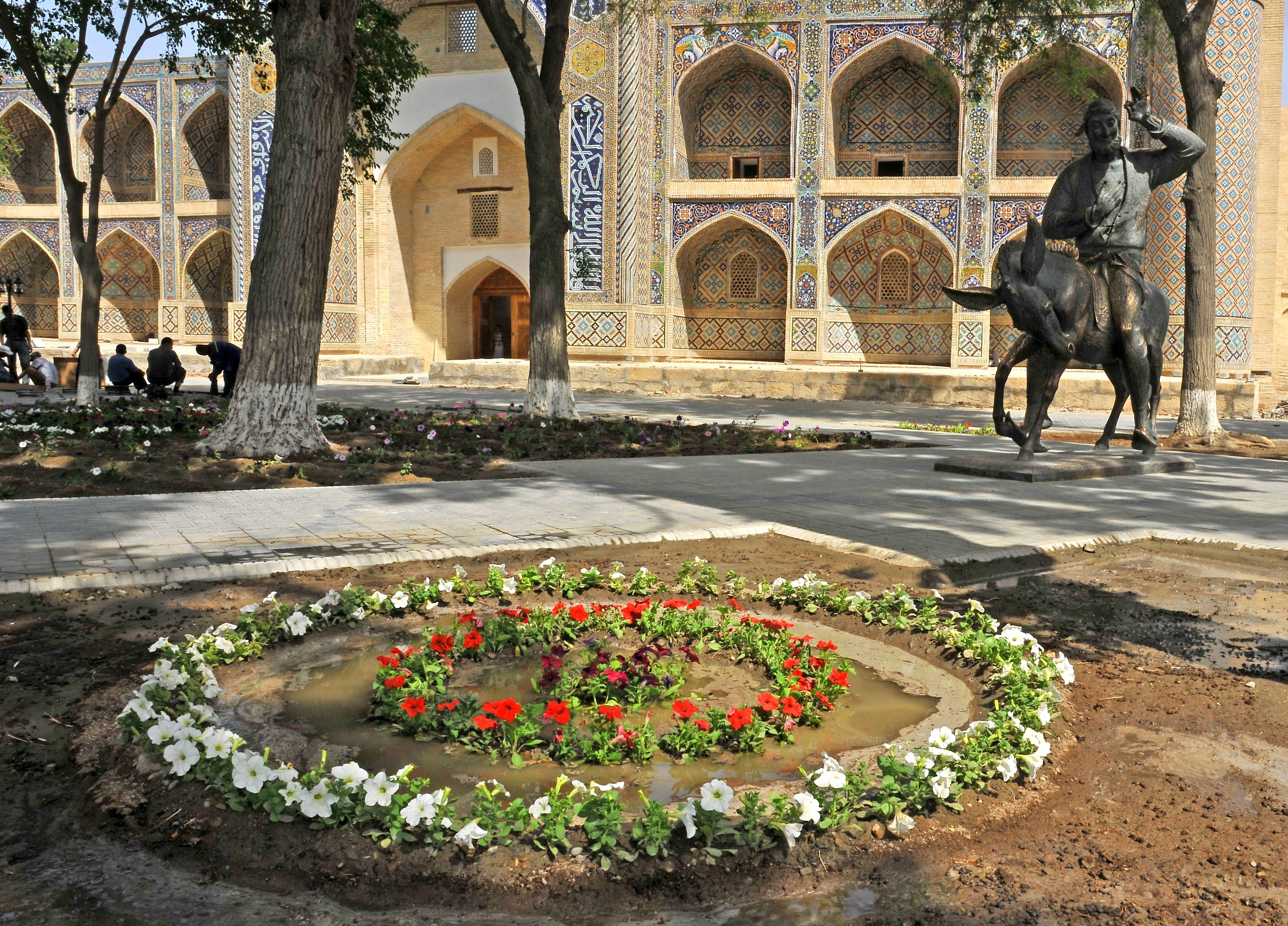
- Kokand: the former capital of the Kokand Khanate, with the Khudayar Khan Palace and some fine 19th-century mosques and madrasahs.
- Fergana city: a 19th-century Russian-planned town with leafy avenues and the most hotels, and a practical base.
Why go? For craft, above all. If you are interested in textiles, ceramics or simply in seeing how things are still made by hand, this is the most rewarding region in the country. It is also a good counterweight to the monument-heavy Samarkand and Bukhara days: fewer tour groups, more everyday life, and some of the best home cooking in Uzbekistan.

How to get to the Fergana Valley from Tashkent
Every route from Tashkent to the Fergana Valley has to cross the Kurama range. There are three ways to do it.
By train. Since 2016 trains have run through the Kamchik rail tunnel, about 19 kilometres long, on the Angren to Pap line. Daytime passenger trains link Tashkent with Kokand, Margilan and Andijan. As of late 2026 the journey takes roughly four hours to Kokand and around five hours to Margilan, usually with a morning departure from Tashkent and at least one train in each direction daily. Uzbekistan Railways cut fares on the Andijan line in March 2026, and a seat remains far cheaper than a private car. Timetables change by season, so check live times and buy tickets on the official railway.uz site or its ticket app. Note that the fast Afrosiyob train runs to Samarkand and Bukhara, not to the Fergana Valley.
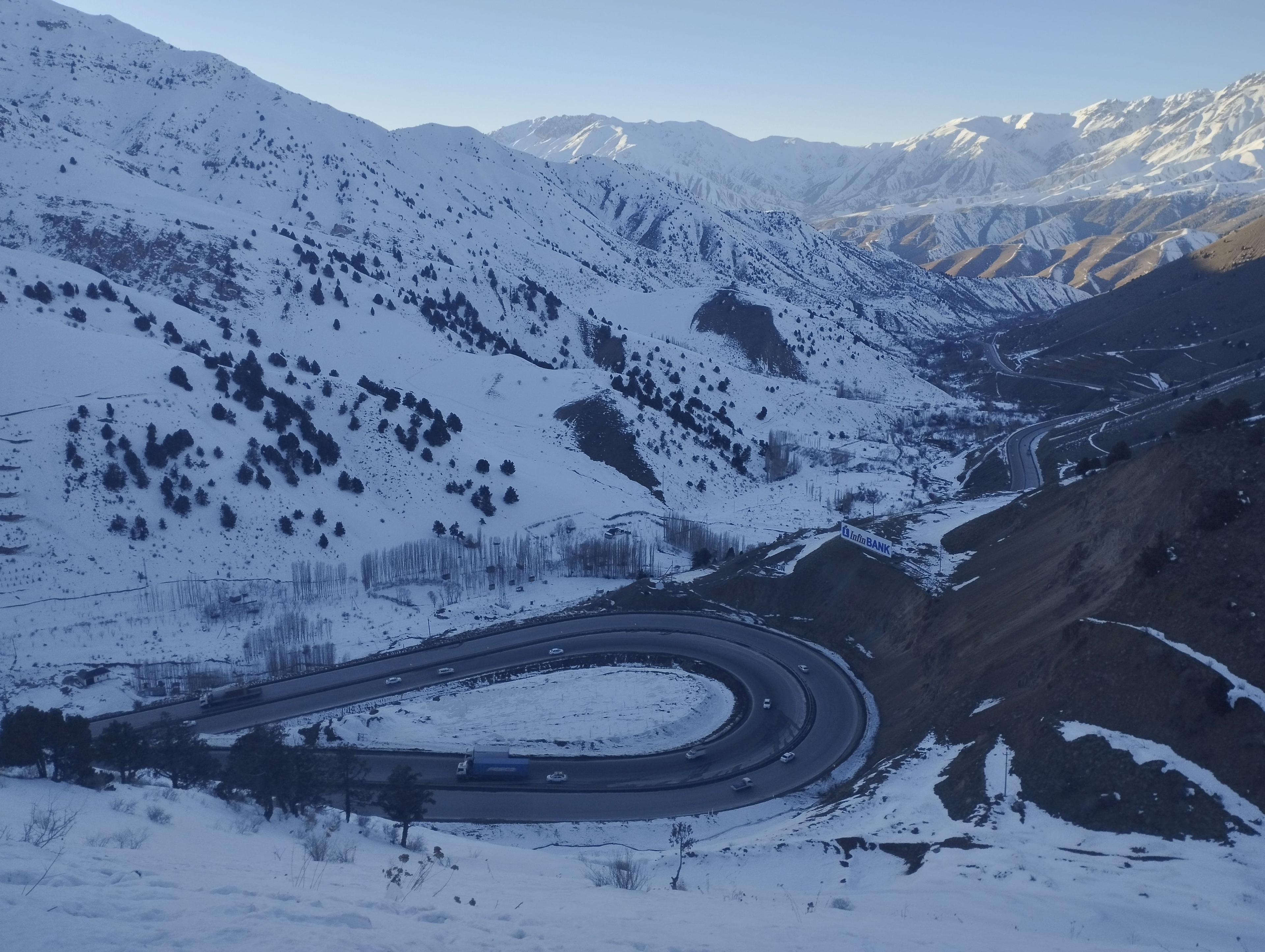
By road over the Kamchik Pass. The A373 highway climbs to around 2,200 metres before dropping into the valley. It is a spectacular drive, with switchbacks, apricot orchards and shepherds on the slopes, and a private car takes roughly four and a half to five hours from Tashkent to Kokand with a stop at the top. In winter the pass is occasionally closed for short periods because of snow and avalanche risk, which is one reason many travellers take the train between November and March.
By air. Fergana has an airport with short domestic flights from Tashkent, around an hour in the air. Flying makes sense if you are coming from Khiva or Bukhara and short of time. See our guide to domestic flights in Uzbekistan for booking tips.
Our usual advice: take the train one way and the road the other. You get the speed of the tunnel and the views from the pass.
Margilan: the Yodgorlik silk factory
Margilan has been a silk town for centuries, and its signature fabrics, khan-atlas (pure silk) and adras (silk woven with cotton), are recognised far beyond Uzbekistan. In 2017 UNESCO added the Margilan Crafts Development Centre, which teaches and protects atlas and adras weaving, to its Register of Good Safeguarding Practices.
The easiest place to see the whole process is the Yodgorlik silk factory, a working mill rather than a museum. A visit usually follows the thread from start to finish:
- Cocoons are softened in hot water and the filament is unwound by hand onto reels.
- The threads are bundled and tied in patterns, then dyed in vats. This resist-dyeing technique is what Uzbeks call abrband and the rest of the world calls ikat.
- Weavers, most of them women, work the dyed warp on wooden looms, a few centimetres an hour.
- In another room you may see silk carpets being knotted.
Allow around an hour for the tour. A modest entrance fee is charged (reported at around 30,000 som, as of November 2026), and English-speaking staff are usually available. The factory shop sells fabric by the metre, scarves and ready-made clothes at fair fixed prices. It is generally open Monday to Saturday; sources disagree on Sundays, so confirm before you plan a Sunday visit.
If you have more time, ask your guide about smaller private workshops in Margilan, where families still run a few looms at home.

Kumtepa Bazaar: which days to go
A few kilometres outside Margilan, the Kumtepa Bazaar is one of the most atmospheric markets in Central Asia. Traders come from across the valley, and the main draw for visitors is the long rows of atlas and adras sold by the bolt, alongside embroidered skullcaps, suzani, household goods, livestock and food.
The key fact: Kumtepa only trades properly on Thursdays and Sundays. Sunday is the busiest day. On other days you will find it largely empty.
- Go early. Trading starts at dawn and the best stalls are winding down by late morning.
- Bring cash in som. Card payments are rare here.
- Bargain politely. Ask your guide what a fair metre of adras costs before you start.
- Ask before photographing people, especially women and older traders.
Because both Yodgorlik and Kumtepa sit near Margilan, the classic plan is the factory and the bazaar on the same Thursday or Sunday morning. If your dates do not fit, Margilan's central bazaar trades daily and is still a good place for silk.
Rishtan ceramics: workshops and what to buy
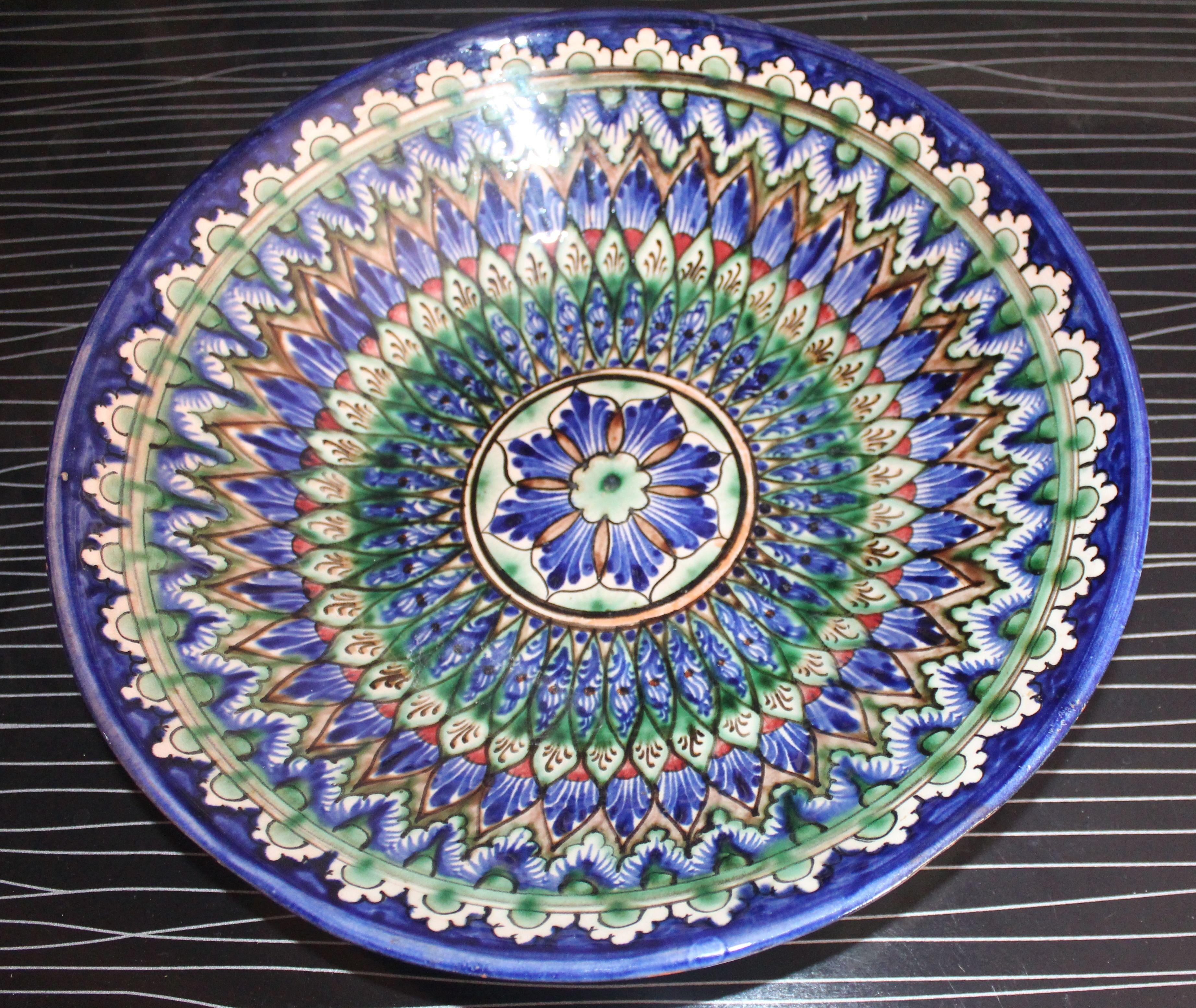
Rishtan sits on the southern edge of the valley, roughly between Kokand and Fergana, and almost everyone there seems to have a potter in the family. The town owes its fame to a fine local red clay and to ishkor, a traditional alkaline glaze made with plant ash. It gives Rishtan ceramics their characteristic turquoise, cobalt and deep green.
Two names come up most often:
- Rustam Usmanov's home workshop, about a kilometre west of the centre, doubles as a small museum with older Rishtan pieces as well as new work. He and his family show visitors every stage, from the wheel to the kiln, and can serve lunch if you call ahead.
- Alisher Nazirov is one of the best-known masters in the country, and his workshop welcomes visitors. His pieces also turn up in galleries in Tashkent, Samarkand and Bukhara.
Expect to spend an hour or so in a workshop, and longer if you want to try the wheel. Prices for plates and bowls are reasonable for hand-painted work, and most masters will wrap pieces carefully for flights. Large dishes are heavy, so think about your luggage before you fall in love with a 50-centimetre lagan.
Rishtan pairs naturally with Kokand on the same day, since it lies on the road between Kokand and Margilan.
Kokand: the Khudayar Khan Palace and the khanate's capital
For about a century and a half Kokand was the capital of an independent khanate that controlled much of the valley and, at times, Tashkent. The town's grandest survivor is the Khudayar Khan Palace, built in the late 1860s and early 1870s for the last ruling khan, just a few years before the Russian Empire absorbed the khanate.
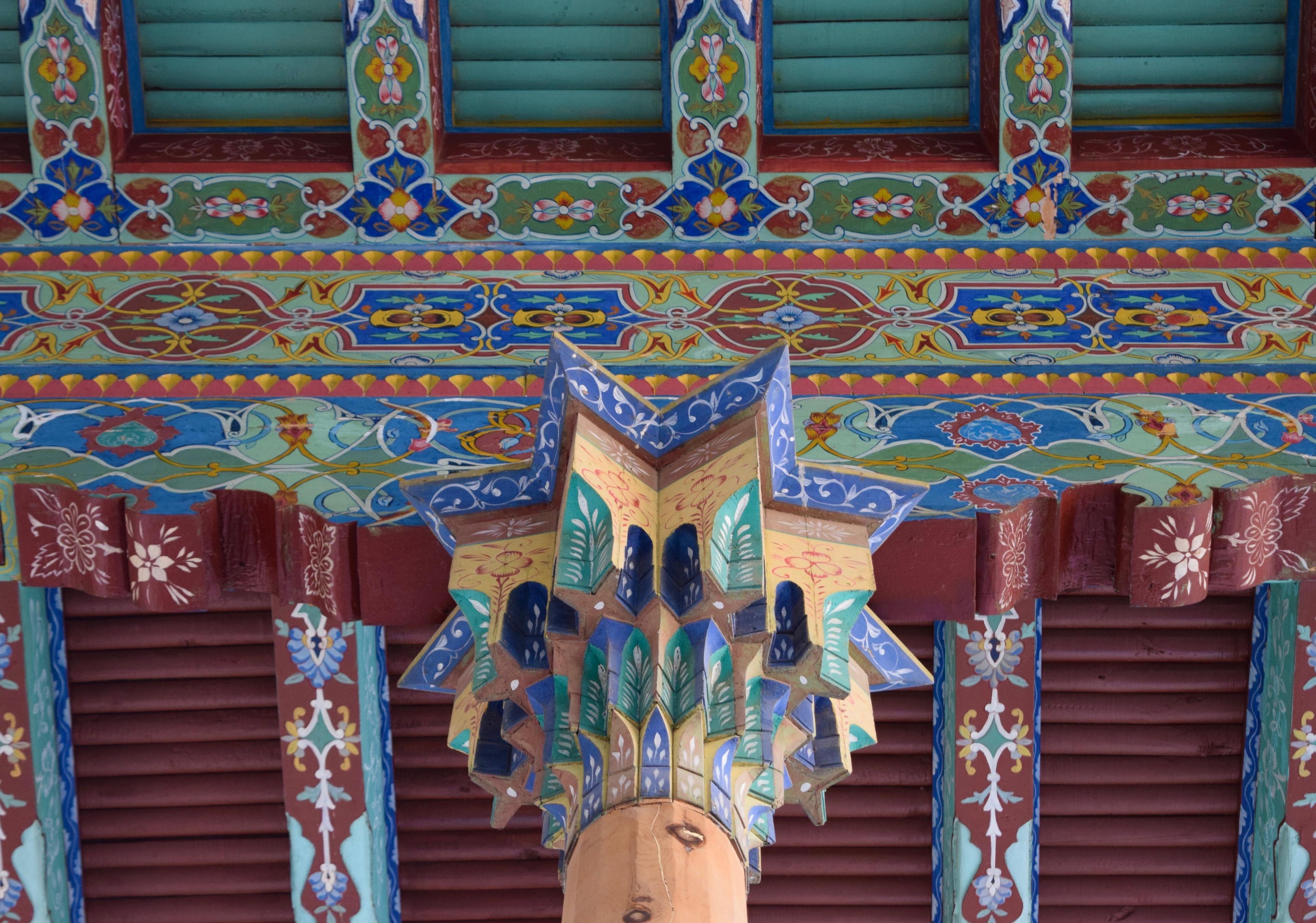
The façade is the reason to come: a long, tiled front in blues, greens and yellows, raised on a high platform and reached by a ramp. Originally the palace had seven courtyards and well over a hundred rooms. Today five courtyards and 19 rooms survive, and they house the Kokand regional museum, which has been here since 1925. Look up as you walk through: the painted wooden ceilings are some of the finest in Uzbekistan. The original throne is in the Hermitage in St Petersburg, and a replica stands in the throne room.
The palace is open daily, roughly 9:00 to 17:00 or 18:00, with a modest entrance fee. We could not confirm the exact 2026 foreigner price, so check on the day.
Kokand repays a few more hours. Its Friday mosque has a long open aivan supported by nearly a hundred carved wooden columns, and the town has several 19th-century madrasahs and a royal necropolis. Most visitors see Kokand in half a day, often on the way in from Tashkent or on the way back.
Getting around the Fergana Valley
Distances inside the valley are short. Margilan and Fergana city are next door to each other, Rishtan is under an hour away, and Kokand is around an hour and a half from Margilan by road.
- Private car with driver: the most efficient way to combine Margilan, Rishtan and Kokand in one day, and what we arrange for most guests.
- Taxis: Yandex Go works in Fergana and Margilan, and shared taxis link the towns from their bus stations. See our guide to getting around Uzbek cities.
- Ring railway: in 2026 a new electric train started running on the valley's loop railway, linking Kokand, Namangan, Andijan and Margilan, at a flat fare of 15,000 som. It is a pleasant novelty, but services are limited, so check times before relying on it.
Most travellers base themselves in Fergana city, which has the widest choice of hotels, or in Margilan if they want to be close to the silk workshops.
How many days do you need in the Fergana Valley?
Two days is the minimum and three is ideal.
A day trip from Tashkent is possible on the train, but you will spend most of it travelling and see one town at best. We do not recommend it.
A two-day plan that works well:
- Day 1: Morning train or drive from Tashkent to Kokand. Khudayar Khan Palace and the Friday mosque, then Rishtan for a workshop visit and late lunch. Overnight in Fergana or Margilan.
- Day 2: Yodgorlik silk factory and, on a Thursday or Sunday, the Kumtepa Bazaar. Afternoon train or drive back to Tashkent.
With a third day you can slow down: a private weaving workshop in Margilan, the Pir Siddiq complex, a cooking session with a local family, or a trip to Andijan or Namangan. Craft-focused travellers often stay longer still to try a weaving or pottery class. Our Crafts of the Fergana Valley tour is built around exactly this.
Plan the days so that a Thursday or Sunday falls in Margilan. It makes the difference between seeing Kumtepa at full volume and seeing it empty.
Best time to visit the Fergana Valley
The valley follows the country's general pattern, which we cover month by month in our guide to the weather in Uzbekistan:
- April to May: green fields, blossom and mild days. The best overall season.
- June to August: hot, often above 35°C in the afternoon. Mornings are fine for bazaars and workshops; plan indoor time after lunch.
- September to October: warm, settled weather and the fruit harvest. Excellent for travel.
- November to March: cold, sometimes snowy, and the Kamchik Pass road can close briefly after heavy snow. Workshops still welcome visitors, and the train runs through the tunnel regardless.
Margilan's silk is woven year round, so there is no bad season for crafts, only for comfort.
Is the Fergana Valley worth visiting? Practical tips
If you have more than a week in Uzbekistan, or a real interest in textiles and ceramics, yes. If you have only five days, Samarkand and Bukhara come first, and the valley is a strong reason to come back.
A few things to know before you go:
- It is more conservative than Tashkent. Dress modestly, with shoulders and knees covered, especially in bazaars and mosques.
- The valley is safe and welcoming for visitors. Our guide to whether Uzbekistan is safe covers the country as a whole.
- Carry cash in som. Cards work in hotels and some shops but rarely in bazaars. See our guide to money in Uzbekistan.
- English is less widely spoken than in Samarkand. A local guide makes workshop visits far richer, since much of the craft knowledge is passed on in Uzbek.
- Try the regional food: Fergana-style plov, fresh tandir bread and, in summer, the valley's famous apricots, grapes and melons. Our Uzbek food guide has more.
- Be mindful of borders. The valley's mountain edges belong to Kyrgyzstan and Tajikistan. Stay on main roads unless you are with someone who knows the area.
Exploring the Fergana Valley with TourEast
Our Fergana Valley guides are on first-name terms with the weavers and potters, which opens doors that a walk-in visit does not. We can build the valley into a private itinerary, time it for a Kumtepa market day, or arrange it as a craft-focused extension to one of our small-group tours.