Rishtan ceramics are Uzbekistan's famous blue pottery. Here is how the ishkor glaze works, which masters' workshops you can visit, how Rishtan differs from Gijduvan, what to pay and how to get a fragile plate home in one piece.
Facts, prices and schedules checked on November 4, 2026
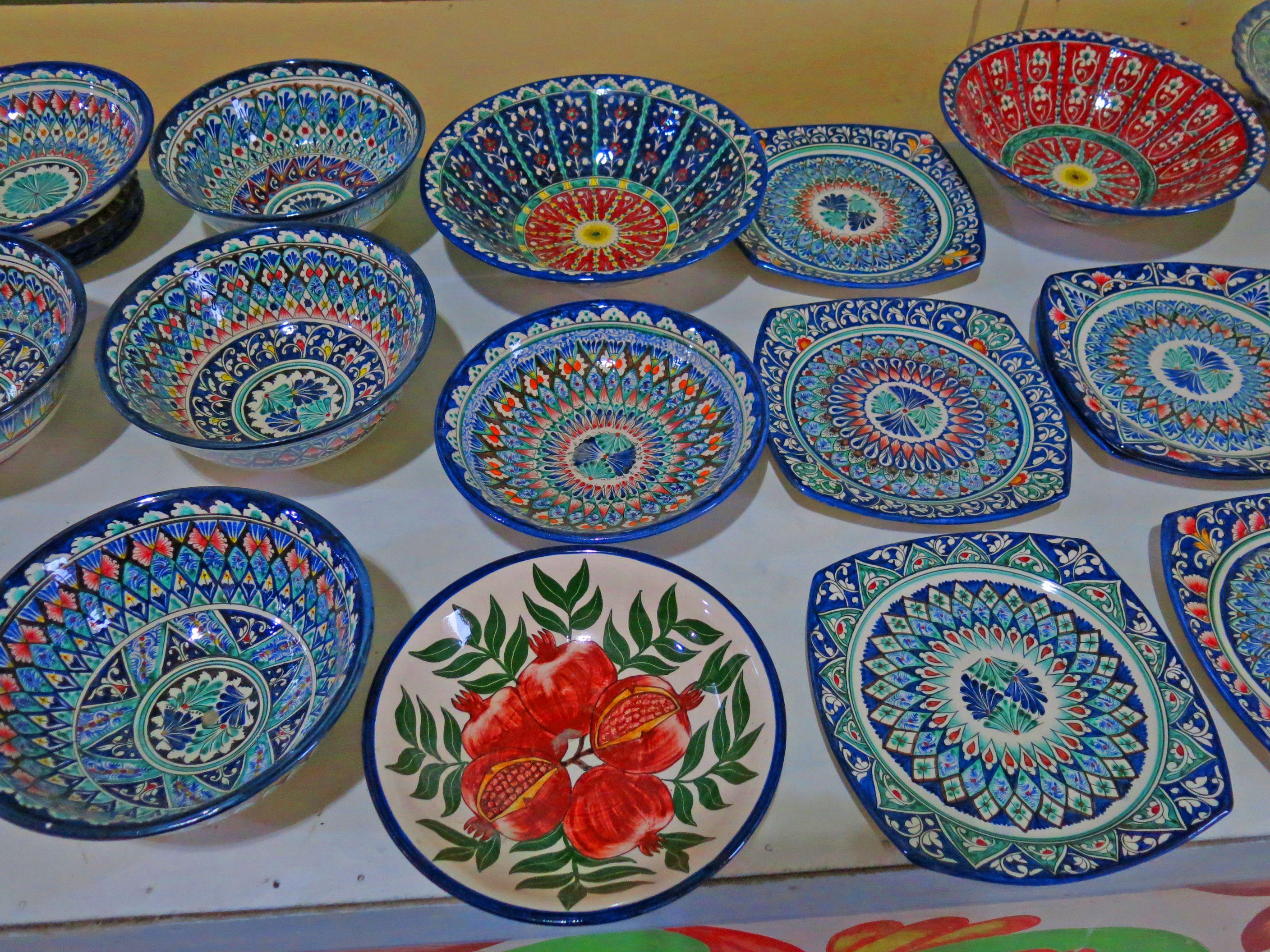
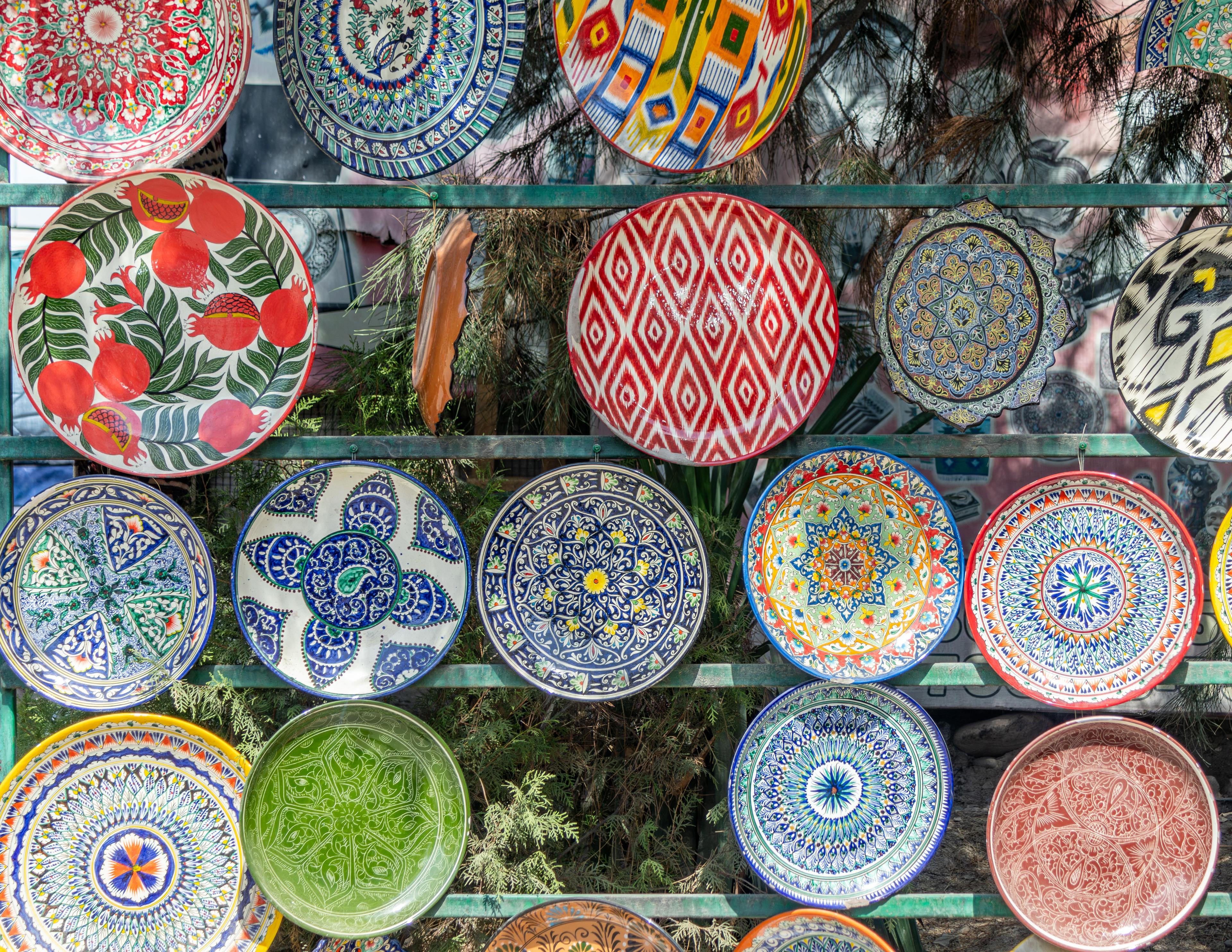
Rishtan ceramics are the blue and turquoise plates you see on every second wall in Uzbekistan, from teahouses in Tashkent to the souvenir stalls of Lyabi-Hauz in Bukhara. They come from one small town in the Fergana Valley, Rishtan (Rishton in Uzbek), where pottery is less a craft than the local economy.
Our general guide to crafts and souvenirs gives the short version. This article goes further: what makes the colour, how a plate is made, which master workshops you can actually walk into, how to tell Rishtan from Gijduvan and from mass-produced copies, what to pay in 2026 and how to get a 40-centimetre dish home without it arriving in pieces.
Why Rishtan? Clay, ash and a thousand years of pottery
Rishtan sits on the southern edge of the Fergana Valley, between Kokand and Fergana city, and owes its pottery to the ground under it. Local red clay is fine and plastic, and potters say it needs very little preparation. Pottery has been made here for centuries, and the craft is passed down inside families: the father throws, the son learns to paint, the grandson grinds pigments.
The scale is unusual. Local estimates of the number of working potters range from a few hundred hereditary masters to around a thousand people in the trade, depending on who is counting. In September 2025 the World Crafts Council named Rishtan a World Craft City, on the eve of the town's second International Pottery Forum, which brought more than 100 potters from 26 countries. Kokand and Margilan already held the same title.
What this means for you as a visitor: in Rishtan you are not visiting one show workshop but a whole town of them. Signs saying "Kulolchilik" (pottery) or "Ceramics" hang over many gates, and most families are happy to show you the kiln.
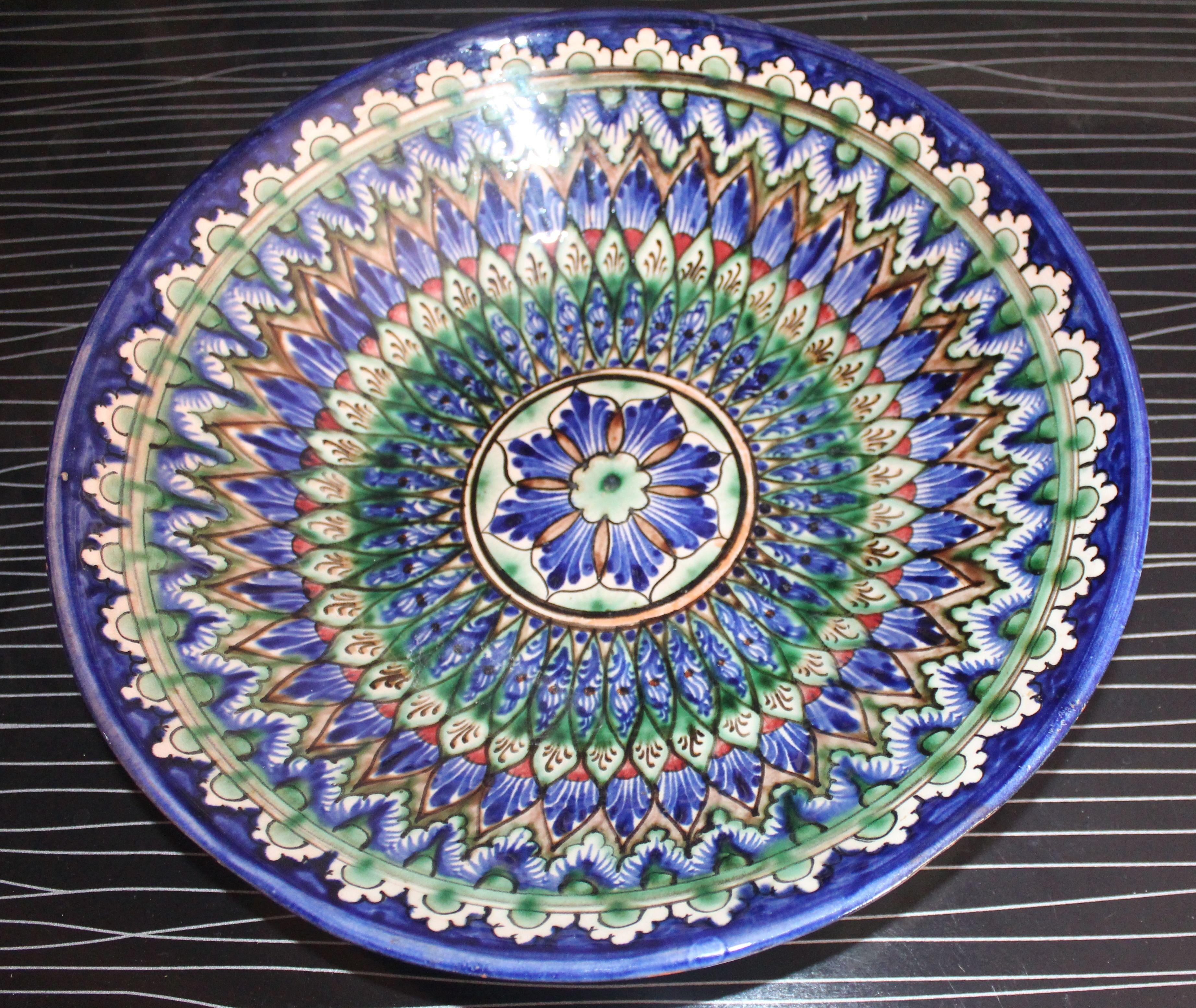
What is ishkor glaze?
The single most important word in Rishtan ceramics is ishkor. It is a traditional alkaline glaze made from the ash of wild steppe plants (locally called kyrk-bugin) mixed with quartz sand and mineral colourants. Masters collect the plants themselves in the hills around the town once a year, burn them and prepare the ash by hand. Alisher Nazirov, the best-known of the current masters, still does this every season.
Ishkor is what gives Rishtan its colour. Fired over painted decoration, it produces the deep, slightly glassy turquoise and cobalt that no factory glaze quite matches. The surface has a soft depth, and the blue seems to sit inside the glaze rather than on top of it. Under a magnifying glass you often see fine crackle and tiny bubbles.
A few things to know:
- Recipes are family secrets. Every workshop's ishkor is slightly different, which is why one master's turquoise is greener and another's bluer.
- The glaze nearly disappeared in the Soviet period, when the Rishtan ceramics factory switched to industrial glazes. Masters such as Ibrohim Komilov kept the old recipes alive, and their pupils revived them after independence.
- Not every blue Uzbek plate is ishkor. Cheaper pieces use commercial glazes that look flatter and more uniform. When you ask "Is this ishkor?", a real master will usually take you to the ash bins and kiln to show you.
How a Rishtan plate is made
A workshop visit follows the plate through the yard. The steps are roughly the same everywhere:
- Clay preparation. Red clay is soaked, cleaned and kneaded, sometimes by foot.
- Throwing. Bowls, piala (tea bowls) and jugs are thrown on the wheel; large lagan (serving dishes for plov) are often shaped over a mould.
- Engobe. The dried piece is dipped in a white slip, which gives the painters a clean ground and makes the blues glow.
- Painting. Women and men paint freehand with fine brushes, traditionally made from goat or cat hair, using mineral pigments. Classic motifs include pomegranates (fertility), fish, almonds, the protective eye, and the dense floral islimi scroll.
- Glazing. The painted piece is coated with ishkor.
- Firing. Pieces are stacked in a kiln, traditionally wood-fired, now often gas or electric, and fired at high temperature. One firing can decide a week's work.
If you have an afternoon, ask to try painting a piala or throwing on the wheel. Several workshops run short master classes, and the result can be fired and wrapped for you if you stay in the valley another day.
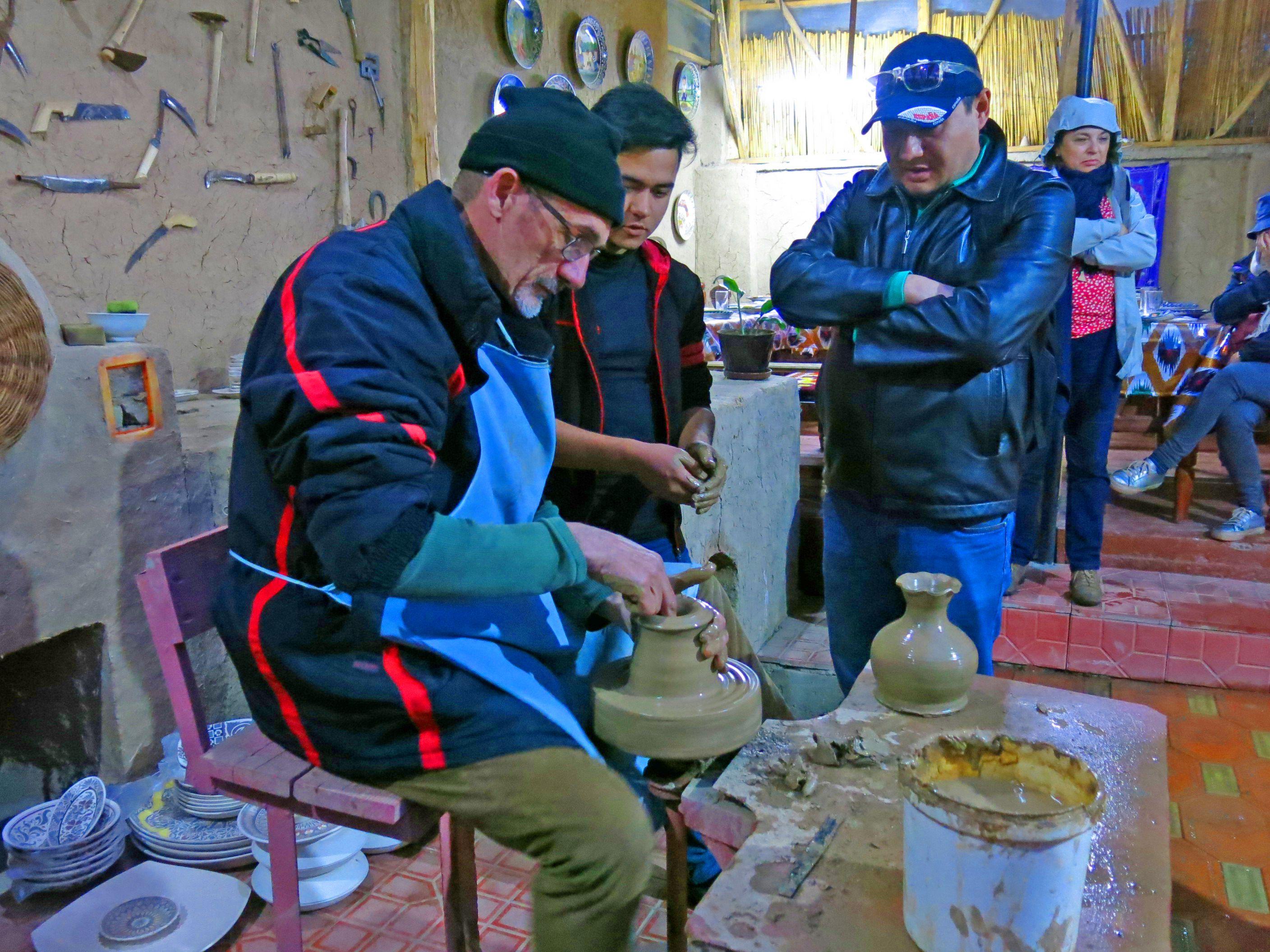
Rishtan workshops you can visit
These are the workshops with the longest record of receiving visitors. All are family homes as well as studios, so a call ahead (or a guide who calls for you) is polite and often means the master is there in person.
- Alisher Nazirov, Bobur Street 50. Born in Rishtan in 1958, he trained with the old masters of the town, worked as chief artist of the Rishtan ceramics factory in the 1980s, and in 1994 completed an internship in Japan. His school, opened in 2005, has trained around a hundred students. The showroom mixes his own pieces, his pupils' work and historic Rishtan ware. His studio lists daily opening from early morning to evening, and he regularly runs master classes.
- Rustam Usmanov, Ar-Roshidoni Street. Usmanov was the first Rishtan potter with a formal academic art education and works with a team of around 20 artisans, much of it on commission for European clients. His house includes a workshop, a small private museum of older Rishtan ceramics and guest rooms, and he welcomes visitors who want to see every stage or try it themselves.
Other masters are well known within Uzbekistan and exhibit abroad, among them Shokirjon Ahmadjonov, Ravshanjon Tojidinov and Tohir Haydarov, all named by the regional government when the World Craft City title was awarded. Your guide can arrange a visit to a smaller family workshop too, which is often where the best value is.
How long to allow: an hour for a straightforward workshop visit, two to three hours if you want a master class and lunch. Rishtan fits easily into a day with Kokand, since it lies on the road between Kokand and Margilan. Our Fergana Valley travel guide covers the rest of that day.
Rishtan vs Gijduvan ceramics: how to tell them apart
Uzbekistan has two great living pottery schools, and you will see both in every bazaar. They are easy to tell apart once you know what to look for.
Rishtan (Fergana Valley):
- Colours: turquoise, cobalt, deep green and white, from the ishkor glaze.
- Line: very fine, crisp, controlled brushwork; motifs are sharp-edged.
- Feel: cool, glassy surface, often lightly crackled.
- Motifs: pomegranates, fish, almonds, dense floral scrolls.
Gijduvan (about an hour north-east of Bukhara):
- Colours: warm browns, ochres, yellows and greens, with touches of blue.
- Line: deliberately soft. The pigments spread slightly during firing, so the contours blur. This is the most recognisable feature of the style.
- Motifs: bold swirling rosettes, stars and geometric patterns.
- The name to know: the Narzullaev family, whose workshop includes a ceramics museum opened by Abdullo Narzullaev in 1992.
Which to buy? It is a matter of taste and of your route. Gijduvan is an easy stop on the road between Bukhara and Samarkand, while Rishtan needs a trip to the Fergana Valley. If you are interested in pottery as a craft rather than a souvenir, try to see both: they show how differently two towns can answer the same question with the same clay.
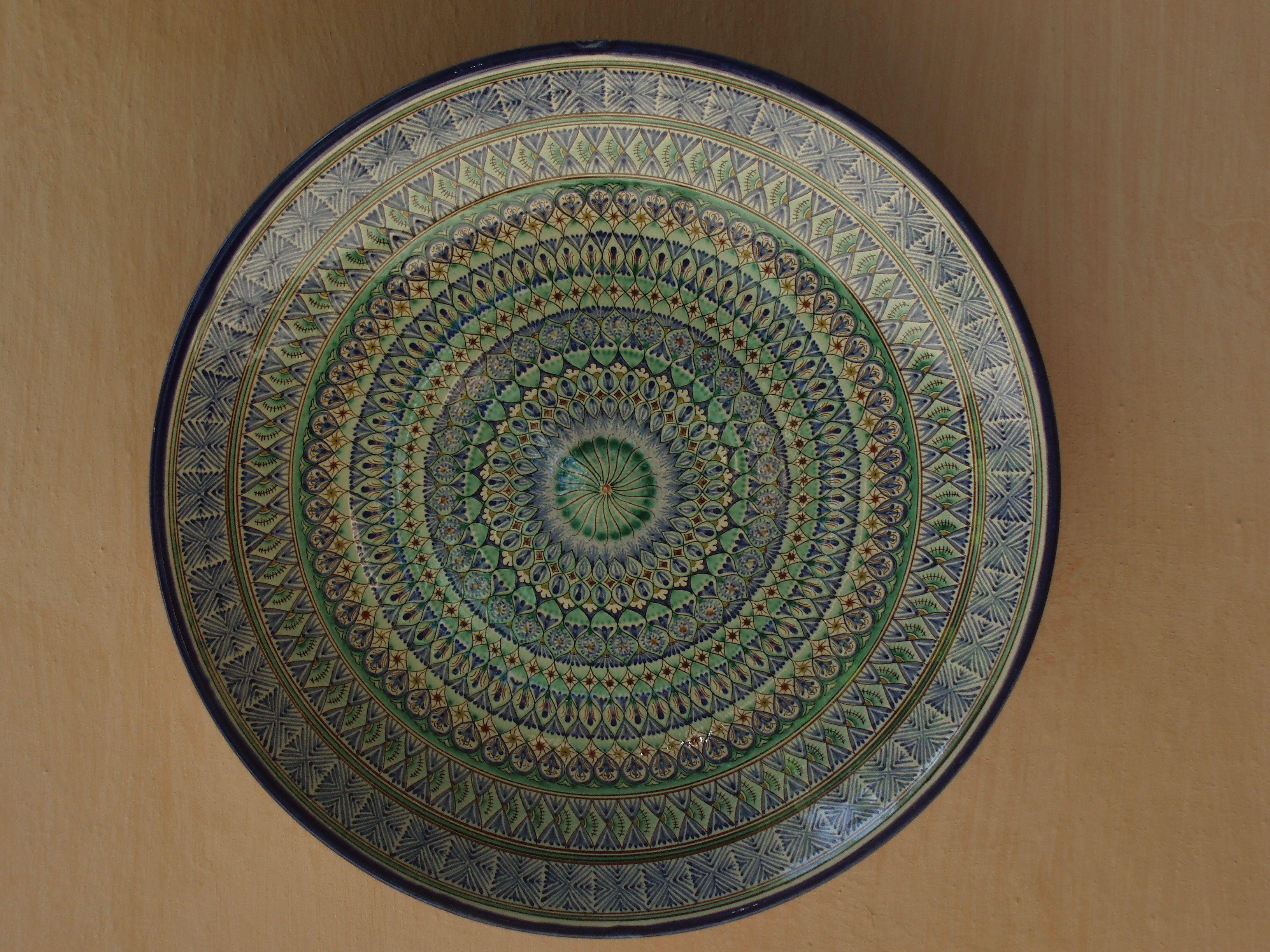
Rishtan ceramics prices in 2026
Prices depend on size, the hand that painted it and where you buy. These are typical prices at Rishtan workshops as of November 2026; expect to pay more in Tashkent, Samarkand and Bukhara shops, and much more abroad.
- Piala (tea bowl): about US$3 to 8.
- Small plates and dishes (15 to 20 cm): about US$5 to 15.
- Medium plates, bowls and teapots: about US$15 to 40.
- Large lagan (35 to 50 cm): about US$40 to 150.
- Signed pieces and exhibition work by leading masters: from a few hundred US dollars upwards.
Workshop prices are usually fixed or close to it. Polite bargaining is acceptable when you buy several pieces, but the margin is smaller than in a bazaar. Cash in som is welcome everywhere; larger workshops increasingly accept cards. Our guide to money in Uzbekistan explains cards, cash and ATMs.
Can you buy Rishtan ceramics outside Rishtan? Yes. Chorsu Bazaar in Tashkent, the madrasah shops in Samarkand and the trading domes in Bukhara all sell them, and Nazirov's work is also sold through outlets in Samarkand and Tashkent. Choice and price are best at the source, though, and you know exactly who made the piece.
How to choose a good piece
Five quick checks before you pay:
- Look at the painting up close. Hand painting shows small variations from one motif to the next. Identical repeats and perfectly even lines suggest a decal or stencil.
- Turn it over. Many masters sign or stamp the base. An unglazed foot ring with red clay showing is normal for Rishtan.
- Tap the rim gently with a fingernail. A clear ring means no hidden crack; a dull thud suggests one.
- Check the glaze for pinholes, bare patches and chips, especially on the rim of large dishes.
- Ask what it is for. Many pieces are made for display. If you plan to eat from a plate, ask the master whether that glaze is food-safe. Artisan glazes vary, and decorative ware is not always tested for food use.
Crackle (a fine web of lines in the glaze) is a natural feature of alkaline glazes and not a defect, as long as the piece rings true.
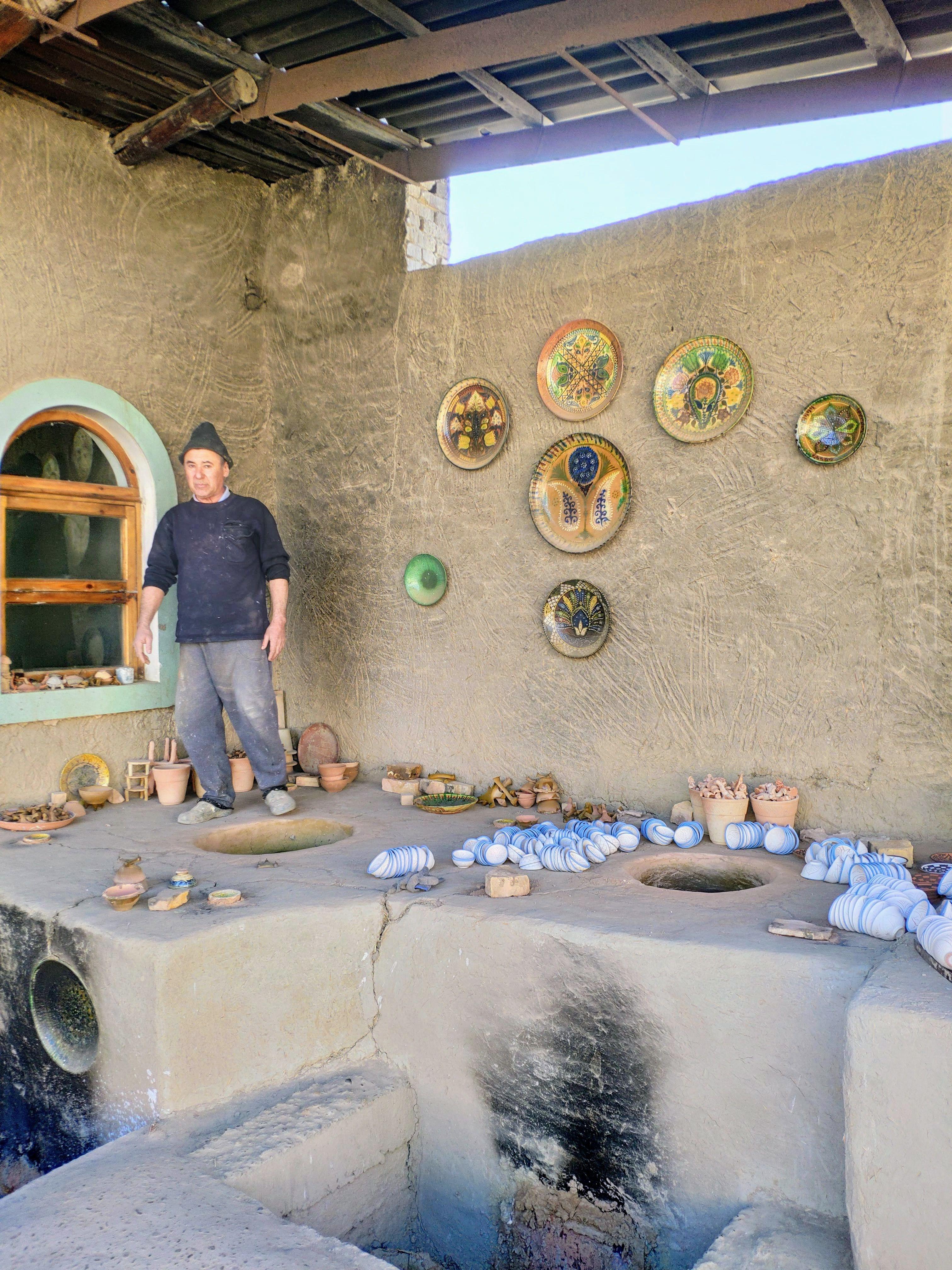
How to pack and ship ceramics from Uzbekistan
This is the question we are asked most after "how much".
Carrying it home is the safest option for anything up to a medium plate:
- Workshops wrap pieces in paper, bubble wrap or cardboard as a matter of routine. Ask for double wrapping for flights.
- Keep ceramics in your cabin bag. Hold baggage is where most breakages happen.
- Pack plates vertically between soft clothes, never flat at the bottom of a case.
- Remember the weight. A 45-centimetre lagan can weigh several kilograms, and domestic flights in Uzbekistan have tighter baggage allowances than international ones.
Shipping is the answer for large dishes or many pieces:
- Some workshops that sell abroad can pack and send pieces for you. Ask at the time of purchase, get the cost and timeframe in writing, and pay the shipping separately.
- Uzbekistan Post offers international parcels and EMS, and international courier companies have offices in Tashkent and regional cities. Courier services are faster and easier to track but cost considerably more.
- Keep the receipt and ask the workshop to state that the item is a new handmade piece. New ceramics are not restricted for export, but the receipt makes customs at the airport quick.
Shipping prices change often and depend on weight and destination, so compare quotes on the day. Your guide can help you find the nearest post office or courier and deal with the forms.
Is Rishtan worth the trip?
If you love ceramics, yes, without hesitation. Nowhere else in Uzbekistan can you walk from one working master's yard to another, watch a lagan come out of the kiln and buy it from the person who painted it.
If pottery is only a passing interest, Rishtan still earns its place on a Fergana Valley day alongside the Margilan silk workshops and Kokand's Khudayar Khan Palace. The valley takes two or three days from Tashkent by train or over the Kamchik Pass. If you cannot fit it in, Gijduvan from Bukhara gives you a taste of a living pottery town, and our guide to crafts and souvenirs covers what to buy in the main cities.
Best time to go: spring and autumn are most comfortable, but workshops work year round. Kilns are often fired on particular days, so if you want to see an unloading, ask in advance.
Visiting Rishtan with TourEast
We can arrange Rishtan workshop visits and master classes as part of a private Fergana Valley itinerary or our Crafts of the Fergana Valley tour, with a guide who translates the potter's stories as well as the prices. If you are buying large pieces, we can also help with packing advice, receipts and shipping arrangements.