Suzani, ikat silk, Rishtan and Gijduvan ceramics, Bukhara knives, carpets, Samarkand paper and skullcaps. Our local guide to what to buy in Uzbekistan, where to find the real thing, realistic prices and the customs rules for carpets and antiques.
Facts, prices and schedules checked on November 4, 2026
What to buy in Uzbekistan is one of the most pleasant questions a traveller can ask. This is a country where crafts never stopped: families in Bukhara, Rishtan, Margilan and Khiva still embroider, weave, throw pots and forge blades the way their great-grandparents did, and you can often buy straight from the person who made the piece.
The challenge is the opposite of scarcity. Every madrasah courtyard and trading dome is full of stalls, and not everything is what it claims to be. Machine-made "suzani", printed "ikat" and imported ceramics sit next to genuine work.
This guide covers the classic Uzbek souvenirs, where each is made, realistic price ranges as of November 2026, how to recognise quality, and the customs rules you need to know before you pack a carpet or anything old.
Suzani: Uzbekistan's embroidered textiles
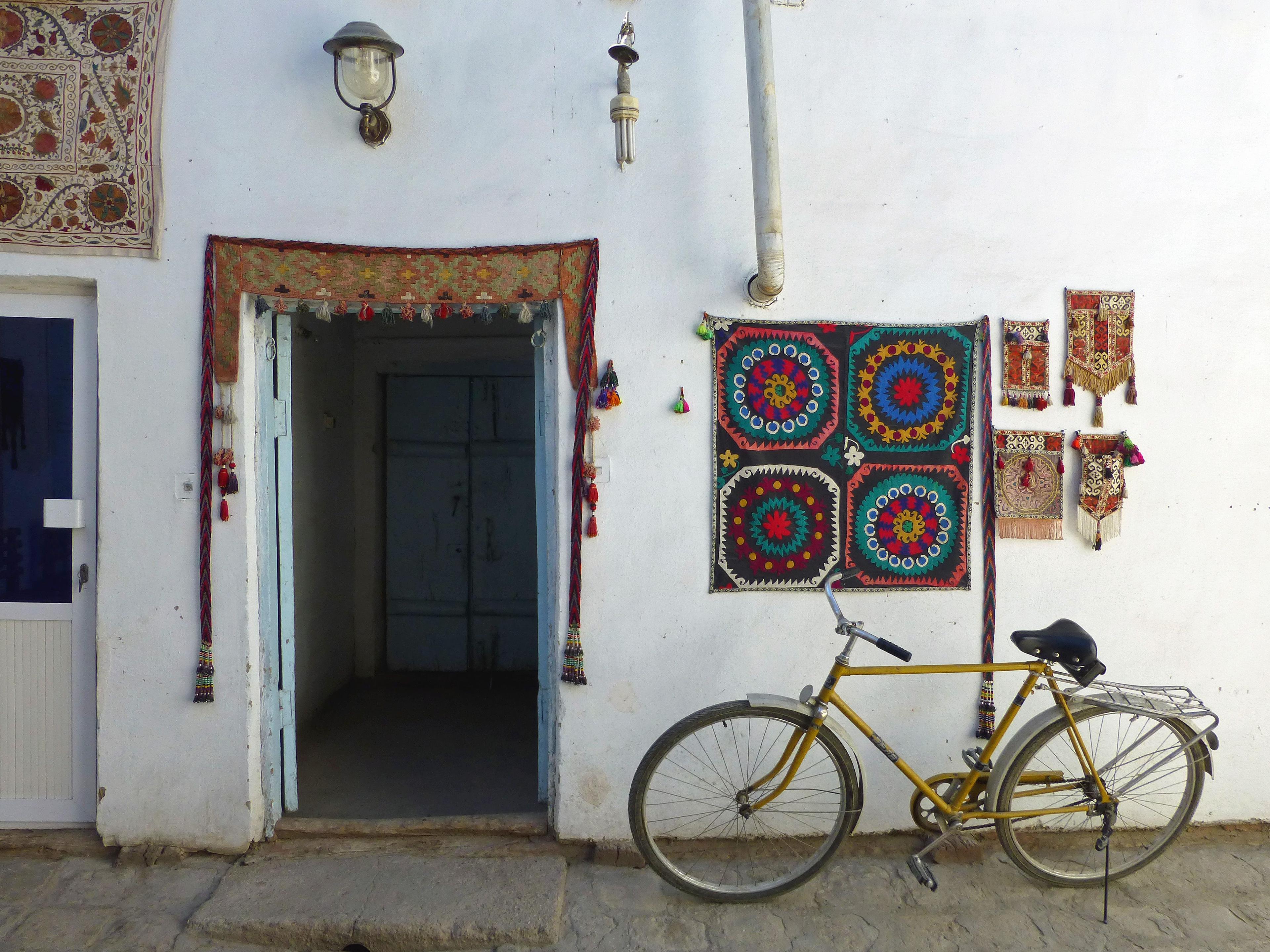
Suzani (from the Persian suzan, needle) are large embroidered panels, traditionally sewn by a bride and her family as part of her dowry and hung on walls or laid over beds. Big floral medallions, vines, pomegranates and stylised suns are typical; each region has its own palette and style.
The main centres are Bukhara, Nurata, Samarkand, Shahrisabz and the town of Urgut near Samarkand, whose large bazaar is a well-known place to look for textiles, especially on weekend mornings.
How to spot a handmade suzani:
- Turn it over. Hand embroidery shows small irregularities, knots and thread ends on the back; machine work is suspiciously even.
- Look for slight variations in the pattern. A hand-drawn design is never perfectly symmetrical.
- Check the base cloth and thread. Better pieces use silk thread on cotton or silk; cheap ones use synthetic thread that looks shiny and flat.
- Ask about dyes. Some workshops in Bukhara still use natural dyes from pomegranate skin, madder and indigo, which give softer colours.
Price ranges (as of November 2026, indicative only):
- Machine-made or printed panels and small items: from about 15 to 50 USD.
- Handmade cushion covers and small panels: roughly 40 to 150 USD.
- Large hand-embroidered suzani: from several hundred US dollars, more for silk on silk and natural dyes.
- Genuine old suzani are collector pieces, priced accordingly, and subject to export rules (see below).
In Bukhara you can visit embroidery workshops in the old town and see suzani being stitched. It is the best way to understand the hours of work behind a good piece.

Ikat silk: atlas and adras from Margilan
Ikat (abrband in Uzbek, literally "tied cloud") is the technique of tying and dyeing the threads before weaving, so that the pattern appears as the cloth is woven. The result is the blurred, flame-like design you will see on dresses, coats and scarves across the country.
Two fabrics matter:
- Atlas (khan-atlas): pure silk in both warp and weft, smooth and glossy, the classic fabric for women's dresses.
- Adras: a silk warp with a cotton weft, lighter in shine, more robust and easier to care for. It is the more practical buy for cushions, bags or upholstery.
The heart of Uzbek silk is Margilan in the Fergana Valley, and especially the Yodgorlik silk factory, a working craft enterprise where visitors can see cocoons unwound, threads tied and dyed, and fabric woven on hand looms. The showroom sells fabric by the metre, scarves and clothing; recent guidebook figures give roughly 8 to 25 USD per metre depending on the fabric. Expect higher prices for the same fabric in tourist shops in Bukhara or Tashkent.
How to check you are buying real ikat:
- Look at both sides. Because the threads are dyed before weaving, true ikat looks almost the same on the back. Printed imitations are pale on the reverse.
- The edges of each motif should be slightly feathered, not crisp.
- Real silk feels cool and slightly warms in the hand; synthetics stay slippery and cold.
Ikat scarves (roughly 15 to 60 USD as of November 2026) are light, easy to pack and among the best-value souvenirs in the country.
Ceramics: Rishtan and Gijduvan
Uzbekistan has two great ceramic traditions, and they could hardly look more different.
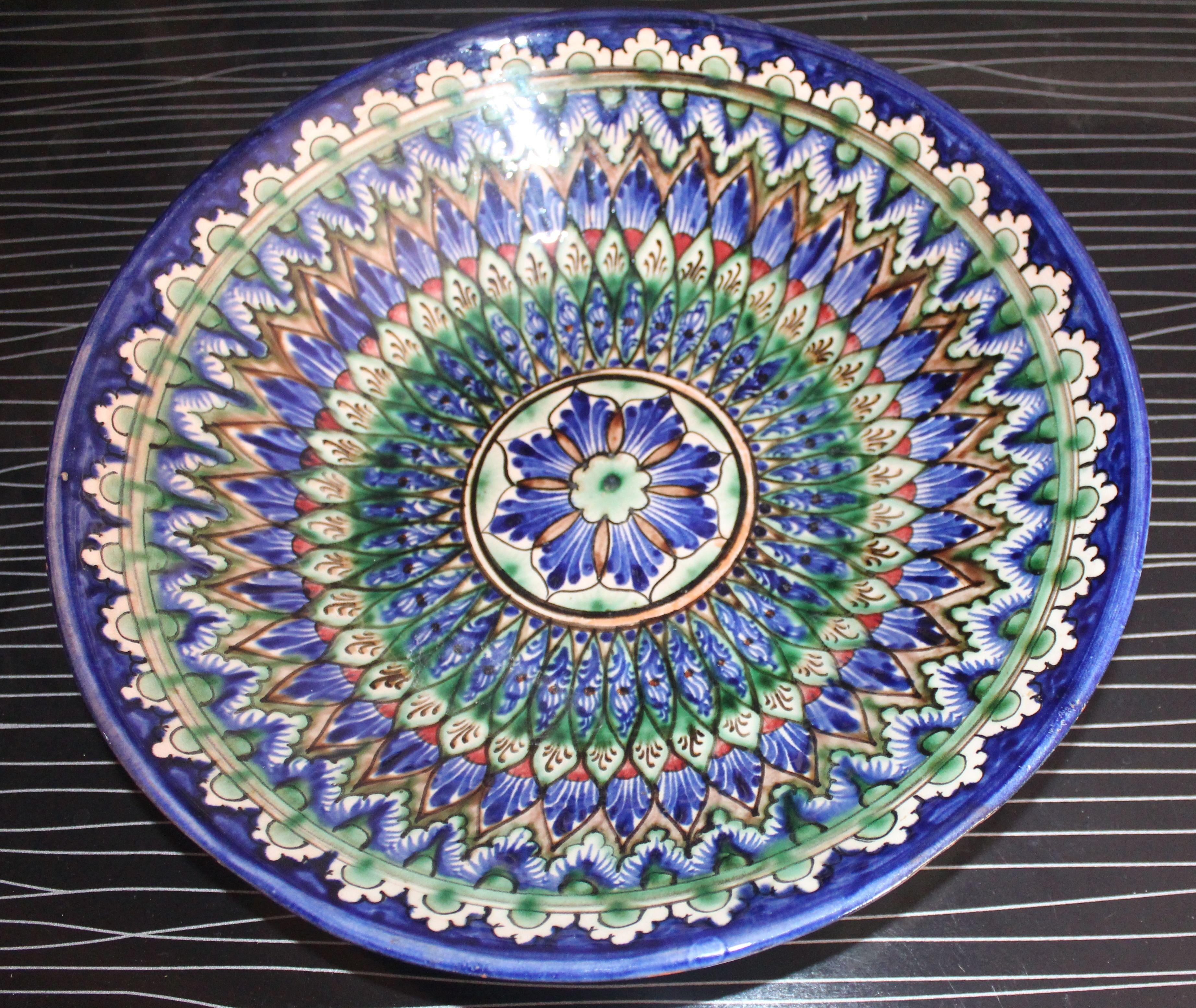
Rishtan ceramics, from a town in the Fergana Valley, are known for their deep blues and turquoise. Rishtan potters revived the traditional alkaline ishkor glaze, made with plant ash, which gives the colours their depth. Large plates (lagan), bowls and jugs are decorated with pomegranates, fish, almonds and the protective "eye" motifs. Several family workshops in Rishtan receive visitors.
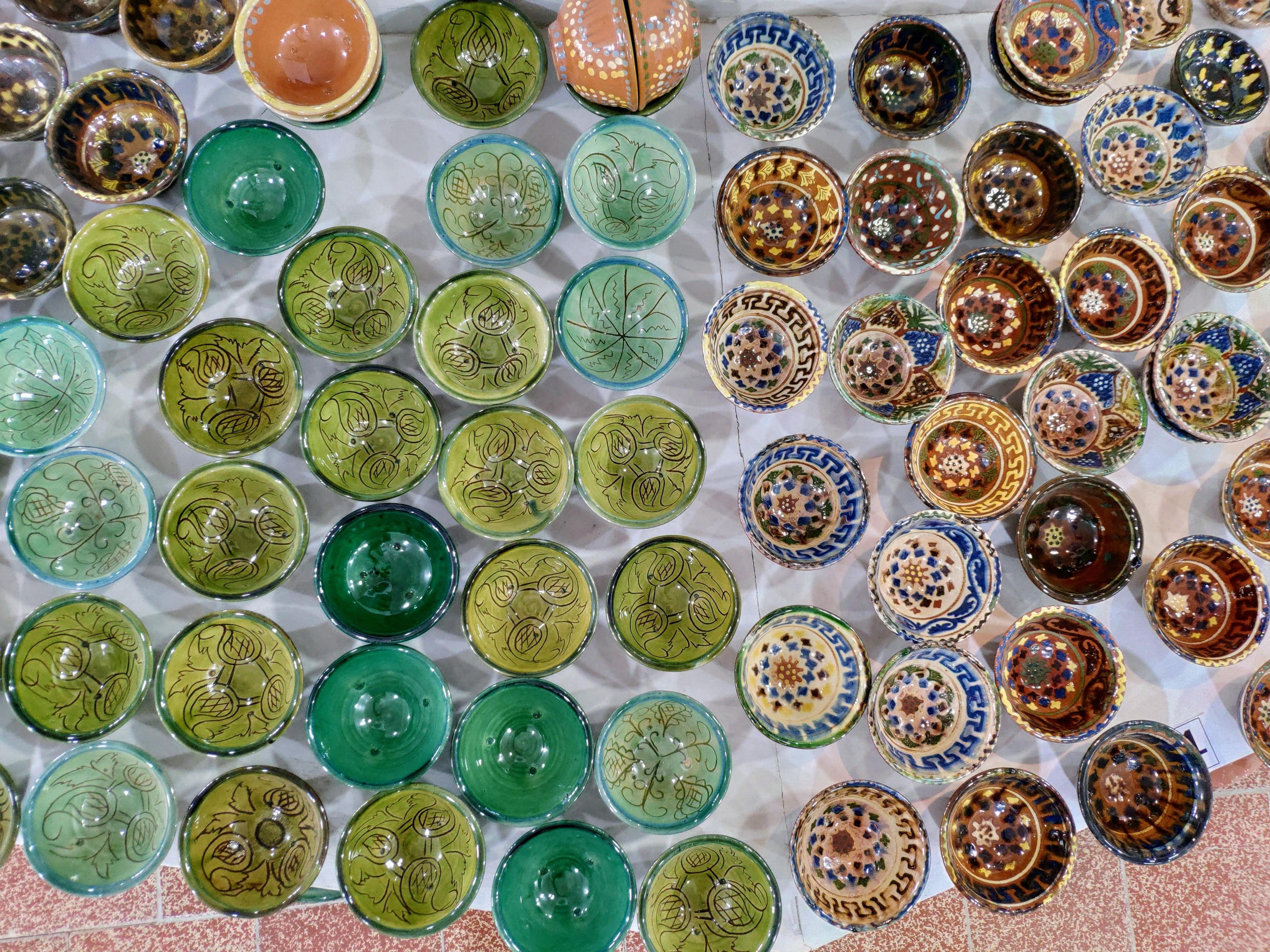
Gijduvan ceramics, from a town about an hour's drive from Bukhara, use warm browns, ochres, yellows and greens with bold, swirling patterns. The best-known name is the Narzullaev family, who have run their workshop for six generations and have a small museum on site.
You will find both styles in the bazaars and trading domes of every major city, but prices and choice are best at the source.
Indicative prices (as of November 2026):
- Small plates, tea bowls (piala) and dishes: about 5 to 15 USD.
- Medium plates and teapots: about 15 to 40 USD.
- Large lagan for plov and signed pieces from master potters: from about 40 USD into the hundreds.
Tips: check the glaze for crazing and chips, tap the rim (a clear ring means no hidden crack), and pack ceramics in hand luggage wrapped in clothes. Workshops are used to wrapping pieces for travel.
Bukhara knives, stork scissors and metalwork
Bukhara has been a city of blacksmiths and metalworkers for centuries, and its forges in and around the trading domes still turn out knives, scissors and engraved copper.
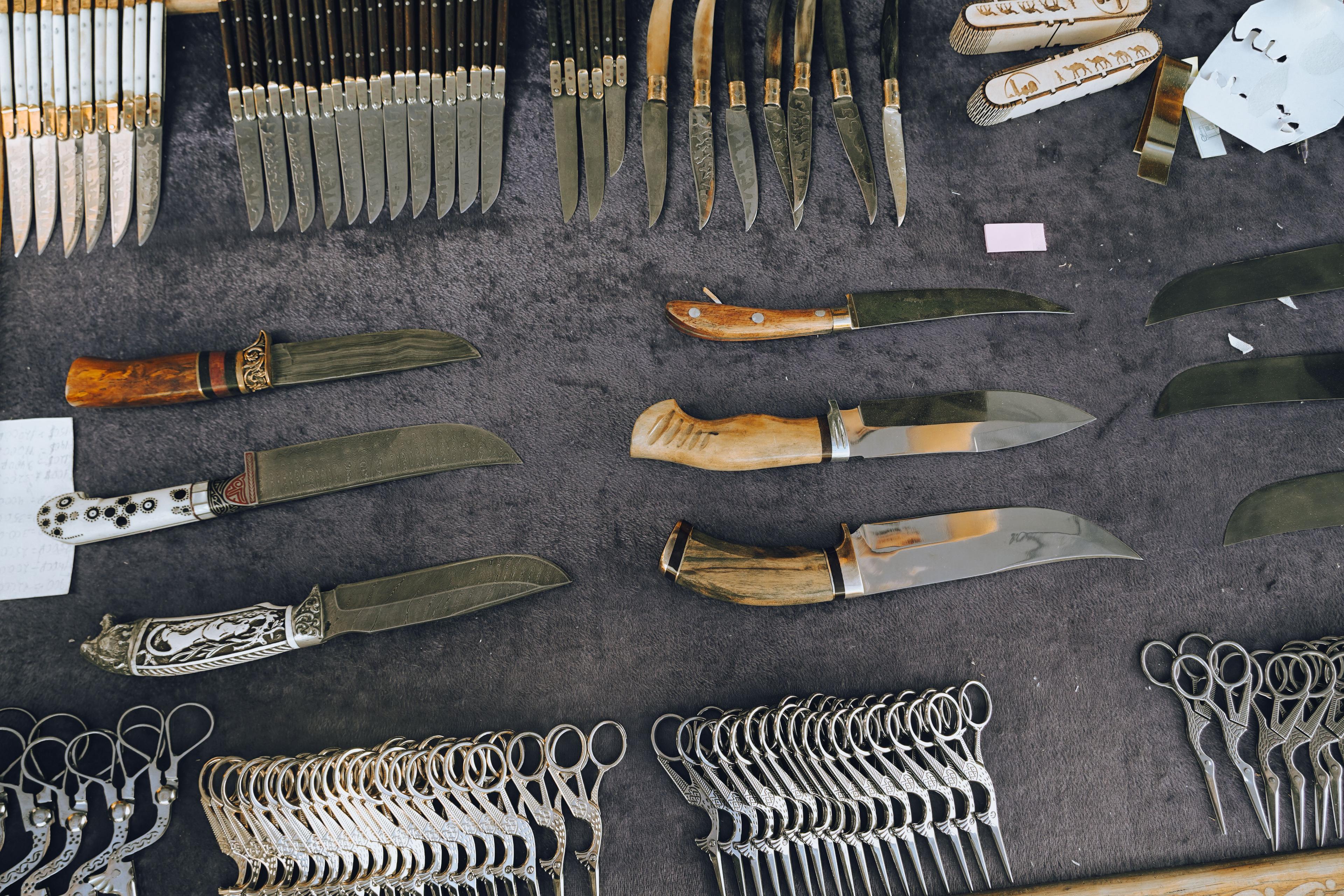
- Pichoq (pchak). The traditional Uzbek knife has a broad, slightly curved blade and a handle of wood, bone or horn. The most famous pichoq come from Chust in the Fergana Valley, but Bukhara workshops make fine examples too, often with Damascus-pattern steel.
- Stork scissors. Bukhara's signature souvenir: scissors and small shears shaped like a stork, hand-forged and engraved. Small decorative pairs make good gifts.
- Engraved copper and brass. Trays, jugs and plates with chased patterns, sold in the old town.
Rough prices (as of November 2026): stork scissors from about 10 to 40 USD; good forged kitchen and pichoq knives from about 25 to 100 USD or more depending on the steel and handle.
Practical points:
- Knives and scissors with blades must go in checked luggage, never in your cabin bag.
- Large hunting knives and anything that looks like a weapon can need a permit to export. Buy kitchen-style knives from a proper workshop and keep the receipt.
- Watch the smith at work before you buy. A forged blade shows hammer marks and a hand-ground edge; cheap stamped knives are thin and uniform.
Carpets: Khiva, Bukhara and Samarkand
Hand-knotted carpets are the biggest investment most travellers make in Uzbekistan, so it pays to slow down.
Where to look:
- Khiva, inside Ichan-Kala, where a silk carpet workshop founded with international support recreates patterns from Khiva's tilework and old manuscripts.
- Bukhara, with carpet shops in the old madrasahs and around the trading domes, and workshops where you can watch weavers at the loom.
- Samarkand, home to a large silk carpet manufactory that offers tours and sells directly.
What to check:
- Material. Wool is warm and hard-wearing; silk shines and shifts colour in the light but is delicate and much more expensive. Ask the seller to confirm in writing.
- Knot density. The finer the knots, the more detailed the pattern and the higher the price. Look at the back: a hand-knotted carpet shows the pattern clearly with small irregularities.
- Fringe. On a hand-knotted carpet the fringe is the end of the warp threads; on machine-made rugs it is often sewn on.
- Dyes. Natural dyes age gently; very bright, uniform colours suggest synthetic dyes.
Prices vary too widely to quote meaningfully: a small new wool rug may cost a few hundred US dollars, while large silk carpets run into the thousands. Always get a receipt that states the carpet is new, and ask the shop for any export paperwork it provides. Many reputable workshops can also arrange shipping.
Samarkand paper, skullcaps and smaller souvenirs
Not every good souvenir needs a suitcase of its own.
- Samarkand paper. Samarkand was one of the first places outside China to make paper, from around the 8th century. The tradition was revived in the 1990s by the Mukhtarov brothers at the Meros paper mill in Konigil village, just outside the city, where mulberry bark is soaked, pounded by a water-powered mill and polished with stones. Notebooks, cards and sheets cost little and make elegant gifts. The mill is open to visitors; buy an entry ticket at the door.
- Doppi (skullcaps). Every region has its own design. The best known is the Chust doppi: black with four white "pepper" motifs. Bukhara is famous for gold embroidery (zardozi) on caps, waistcoats and slippers. Simple doppi cost a few dollars; fine hand-embroidered pieces much more.
- Miniature painting and lacquer boxes, especially in Bukhara and the Registan madrasahs.
- Puppets, from Bukhara workshops.
- Wood carving: the folding Quran stands (lauh) and carved panels, a speciality of Khiva.
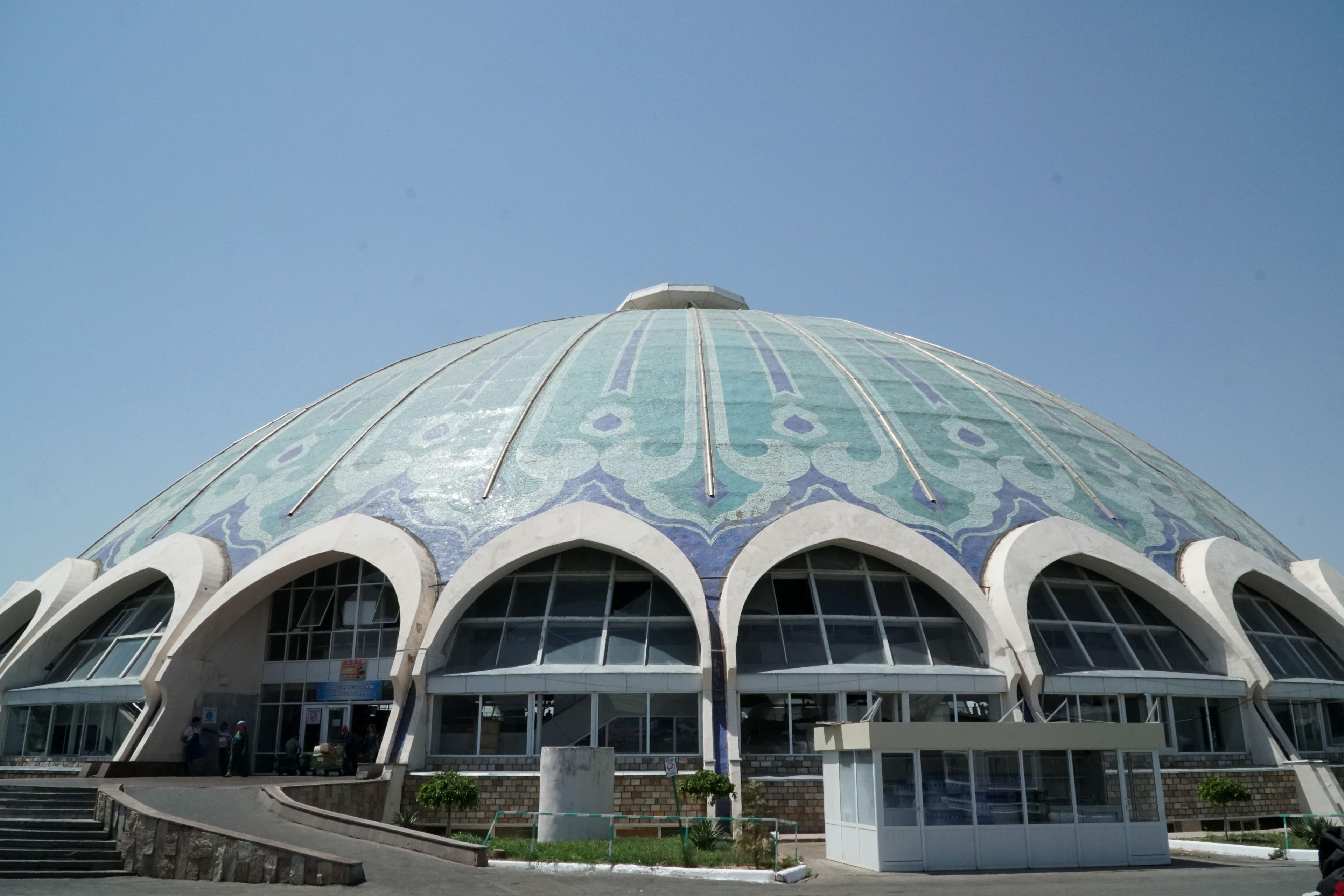
- Edible souvenirs: dried apricots, almonds, pistachios, spices and halva from Siab Bazaar in Samarkand or Chorsu Bazaar in Tashkent. Check your home country's rules on food imports.
Where to shop in Uzbekistan
A quick map of the best places to buy, city by city:
- Tashkent: Chorsu Bazaar for everyday crafts, ceramics and food; the Museum of Applied Arts for a sense of what top-quality work looks like, plus a small shop.
- Samarkand: the cells of the Registan madrasahs, Siab Bazaar, the Meros paper mill in Konigil and the Urgut bazaar for textiles.
- Bukhara: the trading domes (Toki Sarrafon, Toki Telpak Furushon and Toki Zargaron) and the workshops of the old town for suzani, knives, carpets and miniatures; Gijduvan for ceramics.
- Khiva: Ichan-Kala's workshops for carpets, wood carving and fur hats.
- Fergana Valley: Rishtan for ceramics, Margilan for silk, Chust for knives and doppi. Our crafts of the Fergana Valley tour visits all three.
Bargaining is normal and polite in bazaars and small shops, less so in fixed-price workshops and state stores. Start by asking the price, offer a little over half for tourist items in busy areas, and settle somewhere in between. Cash in som gets the best price; cards are accepted in larger shops and workshops.
Uzbekistan customs: exporting carpets and antiques
This is where travellers occasionally get into trouble, so read it before you buy.
The rule in brief: items considered cultural property cannot leave Uzbekistan without permission. In practice this applies to antiques and works of art more than 50 years old, archaeological finds, old manuscripts and religious objects, old coins and historic jewellery.
What this means for you:
- New crafts (suzani, ceramics, ikat, knives, carpets made recently) can be exported freely. Keep the shop or workshop receipt, ideally stating that the item is new or not of cultural value.
- Anything old or that looks old needs an expert assessment and a certificate from the state cultural heritage authorities before export. Reputable dealers can arrange this; it takes time and a fee, so do not leave it to your last day.
- Carpets are the item customs officers check most often. A receipt showing that a carpet is new and where you bought it is usually enough for a modern carpet. Older carpets need the certificate.
- Without paperwork, customs at the airport or land border can confiscate the item.
Rules and procedures change, and the details are not always clearly published in English. Ask your shop for the documents at the time of purchase, and check the current requirements with the State Customs Committee of Uzbekistan if you are buying anything of real value.
Shopping with TourEast
Our guides know the workshops where families still make things by hand, and they are happy to translate, explain what you are looking at and step back while you bargain. On a private or small-group tour we can build in time for Rishtan, Margilan, Gijduvan or the Bukhara forges, and help with paperwork for carpets.

Frequently asked questions
Watch
Photo gallery