What Uzbek men and women wear on festive days: the quilted chapan robe, the embroidered doppi skullcap, regional styles from Bukhara to Chust, what the colours and patterns suggest, typical 2026 prices and where to buy or try them on.
Facts, prices and schedules checked on November 4, 2026
Walk into any Uzbek wedding, mosque on a holiday, or craft shop in Bukhara, and two garments appear again and again: a long quilted robe called the chapan, and a small embroidered skullcap called the doppi. Together they are the most recognisable pieces of Uzbek national dress for men, and they are far from museum pieces. Young people wear doppis with jeans, grooms wear chapans at weddings, and a chapan is still one of the most respectful gifts you can give or receive.
This guide explains what the two garments are, how styles differ between Bukhara, Samarkand, the Fergana Valley and Chust, what colours and patterns suggest, what women wear, and how a visitor can buy, try on or photograph them in a respectful way. Prices are typical 2026 ranges and vary by quality.
What is a chapan?
The chapan is a long, loose, quilted robe worn over everyday clothes. It is cut straight, with long sleeves, an open front and no buttons, and it is held closed with a sash or simply worn open. It is padded with cotton for warmth and made of cotton, silk or velvet, with an outer fabric, a lining and decorative edges. Its roots go back to the Silk Road, and the form shows Persian, Turkic and Mongol influences.
For centuries the chapan was both practical and symbolic. A quilted cotton chapan kept shepherds and traders warm in winter and, thanks to its looseness, cool in the heat. A robe of silk or velvet embroidered with gold thread marked rank. In the Emirate of Bukhara (1785 to 1920), court robes embroidered with gold were among the clearest signs of status; our guide to Bukhara's zardozi gold embroidery tells that story.
Today the chapan appears at weddings, religious holidays and ceremonies. Giving one to a guest or to an elder is a traditional gesture of respect and hospitality. It is also worn as outerwear in the cold season, and designers have started to make shorter, tailored versions for city wear.
Regional styles of the chapan
Styles differ by region, and an experienced eye can often tell where a robe comes from.
- Bukhara: associated with gold and silver thread embroidery and with the court tradition. Many modern pieces reproduce the old patterns.
- Fergana Valley: often silk, with floral patterns, and a link with the valley's silk and ikat traditions in Margilan.
- Samarkand: usually described as bolder and more colourful in pattern.
- Striped chapans: a common sight at bazaars are robes in vertical stripes, often cut from ikat cloth woven in the Fergana Valley. Our guide to Margilan silk and ikat explains how this cloth is made.
These generalisations hold for many pieces, but they are not strict rules. Workshops borrow from each other, and a robe bought in Samarkand may be from Bukhara or Margilan.
What the colours suggest
Colour carries meaning in Uzbek dress, although meanings are tendencies rather than laws. Dark tones, such as deep green, navy or brown, suggest maturity and are favoured by older men. Bright colours and strong patterns are worn by younger men and for celebrations, and gold embroidery signals high status or a wedding. A groom may wear a richly decorated chapan, while a village elder at the mosque wears a plain striped or dark one.
Visitors who try on a chapan in a shop will notice that it is cut generously. It looks right worn loose, with a sash if you like, over a shirt and trousers.
What is a doppi?
The doppi (also spelled duppi, doppa or tubeteika in Russian) is a small, square or round skullcap, typically made of cotton, velvet or silk and worn by men, women and children. Its origins lie in ancient Central Asian dress, and today it is a sign of respect and modesty for men and a decorative accessory for young people and visitors.
Doppis are commonly grouped into regional schools, usually listed as the Fergana, Tashkent, Kashkadarya–Surkhandarya, Samarkand, Bukhara and Khorezm–Karakalpakstan types. Patterns are embroidered by hand or machine. Motifs such as flowers, buds, and circular and geometric designs are widely read as symbols of prosperity, protection and good fortune, though specific meanings differ by region and by maker.
Doppi styles by region: Chust, Bukhara, Samarkand
The best-known doppi is the Chust cap from the Fergana Valley town of Chust. It is black velvet embroidered in white, with the pattern bands radiating from the top and a design of elongated pods that sources describe as either peppers (kalampir) or almonds. The motif is commonly said to protect the wearer, and the Chust cap has become the national symbol; Margilan makers produce a similar style.
Bukhara caps are often embroidered in gold or silver thread and sometimes edged with a fringe. Samarkand caps are generally brighter, with floral and geometric designs. Tashkent, Kashkadarya and other regions have their own shapes, fabrics and stitching, and edging braids vary from region to region.
If you wish to buy a doppi as a souvenir, the Chust style is the safest choice: it is the one locals recognise, it is easy to wear and it comes in a range of prices. Our guide to crafts and souvenirs lists other gifts.
What do women wear?
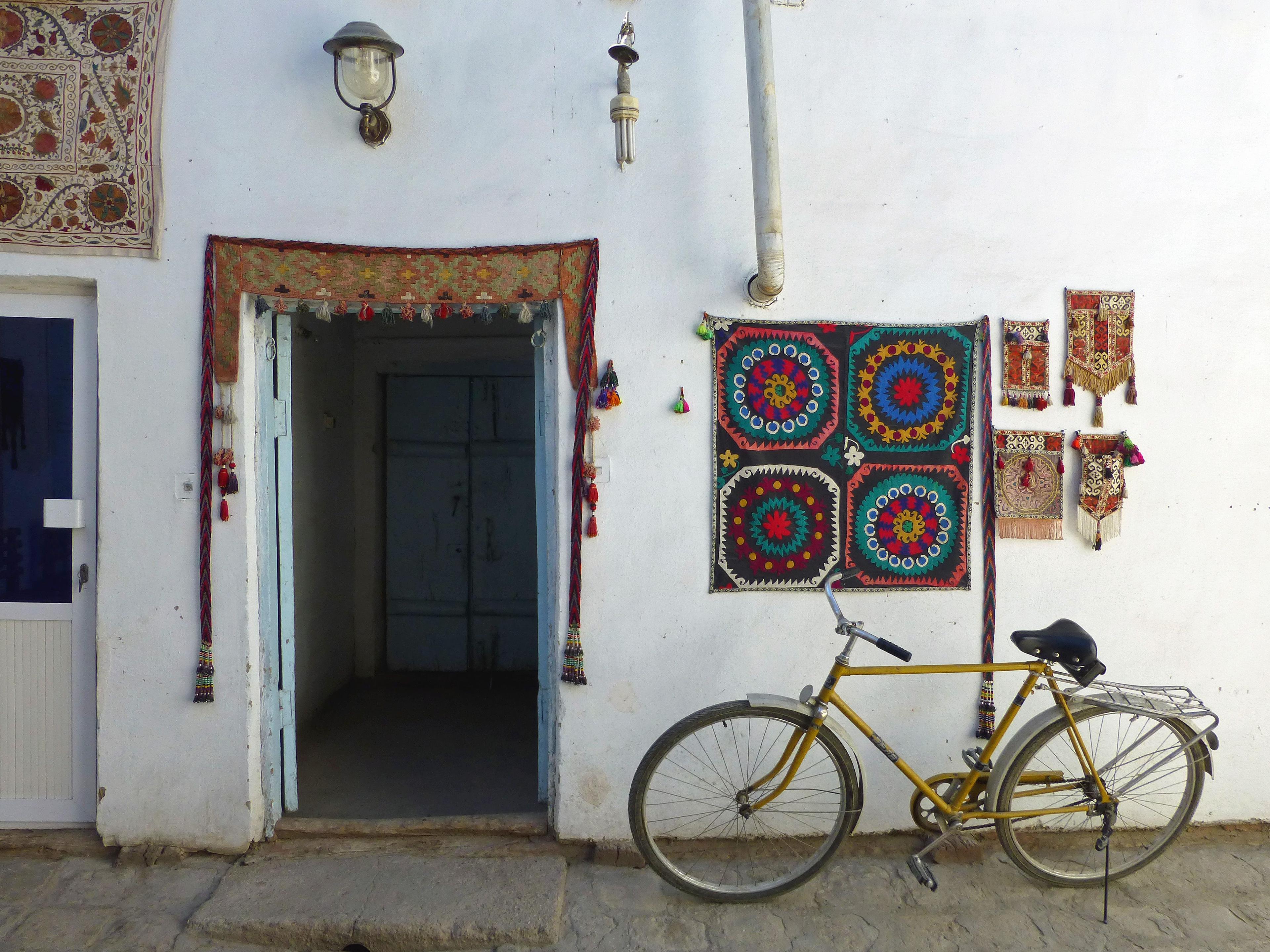
Women's festive dress in Uzbekistan centres on dresses cut from silk ikat, often called atlas or adras, in bright patterns, worn with matching trousers and a headscarf or an embroidered cap. Women also wear small embroidered doppis, particularly girls and young women at celebrations, and Bukhara goldwork appears on caps, scarves and bags. Hand-embroidered suzani, a large textile, is used for wedding gifts and cushions; see our suzani guide.
For visitors, the key point is that traditional dress is for celebration, not an everyday obligation: most Uzbek women in cities wear contemporary clothes with modest cuts. For mosque visits, our packing list explains how to cover shoulders and knees.
When you will see them: festivals and daily life
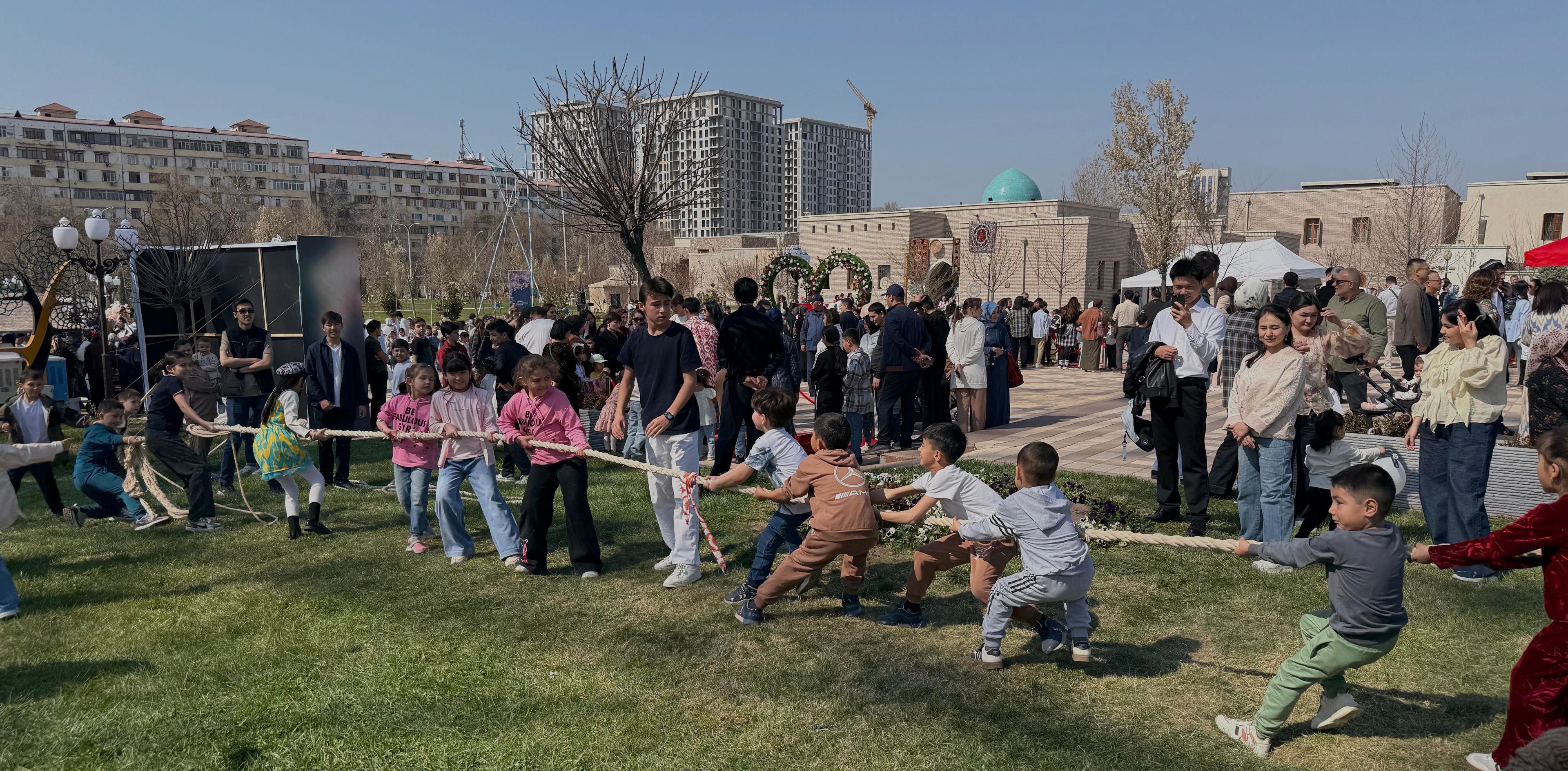
National dress is most visible at Navruz in March, at weddings, on the two Hayit holidays and on Independence Day, when parades and concerts fill city squares. In daily life you will see older men in a doppi at the bazaar and mosque, schoolchildren in embroidered caps on festive days, and entertainers in full costume at restaurants with folk shows. If you have a choice of when to visit and enjoy traditional dress, aim for Navruz or a wedding season weekend in spring and autumn; our guides to Navruz, to weddings and the mahalla, and to music and dance explain what to expect.
Where to buy or try on a chapan and doppi, and typical prices
Good places include Chorsu Bazaar in Tashkent, the Siyob Bazaar in Samarkand, the trading domes and old-town shops of Bukhara, and the markets and workshops of the Fergana Valley, including Margilan and Chust. In Bukhara and Samarkand some shops will let you try on a chapan and take a photograph.
Typical 2026 prices, which vary with fabric and workmanship:
- Simple cotton doppi: about US$5 to 15.
- Embroidered velvet doppi, Chust style: about US$20 to 50.
- Simple modern chapan: about US$20 and up.
- Designer or heavily embroidered chapan: several hundred dollars.
- Antique pieces: far more, and subject to export rules; see our guide to buying antiques and export rules if you consider an older robe.
Bargain politely in bazaars and compare two or three shops. Check the stitching, ask what the cloth is made of and avoid heavily synthetic pieces if you want something authentic. A genuine hand-embroidered piece costs more than a machine-made one, and both are legitimate; the difference is in the price you should expect to pay.
Wearing them respectfully
Visitors are welcome to try on and wear a chapan and a doppi, and many hosts are delighted when guests do so at a celebration. A few courtesies apply:
- Ask before photographing someone in traditional dress.
- Wear a chapan closed or open as locals do; a sash is optional.
- Do not treat a doppi as a toy. Do not put it on the floor, and do not wear it into a mosque if you are unsure.
- Dress up for weddings in neat clothes, and wear a chapan only if invited to.
When you give a chapan or a doppi as a gift, it is read as a mark of respect, so pick one of decent quality.
Seeing national dress with TourEast
Our guides can take you to workshops in Bukhara and the Fergana Valley, where you can watch embroiderers and weavers at work, try on a chapan and choose a doppi. Our Crafts of the Fergana Valley tour is built around these makers. Tell us through WhatsApp or the trip builder at /trip-builder what you hope to see, and we will plan the visit around the workshops and the festivals, such as Navruz, when national dress is at its best.