Month-by-month temperatures for Tashkent, Samarkand, Bukhara and Khiva, when it rains, which festivals fall when, and what to pack for each season. Our local guide to choosing the right time for your Silk Road trip.
Facts, prices and schedules checked on November 4, 2026
Ask anyone in Tashkent about the best time to visit and you will hear the same answer: spring or autumn. That is broadly right, but it is not the whole story. Uzbekistan is a large, dry, continental country, and the weather in the green Tashkent oasis in April is very different from the weather on the edge of the Kyzylkum desert in Khiva in July.
This guide walks through the year month by month, with average temperatures for the four cities most travellers visit, when the rain comes, which festivals are worth planning around, and what to put in your suitcase. The figures are long-term climate averages for 1991 to 2020, so treat them as a guide to what is typical rather than a forecast.
Uzbekistan's climate in brief
Uzbekistan sits deep inside Eurasia, far from any ocean, so its climate is sharply continental: hot, cloudless summers, cold winters and short, lovely transitional seasons. Sunshine is reliable for most of the year, humidity is low, and the dry air makes summer heat more bearable than the numbers suggest, while winter cold can feel sharper.
Rain falls mainly between November and April, and much less of it falls as you travel west. Tashkent, in the foothills of the Tian Shan, averages about 460 mm a year. Samarkand gets around 380 mm. Bukhara and Khiva, surrounded by desert, receive only 120 to 135 mm, and between June and September it hardly rains there at all.
The west is also more extreme. Khiva (whose nearest weather station is in Urgench, 30 km away) has the coldest winter nights of the classic route and summer days just as hot as Bukhara's. Tashkent and Samarkand are a little milder at both ends of the year.
Average temperatures month by month
Average daytime high and night-time low in °C for Tashkent, Samarkand, Bukhara and Khiva (Urgench station), 1991 to 2020 normals:
- January: Tashkent 7 / -1, Samarkand 7 / -1, Bukhara 7 / -2, Khiva 3 / -6
- February: Tashkent 10 / 0, Samarkand 10 / 0, Bukhara 10 / 0, Khiva 6 / -4
- March: Tashkent 16 / 5, Samarkand 15 / 5, Bukhara 17 / 5, Khiva 14 / 2
- April: Tashkent 22 / 10, Samarkand 21 / 10, Bukhara 24 / 11, Khiva 22 / 9
- May: Tashkent 28 / 14, Samarkand 27 / 14, Bukhara 31 / 16, Khiva 29 / 15
- June: Tashkent 34 / 18, Samarkand 32 / 18, Bukhara 36 / 20, Khiva 34 / 19
- July: Tashkent 36 / 20, Samarkand 35 / 20, Bukhara 37 / 22, Khiva 36 / 21
- August: Tashkent 35 / 18, Samarkand 33 / 18, Bukhara 36 / 19, Khiva 34 / 18
- September: Tashkent 30 / 13, Samarkand 29 / 14, Bukhara 30 / 14, Khiva 28 / 12
- October: Tashkent 22 / 8, Samarkand 22 / 8, Bukhara 23 / 7, Khiva 20 / 5
- November: Tashkent 14 / 4, Samarkand 14 / 3, Bukhara 15 / 2, Khiva 11 / 0
- December: Tashkent 9 / 0, Samarkand 9 / 0, Bukhara 8 / -1, Khiva 4 / -4
Two things the averages hide. First, heatwaves: in July and August afternoons above 40°C are common in Bukhara and Khiva. Second, the daily swing: in spring and autumn a 25°C afternoon can be followed by a night under 10°C, so layers matter more than a heavy coat.
Rain follows the opposite rhythm. In Tashkent there are around 13 to 14 days with rain each month from December to April, falling to three or four in July and August. Samarkand is similar, with March the wettest month. In Bukhara and Khiva even the wettest months bring only 15 to 25 mm.
Spring: March to May
Spring is the season most people picture: blossom in the orchards, green hills around Samarkand, and comfortable days for walking the Registan, Shah-i-Zinda and the old streets of Bukhara.
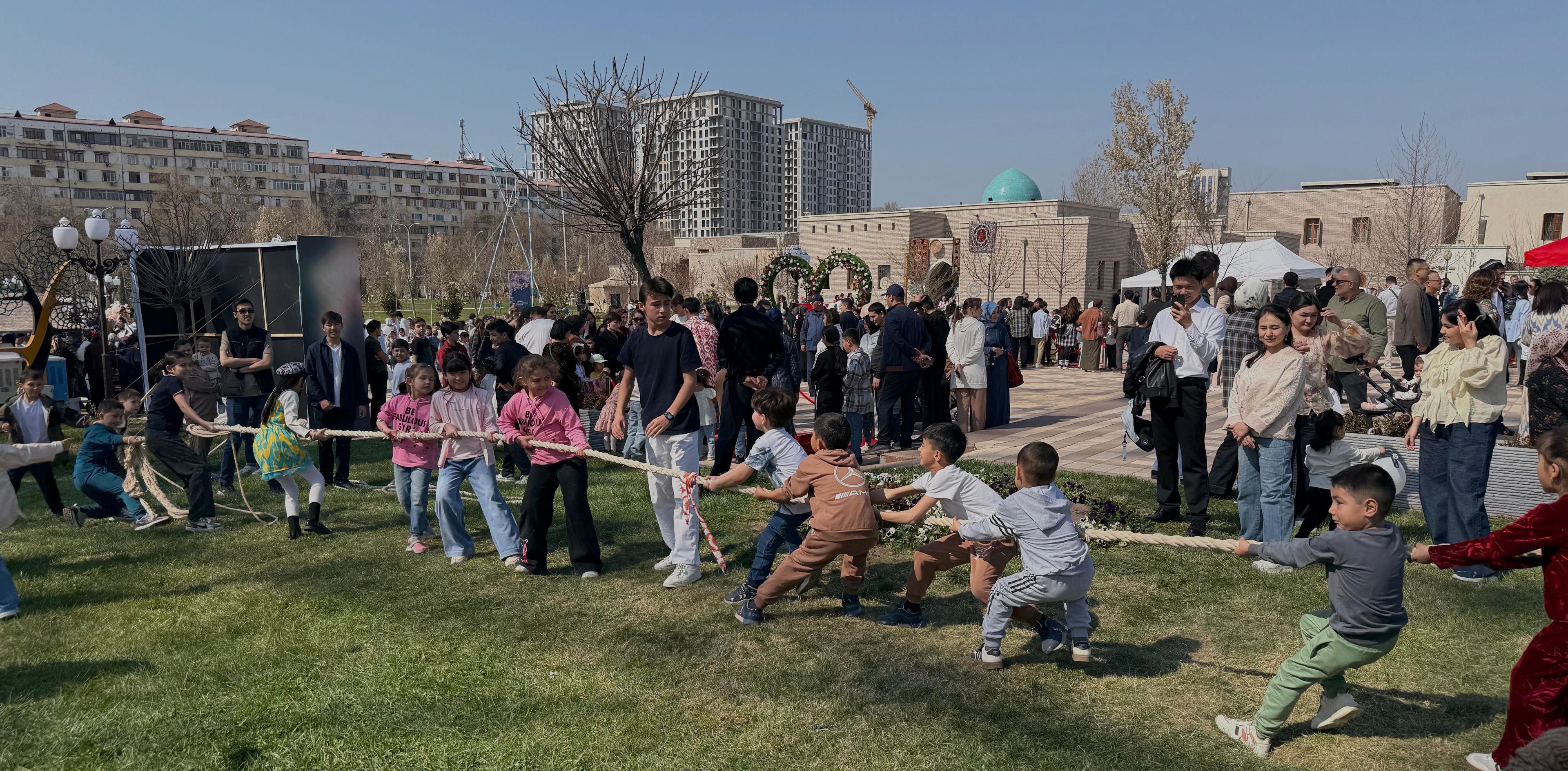
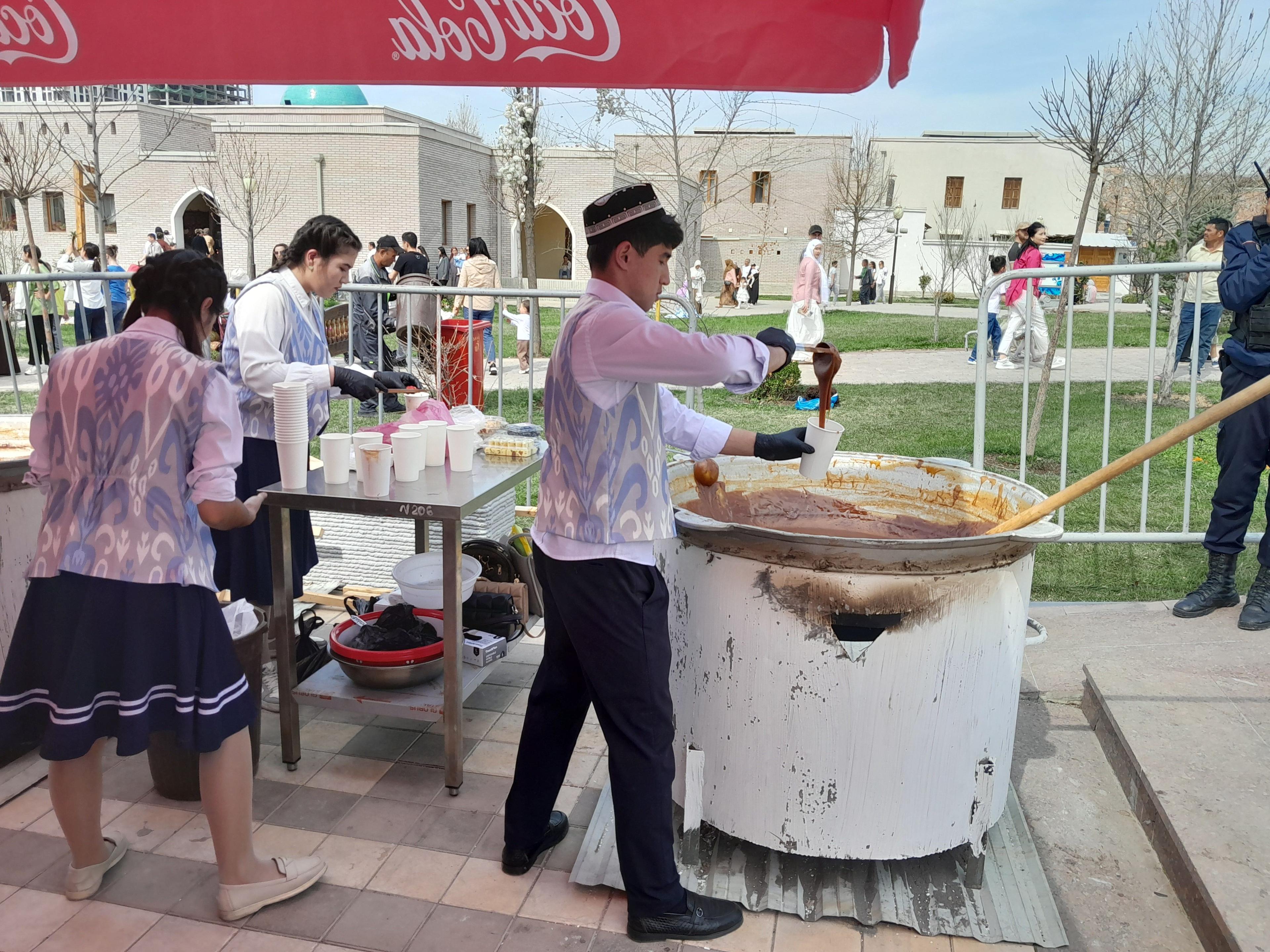
March is still changeable. Days reach the mid-teens, nights are cool, and Tashkent and Samarkand see their wettest weeks of the year, so expect some grey, showery days. The great event is Navruz, the Persian New Year, celebrated on 21 March as a public holiday. Families cook sumalak, a sweet wheat-sprout paste stirred overnight in giant cauldrons, towns hold folk concerts and fairs, and the mood everywhere is festive. Navruz is a wonderful time to be here, but book early: domestic tourism peaks and the Afrosiyob train sells out.
April is close to perfect, with highs in the low 20s across the country and the desert cities at their most pleasant. May warms quickly, reaching around 30°C in Bukhara and Khiva by the end of the month, while evenings outdoors are lovely.
Spring festivals worth knowing about:
- Navruz, nationwide, 21 March
- Tashkent International Jazz Festival, 28 April to 12 May in 2026
- Boysun Bahori folklore festival in Surkhandarya, 1 to 7 May in 2026
- Bukhara's crafts festival, held in late spring: in odd-numbered years it is the Silk and Spices Festival (most recently 6 to 8 June 2025), in even-numbered years a Festival of Gold Embroidery and Jewellery (15 to 17 May in 2026)
Dates are set each year by the organisers and Uzbektourism, so check the current calendar before you book flights around an event.
Summer: June to August
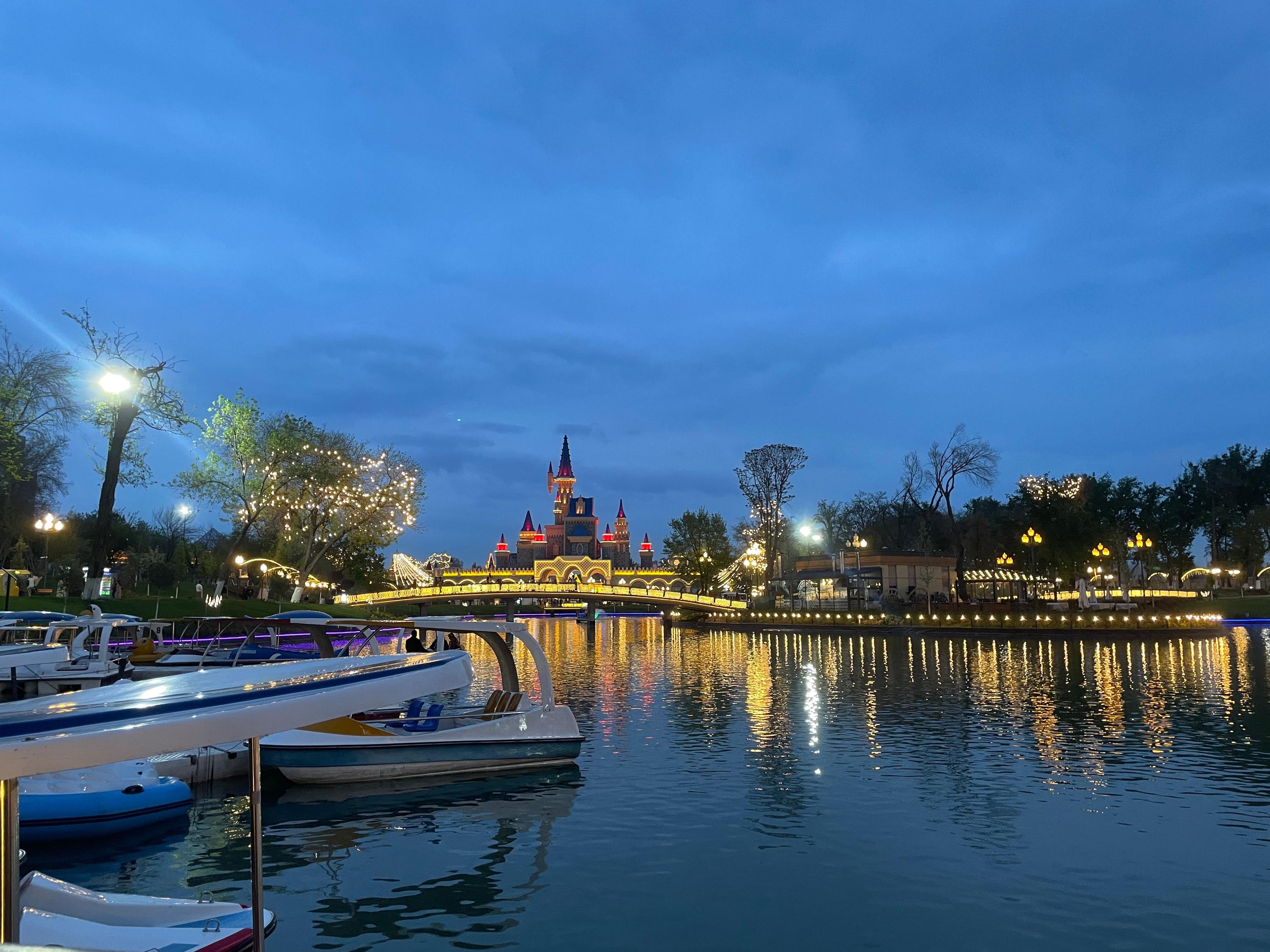
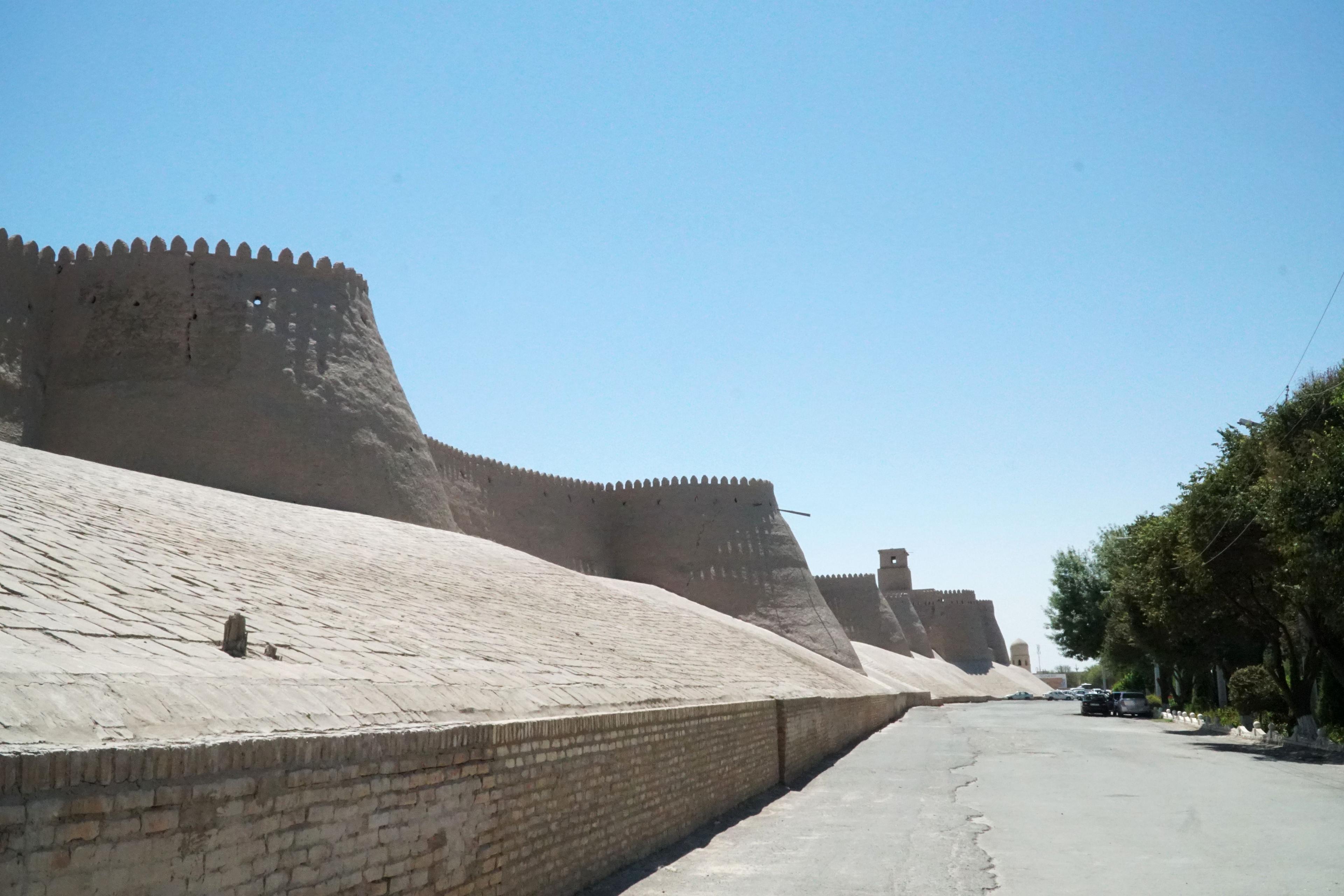
Summer is hot and almost completely dry. Average highs sit at 34 to 37°C, Bukhara and Khiva regularly pass 40°C in the afternoons, and the sky stays clear for weeks. It is not the ideal time for a first trip if you dislike heat, but it has real advantages: long light evenings, fewer tour groups, lower hotel rates in some places, and markets piled with apricots, cherries, melons and grapes.
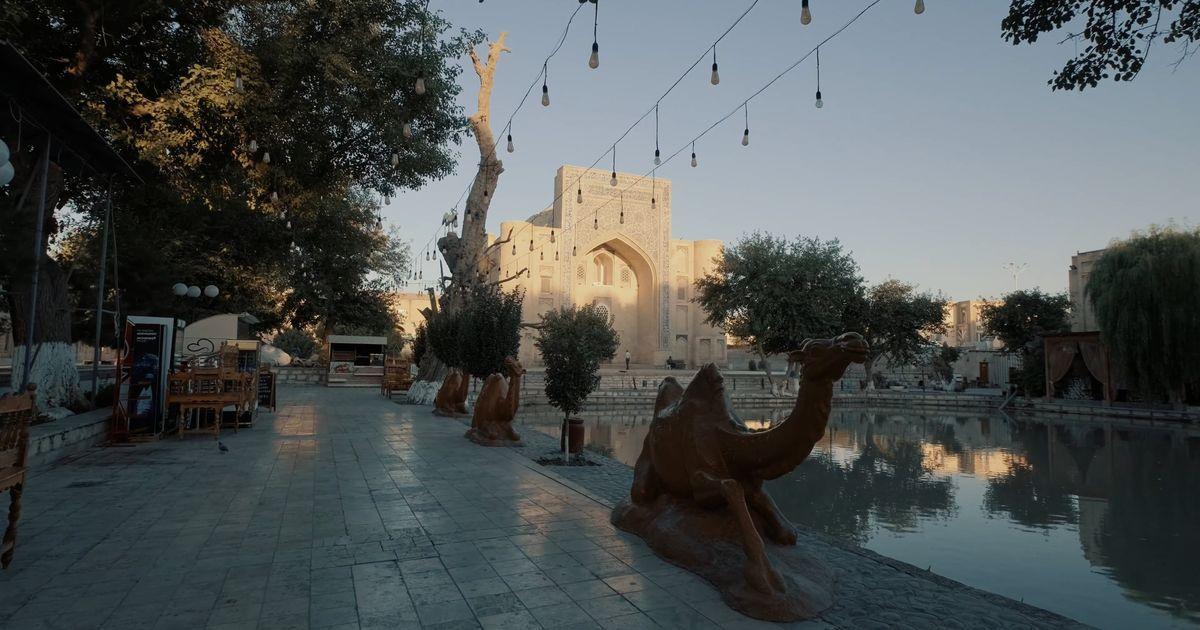
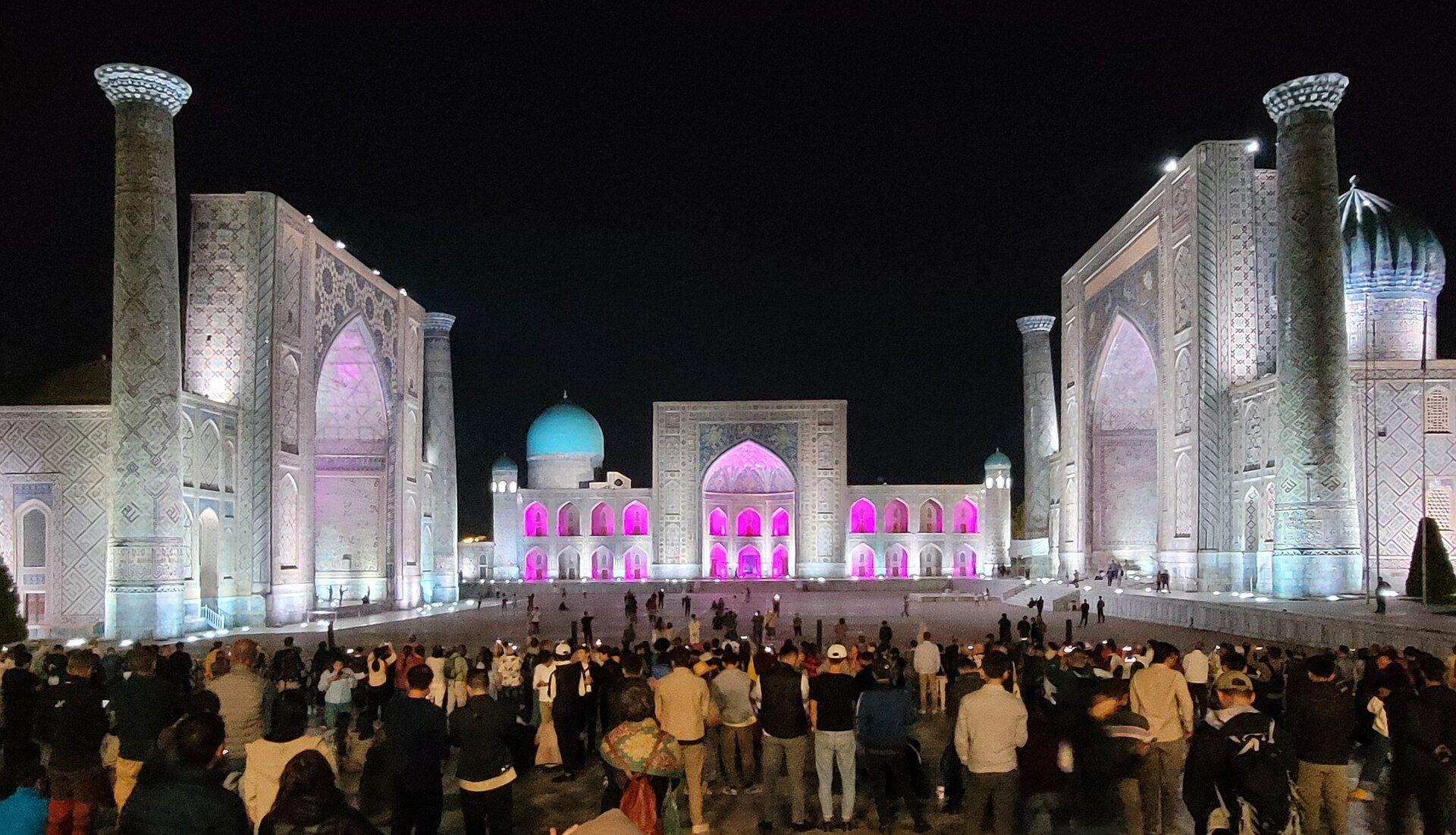
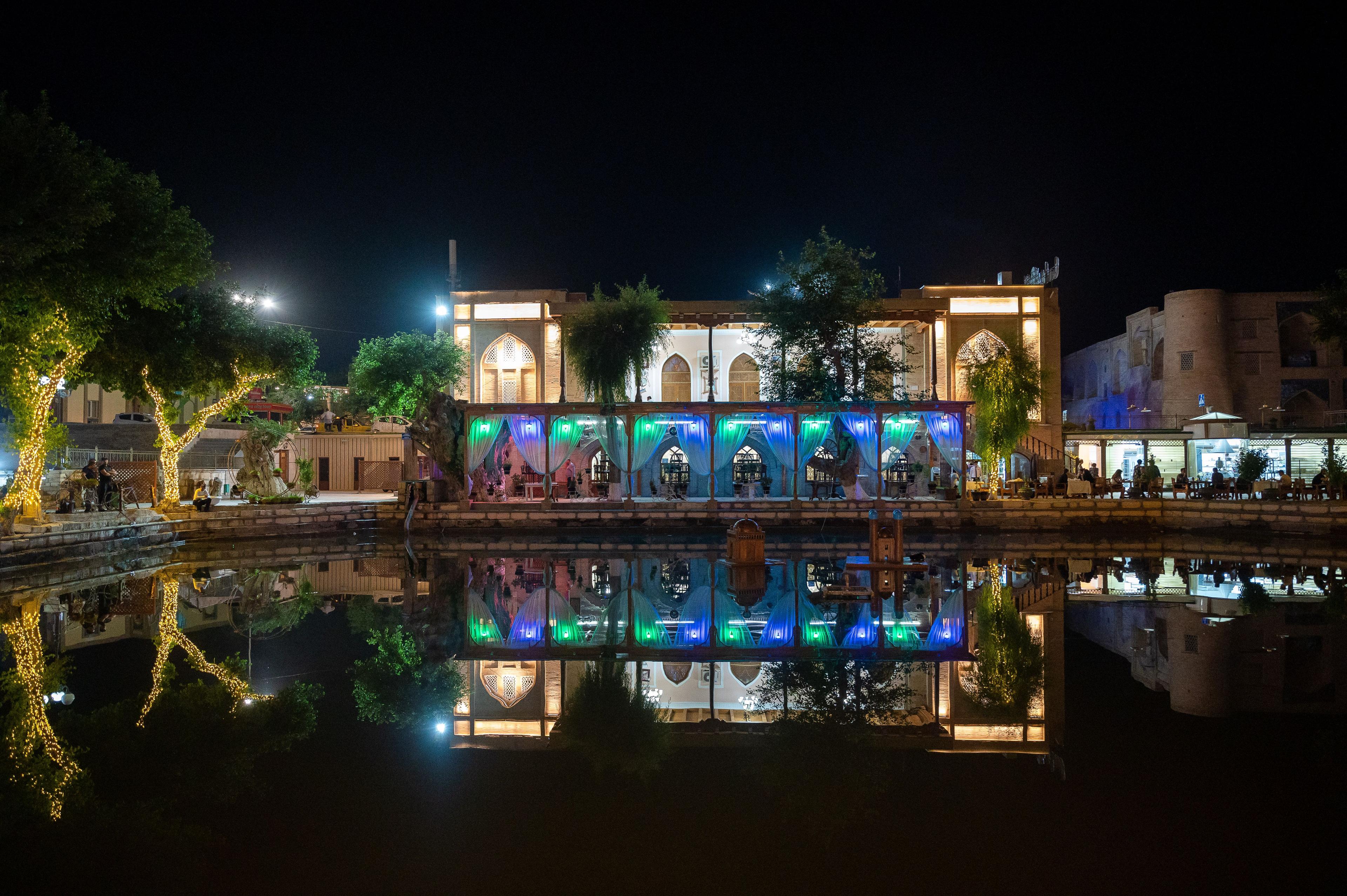
If you travel in summer, do as locals do. Sightsee from early morning until about 11:00, retreat to the hotel or a shaded chaikhana through the hottest hours, then head out again from about 17:00 when the madrasahs glow in the late sun. Bukhara's Lyabi-Hauz and the lit-up Registan in the evening are at their best on summer nights.
Tashkent residents escape the heat in the western Tian Shan, about an hour and a half away. The Chimgan and Amirsoy area and the Charvak reservoir are noticeably cooler and make a good add-on day.
Summer events include the Melon Festival in Khiva (7 to 9 August in 2026) and, in some years, the Sharq Taronalari international music festival on the Registan in Samarkand, traditionally held in late August. Its most recent edition was in August 2024, and it does not run every year, so check before planning around it. Independence Day on 1 September is a public holiday with concerts and fireworks in Tashkent.
Autumn: September to November
Autumn is our own favourite season. September still feels like summer, around 30°C, but the edge has gone from the heat. October is superb almost everywhere, with highs in the low 20s, clear skies, and the desert light at its most golden. This is harvest time: pomegranates, quinces, grapes, persimmons and the famous sweet melons fill the bazaars, and plov tastes better with the new season's carrots.
September and October are also the busiest months for international visitors, so hotels in Samarkand, Bukhara and Khiva fill early. If you want a particular boutique hotel or a seat on a specific train, plan at least two to three months ahead.
November turns cooler and shorter. Days drop to around 14°C in Tashkent and Samarkand and 11°C in Khiva, with the first rain returning to the east of the country. Early November can still be beautiful, and crowds thin out noticeably.
Autumn events include grape and harvest fairs in the Tashkent region, craft and gastronomy festivals in September, the Echo of the Desert festival in Karakalpakstan (25 to 26 September in 2026), and in some years the Bukhara Biennial, a large contemporary art and craft event. Its first edition ran in autumn 2025 and the next is planned for autumn 2027.
Winter: December to February
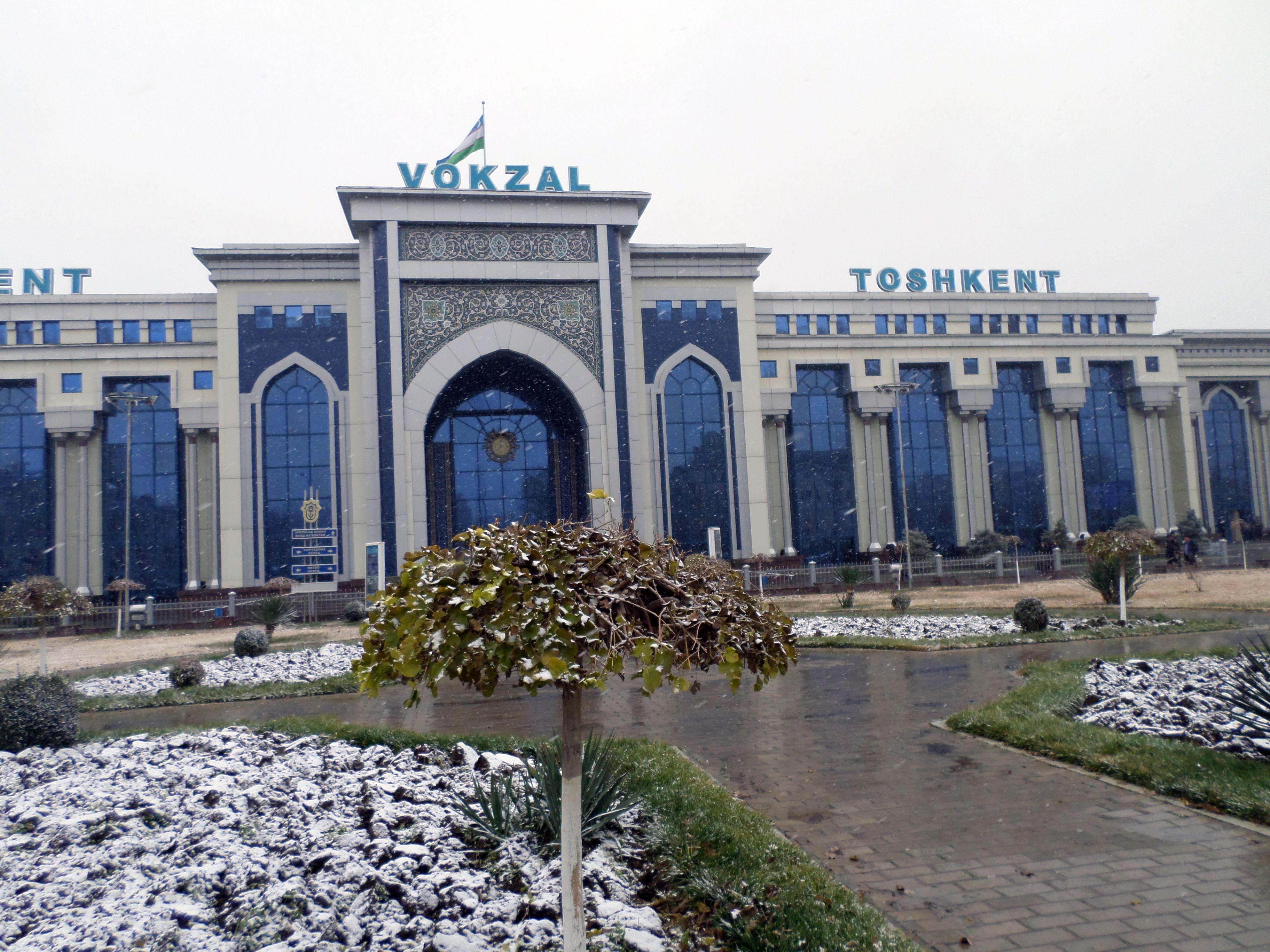
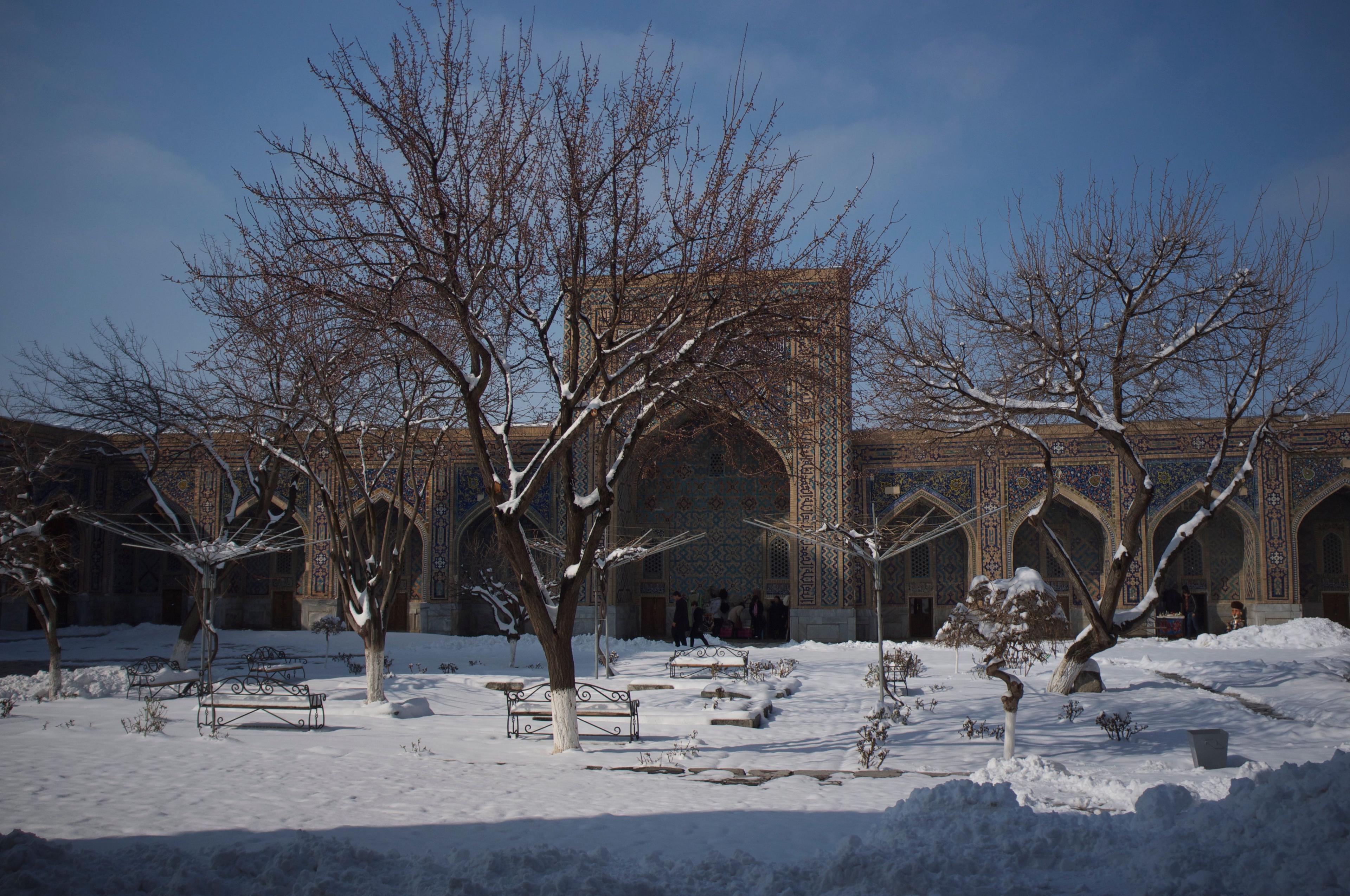
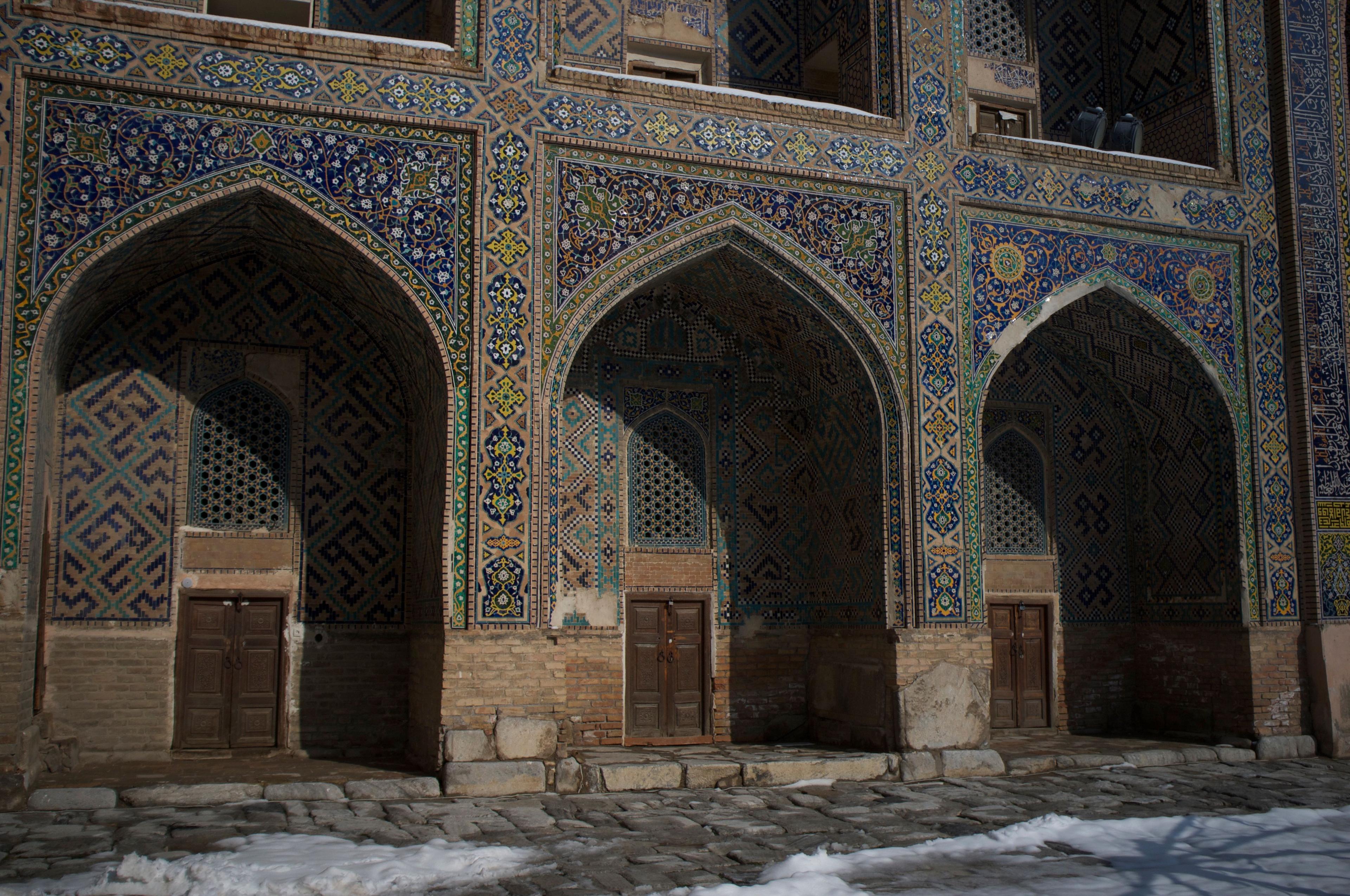
Winter is the quiet season, and an underrated one. Days in Tashkent, Samarkand and Bukhara are typically 7 to 10°C, nights hover around freezing, and Khiva is colder still, with nights of -4 to -6°C on average and sharper cold snaps. Snow falls a few times most winters, rarely lasts long in the cities, and the sight of the Registan or Ichan-Kala under fresh snow is something few visitors get to see.
The trade-offs are real. Daylight is short, some smaller museums and guesthouses close or reduce hours, and many historic interiors are unheated, so you will be cold inside madrasahs. In return you get empty monuments, unhurried guides, lower hotel rates outside the New Year week, and a warm welcome in chaikhanas serving shurpa, manti and endless green tea.
For active travellers, the mountains near Tashkent offer skiing from roughly December to March at Amirsoy and Chimgan, depending on snowfall.
Winter travel works best on a tour that keeps transfers simple. The high-speed Afrosiyob train between Tashkent, Samarkand and Bukhara runs all year and is unaffected by most weather.
Holidays and festivals at a glance
Fixed public holidays that affect travel:
- 1 January: New Year
- 8 March: International Women's Day, a big occasion with flowers everywhere
- 21 March: Navruz
- 9 May: Day of Remembrance and Honour
- 1 September: Independence Day
- 1 October: Teachers' Day
- 8 December: Constitution Day
The two Islamic festivals, Ramazan Hayit (Eid al-Fitr) and Qurbon Hayit (Eid al-Adha), are also public holidays. Their dates follow the lunar calendar and move about 11 days earlier each year. During Ramadan, life continues much as normal for visitors: restaurants and cafés stay open, though some family-run places change their hours.
Around public holidays, especially Navruz and New Year, trains and domestic flights fill up and prices rise, so book transport early.
What to pack for each season
Whatever the season, you will need comfortable walking shoes for uneven stone paving, a scarf or light layer for mosque visits (shoulders and knees covered, women may be asked to cover their hair in active mosques), sunglasses and sunscreen, and a small daypack.
Spring and autumn:
- Layers: T-shirts, a long-sleeved shirt, a light fleece or sweater
- A light waterproof jacket for March, April and November
- Long trousers or a midi skirt for the evenings and religious sites
Summer:
- Loose, breathable cotton or linen that covers shoulders and knees
- A wide-brimmed hat and high-factor sunscreen
- A refillable water bottle and electrolyte sachets
- A light layer for air-conditioned trains and mountain evenings
Winter:
- A warm insulated jacket, hat and gloves, especially for Khiva
- Thermal base layers for unheated monuments
- Waterproof shoes for occasional snow and slush
Dress in Uzbekistan is relaxed in cities, and you will see everything from jeans to summer dresses in Tashkent, but modest clothing is appreciated in the old towns and essential in active mosques and shrines.
So when should you go?
For a first visit covering Tashkent, Samarkand, Bukhara and Khiva, mid-April to the end of May and mid-September to the end of October give the best balance of weather and daylight. Navruz in late March is wonderful for culture lovers who do not mind a few showers. Summer suits flexible travellers who plan around the heat, and winter rewards those who want the monuments to themselves.
We run small-group departures across the year, including a dedicated winter tour, and design private itineraries timed around the festivals and the weather you prefer. Tell us your dates and our team in Tashkent and Bukhara will suggest the best route for that season.
Frequently asked questions
Watch
Photo gallery