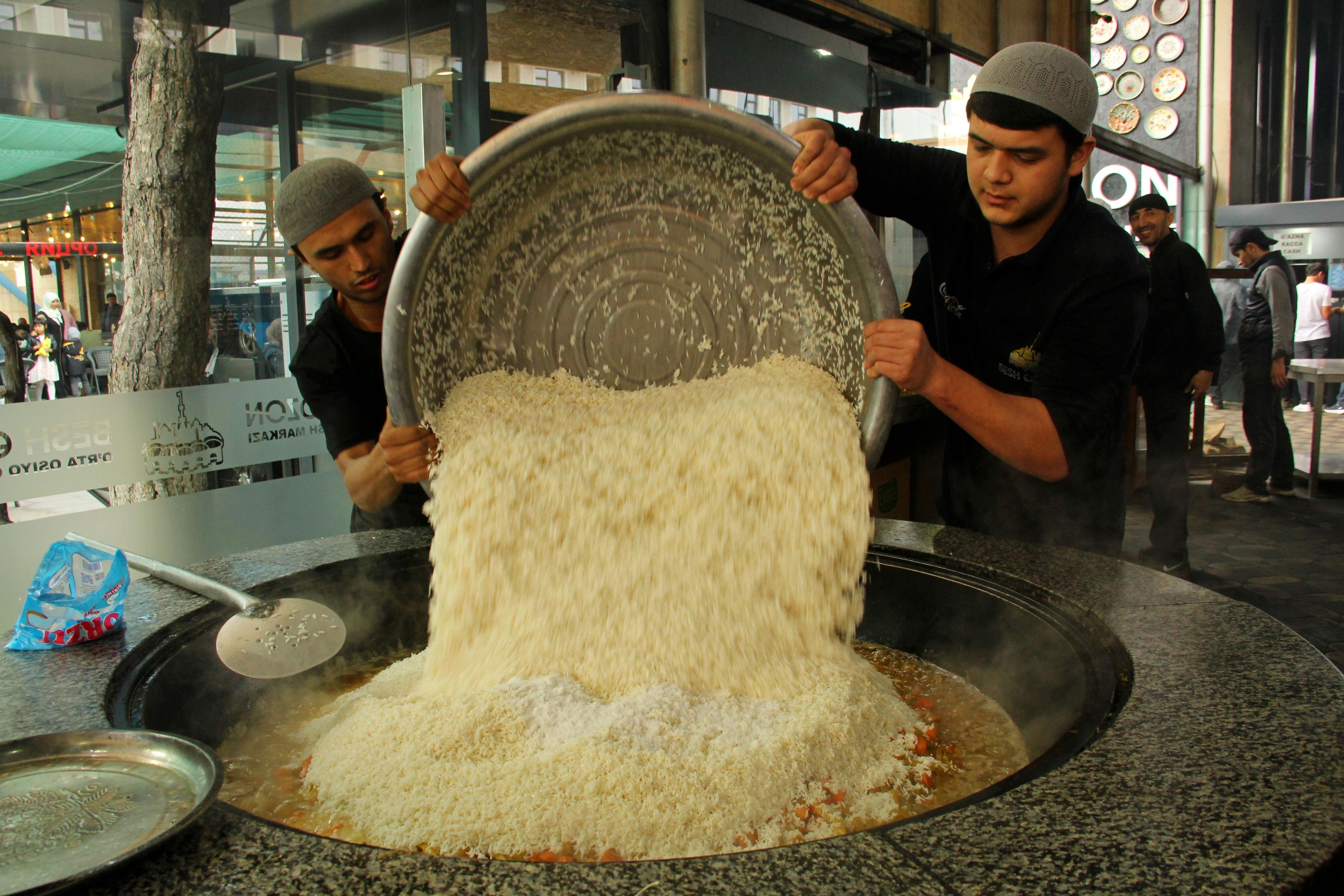
The soup course of Uzbek cooking: shurpa and its variants, mastava and moshkhurda, chuchvara dumplings, Khorezm's shivit oshi and lagman. What is in each, when to eat it, where to order it in the main cities and what suits vegetarians.
Facts, prices and schedules checked on November 4, 2026
Plov gets the headlines, but ask an Uzbek family what makes a proper meal and the answer usually includes soup. At home and in chaikhanas, the soup comes first or at lunchtime, hot in summer and winter alike, with a basket of bread beside it. The range is wider than most visitors realise: clear meat broths with large chunks of vegetables, rice and mung bean soups soured with fermented milk, tiny dumplings in broth, and the green dill noodles of Khiva.
This guide fills the gap between our guides to plov, street food and desserts. It explains the main soups and dumplings, how they differ, when they are eaten, where to order them in the main cities and what vegetarians can do.
Shurpa: the national soup
Shurpa is the best-known Uzbek soup, and the word is shared across Central Asia, the Caucasus and the Balkans in slightly different forms. In its classic Uzbek form it is a clear, fragrant broth of lamb or beef cooked with large pieces of potato, carrot, onion, tomato and sweet pepper, often finished with fresh dill, coriander and sometimes chickpeas. The vegetables are cut big on purpose; this is a soup to be eaten with bread and a spoon, not a delicate consommé.
The main variants:
- Shurpa-chaban, shepherd's shurpa. Chunks of meat on the bone and whole vegetables, boiled together.
- Kovurma shurpa, also written kaurma. The meat and onions are first fried in oil, then the water is added, which gives a richer, darker broth.
- Kuza shurpa. Lamb and vegetables cooked in an individual clay pot, a restaurant favourite.
- Mash shurpa, with mung beans.
Eat it with a squeeze of lemon or a spoon of finely chopped onion in vinegar, and always with non, the round flatbread.
Mastava and moshkhurda: rice and mung bean soups
Mastava is a thick soup of rice, small cubes of meat and vegetables, usually potato, carrot and tomato. It is served with a spoonful of qatiq, a thick fermented milk that works like sour cream, or with sour cream itself, stirred in at the table. Some sources trace it to an older yogurt soup, and the sour note is still essential. It is a home-cooking staple and a sensible lunch.
Moshkhurda, also written mashhurda or moshxo'rda, is similar but is made with mung beans as well as rice. The beans give it an earthy character and a slight thickness, and it too is finished with qatiq. In Tashkent and Samarkand you will find both on the lunch menus of chaikhanas. Mashkichiri, a thicker dish of mung beans and rice, sits between a soup and a porridge, and is a gentle meal after a long journey.
Chuchvara: tiny dumplings in broth
Chuchvara are small meat dumplings, usually about the size of a thumbnail, folded from thin dough and boiled in broth. Compared with Central Asian manti, which are large and steamed, and with Uzbek samsa, which are baked, chuchvara are the delicate end of the dumpling family. They are usually served in a clear broth with fresh herbs, and sometimes with vinegar, sour cream or qatiq. A fried version, served dry, is also common.
Variants differ by city. Recipes differ from city to city and from family to family, with more or less pepper, onion and herbs in the filling. Khorezm uses the same name for a similar dumpling dish. As a traveller's rule, ask the cook how they make theirs; the answers vary from family to family.
Shivit oshi: the green noodles of Khiva
Shivit oshi is the soup the region of Khorezm is best known for, and it is difficult to find outside Khiva and Urgench. Wide noodles made with dill, which tint them bright green, are served with a meat and vegetable sauce or broth and finished with qatiq or sour cream. Some people call it the Khorezm lagman. It is mainly a summer dish and, depending on the cook, ranges from fragrant and herbal to quite rich.
In Khiva, look for it on the menus of restaurants in Ichan-Kala and ask your guesthouse host if a family can make it. It makes a good reason to eat a long lunch in the old city, before the afternoon heat sets in.
Lagman: the noodle soup of the Uyghur diaspora
Lagman is a noodle dish found across Central Asia, brought by Uyghur communities, and eaten in Uzbekistan in two forms: a soup (suyuq lagman) and a fried version (qovurma lagman). The noodles are pulled by hand, and the broth contains lamb or beef, peppers, radish, tomatoes and plenty of garlic. In Tashkent it is a lunchtime favourite and an easy dish for first-time visitors.
When Uzbeks eat soup
Soup is the winter food of the country, and from November to March the chaikhanas serve shurpa, mastava and chuchvara at lunchtime, with steam rising from bowls in the cold. In Ramadan, iftar traditionally starts with dates, water and a bowl of soup, which is easy on an empty stomach; see our guide to Ramadan in Uzbekistan for details. Soup is also the food for guests who have come off a long train, and a hostess often offers a bowl before anything else.
Summer menus lean towards cold qatiq-based soups and lighter broths, though even in July the lunch bowls arrive hot.
Where to order them
- Tashkent: Chorsu Bazaar and the surrounding food courts have stalls serving mastava, shurpa and chuchvara by the bowl, and the capital has restaurants specialising in regional dishes. Lagman is easy to find.
- Samarkand: chaikhanas near the bazaar and the Registan serve shurpa and mastava at lunch. Ask for the soup of the day.
- Bukhara: small family restaurants in the old town offer chuchvara and shurpa, particularly in winter.
- Khiva: shivit oshi and Khorezm dishes in the restaurants of Ichan-Kala, and at guesthouse tables.
Prices for a bowl in a local chaikhana are usually modest, typically a few US dollars in 2026, and more in tourist restaurants. Our guide to Uzbek food and our regional cuisines guide cover the wider picture.
How a soup meal is served
A chaikhana lunch usually starts with tea and bread, then salads of tomato and onion, then the soup, with the main dish following. Bread is broken by hand, never cut. Soup arrives in a wide bowl called a kosa and is eaten with a spoon, with a plate on the side for bones. If you are offered a second helping, accepting it is a compliment.
Dumplings beyond chuchvara are worth a short list:
- Manti, large steamed dumplings with lamb and onion, often with pumpkin.
- Samsa, baked pastries, which belong to street food rather than soup.
- Pelmeni, the Russian dumpling, found in cafés across the country, a reminder of the Soviet decades.
- Khanum, a steamed rolled pasta with a meat and vegetable filling, served with sour cream, popular in Tashkent.
Ask for a small portion if you want to try several dishes in one day. Portions in chaikhanas are generous.
A short glossary for the menu
- Suyuq: liquid, soup.
- Qatiq: fermented milk, like thick yogurt.
- Non: bread.
- Go'sht: meat.
- Sabzi: carrot, or in some places greens.
- Noʻxat: chickpeas.
- Osh: here, a general word for a dish, which can be rice, noodles or soup.
Knowing even these words helps when you ask for the soup of the day, and our guide to useful Uzbek and Russian phrases covers more.
Vegetarians and special diets
Most traditional soups contain meat or are cooked in meat broth, so strict vegetarians will need to ask. Some places can make a version of mastava or a vegetable soup without meat, and mung bean and lentil soups are available, but check the broth. Allow an extra word or two with the cook: the Uzbek word for vegetarian is not widely understood, and some will assume fish or chicken counts. Our guide to vegetarian and vegan food in Uzbekistan gives phrases and advice. For halal travellers, meat in Uzbekistan is generally halal; see our halal travel guide.
A winter lunch in practice
A typical cold-weather lunch for a visitor in Samarkand or Bukhara might begin with tea and fresh non, followed by a plate of sliced tomatoes and onion, then a bowl of shurpa or mastava, and a few chuchvara to share. It is filling, inexpensive and easy to slot between morning sightseeing and an afternoon at the bazaar. In summer, the same lunch shrinks to a smaller bowl and lots of fruit, as our guide to Uzbek fruit and melons explains.
How TourEast can help
Our flavours of Uzbekistan tour is built around food, and we can add a soup lunch to any itinerary, from a Khorezm shivit oshi in Khiva to a winter shurpa in Samarkand. Tell us about dietary needs when you book.