Which language to use where, how much English is spoken, and the Uzbek and Russian phrases you will actually need: greetings, numbers, bazaar and taxi phrases, food words, a pronunciation guide, Latin vs Cyrillic script and the best translation apps.
Facts, prices and schedules checked on November 4, 2026
You do not need to speak Uzbek or Russian to travel in Uzbekistan, but a few words go a very long way. A simple "Assalomu alaykum" and "Rahmat" will earn smiles at every bazaar stall, and knowing how to say numbers and ask "how much?" makes taxis and shopping much easier.
This guide gives you the most useful Uzbek and Russian phrases for travellers, with simple pronunciation, plus the practical background: which language to use where, how much English is spoken, how to read signs in Latin and Cyrillic script, and which translation apps work best. Phrases are written in Uzbek Latin script, with Russian in an easy English transliteration and the Cyrillic in brackets where it helps.
What language is spoken in Uzbekistan, and which should you use?
The official language is Uzbek (o'zbek tili), a Turkic language related to Turkish, Kazakh and Uyghur. It is the mother tongue of most of the population and the language you hear on the street, in the bazaar and at home.
Russian has no official status, but it is still widely used. Most adults learned it at school, it is common in business, science and the media, and in Tashkent many people use it every day. Two other languages matter for travellers:
- Tajik, a form of Persian, is the everyday language of many families in Samarkand and Bukhara. Most people there speak Uzbek too, and Tajik and Uzbek share many words, including "rahmat".
- Karakalpak, another Turkic language, is spoken in Karakalpakstan in the north-west, around Nukus and the Aral Sea.
For a visitor, Uzbek and Russian are the two languages to know a few words of. Both are understood almost everywhere, and nobody will be offended by either.
As a rule of thumb:
- In Tashkent, Russian is very widely spoken, especially among older people, taxi drivers, waiters and in shops. Uzbek is growing fast among younger people.
- In Samarkand, Bukhara, Khiva and the Fergana Valley, Uzbek (or Tajik) is the everyday language, and older people and many traders also speak good Russian.
- In villages and rural areas, Uzbek is far more useful; younger people in particular may speak little Russian.
- Greetings and thanks in Uzbek are always appreciated, even if you then switch to Russian or English for the details.
If you already speak some Russian, you will manage very well. If you speak Turkish, you will recognise many Uzbek words, and the grammar is similar.
Do people speak English in Uzbekistan?
More every year. In hotels, at major sights, in tourist restaurants and among young people in Tashkent and Samarkand, English is common. Many students learn it at school and university, and English signs now appear at airports, Afrosiyob train stations and the main monuments.
Outside the tourist areas, English is still limited. Taxi drivers, market traders, older people and rural guesthouse hosts often speak little or none. That is where a few words of Uzbek or Russian and a translation app make the difference. Our guides work in English, Russian and several other languages, and can help with conversations along the way.
Latin or Cyrillic? Reading signs and menus in Uzbekistan
Uzbek has been written in three scripts in the last hundred years: Arabic, then Latin, then Cyrillic in the Soviet period. In 1993 independent Uzbekistan adopted a new Latin alphabet, revised in 1995. The full switch has been postponed several times, and both scripts are still in use:
- New street signs, road signs, station names and most official signage use Uzbek Latin.
- Many shop signs, menus, newspapers and older signs use Uzbek Cyrillic or Russian Cyrillic.
- Younger people mostly write in Latin; older people often prefer Cyrillic.
The good news is that Uzbek Latin is easy to read for English speakers once you know a few special letters (see the pronunciation guide below). For Cyrillic, it helps to learn a handful of letters that look familiar but sound different, for example:
- Р = r, Н = n, С = s, В = v, Х = kh, У = u
- So РЕСТОРАН reads "restoran" (restaurant), and ВОКЗАЛ reads "vokzal" (railway station).
- Uzbek Cyrillic adds a few letters such as Ў (o'), Қ (q), Ғ (g') and Ҳ (h).
A translation app with a camera function, described below, reads both scripts.
Uzbek pronunciation guide
Uzbek is mostly pronounced as written, and the stress usually falls on the last syllable: ra-KHMAT, as-sa-lo-MU a-lay-KUM. The letters to know:
- a: as in "father"
- o: a rounded sound, as in British "hot" or "law"
- o': a closed "o", close to the "o" in "more"
- u: as "oo" in "food"
- e: as in "bed"
- i: as in "bit"
- q: like "k", but from the back of the throat
- g': a soft throaty sound, like the French "r"
- x: like "ch" in Scottish "loch"
- h: a light English "h"
- j: as in "jam"
- y: as in "yes"
- sh, ch: as in English
- ng: as in "sing"
- the apostrophe ('), as in ma'no (meaning), marks a short break in the word.
Russian stress moves around and the spelling is less regular, so the Russian phrases below are written as they sound, with the stressed syllable in capitals.
Basic Uzbek and Russian greetings and polite phrases
Uzbek first, then Russian:
- Hello: Assalomu alaykum (as-sa-lo-MU a-lay-KUM) / Zdravstvuyte (ZDRAST-vooy-tye, Здравствуйте)
- Hi (informal): Salom (sa-LOM) / Privet (pree-VYET)
- Reply to a greeting: Va alaykum assalom / Zdravstvuyte
- How are you?: Yaxshimisiz? (yakh-shi-mi-SIZ) / Kak dela? (kak dye-LA)
- Fine, thank you: Yaxshi, rahmat / Khorosho, spasibo (kha-ra-SHO, spa-SEE-ba)
- Thank you: Rahmat (rakh-MAT) / Spasibo
- Thank you very much: Katta rahmat / Bolshoye spasibo
- Please: Iltimos (il-ti-MOS) / Pozhaluysta (pa-ZHAL-sta)
- You are welcome; go ahead: Marhamat (mar-ha-MAT) / Pozhaluysta
- Yes / No: Ha / Yo'q (yok) ; Da / Nyet
- Excuse me, sorry: Kechirasiz (ke-chi-ra-SIZ) / Izvinite (iz-vee-NEE-tye)
- Goodbye: Xayr (khayr) / Do svidaniya (da svee-DA-nee-ya)
- My name is...: Mening ismim... / Menya zovut... (mee-NYA za-VOOT)
- I don't understand: Tushunmadim (tu-shun-ma-DIM) / Ya ne ponimayu (ya nye pa-nee-MA-yu)
- Do you speak English?: Inglizcha gapirasizmi? / Vy govorite po-angliyski?
- Where is the toilet?: Hojatxona qayerda? / Gde tualet? (gdye too-a-LYET)
A cultural note: when greeting, men often place the right hand on the heart, and a handshake between men is normal. Between men and women, wait to see if a hand is offered; a nod with the hand on the heart is always polite. Our culture and etiquette guide explains more.
Numbers in Uzbek and Russian, and how prices are quoted
Numbers are the most useful words of all, for prices, taxi fares and bus numbers.
- 1: bir / odin
- 2: ikki / dva
- 3: uch / tri
- 4: to'rt / chetyre
- 5: besh / pyat
- 6: olti / shest
- 7: yetti / sem
- 8: sakkiz / vosem
- 9: to'qqiz / devyat
- 10: o'n / desyat
- 20: yigirma / dvadtsat
- 30: o'ttiz / tridtsat
- 40: qirq / sorok
- 50: ellik / pyatdesyat
- 100: yuz / sto
- 1,000: ming / tysyacha
Uzbek numbers are built simply: o'n besh (15), yigirma besh (25), ellik ming (50,000), yuz ming (100,000).
Because the Uzbek som has many zeros, prices are usually quoted in thousands. A trader who says "o'n besh" or "pyatnadtsat" for a scarf almost always means 15,000 som, not 15. If in doubt, ask them to type the number on a phone or calculator, which everybody does. Our money guide explains the som and cards.
At the bazaar: shopping and bargaining phrases
Bargaining is normal at bazaars and craft stalls, and much less so in shops with marked prices. Keep it friendly, and smile.
- How much is it?: Bu qancha? (bu qan-CHA) / Skolko stoit? (SKOL-ka STO-eet)
- Too expensive: Qimmat (qim-MAT) / Dorogo (da-ra-GO)
- Can you make it cheaper?: Arzonroq bo'ladimi? / Mozhno deshevle? (MOZH-na dye-SHEV-lye)
- I'll take it: Olaman (o-la-MAN) / Ya voz'mu (ya vaz-MOO)
- No, thank you: Yo'q, rahmat / Nyet, spasibo
- One kilo, please: Bir kilo, iltimos / Odin kilogramm, pozhaluysta
- Half a kilo: Yarim kilo / Polkilo
- Can I try it?: Tatib ko'rsam bo'ladimi? / Mozhno poprobovat?
- Very good, beautiful: Juda yaxshi / Ochen khorosho; Chiroyli / Krasivo
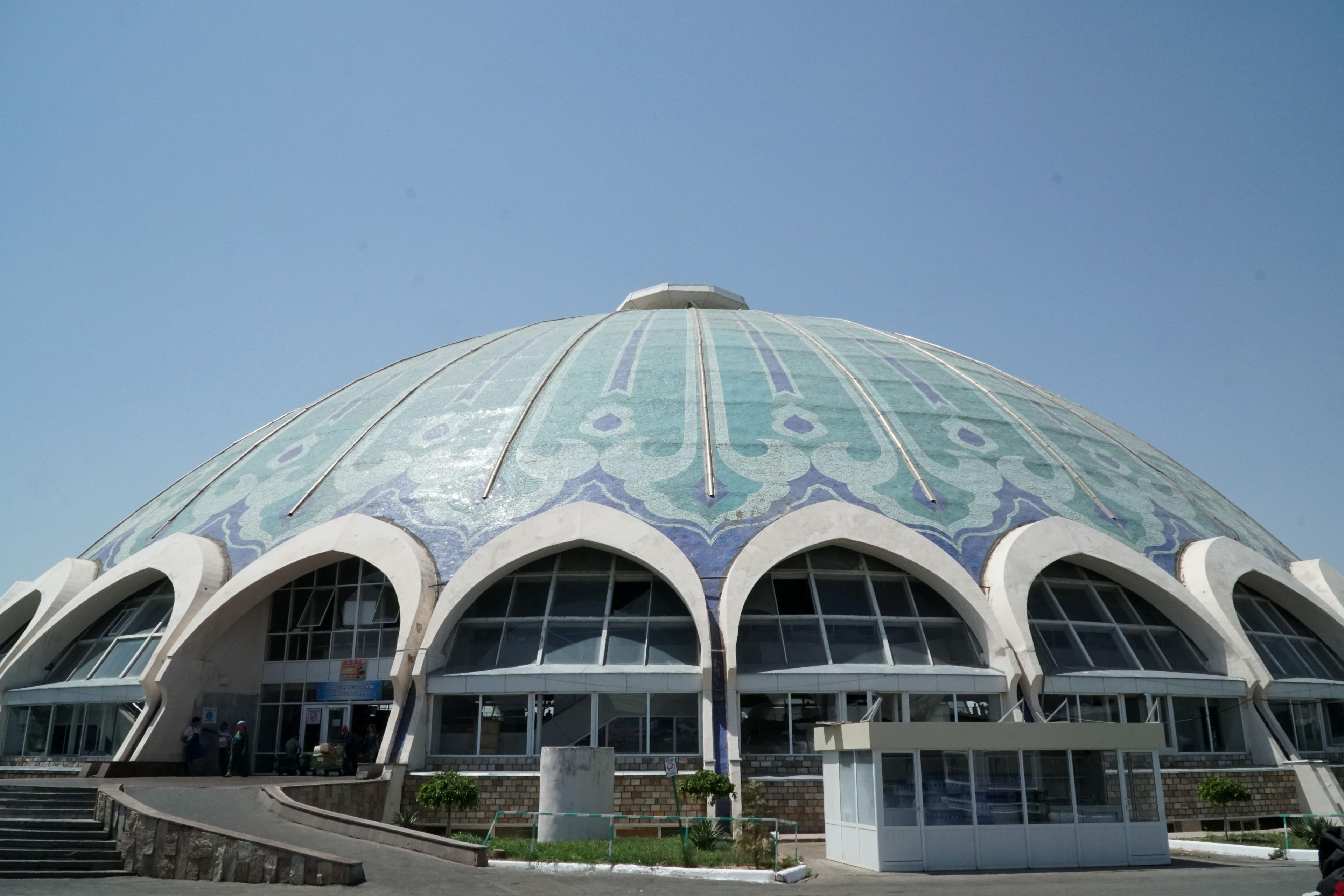
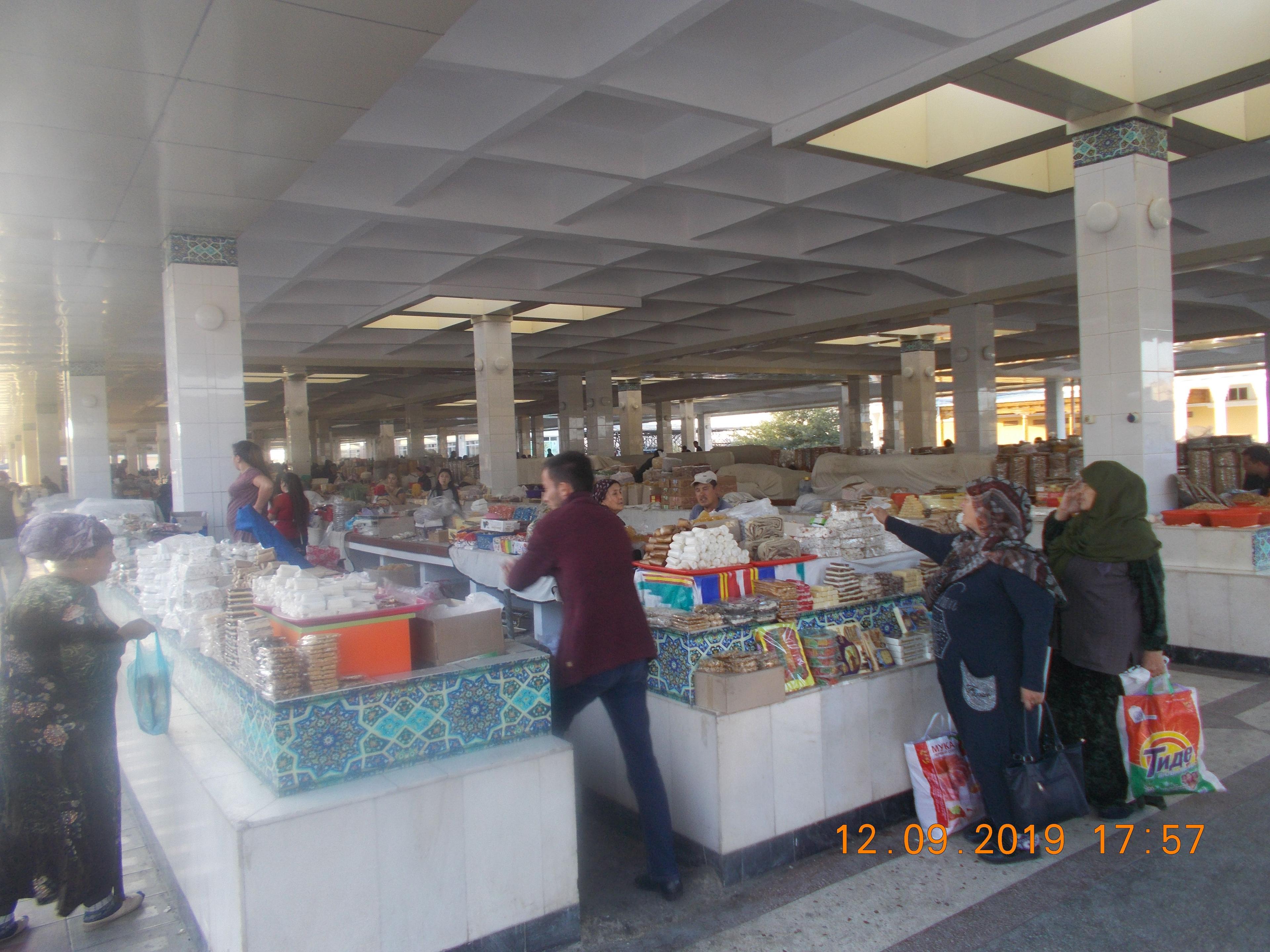
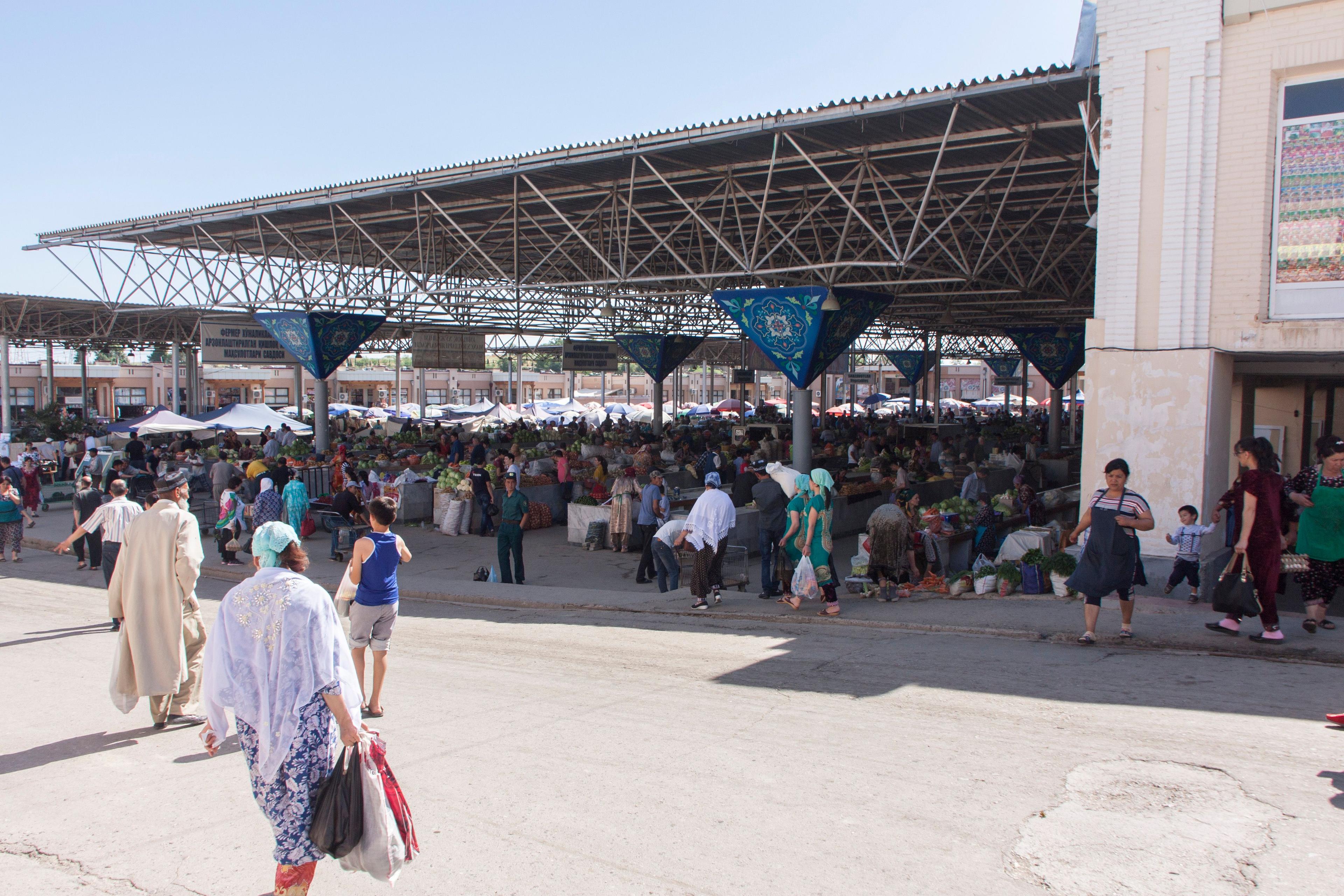
At Chorsu Bazaar in Tashkent or Siab Bazaar in Samarkand, traders will often let you taste dried fruit, nuts and halva before you buy. Our crafts and souvenirs guide explains what to buy and fair prices.

In a taxi, at the hotel and in an emergency
Ride-hailing apps such as Yandex Go mean you rarely need to explain an address, and the fare is shown in advance. These phrases still help with the driver, at stations and on the street:
- Where is...?: ... qayerda? / Gde...?
- Railway station: vokzal (both languages)
- Airport: aeroport (both languages)
- Hotel: mehmonxona / gostinitsa
- Metro: metro (both languages)
- Straight on: To'g'riga / Pryamo (PRYA-ma)
- Left / Right: Chapga / O'ngga ; Nalevo / Napravo
- Stop here, please: Shu yerda to'xtang, iltimos / Ostanovite zdes, pozhaluysta
- How far is it?: Qancha uzoq? / Daleko?
- How much to the airport?: Aeroportgacha qancha? / Skolko do aeroporta?
- Slowly, please: Sekinroq, iltimos / Pomedlennee, pozhaluysta
At the hotel and if something goes wrong:
- Room: xona / nomer
- Key: kalit / klyuch
- What is the Wi-Fi password?: Wi-Fi paroli qanaqa? / Kakoy parol ot Wi-Fi?
- Help, please: Yordam bering / Pomogite
- I need a doctor: Menga shifokor kerak / Mne nuzhen vrach (mnye NOO-zhen vrach)
- Pharmacy: dorixona / apteka
- Police: politsiya (both languages)
Our guide to getting around cities in Uzbekistan covers taxis, the Tashkent metro and buses in detail.
Food words and restaurant phrases
Uzbek menus often mix Uzbek and Russian, so knowing a few words helps in both.
- Menu: menyu / menyu
- The bill, please: Hisobni olib keling, iltimos / Schyot, pozhaluysta (SHCHOT)
- Delicious: Mazali (ma-za-LI) / Vkusno (FKOOS-na)
- Water: suv / voda; still and sparkling: gazsiz / gazli ; bez gaza / s gazom
- Tea: choy / chay; green tea: ko'k choy / zelyony chay; black tea: qora choy / chorny chay
- Bread: non / khleb
- Meat: go'sht / myaso; beef: mol go'shti / govyadina; lamb: qo'y go'shti / baranina; chicken: tovuq / kuritsa; fish: baliq / ryba
- Vegetables: sabzavot / ovoshchi; fruit: meva / frukty
- Without meat: go'shtsiz / bez myasa
- Without sugar: shakarsiz / bez sakhara
- Spicy: achchiq / ostry
- Is this halal?: Bu halolmi? / Eto khalal?
- I am vegetarian: Men go'sht yemayman (I don't eat meat) / Ya vegetarianets (male), Ya vegetarianka (female)
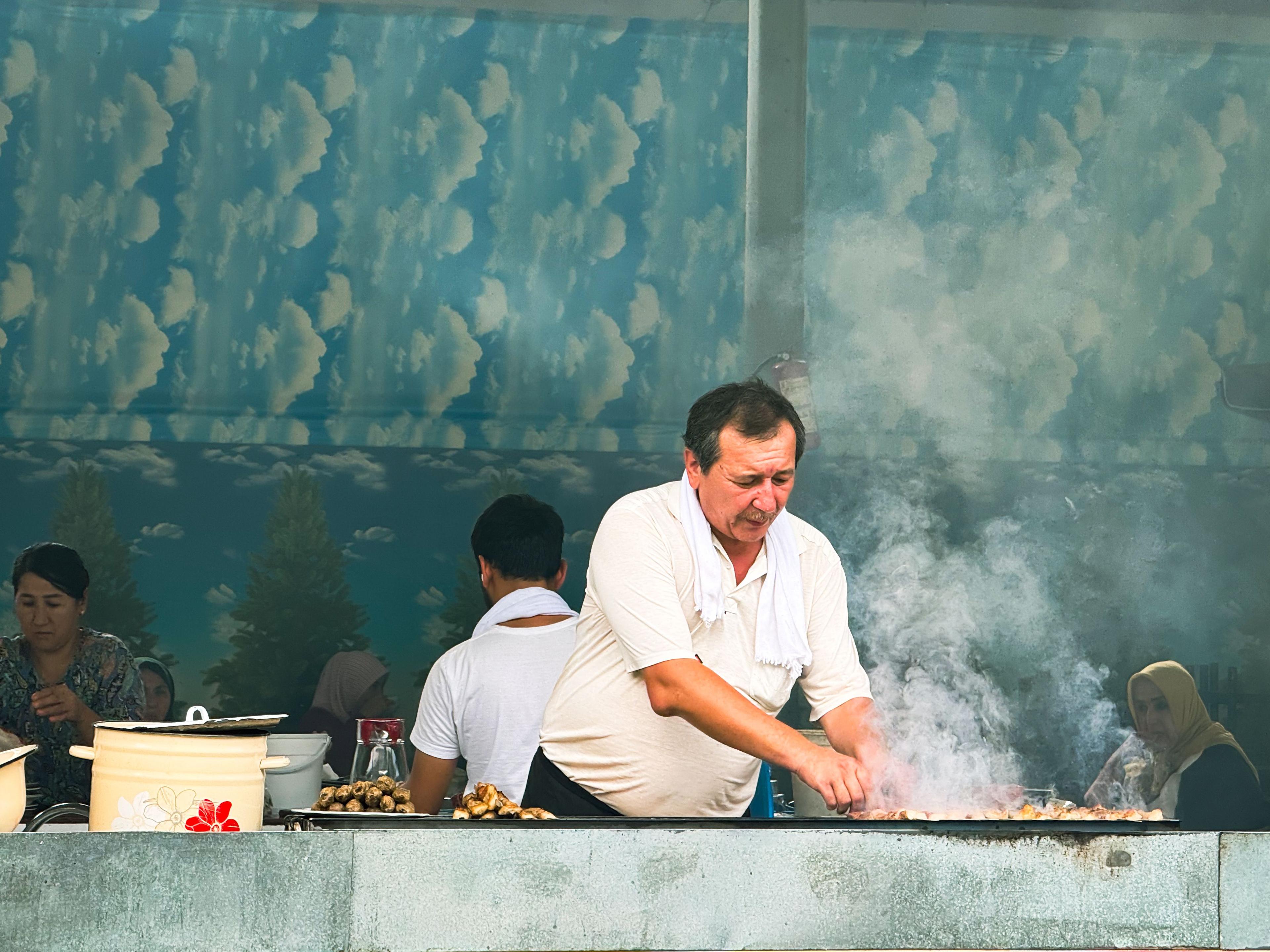
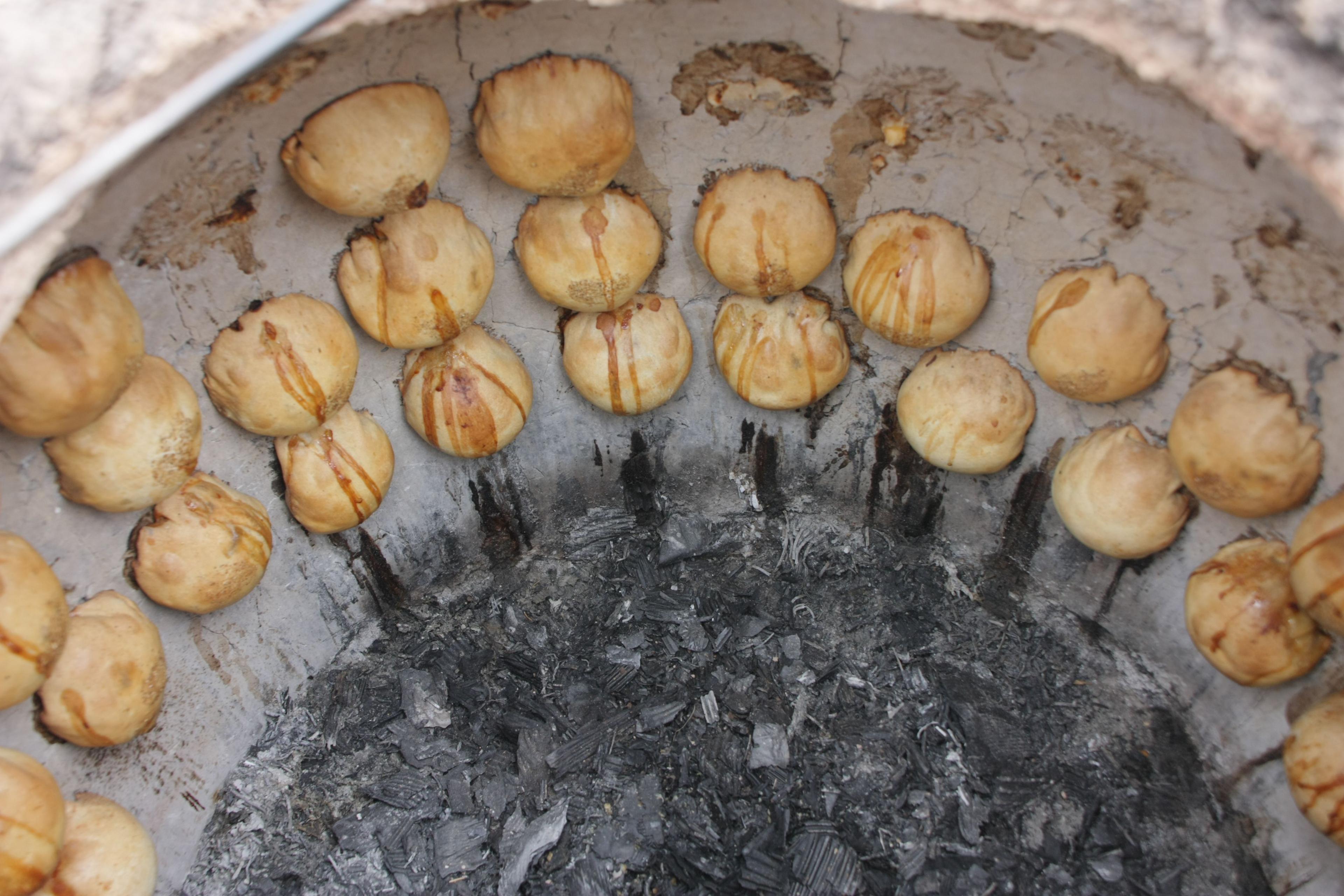
Dish names are the same in both languages: osh or plov, lag'mon or lagman, somsa or samsa, shashlik, manti. Our Uzbek food guide explains them all.
Best translation apps for Uzbekistan
A good app does most of the hard work. Before you travel:
- Google Translate supports both Uzbek and Russian, with typing, voice and camera translation. Camera mode reads menus and signs in Latin or Cyrillic. Download the Russian offline pack, and the Uzbek one if the app offers it for your device, for use without mobile data.
- Yandex Translate is especially strong with Russian and also supports Uzbek; it is widely used in the region.
- Yandex Go, the most popular ride-hailing app, works in Tashkent, Samarkand, Bukhara, Khiva and most other cities, so you can set your destination on a map without speaking at all.
- A local SIM card or eSIM keeps everything online; SIMs are sold at the airport and in city shops with your passport.
For longer conversations, with a family host, a craftsman or an imam, nothing replaces a guide who speaks both languages.
Travelling with a guide who speaks your language
Our guides speak Uzbek and Russian as well as English, and we can arrange guides in French, German, Italian, Spanish, Chinese, Japanese, Indonesian and other languages for private and small-group tours. They will happily teach you a few more words along the way.