Almaty, Charyn Canyon, Big Almaty Lake, the Kolsai lakes and Turkestan's great Yasawi mausoleum: how to add southern Kazakhstan to an Uzbekistan trip, with Tashkent to Almaty flights and trains, border crossings and visa rules as of November 2026.
Facts, prices and schedules checked on November 4, 2026
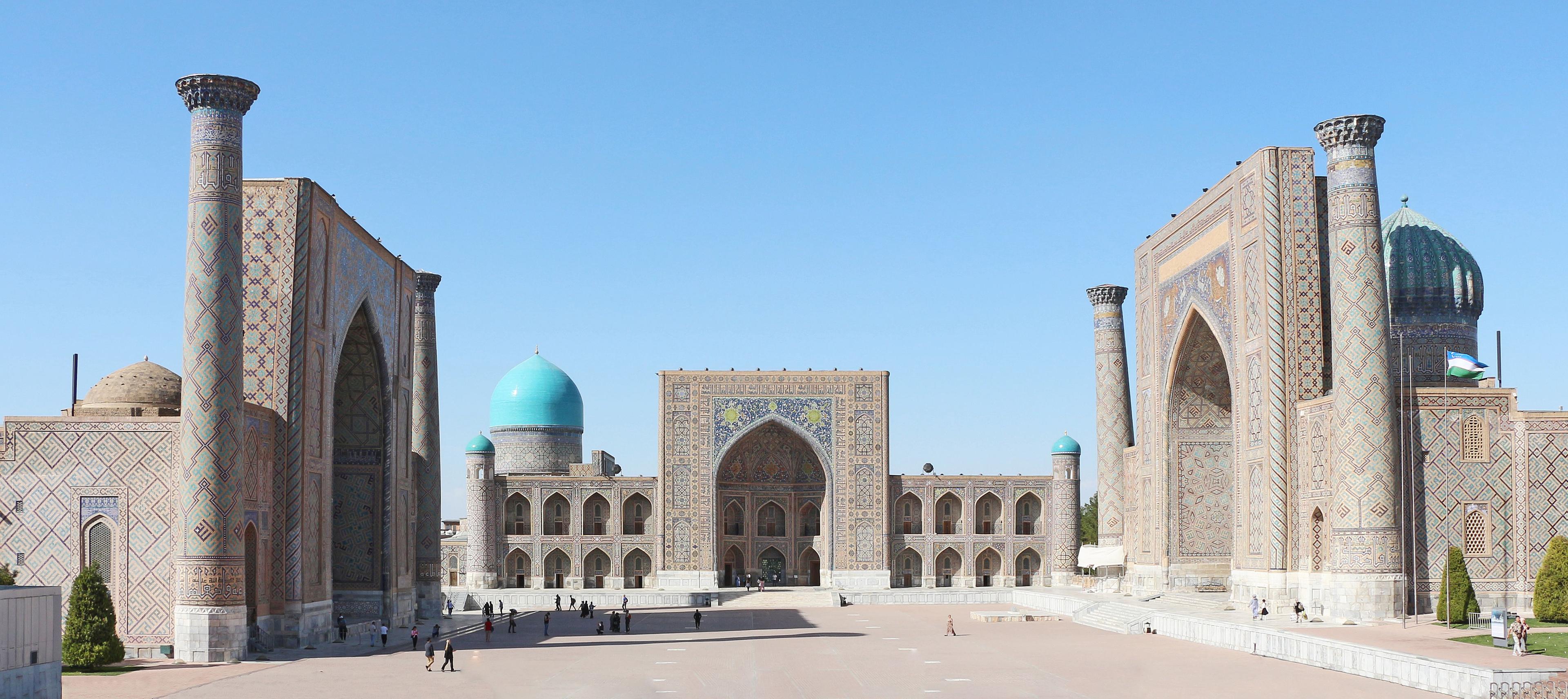
Kazakhstan is the largest country in Central Asia, but for travellers combining it with Uzbekistan, two corners matter most. In the south-east is Almaty, the old capital, a leafy city at the foot of the Tian Shan with canyons and mountain lakes within a day's drive. In the south, just over the border from Tashkent, is Turkestan, home to one of the finest Timurid buildings anywhere: the Mausoleum of Khoja Ahmed Yasawi.
This Almaty and Kazakhstan travel guide is written by our team in Tashkent. TourEast is an Uzbekistan operator. We do not run tours in Kazakhstan, but many travellers arrive in Uzbekistan from Almaty or leave for it, and we arrange the Uzbek side of the journey and the transfers to the border. Here is what we tell them: what to see, how to travel between Tashkent, Turkestan and Almaty, how the borders work right now, and the visa rules.
One important update first: the main road crossing between Tashkent and Shymkent has been closed for reconstruction since February 2025. Details are below.
Is Almaty worth visiting with Uzbekistan?
Yes, and it pairs well because it is so different. Uzbekistan is about history and architecture; Almaty is a modern, green, café-filled city with serious mountains on its doorstep. It is also one of the best-connected airports in the region, which makes it a convenient start or end point.
- Two to three days in Almaty covers the city and one big excursion such as Charyn Canyon.
- Four to five days lets you add the Kolsai and Kaindy lakes, usually with an overnight in the village of Saty.
- One extra day from Tashkent is enough for Turkestan, although it is more comfortable with a night there.
Our Central Asia itinerary guide shows how Almaty fits into two- and three-week routes, often together with Kyrgyzstan, since Almaty and Bishkek are only a few hours apart by road.

Things to do in Almaty
Almaty was the capital of Kazakhstan until 1997 and is still its largest city and cultural centre. It is laid out on a grid that slopes gently up towards the mountains, so up means south and towards the peaks.
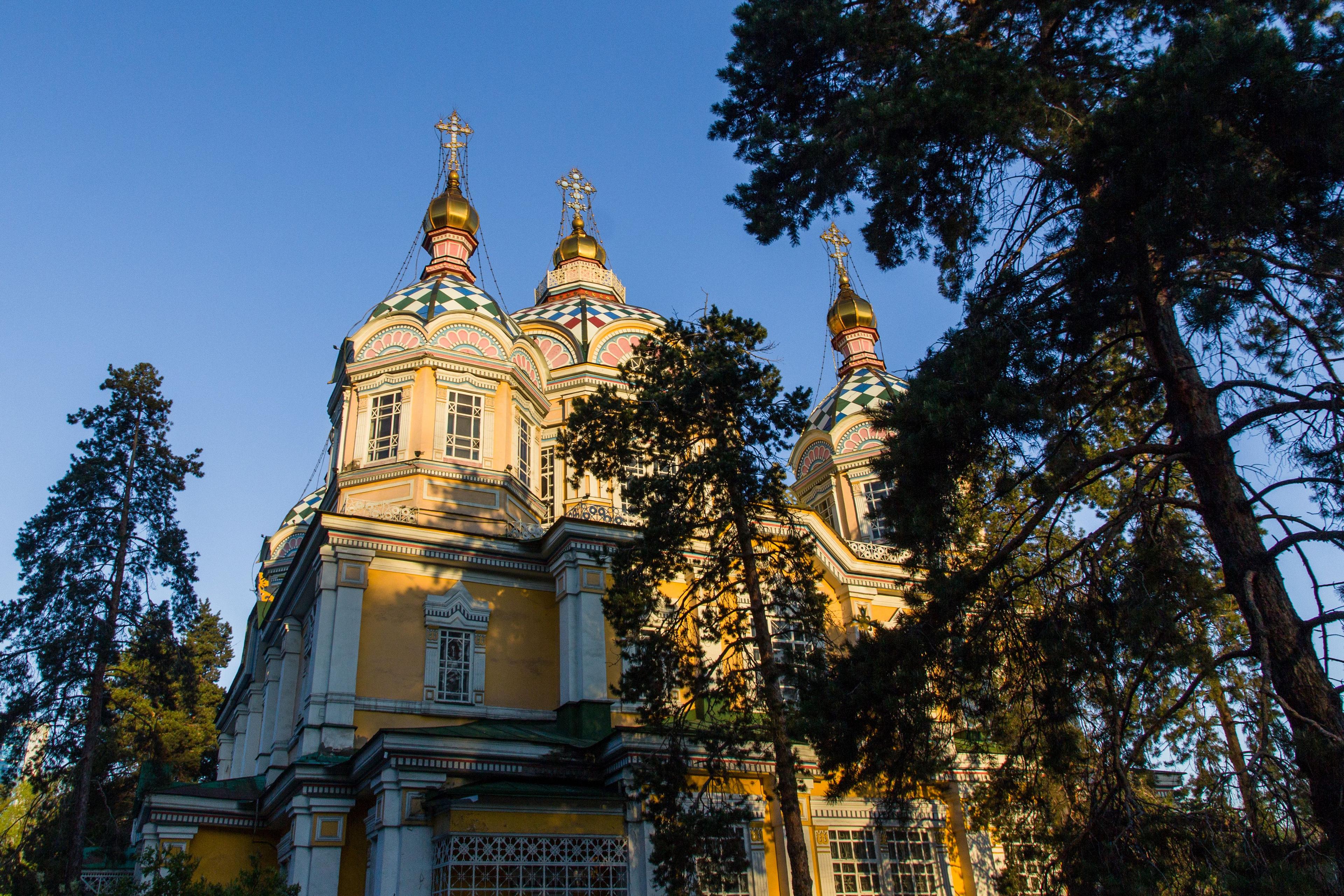
- Panfilov Park and the Ascension Cathedral, often called the Zenkov Cathedral after its architect. Built of wood in the early 20th century, it survived the strong earthquake of 1911.
- The Green Bazaar, a covered market with mountains of dried fruit, nuts, cheese, horse-meat sausage and the region's famous apples.
- The Central State Museum, for Kazakh history, nomadic culture and the Golden Man replica.
- Kok-Tobe hill, reached by cable car, for a view over the city.
- Medeu, the high-altitude skating rink in the mountains above the city, and Shymbulak ski resort above it, linked by cable car. Both are worth visiting in summer too, for the cool air and views.
Almaty is a city for walking and eating. Its restaurant and coffee scene is the liveliest in Central Asia, and it is a good place to rest between more demanding parts of a trip.
Charyn Canyon, Kolsai lakes and Kaindy
The most popular excursions from Almaty lie to the east, towards the Chinese border.
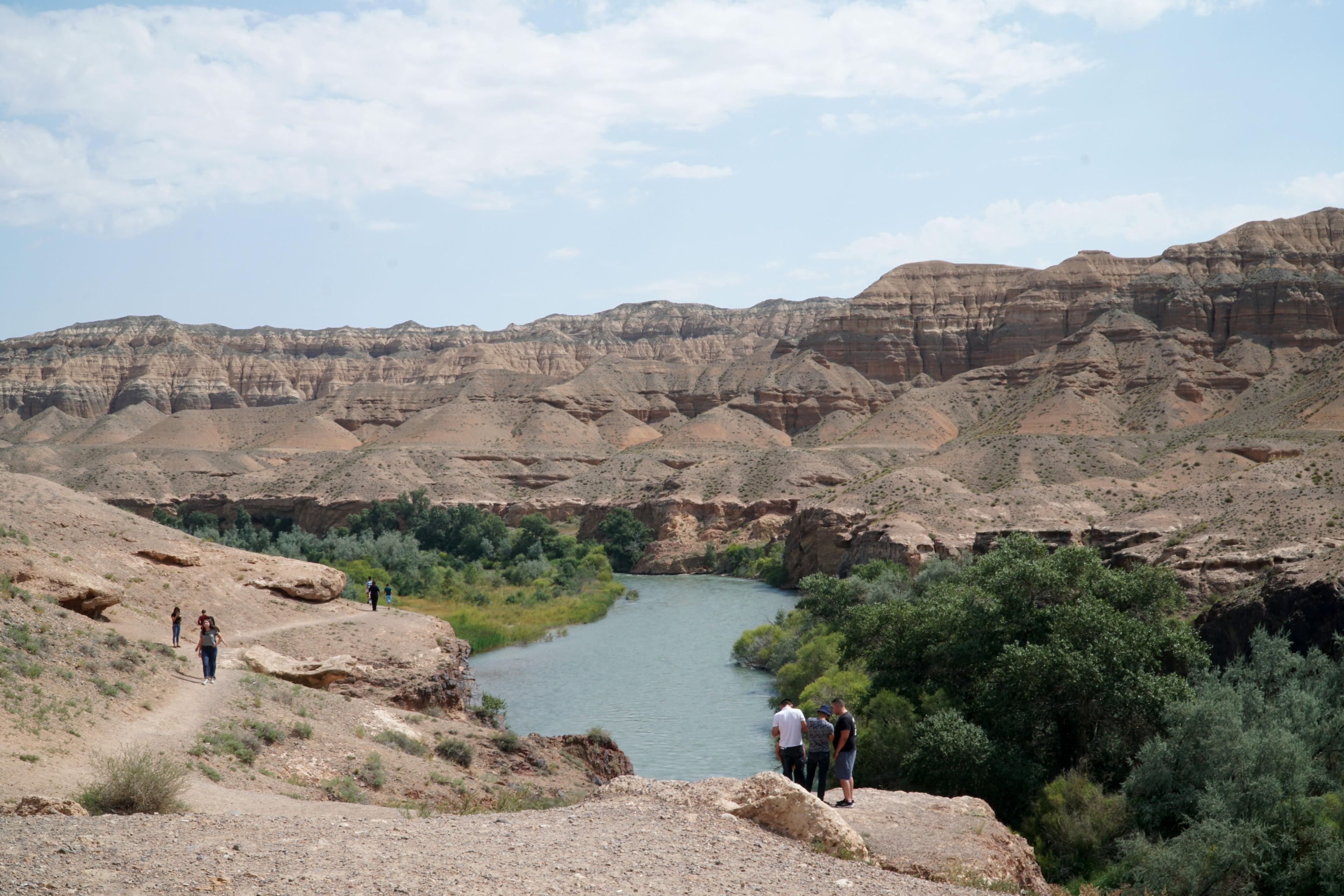
- Charyn Canyon: about 200 km from Almaty, roughly three hours by road. The best-known section, the Valley of Castles, is a walk down between red sandstone walls and towers to the Charyn river. It is often compared, a little generously, to a small Grand Canyon. Allow two to three hours on foot.
- Kolsai Lakes: a chain of three mountain lakes in a forested gorge in the Kolsai Lakes National Park. The first lake is accessible by car; the second is a hike of a few hours; the third is a full day for fit walkers.
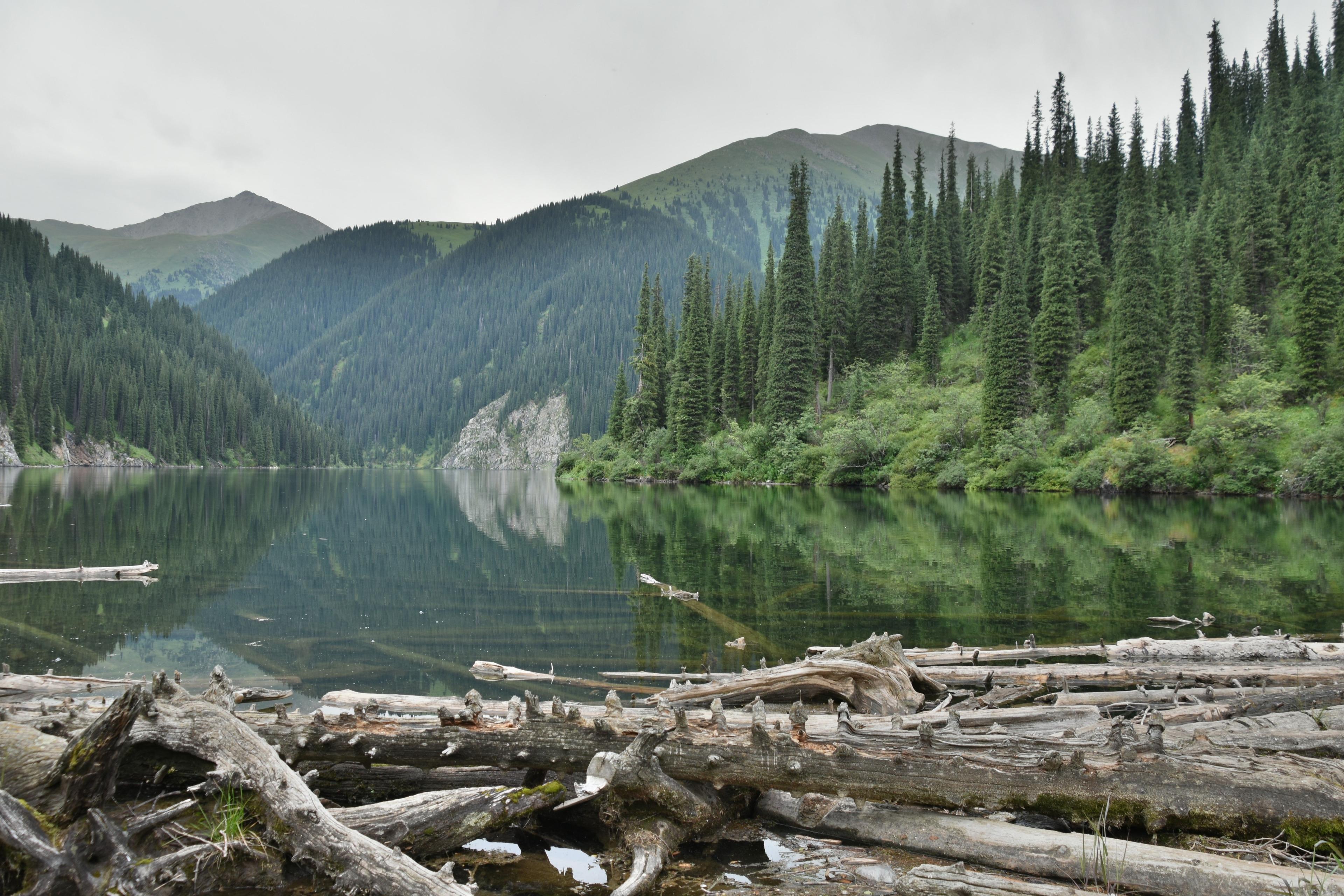
- Kaindy Lake: a lake formed by a landslide after an earthquake in 1911, famous for the trunks of drowned spruce trees that still rise out of its turquoise water. The last stretch is usually by four-wheel-drive vehicle and on foot.
All three can be done in one very long day from Almaty, and many tour companies offer exactly that. It is far more pleasant to stay one night in the village of Saty, near Kolsai and Kaindy, and return via Charyn the next day. National park entry fees apply at each site; they are modest but change from year to year.

Big Almaty Lake: what to know before you go
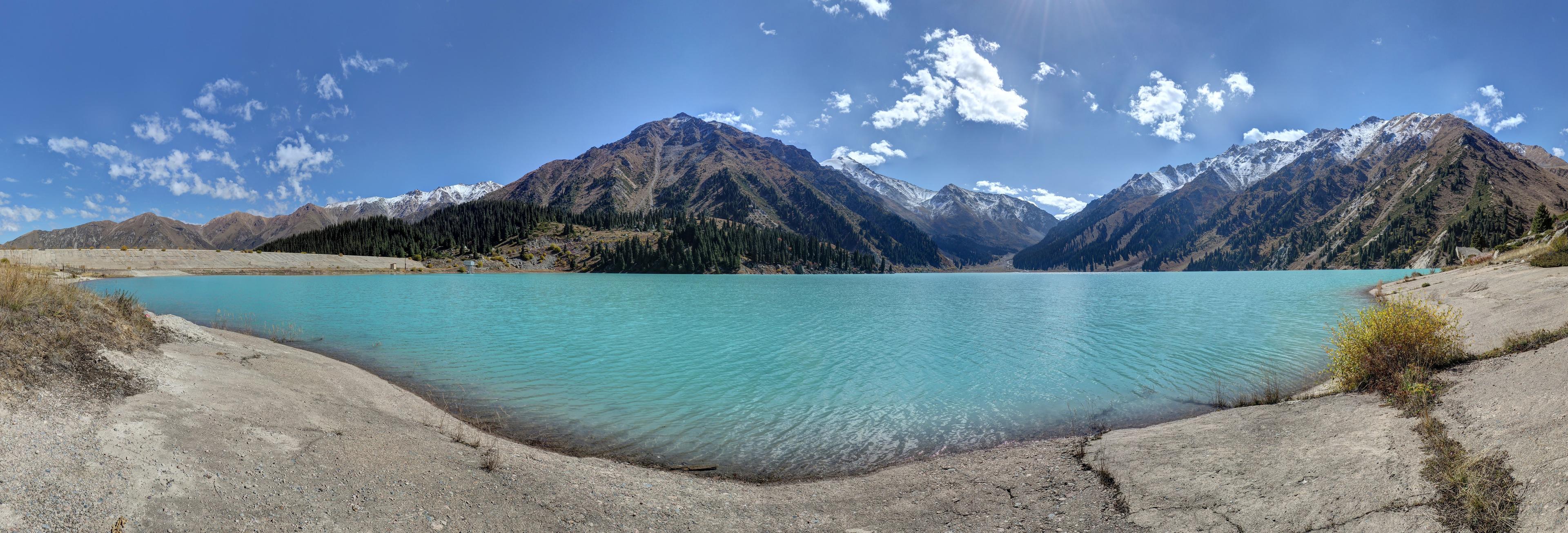
Big Almaty Lake sits at about 2,500 metres in the Ile-Alatau National Park, south of the city, under a ring of peaks. The colour of the water changes with the season from green to turquoise, and photos of it are on every Almaty postcard.
Two things matter for planning:
- It is a drinking-water reservoir for the city, so swimming is not allowed and the shore is protected.
- Access rules change frequently. In recent years the road has been closed to private cars, and the national park has at times banned all vehicles, including bicycles and scooters, during periods of high fire risk, leaving walking as the only way up.
As of November 2026, check the Ile-Alatau National Park's announcements or ask your Almaty guide or hotel shortly before your visit. If the lake is closed, Medeu and Shymbulak offer similar mountain views with easier access.
Turkestan and the Mausoleum of Khoja Ahmed Yasawi
For travellers interested in the Silk Road and Timurid architecture, Turkestan is the most rewarding place in southern Kazakhstan, and it is closer to Tashkent than to Almaty.
Khoja Ahmed Yasawi was a 12th-century Sufi poet and teacher, one of the most revered figures in Turkic Islam. In the late 14th century Amir Timur (Tamerlane) ordered a vast mausoleum to be built over his grave. Timur died before it was finished, and parts of the building, including the main portal, were never completed, which makes it unusually interesting: you can see how Timurid builders worked, with the scaffolding holes still visible in the unfinished façade.
- The mausoleum is a UNESCO World Heritage Site, listed in 2003. Its ribbed, tiled dome is one of the largest of its time in Central Asia.
- Inside are a huge bronze cauldron and several halls and burial chambers.
- For many people in the region it is a place of pilgrimage, so dress modestly as you would at Shah-i-Zinda or Bahouddin Naqshband in Bukhara.
Around it, a new tourist quarter with hotels, museums and fountains has been built in recent years. Nearby you can also visit the ruins of the medieval city of Sauran and, in the other direction, the Arystan Bab mausoleum near ancient Otrar.
Turkestan's architecture links directly to what you will see in Uzbekistan, at Gur-e-Amir in Samarkand and Ak-Saray in Shahrisabz, so it works best at the start or end of an Uzbek Silk Road trip.
Tashkent to Almaty: flights, trains and road
There are three ways to travel between Tashkent and Almaty. Times are as of November 2026.
- By air: the fastest and usually the best option. Direct flights take about 1 hour 30 minutes, operated mainly by Air Astana and Uzbekistan Airways, with other carriers on some days. There are several flights a day.
- By train: a Talgo train runs between Tashkent and Almaty overnight in about 17 to 18 hours. Kazakhstan Railways announced a daily service from December 2025, while other reports describe three departures a week in certain seasons. Check the current timetable on railways.kz or railway.uz before planning around it. Joint Kazakh-Uzbek tourist trains (Jibek Joly, Keruen Express) also run occasionally between Almaty, Turkestan, Samarkand and Tashkent as packaged tours.
- By road: around 800 km via Shymkent and Taraz. It is a long day's drive, and only worth it if you are stopping in Turkestan or the south along the way.
For most travellers, we suggest flying between Almaty and Tashkent and using the road only for the short hop between Tashkent and Turkestan.
Tashkent to Turkestan and the border crossings
Turkestan lies roughly 300 km from Tashkent by road, via the border and Shymkent. With a smooth crossing the trip takes about four to five hours, which makes a long day trip possible, though an overnight is better.
The border situation as of November 2026:
- Gisht-Kuprik (Uzbek side) / Zhibek Zholy (Kazakh side), the main crossing north of Tashkent on the road to Shymkent, closed for reconstruction on 5 February 2025. The work took far longer than planned. In late September 2026 Uzbekistan's Customs Committee said it should reopen in the fourth quarter of 2026.
- Navoi (Uzbek side) / Kaplanbek (Kazakh side) was opened in early 2025 as the replacement for pedestrians, cars and buses while Gisht-Kuprik is closed. This is the crossing most travellers use now.
- Other crossings further from Tashkent are used mainly by freight or have restricted access for foreigners.
At the border you usually leave your Uzbek car and driver, walk across, and meet a Kazakh car on the other side. We arrange the Uzbek leg, from your hotel in Tashkent to the border, timed to meet your Kazakh driver, and the same on the way back. Check the status of Gisht-Kuprik shortly before you travel, as it may reopen during this winter.
Kazakhstan visa rules
Kazakhstan is easy to enter for most Western travellers. As of November 2026:
- Citizens of many countries, including the US, UK, EU countries, Canada, Australia, New Zealand, Japan, South Korea and Singapore, can enter visa-free for up to 30 days per visit.
- The total time allowed is 90 days in any 180-day period.
- A few nationalities have different limits (for example 14 days for some), and many others can apply for an e-visa.
- Visa-free tourists are normally registered automatically when they enter.
The 30-day clock starts at entry and restarts each time you re-enter, within the 90-day limit, so a trip that goes Almaty, Bishkek, Almaty is fine for most visitors. Lists have changed several times in recent years, so confirm the rules for your passport on the website of Kazakhstan's Ministry of Foreign Affairs or with your nearest Kazakh embassy. Our Uzbekistan visa guide covers the other side of the border.
Best time to visit Almaty and southern Kazakhstan
Almaty has four real seasons, unlike the desert cities of Uzbekistan.
- May to June: green mountains, blossom and comfortable temperatures. A good match with Uzbekistan's spring.
- July to August: warm in the city, cool in the mountains and the best months for hiking and the higher lakes.
- September to early October: golden autumn, stable weather and fewer people. Probably the best overall time to combine Almaty with Samarkand and Bukhara.
- Winter: snowy and cold, with skiing at Shymbulak. Charyn Canyon is still accessible, but Kolsai and Kaindy are harder to reach.
Turkestan follows the southern pattern, closer to Tashkent: very hot in July and August, best in spring and autumn. See our guide to the best time to visit Uzbekistan for the Uzbek side.
Sample routes: Uzbekistan and Kazakhstan together
Three combinations we often suggest to travellers who want both countries:
- 9 days, Silk Road focus: Tashkent (1 day), a day trip or overnight to Turkestan across the Kaplanbek crossing, then Samarkand, Bukhara and Khiva by Afrosiyob train and domestic flight (6 days). The Yasawi mausoleum makes a natural prologue to Gur-e-Amir and the Registan.
- 11 days, mountains and cities: Almaty with Charyn Canyon and the Kolsai lakes (4 days), fly to Tashkent, then Samarkand and Bukhara (6 days), and fly home from Bukhara or back via Tashkent.
- 14 days, three countries: Almaty (3 days), road to Bishkek and Issyk-Kul (4 days), fly to Tashkent, then Samarkand, Bukhara and Khiva (7 days).
Whichever you choose, put the long drives and the mountains early, when you are fresh, and keep the last days for the Uzbek cities, where the distances are short and the trains do the work. If you prefer a structured trip on the Uzbek side, our small-group tours have fixed departure dates, and you can add Almaty independently before or after.
Planning the Uzbek side with TourEast
We look after everything on the Uzbekistan side: hotels, guides, the Afrosiyob train, and transfers between Tashkent and the Kazakh border or the airport for your flight to Almaty. Tell us your dates and we will build a private or small-group itinerary that fits neatly with your time in Kazakhstan.