Who can visit Uzbekistan without a visa, how the official e-visa works, the 5-day transit rule, registration of foreigners, customs and cash declaration, and what to expect at land borders with Kazakhstan, Kyrgyzstan and Tajikistan. Checked November 2026.
Facts, prices and schedules checked on November 4, 2026
Uzbekistan has become one of the easiest countries in Central Asia to visit. Citizens of more than 90 countries, including the whole European Union, the United Kingdom and, since 1 January 2026, the United States, can arrive without a visa and stay for up to 30 days. Most others can apply for an electronic visa online in a few minutes.
This guide explains the rules as they stand in November 2026: who is visa-free, how the official e-visa works, the transit option, the registration rules that still apply to everyone, customs and cash limits, and crossing by land. Entry rules do change, sometimes at short notice, so always confirm your own situation with the Ministry of Foreign Affairs, your nearest Uzbek embassy or the official e-visa portal before you book.
Who can enter Uzbekistan without a visa
Citizens of the following countries and groups can enter visa-free for up to 30 days from the date of entry, for tourism or business:
- All 27 European Union countries
- United Kingdom, Switzerland, Norway, Iceland, Liechtenstein, Monaco, San Marino, Andorra and the Vatican
- United States (from 1 January 2026), Canada, Australia and New Zealand
- Japan, South Korea, Singapore, Malaysia, Indonesia, Brunei and Mongolia
- China (from 1 June 2025, ordinary passports)
- Turkey and Israel
- United Arab Emirates, Saudi Arabia, Qatar, Kuwait, Oman and Bahrain, and Jordan
- Serbia, Montenegro, and Bosnia and Herzegovina
- Argentina, Brazil, Chile, Mexico and a number of Central American and Caribbean states
- Tajikistan
Most former Soviet neighbours have their own bilateral agreements. Citizens of Russia, Kazakhstan, Belarus, Ukraine, Armenia, Azerbaijan, Georgia and Moldova enter without a visa and are not limited to the standard 30 days (registration at the place of stay still applies), while citizens of Kyrgyzstan may stay up to 60 days. Holders of Hong Kong and Macau passports may stay 10 days visa-free.
Some travellers qualify under special conditions. Since 1 September 2026, for example, Indian citizens holding a valid multiple-entry tourist or business visa from the United States, the United Kingdom, a Schengen country, Canada, Australia, Japan, New Zealand or South Korea can stay up to 30 days without an Uzbek visa, within the validity of that visa, provided they hold an onward ticket home or to a third country.
The 30 days are counted from your entry date and you must leave before they run out. Overstaying, even by a day, can mean a fine and possible deportation. If you need longer, apply for the appropriate visa through an Uzbek embassy before you travel.

The e-visa: how it works
If your nationality is not visa-free, the simplest option is the electronic visa, issued only through the official portal e-visa.gov.uz. Around 40 nationalities are eligible, including citizens of Vietnam, Thailand, the Philippines, Sri Lanka, Nepal, Egypt, Morocco, Peru, Colombia and India.
The essentials:
- Fees: US$20 for a single entry, $35 for a double entry and $50 for multiple entries, paid online by international bank card
- Processing: officially two working days, not counting the day you apply; apply at least three working days before you travel, and preferably a couple of weeks ahead
- Stay: up to 30 days
- Validity: the e-visa is valid for 90 days
- The fee is not refunded if the visa is refused, and refusals usually come without an explanation
The application asks for a passport-style photo, a scan of your passport's photo page, your travel dates, the address of your first hotel and your occupation. When approved, the visa arrives as a PDF by email. Print it and carry the paper copy with your passport: airline staff and border officers may ask to see it.
One warning: many lookalike websites charge several times the official fee to submit the same form. The only government site is e-visa.gov.uz.
Travellers who are not eligible for the e-visa, or who need a longer stay or a work or study visa, apply through an Uzbek embassy or consulate.
Transit without a visa
Citizens of around 30 countries who are not visa-free, including Algeria, Morocco, Tunisia, Thailand, Vietnam, the Philippines, Sri Lanka, the Maldives, South Africa, Peru, Colombia and Ecuador, can stay in Uzbekistan without a visa for up to five days while in transit by air, provided they hold an onward air ticket to a third country issued by Uzbekistan Airways.
The official wording ties this option to Uzbekistan Airways tickets, and airlines and border officers apply it strictly. If your onward flight is with another carrier, apply for an e-visa instead, and confirm the current list of eligible countries with the nearest Uzbek embassy before you rely on transit.
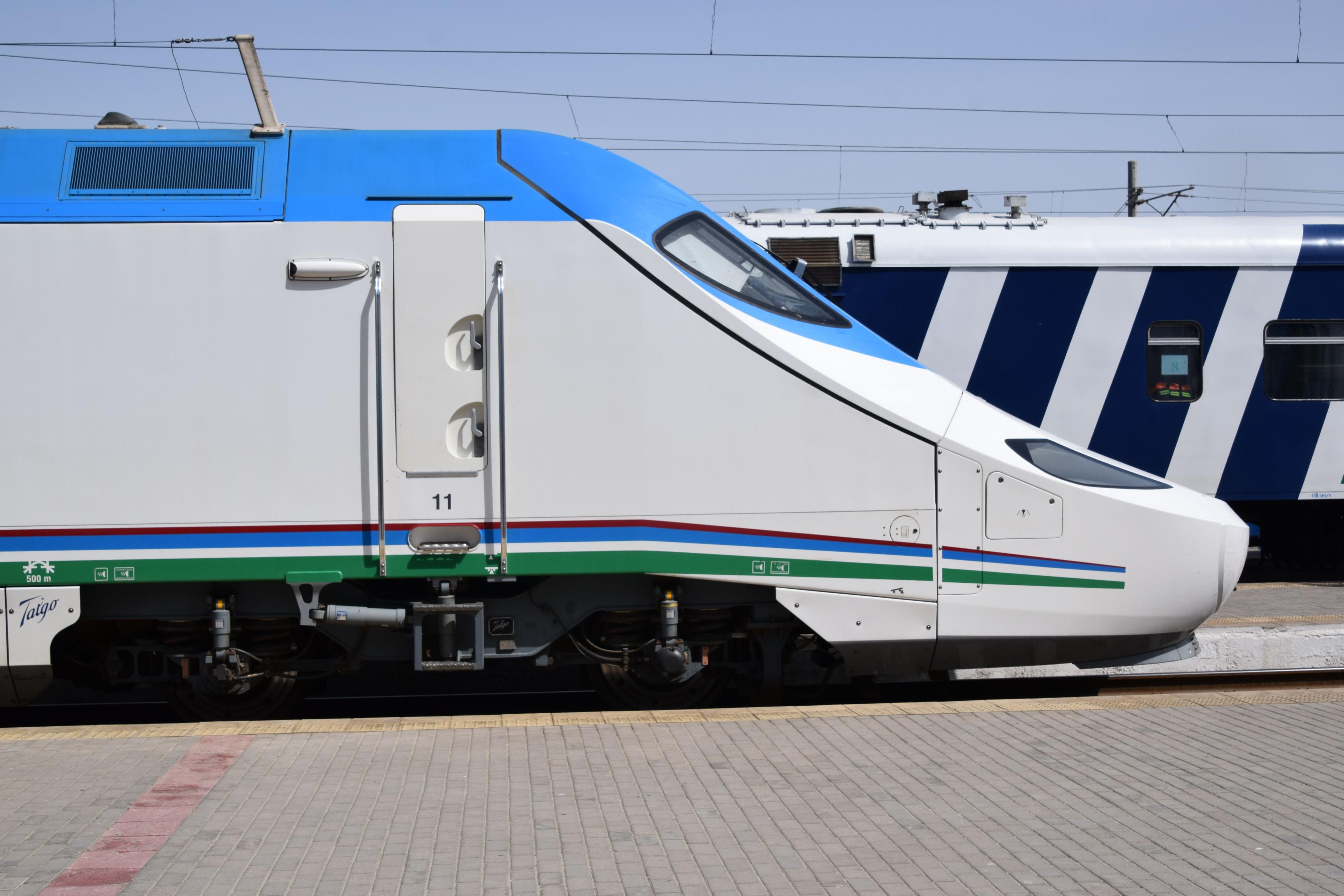
If you already have visa-free status, you do not need the transit rule. A Tashkent stopover of a few days is a good way to see the capital, and many of our guests add a day trip to Samarkand on the Afrosiyob high-speed train.

Passport requirements
Your passport should be valid for at least three months after the date you arrive. We recommend at least six months' validity and a couple of blank pages, as airlines sometimes apply stricter rules than the border.
You will be stamped in on arrival. Check that the entry stamp is clear, because it is checked again when you leave. Uzbekistan does not recognise dual nationality: if you also hold an Uzbek passport, you will be treated as an Uzbek citizen.
Registration of foreigners
Visa-free does not mean registration-free. Every foreign visitor must be registered at their place of stay within three days of arrival, and weekends count towards those three days. Registration is done through the government's E-mehmon system.
In practice:
- Hotels, guesthouses and hostels register you automatically when you check in. Just hand over your passport at reception.
- If you move to another city and stay there more than three days, you are registered again by your new accommodation.
- If you stay with friends or family, your host must register you with the local migration office or through E-mehmon.
- Travellers camping or touring by car or bicycle can register themselves online through E-mehmon within three days and pay the daily tourist levy.
Keep your hotel confirmations or any registration slips until you leave the country. Border officers rarely ask for them now that registration is electronic, but if they do, and you cannot account for where you stayed, you may face a fine. When you travel with us, every hotel on your itinerary handles registration as part of check-in.

Customs, cash and what you can bring
Arrival customs is quick for most travellers, who simply walk through the green channel. A few rules are worth knowing:
- Cash: you can bring any amount of foreign currency, but sums above the equivalent of 100 million som (roughly US$8,400 in November 2026) must be declared in writing on arrival. Keep the stamped declaration: non-residents cannot take out more cash than they brought in and declared.
- Jewellery and gold: declare significant amounts of precious metals and stones, especially if you plan to take them out again.
- Medicines: carry prescription medicines in their original packaging with a copy of the prescription. Some medicines that are sold freely elsewhere, including products containing codeine and some sleeping pills and strong painkillers, are controlled in Uzbekistan. Declare them and keep quantities reasonable for your trip.
- Drones: importing and flying drones is largely prohibited without prior permission. Leave yours at home unless you have arranged a licence.
- Antiques and old textiles: items that look old, such as vintage carpets, suzani or coins, may need an export certificate when you leave. Reputable shops arrange this.
A presidential decree of August 2026 proposes raising the cash limit to US$10,000, but as of November 2026 that change has not yet come into force.
Entering by land
Many travellers combine Uzbekistan with its neighbours, and the land borders are open to foreign tourists at the main crossings. The same visa rules apply as at airports: visa-free nationals simply show their passport, and e-visa holders show the printed e-visa. Customs checks at land borders tend to be more thorough than at airports, particularly for medicines.
Kazakhstan. Tashkent lies only a few kilometres from the Kazakh border on the road to Shymkent and Almaty. The main Gishtkuprik (Zhibek Zholy) crossing has been closed for reconstruction since February 2025; its reopening has been postponed several times and, as of November 2026, is expected by the end of the year. In the meantime, passengers have used the nearby Navoi crossing (Kaplanbek on the Kazakh side). Check the current situation shortly before you travel. There is also a direct train between Tashkent and Almaty.
Kyrgyzstan. The busiest crossing for travellers is Dostuk, between Osh and Andijan, the natural gateway to the Fergana Valley.
Tajikistan. The main crossings used by tourists are Oybek on the Tashkent to Khujand road, Jartepa near Samarkand on the route to Panjakent and the Fann Mountains, and Sariosiyo in the south, on the road from Dushanbe to Termez.
Practical tips: crossings can be slow at weekends and around holidays, you usually walk across between the two posts, and there are rarely ATMs or exchange booths at the border itself, so carry some cash in both currencies. Opening hours vary by crossing; ask us or check locally before you set off.
Official sources to check before you travel
Visa policy in Uzbekistan has been liberalised steadily since 2018, and lists change several times a year. Before you book, check:
- e-visa.gov.uz, the official electronic visa portal
- The Ministry of Foreign Affairs website, gov.uz/mfa, for visa-free lists and consular rules
- The website of the Uzbek embassy or consulate in your country
- Your own government's travel advice, such as the UK's Foreign Office pages, for passport validity and medicines
We help our guests with entry questions as part of every booking, from checking visa-free eligibility to preparing documents for e-visa applications and arranging registration at each hotel. If you are planning a private trip or joining one of our small-group departures, just ask our team.
Frequently asked questions
Photo gallery