How to visit Panjakent, the Seven Lakes and Khujand from Samarkand: the Jartepa border crossing, Tajik visa and e-visa rules, ancient Sogdian Panjakent, Sarazm, a loop back to Tashkent and how many days you need.
Facts, prices and schedules checked on November 4, 2026
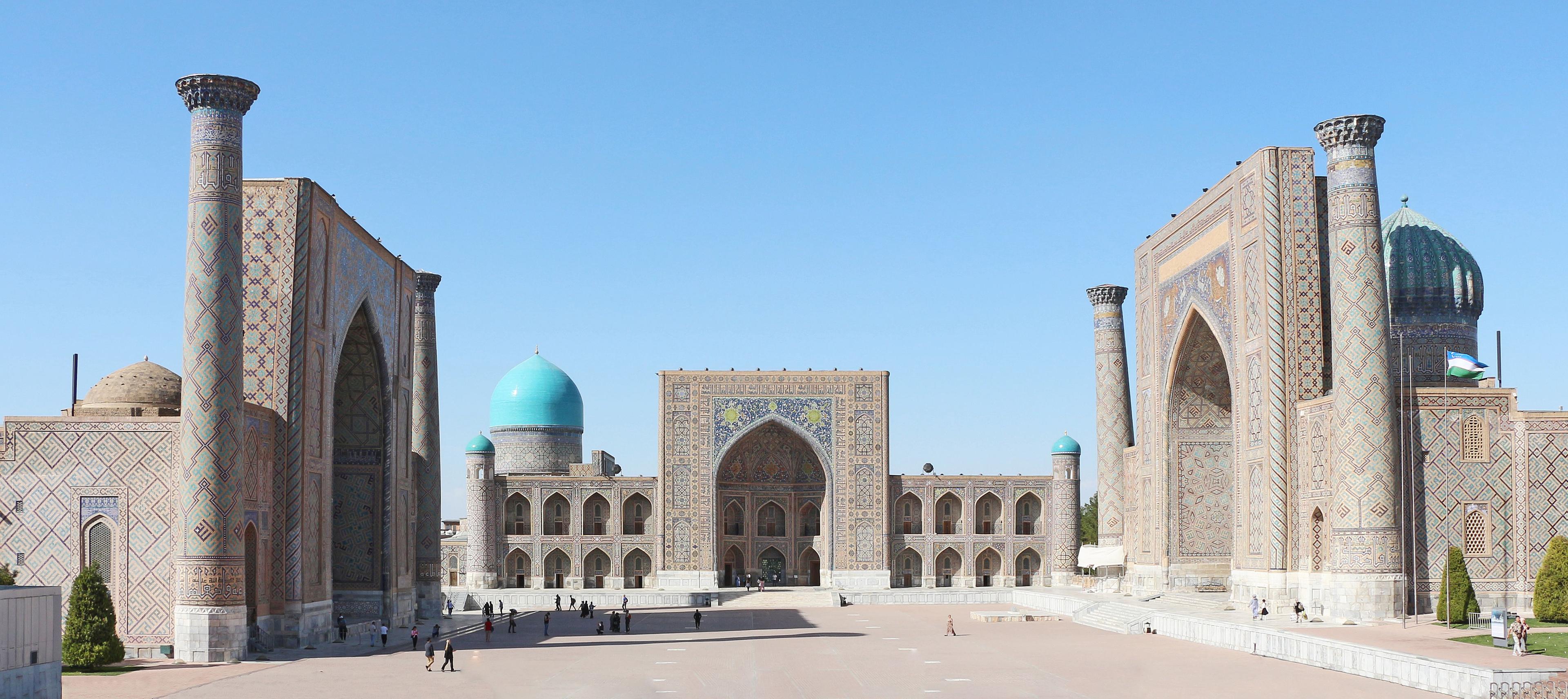
Panjakent and Khujand make the easiest side trip into Tajikistan from Samarkand. The border is under an hour from the Registan, Panjakent lies just beyond it, and a mountain road continues over the Turkestan range to Khujand, Tajikistan's second city, which sits a short drive from Tashkent. Put together, they make a loop that leaves Uzbekistan in Samarkand and returns near Tashkent, with Sogdian ruins, turquoise mountain lakes and one of Central Asia's great bazaars on the way.
This guide explains how the side trip works as of November 2026: the Jartepa border crossing, the visa rules, what to see in Panjakent, at the Seven Lakes and in Khujand, how to link them, and how many days to allow.
An important note before you plan: TourEast is an Uzbekistan tour operator. We do not operate in Tajikistan. We arrange the Uzbek side, a car from your Samarkand hotel to the border and a pick-up when you come back, and we help you plan the Uzbek part of the trip around it. For the Tajik side you will need a local Tajik driver, guesthouse or agency.
Is a side trip to Tajikistan from Samarkand worth it?
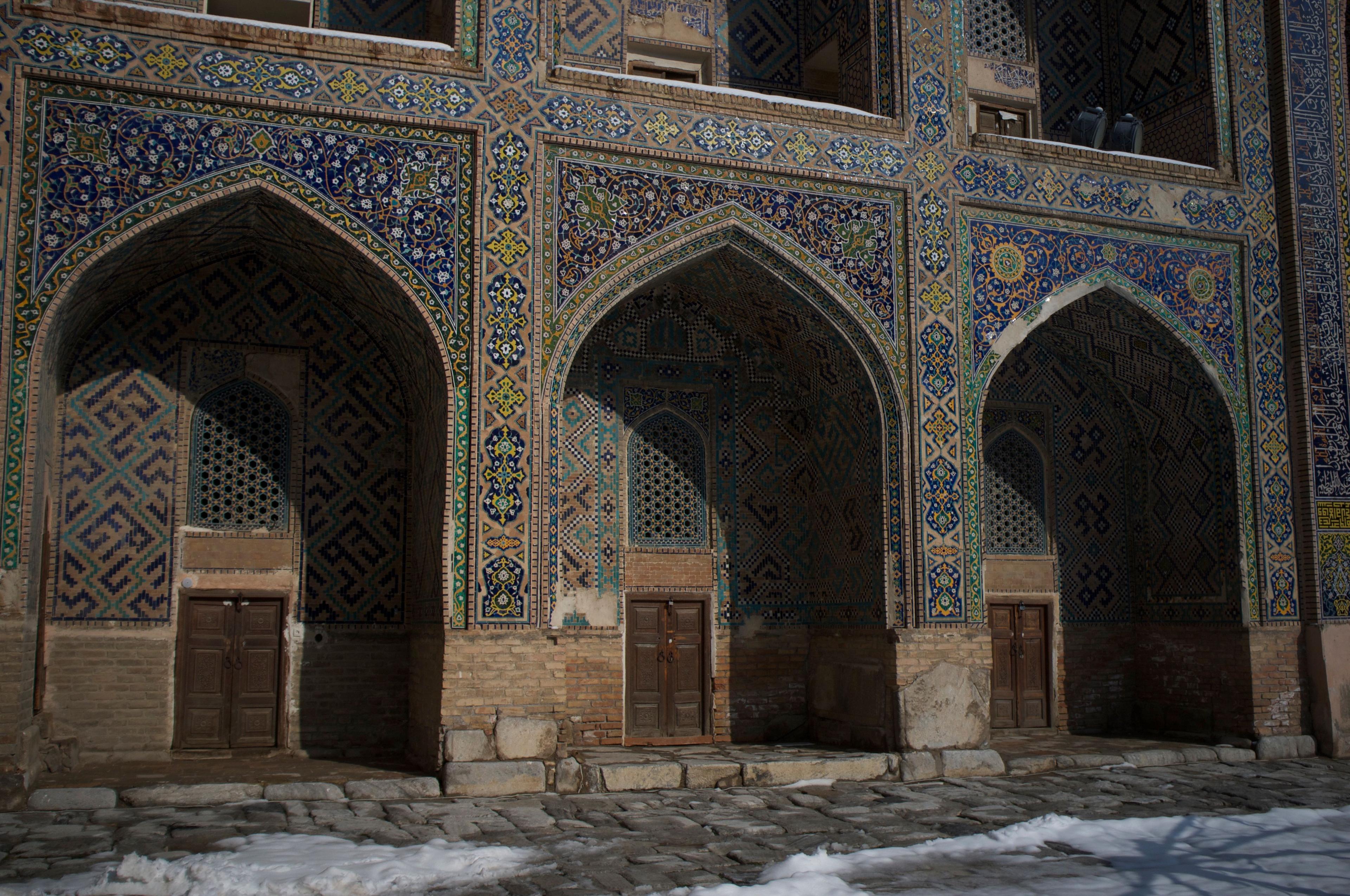
For most travellers who have a spare day or two, yes. Samarkand and Panjakent stand on the same river, the Zarafshan, and share 2,500 years of history: both were cities of Sogdiana, and Tajik, a form of Persian, is still widely spoken in Samarkand. What the trip adds is landscape. Within two hours of Panjakent you are among the peaks and lakes of the Fann Mountains, scenery Uzbekistan's heartland cannot offer.
Three ways to do it:
- A day trip: Sarazm and Panjakent, back in Samarkand for dinner. Easy and relaxed.
- Two days: Panjakent and a night at or near the Seven Lakes, then back to Samarkand.
- A three- to four-day loop: Panjakent, the Seven Lakes, then over the mountains to Istaravshan and Khujand, and back into Uzbekistan at the Oybek crossing near Tashkent.
Our Tajikistan travel guide covers the rest of the country, including Dushanbe, Iskanderkul and the Pamir Highway.
The Jartepa border crossing: hours and what to expect
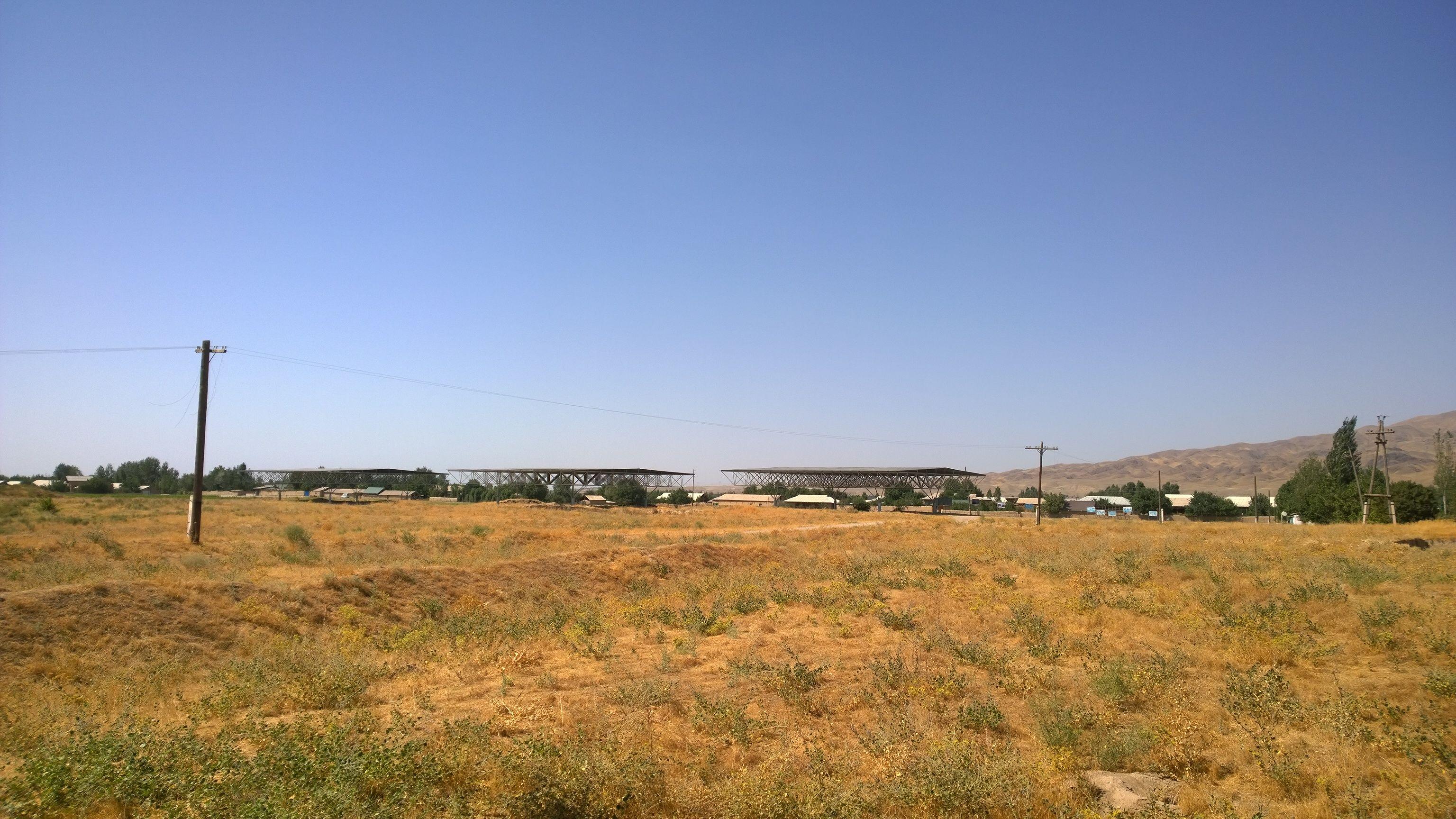
The crossing between Samarkand and Panjakent is called Jartepa on the Uzbek side and Sarazm on the Tajik side. It reopened in 2018 after years of closure and is the standard route for tourists.
- Distance: about 45 to 50 km east of Samarkand, roughly 40 to 50 minutes by car.
- Hours: published border tables list it as open 24 hours, but there is no recent official statement in English. Plan to cross in daylight, ideally in the morning.
- On foot: travellers walk through both posts with their luggage. Cars do not usually take tourists across.
- Time: allow 30 minutes to an hour on a quiet day. Queues build at weekends and around holidays, and slow computer systems occasionally add delays.
- On the Tajik side: taxis wait beyond passport control. Penjikent town is 15 to 20 minutes away; agree the fare before you get in.
Bring your passport, a printed e-visa if you need one, some US dollars or Tajik somoni in cash, and your Uzbek hotel registration slips in case they are asked for. Our guide to Uzbekistan's border crossings explains customs rules and how the Uzbek posts work.
In December 2025 the two governments discussed expanding the capacity of the crossing, mainly for trade. As of November 2026 we know of no closures, but check shortly before you travel.
Tajikistan visa and e-visa rules for the side trip
Tajikistan has relaxed its entry rules a lot, but the rules depend on your passport and many websites are out of date. As of November 2026:
- Visa-free for up to 30 days: citizens of a long list of countries, including the United States, most EU countries, Japan, Australia, Canada, Indonesia and Malaysia.
- E-visa: everyone else, including UK and Chinese citizens, applies online at the official portal evisa.tj. A single-entry e-visa costs about US$30 and allows stays of up to 60 days. Apply at least two weeks before you travel and print it.
- Registration: if you enter visa-free and stay more than 10 days, you must register with the migration office. A short side trip stays well under that limit.
- The Pamir (GBAO) permit is not needed for Panjakent, the Seven Lakes or Khujand.
Coming back to Uzbekistan: visa-free travellers simply re-enter Uzbekistan with their passport. If you entered Uzbekistan on an e-visa, you need a double-entry or multiple-entry e-visa (US$35 or US$50 on e-visa.gov.uz) to come back after the trip. It is an easy detail to miss, so check it before you book.
Always confirm your own case on evisa.tj or with the nearest Tajik embassy. Our Central Asia visa guide sets out the rules country by country.

Ancient Panjakent and Sarazm
Panjakent (also spelled Penjikent or Panjikent) is a calm provincial town on the Zarafshan, with two layers of history close to each other.
Ancient Panjakent. On a terrace above the modern town lie the excavated ruins of a Sogdian city that flourished from the 5th to the 8th century, before the Arab conquest. Archaeologists uncovered houses, two temples, a citadel and a bazaar quarter, and in the houses, wall paintings of banquets, hunting scenes and heroes from Persian epic. The best murals are now in the Hermitage in St Petersburg and the National Museum of Antiquities in Dushanbe. On site you walk among low mud-brick walls, and with a guide or a good imagination you can read the streets of a merchant town of the Silk Road. Allow an hour to an hour and a half.
The Rudaki Museum in town displays finds and copies of the murals and covers the poet Rudaki, considered the father of Persian poetry, whose mausoleum stands in the village of Panjrud east of Panjakent.
Sarazm. Right beside the border post, Sarazm is one of the oldest settlements in Central Asia, dating back to the 4th millennium BC. It was a centre of metalworking and trade between the steppe, Iran and the Indus valley, and became Tajikistan's first UNESCO World Heritage Site in 2010. The excavated areas are under protective roofs, and a small museum shows jewellery, seals and tools. It is the natural first stop after the border.
Panjakent's morning market is worth a walk too; if you know the Siab Bazaar in Samarkand, you will notice the family resemblance.
The Seven Lakes (Haft Kul): day trip or overnight?
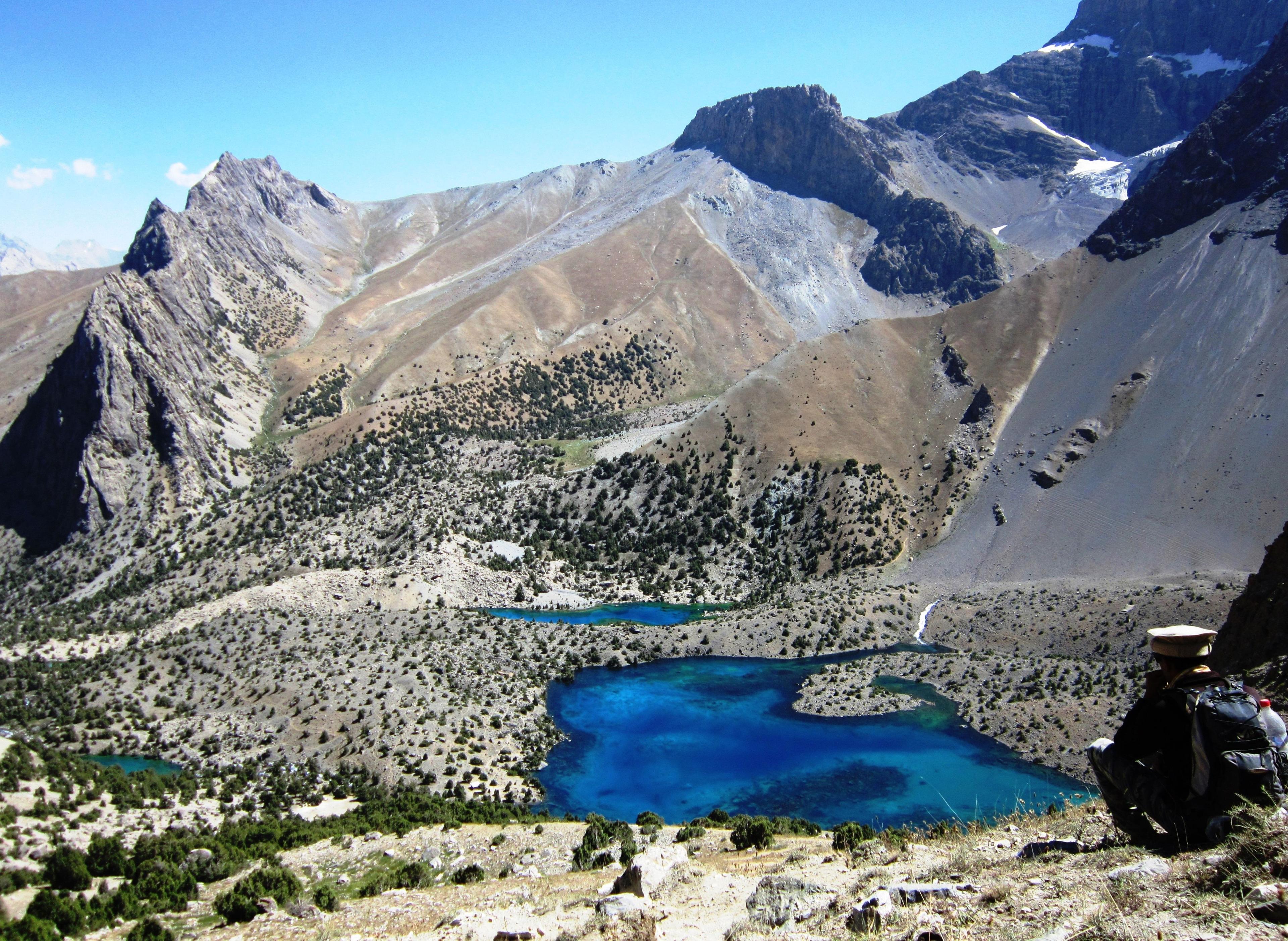
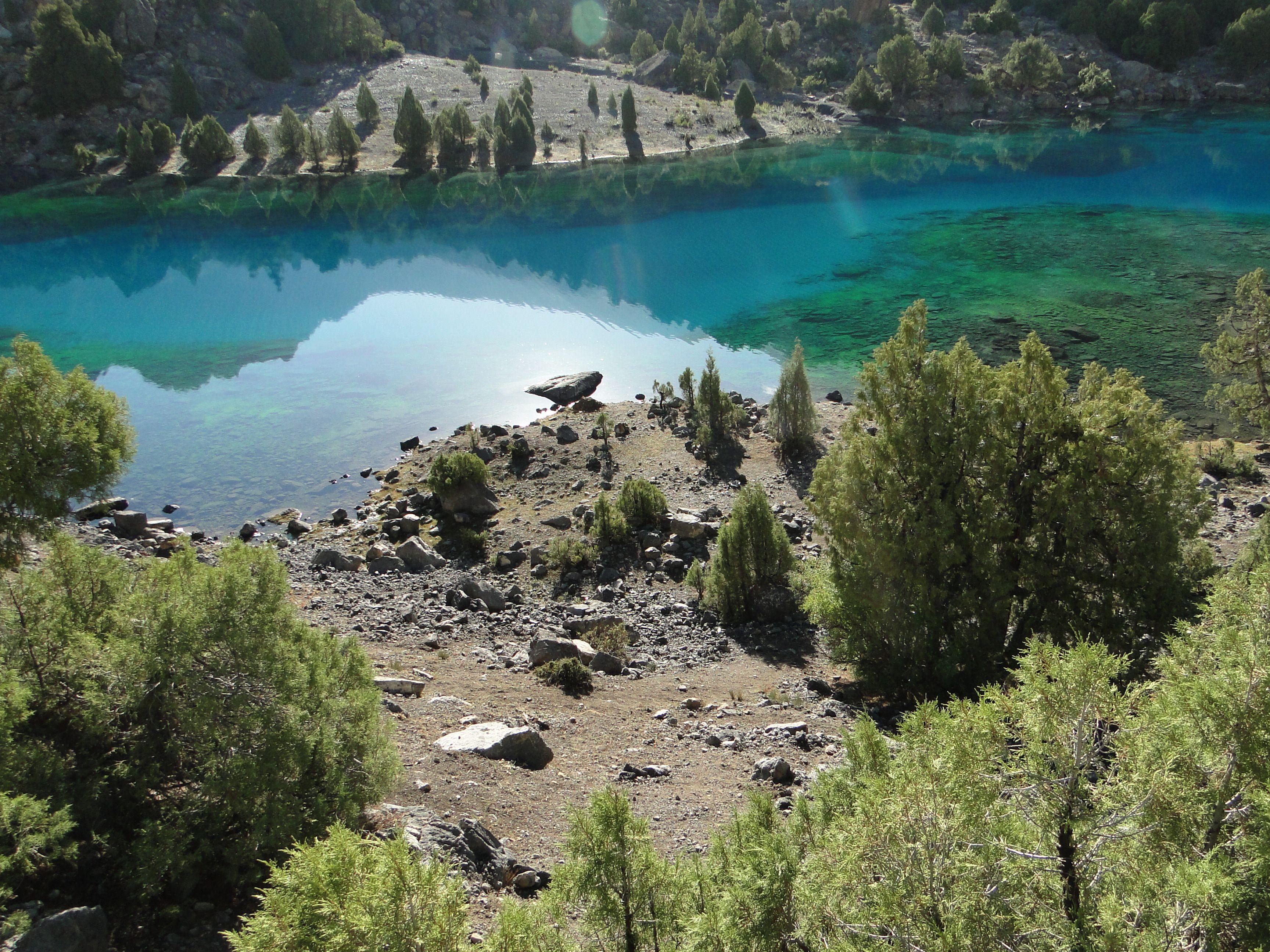
The Seven Lakes, Haft Kul in Tajik, also known as the Marguzor lakes, are a chain of mountain lakes stepping up a narrow valley in the western Fann Mountains, south of Panjakent. Each has its own name and colour, from emerald to deep blue: Mijgon, Soya, Gushor, Nofin, Khurdak, Marguzor and, at the top, Hazorchashma.
- The road from Panjakent follows the Shing valley past villages, apricot orchards and terraced fields. It is unpaved and narrow in places, so a local driver with a four-wheel-drive or a high-clearance car is best.
- Driving to the upper lakes takes about two to three hours one way. Most visitors reach the fourth to sixth lakes by car and walk along the shore; the last stretch to Hazorchashma is on foot.
- Village guesthouses along the valley offer simple rooms and home cooking.
A day trip from Samarkand is possible but long: twelve hours or more with two border crossings and the mountain road. A night in Panjakent or in the valley is much better. You see the lakes in morning and evening light, and you do not spend the whole day in a car.
Season: roughly May to October. In spring, snowmelt and rockfall can affect the upper road, and in winter it is often impassable.
Panjakent to Khujand over the mountains
To make a loop rather than returning to Samarkand, continue north from Panjakent to Khujand. The road runs east along the Zarafshan to Ayni, then north through the Shahriston tunnel under the Turkestan range, and down to Istaravshan and Khujand.
- Time: allow five to six hours of driving, plus stops. The road is paved and spectacular, with high passes, river gorges and summer pastures.
- Transport: hire a car and driver in Panjakent, or use shared taxis, which change in Ayni or Istaravshan.
- Istaravshan: an old trading town on the way, worth an hour or two for its covered bazaar, the Kok Gumbaz mosque and madrasah with its blue dome, the hill of the Mug Tepe fortress and its craft traditions, especially knives.
If you are short of time, this leg can also be done the other way round: enter Tajikistan from Tashkent at Oybek, see Khujand, drive south to Panjakent and come back into Uzbekistan at Jartepa for Samarkand.
Khujand: what to see in Tajikistan's second city
Khujand stands on the Syr Darya at the western mouth of the Fergana Valley. It is one of the oldest cities in Central Asia, traditionally identified with Alexandria Eschate, Alexander the Great's 'furthest Alexandria', founded in 329 BC. In 1220 its governor Timur Malik held out against the army of Genghis Khan in one of the famous episodes of the Mongol invasion. Today it is a lively, green city with a relaxed riverside.
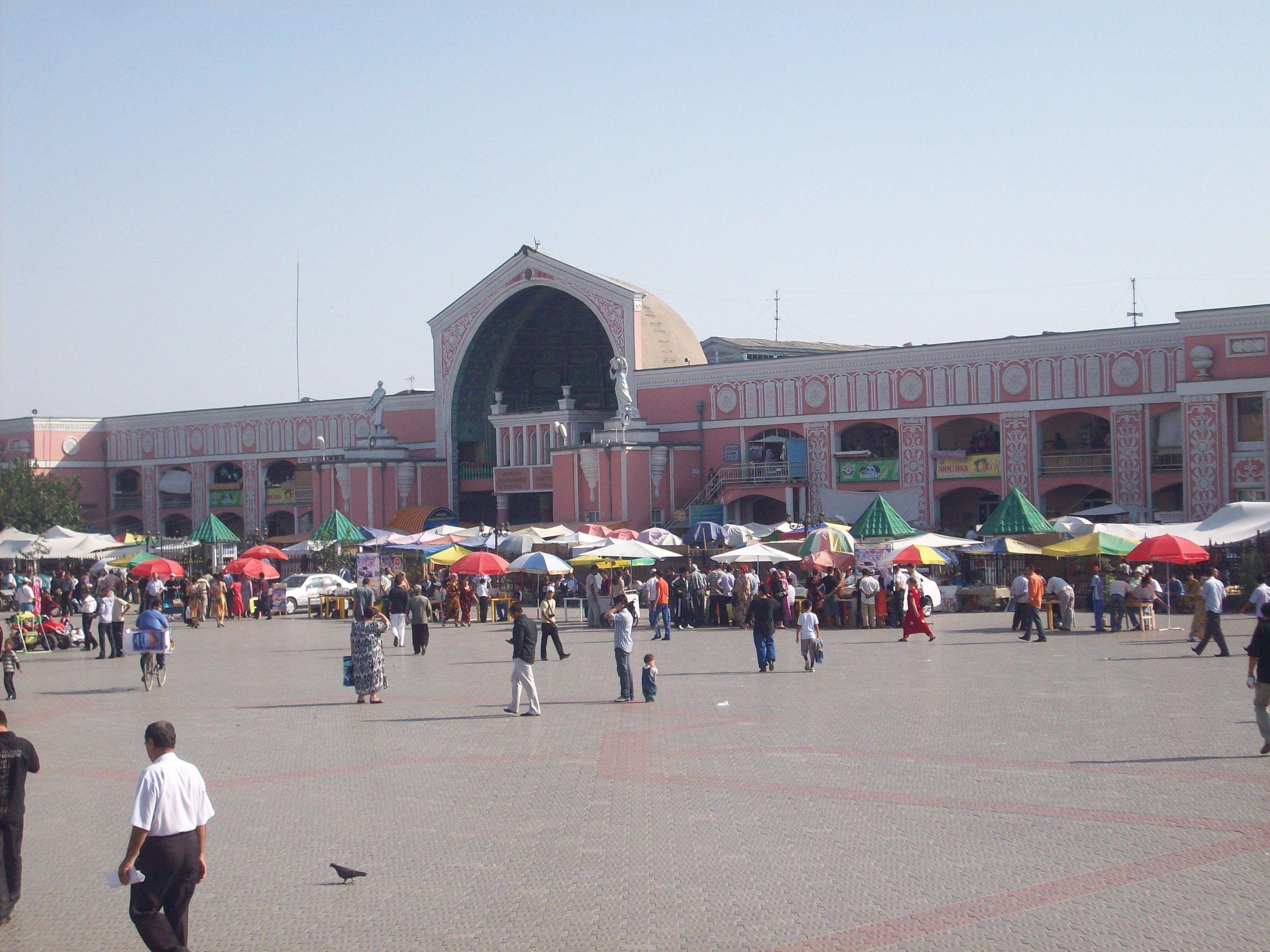
- Panjshanbe Bazaar: the city's great covered market, under a grand Soviet-era hall with a decorated facade, full of dried fruit, nuts, spices, bread and sweets. One of the most photogenic bazaars in Central Asia.
- The Sheikh Muslihiddin complex, opposite the bazaar: a mosque, minaret and mausoleum of a 12th-century poet and saint, with buildings from several centuries. Dress modestly.
- Khujand Fortress and the Historical Museum of Sughd, on restored walls near the river, covering the city's history from Alexander to the Soviet period.
- The Syr Darya embankment, for an evening walk with the locals.
One full day is enough for the city. Food is close to Uzbek cuisine: plov, shashlik, samsa and excellent bread. Khujand is also a natural stop if you are heading on to the Fergana Valley in Uzbekistan or Kyrgyzstan.
Back to Uzbekistan via Oybek, and a sample loop
From Khujand, the Fotehobod crossing (Oybek on the Uzbek side) is the way back to Tashkent. The border is roughly an hour's drive from Khujand, and Tashkent about one and a half to two hours beyond it. The crossing is open 24 hours and is busy at weekends. We can arrange a pick-up at Oybek to take you into Tashkent or straight on with your Uzbek itinerary.
A four-day loop from Samarkand to Tashkent:
- Day 1: Transfer from Samarkand to Jartepa in the morning. Sarazm, then ancient Panjakent and the Rudaki Museum. Night in Panjakent.
- Day 2: The Seven Lakes. Night at a guesthouse in the valley or back in Panjakent.
- Day 3: Drive to Khujand via Ayni, the Shahriston tunnel and Istaravshan. Night in Khujand.
- Day 4: Panjshanbe Bazaar and the Sheikh Muslihiddin complex in the morning, then cross at Oybek and continue to Tashkent.
A shorter version: a day trip from Samarkand to Sarazm and Panjakent, or two days with the Seven Lakes, returning to Samarkand each time through Jartepa.
Best time to go and practical tips
- Best time: May to June and September to mid-October. Panjakent and Khujand are pleasant from April; the Seven Lakes are best from late May to early October. July and August are hot in Khujand but fine in the mountains.
- Money: the currency is the Tajik somoni. ATMs and exchange offices are available in Panjakent and Khujand; carry cash for the mountain villages, where cards are not accepted. US dollars are easy to exchange.
- Language: Tajik and Russian; many people in Panjakent and Khujand also speak Uzbek.
- SIM cards: an Uzbek SIM will roam expensively. Buy a Tajik SIM in town if you need data; coverage fades in the upper valleys.
- Dress: Tajikistan is conservative outside Dushanbe. Cover shoulders and knees, and women should carry a scarf for mosques.
- Timing: start early from Samarkand so that you cross the border in the morning.
- Insurance: make sure your travel insurance covers Tajikistan as well as Uzbekistan.

Planning the Uzbek side with TourEast
We arrange the Uzbek part of this side trip: a car from your Samarkand hotel to the Jartepa border, a pick-up at Jartepa or Oybek when you return, and the rest of your private or small-group itinerary in Uzbekistan, with the Tajik days left free in the right place.