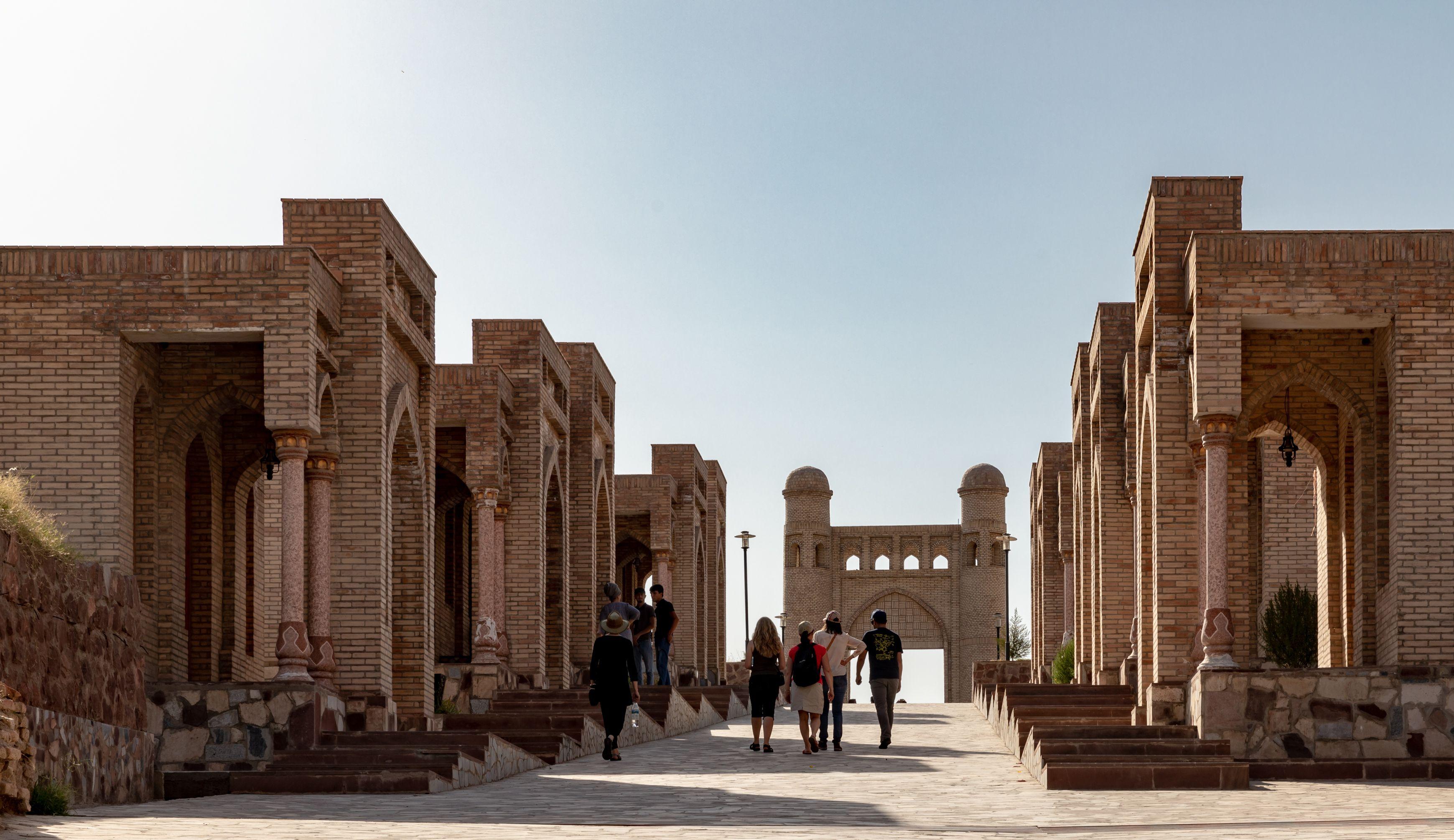
How to continue from Termez to Dushanbe through Denau and the Sariosiyo–Bratstvo (Tursunzoda) border, the least-known Uzbek–Tajik crossing: shared taxis, the 24-hour post, what lies on the Tajik side, how it compares with Jartepa and Oybek, and a 3-day Termez to Dushanbe plan.
Facts, prices and schedules checked on November 4, 2026
Travellers who come south to Termez for the Buddhist monasteries and the Amu Darya usually face a choice afterwards: fly or ride the overnight train back to Tashkent, or keep going east. Keeping going is easier than it looks. Two hours north-east of Termez, the market town of Denau sits a short drive from the Sariosiyo border post, and beyond the border the Tajik capital, Dushanbe, is only about 70 km away. You can leave Termez after breakfast and be in Dushanbe for a late lunch.
This guide covers the Termez and Denau to Dushanbe route as of November 2026: the road to Denau, the Sariosiyo crossing (called Bratstvo, Dusti or simply Tursunzoda on the Tajik side), what happens step by step, transport on both sides, how it compares with the better-known Jartepa and Oybek crossings, the Tajik visa rules to check, and a three-day plan that links Termez's sites with a first look at Tajikistan.
One thing to be clear about. TourEast is an Uzbekistan tour operator. We arrange the Uzbek side: Termez, Surkhandarya, the drive to Denau and the transfer to the border. Everything beyond the line, from the taxi into Dushanbe to a Tajik guide, is arranged with a Tajik agency or on your own, and we are happy to advise.
Why cross here rather than at Jartepa or Oybek?
There are three Uzbek–Tajik crossings most travellers use, and each suits a different route:
- Oybek (Fotehobod on the Tajik side), south of Tashkent, for Tashkent to Khujand. About 1.5 to 2 hours from the capital; Khujand an hour beyond. The natural choice if you are heading for the Fergana Valley of Tajikistan or flying out of Khujand. Dushanbe is a further five to six hours across two mountain passes.
- Jartepa (Sarazm on the Tajik side), east of Samarkand, for Samarkand to Penjikent. About 45 minutes from Samarkand; Penjikent 20 minutes beyond. Best for the Fann Mountains and the Seven Lakes. Dushanbe is four to five hours further over the Anzob Tunnel.
- Sariosiyo (Bratstvo on the Tajik side), north of Termez near Denau, for Termez to Dushanbe. About 40 km from Denau; Dushanbe about 70 km beyond. The only crossing that puts you in the Tajik capital within an hour or so of the border.
Sariosiyo makes sense if Termez is on your itinerary. The Surkhandarya region is the most rewarding corner of Uzbekistan for archaeology, and it would be a waste to go there and come back the same way. It also makes sense in reverse: start in Dushanbe, cross into Uzbekistan, and work north through Termez, Shakhrisabz and Samarkand. All three crossings are described in our Uzbekistan border crossings article; this one focuses on the southern route.
A fourth crossing, Gulbakhor (Ayvaj in Tajikistan), about 60 km from Termez, leads to southern Tajikistan and the road to Kulob and the Pamir Highway. It is open to foreigners but little used; ask locally about hours.
Termez to Denau: the road and what to see
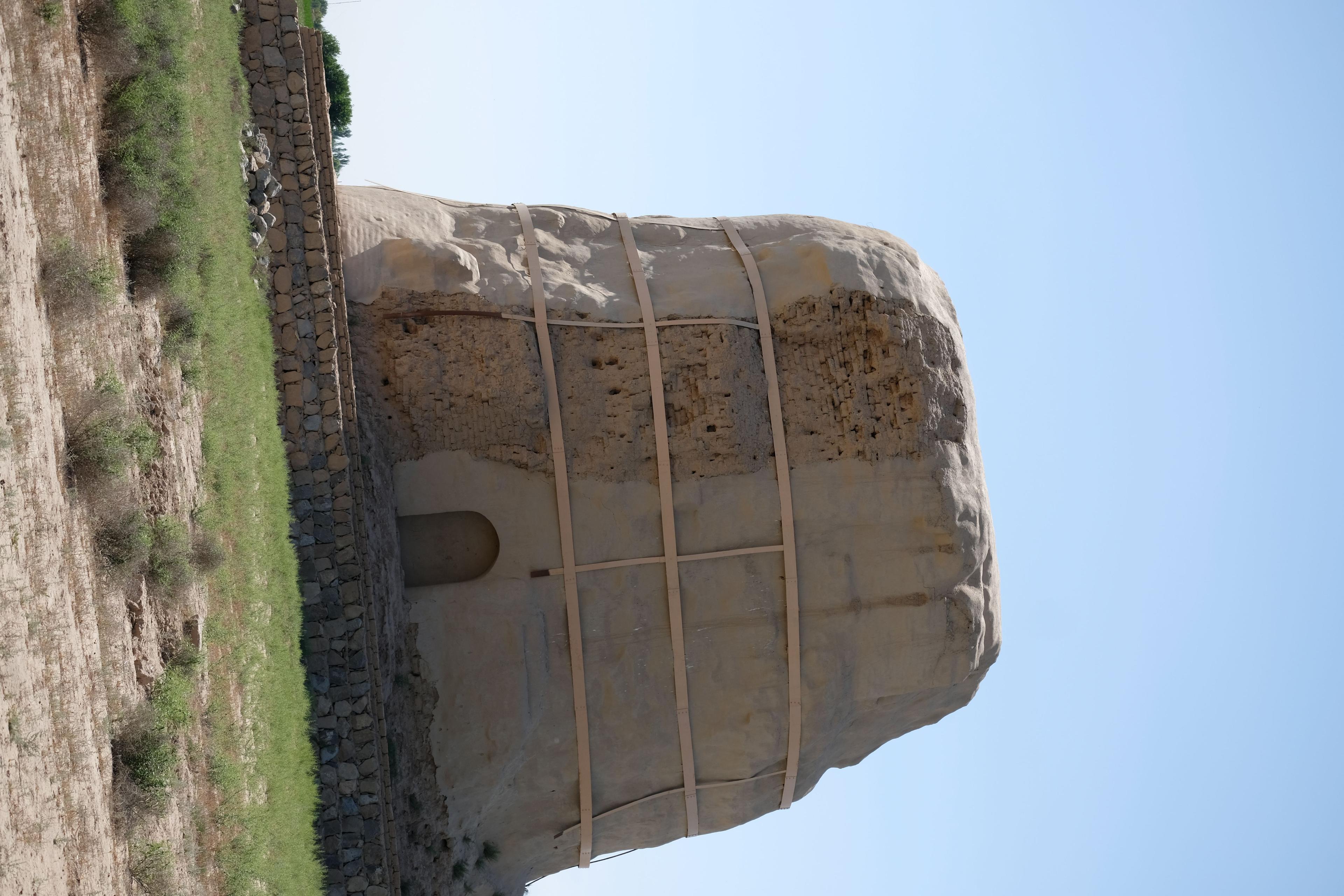
Denau (Denov in Uzbek) lies about 120 km north-east of Termez, a two-hour drive along the Surkhandarya valley with the Hissar range rising ahead. The road is in reasonable condition and passes through cotton and pomegranate country.
Options:
- Private car or transfer: the simplest, about two hours door to door; we arrange this as part of a Termez itinerary, with stops on the way.
- Shared taxi from the Termez bus station or bazaar: cheap, fast once full, typically 40,000 to 70,000 som a seat in 2026, with cars leaving through the morning.
- Bus: slow local services exist; not recommended.
Stops worth a detour on the way:
- The memorial complex of Imam at-Termizi near Sherobod, an hour from Termez, one of the most important hadith scholars of Islam, recently rebuilt on a grand scale. Modest dress required.
- Jarkutan, a Bronze Age settlement of the second millennium BC in the Sherobod district, with a fire sanctuary excavated by Uzbek, German and French teams. For enthusiasts; there is little to see without a guide.
- Denau itself: the Sayid Atalik Madrasah of the 16th century, one of the largest in southern Uzbekistan, and a lively bazaar, which is also where the shared taxis to the border leave.
If you have a spare day, the mountain district of Boysun, north-west of Denau, has the Boysun Bahori folklore festival in May and some of the best walking in Surkhandarya. Our Termez and Surkhandarya guide has the detail.
Denau to the Sariosiyo border
The Sariosiyo post is about 40 km north of Denau, around 45 minutes by car through the town of Sariosiyo itself and up the valley of the Tupalang River toward the mountains.
From the Denau bazaar, shared taxis run to the border throughout the day. In 2026 a seat cost about 30,000 to 50,000 som; a whole car is 100,000 to 150,000 som. Say chegara (border in Uzbek) or granitsa (Russian) and you will be pointed to the right car. If you are coming with us, your driver takes you straight from Termez to the border gate.
The crossing is officially open 24 hours. In practice it is quietest in the early morning and the late afternoon, and busiest at midday and at weekends, when Tajik traders cross with goods from the Denau bazaar. Arriving between 09:00 and 11:00 usually means a crossing of under an hour.
Crossing the Sariosiyo–Bratstvo border step by step
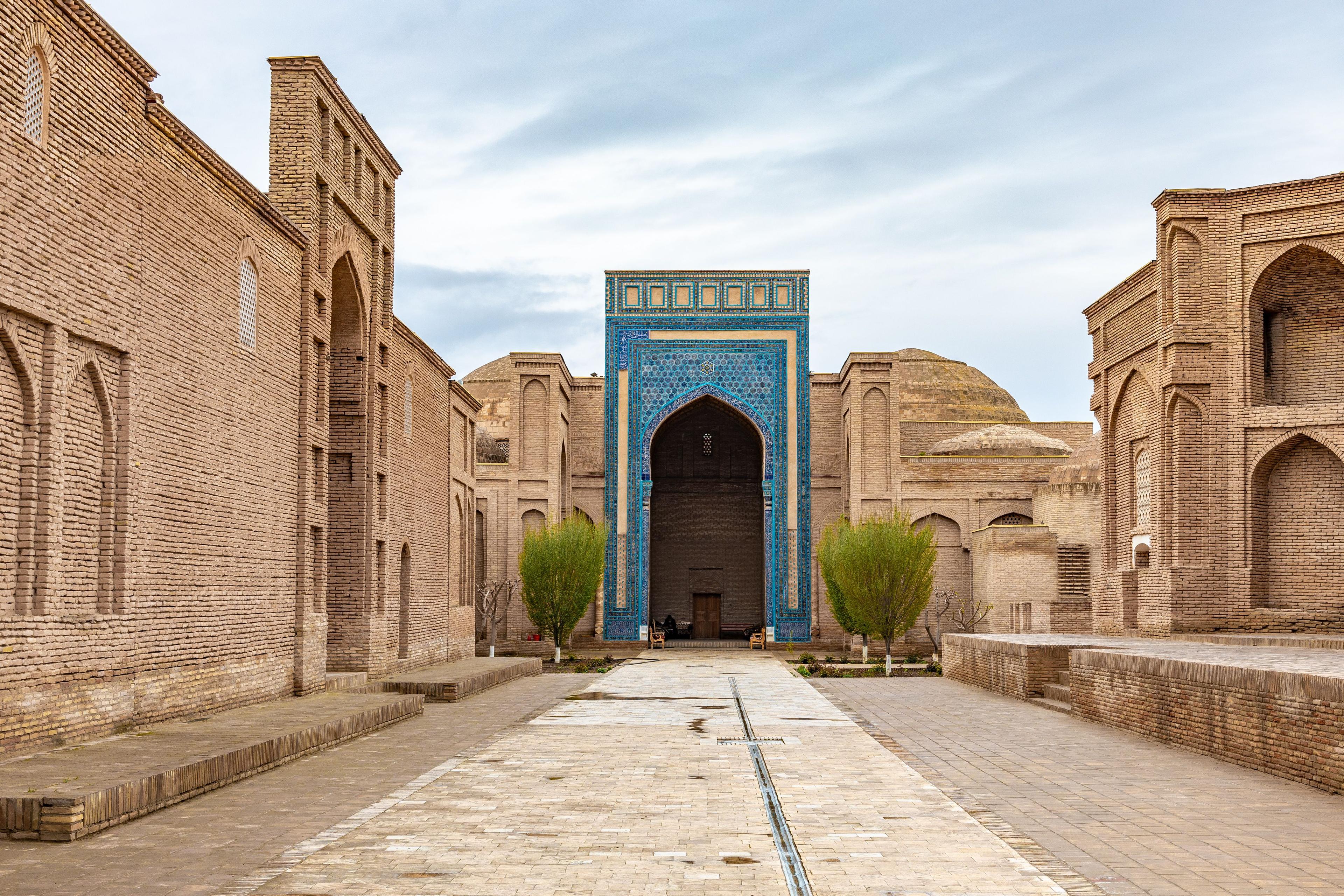
The procedure is the same as at the other Uzbek–Tajik posts, and simpler than it was a few years ago.
1. Uzbek exit. Show your passport at the first window. The officer checks the entry stamp and, for stays over three days, may ask for your hotel registration slips; have them to hand. Bags go through an X-ray. Customs rarely open bags of tourists but may ask about cash and medicines. Exit stamp.
2. The walk. The Tajik post is about 700 metres beyond the Uzbek gate along a fenced road. There is no shuttle; the walk takes ten minutes. Trolleys are not provided, so pack accordingly.
3. Tajik entry at Bratstvo (also signed Dusti). Passport control checks your visa or visa-free status and stamps you in. Fill in nothing unless asked; the paper migration card was abolished some years ago. Customs is a booth you walk past unless called over.
4. The car park. Taxi drivers wait beyond the gate for passengers to Tursunzoda and Dushanbe.
The whole crossing, on a quiet morning, takes 30 to 60 minutes. Keep some Uzbek som for the taxi on the Uzbek side and change a small amount of dollars into Tajik somoni on the Tajik side; the rate at the border is poor, so change only what you need to reach the city. Cards are useless at the border.
Tajik visas and entry rules to check
Tajikistan has liberalised entry rules in recent years, but the details shift, so check before you travel.
- Many Western passports (including the EU, United Kingdom, United States, Canada, Australia and Japan) can enter visa-free for stays of up to 30 days. Confirm your nationality on the Tajik Ministry of Foreign Affairs site or with the embassy.
- Others apply for an e-visa at the official portal, evisa.tj, which is normally issued within a few days and is valid at land borders including Bratstvo.
- If you plan to continue to the Pamirs, you need the GBAO permit, which can be added to an e-visa or obtained in Dushanbe. Our Pamir Highway article explains.
- Registration: stays over a set number of days in Tajikistan require registration with the migration service, usually done by your hotel. Ask your Dushanbe hotel on arrival.
Returning to Uzbekistan, most Western passports are visa-free for up to 30 days per entry; the Uzbek registration rule applies again from the night you arrive. Our Uzbekistan visa and registration articles have the current detail.

The Tajik side: Tursunzoda to Dushanbe
From the Bratstvo car park, the road runs east through Tursunzoda, the aluminium-smelting town 10 km from the border, and on to Dushanbe, about 70 km and an hour to an hour and a half away. The scenery improves as you go: orchards, the Hissar range to the north, and the fortress of Hissar off to the right before the city.
Transport in 2026, typical prices:
- A seat in a shared taxi straight to Dushanbe: about 50 somoni per person, leaving when full.
- A whole taxi to your Dushanbe hotel: 100 to 150 somoni; drivers ask more of foreigners, so agree the price first.
- The budget route: a shared taxi or minibus to Tursunzoda (15 to 20 somoni), then a marshrutka or shared taxi to the Zarnisor taxi stand on the western edge of Dushanbe (15 to 20 somoni), then a city minibus or taxi to the centre.
- A scheduled Denau to Dushanbe bus was launched in 2022 as one of three new cross-border routes; its timetable has varied since, so ask at the Denau bus station whether it is running.
If you want a stop on the way, Hissar Fortress is 25 km west of Dushanbe and a few minutes off the road: a restored 18th-century gateway, two madrasahs and a small museum, in a green valley. It makes a good first hour in Tajikistan before the city.
Dushanbe itself is a leafy, Soviet-planned capital with broad avenues, the National Museum, a good bazaar and the flagpole and statue of Ismoil Somoni that dominate its centre. It is also the base for the Fann Mountains, the road to Khujand and Penjikent, and the Pamir Highway. Our Tajikistan travel guide covers it.
A 3-day Termez to Dushanbe plan
Day 1: Termez. Morning at the Buddhist sites: Fayaz Tepa, 15 km west of the city, with its reconstructed stupa and monastery; the Zurmala stupa; and Kara Tepa if the border zone is open. Afternoon at the Termez Archaeological Museum, then the mausoleum of Al-Hakim at-Termizi beside the Amu Darya and the Sultan Saodat necropolis at sunset. If you arrived on the overnight train from Tashkent, this is a full but manageable day.
Day 2: Termez to Dushanbe. Leave at 08:00. Stop at the Imam at-Termizi complex near Sherobod, continue to Denau for the Sayid Atalik Madrasah and the bazaar, and reach the Sariosiyo border by about 11:30. Cross, take a taxi to Dushanbe with a stop at Hissar Fortress, and check in by mid-afternoon. Evening in Dushanbe.
Day 3: Dushanbe. The National Museum and the Museum of Antiquities (the great sleeping Buddha from Ajina Tepa is here, a fitting end to a Buddhist trail that began in Termez), Rudaki Park, the Mehrgon or Green Bazaar, and a chaikhana evening. From here, fly home from Dushanbe, continue to the Fann Mountains and re-enter Uzbekistan at Jartepa for Samarkand, or begin the Pamir Highway.
In reverse, the same plan works from Dushanbe, ending in Termez for the overnight train or a flight to Tashkent. The Afrosiyob and the domestic flights articles cover the Tashkent connections.
A note on timing: the Termez sites are best from March to May and from September to November. July and August exceed 40 degrees in the Surkhandarya valley, and the Dushanbe road through Tursunzoda is hot and dusty.
Context: the Afghan bridge at Termez
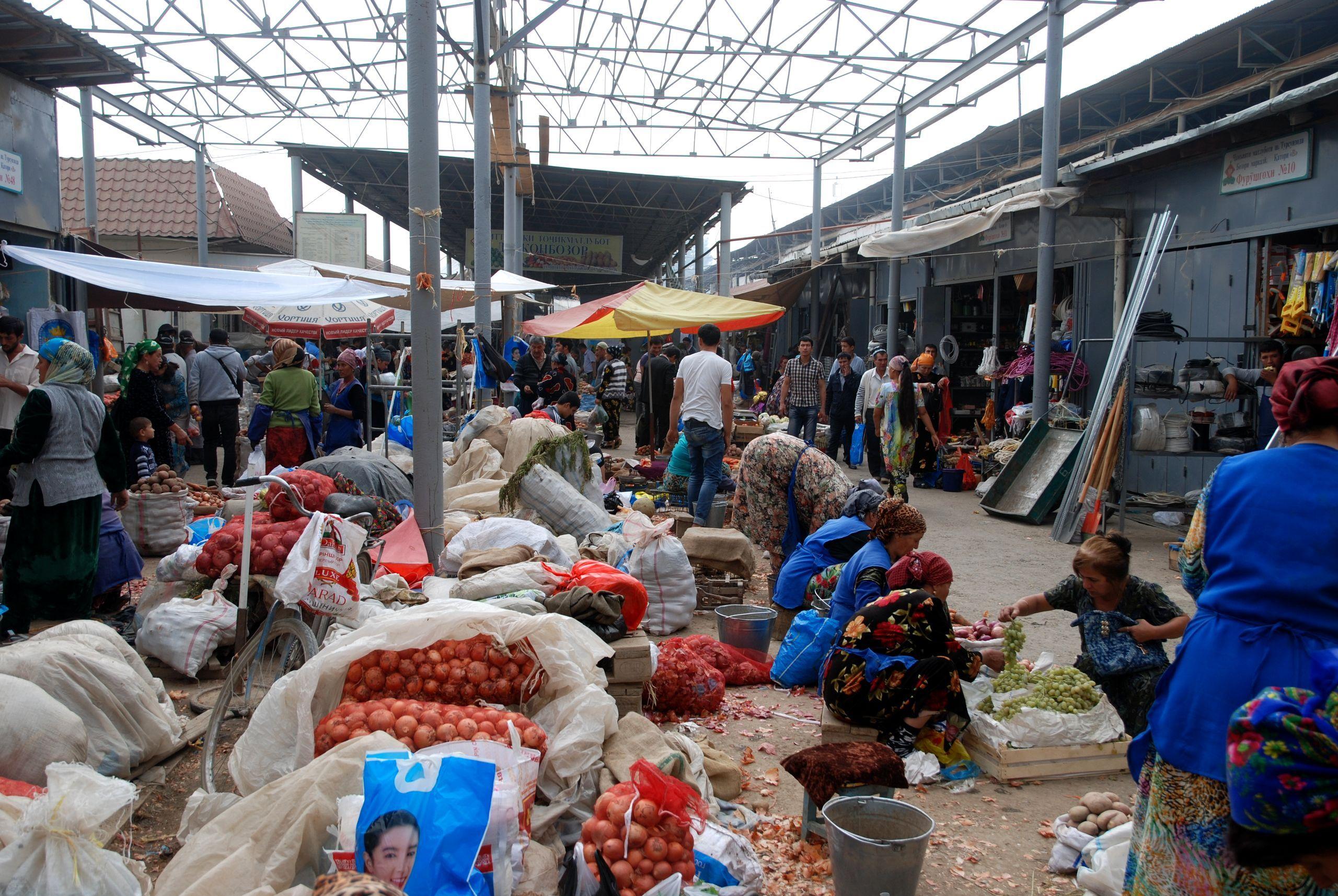
Visitors to Termez often ask about the bridge. The Friendship Bridge across the Amu Darya links Termez with Hairatan in Afghanistan, and it reopened to commercial traffic and Uzbek-run trade after 2021. It is not a tourist crossing: entering Afghanistan requires an Afghan visa, the security situation is unsuitable for independent travel, and most governments advise against all travel there. We mention it only because the bridge, the river port and the barbed wire along the Amu Darya are part of what you see from the Al-Hakim at-Termizi complex, and because it explains the extra document checks in the Termez border zone. Carry your passport in Termez at all times.
How TourEast can help
We arrange the Uzbek part of this route end to end: the train or flight to Termez, a guide for the Buddhist sites and the museum, the drive north with stops at Imam at-Termizi and Denau, and a transfer that drops you at the Sariosiyo gate at the right hour. For the Tajik side we can suggest how to reach Dushanbe and what to see, and for the return we meet you at Jartepa, Oybek or Sariosiyo and continue the Uzbek itinerary from there.