Tashkent in two days, hour by hour: Chorsu Bazaar and Khast-Imam, the decorated metro, the best museums, the UNESCO-listed modernist buildings, evenings at the Minor Mosque and Tashkent City, and a plan for a layover of a few hours.
Facts, prices and schedules checked on November 4, 2026
Two days in Tashkent is enough to see both cities that share the name: the old town of bazaars, madrasahs and mahalla lanes, and the Soviet modernist capital rebuilt after the 1966 earthquake, ten of whose buildings joined the UNESCO World Heritage List in July 2026. This Tashkent itinerary gives you the two days hour by hour, with the metro, the museums, the evenings, and a short version for a layover of a few hours between flights.
Our Tashkent travel guide describes the sights themselves, and our separate guides to the Tashkent Metro, Chorsu Bazaar and the Tashkent airport cover those in depth. This page is the plan: what to do first, how to link the sights, and what to leave out when time is short.
The plan assumes spring or autumn. Most museums close one day a week, often Monday, so check the day you have before you fix the order.
How many days do you need in Tashkent?
- A few hours: possible on a long layover if your passport lets you enter Uzbekistan. You can see Chorsu Bazaar, the Khast-Imam square, three metro stations and Amir Timur Square.
- One day: the old town in the morning, the metro and the centre in the afternoon. It covers the essentials but leaves no time for museums.
- Two days: our recommendation. Day one for old Tashkent and the metro, day two for the museums, the modernist buildings and the new city.
- Three days: add a mountain day at Chimgan and the Charvak reservoir, or a day trip to Samarkand on the Afrosiyob train.
Most travellers spend their first and last nights in Tashkent anyway, because the international flights land and leave here. Splitting the two days, one at the start and one at the end of the trip, works well: arrive, see the old town, travel, and come back for the museums before you fly.
Getting around Tashkent in two days
Tashkent is large and spread out, so walking alone will not do. Combine three things:
- The Tashkent Metro: fast, cheap and a sight in itself. A ride costs 2,500 to 3,000 som depending on how you pay, as of November 2026, and trains run from about 05:00 to midnight. Photography has been allowed since 2018.
- Yandex Go: the taxi app works well, and a typical city ride costs about 15,000 to 50,000 som. Use it to link sights that are far from a station.
- Your feet: the old town between Chorsu and Khast-Imam, and the centre around Amir Timur Square, are good walking areas.
Where you stay matters little, since everything is a short ride away, but a hotel near Amir Timur Square or Tashkent City puts you close to the evening life. The airport is only about 6 km south of the centre, 20 to 40 minutes by car. Our guide to getting around Uzbekistan's cities explains the apps, cards and buses.
Day 1 morning: Chorsu Bazaar, Kukeldash and Khast-Imam
- 08:30 Chorsu Bazaar, by metro to Chorsu station, which brings you up beside the turquoise dome. Mornings are busiest and the light under the dome is best. Climb to the upper gallery for the view over the spice and dried-fruit stalls, then find the bread row and the dairy hall with its kurt cheese balls. Taste before you buy. Allow an hour.
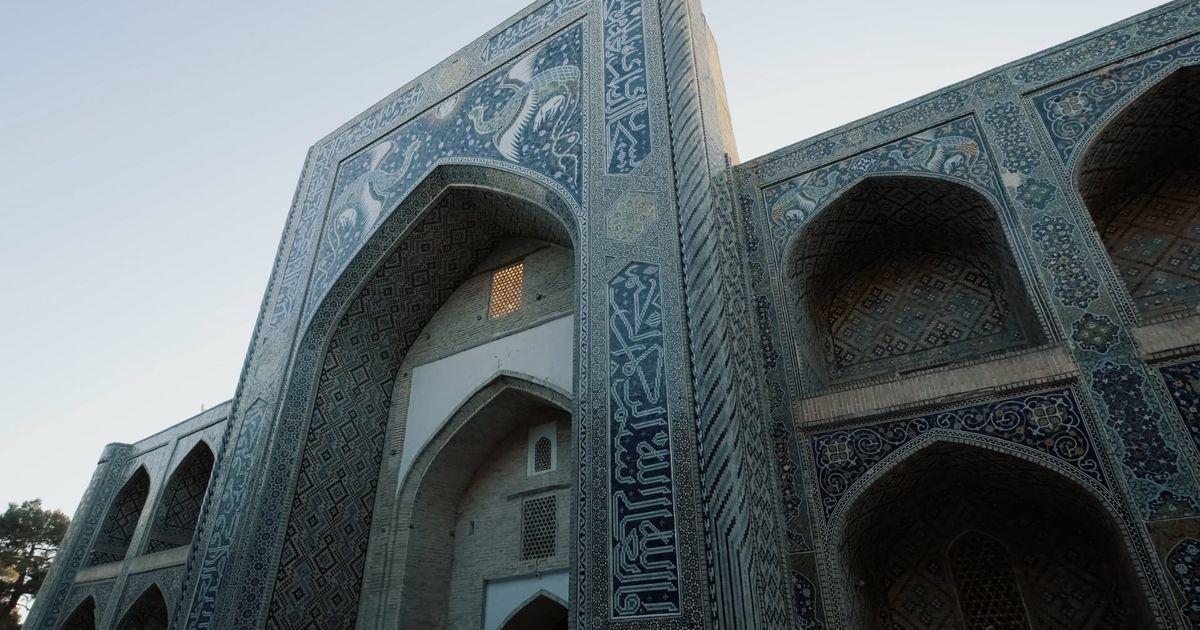
- 09:45 The Kukeldash Madrasah, the 16th-century college beside the bazaar, one of the few old buildings to survive in central Tashkent. Allow 20 minutes.
- 10:15 Walk through the mahalla, the traditional neighbourhood of lanes and courtyard houses, to the Khast-Imam complex. The walk takes 15 to 20 minutes; your guide or a map app will keep you on course.
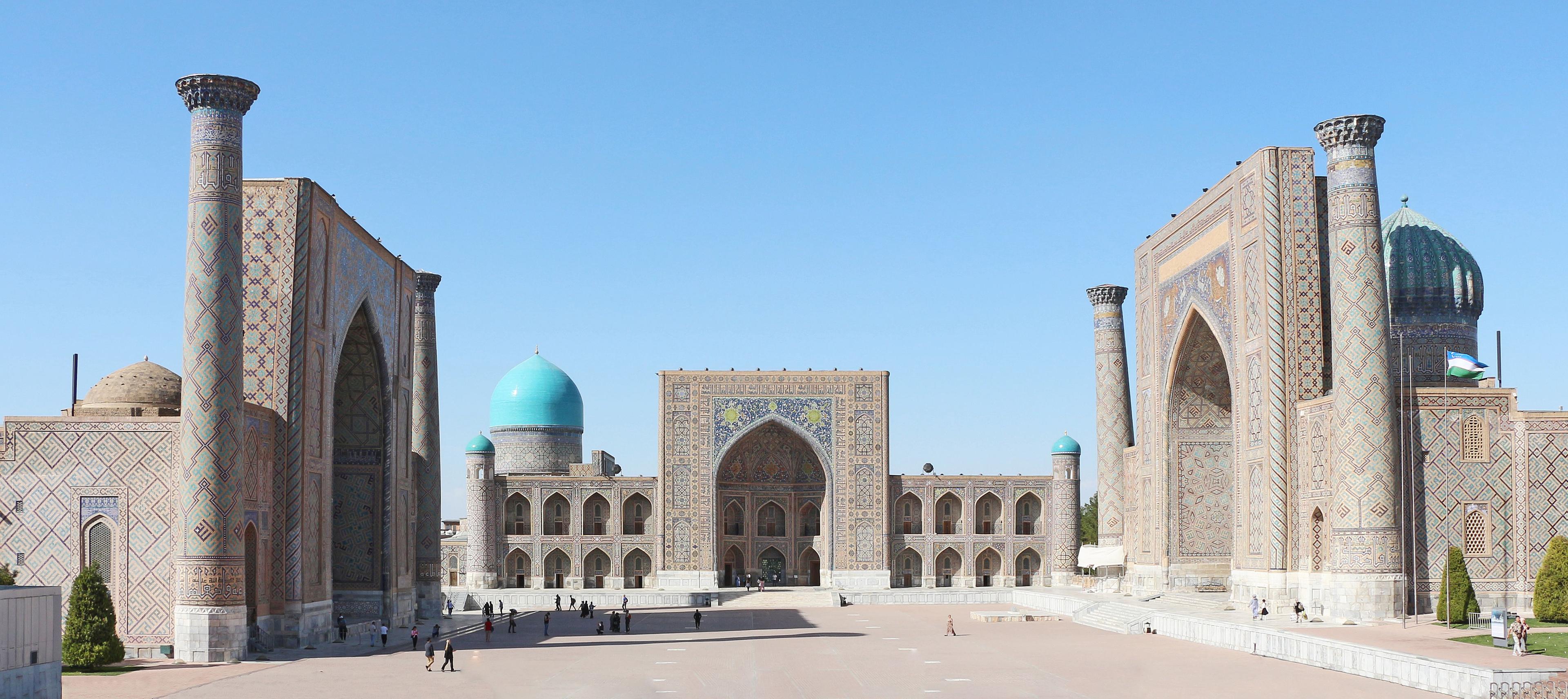
- 10:45 The Khast-Imam square: the Barak Khan Madrasah with craft shops in its old student cells, the 16th-century Kaffal Shashi Mausoleum, the Tilla Sheikh Mosque and the twin-minareted Hazrati Imam Friday Mosque. Allow 45 minutes, and dress modestly.
- 11:30 The Center for Islamic Civilization, next to the square, which opened on 17 March 2026 under a dome about 65 metres high. The Uthman Quran, one of the oldest surviving Qurans, is now displayed here, in its own hall, among thousands of exhibits. Allow at least an hour and a half.
Ticket prices at the Center have been reported in several forms since it opened, from about US$25 for a standard visit to more for guided and full-day options, and hours of 09:00 to 22:00 daily were announced at the opening. Check the official website or ask at the door before you go.
Day 1 afternoon and evening: plov, the metro and Amir Timur Square
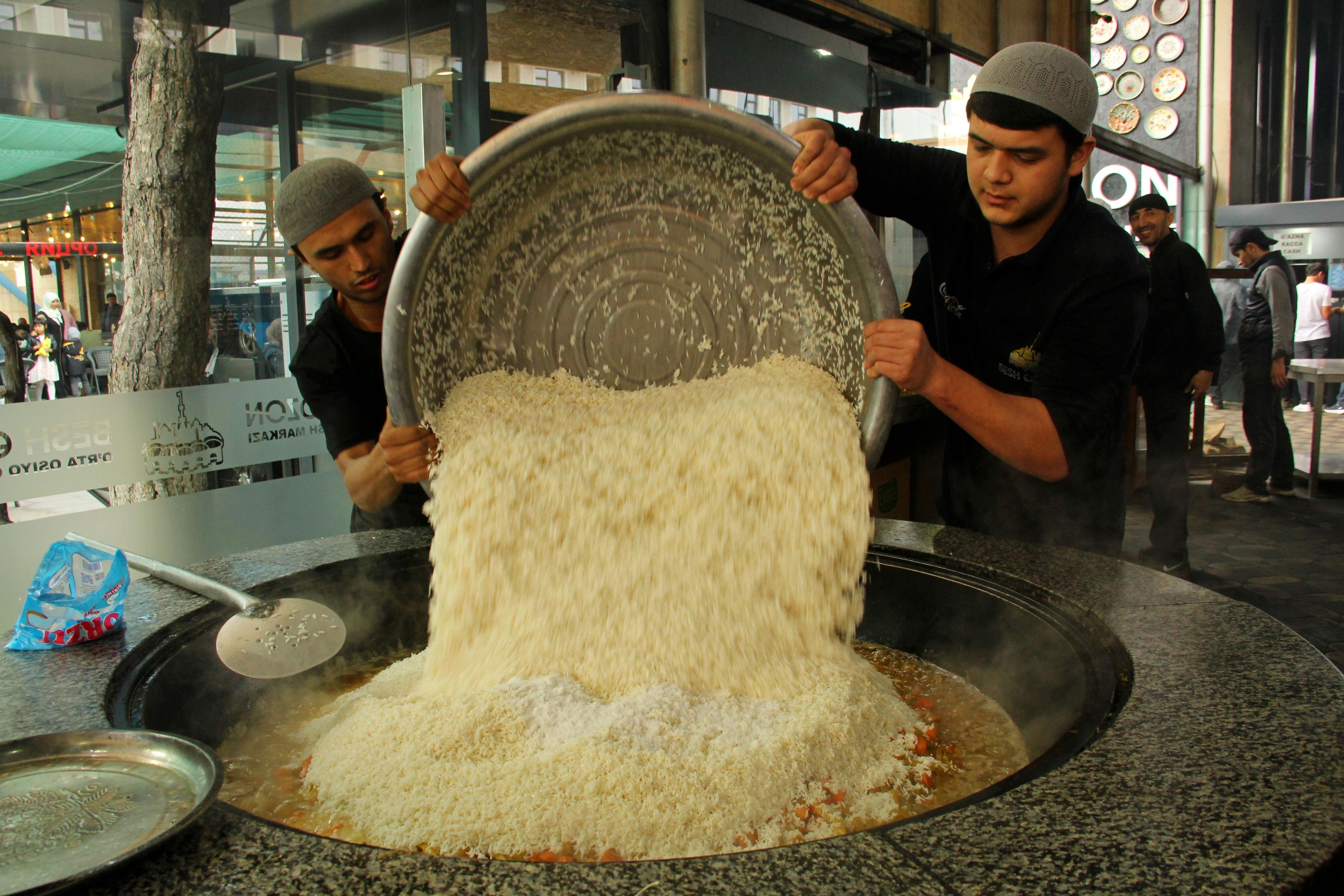
- 13:00 Lunch: plov. Tashkent plov is a lunchtime dish, cooked in huge cauldrons and often sold out by early afternoon. The Central Asian Plov Centre (Besh Qozon) near the TV tower is the famous place to watch it being made, about 15 to 20 minutes by taxi; a teahouse near Chorsu is the quicker option. Our guide to Uzbek plov explains the styles.
- 14:30 A rest at your hotel, especially in summer.
- 16:00 The metro tour on a single fare. Start at Chorsu, ride east to Alisher Navoiy for its white and blue domes, transfer to Paxtakor for the cotton mosaics, then Mustaqillik Maydoni for its chandeliers. If you have energy, add Kosmonavtlar on the blue line, with its deep blue walls and cosmonaut medallions, now part of the UNESCO listing. One fare covers every change as long as you stay inside the gates. Allow one to two hours.
- 18:00 Come up at Amir Temur Xiyoboni. Walk around Amir Timur Square with its equestrian statue, the Hotel Uzbekistan with its concrete lattice façade, and the Palace of International Forums.
- 18:45 Sayilgoh Street, known locally as Broadway: a pedestrian street of cafés, painters and souvenir stalls, busy in the evening.
- 20:00 Dinner in the centre. Tashkent has a lively restaurant scene, from Uzbek fine dining to Georgian, Korean and Italian.
The best time for metro photographs is between about 10:00 and 16:00 on weekdays. Rush hours, roughly 08:00 to 09:30 and 17:30 to 19:00, crowd the central stations, so if photography matters, swap the metro tour with the rest stop.
Day 2 morning: the best museums in Tashkent
- 09:00 The State Museum of Applied Arts, the city's most beautiful museum, near Kosmonavtlar station. It occupies the former residence of the Russian diplomat Alexander Polovtsov, decorated by master craftsmen from across Uzbekistan, and shows suzani, ceramics, jewellery, musical instruments and costume. Recent visitors report a foreigner ticket of about 40,000 som. Allow an hour to an hour and a half.
- 10:45 Taxi or metro to the State Museum of History of Uzbekistan, near Independence Square, for the long story of the country from prehistory to independence. The modernist building itself is on the 2026 UNESCO list. Allow an hour.
- 12:00 Independence Square (Mustaqillik Maydoni), the government quarter of fountains, monuments and the parade ground.
- 12:30 Lunch in the centre.
Alternatives depending on your interests:
- The Amir Timur Museum, under a blue ribbed dome beside Amir Timur Square, for Timur and his dynasty. It is usually closed on Mondays, and foreign visitors pay roughly 25,000 to 50,000 som.
- The State Museum of Arts of Uzbekistan, for Russian, European and Uzbek painting, in another building on the UNESCO list.
If you are planning the whole trip, consider seeing the museums on your last day, when you know the country and its history better. Our article on Amir Timur gives the background.
Day 2 afternoon: a Tashkent modernism tour
After the 1966 earthquake, Tashkent was rebuilt as a showcase city, and its architects blended prefabricated concrete and seismic engineering with Central Asian ornament: lattice screens against the sun, domes and tiled panels. On 26 July 2026 UNESCO inscribed ten of these buildings as Tashkent Modernist Architecture, the first modernist World Heritage property in Central Asia.
The ten buildings are:
- Chorsu Bazaar
- Kosmonavtlar metro station
- the State Museum of History of Uzbekistan
- the State Museum of Arts of Uzbekistan
- the Palace of Peoples' Friendship
- the Tashkent State Circus
- the Central Exhibition Hall of the Academy of Arts
- the National Palace of Cinematic Arts
- the Zhemchug residential building
- the Sun Heliocomplex, a solar furnace in the Parkent district about 45 km outside the city
If you followed this itinerary, you will already have seen three or four. For the rest of the afternoon:
- 14:00 Taxi to the Palace of Peoples' Friendship, a monumental concert hall with a grand colonnade. It is worth seeing from outside even if no concert is on.
- 15:00 The circus, the exhibition hall and the Zhemchug tower are best seen from a car or on foot from outside; most are working buildings with no visitor entry outside performances.
- 16:00 Coffee and a rest.
The Sun Heliocomplex at Parkent needs a separate half day by car and works well on the way to or from the Chimgan mountains. Architecture enthusiasts can also join specialist modernism walks run by local guides; we can arrange a guide with this focus.
Day 2 evening: the Minor Mosque, Tashkent City and the theatre
- 17:30 The Minor Mosque on the Ankhor canal, Tashkent's white marble mosque under a sky-blue dome, opened in 2014. Visitors are welcome outside prayer times; dress modestly, women should cover their hair, and everyone removes their shoes for the prayer hall. Stay for sunset, when the marble turns pink and the canal path fills with families. Avoid Friday midday.
- 19:00 Tashkent City Park, the new business district a short way west of Amir Timur Square, with a lake, lawns and fountains lit in the evening. Entry is free.
- 20:00 Dinner nearby, or a performance.
Two other evening ideas:
- The Alisher Navoi Theatre, the city's opera and ballet house, in a 1947 building with halls decorated in regional styles. Check the programme a few days ahead.
- Magic City, a free-to-enter family park about a kilometre from Tashkent City, with themed streets and a musical fountain in the evening. A good choice with children.
Tashkent is safe and lively after dark, and Yandex Go makes getting home easy.
Tashkent layover: what to do in a few hours
A long layover at Tashkent airport is a real opportunity, because the airport is inside the city. First check whether you can leave it:
- Citizens of the EU, the UK, the US, Canada, Australia, Japan, South Korea, Malaysia, Indonesia, Turkey, the Gulf states and many others can enter visa-free for up to 30 days.
- Citizens of about 30 further countries can stay up to five days without a visa in transit by air, but only with an onward ticket to a third country issued by Uzbekistan Airways.
- Others need an e-visa, applied for in advance on the official portal.
Our Uzbekistan visa guide explains the rules. Then do the arithmetic: allow about an hour after landing for passport control and the taxi, and be back at the airport three hours before an international departure. A layover of nine or ten hours gives you four to five hours in the city.
A four-to-five-hour plan:
- Taxi from the airport to Chorsu Bazaar, about 25 to 40 minutes. Use Yandex Go or the official taxi desk.
- One hour at Chorsu and the Kukeldash Madrasah.
- Walk 15 to 20 minutes through the mahalla to the Khast-Imam square; 30 minutes there.
- Taxi to Alisher Navoiy station and ride the metro two stops to Kosmonavtlar, then back towards Mustaqillik Maydoni, about 45 minutes in all.
- Amir Timur Square and a quick meal on Sayilgoh Street.
- Taxi back to the airport, 20 to 40 minutes.
Night layovers: the metro closes at about midnight and the bazaar winds down in the evening, so after dark focus on the lit centre, Amir Timur Square and Tashkent City Park. Travel light: you will want to leave big luggage checked through. Our Tashkent airport guide covers passport control, money and taxis step by step.
Mondays, Fridays and the seasons
- Mondays: several museums, including the Amir Timur Museum, usually close one day a week, often Monday. On a Monday, swap the museum morning for the old town or the modernism tour.
- Fridays: Khast-Imam and the Minor Mosque are busiest around midday prayers. See them in the morning or late afternoon.
- Summer (June to August): Tashkent often passes 35°C. Start early, take the metro, which stays cool, and spend afternoons in museums. Escape to the mountains at Chimgan and Charvak if you have a third day.
- Spring and autumn: ideal. In spring the city's parks bloom; in autumn the bazaars overflow with fruit.
- Winter: mild by Central Asian standards, with occasional snow, and sunset at about 17:00 in December. The plan works as written, with the evening sections moved earlier.
Our weather by month guide and seasonal guides to Uzbekistan help you choose.
What two days in Tashkent cost
Typical costs per person as of November 2026:
- Center for Islamic Civilization: from about US$25, more for guided and full-day options
- State Museum of Applied Arts: about 40,000 som
- Amir Timur Museum: about 25,000 to 50,000 som
- Other museums: usually in the same range, sometimes with a photography fee
- Metro: 2,500 to 3,000 som a ride; a day pass on a transport card costs 13,500 som
- Taxis: about 15,000 to 50,000 som a ride in the city, and 35,000 to 70,000 som to or from the airport by Yandex Go
- Chorsu Bazaar, Khast-Imam square, Amir Timur Square, the Minor Mosque and Tashkent City Park: free
Without meals and the hotel, two full days cost roughly US$50 to 70 per person in tickets and transport. Our travel cost guide and money guide give the wider picture.
Seeing Tashkent with TourEast
Tashkent is our home city. We can meet you at the airport at any hour, arrange a guide for the old town, the metro or a modernism walk, and build these two days, or a few layover hours, into a small-group tour or a private itinerary across Uzbekistan.