Uzbekistan for young travellers, by locals: the most photogenic check-in spots, atlas-dress photo shoots, citywalks in Tashkent, Samarkand and Bukhara, a yurt night under the stars, nightlife and what it costs in 2026.
Facts, prices and schedules checked on November 4, 2026
Uzbekistan has become one of the most talked-about destinations for young travellers in Asia, and it is easy to see why. The blue domes of Samarkand look unreal at sunset, the Tashkent metro is an art gallery that costs a few cents a ride, the food is cheap and generous, and since 2025 citizens of China, along with more than 90 other nationalities, can visit without a visa. This Uzbekistan travel guide for young travellers is written for that crowd: students, young professionals and friends travelling together who want photos worth posting, good food, a night in the desert and a trip that does not cost a fortune.
We are a tour operator based in Tashkent and Bukhara, so this is a local view as of November 2026. You will find the most photogenic check-in spots, how a costume photo shoot in atlas silk works, three citywalks, a bazaar food crawl, the yurt camp and stargazing, evenings out, and what it all costs. For camera settings, sunrise times and drone rules, see our separate guide to the best photo spots in Uzbekistan; this one is about the trip around the photos.
Is Uzbekistan good for young travellers?
Yes, and for more reasons than the photos.
- It is affordable. A backpacker can travel on about US$40 to 65 a day and a comfortable mid-range trip costs about US$90 to 150 a day, as of November 2026.
- It is safe. Street crime is low, and the tourist centres are busy and well lit in the evening. Our article on whether Uzbekistan is safe goes into detail.
- It is easy to get around. The Afrosiyob high-speed train links Tashkent, Samarkand and Bukhara, and Yandex Go works for taxis in the main cities.
- Entry is simple for many passports. Citizens of the EU, the UK, the US, China, Japan, Indonesia, Malaysia and many other countries can stay visa-free for 30 days. Check our Uzbekistan visa guide for your passport.
- Young Uzbeks are online, curious and often speak some English, especially in Tashkent.
The trend is real. At a tourism forum in Samarkand in July 2025, a senior Trip.com executive described Gen Z travellers as a major force behind the growth of travel to Central Asia, pointing to their taste for off-the-beaten-path destinations and in-depth citywalks. Chinese arrivals in Uzbekistan alone grew to more than 200,000 in the first ten months of 2025, several times the figure for 2024.
What Uzbekistan is not: a party destination. Nightlife is lively in Tashkent and quiet elsewhere, and many monuments are working religious sites. Treat it as a country to explore by day and enjoy slowly in the evening.

Uzbekistan photo spots: the check-in list
These are the places that fill social feeds, with the time of day that works best. Most are free to see from outside; tickets are needed for the interiors.
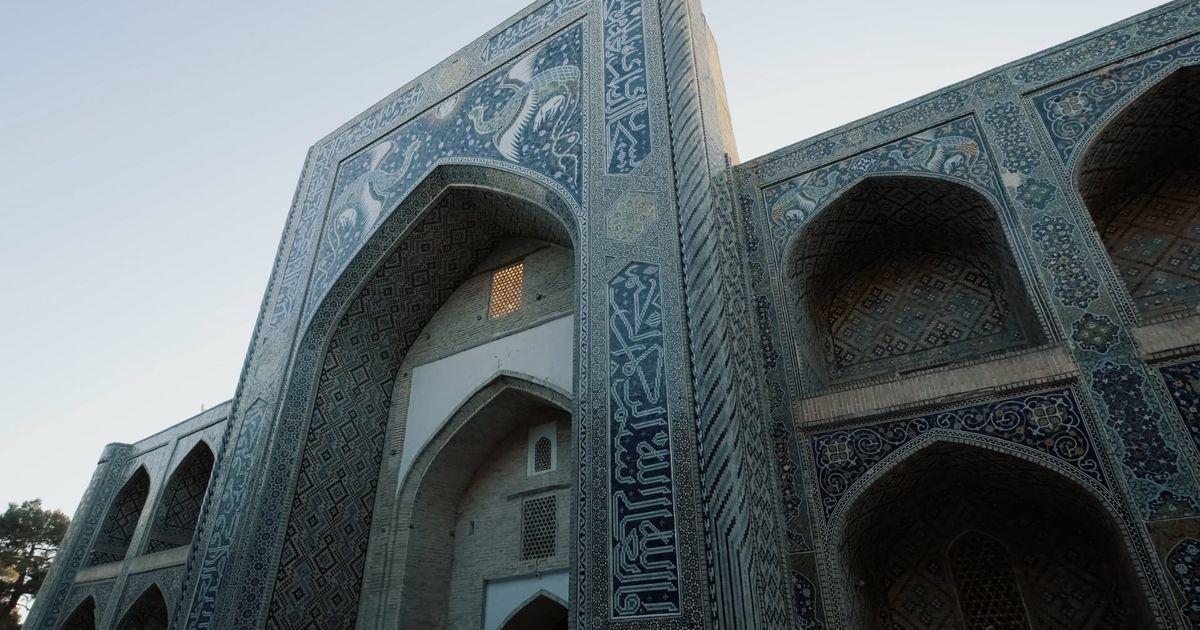
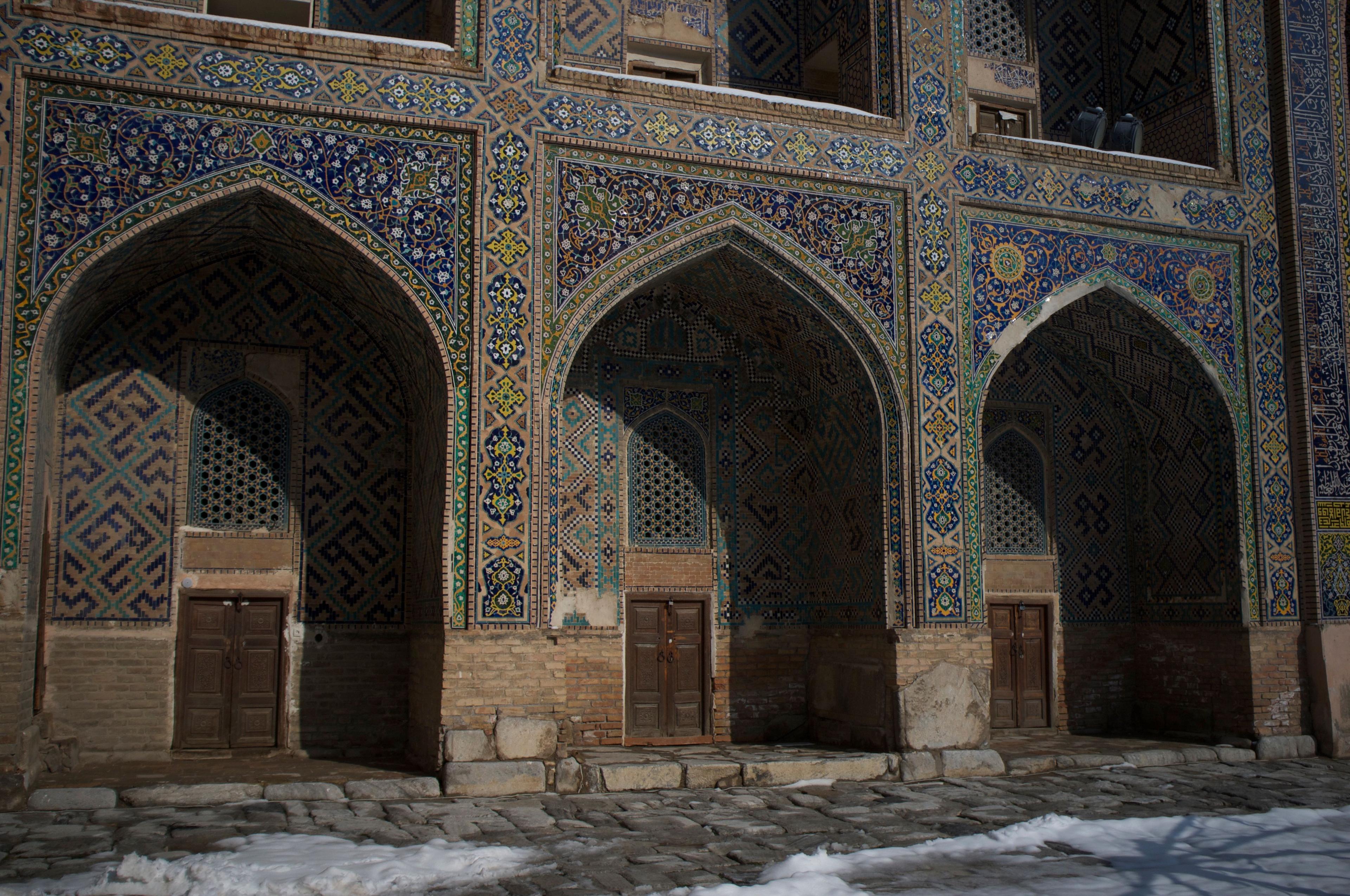
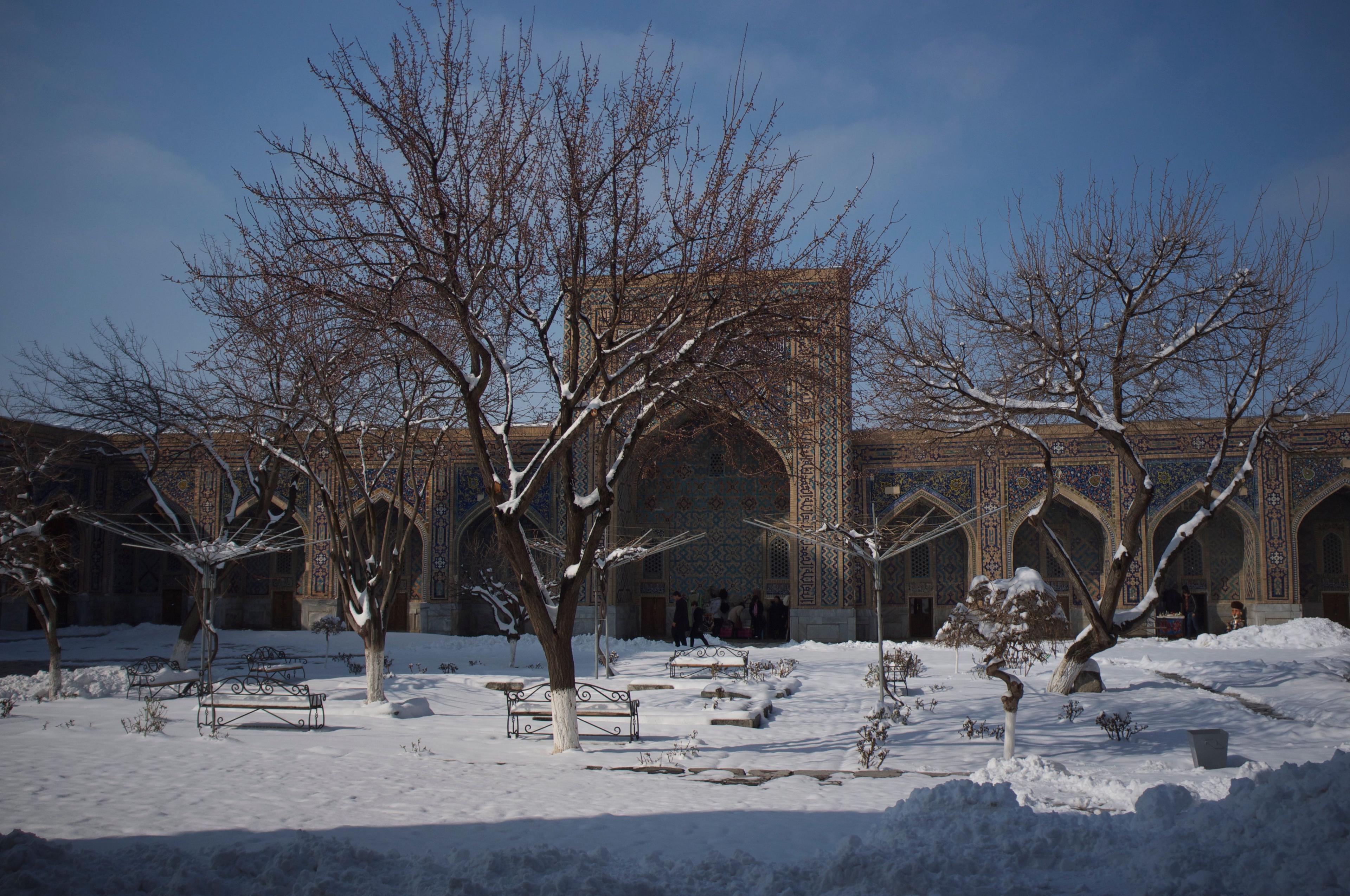
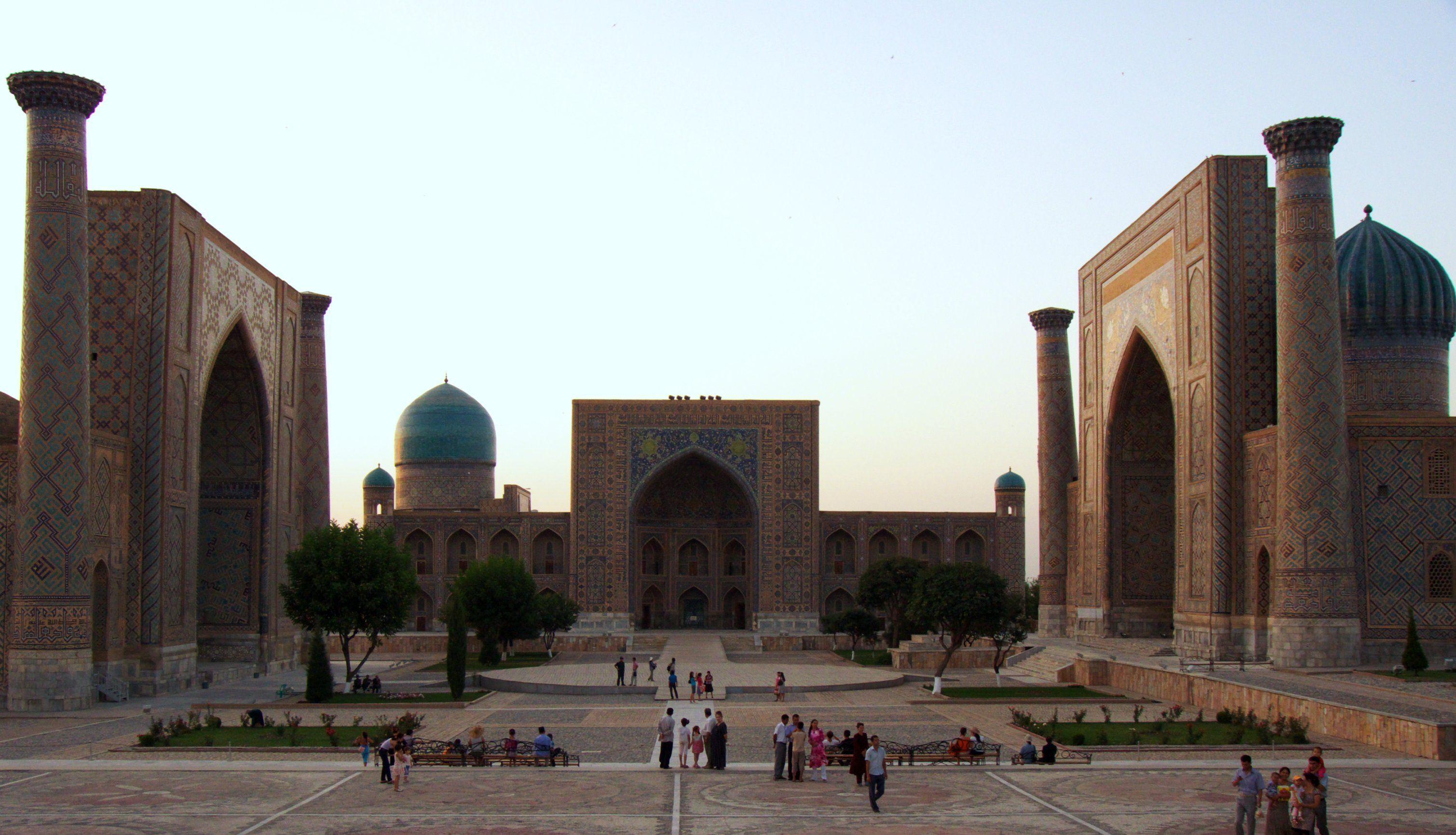
- The Registan, Samarkand. Three tiled madrasahs around one square. Come for golden hour and stay for blue hour, when the floodlights balance with the sky. On most evenings in the warmer months a light show is projected onto the façades. Our Registan guide covers tickets and hours.
- Shah-i-Zinda, Samarkand. A narrow lane of turquoise mausoleums. Late afternoon light is softest here, and it is a sacred site, so keep the shoot respectful.
- The Tashkent Metro, Kosmonavtlar station. Blue ceramic walls fading into deep space and medallions of cosmonauts. Photography has been allowed since 2018.
- Alisher Navoiy and Mustaqillik Maydoni stations. Domes, chandeliers and marble, a few stops apart on one fare.
- The walls of Khiva at sunset. The view over Ichan-Kala, with the unfinished Kalta-Minor minaret in the frame, is the classic Khiva image.
- Poi-Kalyan, Bukhara, at blue hour. The Kalyan Minaret and the Mir-i-Arab Madrasah lit up after sunset, with far fewer people than in the day.
- A Bukhara rooftop. Several cafés around the old town have terraces facing the minaret; order tea and wait for the sun to drop.
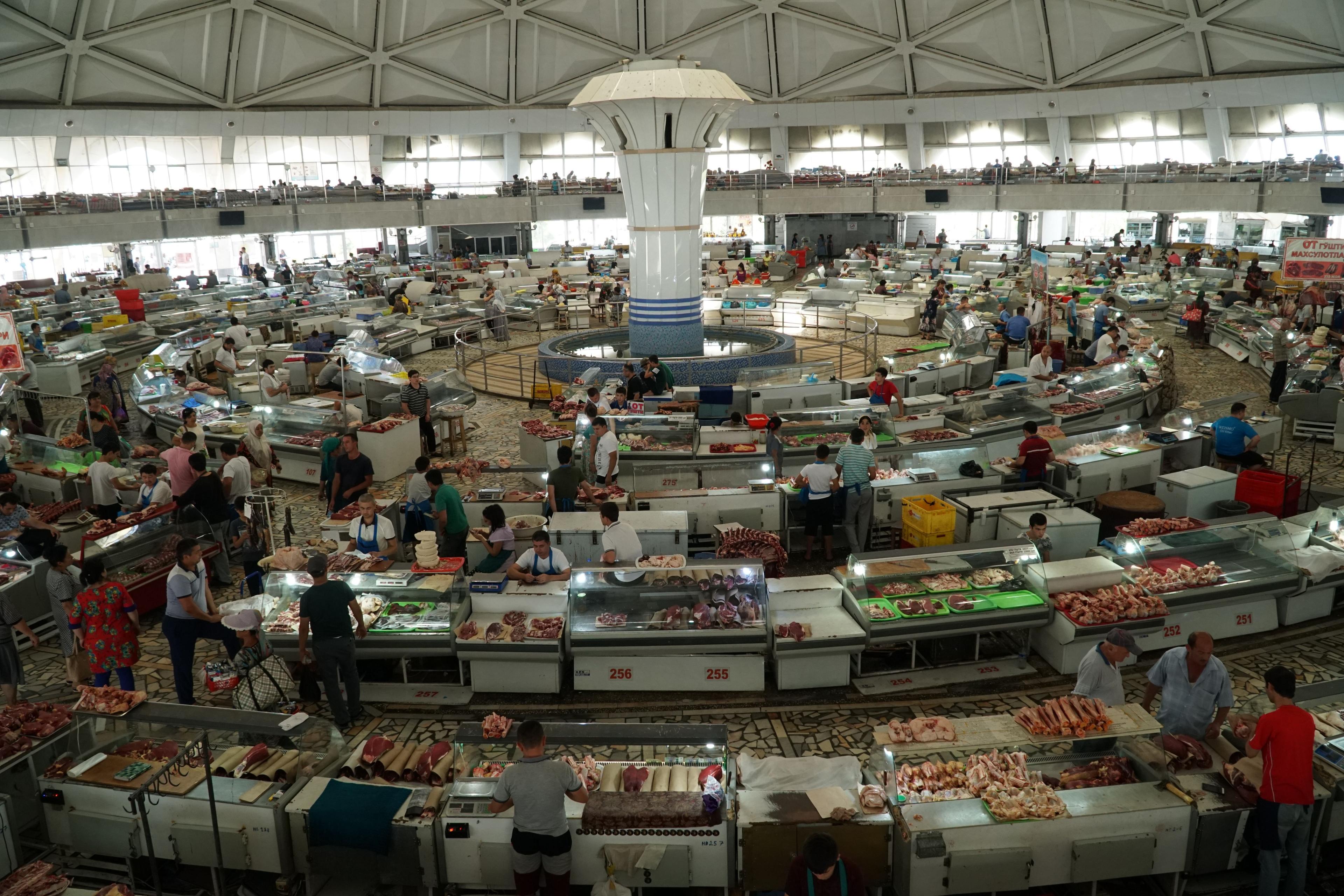
- Chorsu Bazaar, Tashkent. The great green dome from the outside, piles of spices and bread inside.
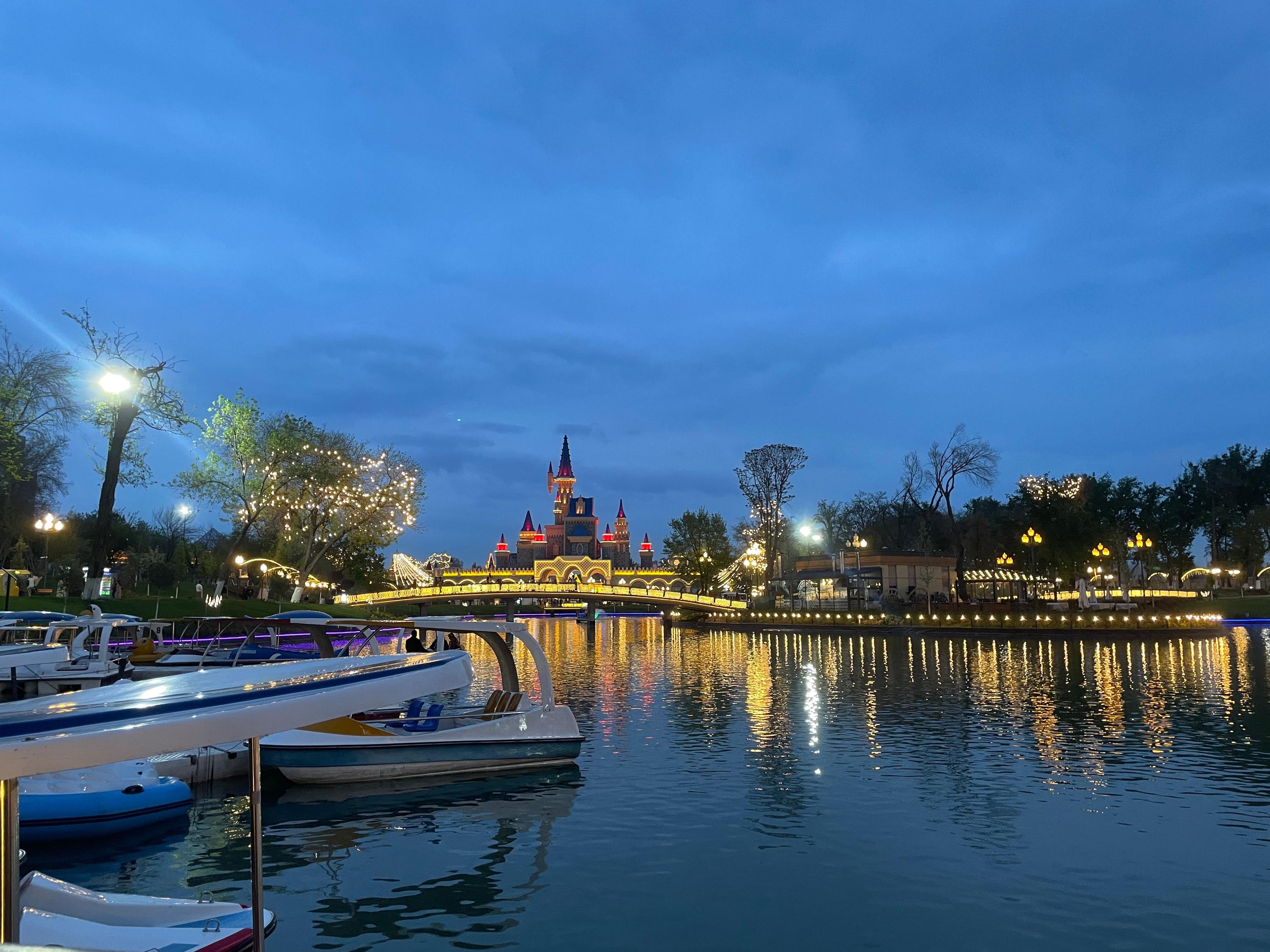
- Tashkent City Park at night. Fountains, a lake and the glass towers of the new city; the contrast with the old cities is part of the story.
- The dunes near Lake Aydarkul. Camels against an orange sky, then the Milky Way over the yurts.
A tip from our guides: the most crowded hour at the Registan is the hour before sunset, when tour groups and wedding shoots arrive together. If you want the square almost empty, come at sunrise; if you want atmosphere, come at dusk and accept the crowd.
Costume photo shoots in Uzbekistan: atlas and adras dresses
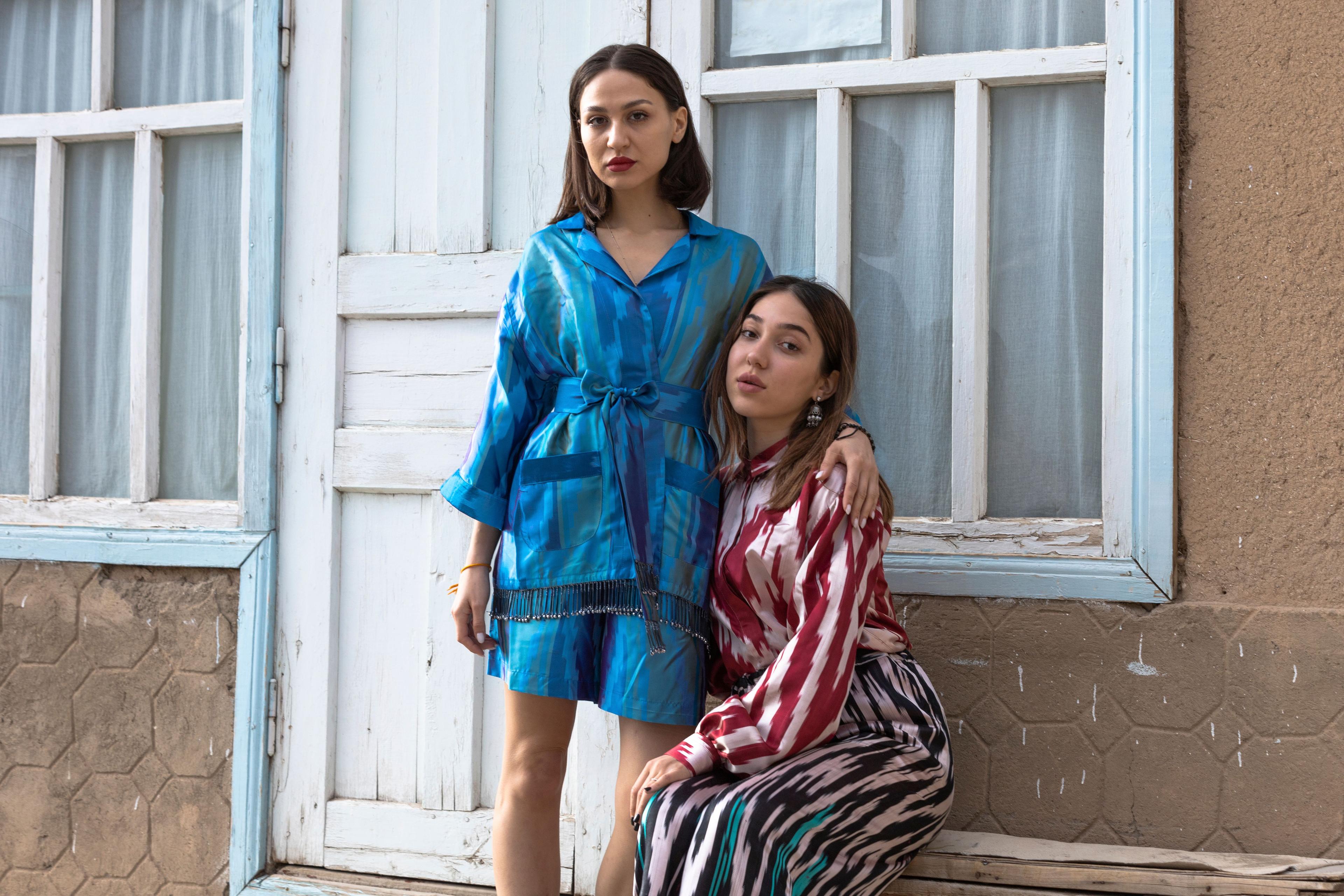
A costume photo shoot is one of the most popular things young visitors book in Samarkand and Khiva. You put on a long dress or robe in atlas or adras, the hand-woven ikat silks of Uzbekistan, and a local photographer takes you around the monuments for an hour or two.
Atlas is pure silk with a glossy surface; adras mixes silk and cotton and is a little heavier and more matte. Both are dyed in the blurred ikat patterns that have been made in Margilan, in the Fergana Valley, for centuries. Our guide to Margilan silk and ikat explains how they are made.
How it works:
- Where: the Registan in Samarkand is the most popular backdrop. In Khiva, the lanes and walls of Ichan-Kala work well, and costume rental is common there. In Bukhara, the Poi-Kalyan square and the old lanes around Lyabi-Hauz.
- When: early morning, before the crowds and the heat, or the last two hours before sunset.
- What you get: the photographer brings several outfits (dresses for women, robes called chapan and skullcaps for men), helps with styling and poses, and sends edited photos a few days later. Some offer short videos as well.
- Typical prices in 2026: roughly US$45 to 100 for a session of about an hour with outfits, more for longer sessions, video or a car between locations. Listings on international booking sites are often higher, around US$130 per person.
- Booking: arrange it a few days ahead, especially in May and October. Agree on the number of edited photos and the delivery time before you start.
Can you bring your own outfit? Yes. Some travellers from China bring hanfu or a qipao and shoot them against the tilework; it is your choice, and nobody minds in the open squares. Inside working mosques and shrines, dress modestly whatever you wear for the camera.
Respect matters. You will often share the square with newly married couples having their own photos taken. Wait your turn, and ask before you include strangers, especially women and older people, in your shots. Commercial shoots inside some monuments may need permission or a fee, so let your photographer handle it.
Citywalks: three walks that work
Citywalk, the slow, unplanned wander through a neighbourhood, is how many young travellers prefer to see a city. Uzbekistan's cities are well suited to it: the old centres are compact, flat and full of tea houses for breaks.
Tashkent: metro and bazaar (about 4 hours).
- Start at the Khast-Imam complex in the old town.
- Walk 15 minutes to Chorsu Bazaar and graze your way through it.
- Take the metro from Chorsu and hop between Alisher Navoiy, Mustaqillik Maydoni and Kosmonavtlar. One fare covers every station as long as you stay inside the gates; our Tashkent Metro guide has the current fares and a station route.
- Finish at Amir Timur Square and walk on to the Broadway pedestrian street or Tashkent City Park.
Samarkand: from the Registan to the bazaar (about 3 hours).
- The Registan, then the pedestrian Tashkent Street past craft shops to the Bibi-Khanym Mosque.
- The Siab Bazaar for bread and dried fruit.
- Up the hill to the Hazrat Khizr Mosque for a view back over the city, then on to Shah-i-Zinda in the late afternoon.
Bukhara: domes to minaret (about 3 hours, ending at blue hour).
- Start at Lyabi-Hauz, the pool square shaded by old mulberry trees.
- Walk through the three trading domes, past the Magoki-Attori Mosque, to the Ulugbek and Abdulaziz Khan madrasahs.
- Arrive at Poi-Kalyan as the lights come on.
In Khiva, simply walk Ichan-Kala after dark, when the day visitors have left and the minarets are lit.
What to eat: an Uzbek bazaar food crawl
Uzbek food is filling, not spicy and very good value. The best way to try it is a slow walk through a bazaar, followed by plov at lunchtime.
- Non. Round bread from the tandir oven, different in every city; Samarkand non is the most famous.
- Samsa. Flaky pastries filled with meat and onion, or pumpkin in autumn, baked on the walls of the tandir.
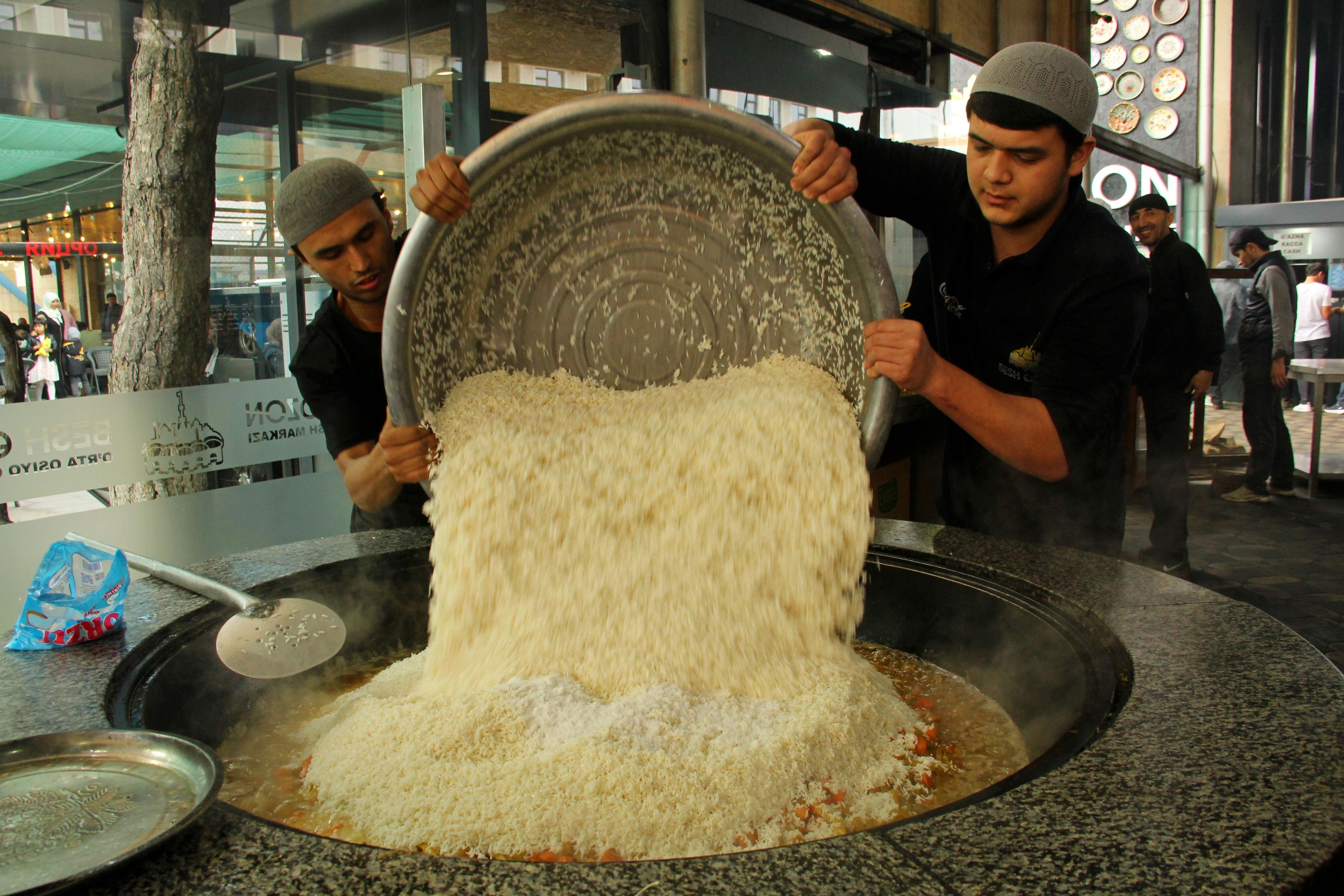
- Plov. Rice, carrots and lamb cooked in a huge kazan. In Tashkent, the Central Asian Plov Centre cooks it in batches for hundreds of people at once. Go before 13:00, because it sells out.
- Lagman. Hand-pulled noodles in broth or stir-fried. Travellers from China will recognise a cousin of lamian.
- Shashlik. Skewers of lamb, beef or minced meat over charcoal, with sliced onions and bread.
- Kurt. Salty dried yoghurt balls, sold in every bazaar. An acquired taste.
- Fruit. Melons, grapes, apricots and pomegranates in season; dried apricots, raisins and almonds all year.
- Tea. Green tea arrives with almost every meal and costs very little.
A bazaar snack lunch costs a few dollars; a full meal in a simple restaurant is often under US$10. Our guides to Uzbek street food and Chorsu and other bazaars go deeper, and vegetarians will find tips in our vegetarian guide.

A night in the desert: yurt camps and stargazing
The most memorable night of many trips is spent far from any city, in a felt yurt in the Kyzylkum desert near Lake Aydarkul. The camps sit between Samarkand and Bukhara, so a night there replaces the train with a road trip.
A typical stay:
- Arrive in the late afternoon, after a stop in the town of Nurata.
- A short camel ride across the dunes at sunset.
- Dinner around a campfire, often with folk songs on the dutar.
- Stargazing. With no towns nearby, the Milky Way is clearly visible on moonless nights.
- Breakfast and a walk to the lake in the morning, before driving on to Bukhara.
Practical points:
- Season: the camps work best from spring to autumn. April to early June and September to October are the most comfortable; summer days are very hot, and winter nights are freezing.
- Moon: for the best stars, choose dates close to the new moon.
- Bring: a warm layer for the night even in May, a head torch, a power bank and wet wipes. Facilities are simple, with shared bathrooms.
Our article on the Nuratau and Aydarkul yurt camp describes the route and the camps in detail.
Evenings and nightlife: Tashkent and beyond
Tashkent is the only city in Uzbekistan with real nightlife, and it is changing fast.
- Tashkent City Park and the boulevard of the new Tashkent City district are where young locals walk in the evening, with fountains, music and food stalls.
- Rooftop bars on the upper floors of several international hotels have views over the skyline and, on some nights, DJ sets.
- Broadway, the pedestrian street near Amir Timur Square, has cafés, street musicians and portrait painters until late.
- Concerts, stand-up and theatre are listed on afisha.uz, in Russian and Uzbek.
In Samarkand the evening belongs to the Registan and its light show, and to the Eternal City, a reconstructed old town with shows and restaurants inside the Silk Road Samarkand complex, a short taxi ride from the centre. In Bukhara and Khiva, evenings are about dinner on a terrace and a walk through the lit old town.
Alcohol is legal and available in restaurants and bars in the main cities, but drinking in the street is frowned upon, and many people do not drink. During Ramadan some cafés in the old towns close in the daytime. Dress for the evening as you like in Tashkent; in the old cities, modest clothes are more comfortable around the mosques.
How much does Uzbekistan cost for young travellers?
Prices have risen in the past few years, but Uzbekistan is still good value. Typical prices as of November 2026:
- Hostel dorm bed in Tashkent: about US$6 to 7 a night. A simple double room in a guesthouse starts at around US$25 to 40.
- Tourist levy: since 1 September 2026, hotels add a small nightly levy for foreign guests aged 16 and over.
- Afrosiyob train Tashkent to Samarkand: from about 311,000 som (about US$26) in economy.
- Metro or bus in Tashkent: a few thousand som a ride, around 20 US cents.
- Bazaar lunch: about US$3 to 6. Dinner in a good restaurant: US$10 to 20.
- Main sights in Samarkand or Bukhara: about US$15 to 30 a day in tickets.
- Costume photo shoot: roughly US$45 to 100.
- Yurt camp night with dinner and camel ride: usually sold with the transfer between Samarkand and Bukhara; prices vary widely with the group size.
Daily budgets: about US$40 to 65 as a backpacker, US$90 to 150 mid-range. Our Uzbekistan travel cost guide has the full breakdown.
Money-saving ideas for groups of friends: share a private car for the desert, book Afrosiyob tickets early, eat lunch at bazaars and dinner at chaikhanas, and pick combined tickets where they exist, such as Khiva's Ichan-Kala pass.
Payments, apps and staying connected
A few things to set up before you go.
- Cards: Visa and Mastercard work in most hotels, larger restaurants and many ATMs. UnionPay cards work at many bank ATMs and some terminals, since both national card systems have agreements with UnionPay. In 2026 an Alipay+ gateway was launched on the national QR payment system, but coverage is new, so do not rely on it alone.
- Cash: bazaars, small cafés and village camps are cash only. Carry som, and some clean US dollars as a backup.
- Apps: Yandex Go for taxis, Yandex Maps or 2GIS for navigation, and a translation app with offline Russian.
- SIM card or eSIM: buy one at the airport or in the city. Our SIM card guide explains phone registration.
- Language: Uzbek and Russian are the main languages; English is common among young people in the tourist centres.
Travellers from China will find more detail in our guide to travelling to Uzbekistan from China, including direct flights and payments.

A 7 to 8 day Uzbekistan itinerary for young travellers
Here is a route that fits the ideas above into one week.
- Day 1: Arrive in Tashkent. Evening in Tashkent City Park.
- Day 2: Tashkent citywalk: Khast-Imam, Chorsu Bazaar, plov, the metro, and an evening in the new city.
- Day 3: Afrosiyob train to Samarkand. Gur-e-Amir, Shah-i-Zinda in the late afternoon, the Registan at blue hour.
- Day 4: Early costume photo shoot at the Registan. Bibi-Khanym, the Siab Bazaar and the Afrosiyob Museum.
- Day 5: Drive to Nurata and the yurt camp near Lake Aydarkul. Camel ride, campfire and stars.
- Day 6: The lake in the morning, a pottery workshop in Gijduvan, Bukhara at sunset from a rooftop.
- Day 7: Bukhara citywalk, ending at Poi-Kalyan at blue hour.
- Day 8: Afrosiyob train to Tashkent and fly home.
With two more days, add Khiva by domestic flight or train. With a few more, combine Uzbekistan with Almaty and Charyn Canyon in Kazakhstan; our guide to an Uzbekistan and Kazakhstan trip explains how.
Travelling with TourEast
We have turned the route above into an 8-day private tour for young travellers, with the costume shoot, the yurt night, the bazaar food crawl and the pottery workshop included, plus a two-country version with Kazakhstan. Guides speak English, and Chinese-speaking guides are available on request. Tell us your dates and group size, and we will send a programme.