Our home city, honestly explained: Khast-Imam and where the Uthman Quran is now, Chorsu Bazaar, the metro, the Minor Mosque, the best museums, new Tashkent City, what to eat, a one or two day plan and how to get from the airport to the centre.
Facts, prices and schedules checked on November 4, 2026
Tashkent (Toshkent) is where most journeys in Uzbekistan begin, and where many travellers spend as little time as possible before rushing to Samarkand. We understand why, but we think it is a mistake. The capital of Central Asia's most populous country is green, safe, easy to get around and full of things to do, from a 16th-century religious quarter to one of the world's most beautiful metros.
Is Tashkent worth visiting? Yes, for one or two days. It is not a museum city like Bukhara: a devastating earthquake in 1966 destroyed much of the old centre, and the city was rebuilt in bold Soviet modernist style. That rebuilding is now part of the attraction. In July 2026 UNESCO inscribed ten landmarks of Tashkent modernism on the World Heritage List, including Chorsu Bazaar and the Kosmonavtlar metro station.
This guide is written by our team in Tashkent, where TourEast is based. It covers the main things to do in Tashkent, a one or two day plan, food, and the practical part: getting from the airport to the city centre.
Khast-Imam and the Uthman Quran
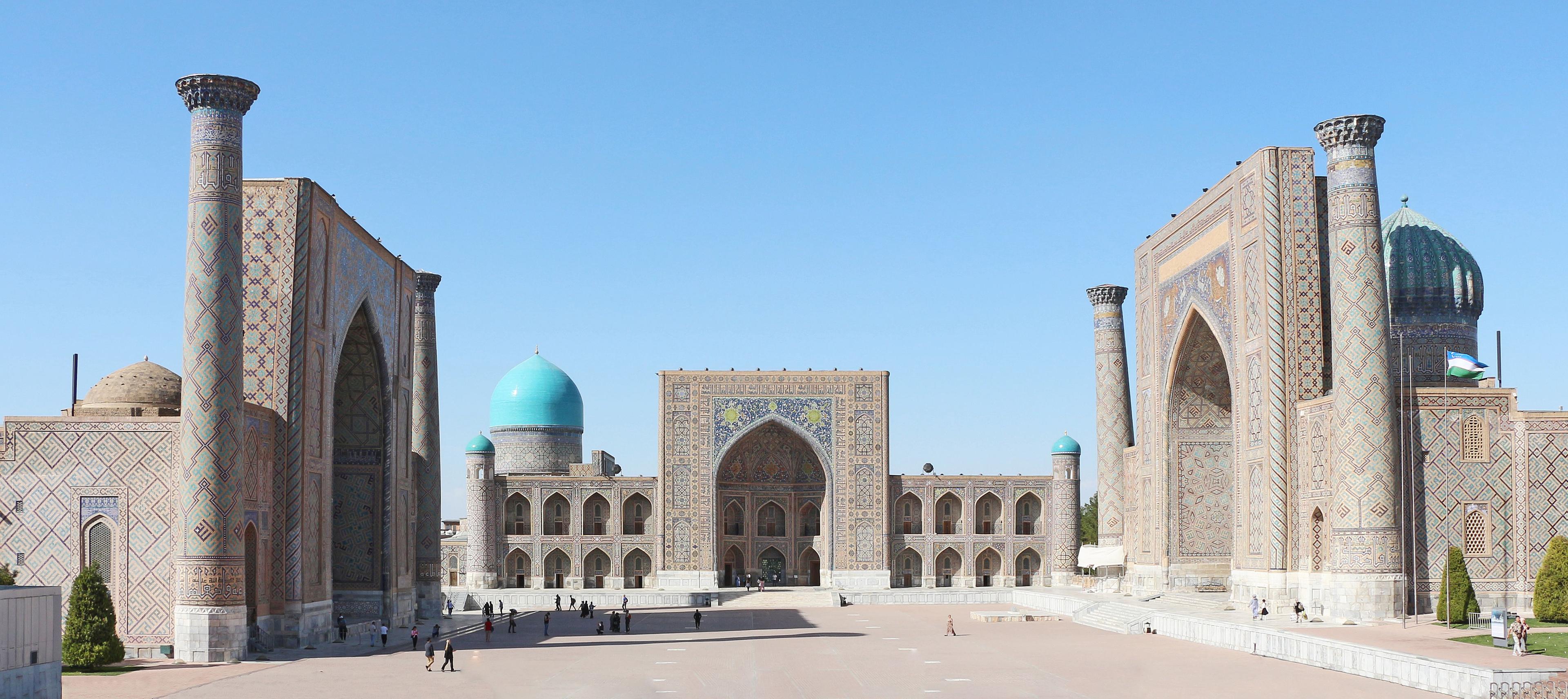
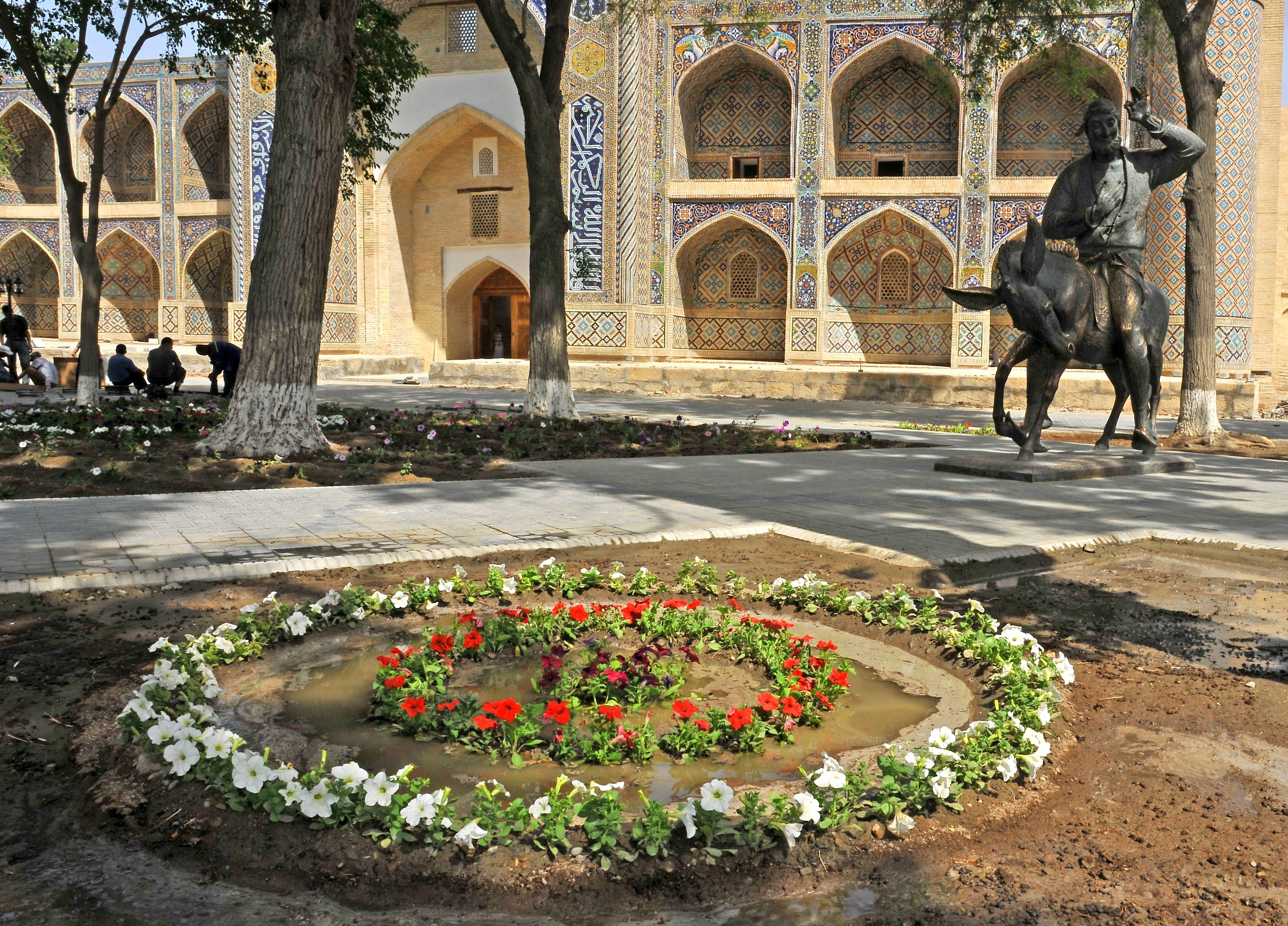
The Khast-Imam (Hazrati Imam) complex in the old town is the spiritual centre of Tashkent and the city's best ensemble of Islamic architecture. Around a large paved square you will find:
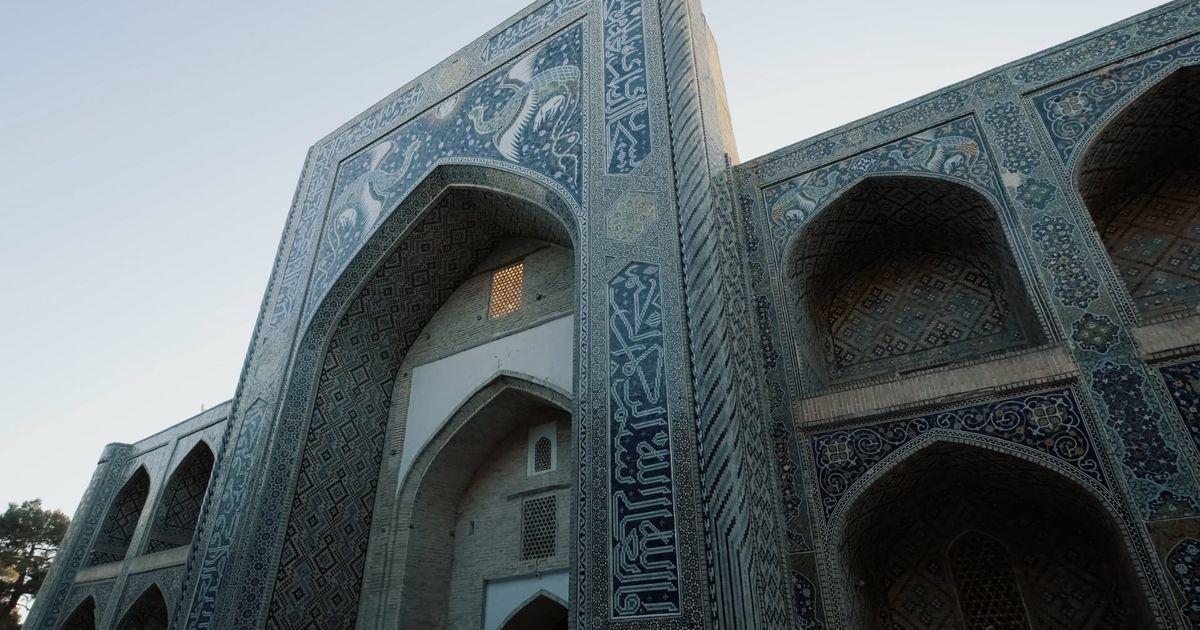
- The Barak Khan Madrasah, a 16th-century college with a tiled portal, now home to craft shops in its former student cells.
- The Kaffal Shashi Mausoleum (1541 to 1542), built over the grave of a 10th-century scholar and poet of Tashkent.
- The Tilla Sheikh Mosque and the Muyi Muborak Madrasah, whose name refers to a relic, a hair of the Prophet, kept in the complex.
- The Hazrati Imam Friday Mosque, completed in 2007, with twin minarets and carved wooden columns.
For decades, the complex's greatest treasure was the Uthman Quran, also called the Samarkand Kufic Quran: one of the oldest surviving Qurans, dated by radiocarbon analysis to between the late 8th and late 10th centuries. It has a dramatic history. Russian troops took it from Samarkand in 1868 to St Petersburg; it came back to Tashkent in 1923 and was kept at Khast-Imam from 1989. UNESCO added it to its Memory of the World Register in 1997.
If you are looking for it today, it has moved. In November 2025 the manuscript was transferred to the new Center for Islamic Civilization next to the Khast-Imam square, which opened on 17 March 2026. The centre is a vast new museum under a dome about 65 metres high, with the Quran in its own hall alongside more than 2,000 exhibits, including dozens of rare manuscripts. As of its opening announcement, standard entry for foreign adults costs 25 USD. Allow at least two hours, and check the current hours before you go.
Dress modestly in the whole complex: shoulders and knees covered, and a scarf for women entering the mosques.
Chorsu Bazaar and the old town
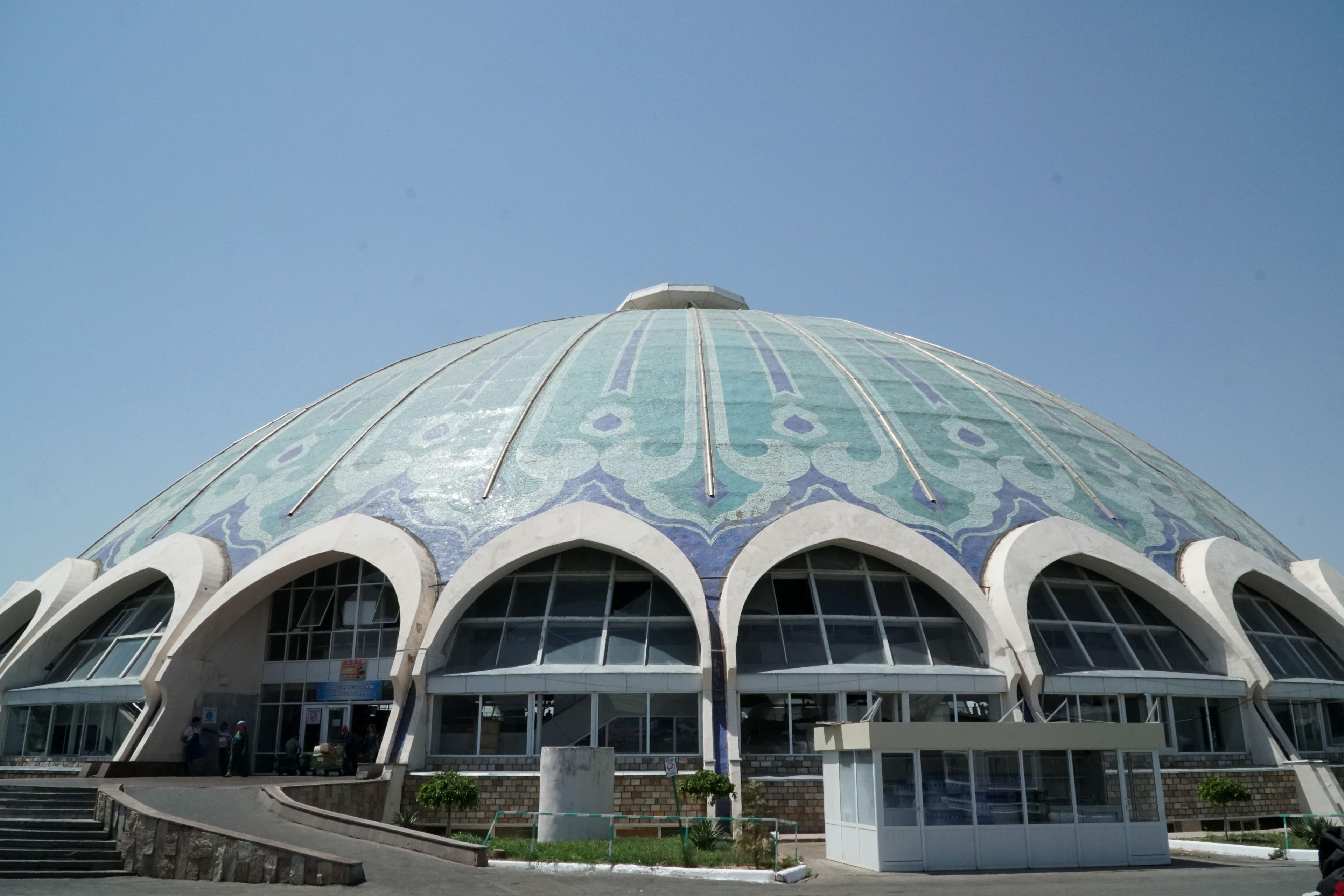
Chorsu Bazaar is the Tashkent sight our guests remember most. Its huge turquoise dome, completed in the late 1980s and early 1990s, covers a circular hall of spices, dried fruit, nuts, cheese and halva on two levels. Around it spread open-air sections for fruit and vegetables, a bread market, a meat hall and lanes of household goods and textiles.
The dome is now a UNESCO World Heritage Site, part of the Tashkent modernism listing of 2026. The trading underneath is anything but a museum.
Tips for Chorsu:
- Come in the morning, when it is busiest and the light under the dome is best. The bazaar is open every day from early morning until evening.
- Taste before you buy. Traders are happy to offer a dried apricot or a piece of halva.
- Prices for visitors can be optimistic. Bargain with a smile, and carry small notes in som.
- Keep your phone and wallet in a front pocket in the crowds.
Next to the bazaar stands the 16th-century Kukeldash Madrasah, one of the few old buildings to survive in central Tashkent. Behind it begin the narrow lanes of the mahalla, the traditional neighbourhood, which lead towards Khast-Imam in 15 to 20 minutes on foot. Chorsu has its own metro station, so it is easy to reach from anywhere in the city.
The Tashkent metro
The Tashkent metro opened in 1977, the first in Central Asia, and each station was designed as a work of art: marble, carved plaster, chandeliers and ceramic panels on themes from Uzbek poetry to space flight. Photography was banned until 2018; now riding it is one of the best things to do in Tashkent.
Do not miss Kosmonavtlar, with its deep blue walls and medallions of cosmonauts, now part of the UNESCO listing, and Alisher Navoiy, with domes and panels inspired by the national poet. A single ride costs 2,500 som paid electronically or 3,000 som with a paper QR ticket from 1 October 2026, about 20 to 25 US cents.
Our guide to getting around Uzbekistan's cities covers the most beautiful stations, a suggested route, passes and how to pay.

Amir Timur Square and the Soviet-era centre
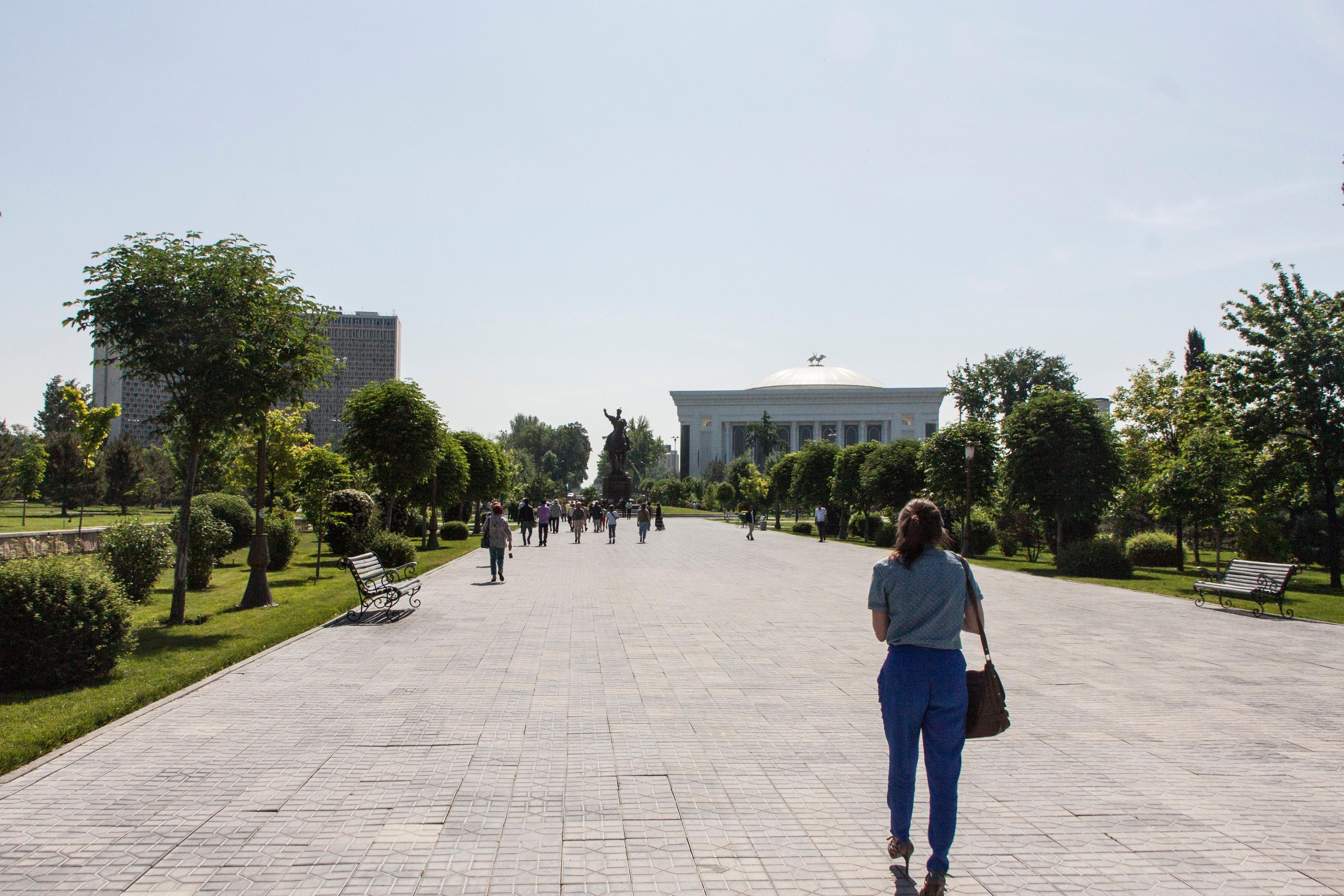
The modern heart of the city is Amir Timur Square, a circular park with an equestrian statue of Timur (Tamerlane), the national hero of Uzbekistan. Around it stand the Hotel Uzbekistan, a 1970s concrete landmark with a façade of oriental lattice, the Palace of International Forums and the old chiming clocks.
- Amir Timur Museum: next to the square, under a blue ribbed dome. It tells the story of Timur and his dynasty with manuscripts, models and paintings. It is usually closed on Mondays; foreign visitors pay roughly 25,000 to 50,000 som as of November 2026.
- Sayilgoh Street: the pedestrian street running west from the square, known locally as Broadway, with cafés, street artists and souvenir stalls.
- Independence Square (Mustaqillik Maydoni): a short walk further on, the government quarter with fountains, monuments and the parade ground. Its metro station is one of the city's finest.
- Palace of Peoples' Friendship and State Museum of History: both on the 2026 UNESCO list and worth seeing from outside even if you do not go in.
In the evening, this part of town is lit and busy with families, and very pleasant to walk.
The Minor Mosque
The Minor Mosque is Tashkent's newest landmark and one of its most photographed. Opened on 1 October 2014, it stands on the bank of the Ankhor canal, a few minutes from the centre. Locals call it the White Mosque for its white marble walls under a sky-blue dome, and it holds around 2,400 worshippers.
Unlike the historic monuments, it is a working mosque first. Visitors are welcome outside prayer times, especially in the morning and late afternoon. Dress modestly, women should cover their hair, and everyone removes their shoes before entering the prayer hall. Avoid Friday midday, the main weekly prayer. The canal-side path is lovely at sunset, when the marble turns pink.
Best museums in Tashkent
Tashkent has the best museums in the country. If you only see one, make it the State Museum of Applied Arts.
- State Museum of Applied Arts: housed in the former residence of the Russian diplomat Alexander Polovtsov, decorated around the turn of the 20th century by master craftsmen from Tashkent, Bukhara, Samarkand and Fergana. The building, with its carved and painted plaster, cedar ceilings and tiled courtyard, is as beautiful as the collection: suzani, ceramics, jewellery, musical instruments and costume from all regions of Uzbekistan. It has been a museum since 1937. Open daily, roughly 9:00 to 18:00; recent visitors report a foreigner ticket of about 40,000 som. Nearest metro: Kosmonavtlar.
- Center for Islamic Civilization: the new museum next to Khast-Imam, described above, with the Uthman Quran.
- State Museum of History of Uzbekistan: the long story of the country from prehistory to independence, in a modernist building on the UNESCO list.
- State Museum of Arts of Uzbekistan: Russian and European painting, plus Uzbek fine and applied art.
- Amir Timur Museum: described above.
Most museums close one day a week, often Monday, and some charge extra for photography. Opening hours change, so check the day before.
Tashkent City and the new capital
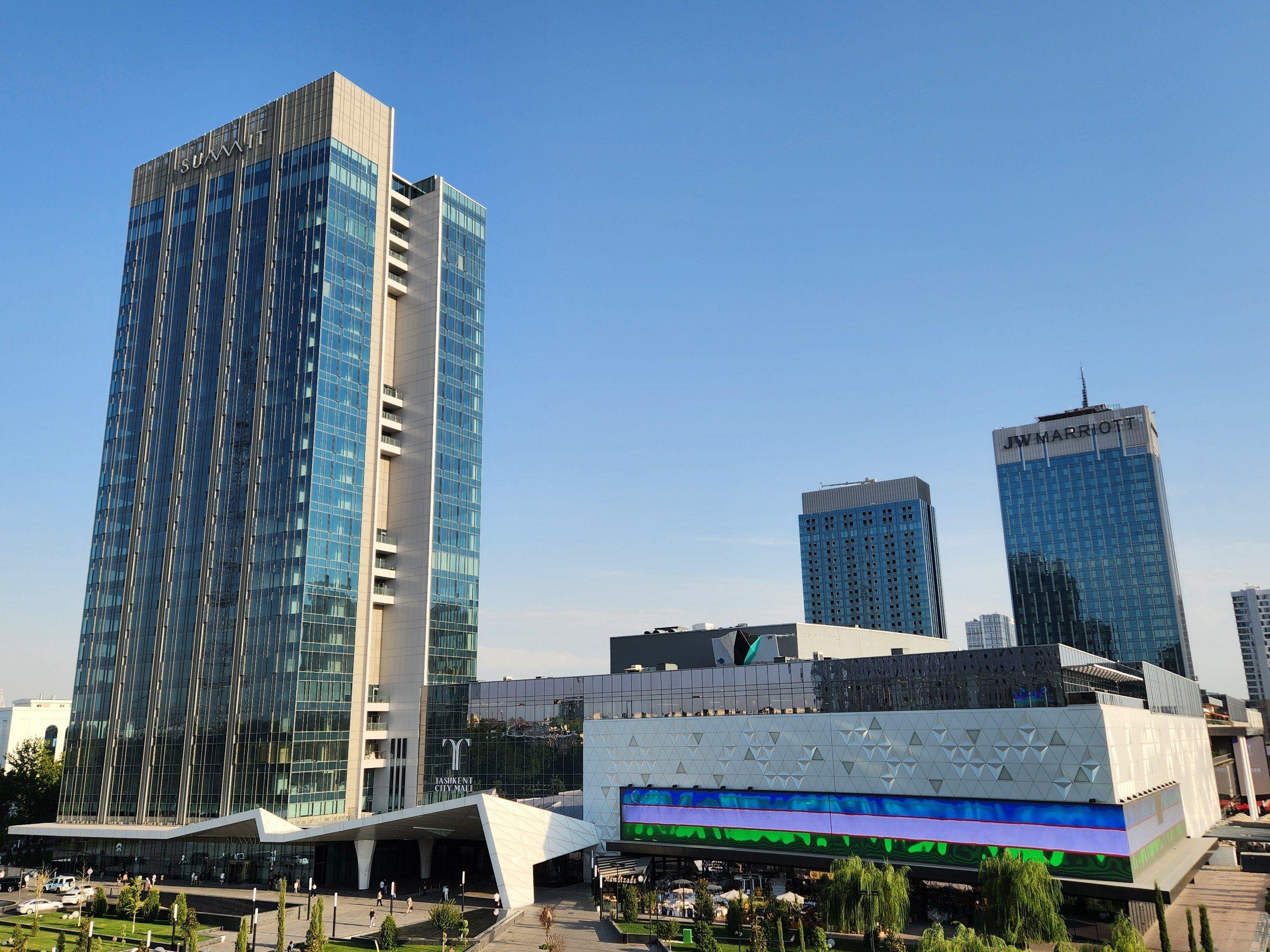
For a look at where Uzbekistan is heading, walk through Tashkent City, the new business district a short way west of Amir Timur Square. Glass towers, international hotels and apartment blocks surround Tashkent City Park, with a lake, fountains, lawns and cafés. Entry to the park is free, and it comes alive in the evening, when families stroll and the fountains are lit.
- Tashkent City Mall: a large shopping centre with around 250 shops, restaurants and a cinema, useful if you need a SIM card, a pharmacy or a rainy-day plan.
- Magic City: a free-to-enter family park a little over a kilometre away, with themed streets, rides and a large musical fountain in the evening. A good choice if you travel with children.
Combine Tashkent City with dinner nearby and an evening walk back to Amir Timur Square. It shows a very different side of the country from the madrasahs of Samarkand and Bukhara.
What and where to eat in Tashkent
Tashkent eats well and cheaply. A few essentials:
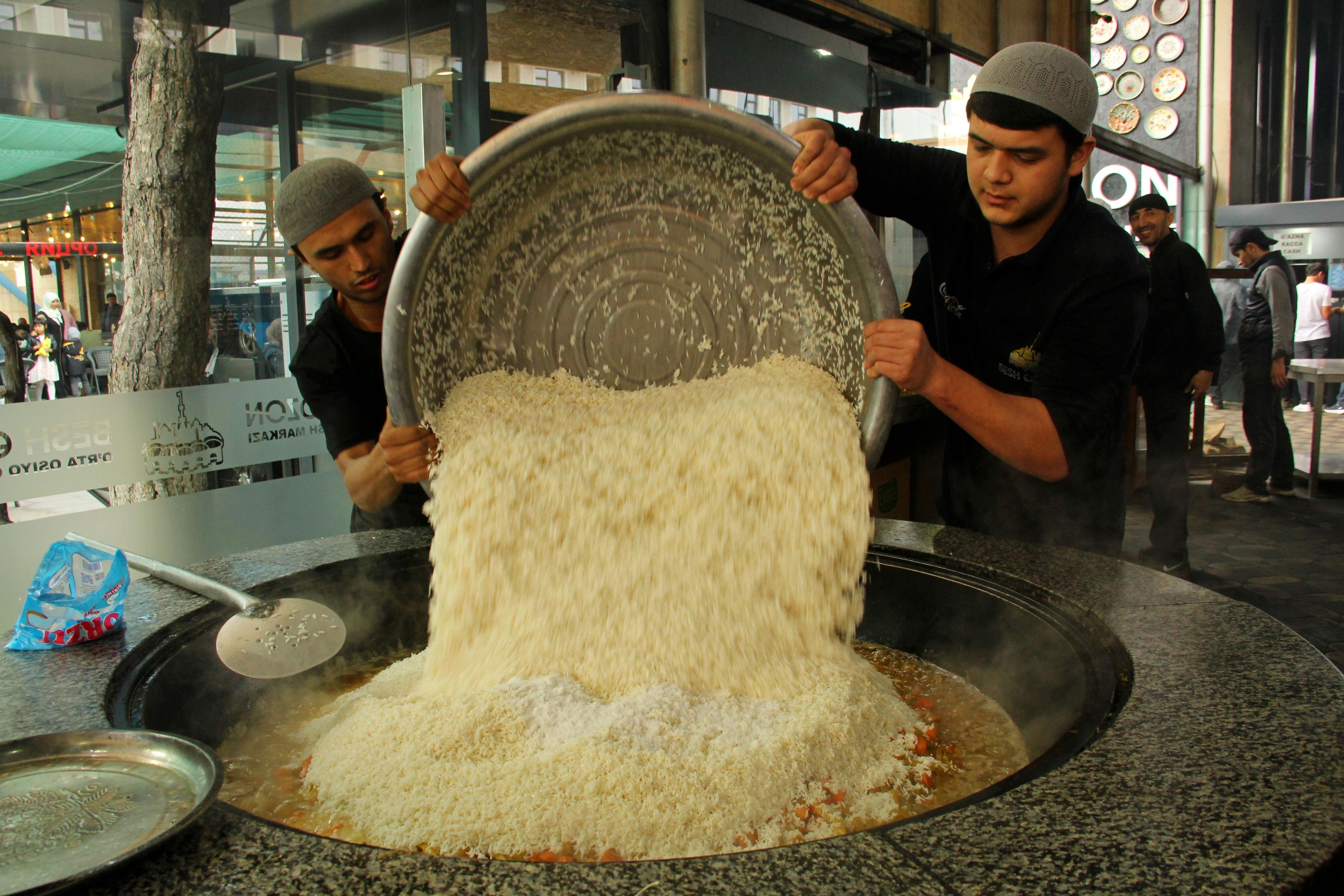
- Plov at lunchtime. Tashkent plov is cooked in huge kazans and served from late morning until it runs out, usually by early afternoon. The Central Asian Plov Centre (Besh Qozon) near the TV tower is the famous place to watch it being made.
- Lagman and manti in any chaikhana, the traditional teahouse.
- Samsa from a tandoor and fresh non bread, the round flatbread stamped with patterns, from the bread hall at Chorsu.
- Shashlik in the evening, grilled over charcoal and served with sliced onion and vinegar.
The city also has a lively modern restaurant scene, from Uzbek fine dining to Georgian, Korean and Italian, mostly in the centre and around Tashkent City. Our Uzbek food guide explains the dishes, and our guide to money in Uzbekistan covers tipping and card payments.
How many days in Tashkent? A 1 to 2 day itinerary
One full day covers the essentials; two days let you add museums and slow down.
Day 1, old and new Tashkent:
- Morning: Chorsu Bazaar and the Kukeldash Madrasah, then walk through the mahalla to Khast-Imam.
- Late morning: the Center for Islamic Civilization and the Uthman Quran.
- Lunch: plov at Besh Qozon or a teahouse near the bazaar.
- Afternoon: the metro from Chorsu to Kosmonavtlar and Alisher Navoiy, then the State Museum of Applied Arts.
- Evening: Amir Timur Square and Sayilgoh Street, dinner in the centre.
Day 2, museums and modern city:
- Morning: the State Museum of History or the Amir Timur Museum (not on Mondays).
- Midday: the Minor Mosque and a walk along the Ankhor canal.
- Afternoon: Independence Square and a coffee in the centre.
- Evening: Tashkent City Park and its fountains.
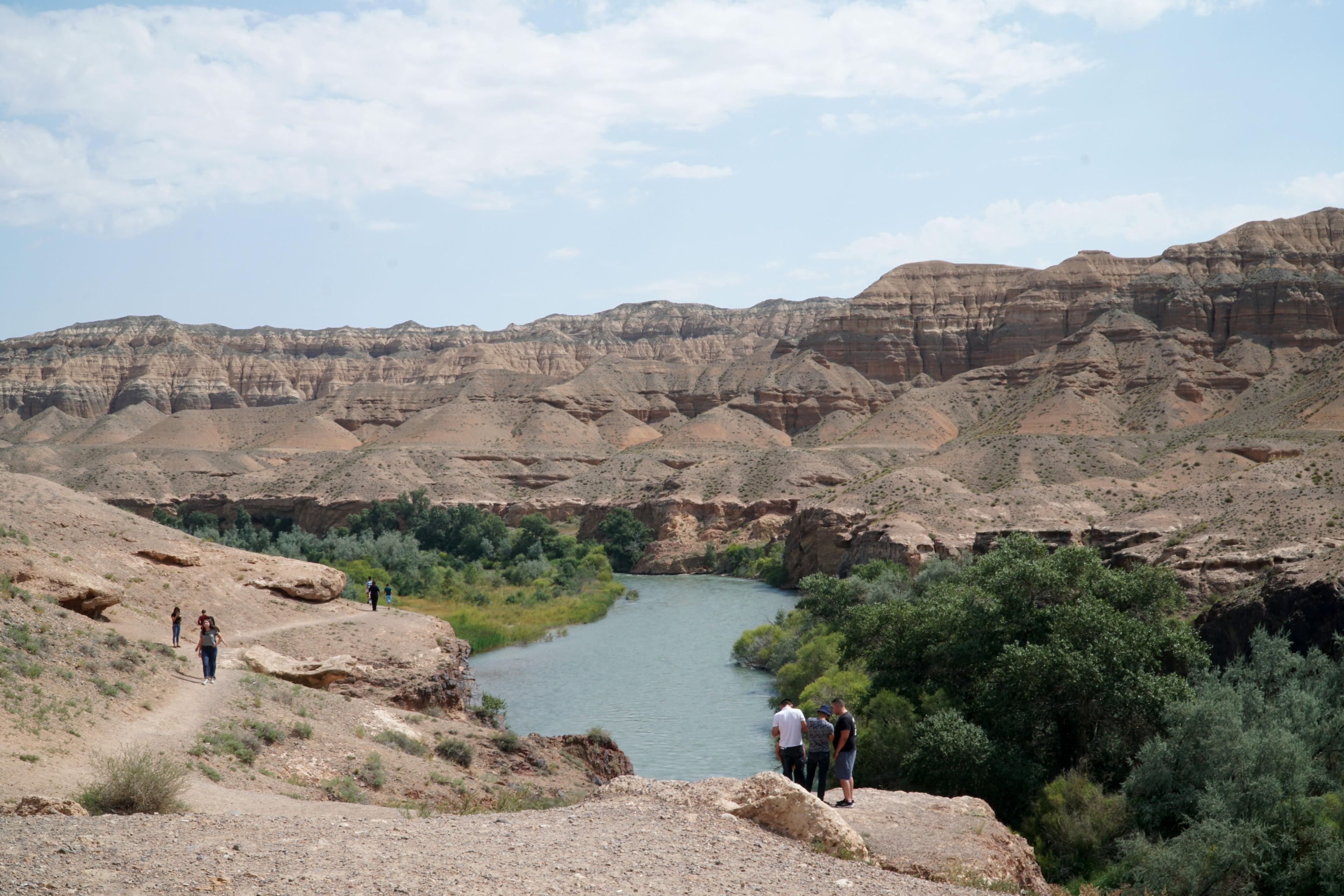
With a third day, consider a trip into the Chimgan mountains and the Charvak reservoir, about one and a half to two hours away, a cool escape in summer.

Tashkent airport to city centre
Islam Karimov Tashkent International Airport is close to the centre, roughly 8 to 12 km depending on your hotel, a 20 to 40 minute drive.
- Yandex Go: the easiest option. Install the app and verify your phone number before you fly. As of November 2026 a ride to the centre usually costs about 35,000 to 70,000 som (roughly 3 to 6 USD), depending on demand. Agree the pickup point in the app chat and walk past the drivers offering rides at the exit.
- Airport taxis: drivers at arrivals usually ask considerably more, often 80,000 to 150,000 som or more. Agree the price before you get in.
- City bus: cheap but slow, and impractical with luggage.
- Hotel or tour transfer: the most relaxed option after a night flight, as many international flights land in the early hours. All our tours include it.
Change a little money or withdraw som at the airport ATMs before you leave the terminal, and keep small notes for the taxi.
Visiting Tashkent with TourEast
Tashkent is our home, and we like nothing better than showing it off. We can meet you at the airport, arrange a guided day in the old and new city, and build Tashkent into a small-group tour or a private itinerary across Uzbekistan.