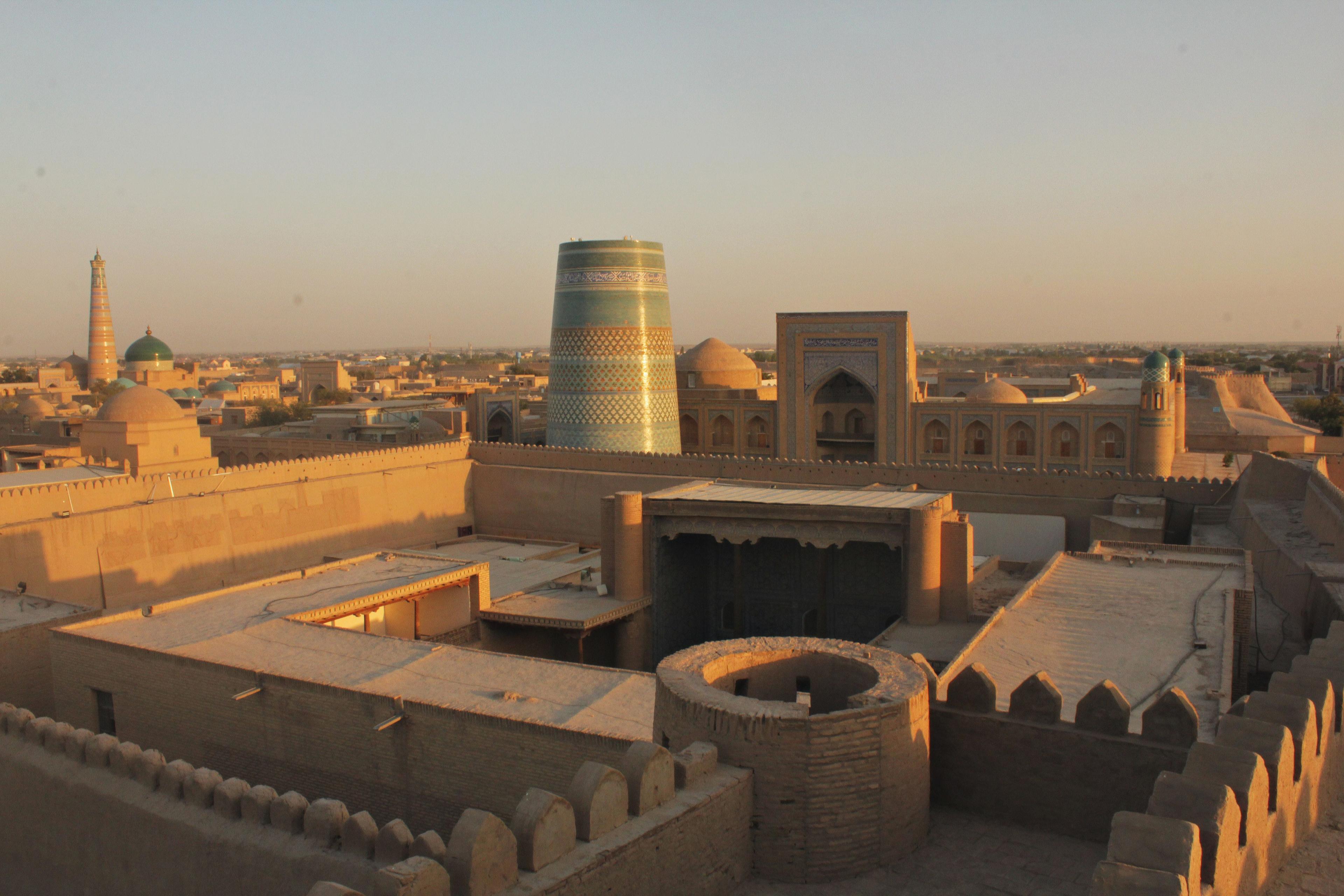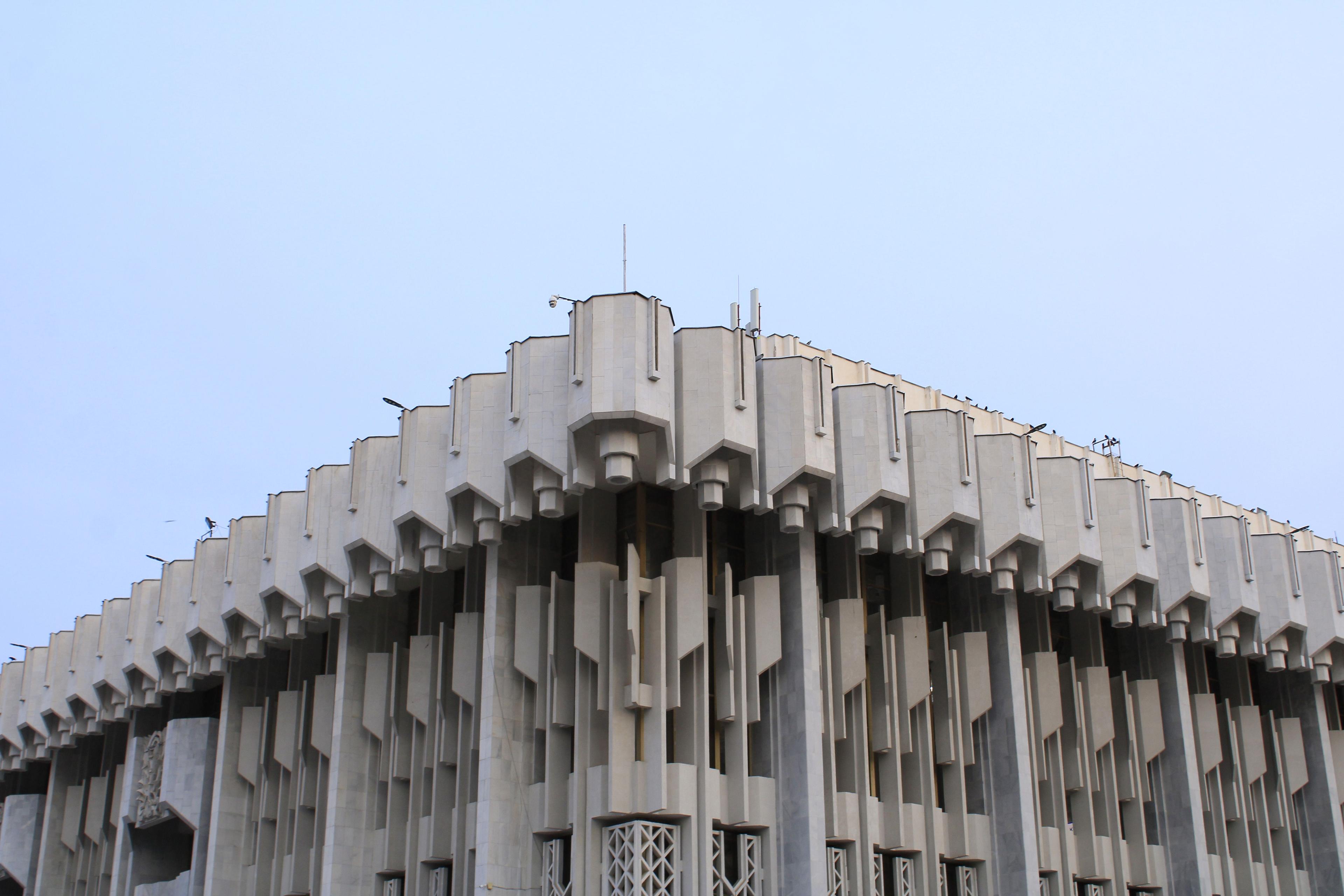
In July 2026 UNESCO inscribed ten modernist landmarks of Tashkent, from Chorsu Bazaar to Kosmonavtlar metro. What they are, which you can enter, and a half-day walking route through Soviet Tashkent.
Facts, prices and schedules checked on November 4, 2026
Tashkent modernism is the name for the bold concrete, glass and ceramic architecture that rose in the Uzbek capital after the earthquake of 1966. For decades visitors walked past it on the way to Samarkand. In July 2026 that changed: UNESCO inscribed "Tashkent Modernist Architecture", a set of ten buildings, on the World Heritage List. It is Uzbekistan's first national inscription in 25 years, and the first time 20th-century modernism from Central Asia has been listed.
This guide is written by our team in Tashkent. It explains what Tashkent modernism is, lists the ten UNESCO buildings, tells you which ones you can actually go inside, and gives a self-guided walking route that takes in most of them in half a day. Facts are as of November 2026.
What is Tashkent modernism?
At 5:22 in the morning on 26 April 1966, an earthquake struck directly beneath central Tashkent. The death toll was low for a disaster of that scale, but the shocks continued for months and tens of thousands of homes, most of them old mud-brick houses, were destroyed or damaged. Hundreds of thousands of people lost their homes.
Moscow turned the reconstruction into a showcase. Builders and architects arrived from across the Soviet republics, and in little more than two decades Tashkent became a modern capital of wide avenues, parks, apartment blocks and monumental public buildings. The Courage Monument near the Ankhor canal marks the epicentre and remembers those years.
What makes Tashkent modernism different from the grey concrete of many Soviet cities is the way architects adapted the international style to Central Asia:
- Sun screens. Deep concrete grilles, louvres and lattice façades, the local answer to the brise-soleil, keep out the summer sun, which regularly pushes temperatures past 40°C.
- Earthquake engineering. Buildings were designed to flex and survive the next shock, which shaped their proportions and structures.
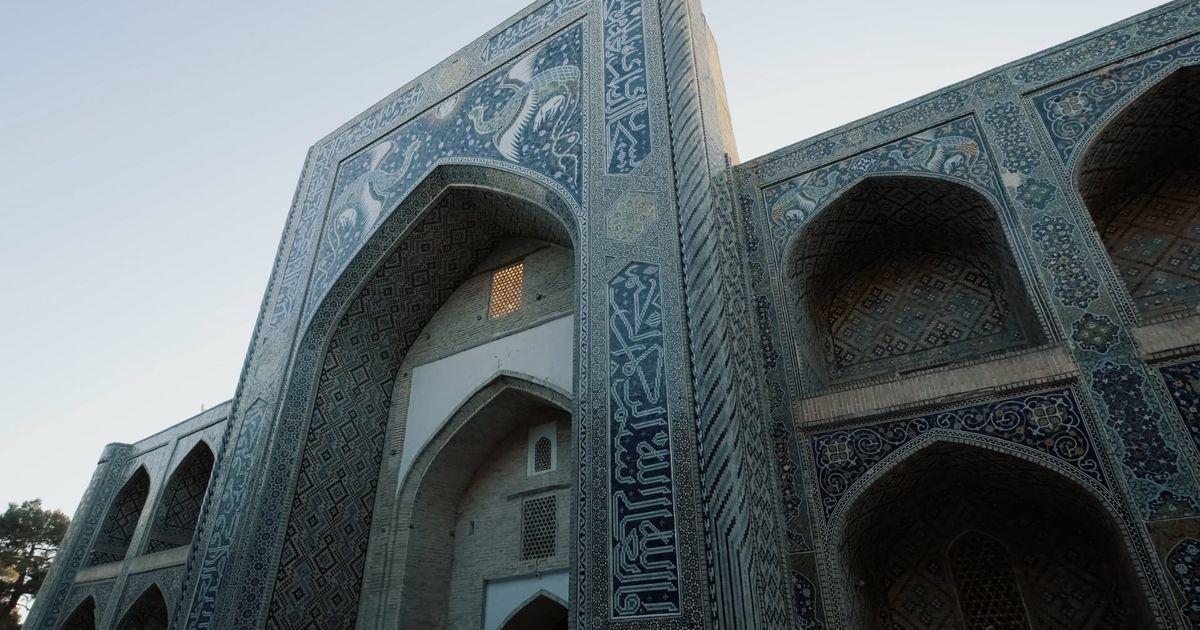
- Local ornament. Carved ganch plaster, ceramic tiles, mosaics and blue domes borrow from the madrasahs of Samarkand and Bukhara, translated into concrete.
- Public space. Many buildings were planned as part of squares, fountains and shaded colonnades, so the city still feels made for walking in the evening.
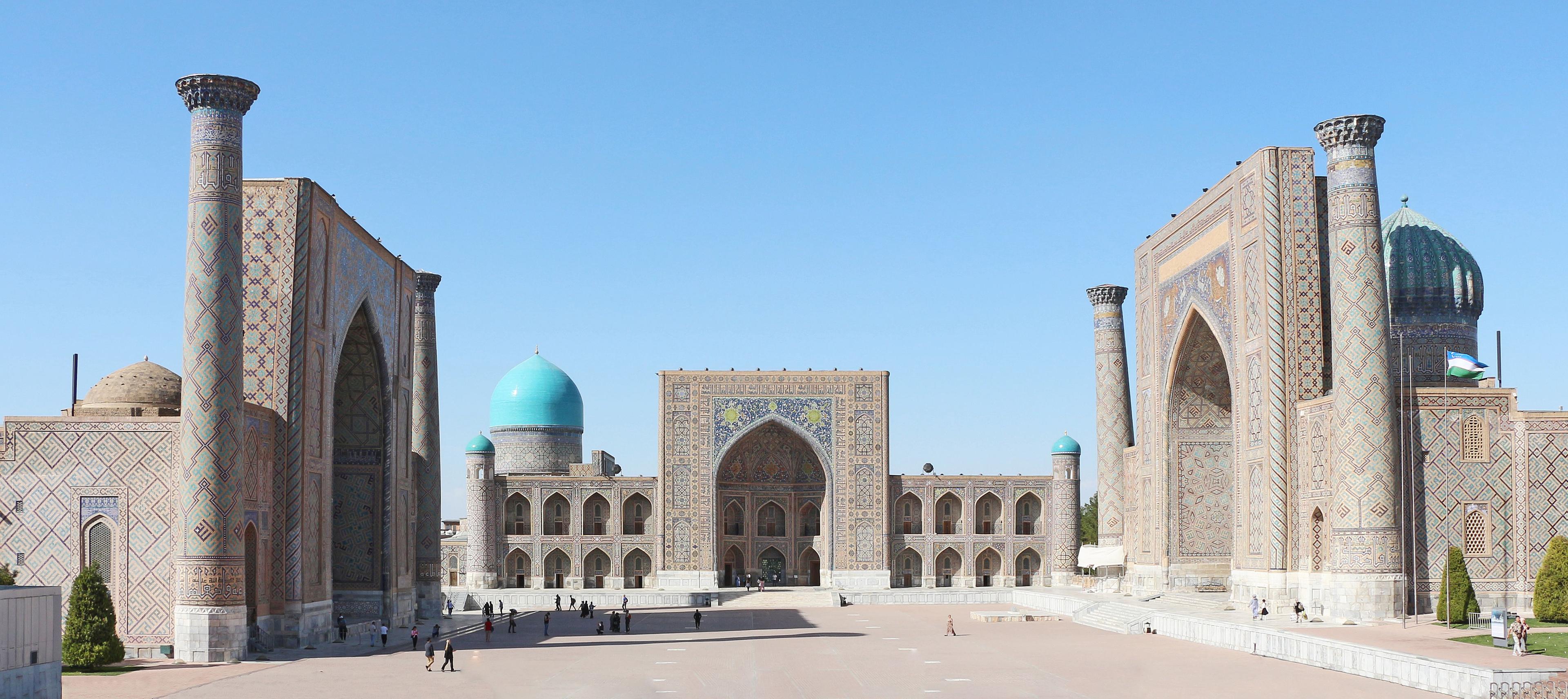
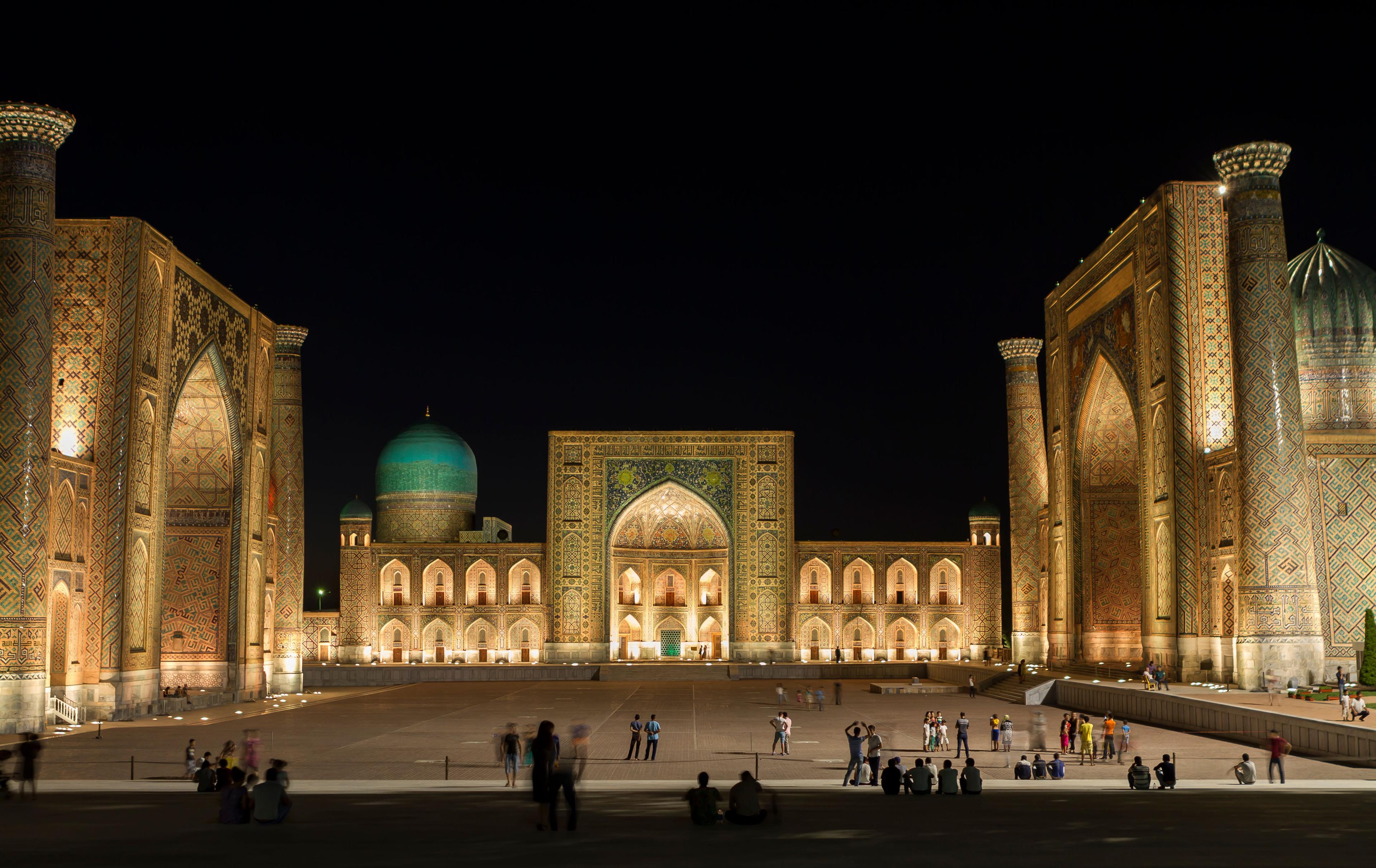
Architects and historians sometimes call the result "Soviet Oriental modernism". You do not need the label to enjoy it. A simple way to see it is this: the patterns you saw on the Registan reappear in Tashkent at the scale of a concert hall.
Tashkent modernism on the UNESCO list: what was inscribed in 2026
The World Heritage Committee inscribed the property at its 48th session in Busan, Republic of Korea, held from 19 to 29 July 2026. Uzbek official sources date the decision to 26 July. The full name is "Tashkent Modernist Architecture. Modernity and Tradition in Central Asia", and it was listed under criterion (iv), as an outstanding example of a type of building and planning that illustrates a stage in human history.
The nomination grew out of the Tashkent Modernism XX/XXI research project, led by Uzbekistan's Art and Culture Development Foundation with international partners. Sixteen buildings were placed on the Tentative List in 2024 and refined to ten for the final serial nomination. The latest component dates from 1990, which makes this one of the youngest architectural sites on the World Heritage List.
The ten UNESCO components, in the order of the official list:
- Zhemchug ("the Pearl") residential building, 1975–1985
- State Museum of History of Uzbekistan, built as the Lenin Museum, 1968–1970
- Central Exhibition Hall of the Academy of Arts, 1972–1974
- Kosmonavtlar metro station, 1982–1984
- Big Solar Furnace (Sun Heliocomplex) near Parkent, 1981–1987
- Palace of Peoples' Friendship, completed 1981
- State Museum of Arts of Uzbekistan, 1967–1974
- Tashkent State Circus, built in the late 1960s and 1970s
- Chorsu Bazaar, 1980s
- Alisher Navoi Cinema Palace, the "Panorama" cinema, 1962–1964
Nine of the ten stand in Tashkent, along the axes of the rebuilt centre. The tenth, the solar furnace, is about 40 km east of the city in the foothills near Parkent. Construction dates vary slightly between sources, so treat them as approximate.
The ten buildings: what to look for
Here is what makes each building worth a look, grouped the way you will meet them on the ground.
The central cluster, around Amir Timur Avenue:
- State Museum of History. A white, almost cubic block opened in 1970 as the Lenin Museum, with marble cladding, sun grilles and carved wooden doors from Kokand. Since 1992 it has held the national history collection, from Stone Age finds to independence, which makes it a good first stop on any trip.
- Central Exhibition Hall of the Academy of Arts. Pleated walls with geometric and floral mosaic panels, raised on a podium. It still hosts changing exhibitions.
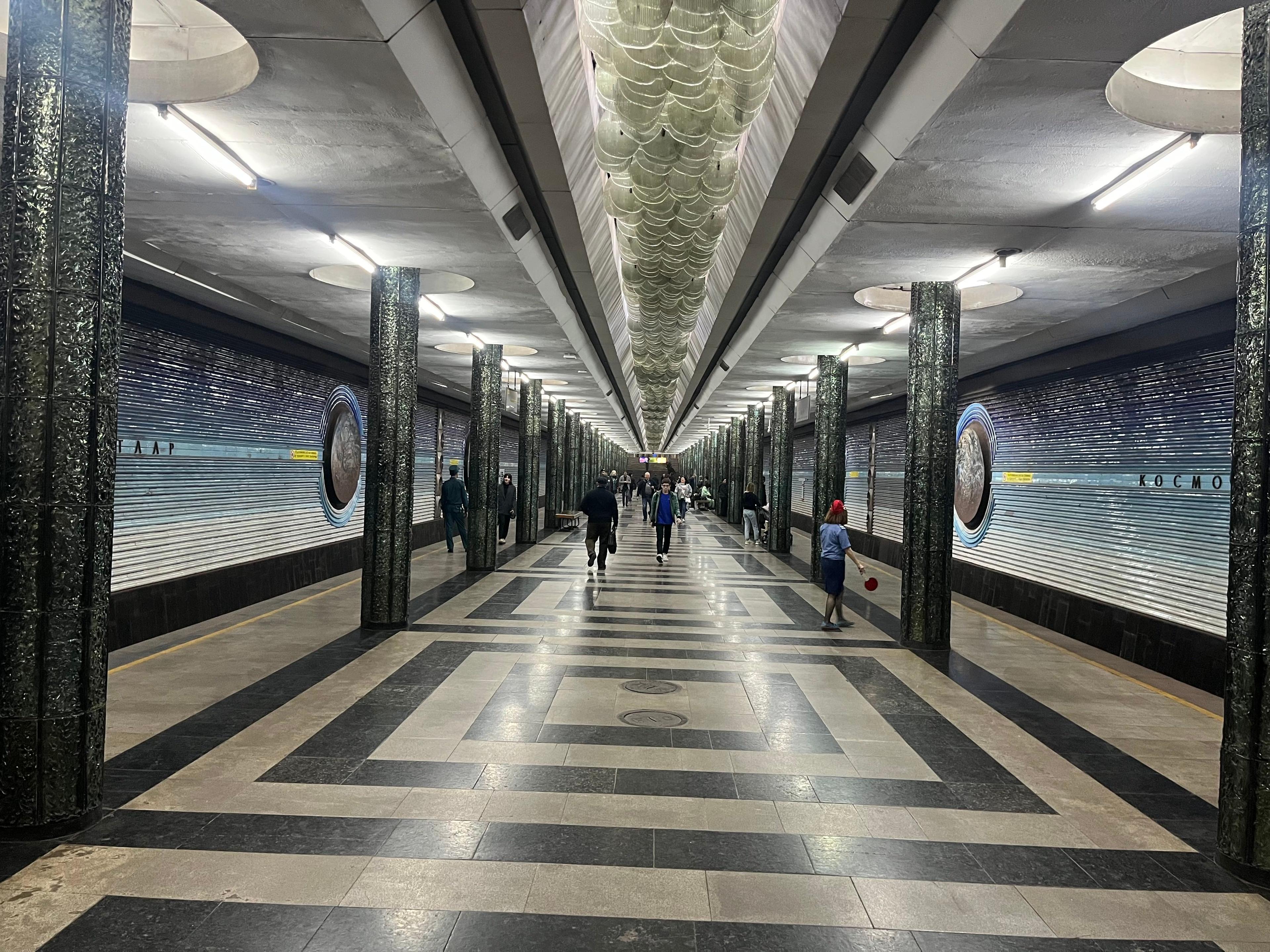
- Kosmonavtlar metro station. Opened in 1984 and dedicated to space flight, with blue ceramic walls that darken towards the ceiling like the night sky and medallions of cosmonauts, including Yuri Gagarin, Valentina Tereshkova and Vladimir Dzhanibekov, who was born in Uzbekistan.
- Zhemchug, "the Pearl". A 16-storey residential block finished in 1985, designed as a vertical mahalla, with communal spaces suspended between the flats. People live here, so admire it from the street.
- State Museum of Arts. A square, glass-fronted box around a tall atrium, purpose-built as a museum in the 1970s.
The old town edge:
- Alisher Navoi Cinema Palace. A pleated concrete drum from 1964, built for wide-screen panoramic films, which is why everyone in Tashkent still calls it "Panorama".
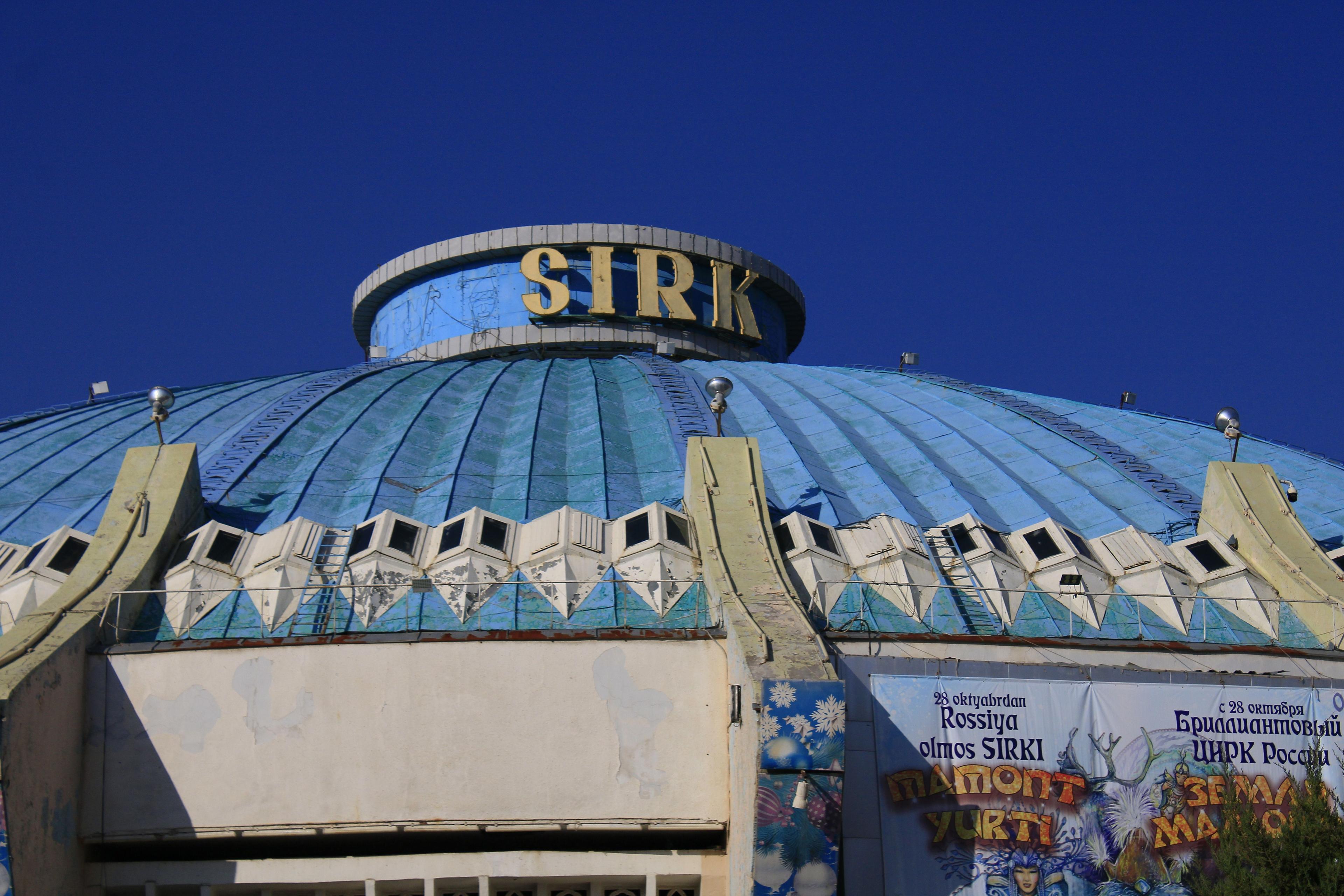
- Tashkent State Circus. A round building with a ribbed dome that echoes the domes of the old city.
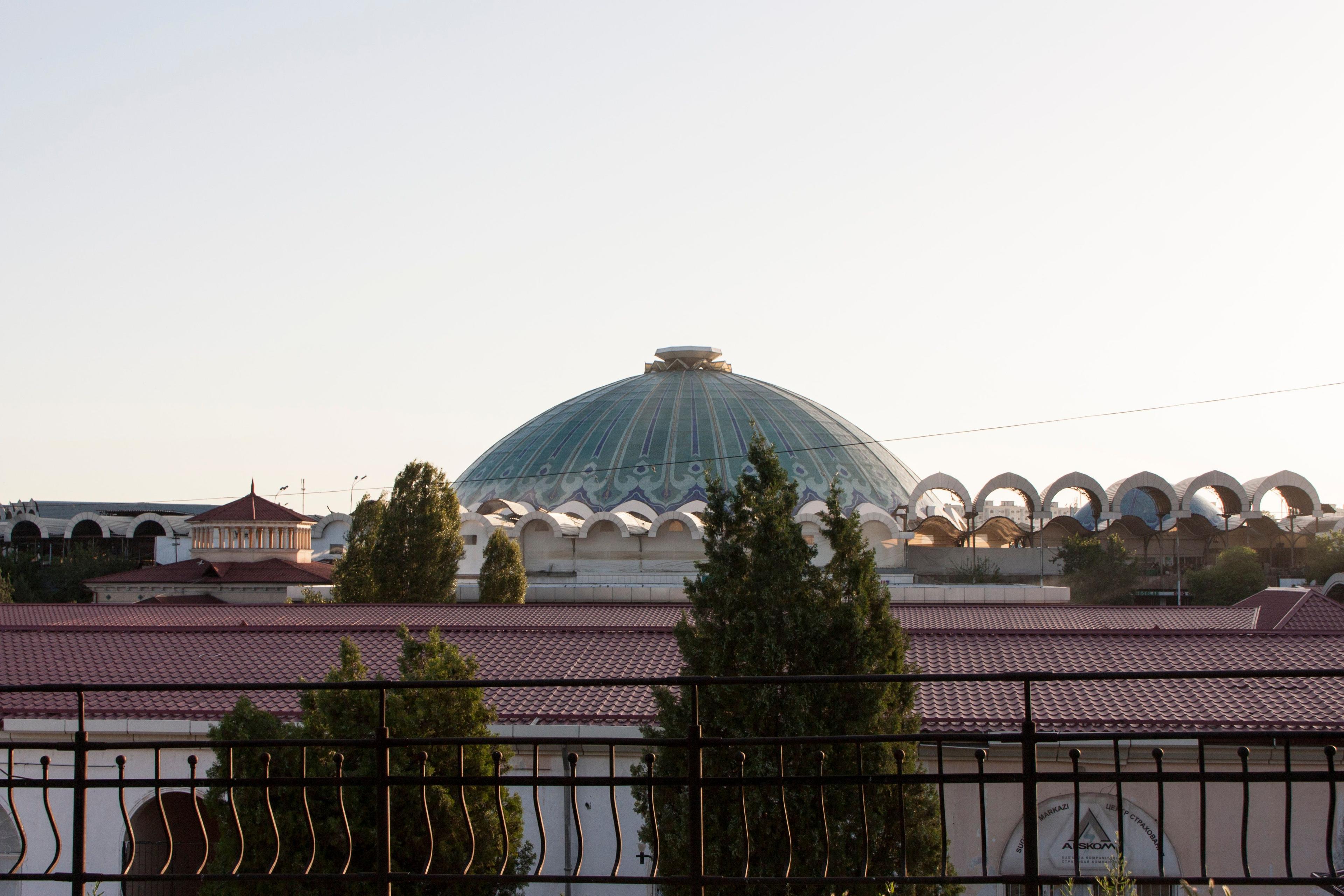
- Chorsu Bazaar. The great blue-tiled dome of Tashkent's oldest market, completed in the 1980s and still very much a working bazaar. Our guide to Chorsu and Uzbek bazaars covers shopping and tasting.
Further out:
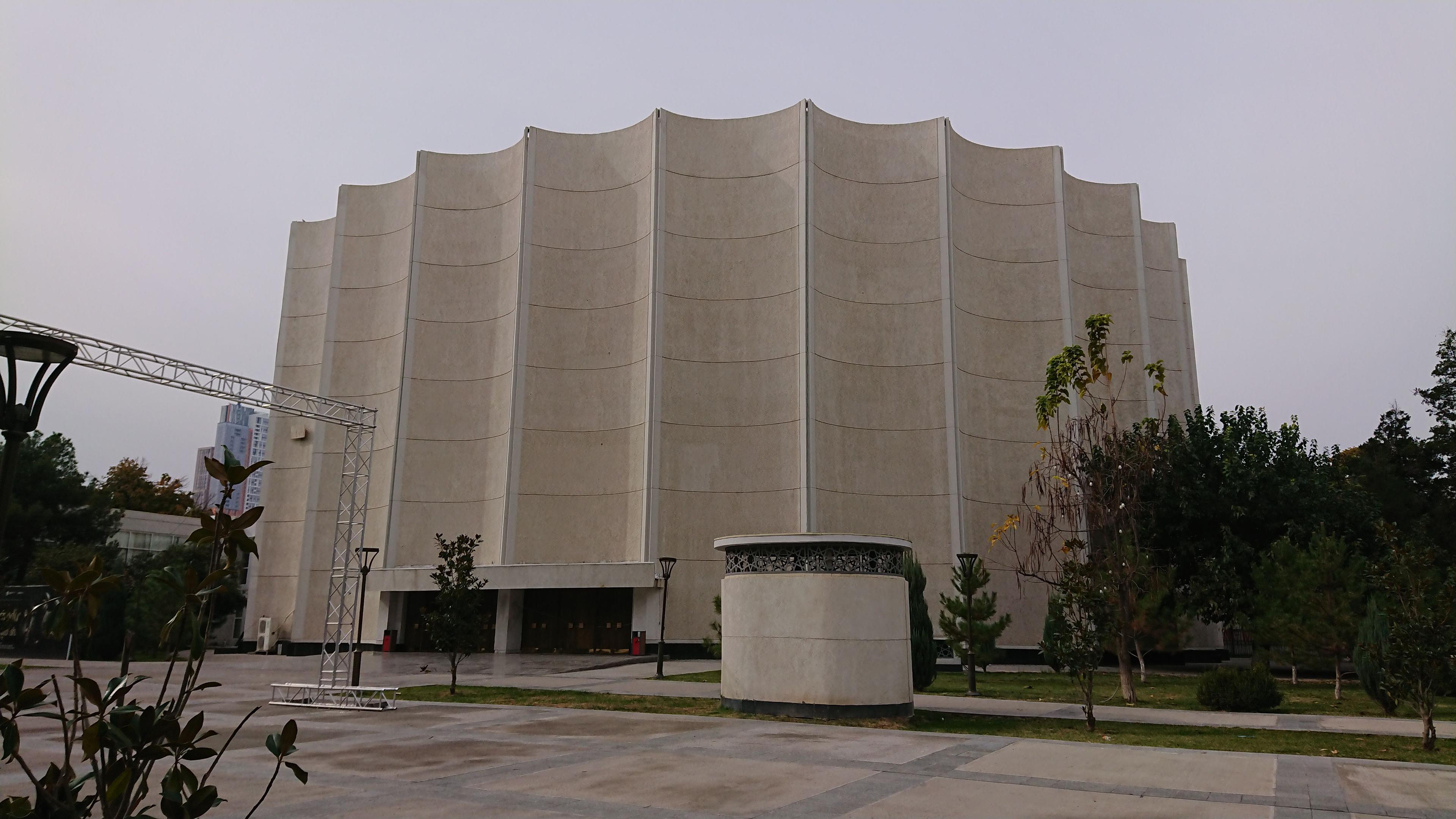
- Palace of Peoples' Friendship. The largest building on the list, a concert and congress hall from 1981 with around 3,800 seats behind a rippling concrete lattice. It stands next to Alisher Navoi National Park.
- Big Solar Furnace. A field of mirrors on a hillside that focus sunlight onto a giant curved reflector and a single tower, built for high-temperature materials research and still used by scientists.
Tashkent modernism walking route: a half-day self-guided walk
Most of the listed buildings sit within a compact area, so you can see seven of the nine city components in a morning with one short metro or taxi ride. Allow about four hours with stops, and around 4 km on foot.
- Start: State Museum of Arts on Amir Timur Avenue. See the façade and the atrium through the glass. If you want a coffee first, Amir Timur Square and the curved façade of Hotel Uzbekistan are about 1 km to the north.
- Walk about 900 m west to the Zhemchug building. The best view of the hanging communal balconies is from across the street.
- Walk about 350 m to Kosmonavtlar metro station. Go down, buy a ticket and walk the platform; one ride costs a few thousand som.
- Walk about 450 m north to the Central Exhibition Hall of the Academy of Arts. Check what is on; even if the halls are between shows, the exterior mosaics are the point.
- Walk about 400 m on to the State Museum of History. Plan an hour inside if it is open.
- Continue about 1.2 km north-west to the Panorama cinema. If your feet are tired, a Yandex Go taxi costs very little.
- From the Panorama, take a short taxi ride (about 1.5 km) to the Circus, then walk about 700 m to Chorsu Bazaar. Finish with lunch under the dome or a plate of plov nearby.
The Palace of Peoples' Friendship is about 2 km south of Chorsu. Take a taxi, or the metro to Xalqlar Do'stligi station, and come in the late afternoon, when low sun picks out the lattice. If you prefer to finish in the old town, reverse the route and start at the Palace.
A few practical tips:
- Mornings are best from May to September; by early afternoon the avenues are hot and shade is patchy.
- Download an offline map, since the official street names on signs are in Uzbek Latin script and older maps use Russian names.
- The Uzbekistan Art and Culture Development Foundation has promoted a Tashkent modernism guide app with a route of 21 buildings, if you want to go deeper than the UNESCO ten.
Can you go inside? Opening status in 2026
UNESCO status does not mean a single ticket or a visitor centre. Each building keeps its original use, so access varies:
- State Museum of History: open as a museum, with a modest entrance fee. Like most museums in Tashkent it closes one day a week, so check before you go.
- Central Exhibition Hall: open during exhibitions.
- Kosmonavtlar station: open whenever the metro runs, for the price of a ride. Photography in the Tashkent Metro has been allowed since 2018.
- Chorsu Bazaar: open daily from early morning until evening; mornings are the liveliest.
- Palace of Peoples' Friendship: open for concerts and events only. Look at the city's event listings and you may be able to combine architecture with a performance.
- Panorama cinema: used for screenings and events; the exterior is the highlight.
- State Museum of Arts: the building has been closed for reconstruction, and we could not confirm a reopening date as of November 2026.
- Tashkent State Circus: under restoration in 2026; shows may be suspended.
- Zhemchug: a residential building. Do not go into stairwells or onto the roof without an invitation from residents.
Opening hours and access change often around restorations, so check the current status before you go.

Beyond the UNESCO list: more Soviet modernist architecture in Tashkent
The ten listed buildings are a selection, not the whole story. If the walk leaves you wanting more, these are easy to add:
- Hotel Uzbekistan, from 1974, with its tall curved façade of concrete sun screens facing Amir Timur Square. It is a working hotel and the classic postcard view of Soviet Tashkent.
- The Courage Monument, the earthquake memorial near the Ankhor canal, with a cracked stone cube showing the time of the first shock.
- The Tashkent TV Tower, completed in 1985 and one of the tallest structures in Central Asia.
- Other metro stations. Alisher Navoiy, Mustaqillik Maydoni and Toshkent are each worth a stop; our Tashkent Metro guide lists the best.
- Mosaics. Many housing blocks and institutes along the main avenues carry large Soviet-era mosaic panels on their end walls.
Not every building survived. The House of Cinema, a much-loved modernist landmark, was demolished in 2017, and the loss helped push the campaign to protect what remained. Part of the significance of the UNESCO listing is that it gives the rest of the city's modernist heritage a stronger case for protection.
Visiting the Big Solar Furnace near Parkent
The tenth UNESCO component is a day trip rather than a stop on the walk. The Big Solar Furnace was built between 1981 and 1987 on a site in the foothills chosen for its clear skies and seismic stability. A hillside of flat mirrors, the heliostats, tracks the sun and reflects light onto a huge curved concentrator, which focuses it onto a small target in the central tower. The temperatures reached there are used to test materials, and the institute that runs it is still active.
What to know:
- Distance: about 45 km from central Tashkent, roughly 1 to 1.5 hours by car each way.
- Visits are arranged with the institute in advance. There is no reliable walk-in schedule, so do not just turn up.
- Allow half a day including the drive. The site is at altitude and sunny, so bring a hat and water.
- It combines well with Chimgan and Charvak, which lie in the same mountains.
We can arrange a visit as part of a private day out from Tashkent.
How much time do you need, and when to go?
For the city buildings, half a day is enough for a good overview, and a full day lets you go inside the museums and have a long lunch at Chorsu. Add half a day for the solar furnace.
The best months are April to early June and September to October, when the light is soft and walking is pleasant. Summer works if you start early. In winter, Tashkent can be grey but the museums are quiet, and the blue tiles of Chorsu and Kosmonavtlar look good in any weather. For month-by-month details, see our guide to the best time to visit Uzbekistan.
If you only have one day in Tashkent, combine a shortened modernism walk with the Khast-Imam complex and Chorsu Bazaar: Islamic Tashkent in the morning, Soviet Tashkent in the afternoon, with plov in between.
Exploring Tashkent modernism with TourEast
Our guides in Tashkent can lead the modernism walk as a private tour, check opening status on the day, and add the Big Solar Furnace or an evening performance at the Palace of Peoples' Friendship. We can build it into a wider Uzbekistan itinerary before you take the Afrosiyob train to Samarkand.