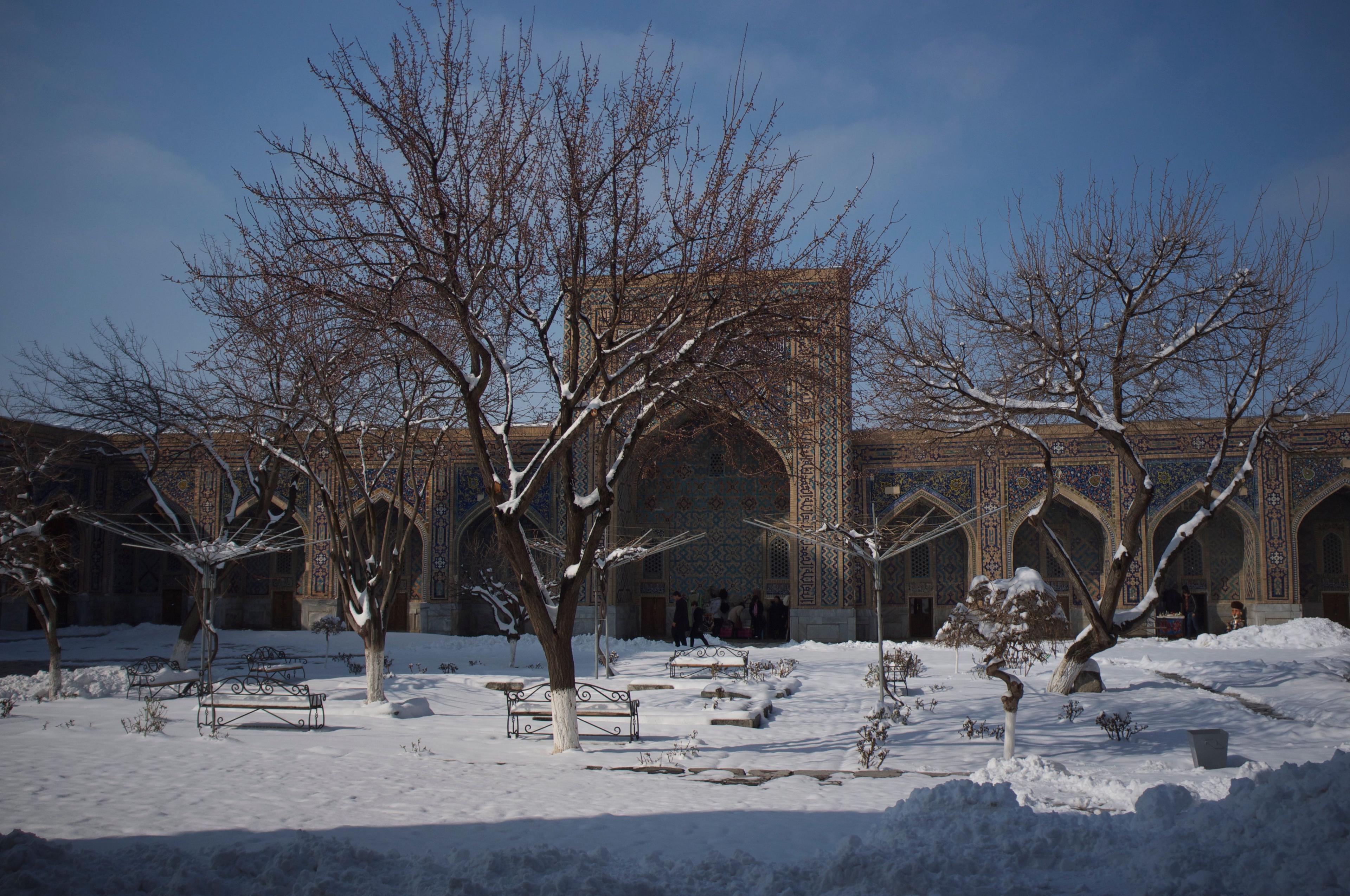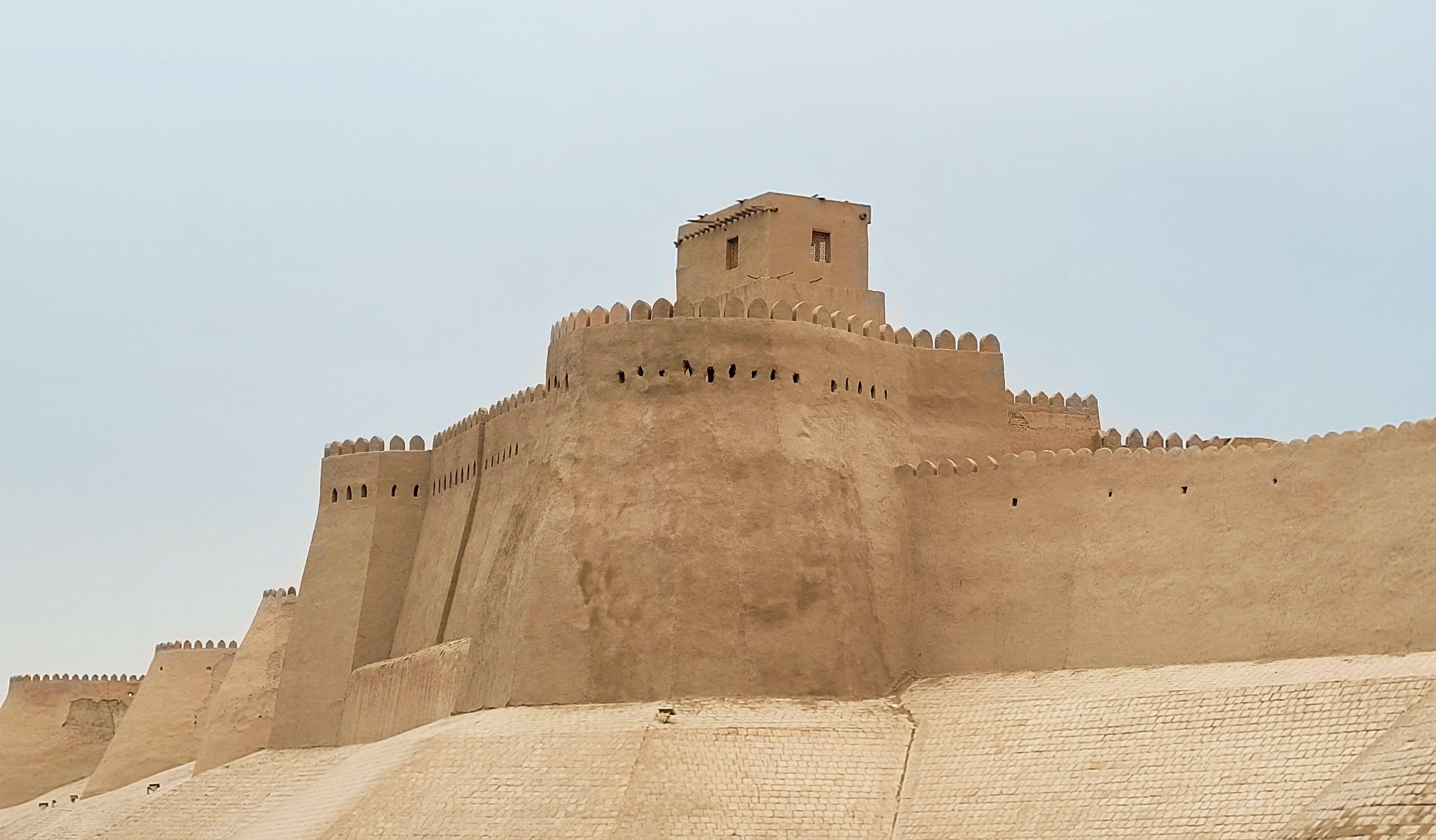
Where to run in Uzbekistan: sunrise loops past the Registan, laps of the Khiva walls, Bukhara before the shops open, canal paths in Tashkent and mountain trails at Chimgan, with the best months, safety and recovery tips.
Facts, prices and schedules checked on November 4, 2026
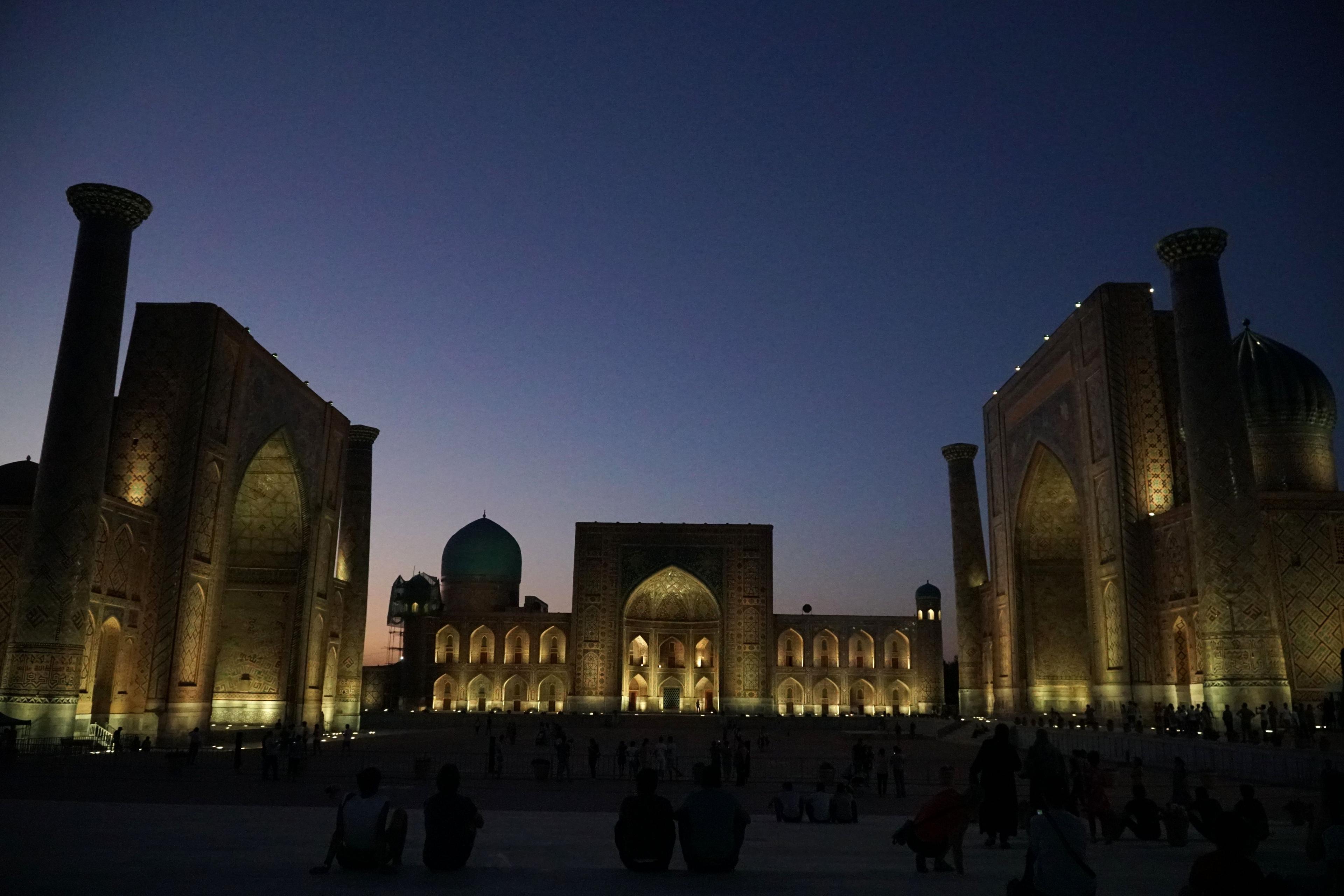
Running in Uzbekistan is one of the best ways to see the country, and it is still almost unknown to foreign visitors. At sunrise the old towns of Samarkand, Bukhara and Khiva are close to empty: no tour groups, no traffic in the pedestrian zones, just street sweepers, bakers lighting their tandyr ovens and the first light on the tiles. By 08:00 you have run 8 km past three or four UNESCO-listed monuments, and the day of sightseeing has not even started.
This guide covers the best running routes in Tashkent, Samarkand, Bukhara and Khiva, trail running in the mountains near Tashkent, the best months, heat and air quality, local run clubs, what to wear, and how to recover the Uzbek way. If you are planning to race, our separate guide to marathons and races in Uzbekistan covers the Tashkent Marathon, the Samarkand Marathon and the trail races.
Is Uzbekistan good for running?
Yes, with two conditions: run early, and pick the right season. The country is flat where the great Silk Road cities are, so most city runs have almost no climbing. The historic centres are compact, which means a 5–10 km loop links several landmarks, and in Samarkand, Bukhara and Khiva large parts of the old town are pedestrian. Uzbekistan is generally safe for visitors, and many runners, women included, find early-morning runs in the city centres comfortable; use normal precautions (see our guides to safety and solo female travel).
Running is also booming locally. Tashkent now has more than a dozen run clubs, the Tashkent International Marathon drew more than 23,000 participants in April 2026, and a series of charity races runs from Bukhara to the Aral Sea. Seeing a runner on the Registan at 06:30 no longer surprises anyone.
The challenges are the summer heat, fast traffic on the big avenues, uneven paving stones in the old towns, and, in Tashkent, poor air quality on some autumn and winter days. All of these are manageable with the advice below.

Best time to run in Uzbekistan
The best months for running in Uzbekistan are mid-March to mid-May and mid-September to early November. Mornings are cool, often 8–15 °C, and daytime highs stay in the low to high twenties. These are also the months of the big races: the Tashkent Marathon and the Bukhara Night Race in April, the Samarkand Marathon in November.
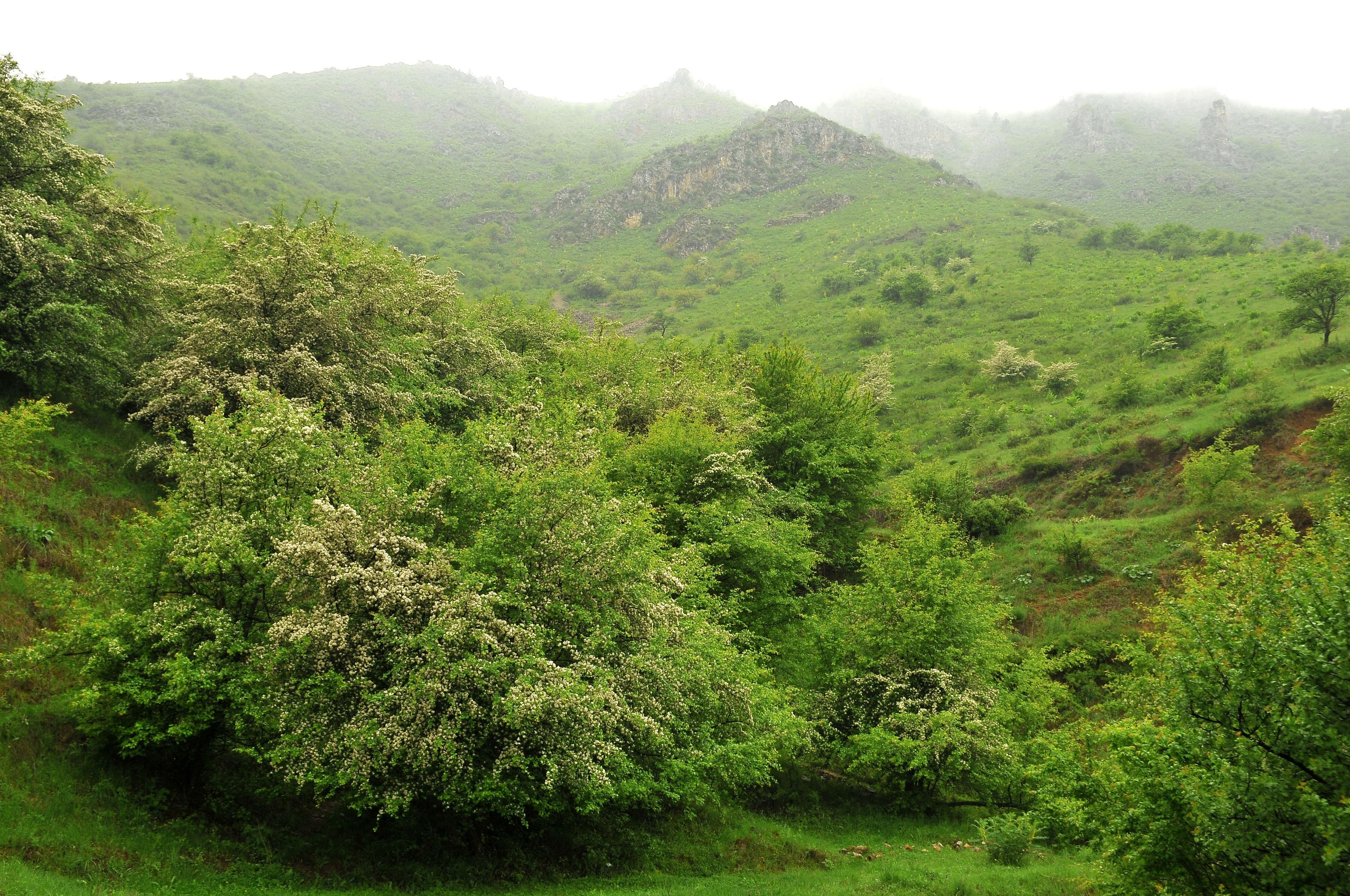
- Spring (March–May): the best season overall. Green mountains, fruit trees in blossom, low dust. Rain showers are possible in March and April.
- Summer (June–August): Bukhara and Khiva regularly reach 38–42 °C in the afternoon, and even at sunrise it can be 25 °C or more. Run only at first light, cut the distance and take water. The mountains near Tashkent are the place to run in summer.
- Autumn (September–early November): dry, stable and golden. September can still be hot by mid-morning; October is close to perfect.
- Winter (December–February): cold mornings around freezing, occasional snow, short days. Fine for hardy runners in the cities; the mountain trails are under snow.
Sunrise comes later the further west you go, because the whole country keeps one time zone (UTC+5). In mid-April the sun rises at about 05:50 in Tashkent, about 06:05 in Samarkand and about 06:30 in Khiva. In mid-October it is about 06:45, 06:50 and 07:15. For month-by-month temperatures, see our guide to the weather in Uzbekistan by month.
Running in Tashkent: best routes
Tashkent is a green city of wide avenues, parks and canals, but it is big, and traffic on the main roads is fast. The best running in the capital follows water and parks.
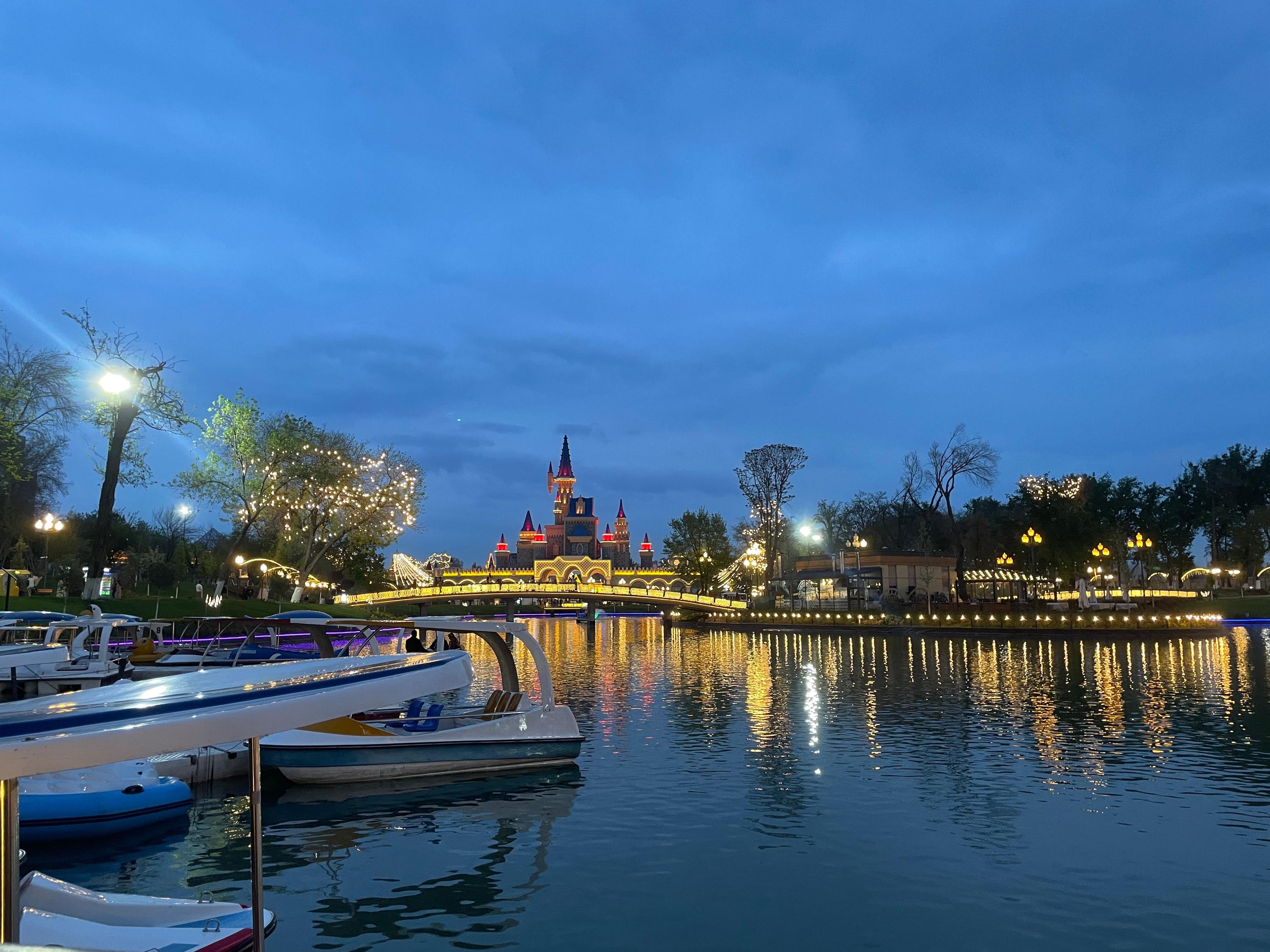
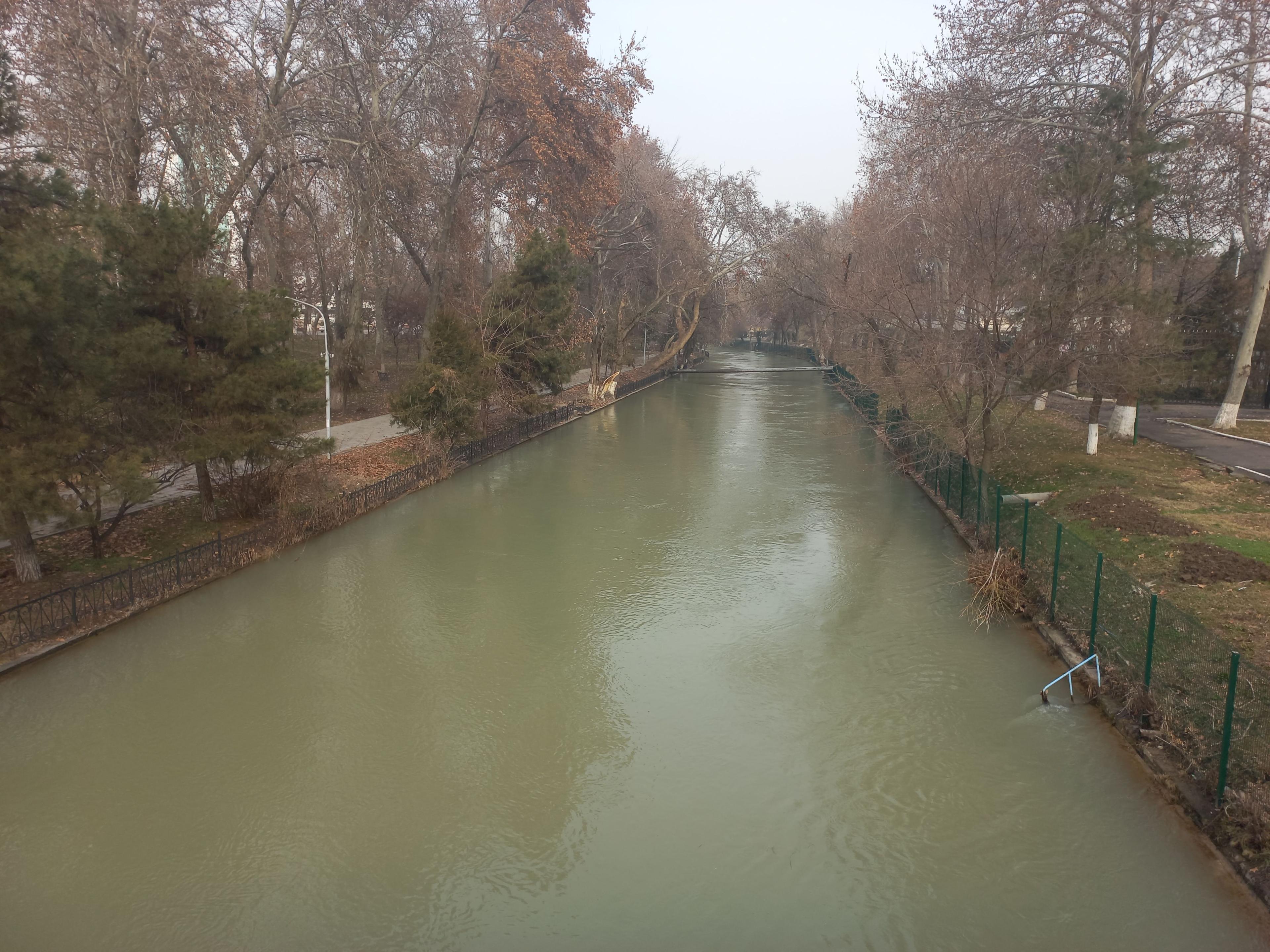
- Ankhor canal: the most popular route in the centre. A path follows the tree-lined Ankhor (Anhor) canal for several kilometres between the old city and the new centre, with bridges to cross and few road crossings. An out-and-back of 5–8 km is easy to plan.
- Independence Square and Amir Timur Square: combine them with the Ankhor canal for a 5 km loop past the Senate, the fountains and the equestrian statue of Timur. Early on a weekend morning the squares are quiet.
- Botanical Garden: shaded paths and a favourite of local run clubs for interval sessions. There is a small entrance fee, and it opens later than the city streets.
- Stadium tracks: the Pakhtakor area hosts club training sessions on weekdays, which is useful if you want intervals on a proper surface.
One idea we like: run one way from the centre to the old city (Khast-Imam, Chorsu Bazaar) and take the Tashkent Metro back. The metro opens early and costs very little.
Air quality matters in Tashkent. Fine-particle pollution (PM2.5) is highest from late autumn to winter, when heating and still, cold air trap smog over the city. On those days check the air quality index (for example on IQAir) before you go. If it is above about 150, choose an easy jog or a gym, or take your long run to the mountains. Spring air is usually much cleaner.
Running in Samarkand: the Registan sunrise loop
Samarkand gives you the most spectacular running in Uzbekistan. Our favourite route starts at the Registan just before sunrise, when the three madrasahs turn gold and the square is still empty, and links the great monuments of Timur's capital in about 10 km.
- Registan: start at the viewing area in front of the square.
- Toshkent ko'chasi: the pedestrian street that runs north-east to the Bibi-Khanym Mosque and Siab Bazaar, smooth and car-free.
- Shah-i-Zinda: run past the foot of the necropolis stairway.
- Afrasiab: a loop on the hill of the ancient city that Genghis Khan destroyed in 1220. This is where the route climbs, about 50–70 m in total.
- University Boulevard: back down the shaded avenue of plane trees to Gur-e-Amir and the Registan.
For a shorter option of about 6 km, turn around at Shah-i-Zinda. The route goes past the monuments, not through them: the Registan courtyards and Shah-i-Zinda are ticketed and open later in the morning, and they are places to visit on foot, respectfully, after breakfast. The Samarkand Marathon follows a similar idea every November, with the start and finish on the Registan.
In Samarkand the old town is paved with smooth stone along the tourist axis, and the side streets are quiet at dawn. Watch for the tram lines and the traffic at the large crossroads by Bibi-Khanym.
Running in Bukhara: the old town before the shops open
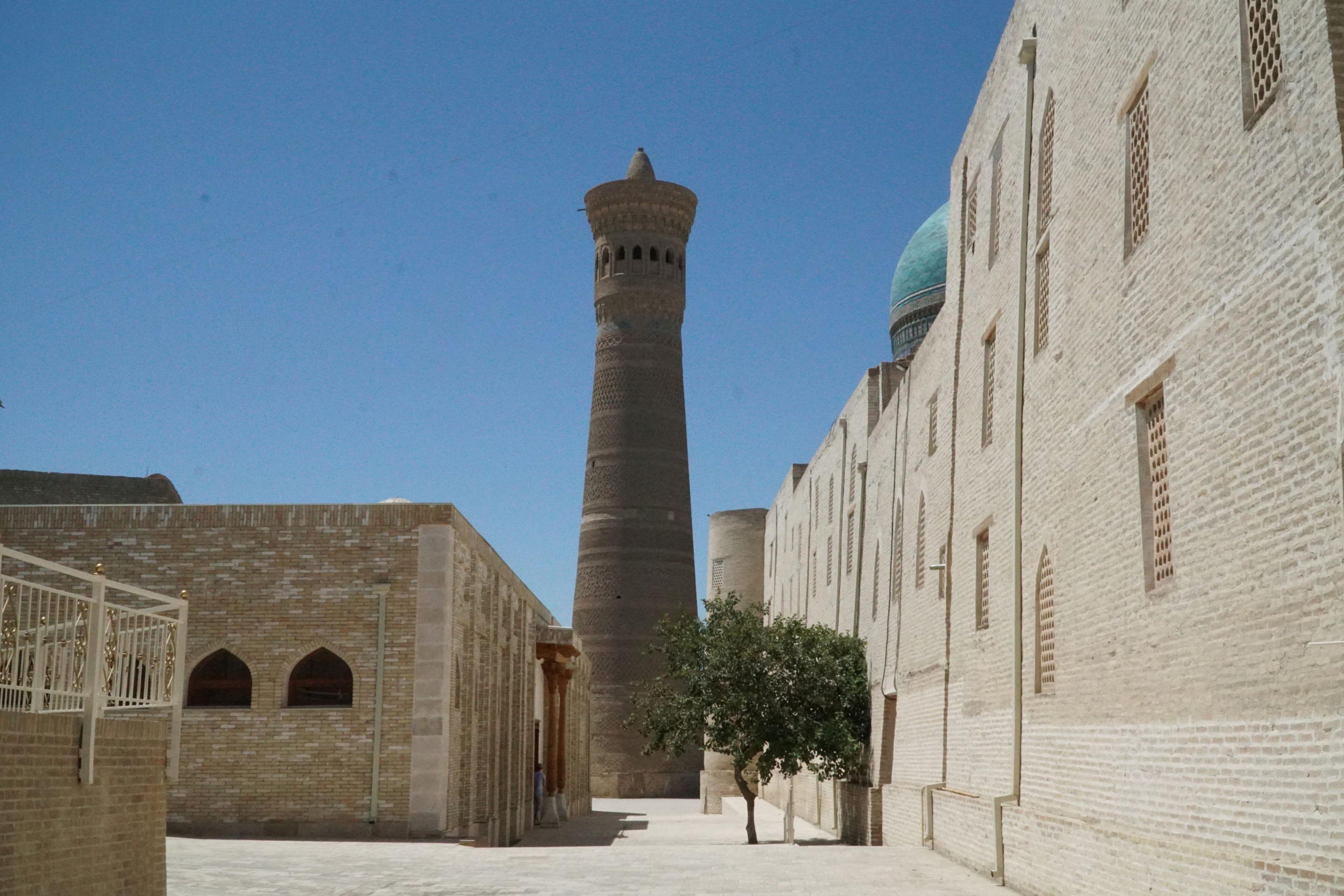
Bukhara is completely flat and has the most intimate old town of the three Silk Road cities. In the morning, before the trading domes open their stalls, you can run the length of the historic centre on paved, almost car-free lanes.
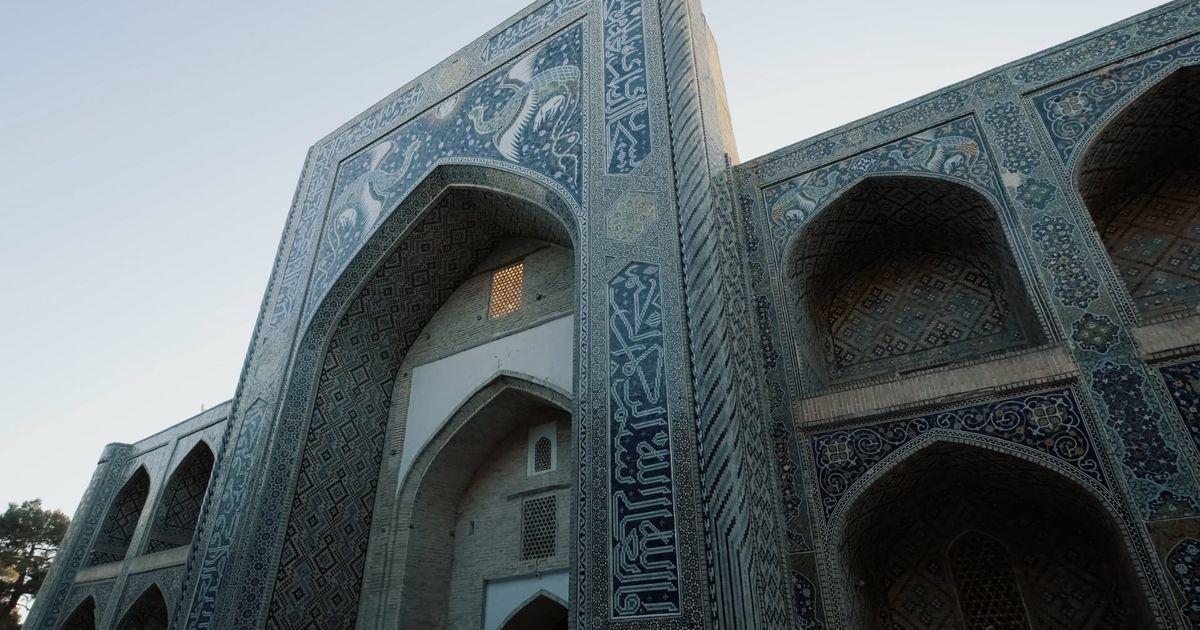
- Lyabi-Hauz: start by the pool and the Nadir Divan-Begi madrasah.
- Trading domes: run under the 16th-century domes of the old bazaar, past the Magoki-Attori Mosque.
- Poi-Kalyan: the Kalyan Minaret, the Kalyan Mosque and the Mir-i-Arab Madrasah, the finest square in Bukhara at first light.
- Ark: run along the sloping walls of the citadel to the Bolo-Hauz Mosque.
- Samani Park: a loop through the park around the 10th-century Samanid Mausoleum and Chashma-Ayub.
This gives about 8 km; finish at the Ark for a 5 km version. A second good run is the recovery loop through the residential mahallas to Chor-Minor, the gatehouse with four turquoise-domed towers. Bukhara is also home to the Bukhara Night Race every April, a half marathon run after dark past the illuminated monuments, starting and finishing at the Ark.
Recovery in Bukhara is traditional. The city still has working historic bathhouses (hammams), where an attendant scrubs and stretches you on hot marble. It is the ideal end to a running morning; book ahead and check opening days, as some are closed one day a week.
Running in Khiva: laps of the Ichan-Kala walls
Khiva is the most compact of the four cities. The walled inner town, Ichan-Kala, is enclosed by about 2.2 km of mud-brick walls, roughly 10 m high, with a gate on each side. That makes for a perfect running loop: flat, almost car-free on the outside path, and with the minarets in view the whole way.
- Two laps of the walls give about 4.5 km.
- Add the main street of Ichan-Kala from the West Gate to the East Gate, past the Kalta-Minor, for 6–7 km.
- Extend to the surviving gates of the outer town, Dishan-Kala, for 8 km or more.
Run early: inside Ichan-Kala the lanes are empty before the ticket checks and souvenir stalls start, and the light on the walls at sunrise and sunset is superb. Because Khiva lies far to the west, sunrise comes about 30–40 minutes later than in Tashkent. Summer is very hot here, so from June to August only run at dawn. For the history of the walled town, see our guide to Ichan-Kala.
Trail running near Tashkent: Chimgan, Amirsoy and beyond
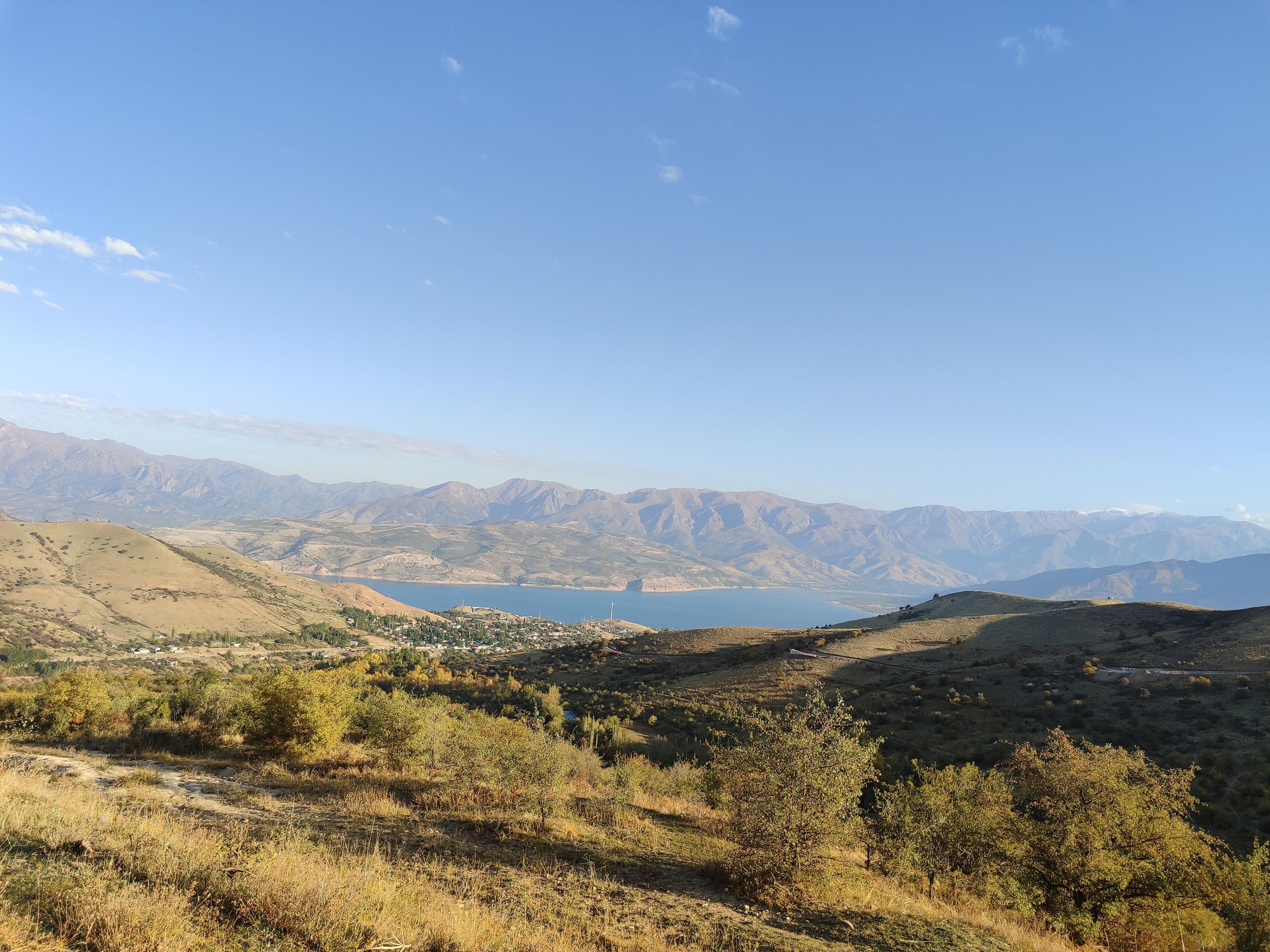
Ninety minutes from Tashkent, the Western Tian Shan offers proper trail running. The Chimgan area, around a village at about 1,600 m below Big Chimgan (3,309 m), has dirt paths through juniper and wild-rose slopes, and a 9–10 km loop with 400–500 m of climbing is a satisfying morning for a fit amateur. Afterwards, the shore of the Charvak reservoir, at about 890 m, is the place for lunch, stretching and, from June to September, a swim.
The Amirsoy resort, in the same district, is the base of Sky Camp Bo'stonliq, a trail festival held every August, with a short vertical race and trail courses from 5 to 55 km. In 2024 its 20 km course became the first race in Uzbekistan to award ITRA points. Further south-west, Zaamin National Park hosts the Zaamin Ultra in June, with distances up to 50 km.
A few practical points:
- Altitude: at 1,600–2,300 m most people feel the thinner air on climbs. Walk the steep parts and expect slower paces.
- Season: May to October. From about December to March the upper trails are under snow, and the area is about skiing.
- Navigation: paths are not waymarked to European standards. Go with a local guide or a well-tested GPX track, and tell someone your route.
- Water: there are few sources on the slopes. Carry at least 1 litre.
Our guides to Chimgan and Charvak and to hiking in Uzbekistan cover the area in more detail.
Run clubs in Tashkent: running with locals
Tashkent has a lively running scene, and most clubs welcome visitors. They organise themselves on Telegram, which is the easiest way to find the next session.
- Tashkent Runners (Telegram @tashkentrunners): the best-known community, with weekly open runs for all levels and the largest running chat in the country.
- Runa Running Club: Sunday 5 km runs that start from a different place each week.
- Run Lab: technique and functional training sessions on weekdays at stadiums in the centre.
- Lactic Acid Wednesday and Thirteen Running Club: both train at the Botanical Garden.
Meeting times change with the seasons, so check each group's channel before you go. Most sessions are free. On Strava you will also find the Tashkent clubs and popular local segments, which is a quick way to see where people actually run.
Is it safe to run in Uzbekistan? Practical tips
Running in Uzbekistan is safe if you follow the same common sense as in any big city, plus a few local points.
- Traffic: drivers do not expect pedestrians on the big avenues, and some crossings are underground. Stay on pedestrian streets, canal paths and parks, and wear something bright at dawn.
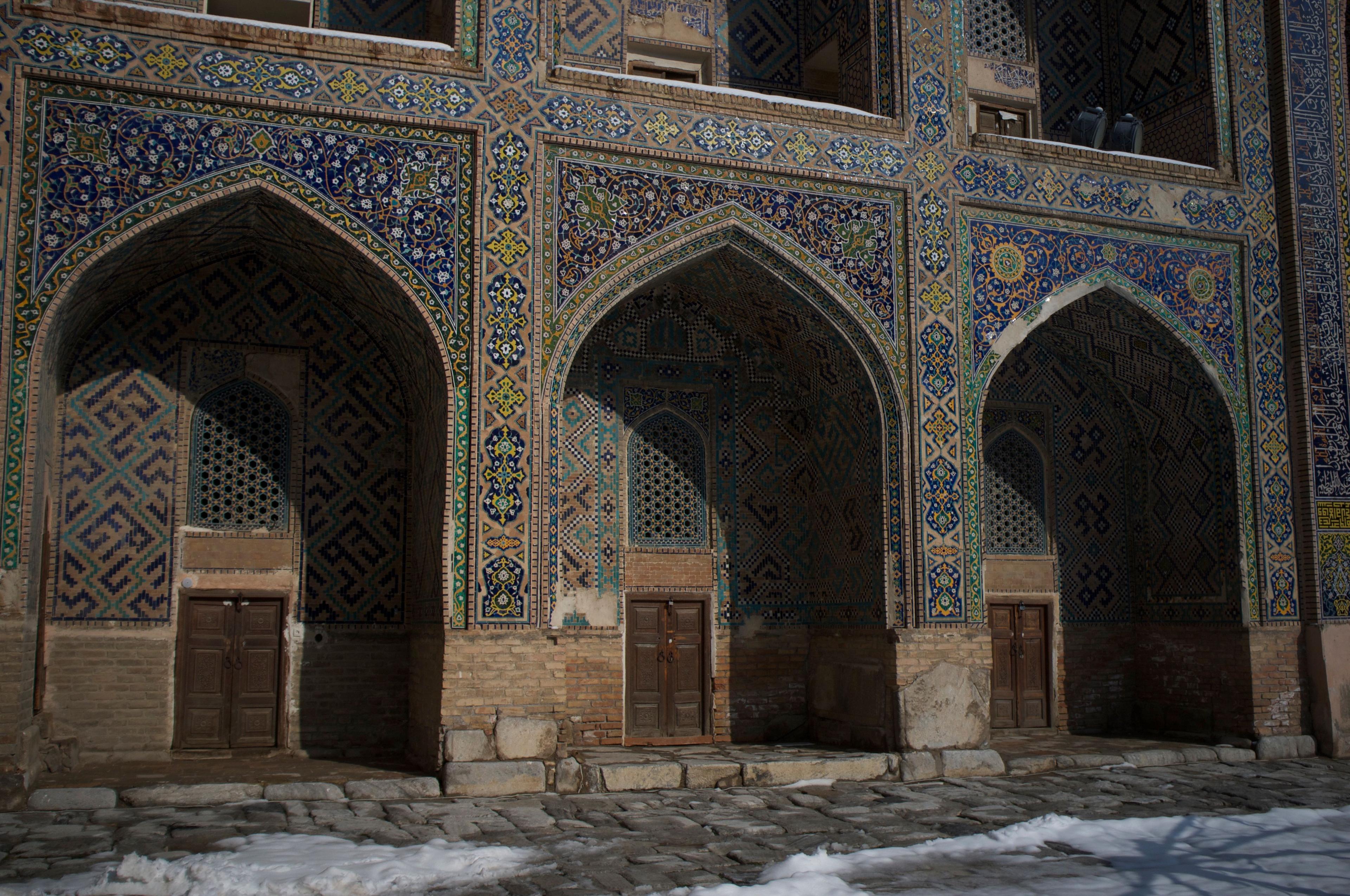
- Surfaces: old-town paving can be uneven, and kerbs are high. Look down at the brick lanes in Bukhara and Khiva.
- Dress: shorts and a T-shirt are fine for running in the cities. Knee-length shorts or tights are the most respectful choice in the old towns and around working mosques, and you should cover shoulders and knees if you go inside. Our packing list has more on what to wear.
- Dogs: rarely a problem in city centres, more common on village and mountain paths. Slow down, keep your distance and do not run at a guarding dog.
- Water: do not drink tap water. Bottled water is sold everywhere from early morning. Carry some on any run longer than 45 minutes from May to September, and add electrolytes in the heat.
- Respect: avoid running through cemeteries and shrines, and stop running when you pass a mosque at prayer time.
- Drones: flying a drone needs a permit in Uzbekistan, so leave it at home if you were planning aerial footage of your run.
For what to do if you feel unwell, and why you need insurance, see our guide to health, tap water and travel insurance.
Food, recovery and the Uzbek carb load
Uzbek food suits runners better than its reputation suggests. Breakfast in most hotels includes eggs, bread, yoghurt, honey, fresh and dried fruit. Flatbread (non) is sold warm from the tandyr from early morning, and green tea is served everywhere.
Plov, the national dish of rice slow-cooked with carrots, meat and spices, is traditionally a lunch dish and an excellent carbohydrate load before a long run or race. Lagman noodles, steamed manti dumplings and fresh salads from the bazaars are lighter options. Our guides to plov and to Uzbek food explain what to order.
For recovery, book a hammam in Bukhara, a massage in Samarkand or Tashkent, or simply rest through the hottest hours like everyone else: most of the country slows down between 13:00 and 16:00 in summer.
Run the Silk Road with TourEast
We have built a small-group running tour around these routes: eight days, guided sunrise runs of 4–10 km in Tashkent, Khiva, Bukhara and Samarkand, a trail day below Big Chimgan, and recovery with a hammam and massage, with the sightseeing and transport taken care of. We can also plan a private trip around your own runs or a race, with a guide who knows the routes and a car waiting with water at the finish.