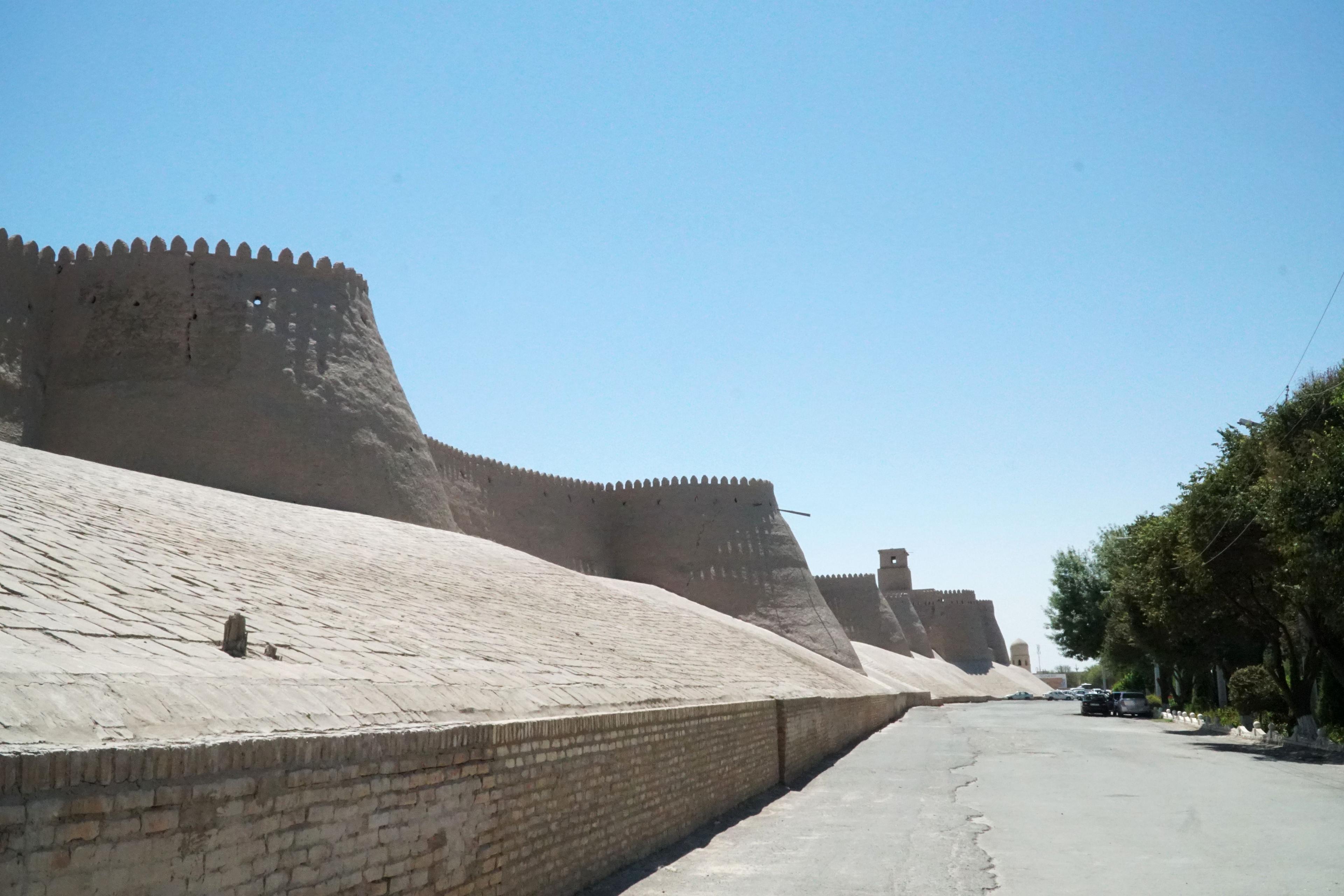
Khiva (Xiva) beyond the walls: the new train and Urgench airport, how many days you need, a one-day plan, Dishan-Kala and the Nurullabay Palace, sunset spots, Khorezm food and a day trip to the desert fortresses of Ayaz-Kala and Toprak-Kala.
Facts, prices and schedules checked on November 4, 2026
Khiva (Xiva in Uzbek) is the most complete walled city on the Silk Road, and for many of our guests the most photogenic stop in Uzbekistan. Its inner town, Ichan-Kala, is a UNESCO World Heritage Site packed with madrasahs, minarets and palaces inside clay walls, and we cover it monument by monument in our separate Ichan-Kala guide.
This Khiva travel guide deals with everything around it: how to get to Khiva now that the high-speed railway has arrived, how many days to plan, a one-day itinerary, the outer town of Dishan-Kala, the best places for sunset, what to eat in Khorezm and the day trip into the desert to the ancient fortresses of Ayaz-Kala and Toprak-Kala.
Is Khiva worth visiting? Yes. It feels different from Samarkand and Bukhara: smaller, more enclosed and closer to the desert, with its own architecture, food and dialect. Until recently it took real effort to reach. In 2026 it is easier than ever, which is all the more reason to give it proper time.
How to get to Khiva
Khiva sits in the far west of Uzbekistan, in the Khorezm region on the lower Amu Darya. There are three ways in.
By train. The biggest change of 2026 is the electrified railway across the Kyzylkum desert. The Jaloliddin Manguberdi high-speed train made its first run on 3 May 2026. It leaves Tashkent at about 07:00, stops at Samarkand, Bukhara and Urgench, and reaches Khiva in the mid-afternoon, about 7 hours 30 minutes to 7 hours 45 minutes later. From Bukhara the journey takes about three and a half hours, compared with six to seven hours by road. Frequency on this line has been changing since launch, so check the live timetable on the official Uzbekistan Railways site and book early: seats are limited and demand is high.
Slower conventional and overnight trains also run to Urgench and Khiva from Tashkent and other cities, a good backup if the fast train is full. Khiva station is about 1.5 km from the walls, a short taxi ride or a 20 to 30 minute walk. Our Afrosiyob train guide has fares and booking advice.
By air. The nearest airport is in Urgench, the regional capital, about 35 to 40 km from Khiva. Flights from Tashkent take roughly an hour and a half, and there are some international routes. From the airport to Khiva is a 40 to 50 minute drive on a flat road. There is no direct airport bus; a taxi usually costs about 70,000 to 100,000 som (roughly 6 to 8 USD) as of November 2026, and drivers at the exit start higher, so agree the price first or use Yandex Go. See our guide to domestic flights in Uzbekistan.
By road. From Bukhara the drive across the desert takes six to seven hours, with a stop at a roadside café near the Amu Darya. It is a long day, but a private car lets you stop where you like.
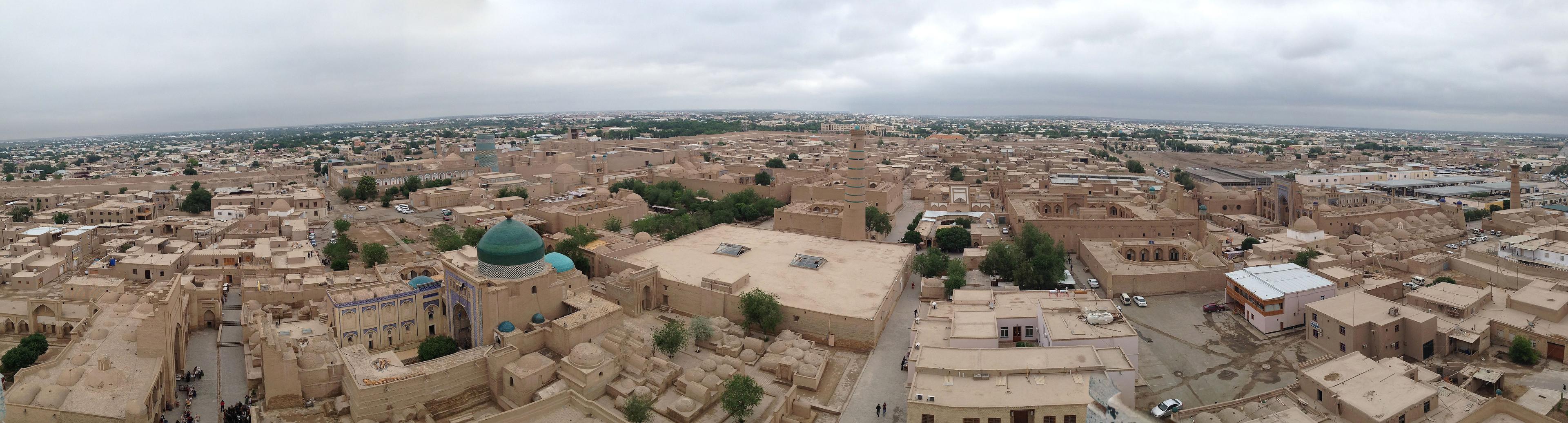
How many days do you need in Khiva?
For most travellers, two nights and one and a half to two days is right.
- One day: enough for the main monuments of Ichan-Kala with a guide, but you will miss the softer hours of early morning and evening, when Khiva is at its best.
- Two days: Ichan-Kala at a relaxed pace, sunset from the walls, Dishan-Kala and the Nurullabay Palace, the bazaar and a long Khorezm lunch.
- Three days: add the desert fortresses of Karakalpakstan, either as a long day trip or with a night in a yurt camp near Ayaz-Kala.
A practical point: because Khiva is at the far end of the country, it works best as the start or end of a route. Many of our itineraries fly into Urgench and travel east by train, or finish in Khiva and fly back to Tashkent.
One day in Khiva: a simple itinerary
If you only have one day, this is the order we use with our guests. It keeps you in the shade at midday and on the walls for the evening light.
- 08:00: Enter by the west gate, Ota Darvoza, while the streets are empty. Photograph the Kalta Minor and the Muhammad Amin Khan Madrasah before the groups arrive.
- 09:00: The Kunya-Ark, the khans' fortress, with its throne courtyard and the summer mosque lined with blue tiles.
- 10:30: The Juma Mosque and its forest of more than 200 carved wooden columns, cool even in summer.
- 11:30: The Pakhlavan Makhmud Mausoleum, Khiva's most revered shrine, and the Islam Khoja Madrasah and minaret next to it.
- 13:00: Lunch on a terrace with Khorezm dishes (see below).
- 14:30: A slow afternoon: the Tash-Hauli Palace and harem, the craft workshops for carpets and wood carving, a rest at your hotel.
- 17:00: Out of the east gate, Palvan Darvoza, to the bazaar and the edge of Dishan-Kala.
- Sunset: back on the walls or a rooftop terrace (see below), then dinner inside the old town.
Most monuments are covered by the Ichan-Kala ticket, sold at the west gate. Climbing the Islam Khoja minaret and the Kunya-Ark watchtower costs extra. Our Ichan-Kala guide lists what the ticket includes and current prices.
Beyond the walls: Dishan-Kala and the Nurullabay Palace
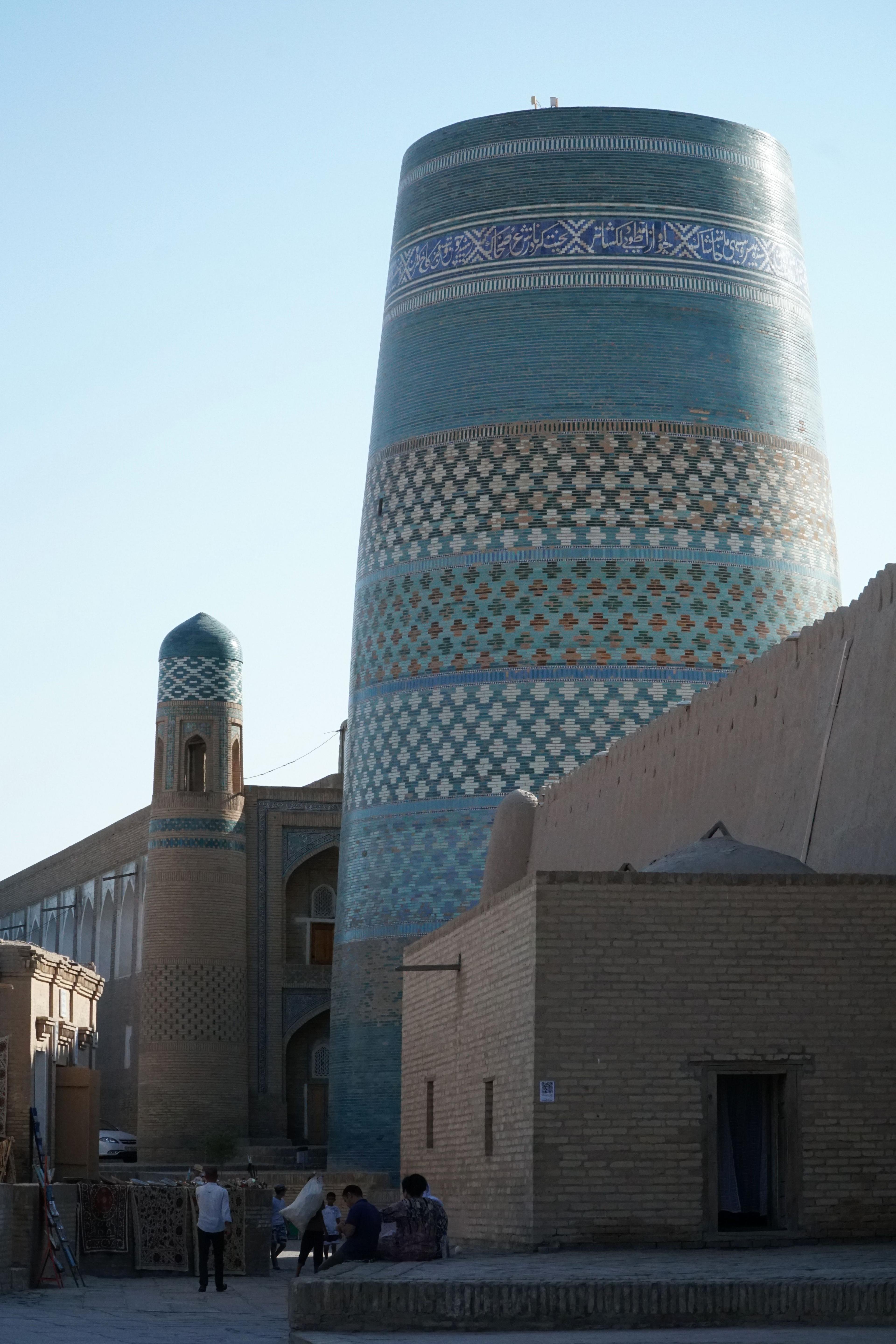
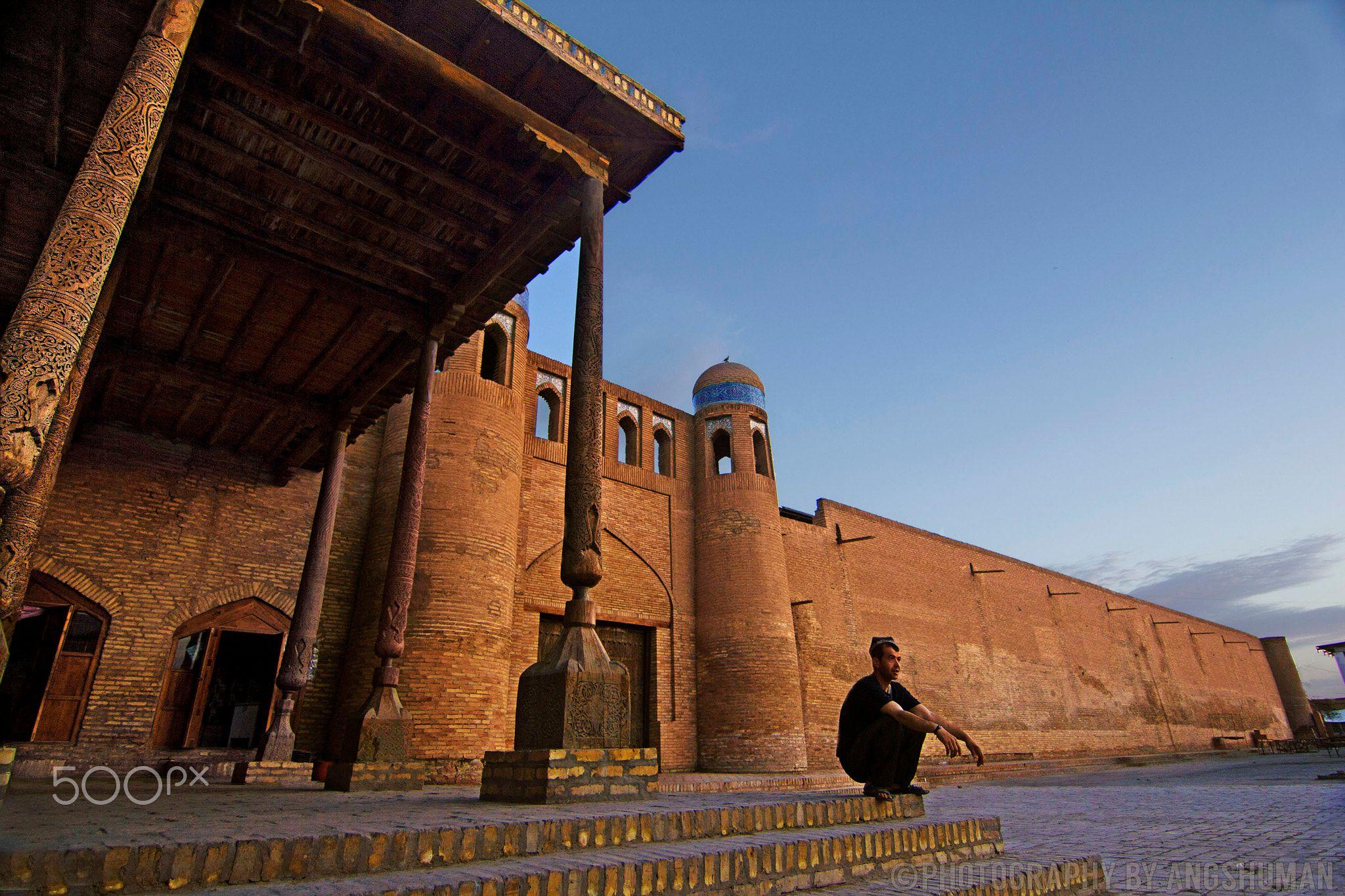
Most visitors never leave Ichan-Kala, which is a shame. Around it lies Dishan-Kala, the outer town, which was enclosed by its own wall in 1842 under Allakuli Khan to protect the city from raids. The wall ran for roughly six kilometres with ten gates. Long stretches have gone, but sections and a few gates survive, and the quarter behind them is where Khiva lives: family houses, small mosques, workshops and schools.
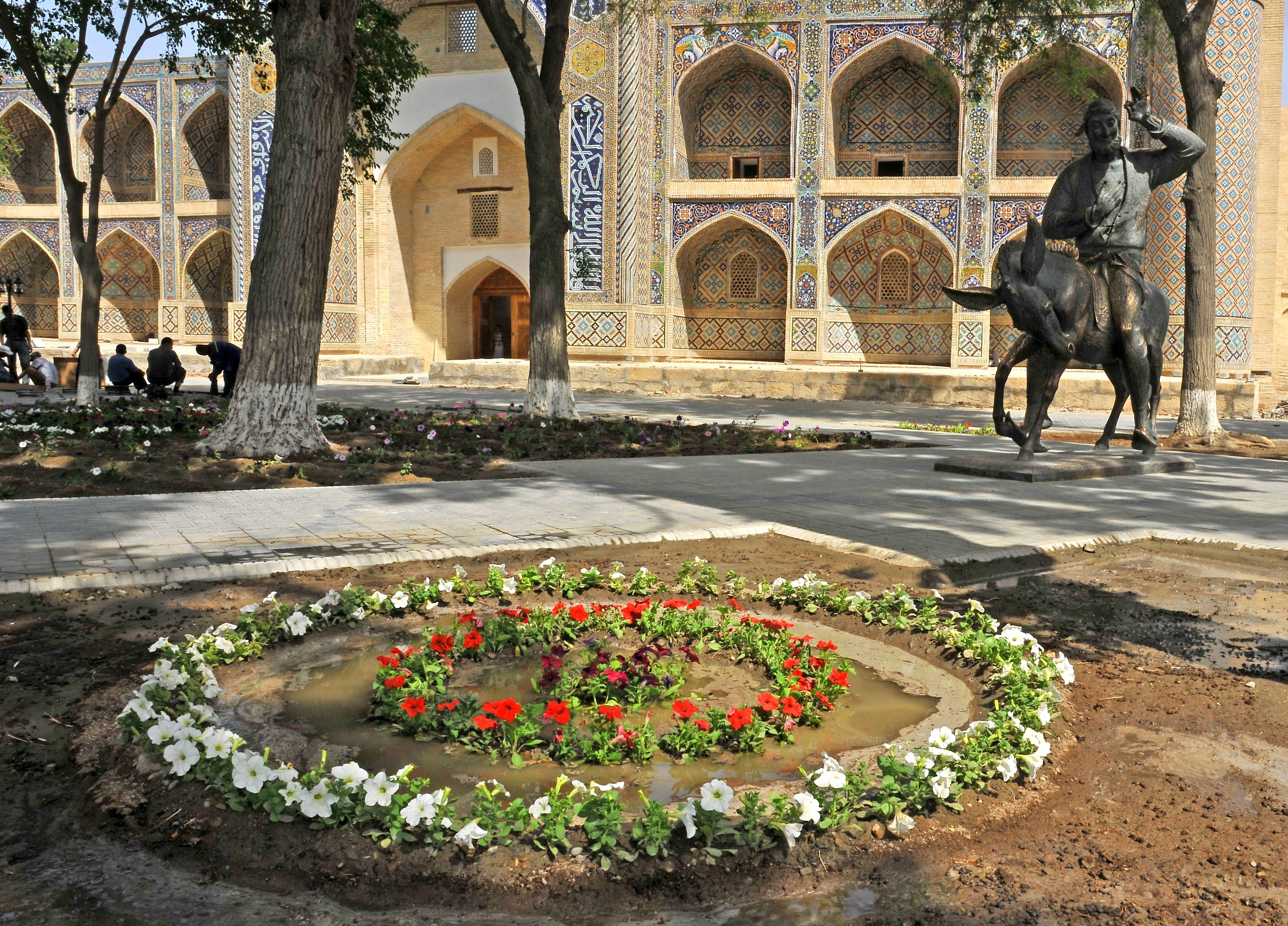
The highlight is the Nurullabay Palace, a few minutes' walk north of Ichan-Kala. It was built in the early 20th century for Isfandiyar Khan, one of the last khans of Khiva, on the site of a garden that belonged to a merchant named Nurullabay. Its reception rooms are a fascinating mix: Khivan carved wood and tilework alongside European stoves, chandeliers and plasterwork, reflecting the khanate's ties with Russia before the revolution. Some guidebooks say entry is included in the Ichan-Kala ticket; ask when you buy yours.
Other things worth a look outside the walls:
- The main bazaar by the east gate, best in the morning, for dried fruit, bread, spices and local life.
- The outer face of the Ichan-Kala walls, especially on the west side, which most people only see from inside.
- Neighbourhood workshops for carpets and suzani, many of them run by local women's cooperatives.
Best sunset spots in Khiva
Khiva's clay walls and tiled domes glow orange in the last hour of the day. Where to watch:
- The city walls near the north gate: a stretch of the wall can be climbed for a small fee, with a long view across the rooftops to the minarets. This is the classic sunset spot, so arrive 30 to 45 minutes early in high season.
- The Ak-Sheikh Bobo watchtower in the Kunya-Ark: the best panorama in the old town. In summer it often closes before sunset, so check the time it shuts; in spring and autumn the light is lovely by late afternoon anyway.
- Rooftop terraces: several cafés and hotels inside Ichan-Kala have roof terraces facing the Kalta Minor or the Islam Khoja minaret. Buy a drink and stay for the light.
- Outside the west gate: the walls themselves, lit from the side by the setting sun, make the best photograph of Khiva from ground level.
After dark, walk the main street between the west and east gates. The monuments are lit, the day groups have gone and the town returns to its residents. It is one of the best reasons to stay the night.
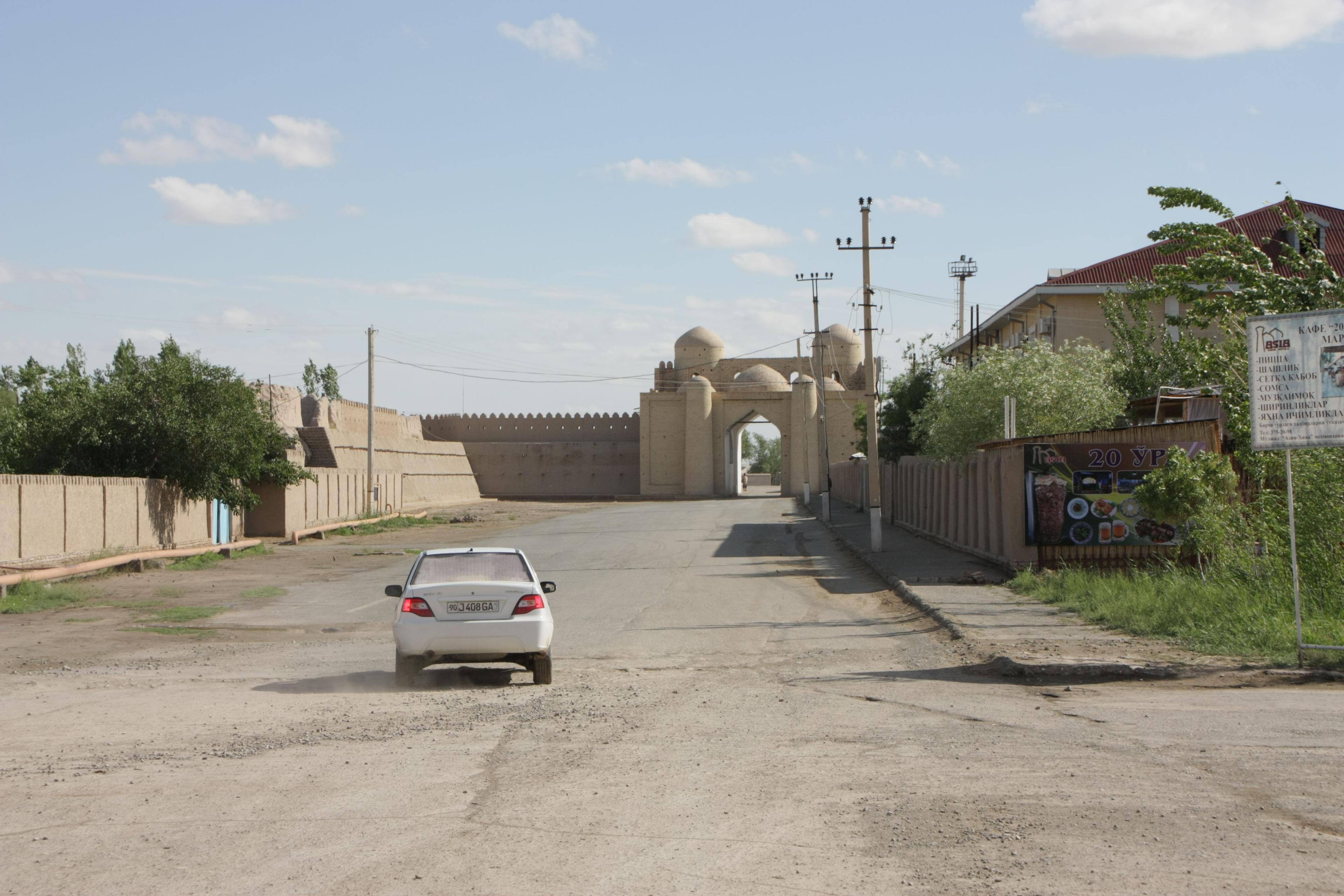
What to eat in Khiva: Khorezm food
Khorezm has its own kitchen, and Khiva is the place to try it. Look for these on the menu:
- Shivit oshi: noodles coloured bright green with dill, served with a meat and vegetable stew and a spoon of yoghurt. Mostly a summer dish, and Khiva's signature.
- Tukhum barak: thin dumplings filled with egg, boiled and served with butter or sour cream. You will rarely find it elsewhere in Central Asia.
- Khorezm plov: the local version of the national dish, often made with yellow carrots.
- Gumma: fried pies stuffed with meat, sold at the bazaar and street stalls.
- Dimlama: a slow-cooked stew of meat and vegetables layered in a pot.
Several terrace restaurants in Ichan-Kala offer tasting menus that bring a few Khorezm dishes to the table at once, a good way to try everything. Many places now also serve vegetarian dishes. For the background to plov, bread and teahouse culture across the country, see our Uzbek food guide.
Day trip to the desert fortresses: Ayaz-Kala and Toprak-Kala
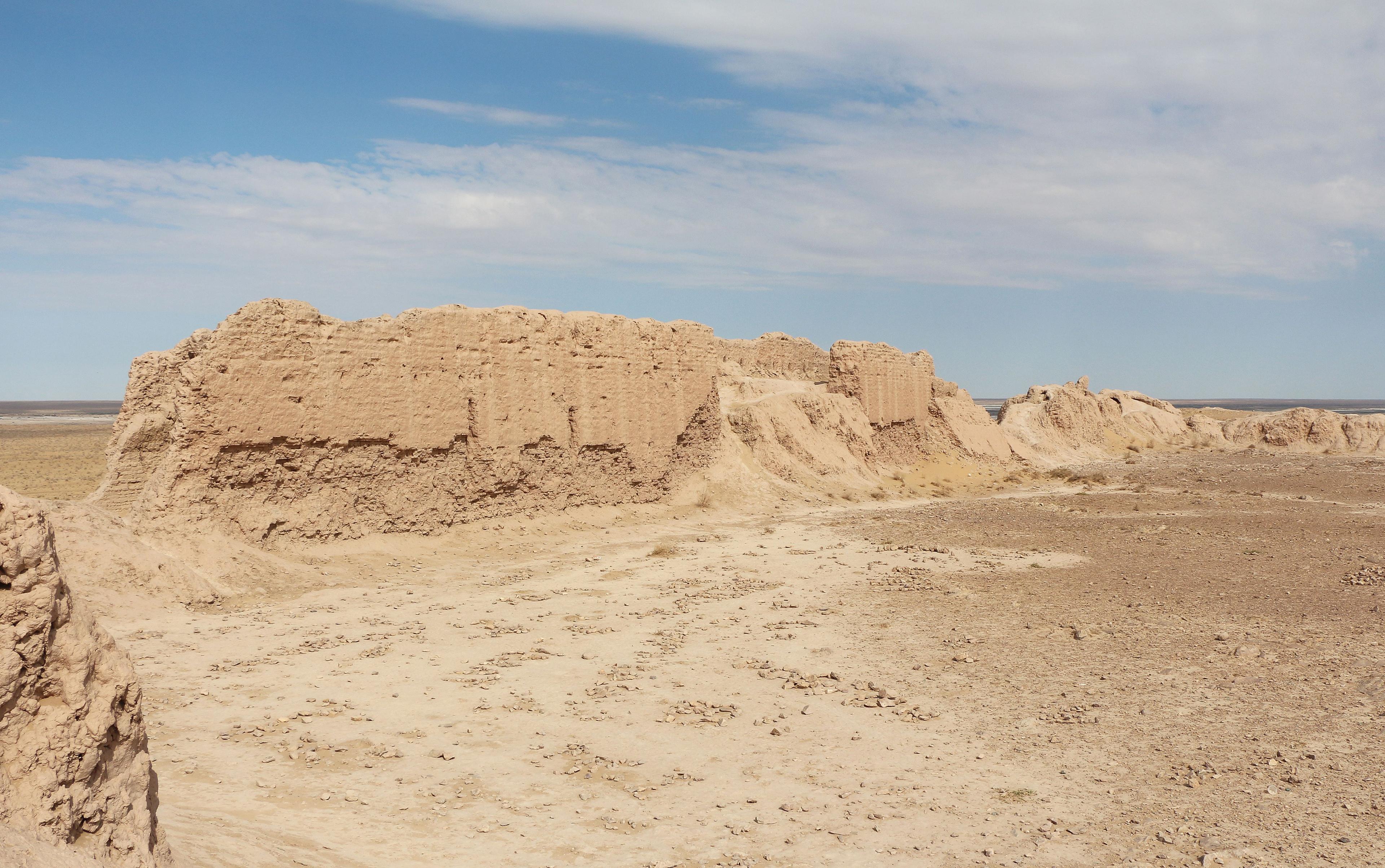
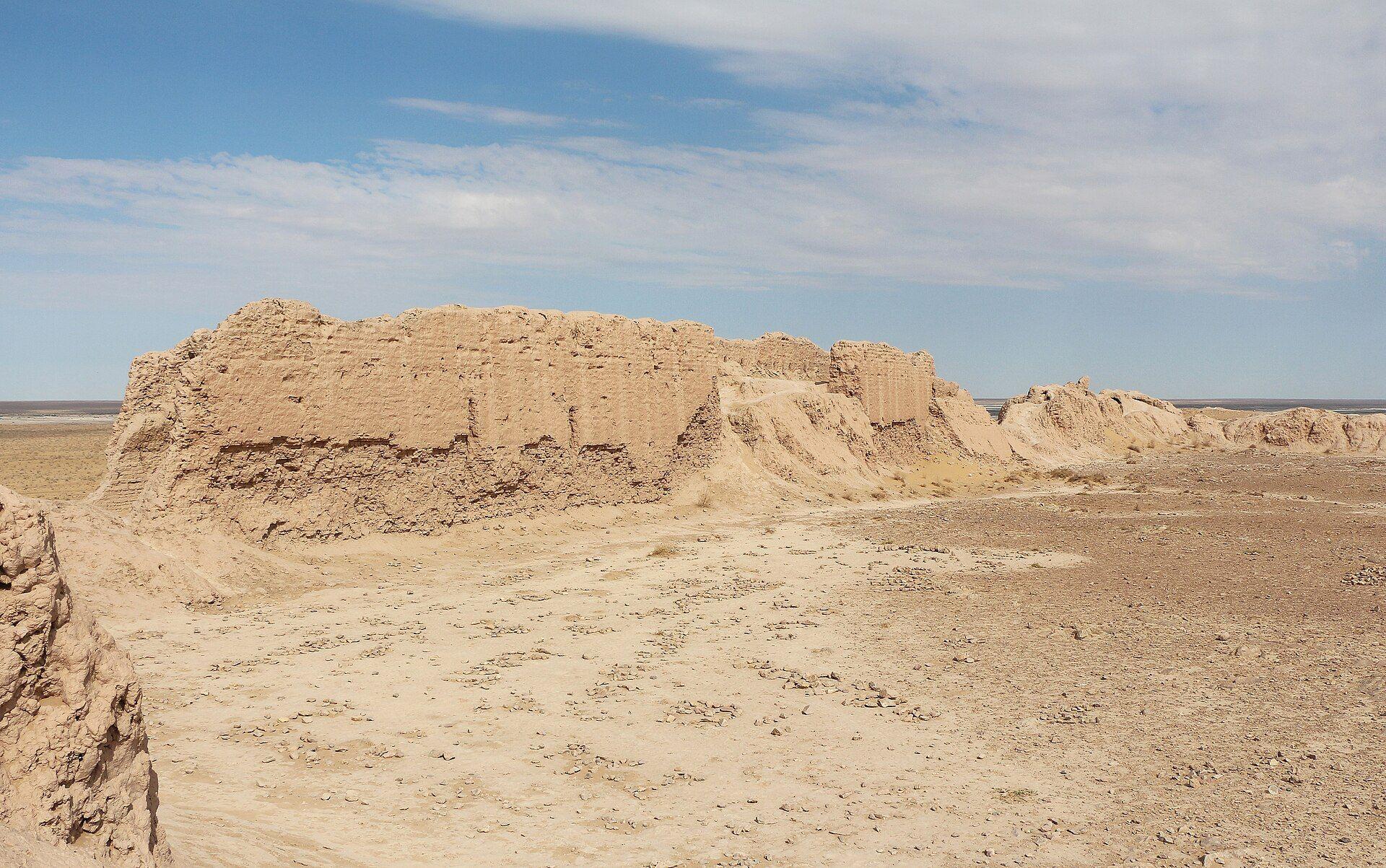
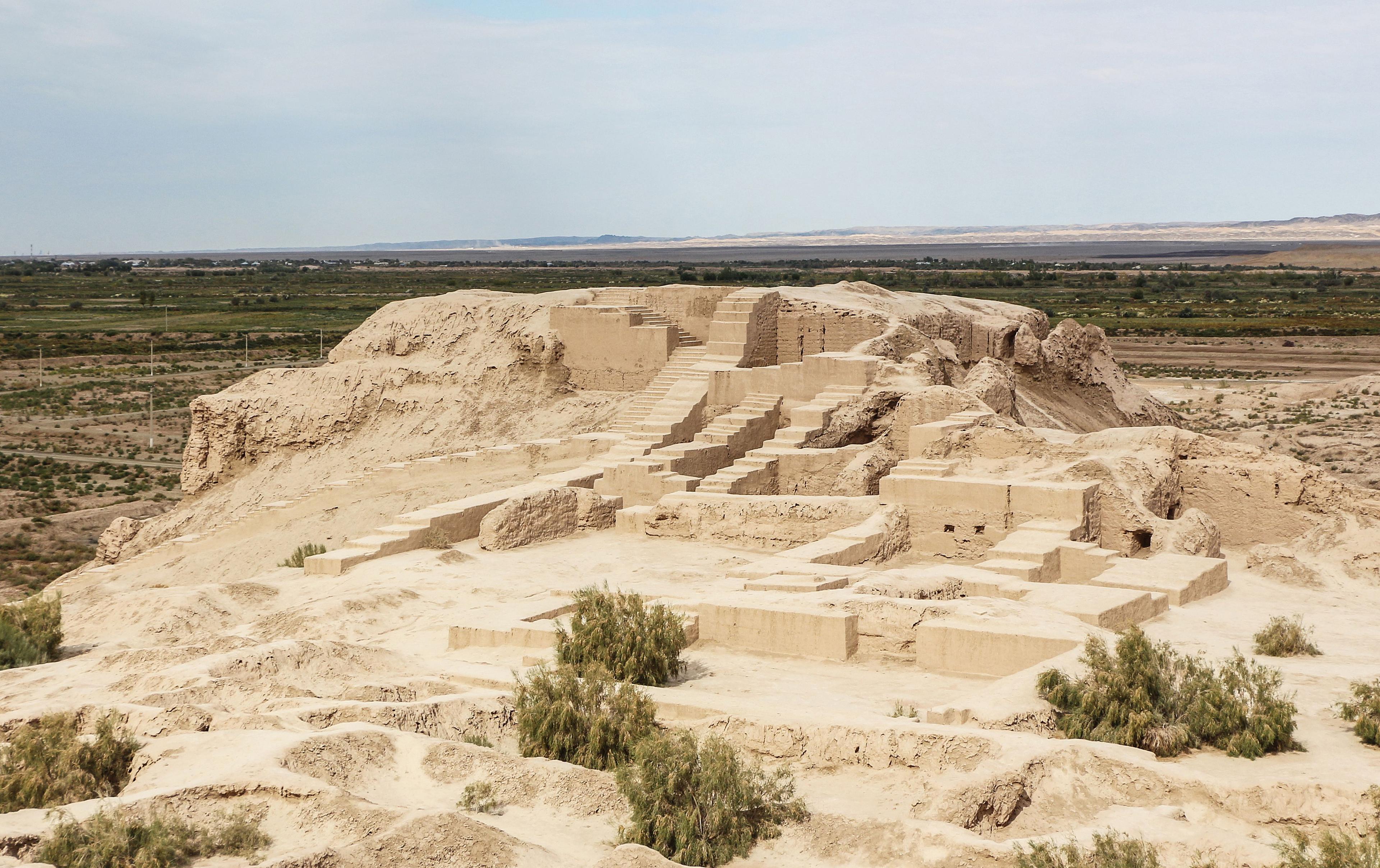
North-east of Khiva, across the Amu Darya in the Republic of Karakalpakstan, the desert holds the ruins of dozens of clay fortresses from ancient Khorezm. Archaeologists call the area the oasis of fifty fortresses. They are older than anything in Khiva, and their scale on the empty plain is unforgettable.
- Toprak-Kala: a palace city of the kings of Khorezm, built around the 1st or 2nd century AD and used as a capital in the 2nd and 3rd centuries. Soviet archaeologists of the Chorasmian Expedition, led by Sergey Tolstov, began excavating here in 1938 and found wall paintings, sculpture and documents; some finds are now in the Hermitage in St Petersburg. You walk up into the palace complex and look down over the grid of the old town.
- Ayaz-Kala: three fortresses on and below a hill above the Kyzylkum desert. The oldest, on the summit, dates from around the 4th to 3rd century BC; the others are later, up to the early medieval period. The climb to the top takes 15 to 20 minutes on sand and is worth it for the view. A yurt camp below the hill offers overnight stays, camel rides and dinner under the stars.
- Kyzyl-Kala: a smaller, partly restored fortress close to Toprak-Kala, usually included on the same route.
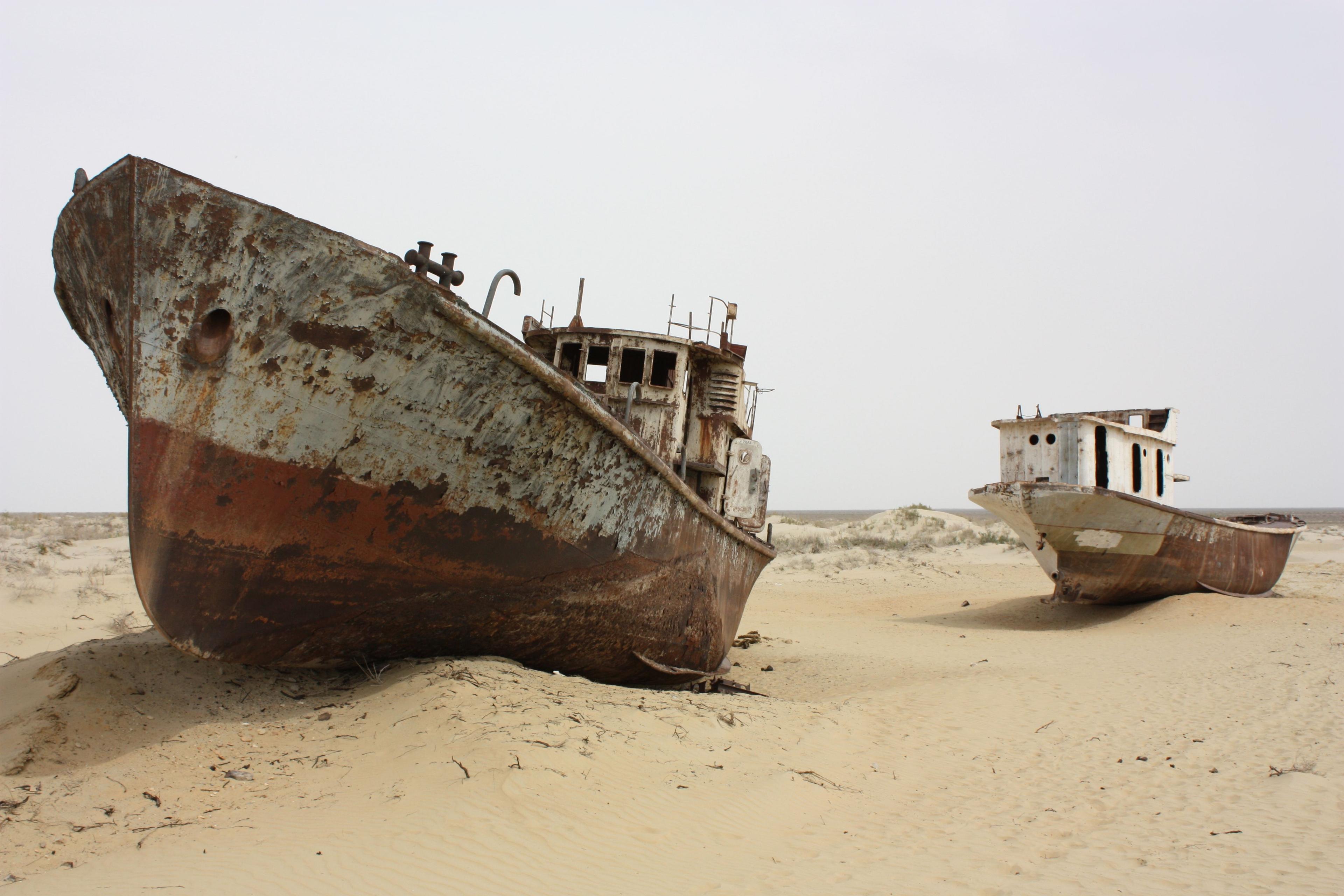
Practicalities. The fortresses are roughly one and a half to two hours' drive from Khiva, and a full loop takes most of a day, typically seven to nine hours with stops. There is no public transport, so you need a car and driver, ideally with a guide who can bring the ruins to life. Entry fees are small and paid in cash; some sites have no ticket office at all. Take water, a hat, sunscreen and closed shoes. In summer start very early; spring and autumn are ideal. The trip can also be done on the drive between Khiva and Bukhara, or combined with a longer journey to Nukus and the Aral Sea.
Best time to visit Khiva and where to stay
Khiva has a sharp desert climate. April, May, September and October are the best months: warm days, cool nights and soft light. In July and August afternoon temperatures often exceed 40°C, so sightseeing is limited to the morning and evening. Winter is cold, sometimes below freezing, but sunny and almost empty of visitors, with low prices. Our guide to the weather by month has details for every region.
Where to stay:
- Inside Ichan-Kala: family guesthouses and small hotels, some in historic buildings. Nothing beats walking out at dawn into an empty old town. Rooms are often modest, and cars cannot reach every door.
- Just outside the walls: larger, newer hotels with more space and parking, a few minutes' walk from the gates.
Bring cash in som. Card acceptance has improved, but small guesthouses, ticket desks and the bazaar still prefer cash, and ATMs in Khiva occasionally run dry at weekends. Our money guide covers cards, cash and exchange.
Visiting Khiva with TourEast
Khiva is one of our favourite places to slow down. We can arrange train tickets, airport transfers and a local guide for Ichan-Kala and Dishan-Kala, add a day in the desert fortresses or a night in the yurt camp, and fit it all into a small-group tour or a private itinerary across Uzbekistan.
Frequently asked questions
Watch
Photo gallery