Samarkand plov, Tashkent wedding plov, Fergana devzira, Bukhara with dried fruit, light Khorezm plov: a tasting guide to seven Uzbek plov styles, what sets them apart, why cooks argue, and how to taste several on one trip.
Facts, prices and schedules checked on November 4, 2026
Ask an Uzbek how many kinds of plov there are and you will get a number, then an argument. Uzbek sources variously speak of around seventy, more than a hundred, even some one hundred and twenty recipes, depending on who is counting and what counts as a separate dish. What nobody disputes is that plov is not one recipe. It is a family of dishes that changes with the city, the rice, the cooking fat, the occasion and the cook.
This guide picks seven styles that a traveller can realistically taste and tell apart: everyday Tashkent plov, the festive toy oshi of weddings, Samarkand's layered plov, Fergana's devzira plov, Bukhara's sweeter version, Khorezm's light plov, and the early-morning plov that opens a wedding. The number seven is our selection, not an official list. Where sources disagree on a detail, we say so.
For the history, the UNESCO listing and how a kazan is used, see our general guide to Uzbek plov. Here the subject is the differences.
What is the difference between plov styles?
Four variables do most of the work.
- The rice. Devzira, a pinkish-brown local rice grown in the Fergana Valley, is the classic. It absorbs fat and liquid without breaking up. Some festive plovs use a white long-grain variety known as lazer instead.
- The fat. Cottonseed oil is the everyday choice. Samarkand cooks are known for zigir oil, a dark oil usually described as pressed from flax or linseed, and for blends. Mutton fat appears in some home kitchens.
- The structure. In some styles the rice and the meat-and-carrot base are stirred together; in others the layers are kept apart and served in separate tiers on the dish.
- The extras. Chickpeas, raisins, barberries, dried apricots, whole garlic, hot pepper, quail eggs and slices of horse-meat sausage (kazy) all mark one place or another.
None of these rules is absolute. Every family has its own version, and a cook from Samarkand may sniff at a Tashkent plate while a Tashkent cook says his rice is simply better. Treat the descriptions below as tendencies.
1. Tashkent: choyxona oshi, the everyday plate
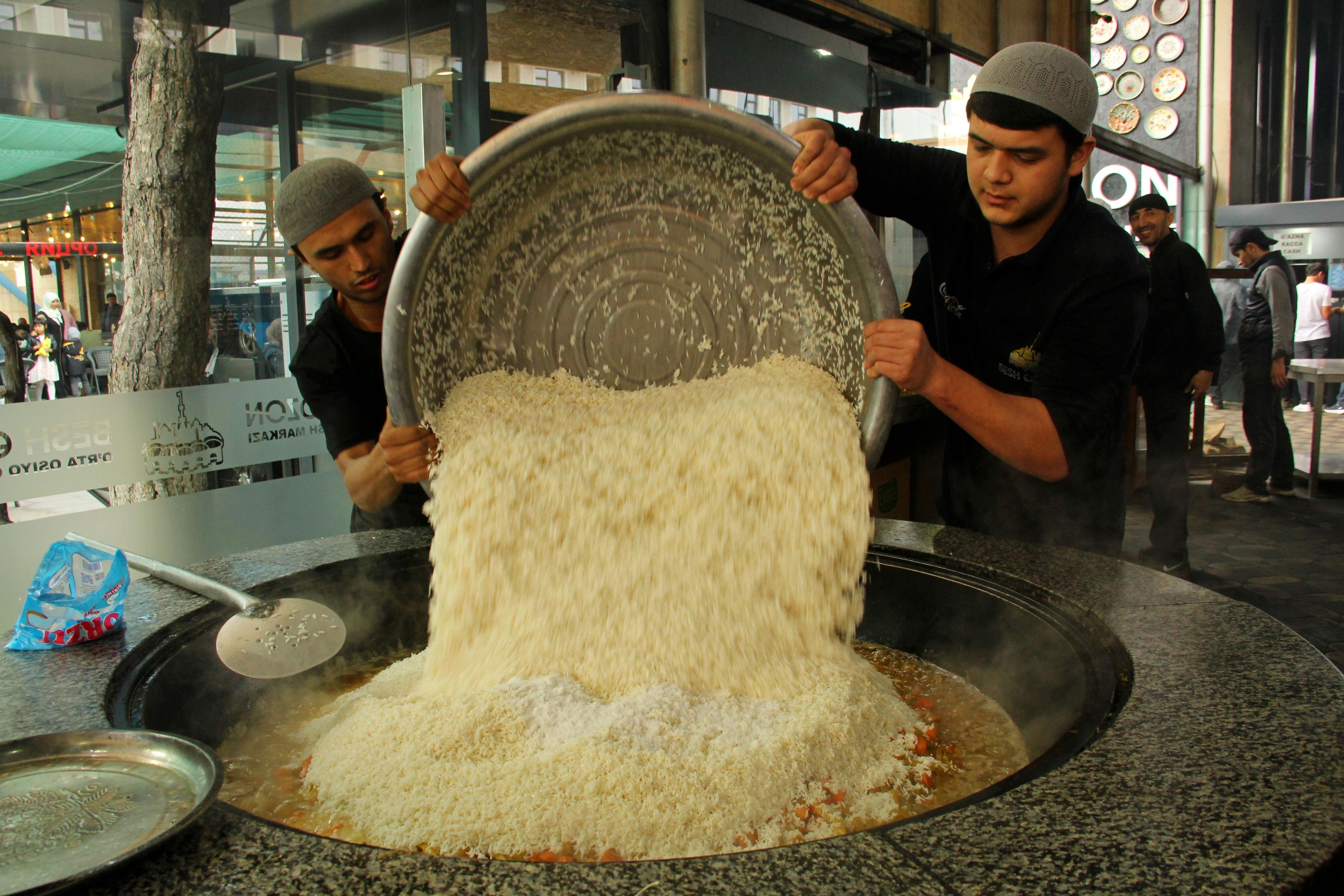
Tashkent plov is often treated as the reference, and the capital is where most visitors meet it first. The weekday version, choyxona oshi (teahouse plov), is made in huge kazans in plov centres and neighbourhood teahouses, where it sells out by early afternoon.
Descriptions of the technique differ. Several sources say Tashkent cooks fry the onion first and add the meat afterwards, then bring the rice and base together in the kazan. Others stress that the rice is cooked in the same vessel as the zirvak, the fried base, so it picks up the colour and flavour of the meat. Either way, you can expect a medium-rich, well-balanced plate with a mild spicing of cumin, often on devzira rice.
Where to taste it: the Central Asian Plov Centre at the foot of the Tashkent TV Tower, now trading as Besh Qozon, fires its kazans before most people have finished breakfast. National Geographic has reported that it starts serving as early as 5 am and has several branches in the capital. A newly opened plov museum in the city is also worth a look, though we have not confirmed its exhibits in detail. Typical prices for a portion in 2026 are around 40,000 to 90,000 som.
2. Toy oshi: the festive Tashkent wedding plov
Toy oshi means wedding plov, and it is a different animal from the teahouse plate. The festive version is typically described as richer and more decorated: long-grain rice, raisins, barberries and chickpeas in the mix, with slices of kazy and halved boiled quail eggs on top.
It is cooked for a crowd, in cauldrons that can hold many kilograms of rice, by a specialist cook called an oshpaz. It is also a social event. The plov is served at long tables in the mahalla, the neighbourhood, and guests come and go in waves. You will not find the real thing on a restaurant menu, but some Tashkent restaurants offer a version of toy oshi, and a guide can sometimes arrange for you to join a family celebration if the family agrees. Our guide to Uzbek weddings and mahalla traditions explains the etiquette.
3. Samarkand plov: layers, yellow carrots and zigir oil
Samarkand plov is the best known of the regional styles outside Uzbekistan, and the one whose look is easiest to describe. It is presented in layers: pale rice below or beside the meat, with yellow carrots and often chickpeas and a piece of meat arranged on top, rather than stirred through.
Two features are widely mentioned. The first is the use of yellow carrots, which are sweeter and softer than orange ones. The second is zigir oil, the dark seed oil heated until it just begins to smoke, which gives a distinctive aroma. Because of the different fat, Samarkand plov is often described as lighter than Tashkent's, though that is a matter of taste.
Where to taste it: in Samarkand itself, at a lunchtime plov centre or a family restaurant near the Siab Bazaar. Eat early. By mid-afternoon the best portions have gone, and what remains has been sitting.
4. Fergana plov: devzira, oil and heat
The Fergana Valley is where devzira grows, and the plov of Fergana, Margilan, Kokand and Andijan is organised around it. Sources describe Fergana plov as dark, deeply flavoured and generous with oil. Onions go into the kazan before the meat, and some cooks add a hot pepper pod on top, which perfumes the rice without necessarily making it fiery.
The visual cue is the colour of the rice, a reddish-brown that the paler styles lack. Fergana plov is also usually stirred, so that every grain is coated.
Many Tashkent restaurants advertise Fergana plov or Kokand plov as a speciality, so you can compare it with the local style in a single day. If you travel through the valley itself, our Fergana Valley travel guide and the crafts tour describe where to eat in Margilan and Kokand.
5. Bukhara plov: sweeter, with dried fruit
Bukhara's plov has a reputation for being slightly sweet. Sources agree on raisins and, in some descriptions, dried apricots. Beyond that they diverge. One source says the ingredients are boiled separately until partly cooked, then layered in the kazan and stewed together. Others emphasise more rice and chickpeas and less meat. Because the descriptions conflict, take any single account as a tendency rather than a rule.
Bukhara's plov is also tied to the city's older tastes. The city has a long tradition of dried fruit, and the sweetness suits the bread and tea of a chaikhana lunch. Several restaurants near Lyabi-Hauz and the trading domes serve plov at lunchtime only, and close the kazans in mid-afternoon.
Where to taste it: ask for Bukhara-style plov at a family restaurant in the old town, and compare it with a plate in Samarkand the next day. The Afrosiyob journey between the two cities takes under two hours.
6. Khorezm plov: light and gently spiced
The plov of Khorezm, the oasis around Khiva, is described in several sources as the lightest of the regional styles: yellow carrots, little oil and minimal spice, so that the finished dish is pale. It is the opposite of the dark, oily Fergana plate.
Khorezm is also the place for large-scale cooking. In Khiva, cooks once prepared a record 9 tonnes of plov for a festival, using about 2.5 tonnes of beef, 3 tonnes of carrots, 2.5 tonnes of rice and 750 litres of cottonseed oil, according to a government tourism report. That gives a sense of the basic ingredients, though not a home recipe.
If you visit Khiva, plov is available in courtyard restaurants inside and just outside Ichan-Kala. But Khorezm has other dishes you should not miss, such as shivit oshi, the green-noodle dish, and tukhum-barak dumplings, which our regional cuisines guide describes.
7. Nahor oshi: the dawn plov
The seventh style is defined by time rather than place. Nahor oshi, the morning plov, opens many weddings and other large family gatherings. The cooks start in the dark, the first guests arrive soon after dawn, often straight from morning prayers, and the plov is served in quick waves to men of the neighbourhood and relatives before the main celebrations of the day.
The dish itself follows the festive logic of toy oshi, rich and generous, but the setting is what visitors remember: long tables in a courtyard or street, a blessing, a short meal and then the next group sits down. Outsiders rarely taste it unless invited by a family, and we would not suggest asking. If you are invited, accept the plov, stay for the blessing and do not photograph guests without asking first.
What about Kashkadarya, Andijan and the others?
Uzbek sources list further styles, among them Kashkadarya and Andijan, and Tashkent restaurants advertise Fergana and Kokand versions. The sources we found did not describe their differences in a reliable way, so we have not tried to. If you are travelling in those regions, ask locals. Cooks are happy to explain what makes their plov different, and the answer is often about the rice.
One more point is that rice quality and the cook matter as much as the region. A well-made plov in the wrong style beats a dull plov in the right one.
How to taste several plovs on one trip
A simple plan fits the standard route.
- Tashkent: eat choyxona oshi at a plov centre at lunchtime on your arrival day or the day you leave. Compare it with Fergana-style plov in a restaurant that specialises in it.
- Samarkand: have the layered plov, with its yellow carrots and zigir aroma, for lunch after the Registan or the Siab Bazaar.
- Bukhara: try the sweeter plov, and ask about the dried fruit.
- Khiva: have the lighter Khorezm plov for lunch, then walk it off on the walls of Ichan-Kala.
Rules that apply everywhere: eat at midday, go where locals queue, and drink green tea with it. Portions are large, so share one plate between two people in the first city and order a smaller portion later. A plov cooking class, available in several cities, is the best way to understand the structure.
Plov with TourEast
Plov is part of almost every day on the road, and our Flavours of Uzbekistan tour is built around regional tastes, from the kazans of Tashkent to the courtyards of Khiva. If you would like to compare several styles in a week, tell us your route and we will fit the lunches and a cooking class into it, or you can sketch a route with our trip builder at /trip-builder.